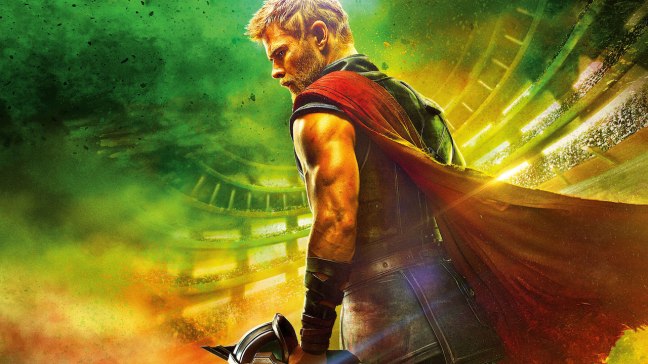
It’s been a few weeks but the critic and audience reactions continue to come in: everyone is having fun with Thor: Ragnarok. Why they can’t remember the last time they’ve enjoyed watching a movie this much (hint: Spider-Man: Homecoming) and wonder when’s the next time they’ll see a movie this light-hearted again (hint: Black Panther). Hey, if it ain’t broke, don’t fix it – the Marvel superhero formula continues to turn out grins and box office dollars.
But for some reason – likely partly due to the fact that Thor: Ragnarok was the fourth superhero film I saw this year – I walked out frowning. Before I dive in, let me say a couple things: This film is much better than the dull Thor: the Dark World. Second, I applaud director Taika Waititi for making a genuinely funny movie. But overall, I feel like Thor: Ragnarok missed the mark, leaving it an almost success, which can be more infuriating than a failure.
Comedy and Death
When crafting a story, it is vital to pick a tone and stick to it. Tone can be described as the “attitude of a writer toward a subject or an audience.” Usually a tone is determined by the story’s content. For example, if I were to be writing about a mother struggling to feed her family, I would probably go darker than if I were writing about two young children experiencing a first crush at the carnival. There’s wiggle room in every scenario but general rules apply. Death = darker, sex = more adult, clowns = horror. You get the idea.
Let’s look at the main events in the plot of Thor: Ragnarok (warning – spoilers)
- Thor loses Jane (the woman he gave up the throne for).
- Loki abducts Odin, effectively killing him.
- Odin’s death frees Hela, who bashes Thor and Loki across the galaxy before murdering most of Asgard – including three of Thor’s best friends.
- Thor is broken and made to fight. He meets a fellow Asgardian struggling with alcohol abuse and PTSD and his friend, Bruce Banner, who has been a mental prisoner of the Hulk for years.
- Thor escapes his bonds and returns home.
- Thor loses an eye.
- Thor is unable to stop Hela without completely destroying Asgard (which he does), banishing the survivors to wandering uncertainty amongst the stars.
- (BONUS after credits scene) Thanos shows up and looks to butcher the remaining refugees.
Sweet mother of Mary, that’s a lot of heavy stuff. The tone: WACKY IRREVERENT COMEDY! Seriously, there is a joke is almost every scene of the movie and nothing is off limits. Odin being forgotten to die – joke. Valkyrie’s alcoholism – joke. By the end of the movie, I was surprised Thor didn’t do some weird pantomime with one of the Warriors Three’s corpses.
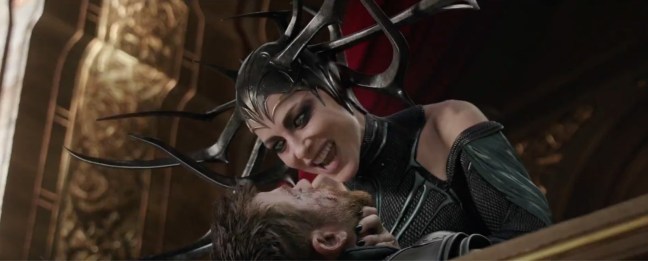
The problem with setting such a bizarre tone (apart from its strangeness) is its effect on the sense of consequence. You would think Loki killing Odin would be, at the very least, an evil act but Loki is regarded as at his most heroic in this film. That’s a larger disconnect than no one pointing out that Tony Stark was responsible for every death in Avengers: Age of Ultron.
Serious, depressing events unfold in Thor: Ragnarok but we’re made to laugh and smile. Only occasionally does the movie ever try to be dramatic and even when it does, you know the scene will climax in a joke. This works fine for a comedy or even a dark comedy but Ragnarok isn’t trying to be just those things (it isn’t trying to be a dark comedy at all… for some reason), it’s going for the typical Marvel bundle of laughs, action and drama, only none of the drama works. It simply is not allowed to.
Too Many Plots
When I structured Thor: Ragnarok, I focused on the main plot – mainly Thor’s banishment and return to Asgard but the movie has more going on. Subplots are fine in films if they meet two criteria. One – there aren’t too many of them. Two – they all exist in service to the story’s central idea.
Buried under all the jokes and laughs of Thor: Ragnarok is actually a really compelling commentary on the evils of imperialism. Asgard’s dark secret past is exposed, capped off in a wonderful line by Hela that was something like “where do you think the gold for this throne room came from?” Thor is stripped and made an immigrant, a refugee at the whim of those in power – much in the same way Odin and Hela must have done to countless civilizations in the past.
That’s all great…but it’s not all there is. We also have a very brief arch involving Dr. Strange and his introduction to Thor and Loki. We also have Bruce Banner battling with the Hulk for control of one body. We also have Valkyrie struggling to come to terms with the loss of her girlfriend and battling her alcoholism/PTSD. We also have Loki searching for some new material/purpose. We also have a slave uprising on a gladiator planet. We also have Scourge struggling with his sense of loyalty. We also have Heimdall struggling to keep the survivors of Asgard safe from Hela’s tyranny.
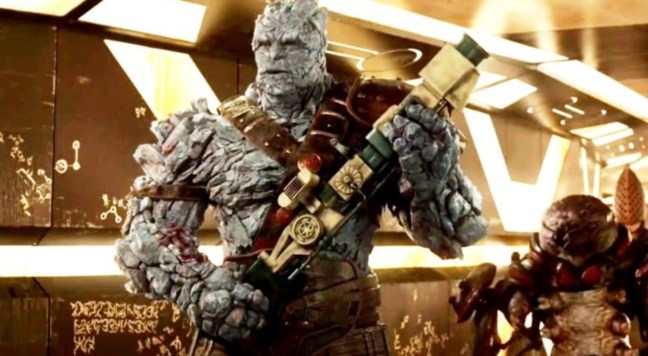
There’s a lot going on and some of these plots work better than others. One which definitely gets short-changed is Valkyrie, who seems to pull herself out of complete human mess very quickly. Another is Hela who strangely has no subplot of her own (more on that later). People can praise the progressive nature of Ragnarok ‘s anti-imperialism all they want but… how come the women really had no time devoted to them?
It’s not just the ladies though. I’m really not sure how Banner’s struggle resolved itself. He became the Hulk again and then turned back into Bruce soooooo I guess it’s all good now? The inclusion of characters like Dr. Strange and Scourge took away from time that really could have been better spent elsewhere.
Especially Scourge – who the hell is Scourge and why do I care?
Endless Quipping
After Avengers came out, I started to hear how Joss Whedon had ruined Marvel dialogue forever. His love of Bathos and Buffy Speak seems to have infested every Marvel superhero film since. Truth be told I never minded and I will tell you why: not everyone was witty. Not everyone had a one-liner waiting in the wings. I think back to the first two Avengers films and look at them as comedy compositions.
Iron Man was the wise-cracking sarcasm guy. Captain America was clueless in a hilarious way. Bruce Banner made often uncomfortable jokes about how he could kill everyone. And Thor was the straight man – he didn’t try to be funny or see the humor in his actions.
Well not anymore baby! This new Thor quips! He has one-liners galore and is always happy to diffuse tension through some snarky observation. In other words: he is much more Star-Lord than Odin-son. I know people found this new Thor funnier (I did too) but it came at the expense of his identity. If I wanted to watch Guardians of the Galaxy, I have two (soon to be three) films to choose from. I’ve got my snark fix. Thor was supposed to be my superhero Shakespeare and that is now completely gone.
Hela and the continuing Marvel villain problem
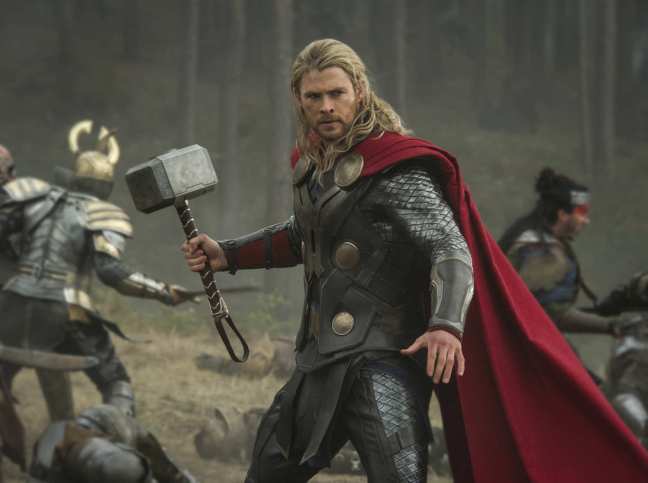
Before I go any further, let’s go back to Hela. Man does she make an entrance. First she breaks Thor’s hammer and then she murders the Warriors Three and takes over Asgard. Hot damn! What’s next?
Oh…oh that was it, I guess.
Hela is evil – for some reason? We’re never really told why other than she is very ambitious and aggressive. A conveniently hidden mural later helps flush out her backstory by essentially saying “See? This happened!”
Her grand plan is to use some magic fire… to bring back an army of the dead and a giant wolf… then sit in Asgard for a bit before eventually leaving – I think?
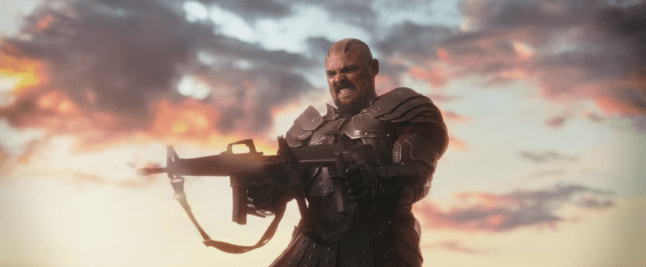
We don’t care and that’s a real shame. Last time Thor had a sibling he turned out to be Marvel’s most compelling villain. We’re repeatedly told how powerful Hela is and early on we see it – she smashes the hammer but then… she makes pointed sticks.
Increasingly large pointed sticks and she can shoot them very fast. Yes, she is a super-charged evil version of Spyke from X-Men: Evolution. Cool.
Hela didn’t need a lot of character to be effective. Heck, she could have enhanced the imperialism commentary if she went on about divine right and acted more racist/xenophobic but all we get is the generic “I’m evil!”
She’s the goddess of death, did she mention that? Someone should have told her that death is not innately bad – also she has no specific death powers so I call bullshit. At the end of the day, Hela is poised to take her place alongside the whip-guy from Iron Man 2 (not worthy of me remembering his name) and Red Skull from the first Captain America. Oh well, at least she was better than Dark Elf Man!
An Honest Question
If I were ever to meet Taika Waititi, I’d ask him this question: Did he ever really care about/like Thor to begin with?

The callous end to the Warriors Three, the complete rewrite of Thor’s personality, the dismissal of Loki to just comic relief, the immediate removal of Thor’s hammer for a recycled plot exercise (it’s just a more dramatic repeat of the first film), the inclusion of the Hulk – all of this, to me, says “I don’t really get this Thor guy but I know how to make an entertaining movie!”
Often times, when a director takes over a project they don’t care about, it goes badly. Think Godzilla (1998) and X-Men: The Last Stand levels of failure. Here we avoided that but I think it has less to do with Waititi’s love of the character and more to do with his skill as a comedic director.
Thor: Ragnarok, to me, ultimately feels like a much better version of Thor: the Dark World. It’s still a product, but this one was put together by somebody who knows what they’re doing. Kenneth Branagh remains the only director who seems to approach the material with love and a seriousness that comes from knowing it can be good as it is.
Sadly, I have given up hope that we’re ever going to see a Thor sequel that understands and respects the source material in its entirety. I can understand why Natalie Portman wanted no part of this bombastic, uneven mess of comedy.



 Colin McMahon