Blog

The Troubling Decline of First-Party Nintendo Titles

It is no secret that Nintendo has seen better days. While the company is far from in trouble financially, the Wii U and 3DS have not matched the high profitability of the Wii and DS. Part of this is the normal rise and fall of the video game industry (think Xbox-Xbox 360-Xbox One). Yet there is another sign that the Big N might be in trouble that is actually far more worrisome than lackluster hardware sales.

Nintendo is a rarity in today’s video game climate. It is a company that survives largely without the support of third-party developers. Want to play Grand Theft Auto, BioShock, Star Wars Battlefront – buy another system. This absence would doom most video game console developers, but Nintendo has been able to fire back with the likes of Mario, the Legend of Zelda, Super Smash Bros., and Pikmin. They are a company that carries itself on its first-party (in-house) software library.

A sales chart in 2014 for the Wii U shows a predictable pattern: a top selling list dominated by Nintendo titles.
A sales chart in 2014 for the Wii U shows a predictable pattern: a top-selling list dominated by Nintendo titles.

In short: if Nintendo first-party games don’t sell, the company hasn’t got a chance. So far this hasn’t been a problem, since Nintendo games usually gather near-unanimous praise from gamers and critics alike. This past year, however, has seen a disturbing trend. Several first-party games have been released to less than stellar reviews, some of them coming from Nintendo’s most prominent series.

Mario Tennis Ultra Smash

Beginning on the Virtual Boy, the Mario Tennis series went big with its Nintendo 64 entry. Since then, the series has been a staple of fun sports games done well. While it never rose as high as Mario Kart, the series enjoyed success on the Gamecube, the Gameboy Advance, the Wii, and on the 3DS. Yet the Wii-version was just a redone Gamecube release and fans could not wait for the next console entry to continue the series’ high standard.

They’re still waiting.

Mario Tennis was a series that prided itself on its variety of modes and diverse game types, features that were completely missing in the lackluster Mario Tennis Ultra Smash. The result was immediately seen in the critical response. On Metacritic, while previous games averaged a 77, Mario Tennis Ultra Smash manged only a 58 (5.2 out of ten user score). This is a dramatic drop, and not just in review score. In its first month, Mario Tennis Ultra Smash sold just 18,000 copies (compared to Yoshi’s Woolly World at 97,000 which only debuted a few weeks prior). Mario Tennis had a reputation, and it was severely damaged by this lackluster entry.
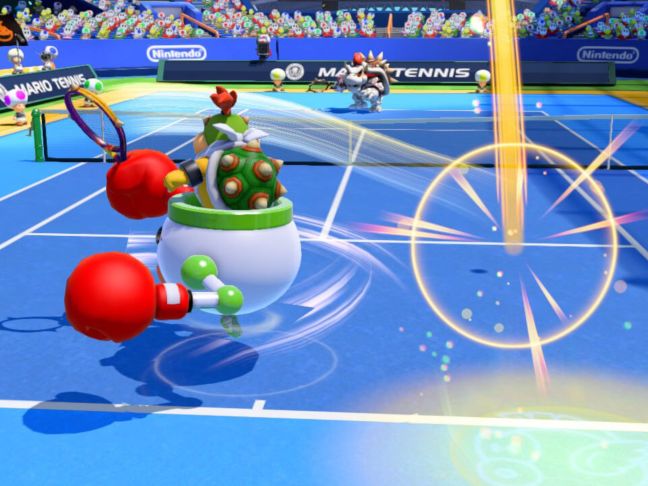
This was a gorgeous, vibrant looking game. It's a real shame.
This was a gorgeous, vibrant looking game. It’s a real shame.

Animal Crossing: Amiibo Festival and Happy Home Designer

How do you follow-up the surprising success of Animal Crossing: New Leaf on the 3DS? Apparently, Nintendo opted for a mediocre handheld game (which many critics said felt more like a mini-game) and a console release that convinced many gamers that amiibos were the stuff of gimmicks.

I would be curious to see how well these actually sold, given that Amiibo in general is doing quite well for Nintendo. Gamers are still very polarized on the figures.
I would be curious to see how well these actually sold, given that Amiibo in general is doing quite well for Nintendo. Gamers, however, are still very polarized on the figures.

While New Leaf received near-universal praise (88 on Metacritic with a 8.7 user rating), Happy Home Designer managed only a 66 (6.7 user score) and Amiibo Festival was worse at 46 (4.4 user score). In two games, Nintendo was able to erase nearly all the goodwill established with New Leaf. Now, when the next Animal Crossing game is released – customers will likely check to see if it is an actual new game, or another gimmick trodden out to pad game release numbers.

Most gamers would agree that the strengths of Animal Crossing lie in the ability to do a wide range of tasks and challenges. These two newest titles have gone strongly away from that - without adding any real depth.
Most gamers would agree that the strengths of Animal Crossing lie in the player’s ability to do a wide range of tasks and challenges. These two newest titles have gone strongly away from that – without adding any real depth.

To look at the units sold, it’s even worse. New Leaf sold a strong 8.87 million units. Happy Home Designer has only sold 2.83 million, and Amiibo Festival has yet to break a million (at this point it is unlikely that it will). Ouch.

The Legend of Zelda: Tri-Force Heroes

While this game did not receive the negative reviews of the others, it is worth mentioning because it is a Zelda game. Specifically, I believe that this game features the lowest average review score of any Zelda game made by Nintendo (these don’t count). The Legend of Zelda: Tri-Force Heroes earned only a 73 on Metacritic (user score was 75). To put that in perspective, the average of the other Zelda games, just on page one, was 92. Again, that is a large drop off in quality (far down from A Link Between Worlds, which earned a 91.
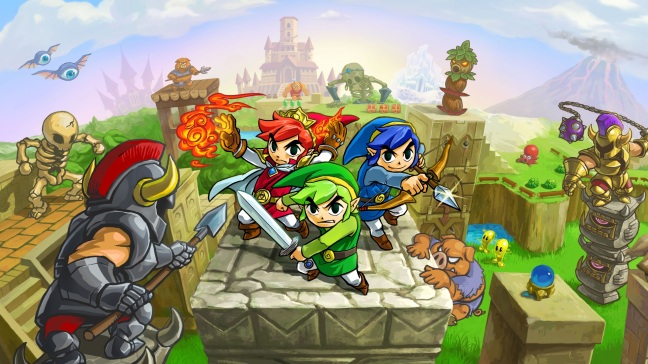
More players felt that the focus on three-player gameplay hurt rather than helped the franchise.

To look at units sold, Tri-Force Heroes sits currently at just over a million, whereas A Link Between Worlds is just under three million. Again, it is not incredibly troubling, but to release even an “okay” Zelda game damages the brand of one of Nintendo’s biggest franchises.

Star Fox Zero

I include this last one with an *. As of now, Star Fox Zero has not been released to the public yet in North America, but reviews are coming in. Currently, it is a 72 on Metacritic, which is not terrible (currently above Star Fox Assault). That said, Star Fox Zero was the first game since 64 that directly involved legendary creator Shigeru Miyamoto – so expectations were a little higher.

The dual screen gameplay appears to be receiving very different reactions.

Time will tell exactly how well this new Star Fox sells and is received by fans. Star Fox Assault, the last console Star Fox game, sold just over a million units, so that is the number to beat.

Of course, there are those out there who would argue that the series has been in decline for quite a while.

It is no surprise that higher review scores translate to higher sales numbers. In a world that is overloaded with games, it is tough to make a case to own any game that is less than good. Nintendo has survived on its brands and will continue to do so. Every misstep is costly. Series like Legend of Zelda will no doubt recover from Tri-Force Heroes, but when will we see another Mario Tennis game? To give a comparison, Rogue Squadron was a staple Star Wars franchise… that is until Rebel Strike came out.

Will Metroid Prime: Federation Force be the next first-party misstep for Nintendo?

The damage done by lackluster games cannot be understated. Here’s hoping that Nintendo rightens the ship before it is too late. Perhaps they are saving all their big ideas for the NX.
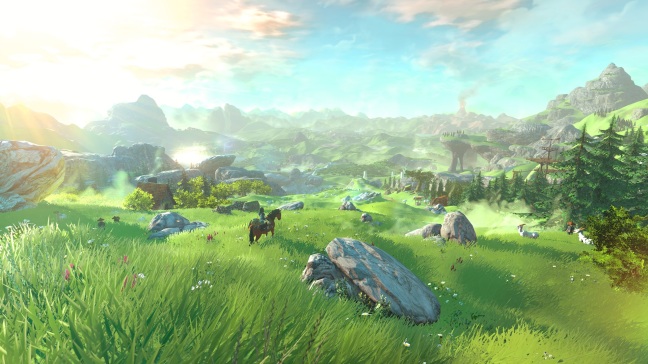
The new Legend of Zelda is a game that Nintendo cannot afford to misstep on.

Godzilla: What Kind of Resurgence will Toho Bring?

I had planned to write a post on the stages of Amiibo addiction, but I’ll save that for another time. A couple of trailers debuted yesterday and I want to talk about this one:

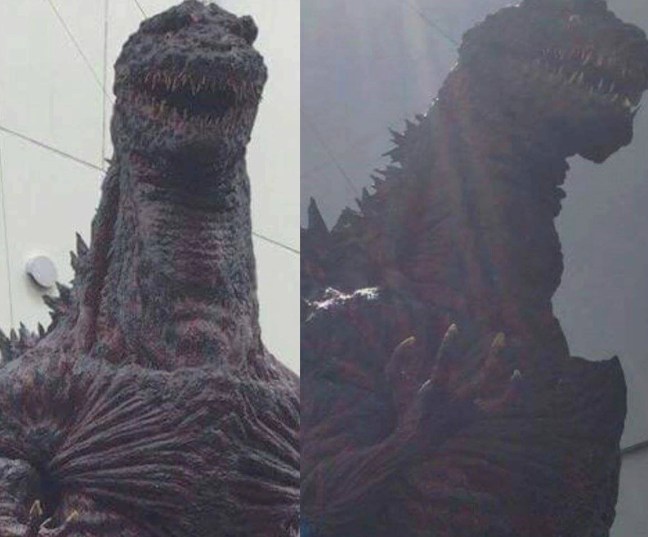
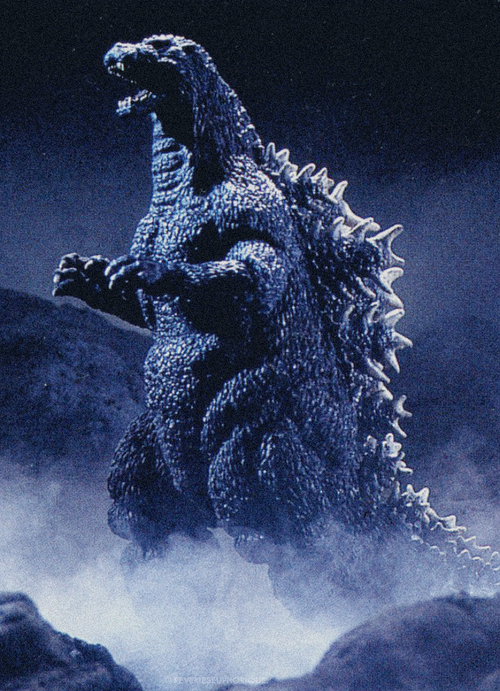
Needless to say, this footage is pretty striking. The images of a glowing, bleeding, gnarled Godzilla frame a stark contrast from the monster last seen by mainstream audiences in 2014. Shin Godzilla, or Godzilla Resurgence as it will be known internationally, is the 29th Toho Godzilla film and the 31st overall iteration in the franchise.

The new Godzilla is grotesque, with large chunks of exposed muscle tissue and bone, not to mention a multitude of sharp dagger teeth.

Since his original film in 1954, Godzilla has become an unparalleled film icon. It is the longest running, largest film series of any character (outnumbering even the 26 James Bond  films). He is part of the modern mythology of the twentieth and now twenty-first century, and has such seen many interpretations.

Godzilla has been a father, a force of nature, an angry spirit, a protector of Earth, a radioactive mutation, and, most famously, a symbol of man-made nuclear destruction. Watching the trailer for Godzilla Resurgence, it seems fairly obvious that Toho has selected to invoke this original, most striking interpretation of the Godzilla mythology.

Fun fact: Godzilla's skin has always been designed to show radioactive burning, but this is the first iteration to go further.
Fun fact: Godzilla’s skin has always been designed to show radioactive burns, but this is the first iteration to go further.

Before I continue further, it is interesting to note that, to date, Japan is the only one to pursue this horrible envisioning of Godzilla. When the United States has adapted the King of the Monsters, there is always the tendency to distance his creation from the use of nuclear weapons. The 1998 film actually comes the closest to preserving his nuclear heritage, but even that movie reduces Godzilla to the byproduct of a French nuclear test, and not the direct result of the United States using and testing atomic weapons on its then enemies.

Even the unmade American Godzilla adaptation featured an origin very similar to the 2014 film, where Godzilla is an ancient creature from before the dinosaurs.
Even the unmade American Godzilla adaptation featured an origin very similar to the 2014 film, where Godzilla is an ancient creature from before the dinosaurs. (This point taken from David Kalat’s book, which can be found here).

Godzilla Resurgence appears to be a direct sequel to the 1954 film, and by that I mean it will likely not include any of the other films in the Godzilla series in its continuity. This would make it the fourth time that Toho has used a direct sequel to start a new series (yes I am aware of the Millennium series – I will talk more about that in a bit). The others include Godzilla Raids Again, The Return of Godzilla (Godzilla 1985), and Godzilla 2000: Millennium (Godzilla 2000). Of those, this will be the second time that Godzilla has appeared in a movie solo, without fighting another monster – The Return of Godzilla being the only other Godzilla sequel to not feature another monster.

The Return of Godzilla marked the first time that Toho tried to return Godzilla to his somber roots.

Each of these films began a “series” of Godzilla films. Godzilla Raids Again is the first film in the Showa series, the Godzilla films between 1955 and 1975. The Return of Godzilla launched the Heisei series, covering all Godzilla films between 1984 and 1995. And Godzilla Millennium appropriately launched the Millennium series, spanning 1999 to 2004. Each of these series has their own unique feel.

The Showa is historically marked by silliness and “cheapness.” As the first series, this is when the effects looked their “worst.” It also saw Godzilla primarily as a good guy, the defender of Earth against all other monsters. The fights were brawls, typically featuring a lot of wrestling moves. This series saw the most movies, the most monsters, and the greatest range of film style and tone.

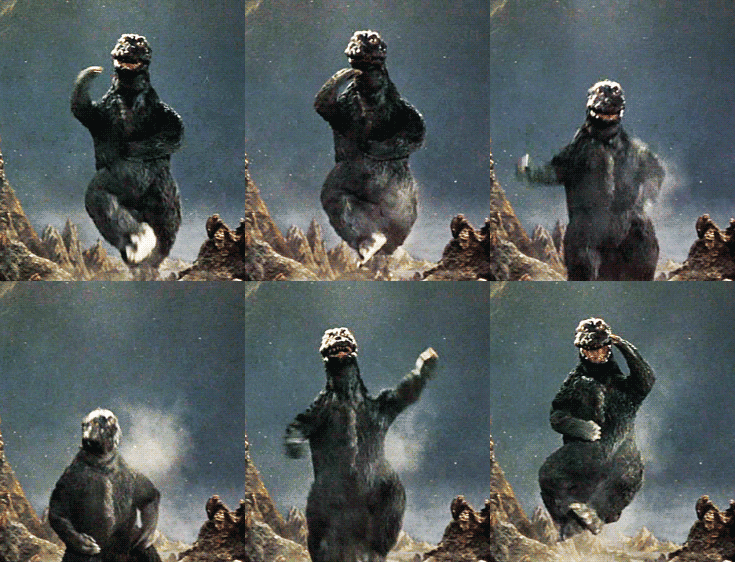
Dancing Godzilla was part of the Showa… and this is nowhere near how zany things got.

The Heisei series is “serious.” These films feature a continuity, with each clearly happening after the one before it. This is the only Godzilla series where a clear continuity is evident. The costumes became bulkier, Godzilla became meaner and more a force of nature than either villain or hero, and the fights became more beam-oriented and less close quartered.

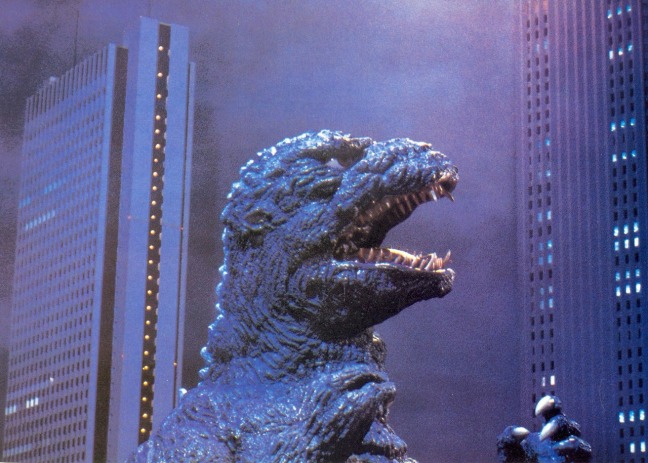
The bulky design rendered a lot of fighting movement impossible, but the "cheap" look of the Showa was quickly forgotten.
The bulky design rendered a lot of fighting movement impossible.

With the Millennium, nearly each film became a direct sequel to the original. Despite this, there is almost a continuity present as nearly all the films share a similar tone (Godzilla, Mothra, and King Ghidorah being the exception). The Millennium series can be described as an interesting mix of what came before. Godzilla is mostly the good guy, although never to the extreme that he was in the Showa series. The films are also, for the most part, less serious – or take themselves less seriously – than the Heisei, although again not to the extent that was seen in the Showa. This is the shortest series and the one to introduce the fewest new monsters to the Godzilla mythology.

I am making a point with this lesson in Godzilla film history (besides my having too much free time), and that is this: the first film does not necessarily echo how the series will be shaped. Godzilla Raids Again had a lot more in common with its 1954 predecessor than did Godzilla’s Revenge, yet both are part of the Showa series. GMK and Final Wars had nothing to do with Godzilla 2000 and were both tonally different films.

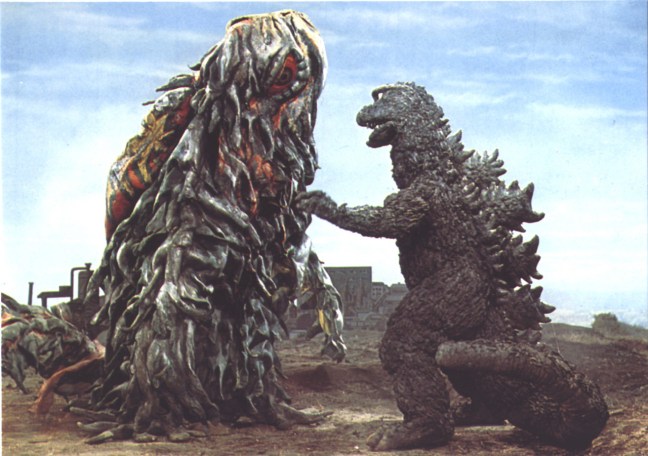
Godzilla vs. Hedorah features an LSD sequence, animated segments, and a flying Godzilla. This film was part of the Showa series but is unlike any other Godzilla movie... and probably any other movie, period.
Godzilla vs. Hedorah features a LSD sequence, animated segments, and a flying Godzilla. This film was part of the Showa series but is unlike any other Godzilla movie… and probably any other movie, period.

So, while Godzilla Resurgence looks to be bringing back the dark and ratcheting up the horror from the original, it is still too early to say what the spirit of the Shin or Neo (or whatever the fourth series is ultimately called) Godzilla series will be. Will there be continuity or will it be more disjointed (continuity at this point looks less likely given the stark imagination of the Godzilla suit)? Will Godzilla remain a horrifying menace or transform back into the good-guy defender of Earth?

The only thing for sure is that it is unlikely that audiences will be seeing the good-guy anytime soon from Japan. I base this off no definitive information, but rather by looking at the international landscape. For the first time ever, Toho will not be the only company putting out a Godzilla series. “The Legendary Series” as it is already becoming known, will span at least three films, and features a Godzilla who seems to be nearly completely the positive presence. Toho may likely opt to go darker just to form a distinction.

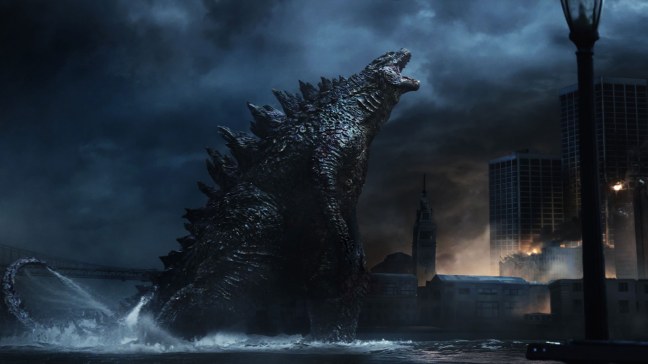
For all his power, this Godzilla definitely has the feeling of a superhero. Fighting King Ghidorah will only cement that.

But all this may be getting ahead of ourselves. Let’s hope Godzilla Resurgence is good enough, and successful enough, to spawn a fourth Godzilla series. There are simply some things that Japan still does better than the United States.

Godzilla Resurgence is directed by Hideaki Anno, creator of Neon Genesis Evangelion. While that series started off entertaining, consistent would not be the word I would use to describe it.

Skull Island: More Son of Godzilla than King Kong?

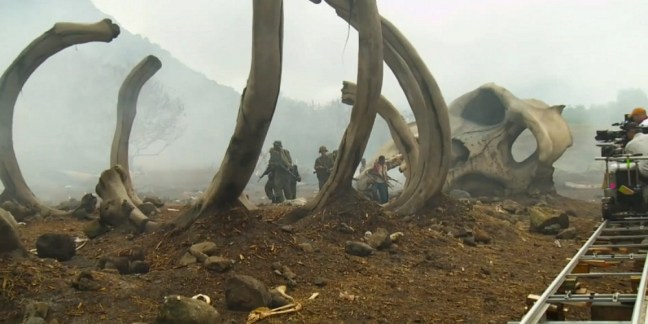
Recently, the first behind-the-scenes look was revealed on Kong: Skull Island, the upcoming reboot to the King Kong franchise. Have a look at it below: … actually, scratch that. It was uploaded by MTV and they don’t like making their videos accessible (that leads to a socialist internet). So here is the link to their site, and below I’ll just stick an IGN recap of what was said. Sound good?

Anyway, so this Kong is a bit different from the one that Peter Jackson brought to life back in 2005. Jackson’s Kong was a remake of the 1933 classic, plain and simple. It told the same story, albeit with minor alterations and updated effects. This new movie is going for something different.

Cinematic universes are all the rage now and Universal and Legendary are looking to make one of their own. As recently confirmed (and accurately guessed on this website long before), Legendary wants to remake King Kong vs. Godzilla, the most financially successful Godzilla movie ever made. Makes a lot of sense.

The original ultimate crossover.

Yet we all know that good cinematic crossovers need establishing films. When companies just throw a lot of properties into a film without first establishing while the audience should care… well, bad things happen. Kong: Skull Island is meant to establish King Kong in the same universe as Gareth Edwards’ 2014 Godzilla, and set the stage for future monster rumbles.

What does this mean for the movie itself… well, quite a bit. Don’t expect Kong to climb the Empire State Building this time out. Don’t expect Skull Island to be populated with dinosaurs. Don’t expect the relationship between Kong and Brie Larson (the female lead) to be the center of attention. In short: don’t expect a lot of things that you would expect in a King Kong movie. A lot of this has to do with size.

Kong will be a lot larger this time out.

In order to battle the King of the Monsters, Kong needs to go through a growth spurt. Kong is typically 25 feet tall, whereas the newest Godzilla clocked in at about 360 feet tall. That would look like this:

Comical but not blockbuster material.

So obviously, bring Kong up to size. They’ve done it before and they can do it again. Yet this creates problems for the typical King Kong mythos. Either Godzilla becomes very mundane or Skull Island cannot be full of super-sized dinosaurs. This means that Kong will either be alone on his island (like he was in the other King Kong film set in the 70s), or they will be other creatures. To spoil what was said in the MTV First Look: There will be other creatures.

Gorosaurus is one large dinosaur-like creature that Kong could fight, having already done so in the Toho film, King Kong Escapes.

Where will these creatures come from? Well, there’s an intriguing possibility here. Let’s look at the facts. Gareth Edwards has long put forth the idea that he would like to establish the concept of Monster Island in his Godzilla movies. For those who don’t know: Monster Island is an island that houses all the Earth’s monsters. Pretty self-explanatory. In the Toho universe, Monster Island is somewhere in the Ogasawara (Bonin) Islands. No location has been given yet for the Legendary universe but hmmm, wouldn’t Skull Island do nicely?

Another fun factoid to know: Legendary has purchased the rights to multiple Toho monsters, meaning that they now have access to the largest famous kaiju (giant monster) library in existence. This sets the stage for Kong to have some noteworthy adversaries in Kong: Skull Island.

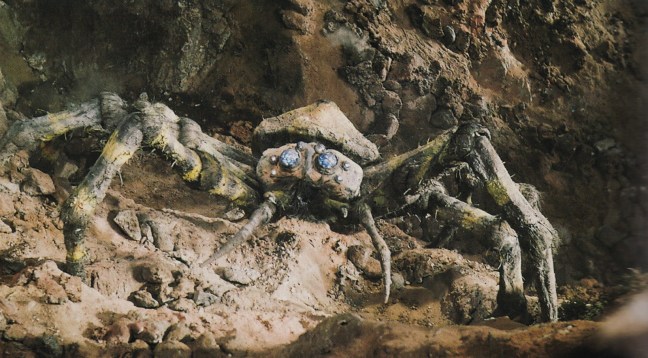
Kumonga, the main enemy in Son of Godzilla, would actually make for a decent villain in a King Kong movie.

A movie, set on a tropical Monster Island, with giant monsters battling and a team of humans struggling to survive… sounds a lot like 1967’s Son of Godzilla. The movie, which follows a scientific team conducting a weather experiment, seems to line up a lot closer than the original King Kong likely will.

The team seems a lot more military-oriented this time out.

For one thing, Kong will most likely not be traveling to the mainland this time around – as the film is set in the 1970s. If Kong went mainland, and this film shares a universe with Godzilla 2014, how come the army seems unprepared to handle giant monsters forty years after one publicly appeared? It’s not likely. Edwards already tweaked the story of the 1954 Godzilla to avoid a similar situation.

So Kong: Skull Island will likely take place entirely on the island, following a team that discovers, and likely then attempts to escape from, the creatures they encounter. There’s few films like that out there, and Son of Godzilla is one of the better ones. I would not be surprised if that film becomes a blueprint.

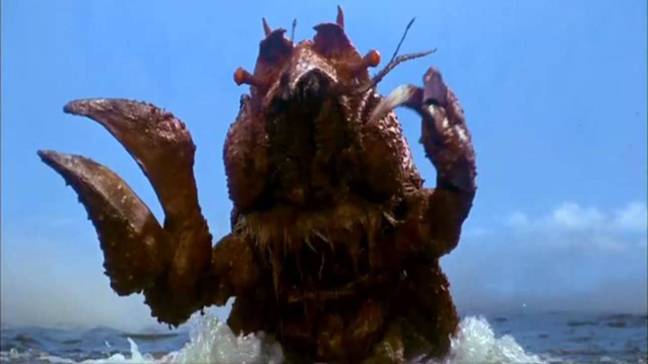
They could also use Godzilla vs. the Sea Monster as a blueprint, which would be oddly fitting.