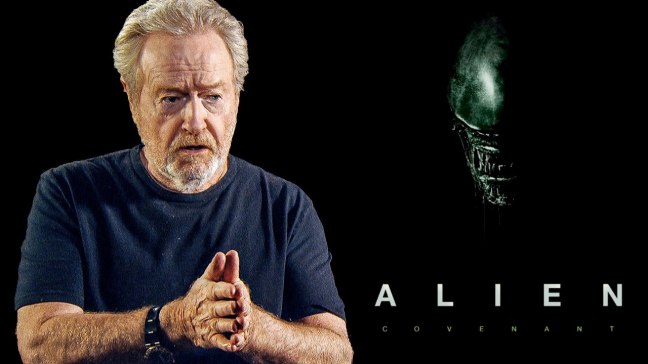
Ridley Scott has Murdered the Alien.

Horror franchises age poorly. This is a general rule and there are few exceptions. While John Carpenter’s Halloween is hailed as a classic, not many outside of horror diehards await the next installment. Ditto with genre defining pieces like The Exorcist and Silence of the Lambs. Horror sequels suffer from one inherent problem: It is never as scary the second time you see it.

Now there are some ideas that are more open for exploration and can find new ways to frighten audiences. There are also some horror sequels that are carried by excellent casting, directing, and production design. Then there are some movies that abandon the horror in favor for fun, dumb or otherwise. The Alien franchise is a horror series that has done all three.

But it’s over now.

The lifespan of the alien as a horror icon has ended. Shortened by rampant commercialization and less-than-stellar sequels, the series showed a blip of life with Prometheus before flat-lining in Alien:Covenant.  Director Ridley Scott, channeling George Lucas, has returned to murder the creation that he gave life to decades earlier. Spoiler alert: I f*cking hated watching Alien:Covenant.

The Alien is No Longer Threatening

It is true that the alien design has not been scary for years. That’s what happens with eight movies, video games, and a toy line. It is simply too familiar to be terrifying in the way it was in Alien. That said, solid film-making can overcome this deficiency. But in order to do so, the alien must remain the primary threat. This shouldn’t be hard. After all, it was billed as the “perfect organism” in the first film.

Yet the traditional alien is the least threatening aspect of Alien: Covenant. Sure it still kills ‘people’ and is fast and strong, but let’s examine the other antagonists that the film provides. First off: David, the android from Prometheus appears to have scrambled his circuits and gone insane. He is deceptive, strong, intelligent, manipulative, and can blend into the party of good guys by virtue of looking exactly like one of them.
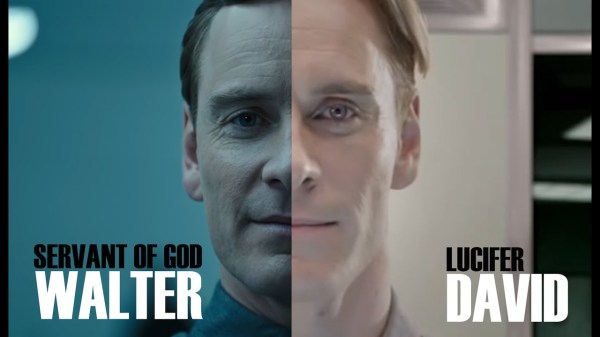
David more menacing than aliens
Is that Michael Fassbender a friend or a homicidal murder? Seems like an important and persistent paranoia-inducing question.

Alien: Covenant goes further to strongly imply that David created and can control the entire alien race. So really, he is the head of the snake, as well as a much more calculating menace.

In addition to David, we have his weaponized diseases that he took from the Engineer aliens of Prometheus. For my money, this thing is the perfect organism. It is a microscopic disease that travels quickly and is lethal upon contact/penetration with human skin. Sure, it could probably be burned up but no one ever seems to see it coming. They’re just fine until they start spurting blood and hatching monsters.

Alien Covenant Death of Alien
Not as bombastic looking but certainly more effective.

The alien comes across as nothing but a servant of a larger evil – a minion that is replaceable and expendable and, frankly, nothing more than a work in progress.  The perfect organism has fallen very far from grace. Remember that Family Guy sketch about “Bigger Jaws” – that is essentially what Alien: Covenant does. It has one-upped its monster to the point of obscurity.

Killing Prometheus and Originality

I will say this right now: Prometheus was far from a perfect movie. It suffered from a litany of problems that are very amusingly laid out in this video:

That said, Prometheus also represented a bold new direction for the Alien franchise. An attempt to distance the films from the repetitive slump they had fallen into – you know, an evil company trying to exploit the aliens for military gain. Sure we still had the evil company, but this time they’re looking into how humanity evolved and attempting to understand its origin.

Perhaps I am in the minority but I found it profoundly refreshing to not see a traditional alien in Prometheus. As I’ve said before, the design is tired. Exploring another alien race and its relationship to the aliens may be a flawed idea, but at least it was one that was open to originality.

Alien: Covenant murders this promise with the same disdain that the third Pirates of the Caribbean abandoned all ideas established in the second. The Engineers from Prometheus – they’re dead now. Any unanswered questions remain unanswered because, well they’re dead.
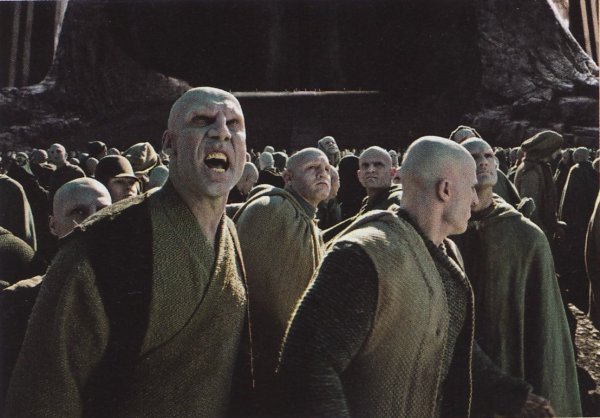
Ruining the Engineers in Alien: Covenant
The much more human-like engineers only make a cameo in Alien: Covenant. I have a question: why did they ditch their super advanced technology for monk robes and stone buildings? For such an advanced race that specialized in advanced bio warfare, they sure were open to attack.

But the Engineers aren’t the only open-ended story path being squashed. Noomi Rapace’s Elizabeth Shaw barely makes a cameo, being killed off-screen in a way reminiscent of Newt and Hicks in Alien 3. Dr. Shaw may have been a flawed character, but I spent all of Prometheus getting behind her and was genuinely curious to see where her character went.

After all, she is portrayed as an idealistic and naive scientist driven by her faith in Prometheus – a faith that is shattered by the horrific events she encounters. Logically, I could have seen her sliding into a homicidal streak more easily than the well-meaning but controlled David.
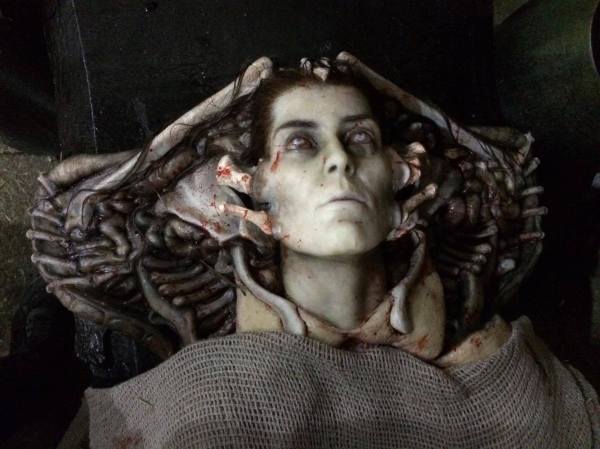
Alien: Covenant wasted Elizabeth Shaw
Instead, Elizabeth Shaw started trusting David (the android who murdered her husband) for… reasons, and then is betrayed and killed, used in David’s experiments to creation the perfect phallic monster.

Killing her off would have been more acceptable if it was to make way for stronger characters but, well, we’ll get to that in a minute.

For all its flaws, Prometheus opened the Alien franchise to expansion. Alien: Covenant was a film very determined to close off every avenue of that expansion, hastily answer the un-asked question of alien origin, and slam the series back to its tired roots of traditional xenomorph murdering space colonists.

The Lazy Writing of Bad Horror

I have been dancing around this problem throughout my review. Alien: Covenant is bad horror filled with bad horror cliches. Its cast is made up of so many characters – most of whom named – who exist without characterization. They are simply there to die. They don’t feel like people, instead serving as plot mechanics or set dressing.
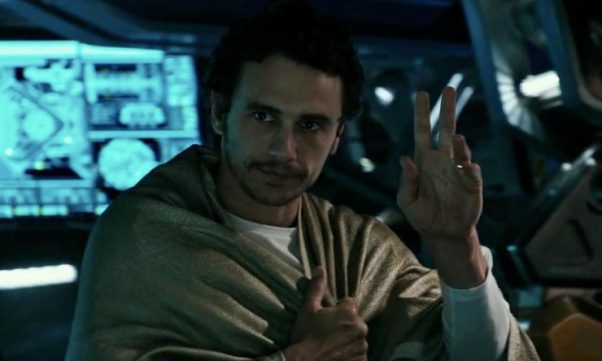
Alien: Covenant does not have characters
The bizarre inclusion of James Franco (who dies immediately in Alien: Covenant) is actually one of the better handled characters in the film.

I’ll perform a test. The main protagonist of the film is Daniels (Katherine Waterson). She is our primary good guy. She is… a woman… who was a wife… and has short hair. I cannot name a single personality trait. She’s good? She kinda looks like a knock-off Sigourney Weaver?

She is the best developed of at least 13 named crew members. Even David cannot keep up with Ridley Scott’s disregard of humanity in this picture.

There is another character who I want to point out; Oram (Billy Crudup). Oram is a man of faith, someone who takes his religion very seriously. How do I know this? Not through his personality or meaningful plot action. Instead, I know this because the film tells me – over and over and over again. Literally every scene where someone says something about Oram, they mention his faith. And it is not important at all. Oram does nothing to contribute to the plot, eventually dying to face-hugger.
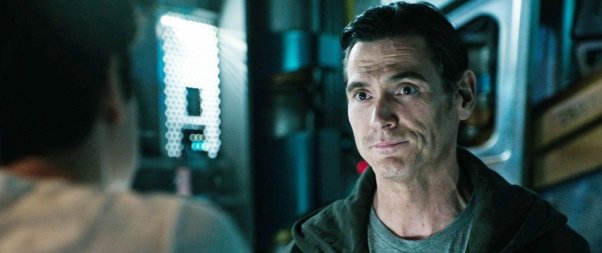
Poor writing Alien Covenant
“See this face? This is my religious face.”

I’m going to say this as someone who is not particularly religious: If you’re going to write about religion, treat it with respect. Do not tack it on as some afterthought. Perhaps Oram mattered in some version of the script but it just feels like his faith is there to take digs at. It is tacked on. If you want a better written religions figure – maybe try Elizabeth Shaw (whoops – too late for that).

The lack of characterization could have worked in a movie that was only interested in having fun, but Alien: Covenant takes itself too seriously. This is a film clearly far up its own ass with half-baked ideas of Paradise Lost and artificial intelligence. It postures and uses words, the best words, to sound smarter and inflate itself over all the other slasher films on the market.

Oh, one other character to mention – David. I loved Michael Fassbender‘s David in Prometheus. He is complex; a seemingly well-meaning creation who is disregarded by others and abused by his creator. Mary Shelly would have been proud by how well her creation was adapted into a futuristic setting.

In Alien: Covenant, David has ‘gone insane.’ This is the rationale used to justify his behavior. It is also lazy writing 101. Going insane is the overused excuse to get a character to do something that goes against earlier characteristics/motives. In Iron Man, the villain goes insane to switch from scheming business tycoon to rock ’em sock ’em robo-fighter.

It does not add to David’s character to make him pure evil – it detracts from it. He is no longer complex, he is just crazy. He hates humanity but loves its art and creation? Sure?

Alien: Covenant is a perfect example of how not to write an effective horror movie. If people don’t care about the characters then none of the horror can be particularly effective. I don’t care that the alien tore off a woman’s head – I’m still trying to recall who exactly she was.

10-insane-facts-you-probably-didn-t-know-about-heath-ledger-s-joker
For as often as it’s used, insanity is rarely done well in film writing. When it is, the results are truly memorable characters.

Ridley Scott is clearly bored with the alien concept and using it to explore other ideas. The problem is that he seems to have no qualms trashing a universe that has evolved past him. Yes, he directed the first film (and kudos for that) but the series has grown so much since then. If he truly wants to explore AI – then by all means make a film exploring that concept, but leave Alien out of it.

Perhaps he just wants people to see his movies but doesn’t trust his name anymore. Exodus: Gods and Kings was one of the last ‘original’ projects he did and most people remain blessedly unaware/unaffected by the lifeless mediocrity that was that film. Regardless, I have only one request for Mr. Scott: Leave alien and don’t come back. Maybe someone else can give it life. This is what you’re doing to your franchise:

Prejudice in Fantasy

Let me say a few quick things before we dive in. This article is not intended to be your last stop on this topic, but your first. This topic is worth researching as it reflects a shift away from Tolkien’s more simplistic fantasy archetype, as well as an important examination into issues that we as a society still struggle discussing. I’m also (with a couple exceptions) going to focus on prejudice portrayed in writing – not in the author. All righty, here we go.

Racism, prejudice, bigotry – whatever you wish to call it – has been reflected in the fantasy fiction genre for many years. Part of this comes from the simplistic nature established by the Tolkien archetype. Orcs are evil because… well, they just are. Their whole race was made from black magic with ill intent. You can read every extensive page of Tolkien lore and never find a good orc, Tolkien never envisioned one.

Tolkien orc prejudice Warcraft
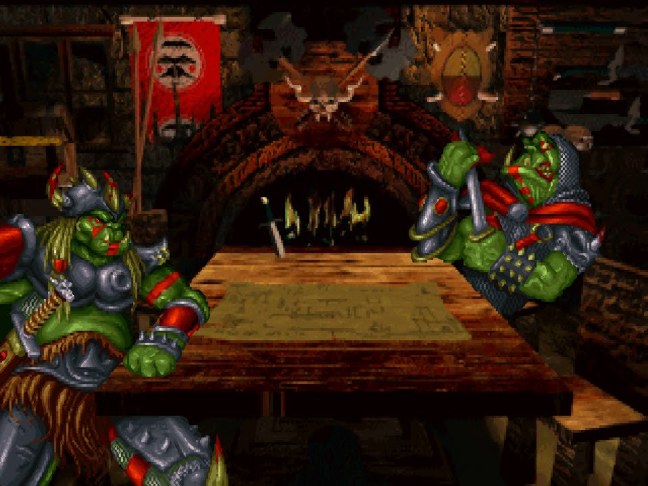
When Blizzard first created Warcraft, its orcs were also stereotypically evil. As the series evolved, this shifted to favor actual characterization and a break from the Tolkien model.

And that’s fine. Middle Earth is not ever intended to be a one-to-one comparison with our actual Earth. Its larger-than-life heroes without flaw are proof of that. The Lord of the Rings has much more in common with Greek mythology than modern day fantasy. After Tolkien, however, the problems really started. Writers, influenced by the grand epic nature of Tolkien’s world, sought to flesh out and humanize their characters… while still maintaining Tolkien’s simplistic world view.

The Unknown Prejudice of Brian Jacques

I grew up reading Brian Jacques‘ Redwall series. Books like Mossflower, Mattimeo, Mariel of Redwall – I loved them all. I was a big fan of mixing epic fantasy with local woodland creatures, somehow it helped make it more believable for me (I say this as someone raised surrounded by woods). As I grew older and the series continued, however, I began to notice things.

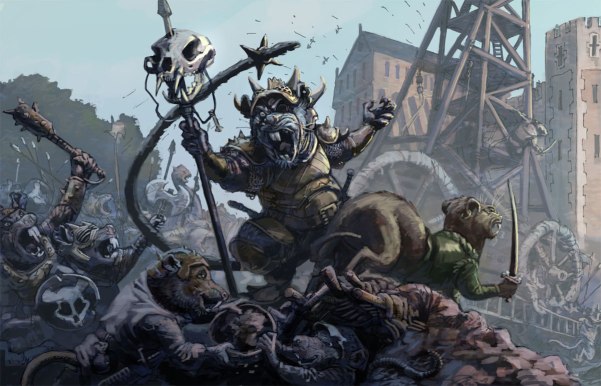
Marlfox was the novel where I first really noticed it. It seemed like certain races – rats, foxes, cats – were just destined to be evil. Wickedness appeared hardwired into their lineage. Born a fox – well too bad, you’re a monster! Every good character in Brian Jacques’ Redwall series was relatable. The mythological, Arthurian nature that was present in Lord of the Rings was nowhere here.

The problem manifested again and again with every new book – and perhaps this was the root of it. Jacques likely had never envisioned Redwall as a long-running series (22 main books when all was said and done). It is fine to have a group of murderous rats once or a thieving fox once – but as these character recur endlessly without contradiction, then an ugly commentary on racism becomes apparent.

Prejudice in Redwall
One bad rat is not a problem. A race of bad rats without a single good rat is.

I will not assume motive but the taint on the series is sadly undeniable. Whether intentional or not, Jacques has damaged the enduring charm of Redwall with, at best lazy and at worst racist, villains.

A Better Portrayal of Prejudice

There are many Brian Jacques (and unfortunately some H.P. Lovecrafts) in the fantasy genre. The inherent problem stems from a domination of white voices at the expense of minority ones. This is an issue that troubles multiple genres. A recent (2015) study found that less than 2% of science fiction stories published that year were by black authors. The odds of that happening by chance are practically non-existent.

We need to do better. If literature is as mind-opening as we claim than we have to make sure it is a medium owned by everyone. I say we because last year I attended a writers of color event and discovered – with incredible dismay – that I really had never read books that weren’t from a white author.

While there is nothing wrong with reading white authors, it is innately limiting. That meant that there was a whole perspective, whole dimensions of understanding that I was missing. It was unacceptable to me so I resolved to change it.

The Broken Earth trilogy by N.K. Jemisin is a marked improvement in the examination of prejudice in fantasy literature. Jemisin presents a world where those gifted with earth-related magic (here called orogeny) are treated with distrust, abuse, and torment. Stripped of their humanity, they are seen as less than people and too dangerous/stupid to be left on their own. They must be shackled for the good of all humanity.

Of course, The Broken Earth is told from the perspective of one of these “less-than-human creatures” and the reader can learn firsthand how nightmarish the whole system is. The lazy black-and-white nature that writers like Jacques relied on is gone. The Broken Earth Trilogy sparks thought without hitting very real issues expressly on the nose.

Dragon Age Mage Prejudice
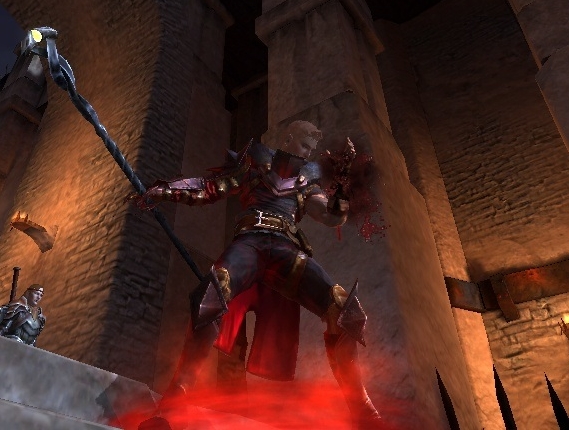
Dragon Age was a fantasy video game series with writing that was initially similar to N.K. Jemisin’s work. Its portrayal of prejudice against mages was thought-provoking and compelling… until it was dropped for the most boring black-and-white conflict that Bioware could imagine.

I believe it is incredibly important to discuss issues like racism and slavery outside of the real world. Trapping them in history confines the reality of what happened and is still happening in the world. While books like Yaa Gyasi’s Homegoing may be fantastic – and it is fantastic – they can be too easily ignored. Sometimes the best way to talk to people on tough subjects is to do so indirectly. It, at the very least, is likely to expand the audience.

I am optimistic that more new voices will enter the literary space and that genres like fantasy will deepen and improve. The presence of writers of color can only strengthen us. They will bring to light issues and ideas that we may have not thought of before and we will strengthen each other by having, for the first time, truly open exchange. Prejudice is a literary topic begging for new and better voices that offer real examination and do not simply attempt to emulate what has come before.

Rebels’ Thrawn: Turning Genius into Competency

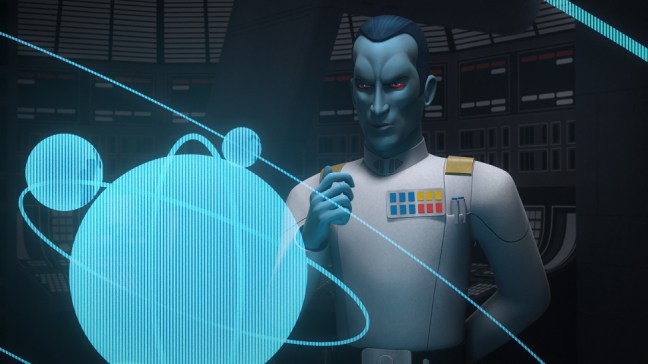
At this point, I feel my appreciation of Timothy Zahn’s Grand Admiral Thrawn is well documented. The villain first appeared in the Star Wars universe as the direct follow-up to Darth Vader and Emperor Palpatine. The success of Thrawn came from the fact that he met two conditions: 1) He had very different character traits from Vader or Palpatine. 2) He came off as no less dangerous.

Thrawn is a villain without the Force. Indeed, physically, he is not intimidating. He can fight – sure, but against a jedi it would not be a contest. Thrawn’s weapon is his intellect. He can stand in a room with Luke Skywalker and Luke will be unable to touch him, because Thrawn has calculated every scenario and anticipated every plan. The Grand Admiral’s own designs have layers upon layers upon layers of intricacy. Simply put: Thrawn has no intellectual equivalent.

Thrawn outsmarting jedi
From a graphic novel adaptation of Heir to the Empire. Thrawn’s research leads him to a way to disrupt the Force.

At least, that is how he was in the Heir to the Empire trilogy – the novels that sparked the Star Wars expanded universe (long before Disney or the prequels). Author Timothy Zahn crafted compelling new characters (Grand Admiral Thrawn and Mara Jade) that breathed life back into the Star Wars fandom. About 24 years later, Disney is rebooting the Star Wars expanded universe – hoping to capture the brilliance while whittling out the…well the not-great ideas.

I was overjoyed to hear that Grand Admiral Thrawn was to be made officially canon in Star Wars Rebels. After seeing season three (Thrawn’s introduction) however, I have doubts that the show writers are up to the task of capturing what made Thrawn compelling.

Thrawn in Rebels

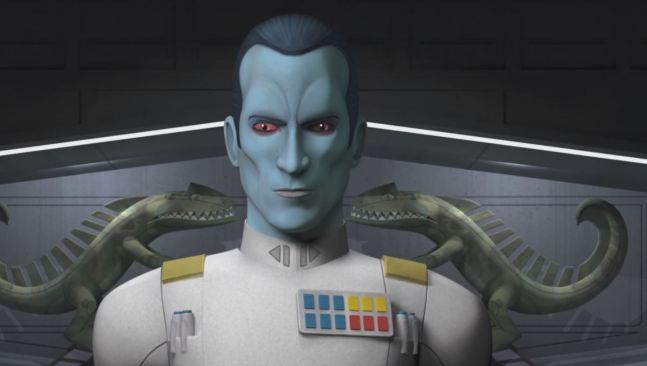
Grand Admiral Thrawn is assigned into Rebels after the unexplained departure of Darth Vader (he is hunting the rebels until he isn’t). For much of season three, Thrawn is present but passive. He observes but rarely acts. When he interacts with the rebels, one of two things happens. Thrawn “lets them go” or he turns over their handling to a subordinate…who promptly fails, allowing the rebels to escape. Neither of these courses of action paint Thrawn as a genius.

Plans without Payoff

The former could have done so with appropriate payoff. Early on in the season, Thrawn captures a family heirloom of Hera’s and seems very intent on learning about her family and culture. Later on, Thrawn lets Commander Sato escape after learning the extent to which the man values family.

The problem here is that neither of these developments are revisited in season three. Thrawn never utilizes his knowledge of Hera’s family to out-think her and never manipulates Sato’s dedication to family. Nope, instead he just finally figures out where the rebel base is and attacks it. That’s it. For a master of planning, Thrawn is incredibly simple.

Dork-Side-Rebels-Review-Zero-Hour-7
Given Commander Sato’s death at the end of season three, it is very unlikely that Thrawn’s information gathering will ever be worth it.

So…why does Thrawn let them escape? It comes off as masked incompetence rather than cleverness. Thrawn is merely spinning his failures to sound more positive. “I didn’t let them get away… I wanted this! Yeah, yeah that’s it!”

In addition, a subplot of season three centers around Agent Kallus, an imperial agent turned rebel spy. While Thrawn learns of Kallus’ true loyalties fairly quickly, he does nothing to use this information to his advantage. This despite a scene where Thrawn says he will do exactly that. I believe the line is “Agent Kallus will have far more use as a rebel spy” or something like that. But nothing comes of it in terms of payoff – Thrawn never feeds Kallus false information and Kallus eventually leaves to join the rebels. In literary terms, this is loading a gun without ever firing it. What was the point?

Star-Wars-Rebels-Thrawn-Featured-03202017
I also find it hard to believe that Thrawn, who meticulously studies art, would not immediately notice a removed planet in a map he had been researching.

The “Stupid Watson” Syndrome

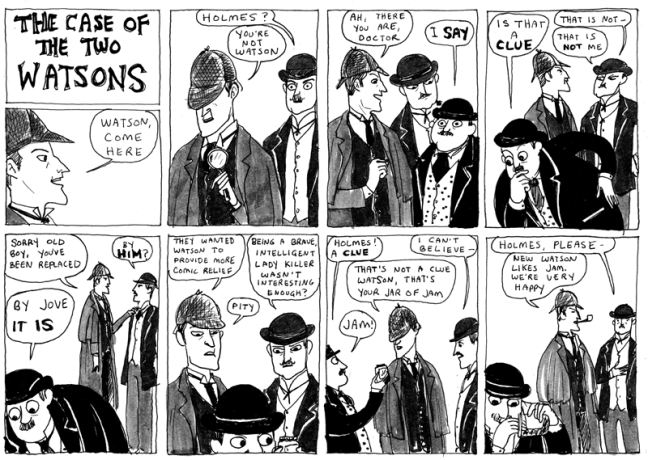
I credit pointing out the “Stupid Watson” syndrome to author and cartoonist, Kate Beaton. In the early Sherlock Holmes movies of the 20th century, Watson is re-imagined from a clever doctor to a bumbling sidekick with juvenile-or-senile levels of intellect. While it’s good for a chuckle, it raises a question: “Why does Holmes hang out with this guy? Isn’t this creating more work for him?”

Stupid Watson syndrome

The answer is that it was lazy writing. Rather than make Holmes look like the genuine genius he is, they paired him with a moron to amplify his competence and make even mundane actions look intelligent. In Rebels, the show writers did a similar thing with Thrawn.

Thrawn continually hands off command to people who promptly screw up – much as Sherlock Holmes in the old movies continually gave Watson tasks, which he promptly screwed up. The problem here is that the genius stops looking smart when he repeatedly places idiots in charge.

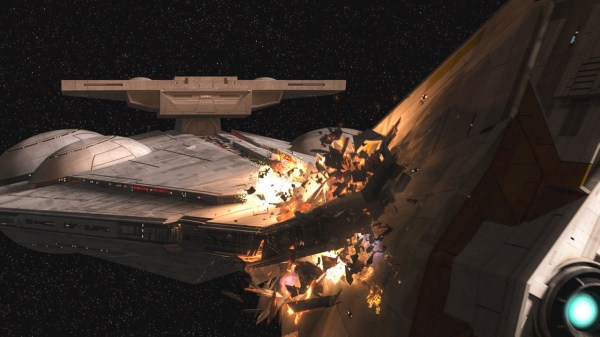
It also is uncharacteristic of a mastermind. In the season three finale, Thrawn begins by overseeing command of the bombardment of the rebel base. He then hands off that command to go down to the surface so that he can accept the rebel surrender. For a macro-manager, this is an odd choice. Why abandon the position of control? It also gives the writers an easy way out. Thrawn didn’t lose the battle – Governor Price did. This isn’t Price’s first failure so why – with the situation so crucial – does Thrawn again give her command?

Star-Wars-Rebels-Thrawn-1-09202016
Only fools keep around other fools whom they can pass the blame onto.

It would be one thing if this new Thrawn was supposed to be different from the original, but Disney has taken pains – including bringing back Timothy Zahn to write a new origin story – to recapture Thrawn’s evil genius. They want the compelling character who gave birth to the expanded universe. Unfortunately, at least in season three, Rebels writers have not been up to the task of writing genius. The Thrawn in Rebels is so far only a pale shadow of his literary predecessor – he is nowhere near as interesting and less than half as threatening. Let us hope they can turn it around in season four.