How to Train Your Child to Love Dragons

Dragons have fascinated humanity for millennia. No matter which part of the world you travel to, odds are the indigenous culture had at least one myth devoted to these beasts. While some may run to conspiracy, the logical explanation for widespread dragon mythology is dinosaur bones… or are dinosaurs a cover-up for dragons?!

They’re not. Dinosaurs have always existed but it’s easy to forget that we’ve only started formulating scientific study on these fossils during the last couple centuries. Before then, they were just giant bones – proof that our planet once held strange and amazing animals.

The natural mystery of the dinosaurs gave birth to arguably the greatest fantastical creation of all time. One that symbolizes our creative spirit as a species and adds an element of wonder to our collective consciousness. So, in my mind, passing on this love of dragons is essential in healthy human development.

After all, I love dragons and I consider myself a well-balanced individual (twitch).

Early Childhood

If you’re trying to get your child to love anything then start early. I don’t mean ramming dragons in the face of your baby and screaming “like it!” – rather, maybe just choose books and films that are age appropriate. Luckily, popular culture has you covered.

In terms of movies, recent hits like Pete’s Dragon and The Chronicles of Narnia: Voyage of the Dawn Treader both feature friendly, nonthreatening creatures. Another obvious choice is the How to Train Your Dragon series from Dreamworks Animation.

If I may state a personal preference and a loved childhood memory, I would recommend Flight of Dragons. This light, whimsical fantasy gives dragon flight and fire a pseudo-science explanation and features a lot more elements of the genre. Talking animals? Got it. Ogres – yeah there’s one. James Earl Jones voicing the villain who turns into a giant monster – okay, we’re onto something here.

Also, it’s got this song:

Yeah, that will be in your head awhile. It’s a wonderfully meta film, choosing the author of the source book as a main character. And speaking of books, you don’t get much more famous than The Hobbit. Read that to your child and I guarantee, apart from the giant spiders, Smaug will be a highlight.

In terms of other books, really you can’t go wrong. There are so many dragon stories out there. I would also advise purchasing those giant picture books – like World of Dragons or something. They’re image focused so literacy isn’t a barrier, and the better ones feature drawings that will compel the development of a healthy imagination.
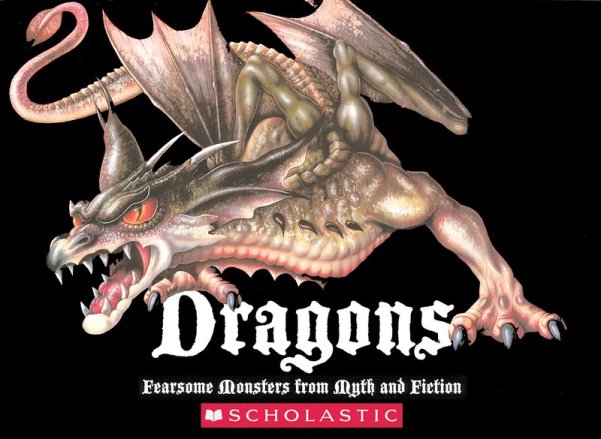
children dragons
One of the coolest aspects of dragon lore is how many different shapes and designs the creature can take. Try to look for literature that highlights each vision.

The tweens

As kids age, “cool” starts to matter more. Everyone wants to be cool – gotta do the cool things to be cool. However, they’re not quite teenagers yet so, you know, parents have yet to become the exact opposite of cool. So you can still make recommendations but the best bet is just making things available for consumption.

A film like Dragonheart, while rated PG-13, is perfect for this age range. After all, you can’t get much more awesome than Sean Connery voicing a dragon. It’s a little more violent without being Game of Thrones and the sexual innuendos will likely fly over your childrens’ heads… like a dragon, get it? I’m very clever.

Notable books include easy reads like Harry Potter, stuff your child can devour and process easily, helping to fuel not just a love of dragons but a greater affection for reading in general.
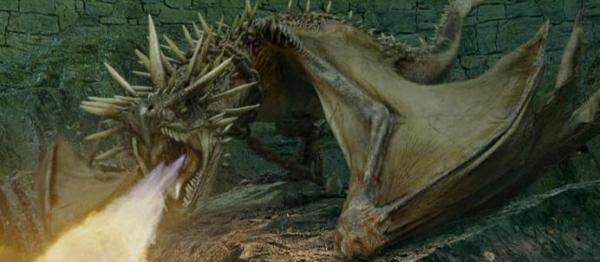
Harry Potter children dragon
Harry Potter ages along with the series, but its never particularly terrifying or overtly mature.

Teenage Years

Okay, now you’re not cool anymore. Being a teenager is all about being rebellious. Are they old enough to watch Game of Thrones? Doesn’t matter, they’ll likely watch it anyway.  However, this desire to revolt can be capitalized on with some appropriate dragon literature.

Gork the Teenage Dragon is every story of young adult high school trauma and liberation only… you know, with dragons. We follow Gork, a young, smaller dragon who is too nice for his own good. This hurts his chances of winning a female for the mating dance (a more straight forward name for “prom”) and impressing his family.

Gork has no idea what he wants to be but he feels the enormous pressure to be great. Typical teenager stuff, just substitute the people for dragons.

teenage dragon books
I feel the cover gives an excellent indication of the overall tone of this story.

The Magicians trilogy also provides dragons in more mature setting, although parents have to be comfortable exposing their child to teenage sex and drug use – if anything, it can be seen as prep for actual high school.

At this point, more scholarly works like Beowulf may also be attempted. Video games like Dragon Age also, as the name suggests, feature dragons very promptly. And I think it’s safe to assume that Skyrim will still be being released on new systems, even ten years from now.

And there you have it. Obviously there’s more to cover. I haven’t even scratched the surface of dragon pop culture.

I don’t claim to be an expert on the subject but I like to think that I still remember what it was like to be a child. Dragons are amazing creatures of power and mystery. These are qualities that I believe are attractive to children. Keep in mind, you don’t always have to go traditional.

As I mentioned in the beginning, dinosaurs are part of dragon lore and can easily expand the overall love of fire-breathing winged beasts. There’s also Godzilla, who is pretty amazing and fights other dragon-like creatures on a regular basis. I’m just saying.

https://www.youtube.com/watch?v=bNdCT6Tx5sg

Alice: a Visit to Wanderland

Okay, it’s October and I am already well behind my horror blog writing. This month, as with every October, I will be reading exclusively horror – either books that are in the horror genre or have many horrific elements. This year I have chosen to kick things off with Alice: The Wanderland Chronicles by J.M. Sullivan. As some of my more astute readers may have already noticed, Wanderland Chronicles is another book from Dreamcatchers publisher, Pen Name Publishing. Rest assured, I shall endeavor to remain objective.

So, first thing’s first: I don’t care for Alice in Wonderland. It’s not that I hate it, I have just never invested in Lewis Carroll’s universe the way that some others have. While I’m a big fan of fantasy, I’m also a big fan of logic… something that vanishes rather quickly as we journey down the rabbit hole. It is impossible to deny the impact that Carroll has made on writing and on imagination. Nevertheless, it’s never been my tea party.

Alice: The Wanderland Chronicles
I actually liked Tim Burton’s Alice in Wonderland, which I felt brought a more sensible plot to Carroll’s world. That said, I think we can all agree that the film would have benefited from less Mad Hatter.

Yes, but what if there’s zombies?

This the question author J.M. Sullivan asked when she re-imagined Carroll’s world as post-apocalyptic fantasy. Gone are the over-sized rabbits and the disappearing cats. In their place are the Momerath, virus-infected human beings with a bad temper and an appetite for human flesh.

And it’s not Wonderland anymore, it’s Wanderland – or what’s left of Phoenix. No rabbit hole required for entry. All that Alice Carroll (see what she did there?) needs to do to get in is simply walk… and not die. That’s the rules for Wanderland: keep walking, try not to die, and stay on the good side of the Red Queen.

Wonderland vs. Wanderland

While Wanderland Chronicles abandons much of Lewis Carroll’s nonsensical scenery, its characters nearly all have counterparts. Apart from Alice, Wanderland inhabitants include Chess – a boy with unnaturally quick reflexes, Bug – a surveillance expert with a passion for smoking, and Dr. Matt Hatta – I’ll let you figure that one out on your own. And, of course, the kill-happy Red Queen.

For the most part, Sullivan does an admirable job fitting these characters into their new roles in the zombie-filled wasteland. The only unfortunate side effect is that it does make the plot fairly predictable, something that takes all the air out of any tension she is trying to build. We know before she leaves what Alice will find in the Wanderland. Luckily, the book’s climax does add some twists away from the source material.

aliceinzombieland
The idea of mixing zombies into Alice in Wonderland is not new. Wanderland Chronicles, however, does a better job of it than the fanart of the internet.

Writing in Wanderland

J.M. Sullivan crafts strong characters with believable (love triangle excluded) emotions and reactions in Wanderland. Her Alice is a fun protagonist, if one who goes from introvert to extrovert very quickly. Chess, Nate, and the Red Queen round out a compelling support cast. The plot hops along at a brisk pace, never dallying in any location too long.

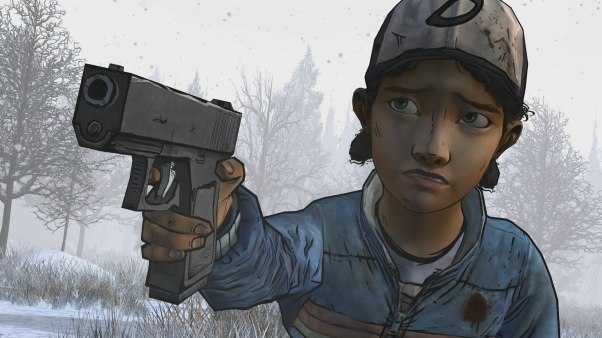
twdclementine_feature
If I were to compare Alice to another protagonist in the world of zombie fiction, it would be Clementine.

If I have any complaint about the writing, it is that it violates the “less is more” rule. This is author J.M. Sullivan’s first book and I could tell that she didn’t trust her language, often repeating or going too simple. I’m from the school that taught me to avoid repetitive words on a page. Never give two sentences of explanation when one will do. Lewis Carroll owned the lingo of his fantasy, but this is the area of all others where J.M. Sullivan feels like a tentative tenant.

I hope that, in the sequel, she finds a stronger voice to suit her strong protagonist.

https://www.youtube.com/watch?v=QXSjeBuCCzU

Alice: The Wanderland Chronicles won’t make you a believer in the zombie genre – it’s not World War Z. For those who don’t care for either Lewis Carroll’s world or horrific undead cannibals, I would advise giving this one a pass. That said, any out there who enjoy a fun zombie-filled romp should sink their teeth in. Wanderland Chronicles is the perfect popcorn to open up a fun-filled October.


Prejudice in Fantasy

Let me say a few quick things before we dive in. This article is not intended to be your last stop on this topic, but your first. This topic is worth researching as it reflects a shift away from Tolkien’s more simplistic fantasy archetype, as well as an important examination into issues that we as a society still struggle discussing. I’m also (with a couple exceptions) going to focus on prejudice portrayed in writing – not in the author. All righty, here we go.

Racism, prejudice, bigotry – whatever you wish to call it – has been reflected in the fantasy fiction genre for many years. Part of this comes from the simplistic nature established by the Tolkien archetype. Orcs are evil because… well, they just are. Their whole race was made from black magic with ill intent. You can read every extensive page of Tolkien lore and never find a good orc, Tolkien never envisioned one.

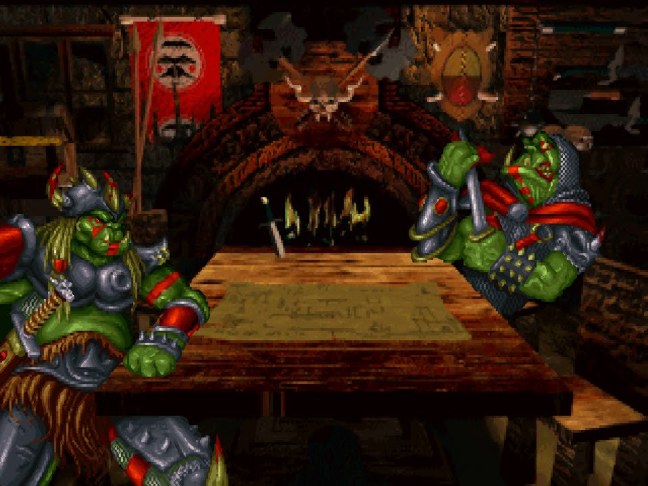
Tolkien orc prejudice Warcraft
When Blizzard first created Warcraft, its orcs were also stereotypically evil. As the series evolved, this shifted to favor actual characterization and a break from the Tolkien model.

And that’s fine. Middle Earth is not ever intended to be a one-to-one comparison with our actual Earth. Its larger-than-life heroes without flaw are proof of that. The Lord of the Rings has much more in common with Greek mythology than modern day fantasy. After Tolkien, however, the problems really started. Writers, influenced by the grand epic nature of Tolkien’s world, sought to flesh out and humanize their characters… while still maintaining Tolkien’s simplistic world view.

The Unknown Prejudice of Brian Jacques

I grew up reading Brian Jacques‘ Redwall series. Books like Mossflower, Mattimeo, Mariel of Redwall – I loved them all. I was a big fan of mixing epic fantasy with local woodland creatures, somehow it helped make it more believable for me (I say this as someone raised surrounded by woods). As I grew older and the series continued, however, I began to notice things.

Marlfox was the novel where I first really noticed it. It seemed like certain races – rats, foxes, cats – were just destined to be evil. Wickedness appeared hardwired into their lineage. Born a fox – well too bad, you’re a monster! Every good character in Brian Jacques’ Redwall series was relatable. The mythological, Arthurian nature that was present in Lord of the Rings was nowhere here.

The problem manifested again and again with every new book – and perhaps this was the root of it. Jacques likely had never envisioned Redwall as a long-running series (22 main books when all was said and done). It is fine to have a group of murderous rats once or a thieving fox once – but as these character recur endlessly without contradiction, then an ugly commentary on racism becomes apparent.

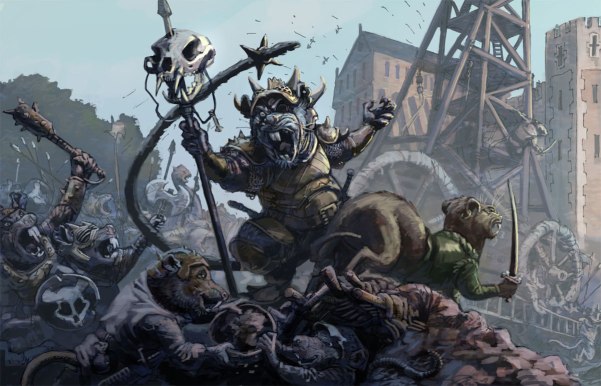
Prejudice in Redwall
One bad rat is not a problem. A race of bad rats without a single good rat is.

I will not assume motive but the taint on the series is sadly undeniable. Whether intentional or not, Jacques has damaged the enduring charm of Redwall with, at best lazy and at worst racist, villains.

A Better Portrayal of Prejudice

There are many Brian Jacques (and unfortunately some H.P. Lovecrafts) in the fantasy genre. The inherent problem stems from a domination of white voices at the expense of minority ones. This is an issue that troubles multiple genres. A recent (2015) study found that less than 2% of science fiction stories published that year were by black authors. The odds of that happening by chance are practically non-existent.

We need to do better. If literature is as mind-opening as we claim than we have to make sure it is a medium owned by everyone. I say we because last year I attended a writers of color event and discovered – with incredible dismay – that I really had never read books that weren’t from a white author.

While there is nothing wrong with reading white authors, it is innately limiting. That meant that there was a whole perspective, whole dimensions of understanding that I was missing. It was unacceptable to me so I resolved to change it.

The Broken Earth trilogy by N.K. Jemisin is a marked improvement in the examination of prejudice in fantasy literature. Jemisin presents a world where those gifted with earth-related magic (here called orogeny) are treated with distrust, abuse, and torment. Stripped of their humanity, they are seen as less than people and too dangerous/stupid to be left on their own. They must be shackled for the good of all humanity.

Of course, The Broken Earth is told from the perspective of one of these “less-than-human creatures” and the reader can learn firsthand how nightmarish the whole system is. The lazy black-and-white nature that writers like Jacques relied on is gone. The Broken Earth Trilogy sparks thought without hitting very real issues expressly on the nose.

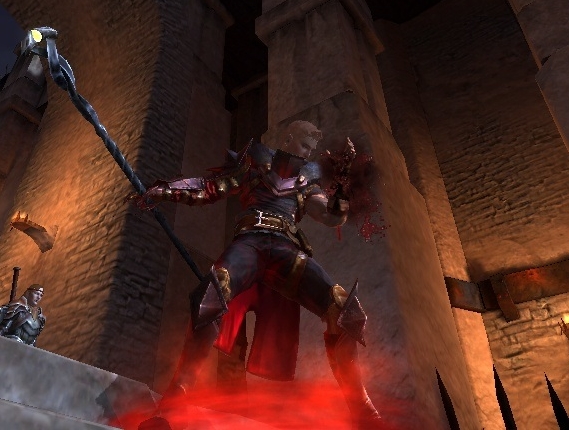
Dragon Age Mage Prejudice
Dragon Age was a fantasy video game series with writing that was initially similar to N.K. Jemisin’s work. Its portrayal of prejudice against mages was thought-provoking and compelling… until it was dropped for the most boring black-and-white conflict that Bioware could imagine.

I believe it is incredibly important to discuss issues like racism and slavery outside of the real world. Trapping them in history confines the reality of what happened and is still happening in the world. While books like Yaa Gyasi’s Homegoing may be fantastic – and it is fantastic – they can be too easily ignored. Sometimes the best way to talk to people on tough subjects is to do so indirectly. It, at the very least, is likely to expand the audience.

I am optimistic that more new voices will enter the literary space and that genres like fantasy will deepen and improve. The presence of writers of color can only strengthen us. They will bring to light issues and ideas that we may have not thought of before and we will strengthen each other by having, for the first time, truly open exchange. Prejudice is a literary topic begging for new and better voices that offer real examination and do not simply attempt to emulate what has come before.