The Dreamcatchers: A Journey in Cover Design

The Dreamcatchers is out and available now, so it is easy to miss all the work that went into bringing the final product into your hands. Since I’ve already written about my writing style and inspiration sources for The Dreamcatchers, I thought today that we might focus on the exterior. You know what they say: “You can’t judge a book by its cover!”

While they may be right – You can’t – it doesn’t mean that many people don’t. Creating a compelling book cover is important. It is nothing less than the reader’s first impression of your work. Some writers may be good illustrators (or at the very least graphic designers) but, for most of us, creating a good cover means stepping outside our comfort zone.

It is one of the first times we bring our work to someone else – Ask them to judge it – and then, even more disarmingly – Ask them to create something new from it. Lightning doesn’t always strike the first time either.

Let me take you through the book cover creation process for The Dreamcatchers:

Capturing the Right Tone

I’ve always loved reading fantasy. It is hands down my favorite genre to dive into. When I think of what intrigues me about this writing, it is the promise of impossible adventure. I am about to enter a world that isn’t my own, no matter how real it feels. But how do I pick which fantasy to read?

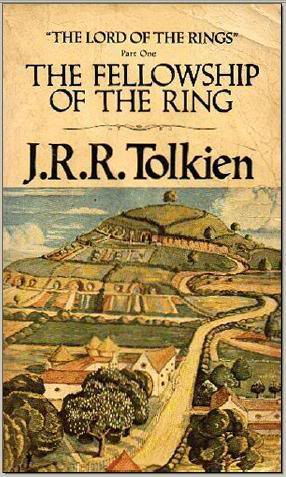
…I usually go by the cover. To me, the most intriguing books have cover designs that look like windows into the imagination. I always loved The Lord of the Rings‘ cover art. It provided an immediate visualization of Middle Earth:
cda77dfca51feb179d6847d14e14cfc4

So, when it came time for The Dreamcathers, naturally I wanted to do the same thing. This proved a challenge. Setting a story in dreams lends itself to some surreal imagery. Just choosing one dream felt too limited. I also didn’t want to use the world of the dreamcatchers, since I felt that, out of context, they would look too alien and sci-fi.

My publisher was also concerned about the audience. The Dreamcatchers contains frightening chapters and its core audience is in their teens. Perhaps something as family-friendly as Tolkien or J.K. Rowling wasn’t the best idea.

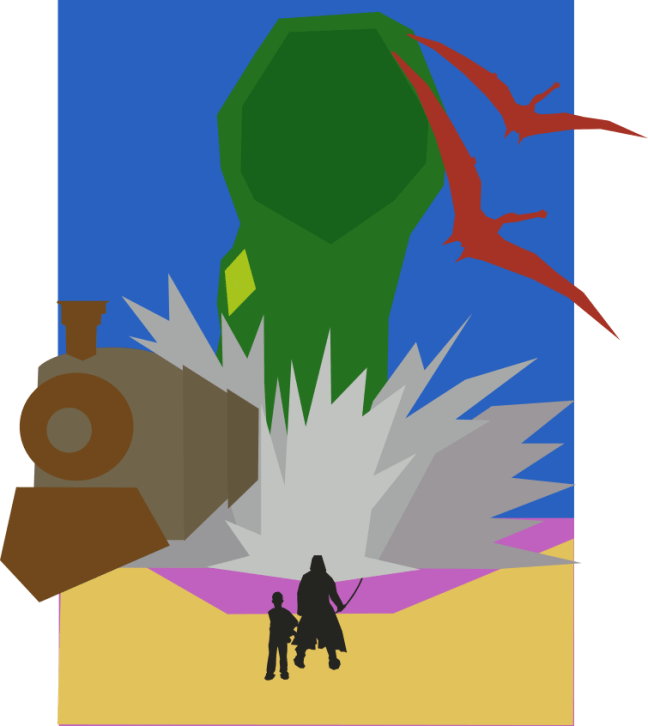
I was convinced to go more abstract – and I think it was the right decision. But, for any out there curious, I had a friend do a rough mock-up of my original Dreamcatchers cover design, and here it is:
The Dreamcatchers original cover
Those who have read the book can hopefully recognize certain elements of the story. The base outline for Vakarian was actually lifted from a The Hobbit: The Battle of the Five Armies poster.

The Essence of Story

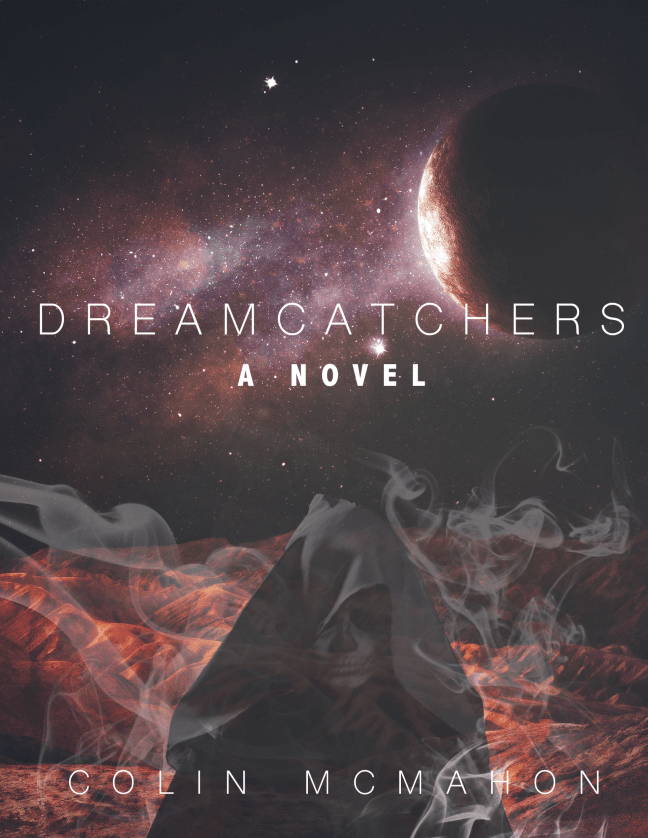
Being abstract posed its own challenges. While The Dreamcatchers is a fantasy, it is not the traditional one. There is no magic, no castles – instead, it is set primarily in a space-like realm filled with humanoid characters. Seeing the issue? Doesn’t that sound a little science-fiction-y? The early cover art definitely tended toward an outer space feel:
dreamcatcher7

While this rough outline has some potential, I felt it was just too jarring. The colors evoked Mars more than anything ethereal and the hooded figure was too sinister (had we decided to work from this mock-up, the face would have been a difficult change). The planet and stars in the background are also out-of-place.

Overall, I was worried that someone looking at this cover would get the impression that The Dreamcatchers was a sci-fi horror story. Going a little more abstract didn’t help:

dreamcatcher4o2

It became clear that my messaging was getting garbled. I wanted to show readers a new world – this was true. But it wasn’t a place they could reach in a space ship.

When you’re working with your illustrator, you must be clear. They’re busy people and likely yours isn’t the only project on their plate. This disconnect was being caused by a breakdown in communication. My illustrator, the Happy Writing Co., only understood half of what I wanted, so the illustrations fit this mold.

As author, I had to articulate the essence of The Dreamcatchers in a way that made sense. The right cover had to entice in a way that conveyed mystery, otherworldly experience and, above all, the surreal. At the same time, the reader needed an entry point. Vakarian, being a nefiri dreamcatcher, wasn’t the best person for the job.

So, it turned to Tony.

The Writer’s Gift of Communication

Writers may not always believe it, but we have a gift of communication. I’m not saying we’re all amazing speakers, but we possess the ability to put words to paper – and that’s pretty great. We also know our stories, inside and out. Remember that when dealing with your own publisher: No one knows your story better than you.

I didn’t want to focus on any one dream of Tony’s, but I wanted the idea of him dreaming to be conveyed on the cover. I also wanted the reader to know that where he was going wasn’t safe. At first, I think I went too heavy handed with my image suggestion. Together with Happy Writing Co., we settled on an initial idea:

dreamcatchers4

As you can see, we hadn’t even bought the full image yet. We were still in testing with the mock-ups. Despite looking a bit alien-y, I knew we had a winner. It just needed some dressing. There needed to be something more:
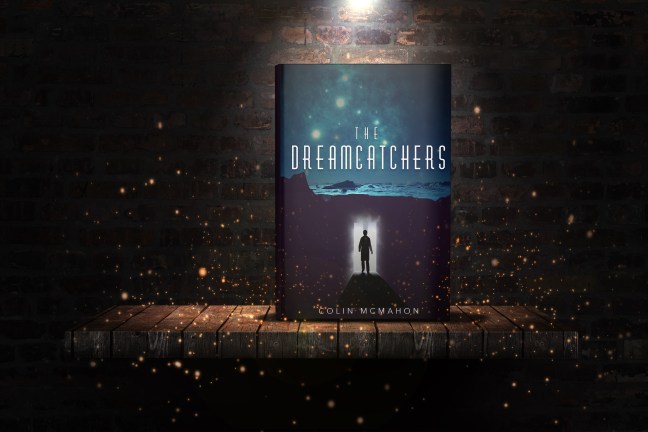
dreamcatchersmagical

And you know the rest. There are other designs that I didn’t show but hey, never reveal all the secrets, right?

The final result was incredible – a cover that entices and feels like something new, without going too far on the science fiction. I could not be more happy with how The Dreamcatchers‘ cover turned out. The Happy Writing Co. – who was unbelievably patient – did an amazing job and deserves the credit. They hit it out of the ballpark.

I hope this look inside The Dreamcatchers‘ cover selection process has been enlightening and given you some advice for when you pursue your own publication. Remember, illustrators are people and should be treated as such – you’re a team so try not to butt heads. Great things can be accomplished when you’re aligned and working toward a common goal.

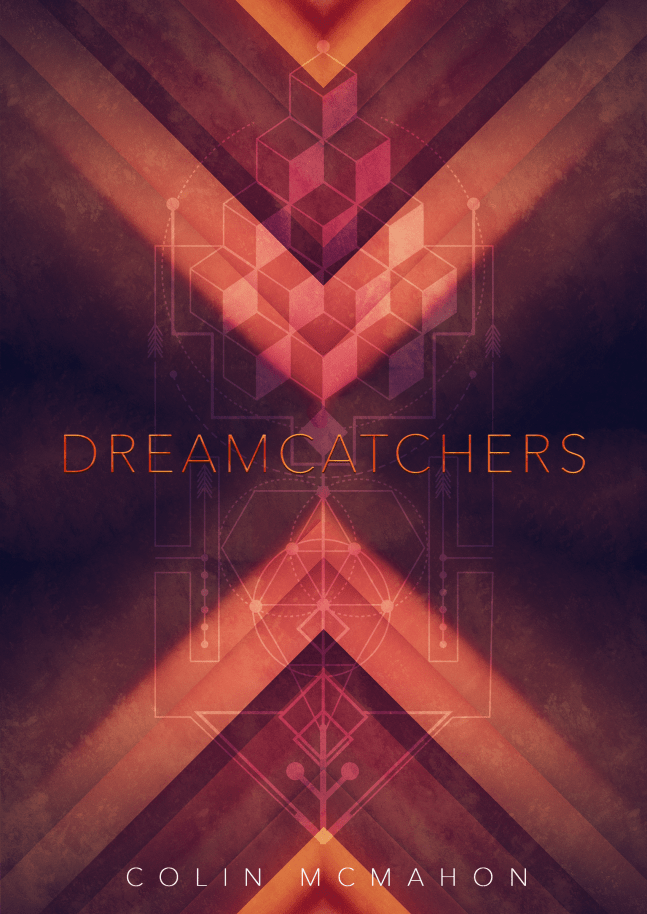
Now, before you go, enjoy one more mock-up:
dreamcatchers5.png

Oh, and if you’re intrigued, you can pick up your own copy of The Dreamcatchers right here!

The Witches: Finding Narrative in History

I recently had the task of reading Stacy Schiff’s The Witches (full title is The Witches: Salem, 1692). I write “task” instead of “pleasure” for two reasons. First, I can’t honestly say I enjoyed reading 400 pages about a mass hysteria that turned into tragedy and gross injustice, in which 20 innocent people lost their lives. Second, I wasn’t really sure if I liked it while I was reading it.

I think Stacy Schiff had an incredible challenge: Bring the reader into Salem, 1692 – introduce them to all relevant characters – outline what happened in the order that events occurred – and give appropriate backstory/information whenever needed. Considering the cast begins with 20 victims (to say nothing of accusers and judges), that’s a lot of people to wrangle.

Now that I’ve finished, I’m on the positive side – I liked Schiff’s The Witches. However, I do feel that it has an interesting battle, and that is narrative vs. history. Throughout the book, I felt the two were constantly at war with one another in Schiff’s writing. She would attempt to give each chapter a narrative, but in the end most felt bogged down by superfluous information.

It was great for historical relevance but not so much for storytelling. So I want to write about that: How does a nonfiction writer balance the battle between history and narrative?

The challenge of finding a narrative

To begin, it depends on what you’re researching. Schiff begins her book by stating that the puritan settlers of Massachusetts were studious record keepers…except when it came to 1692. This means that she had to fill in a lot of gaps. To give contrast, I’m reading another piece of nonfiction right now called Console Wars: Sega, Nintendo, and the Battle that Defined a Generation (quite a topic change, I know) and, not only is this book discussing much more recent history, the author had the ability to actually interview most who were directly involved.

So, right away Schiff’s writing must rely heavily on inference and intuition, which can blur the line between fiction and nonfiction. This may sound like an advantage when it comes to establishing narrative but think again. Most historical nonfiction authors have two priorities: Get it right and make it interesting.

Schiff was immediately challenged with the first priority. When the information isn’t readily available, more research is needed. She had to expand her scope – bring in tangentially related information. When developing a narrative, widening your scope is the last thing you want to do.

A plot is often a very simple thing that is then dressed up by character, setting, and other elements. For example, Star Wars can be boiled down to “hero saves galaxy” without losing its essence. The plot of the Salem Witch Trials is that innocent people were wrongly accused and convicted of an impossible crime – but how do you get there when many details (in some cases whole defenses) have been omitted or destroyed.

A weak plot begs for outside help – but that outside help can overwhelm and distract from the initial goal of writing the story. You see this in fiction – certain authors can fall more in love with “world building” than with telling a story. If too much attention is paid to details – or supplemental information – without enough devoted to core knowledge, the story can fall flat. In short – it won’t be interesting.

But with a topic like the Salem Witch Trials, is that even possible?

Does history need a narrative?

It is difficult for me to write about Stacy Schiff’s The Witches without getting lost in the history. This is, to me, essential knowledge for every American (or at least my fellow Massachusetts residents). Today, my state likes to hold itself up as a land of reason, science, and logical debate (…and sports teams), so it is an important reminder that we have come a long way, and that there were serious consequences when we abandoned our better senses.

Schiff The Witches
This monument sits in Danvers, Massachusetts – which used to be known as Salem Village.

So, which such a packed slice of history – does narrative really matter? Isn’t simply recounting the trials enough? I would say no. Schiff’s biggest triumph is that she brings her reader into the mindset of the 1962 puritan. Through this lens, we are better to understand truly what happened – beyond the simple order of events.

Saying that innocent people died in the Salem Witch Trials is like saying the Holocaust happened. It loses a lot of its resonance and meaning without discussing the “how” and the “why.” These events cannot be made simple by vague summation. Even growing up, I thought that disasters like these happened because of “evil people” or something like that.

Evil people don’t exist and believing they do only opens the door for more bigoted leaders to come to power. In what narrative she can salvage, Schiff presents Salem as a dark place in more ways than one. The people they are constantly afraid. Real world dangers such as disease and Native Americans mix with supernatural ones like the devil and demons. Add to it a poor understanding of science and a constant persecution complex and this community was ripe for disaster.

But even that isn’t the whole picture. There were grudges to be settled, opportunists doing whatever they could to get ahead, teenage women suddenly thrust into a position of power, wrongs to be avenged, and simply matters of colonial politics.

Again – it’s a lot. What happened over a couple months needs the preceding years to explain it in proper context.

I’ll leave these thoughts with this question. What is more interesting, saying Giles Corey was executed for witchcraft, or this:

The final impact of Stacy Schiff’s The Witches 

In the end, I feel that Schiff’s The Witches is a weak narrative saved by its historical significance. Given her obstacles, I think she did the best she could. Much of the real procedure has been lost, letting us only speculate as to the true nature of this delirious period of history. We have an incomplete picture but, through her supplemental research, Schiff goes a long way to fill in the gaps.

I just wish it didn’t derail the main action so much. It also doesn’t help that each chapter is roughly 40 pages – or that one of her asides was to mention Albus Dumbledore from the Harry Potter series (in the same chapter that discusses alleged sex abuse in 1692 Salem – I’m not kidding).

The many origins and inspirations of The Dreamcatchers

This is the third post on the creation of The Dreamcatchers. I already wrote on the initial origins (where the idea came from, how the dreamcatchers’ appearance was based off Marvel villain, Dr. Doom) and how the book took on a new identity as it evolved, but today I wanted to do a deep dive. Let’s talk more about everything Dreamcatchers, answering so many questions. My goal is to provide you with an inside look at my writing process and even my inner mental workings.

So, without further ado – let’s talk about The Dreamcatchers!

Character names

Every author will tell you that a character’s name matters. It becomes part of their larger personality and an easy mental association as you write. Having the name nailed down can call to mind a fully formed image of the character in your mind.

“Oh, I’m writing about so-and-so! That’s easy! They look like this and they act like this because of what happened years ago, plus this person they met…” You get the idea – the name becomes a mental bookmark in your brain. It marks the start for a chapter detailing your entire character.

So choosing the right name matters. When I began writing Dreamcatchers, I wanted to convey that most of the main characters weren’t human right away. So, I chose names that, for the most part, sounded very alien to me. What better place to start than one of my favorite video games of all time, Mass Effect.

Vakarian Dreamcatchers
“I’m Garrus Vakarian and I was an inspiration for The Dreamcatchers!”

To better humanize Dreamcatcher – give him a life outside of his job – I decided to name him after long-time wing man and BFF Garrus Vakarian. This name grab served another purpose besides honoring a game series. I wanted Vakarian to be balanced. Garrus is always a constant in the Mass Effect series – a character who can be depended on time and time again. That was also my vision for Vakarian. At his best, he is in control and there for his fellow squad mates – just like Garrus.

When it came to the other nefiri, most came to me as I wrote, without one single source of inspiration. There were three exceptions. Fidel, a.k.a. Duckie, was named after a close friend of mine – using her last name instead of her first. Romaniuk has similar origins.

Then there was Zarel – specifically his codename, The Midnight Phantom. When I was younger, I used to attend a camp in Maine called Birch Rock Camp. This place had local legends – stories the campers and counselors told to entertain ourselves. One of my favorites was the Midnight Phantom, a prankster who would move stuff around during the night. You could always tell he’d been there because he would leave his initials – MP.

Since Zarel was intended as a comic relief, I felt that the Midnight Phantom was a natural fit for his codename. In regards to his appearance – I went a different route: ‘

Gorefiend Zarel Dreamcatchers
It’s tough to get captures from old games but Gorefiend’s picture is in the upper left.

Warcraft II was my favorite video game growing up, in large part due to its incredible art style. One NPC – Teron Gorefiend – had what looked like a disfigured face, hidden largely by a scarf and his hood. This image has stuck with me throughout the years and, when the time came, I felt it was a terrific basis for Zarel’s facial structure.

Quick side note: Gorefiend’s yellow hood also inspired the choice of female dreamcatcher garb.

The technology

Part of what I loved most when writing The Dreamcatchers was their technology. On the one hand, it’s very traditional fantasy. A big part of this is the lack of traditional firearms, which made sense to me since there is no gunpowder in their world. To compensate, many dreamcatchers still use bows, namely crossbows. But this does not mean they’re outdated.

At every other turn, I wanted the nefiri to come off as a technically advanced race. Part of it is there world structure. It isn’t easy to navigate the Nether, and Inspiration is even more hazardous. To get around, the nefiri had to be hardy and capable of building impressive machines.

Some of this notion came from Eoin Colfer’s Artemis Fowl series. I’ve always loved how he blended the fantastical with the technological, so I sought to strike a similar balance. If Colfer’s faeries could adapt to a challenging world, then so could my nefiri.

Dreamcatchers damsel pod
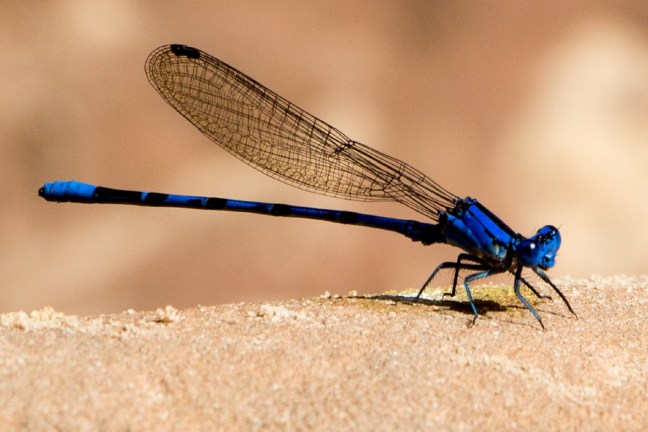
The damsel pods were based off of damselflies and have similar designs.

The villain

Incubus was a lot of fun to write as well, in part because he was one of the rare points when I got to project beyond the The Dreamcatchers. To all of you who have trouble understanding what exactly he’s talking about, all I can say is – just wait. After you read The Night Terrors, go back and check his dialogue. You won’t be disappointed.

I knew early on that I wanted him to be a shapeshifter. This comes from my own experience as a lucid dreamer. When I was fighting back against my nightmares, I noticed the more persistent ones had the ability to change forms, adapting to whatever would scare me the most. How nice of my subconscious to put in that extra effort.

In regards to Incubus’ appearance in the Inspiration, I used two primary sources. The first was Hayao Miyazaki and his demons from Princess Mononoke. The second once again came from Marvel. Anyone watching recent movie trailers might have seen this one:

Venom and Carnage are my two favorite Spider-Man villains. I love how their bodies change to fit the situation (like arms turning into weapons). When I was thinking of how Incubus’ skin should look outside of the dream, the texture of the symbiote was in my head.

The music I wrote to

A lot of authors listen to music when we write. I’ve always found that it helps shut out the world and allows me to focus more on the story in front of me. My goal with musical choice is to have it enhance the scene I’m writing. For starters, when Tony and Vakarian fly, I wanted to use something inspirational. The initial teaser music for How to Train Your Dragon 2 was a perfect fit:

Vakarian’s final showdown with Incubus was another moment very charged with musical influence. The initial fight in Inspiration had multiple parts. The showdown with the omen was inspired by part of the Transformers: Dark of the Moon soundtrack. Vakarian’s fight with Incubus came from a sampling from V for Vendetta.

As for the fight in the Dream itself? Well, that actually came from The Hobbit: The Battle of the Five Armies. I loved all the imagery surrounding Bard and Smaug. The idea of this single lone warrior against an overwhelming force really summed up what I wanted the final fight to feel like. As much, the music from this scene also factored into The Dreamcatchers finale:

Lastly, we need to talk about Tony and Fidel’s victory moment. Since the book has just come out, I don’t want to go too much into spoilers. For this particular point, I reached back to one of my favorite scenes as a kid and used the corresponding music:

https://www.youtube.com/watch?v=I0WaiRulyoY

So there you have it! There’s more – so much more to say – but I hope this has satisfied at least some of your curiosity when it comes to the novel writing process. Writers are like sponges. We absorb the art around us and transform it into something new (or at least try to).

Writing a novel is a process, equal parts inspiration from without as well as within. Not all ideas fit together well, and that’s part of the trick. I don’t think I ever would have used anything from Dragonball Z in a “serious” story but for a fantastical adventure like The Dreamcatchers, it made perfect sense.

As a storyteller, feel out ideas by tone and try to group them accordingly. You’ll find it may help!

That’s all for now. If you’ve bought a copy of The Dreamcatchers –  thank you so much for reading it! I hope you found it as entertaining to read as I did to write. I’ll leave you now with one teaser. A look ahead to The Night Terrors. As with Dreamcatchers, I’m using music to help write certain scenes. Here is one of the tracks I’ve been listening to a lot:

As always, if you’d like to get your own copy of The Dreamcatchers, it is available on Amazon and Barnes and Noble. Ta ta for now!