Why I blog

It’s funny to think that I’ve been blogging for years but, in all that time, I’ve never once sat down and wrote out why I’m doing this. I mean, if you’re here then you can probably guess the first reason: I like to write. I don’t know of a single author that doesn’t. And – surprise, surprise – even I don’t want to scribble down notes about fantastical worlds all the time, so blogging provides a refreshing alternative.

But it’s more than that. Blogging is a very public form of record keeping. If I just wanted to record private thoughts, I’d stick to my diary (which I update very infrequently these days). Instead, I publicly share thoughts, opinions, and stories with family, friends, and strangers.

Why?

Well – it’s definitely not because I think I have anything truly special to say. My opinions, even my controversial ones, are far from unique. And I’m far from the most eloquent person on the planet – but I guess that’s part of it.

Writing Practice

I was taught that writers had to do two things: read and write. I work very hard to keep up with both of these demands. Blogging serves to satisfy the latter requirement. Novel writing is fun but tiring. Since I write in fantasy, I always have to be careful to keep my worlds straight. The last thing I want to do is defy history or leave a logic gap that doesn’t make sense with my characters.

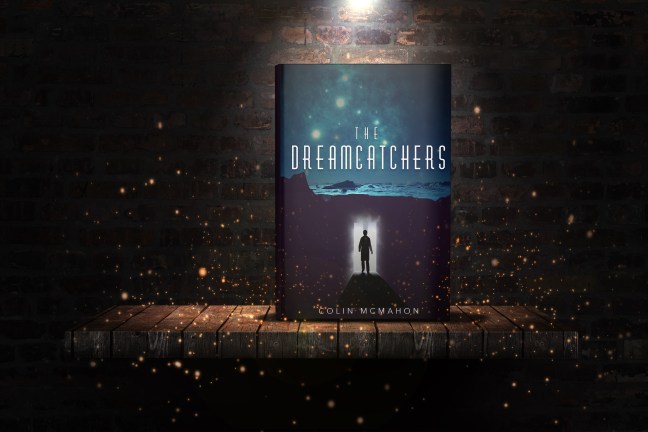
It’s intense, and it’s a long process. The Dreamcatchers took years from its first scribbles to final publication, and Monsters Among Us and The Night Terrors still have a ways to go before they’re ready to be read. I don’t believe I’m the first author to be occasionally demoralized by the sheer scope of it all.

blogging writer's block
Blog writing can be a good way to dodge my inevitable writer’s block.

Writing a blog allows me to keep strengthening my “muscles” while enjoying a rapid success. I spend an hour instead of a year and immediately get the satisfying reward of publicly publishing something.

It’s helps me to feel a sense of accomplishment in that long period between publications. And it lets me feel a little better about myself during those weeks when I don’t make the progress I would like. Blog writing is like doing leg stretches when you’re supposed to be training for a marathon. It’s not the most productive thing I could be doing, but it certainly doesn’t hurt.

Working on Critical Thinking

A lot of the blogs I write are opinion posts, and there’s a reason for this. I have found that writing down an opinion greatly helps me get my thoughts in order. Almost everyone can say whether they liked something or not – it’s an emotional reaction we have. I’ve found, however, that fewer people can articulate their exact reasons. For a lot of people – including some of my friends – something is either “awesome” or “terrible” and that’s about it.

Not that there’s anything wrong with this. Honestly, sometimes I envy it. I doubt they’ve ever woken up at 3 AM and then stayed awake because they couldn’t stop thinking about how bad Alien: Covenant was (such a waste of potential!!). What I do definitely feels obsessive on at least one level.

But it’s helpful. When I watch a movie, read a book, or play a game – I always try to think about the storytelling structure. More than that, I usually try to identify what I liked, what I didn’t like, and what I would do to improve. I’ve found this exercise helpful when it comes to my own writing.

Godzilla vs. Megalon critical thinking
Most people probably don’t think critically about the storytelling in Godzilla vs. Megalon. In this regard, I am not like most people.

Blog writing is the final reinforcement. It’s like when I went to college – I’d remember the general idea of something if I just listened to the professor but, if I really wanted to memorize specifics, writing it down made it clearer.

I know art is subjective, but I try to write as objectively as possible (most of the time) to improve my critical thinking skills. Time will tell how helpful it is.

Charting Personal Growth

I am human. I will never claim otherwise. This means that I am a flawed individual. I make mistakes, do dumb things, write dumb articles – I’m far from perfect. If I were to list every blog post that I have had second thoughts about, this article would be either a short novella or a long short story.

That said, I find an advantage to recording my thoughts at the time. I feel that some people today have wrong expectations – they demand perfection from themselves and everyone else all the time. I don’t believe this should be our goal as a species. While it’s important to always try to do the right thing, it is just as important (in my view) to be constantly learning.

Personal growth through blogging
One of my favorite quotes: These are words I try to live by.

I have learned so much since I started writing this blog. I hope that I have been growing in a positive way that will make me a more mature, compassionate, and well-rounded individual. I’m not sure – but I’m doing my best. Going forward, I plan to write more explicitly about my growth and about how I’m still dealing with some of the more complex issues in today’s society.

I mean, all this is great but I still haven’t answered my main question: Why a public blog? Why do I put all this out there for the judgment of other people?

It’s who I am. I’m a writer – my job is to entertain and enlighten. Hopefully, at the end of my life, I will be able to look back and say I did both of these things. That or got filthy rich and made a real life Jurassic Park…one of the two.
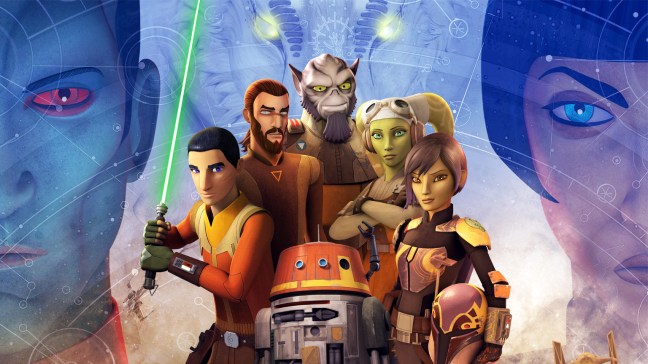
 

What Writers can learn from Star Wars Rebels

Last night, I finished watching Star Wars Rebels. The adventures of Ezra Bridger and company came to a close and, overall, I think I will look back on the series with a general thought of “It was all right, but I felt like it could have been so much more.”

The season 4 finale in particular had me scratching my head and sighing, feeling like a letdown after the superior writing of the mid-season finale. The sad part is, after the season 3 finale, I wasn’t surprised.

Star Wars Rebels hopes to teach its audience many lessons about life, morality, and consequences. However, I think it best serves as a message to writers and, unfortunately, I believe it will go down as a cautionary tale more than anything else. Let’s focus on the writing of Rebels and break down exactly what I’m talking about (warning: spoilers to follow).

The Importance of Payoff

When I think of Rebels, I label it as a show that raises many good questions and ideas. Ezra is a jedi trainee outside of the temple – at a time when temptations to the dark side should be at their peak. After all, he’s relatively powerless against overwhelming odds, and his chief drive is to protect his new family. On top of that, he’s a young kid in the middle of a war. Sound familiar?

Ezra Anakin Rebels Writing
The parallels between Anakin and Ezra aren’t hard to spot.

And the show seems to be aware of this. We see Ezra tempted by the dark side. In pervades all of season 2 and is the dominant theme. Kanan is worried, stormtroopers are mind tricked into murder/suicide – it seems like Ezra’s “soul” is in real danger.

Then he meets Maul and Kanan gets blinded and…that’s it? The temptation of the dark side effectively vanishes for the remainder of the show, despite having numerous opportunities to resurface. This makes Ezra look incredibly strong-willed, which is odd because he doesn’t seem to really mature much elsewhere. He is still impetuous, he’ll still do anything for his friends, he still is placed in many life-and-death situations.

But the payoff never comes. Star Wars Rebels does this with an art form – build to events that never happen. Let’s go through the seasons. Season 1: Pretty solid – actually not much to report there. Season 2: The temptation of the dark side – payoff: Kanan gets blinded by Maul and Ezra is forever “cured.” Season 3: The rebels face Thrawn, who continually lets them go – referencing a larger plan – Payoff: Thrawn stumbles onto their base through unrelated events. Season 4: Lothal is revealed to be deeply connected to the Force, including force wolves and a portal that controls time – payoff: Ezra calls in some space worms from season 2 to save the day…?

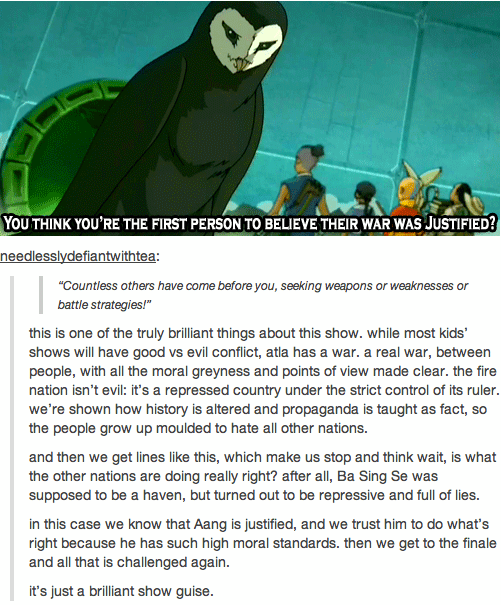
Yeah it’s not great. Throughout its four season span, Rebels continually raises plot lines that it doesn’t pursue to conclusion. It isn’t the first show to do this, nor will it be the last. Thematically, it is more challenging to explore a theme in its entirety – but also much more rewarding. In Avatar: The Last Airbender, the audience gets the feeling that the two writers really thought about war, violence, and resolving conflict. Almost every aspect is thoroughly explored, and I never once got the impression the writers were talking down to me.

a33

If Star Wars Rebels can teach you anything about writing, it should be that plot threads should be fully developed ahead of time (or refined in editing) to erase most of the dangling story points.

Creating Characters with Arcs

All through season 4, there was one character I was wondering about: Zeb Orrelios. Namely, the thought on my mind was “What happened to him?” Zeb has no character-focused episodes in the final season, instead sitting on the sidelines. I also started thinking about his character. Throughout the series, he did have several arcs – he found his people, persuaded Agent Kallus to rebel against the Empire (really easily), and…that’s it.

And while Zeb had his character arcs – I couldn’t really figure out what he ever did for the main plot. He was always there, it’s true, but his stuff felt very superfluous. Kallus’ betrayal never amounts to much (he’s in season 4 even less than Zeb). In the greater struggles of Rebels, Zeb is a passive character, largely just along for the ride. He could have left at any point without making a noticeable impact. There is no “it” that he has that the other characters don’t.

And I feel like this is true of a lot of the main characters in Rebels. Their arcs are general or barely there. How does Sabine Wren really change from the first to the last episode? How does Hera? Most characters are very static – with only small deviations (hey remember that time Sabine left the rebels for all of three episodes?).

Even Ezra – the main character – does the bulk of his changing in the first season, going from a loner to a team player. He doesn’t really sway much past that point. Many character arcs relate to the goals of the story. Here is a chart:

d029d166310134ce34fbbc9ecb15c104

Most of the characters never go through this change, in part because many don’t have serious flaws to be corrected. In much the vein of traditional Star Wars archetypes – the good guys are good and the bad guys are bad (in every sense of the word). It fits but…eh, it’s a bit dull for a series.

The Importance of an Intimidating Villain

I’ve already written about this in an earlier post on Thrawn, as well as touched upon the broader writing lessons in my ‘Beat Up Your Heroes‘ post – but it bears repeating here. The villains of Rebels were typically dull and uninteresting. Part of this was the movie armor. Darth Vader is imposing as heck but then…stops pursuing them? The rationale is never given.

Likewise, it is a joke by this point that stormtroopers can’t aim, but Rebels elevates this to laughable heights. The final episode features stormtroopers firing – and missing – a stationary target roughly five feet in front of them. It would be okay if I didn’t think the show wasn’t trying to be serious – but you can’t have serious when your standard villains are less threatening than unarmed children.

The rebels are never beat up – for an oppressed group, they seem to be doing very well for themselves. Only one of them dies, and even then it feels more like the will of The Force than the actions of the villains.

Star Wars Rebels villain writing
Whoever gave this woman control of anything more powerful than a teacup should be fired.

If you want the hero’s victory to feel incredible, they’ve got to earn it. Rebels ends with a James Cameron’s Avatar moment: The intergalactic threat is defeated and just…leaves? Never comes back? What? It’s a happy ending but it doesn’t feel like an earned ending. With everything at stake on Lothal – why would the Emperor, a dude so evil he looks like Satan, let Lothal go?

Also if that’s all it took to free Lothal then they could have done it seasons ago – just saying.

Managing Escalation

At its heart, I think the Rebels‘ writing team had a real problem managing the escalation of stakes. When it was a little show about a small group of rebels on one backwater planet, resisting whatever the Empire had time to throw at them, it was believable and fun.

Toward the end, they were blowing up star destroyers left and right and crippling whole operations like it was nothing. How did these guys not single-handedly defeat the Empire?

There is one episode in season 4 where they fight 2 trandoshan slavers (one voiced by Seth Green doing his Cobra Commander voice) and they struggle. I mean, it takes them a whole episode to capture the freighter. While I liked this hearkening back to the first season’s scale, it stuck out to me. Why were they having so much trouble with 2 non-military personnel?  After all I’d seen them do?

I could go on – and I’ll probably reference Rebels again in future articles. For now I will just say this: A lot of good stories can be ruined by laziness or sloppiness. I don’t think Rebels was ruined, but it was never great. If it wasn’t Star Wars, I don’t think people would have been as hooked.

When writing your stories, manage your payoffs – keep character arcs in mind – and write to suit escalation.

The many origins and inspirations of The Dreamcatchers

This is the third post on the creation of The Dreamcatchers. I already wrote on the initial origins (where the idea came from, how the dreamcatchers’ appearance was based off Marvel villain, Dr. Doom) and how the book took on a new identity as it evolved, but today I wanted to do a deep dive. Let’s talk more about everything Dreamcatchers, answering so many questions. My goal is to provide you with an inside look at my writing process and even my inner mental workings.

So, without further ado – let’s talk about The Dreamcatchers!

Character names

Every author will tell you that a character’s name matters. It becomes part of their larger personality and an easy mental association as you write. Having the name nailed down can call to mind a fully formed image of the character in your mind.

“Oh, I’m writing about so-and-so! That’s easy! They look like this and they act like this because of what happened years ago, plus this person they met…” You get the idea – the name becomes a mental bookmark in your brain. It marks the start for a chapter detailing your entire character.

So choosing the right name matters. When I began writing Dreamcatchers, I wanted to convey that most of the main characters weren’t human right away. So, I chose names that, for the most part, sounded very alien to me. What better place to start than one of my favorite video games of all time, Mass Effect.

Vakarian Dreamcatchers
“I’m Garrus Vakarian and I was an inspiration for The Dreamcatchers!”

To better humanize Dreamcatcher – give him a life outside of his job – I decided to name him after long-time wing man and BFF Garrus Vakarian. This name grab served another purpose besides honoring a game series. I wanted Vakarian to be balanced. Garrus is always a constant in the Mass Effect series – a character who can be depended on time and time again. That was also my vision for Vakarian. At his best, he is in control and there for his fellow squad mates – just like Garrus.

When it came to the other nefiri, most came to me as I wrote, without one single source of inspiration. There were three exceptions. Fidel, a.k.a. Duckie, was named after a close friend of mine – using her last name instead of her first. Romaniuk has similar origins.

Then there was Zarel – specifically his codename, The Midnight Phantom. When I was younger, I used to attend a camp in Maine called Birch Rock Camp. This place had local legends – stories the campers and counselors told to entertain ourselves. One of my favorites was the Midnight Phantom, a prankster who would move stuff around during the night. You could always tell he’d been there because he would leave his initials – MP.

Since Zarel was intended as a comic relief, I felt that the Midnight Phantom was a natural fit for his codename. In regards to his appearance – I went a different route: ‘

Gorefiend Zarel Dreamcatchers
It’s tough to get captures from old games but Gorefiend’s picture is in the upper left.

Warcraft II was my favorite video game growing up, in large part due to its incredible art style. One NPC – Teron Gorefiend – had what looked like a disfigured face, hidden largely by a scarf and his hood. This image has stuck with me throughout the years and, when the time came, I felt it was a terrific basis for Zarel’s facial structure.

Quick side note: Gorefiend’s yellow hood also inspired the choice of female dreamcatcher garb.

The technology

Part of what I loved most when writing The Dreamcatchers was their technology. On the one hand, it’s very traditional fantasy. A big part of this is the lack of traditional firearms, which made sense to me since there is no gunpowder in their world. To compensate, many dreamcatchers still use bows, namely crossbows. But this does not mean they’re outdated.

At every other turn, I wanted the nefiri to come off as a technically advanced race. Part of it is there world structure. It isn’t easy to navigate the Nether, and Inspiration is even more hazardous. To get around, the nefiri had to be hardy and capable of building impressive machines.

Some of this notion came from Eoin Colfer’s Artemis Fowl series. I’ve always loved how he blended the fantastical with the technological, so I sought to strike a similar balance. If Colfer’s faeries could adapt to a challenging world, then so could my nefiri.

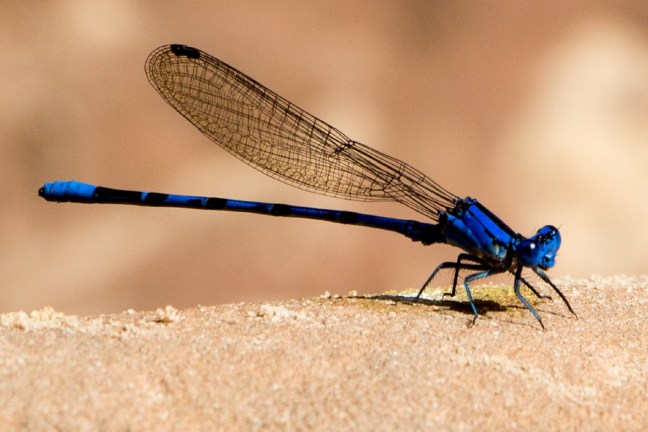
Dreamcatchers damsel pod
The damsel pods were based off of damselflies and have similar designs.

The villain

Incubus was a lot of fun to write as well, in part because he was one of the rare points when I got to project beyond the The Dreamcatchers. To all of you who have trouble understanding what exactly he’s talking about, all I can say is – just wait. After you read The Night Terrors, go back and check his dialogue. You won’t be disappointed.

I knew early on that I wanted him to be a shapeshifter. This comes from my own experience as a lucid dreamer. When I was fighting back against my nightmares, I noticed the more persistent ones had the ability to change forms, adapting to whatever would scare me the most. How nice of my subconscious to put in that extra effort.

In regards to Incubus’ appearance in the Inspiration, I used two primary sources. The first was Hayao Miyazaki and his demons from Princess Mononoke. The second once again came from Marvel. Anyone watching recent movie trailers might have seen this one:

Venom and Carnage are my two favorite Spider-Man villains. I love how their bodies change to fit the situation (like arms turning into weapons). When I was thinking of how Incubus’ skin should look outside of the dream, the texture of the symbiote was in my head.

The music I wrote to

A lot of authors listen to music when we write. I’ve always found that it helps shut out the world and allows me to focus more on the story in front of me. My goal with musical choice is to have it enhance the scene I’m writing. For starters, when Tony and Vakarian fly, I wanted to use something inspirational. The initial teaser music for How to Train Your Dragon 2 was a perfect fit:

Vakarian’s final showdown with Incubus was another moment very charged with musical influence. The initial fight in Inspiration had multiple parts. The showdown with the omen was inspired by part of the Transformers: Dark of the Moon soundtrack. Vakarian’s fight with Incubus came from a sampling from V for Vendetta.

As for the fight in the Dream itself? Well, that actually came from The Hobbit: The Battle of the Five Armies. I loved all the imagery surrounding Bard and Smaug. The idea of this single lone warrior against an overwhelming force really summed up what I wanted the final fight to feel like. As much, the music from this scene also factored into The Dreamcatchers finale:

Lastly, we need to talk about Tony and Fidel’s victory moment. Since the book has just come out, I don’t want to go too much into spoilers. For this particular point, I reached back to one of my favorite scenes as a kid and used the corresponding music:

So there you have it! There’s more – so much more to say – but I hope this has satisfied at least some of your curiosity when it comes to the novel writing process. Writers are like sponges. We absorb the art around us and transform it into something new (or at least try to).

Writing a novel is a process, equal parts inspiration from without as well as within. Not all ideas fit together well, and that’s part of the trick. I don’t think I ever would have used anything from Dragonball Z in a “serious” story but for a fantastical adventure like The Dreamcatchers, it made perfect sense.

As a storyteller, feel out ideas by tone and try to group them accordingly. You’ll find it may help!

That’s all for now. If you’ve bought a copy of The Dreamcatchers –  thank you so much for reading it! I hope you found it as entertaining to read as I did to write. I’ll leave you now with one teaser. A look ahead to The Night Terrors. As with Dreamcatchers, I’m using music to help write certain scenes. Here is one of the tracks I’ve been listening to a lot:

As always, if you’d like to get your own copy of The Dreamcatchers, it is available on Amazon and Barnes and Noble. Ta ta for now!