Growing up, I have always been drawn to the storytelling ability of video games. Bioware’s Knights of the Old Republic may have been the first game I played that fully immersed me into the idea that video games could be an advanced form of storytelling, one that merges reader/player and protagonist. Years later, their Mass Effect trilogy made that idea into a reality. With Mass Effect: Andromeda, the question becomes: What new directions will the storytelling go?
Most every major developer in the world of video games has a skill sets their company apart. Want to play a polished game with years of development clearly invested: go Valve or Blizzard. Want a cooky sandbox-style game that plays with morality in a delightfully childish way: contact Peter Molyneux (whatever company he happens to be a part of). Feel like you’re in the mood to play an NFL simulator: well, too bad because EA Sports still holds exclusive rights so it is Madden or nothing. Everyone has strengths. With Bioware, the company has made its reputation on immersive, choice-driven stories. The company exploded into the public spotlight with Knights of the Old Republic, a Star Wars game that featured the greatest twist since Empire Strikes Back.
Since then Bioware has built worlds filled with entangling plots, diverse characters, and morality systems. Of course, the games themselves have evolved over time – and Bioware has made improvements accordingly. Real-time combat has replaced turn-based strategy and advanced animation allows for characters to express more personality. Storytelling is also able to be much more seamlessly integrated into the gameplay, although Bioware’s style has been to use non-playable cutscenes to attain a cinematic quality. How have the stories themselves been? Great! Stellar really across the board, give or take a few complaints. Yet as with any company, there is room for improvement. Here are three areas where Bioware can succeed at even higher levels:
1. Villains
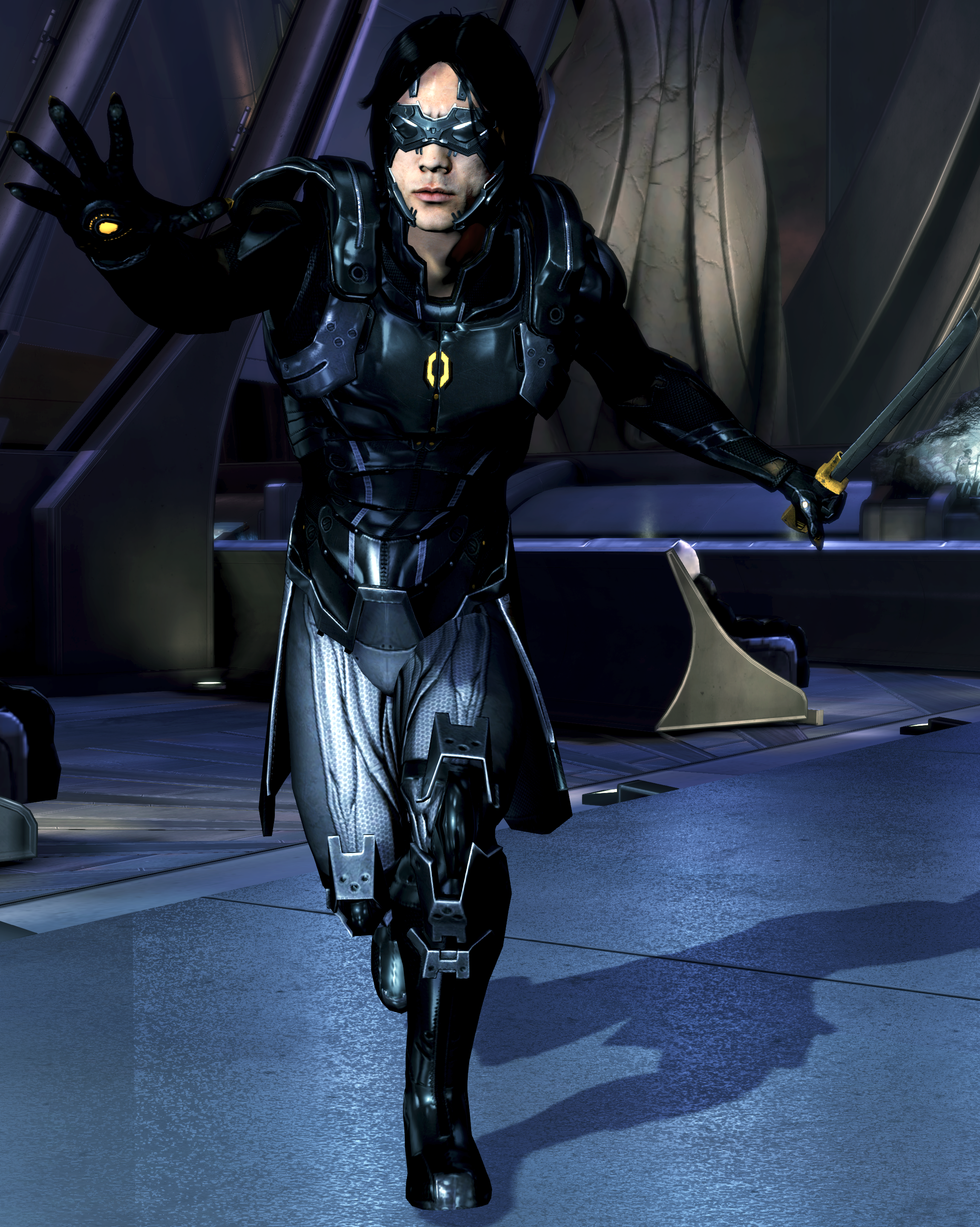
For all the impressive companions that the Bioware writing staff develops, the villains… leave a little to be desired. Not to say that every enemy has been a bore by any stretch, Master Li (Jade Empire) and the Illusive Man (Mass Effect 2 & 3) are definite highlights. Yet for every interesting antagonist, there are two others that just do not work. Kai Leng, the Archdemon, and Corypheus are all prime examples of one-dimensional villains. The player understands that these people are evil because… there needed to be a villain in there somewhere? Motivation breathes relatability and frankly, a lot of Bioware villains just seem to be jerks. A good villain is hard to do well and there needs to be gray area to allow the player to see things from their perspective, even if they do not agree with it. In certain cases, Bioware has tried to give a villain dimension.
Kai Leng looks like he leapt right out of the pages of fanfiction.
The greatest example is Teyrn Loghain, one of the main antagonists in Dragon Age: Origins. Early in the game, the player is trying to help the king win a battle against the darkspawn (the bad guy of the game). The player has to light a torch, signaling Loghain to come in and help with all his men. Here is what happens:
Apparently, Loghain had deemed the battle lost and blames it all on the player. Of course, he clearly did everything he could. Just look at him try and… what a dick. Yes, for all Bioware’s efforts – this attempt did not work. The only thing they succeeded in doing was creating an immense feeling of satisfaction when the player finally had the choice to kill Loghain. As you can imagine, many people chose to do so. Not that this is not an achievement, but given the depth of character writing Bioware exhibits, it is a shame to see so many cardboard cutouts when it comes to the bad guy.
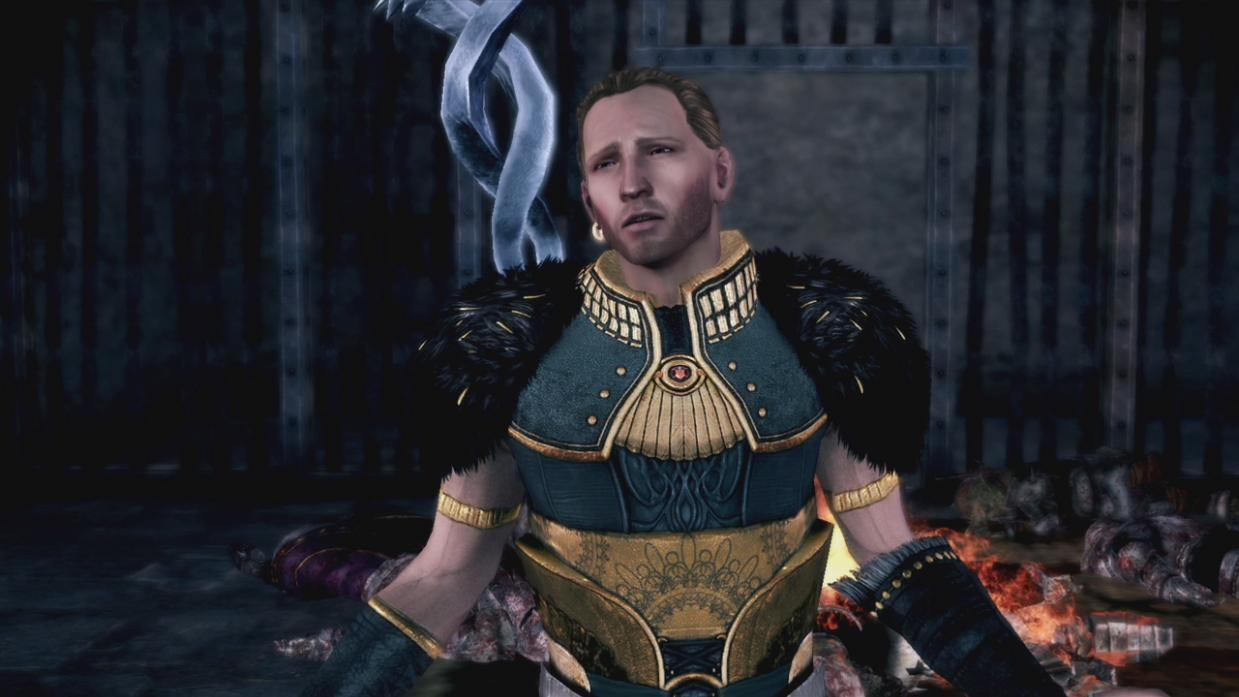
Anders might be the best villain Bioware has ever created. He is certainly the most relatable in the sense that he is a good guy for most of the game.
2. Character Consequences
A lot of Bioware writing has creates consequences to be sure. The main one I am highlighting is best shown in Mass Effect 2. For those out there not in the know, the plot of Mass Effect 2 involves summoning a team of experts to take on a highly dangerous suicide mission. Seriously, this mission is super dangerous – like 99% chance of failure. No one really has any hope of… what, everyone lived? Oh, okay then.
People can die. Can, but don’t have to.
Perfection is not perfect. Saving everyone does not breed the best storyline, in fact it can create some real problems with a lot of leftover characters (just look at how they had to handle things in Mass Effect 3). Sure, having an achievement for surviving with everyone is nice but really – it’s dumb and it takes away from the realism and the intensity of the story. Make the player make choices that will get people killed. You can’t make an omelet without breaking a few eggs as they say.
Better example: imagine there was a way to play through Telltale’s The Walking Dead without anyone dying. How much less engaging and emotional of a story would that be?
There is no way to save Carley. That’s what makes it memorable.
3. More Mature Relationships
No, I don’t mean more sex. Bioware has come a long way with this but there is still almost a juvenile obsession with the player’s love life. It can be amusing and make for some great scenes but – with everything that is usually going on in these games, why do people really care? Also, why is it only the player character who ever enters into a relationship? Why not two party members? Yes, Mass Effect toyed with this concept a little but more could be done.
The kiss was the first climax in Bioware relationships.
Also, the game places an unhealthy standard by claiming that the sex scene is the climax. As a player, you romance a party member, have sex with them and – that’s it. You’ve won, right? That’s totally how relationships work in real life. It reduces the problems and emotions involved. There are a lot of avenues here like having the player already begin the game in a relationship.
Bioware did this in Mass Effect 3 but it did not feel genuine. Even if the player’s love interest was on the ship, they stayed in their own area and did not really ever interact as a couple. This could have been more due to programming difficulty and time limitations more than anything else. Still, Bioware has pioneered a lot of relationship mechanics in games, it would be nice to see them take the next step in making it more believable, and less about getting laid. Not that there is no place for certain scenes like that:
And when I say five ideas, I of course mean five intellectual properties that already exist… so five ideas that are not mine.
HBO has a long history of stellar television programming. Since the mid-1970s, HBO has created shows such as Oz, The Sopranos, Fraggle Rock (not kidding), The Wire, and Flight of the Concords. Their current broadcasting line-up includes Game of Thrones, Boardwalk Empire, and True Detective. In short: they make a lot of kick-ass shows. What does the future currently hold? Well, there is a post-rapture series known as The Leftovers in the works… that sounds interesting. Sadly, a miniseries based on Neil Gaiman’s American Gods has just officially fallen through so that will not be happening.
Not that HBO needs help but American Gods would have made for a very interesting series (to say the least). There are other known series out there floating around, some are currently trying to land television networks. Here are five ideas for existing series that would be perfect for HBO to adapt into television:
Honorable Mention: Dune
Essentially Game of Thrones on a desert planet with giant worms. Look it up.
5. The Sandman
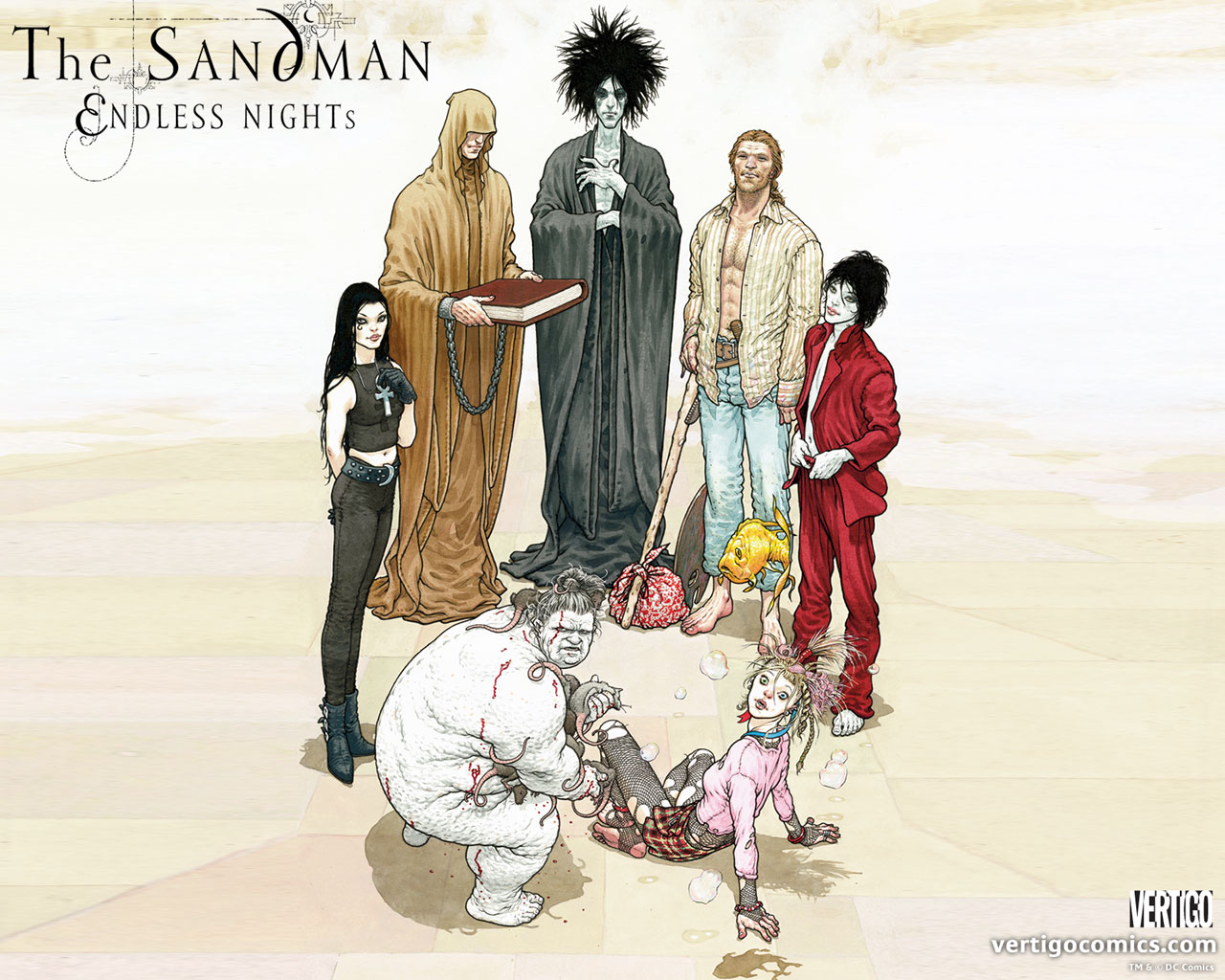
Forget American Gods, if there is any Neil Gaiman series that would make a killer show: it is The Sandman. This series of graphic novels is arguably the best piece of created work in that medium ever (sorry Watchmen). The plot revolves around a protagonist called Dream, who is one of the Endless (others include Destiny, Desire, Death, Despair, Delirium, and Destruction). Their names reflect their role in the world of humanity, which is obviously separate from their own. It sounds complicated because it is, and there really is no better way to understand the Sandman than to read it.
I could make sense of this image but I stand by my “just read it” philosophy.
Unfortunately, this one is very unlikely. Two reasons: the first being that HBO already tried to get the show off the ground in 2010. It is unclear why the pitch fell through but, needless to say, it didn’t happen. Second, Hollywood (with the help of Joseph Gordon-Levitt) have acquired the rights for a movie, due out at the end of 2016. Can the Sandman even work as a movie? I am very skeptical (this is a 75 issue series with a lot going on), nevertheless, this appears to be the direction that the adaptation is heading in.
4. Fables
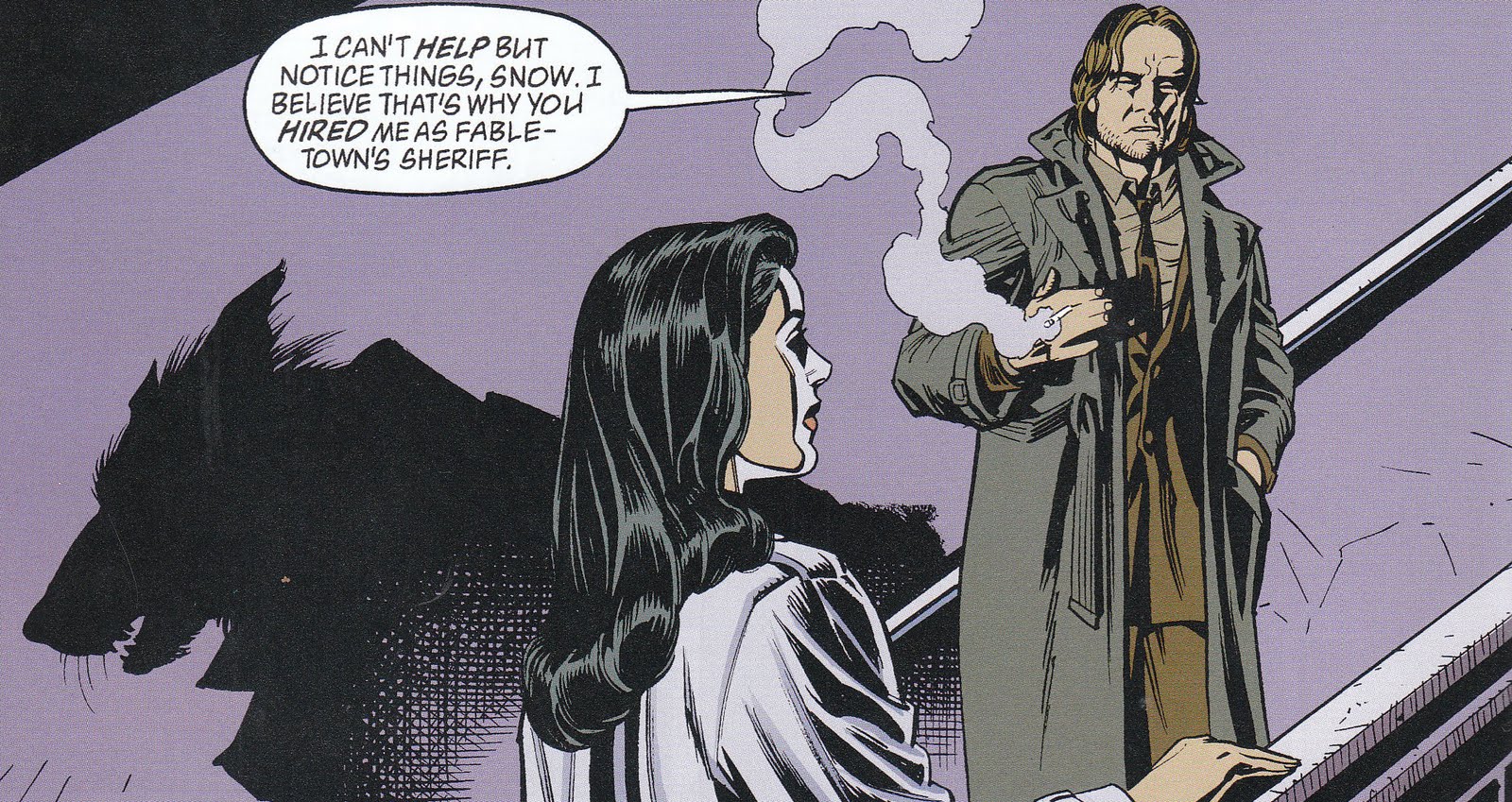
The comic series by Bill Wilmington may be overstaying its welcome at this point (ending next year) but it is still perfect for a gritty HBO series. The story primarily follows Bigby Wolf (the Big Bad Wolf) who is the sheriff of a community of fables living in our world. They are outcasts, driven from their homelands. Bigby, along with the rest of his community, must try to keep themselves hidden as they plot to reconquer their homeland and defeat the unknown empire that has set up there.
Bigby is a very likeable protagonist, and his relationship with Snow White is one of the biggest “awwwws” in the series.
While dealing with fantastical characters, this series handles everything in a very realistic manner, so it would not be one of those ideas torpedoed by budget costs. Apparently, a television series was already pursued on NBC without achieving any results. There is also a movie in very early stages. Fables would be at its best as a series. There are multiple protagonists and multiple villains.
Okay, that’s it for the safe choices. Now let’s get to the great untapped world of video game adaptations.
3. Metroid
The idea of an HBO series coming from a video game (made by family-friendly Nintendo) is untested. It has never been done. In Metroid, I believe the potential exists to create a very cool sci-fi drama revolving around bounty hunter Samus Aran. For those unfamiliar, in the Metroid series, Samus goes from planet to planet, looking for her targets. It is a very cold and solitary existence, which might present problems in terms of the supporting cast.
Still one of the biggest moments in gaming when Samus first removed her helmet, and players realized that the badass they had been controlling was a woman.
In the past, Nintendo has tried to solve the problem in multiple ways. First, the hunters: they are simply other bounty hunters that Samus competes with. Secondly, in Metroid: Other M, her squad and trainer were introduced. However, I would stay away from this group as it was used to rob Samus of her agency in Other M. The feared bounty hunter suddenly became a little girl who had to ask permission from her superior male officer to use her weapons… it sounds like I’m exaggerating but that game was kinda sexist (it was bad).
Metroid is a risk but, the science fiction genre is huge right now and people love a strong female protagonist. Metroid could be a fantastic and unique series if done right.
2. BioShock
Arguably the most intellgient AAA game made in recent years, BioShock would be perfect for a dark horror/sci-fi series. The setting of Rapture, the city at the bottom of the sea, would be challenging but not impossible to pull off with modern day visual effects. Andrew Ryan’s (no relation to Ayn Rand) world of capitalism gone wild and elaborate gene splicing would create a welcome newcomer to television.
This series was already tried as a movie but failed. The primary reason was the dark nature of the subject material. Simply put: there is no way to make a true BioShock movie without it earning the R rating, something that companies shy away from as it tends to drive profits down. Solution: HBO series. Sex, grotesque murder, insane characters, children in danger… why that’s all the best parts of HBO right there.
Best part is the spinoff is already taken care of with BioShock Infinite.
1. Mass Effect
Stop me if this sounds familiar: a world consumed by politics while greater dangers come in from areas outside the political focus. Sounds so far-fetched right? Mass Effect follows the story of Commander Shepard, the man (or woman) trying to save the galaxy from itself…. and also a massive indestructible army of space squid called the Reapers. Shepard must travel from planet to planet, forging allies and eliminating enemies before time runs out. His crew: aliens from essentially every major race out there. His boss: occasionally the government (known as the Citadel), occasionally pro-human terrorists (Cerberus), and occasionally the military (he is a commander after all).
Mass Effect really would be perfect. The only thing holding it back is the budget requirements. This would be an expensive show. That said, it is still well within the realm of possibility. With the movie adaptation floundering under script difficulties (this is a massive story to condense into three two-hour segments), it seems like a well-made TV show is the way to go. If this is done right, it would be the next Star Trek… only, you know, popular when it initially airs.
So there they are, five ideas for HBO to pursue. Of course, if one is looking for actual quality television to watch, I recommend starting here.




 Colin McMahon