Thinking Deeper: Analyzing Star Wars: The Last Jedi

Star Wars: The Last Jedi came out in theaters six months ago and the impact of its release is still being felt. To say the film is controversial appears to be an understatement. Some claim it is the death of Star Wars, a film worse than all the prequels (really?) that shreds the source material. To others, including myself, it is a breath of fresh air and maybe the first true Star Wars “sequel” in quite some time.

One of the main reasons that I love Last Jedi is that the movie generates conversation. I saw Solo last week and am already forgetting it. It wasn’t a terrible film by any stretch, nor was it really good. Solo just exists, checking off all the boxes it has to without feeling particularly inspired or warranted. I feel like there was no deeper subtext or character development. Spoilers: Han Solo is a scoundrel but a good guy. Did I really need to spend $16 just to confirm that?

With Last Jedi, I felt like I was watching a movie that wasn’t content to simply check boxes. It didn’t care that it was a “Star Wars film” and spent more time trying to be a genuine movie. The result is an experience that gives me something new every time I watch it. Here are some of the thoughts and readings I’ve had while watching Rian Johnson’s Star Wars: The Last Jedi:

Luke Skywalker is George Lucas

I know, shocker right – that Luke S. could mean Lucas? Watching Mark Hamill in Last Jedi is fantastic. True to the series’ Kurosawa roots, Luke is no longer the bright-eyed boy on Tatooine but a grizzled, jaded Jedi master. Unlike Harrison Ford’s Han Solo from The Force Awakens, Hamill’s Luke feels different from when we last saw him. His character has been appropriately aged along with himself.

When I was last watching the movie, I paid attention to Luke’s dialogue – in particular his self-loathing. Luke Skywalker did the impossible, he redeemed Darth Vader. Bear in mind, Luke is still fairly young in Return of the Jedi – at most 30. It’s not everyone who saves the galaxy before they can even qualify for a midlife crisis.

Therefore, it’s easy to see how Luke made mistakes. In his hubris, he felt he could do anything after that. It’s a very human reaction. Some would say it’s exactly what happened to Star Wars creator George Lucas after he made the original trilogy.

The struggles of George Lucas in making Star Wars have been widely documented. He had to fight on every decision and ultimately had to shoulder more than his share of the work. Lucas saw someone few people did, perhaps that nobody else did: that Star Wars could be a hit. And he did it. When everyone doubted, George Lucas did it. The man created a property that has impacted the lives of millions and created a devote following (to say the least).

To quote Hamill’s Luke from Last Jedi: he “became a legend.”

Then the time came for George to duplicate his massive success. The year was 1999 and the world was hungry for Star Wars Episode I: The Phantom Menace. Then the movie, and its two sequels came out and…well…lighting did not strike twice. With the introduction of characters like Jar Jar Binks and concepts like midichlorians, many fans thought that Lucas was destroying his creation and tarnishing his legacy.

And not to mention the Special Editions that are widely held as inferior to the original theatrical cuts. On all fronts, it seemed like George Lucas could do no right. Yet still he forged ahead. Why? Because he was George Lucas…a legend.

Until, one day, older and definitely with some bitterness, George Lucas sold Star Wars and retired to his home, essentially becoming a grizzled old hermit himself and completing the character arch that he envisioned for so many of his Jedi heroes.

Did Rian Johnson write Luke S. as a metaphor for Lucas? Who knows. But the similarities are uncanny.

Are sacred texts the expanded universe?
Part of me wonders if the sacred texts are a stand-in for the expanded universe. If so, then Yoda’s dig is even more of a burn…although not entirely undeserved in my opinion.

Kylo Ren really is a Star Wars fanboy

When I first wrote my article declaring Kylo Ren a Star Wars fanboy, I had no idea how right I’d be. In a movie script obsessed with subverting history, Kylo Ren is the character most consumed by it (even more than lonely Luke). Despite his vocal claims to the contrary, Ren cannot let go of the past.

He sees himself as the central figure in the story, a view he asserts on Rey in the following line:

“You have no place in this story; you come from nothing. You’re nothing.”

Charming. Such a wonder why Rey promptly runs away after that exchange. Kylo Ren’s delusions of grandeur aside, his character typifies the negative perception that Star Wars fans feel they “own the trilogy” more than anyone else. This belief (to varying extents) was represented in the documentary, The People vs George Lucas where the filmmakers made the argument that fans owned Star Wars more than its creator.

The story of Star Wars has become so ingrained in pop culture that most everyone knows at least the basics. The heroic Skywalker stands at the center of the galaxy, reshaping it in his image. For both Luke and Vader, this perspective holds weight and no doubt Kylo Ren sees himself as simply a continuation.

He knows how the story will go, how could he not? He believes himself to be the main character. This fits with a large viewpoint in the Star Wars fandom that family lineage matters. Even in the Expanded Universe, the focus was largely on Luke, Han and Leia – not to mention all of their children and spouses.

This idea runs so counter-intuitive to the message of the original film, which showed that heroes could come from anywhere – even a nowhere like Tatooine. Kylo Ren has done very little to declare himself a hero, yet he still clearly sees himself as one.

His expectations and actions based around how he believes the “story” will go reflects the controlling nature of fandom. The cry for newness while wallowing in the familiar. Kylo Ren must be the hero because…well, that’s how he wrote it in his head.

Who owns Star Wars?
Part of me is starting to wonder why we feel the need to “own” things – especially universes that aren’t real. Star Wars has impacted so many people, I’m honesty not sure if anybody can really say they own it more…except Disney.

The toxic masculinity of Poe Dameron

When I first saw The Last Jedi, I had problems with Poe Dameron’s subplot. Specifically, I didn’t understand why Admiral Holdo didn’t just tell him the plan. Was she worried about a spy? Was it subversion just for subversion’s sake?

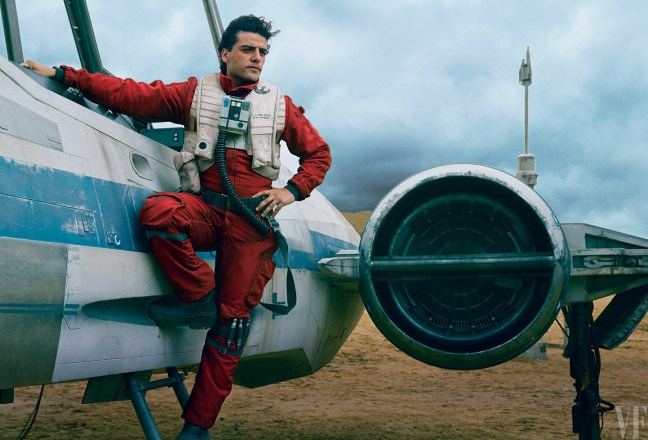
Since then, I’ve noticed quite a few things in Poe Dameron’s dialogue. Holy hell, is he an asshole. Never mind that he gets nearly the whole bomber fleet killed at the beginning of the movie (an action which gets him justifiably demoted), he refuses to treat Holdo with respect.

His first “not what I expected” conveys a personal disappointment. The feared military hero, Vice Admiral Holdo, is nothing more than a skinny, older, soft-spoken woman who doesn’t convey bravado or really anything. She just sets about doing her job.

Watch Poe’s first conversation with Holdo, look at what he’s saying:

Poe: “Vice admiral? Commander Dameron. With our fuel consumption there’s a very limited amount of time that we can stay out of range of those star destroyers.”

Holdo: “Very kind of you to make me aware.”

Yes, because there is no way that the Vice Admiral of the Resistance fleet already understood the very basic situation. If you’ve ever wondered what “mansplaining” is – this is an example. Poe, who was recently demoted for screwing up royally, still feels entitled to assert himself.

His lack of faith in his superior officers translates into a loss of hope and a dangerous turn that gets more people killed. The First Order learns of the rebel plan partly through Poe’s actions.

Remove the fact that Holdo is a woman and treat it like a standard military operation: A demoted officer immediately undermines his superior’s orders because he feels left out. Granted, we never see if Holdo tells anyone the plan because we’re confined to Poe’s view point.

We see him rebel again and again, not to further any real cause but his own desire for control. It is a subplot that I did not fully pick up on the first time through – mainly because I was so surprised to find it in a film like this.

tumblr_p7nz16lwDy1ub0sqqo1_1280

Visual storytelling: Snoke and Hux

One last point I want to make before I wrap this article up. When I saw Force Awakens, I didn’t have to think about my least favorite characters: Supreme Leader Snoke and General Hux. Snoke, despite the performance of Andy Serkis, came off as Emperor Palpatine 2 – a character who served the story because, well, it’s a Star Wars movie and those need a creepy old dude in a chair.

Hux, by contrast, had the personality of an evil brick. I had no sense of these people as characters, merely as roles. Snoke was the leader and Hux was a general. Got it. Last Jedi greatly improves this without taking serious script time and Johnson does it through visual storytelling.

First, Snoke: Look at that robe! Who wears a fabulous glitter gold robe complete with slippers while overseeing a military operation? Someone who is very arrogant and very much in control – a.k.a. the dear Supreme Leader. By the simplest wardrobe change, Snoke takes on some of his own character and becomes less of a Palpatine clone.
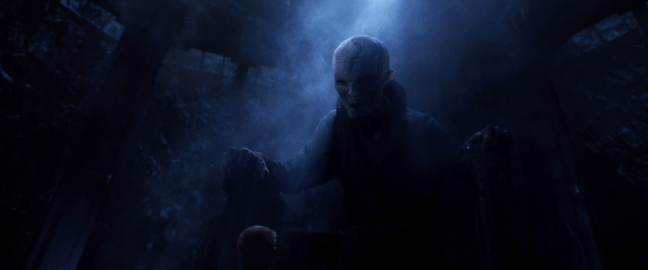
Snoke more interesting in Last Jedi
Best part of Snoke in Force Awakens? When I thought he was 20 feet tall.

Hux, by contrast, has more of his characters conveyed through his unspoken actions. Whether it is the smug sneer he gives Kylo Ren at the start of the film or when he almost pulls a gun on Ren’s unconscious body, the audience understands the relationship between these two characters. No one ever blurts “power struggle” because they don’t have to.

This dynamic gives Hux depth and informs us better of his character.

There’s more to say on Last Jedi but I’ll save it for another day. Suffice it to say, I feel strongly about this movie and I hope Episode IX can live up to its fine example. I’m genuinely sorry for the other Star Wars fans who saw this film and thought it was the worse thing since Jar Jar – but I implore them to give it another go. No, it’s not what you were expecting – but that’s okay. This film still has a heart and, more importantly (at least to me) it has a mind clearly present in its script.

Star Wars Episode VII: We Owe George Lucas an Apology

While waiting to see Star Wars: The Force Awakens this week, I re-watched my least favorite Star Wars film: Episode II: Attack of the Clones. For weeks, as the hype built up and we waited with bated breath to see what director J.J. Abrams would do, I heard a lot of renewed hatred for the prequels.

At least it can’t be as bad as the prequels.

Thank god it won’t have Jar Jar in it.

J.J. can’t do any worse.

People really hate those movies. They have been ripped to pieces in the years since their release. Video reviews (longer than an hour each) have been created to talk about what trash they are. For the record – I think that pretty much every criticism of the prequels is valid. They are a poorly acted, wooden mess of a story. That said… I don’t think that any film, even Attack of the Clones, was outright horrible on its own.

That may be the reason, beyond the fact that it’s Star Wars, that the prequel trilogy inspired such hatred: it’s not entirely awful. There is some good there… but it’s broken. It’s too weighed down with all the problems going wrong to ever let the innocent, fun charm of the story shine through. I’ve seen – and forgotten about – many films that are just crap. The prequels, for all their faults, stand at least as memorable.

They attempted to add something real and new to the Star Wars universe. They failed.

I read the reviews, the hype of Episode VII: The Force Awakens. It sounded like J.J. had done it, that he had done what Lucas could not and given fans the sequel we wanted.

Then I saw the movie… (minor spoilers to follow)

Let me say this up front: Star Wars: The Force Awakens is not a bad film. It’s fun, it has great performances (particularly Daisy Ridley as Rei and Adam Driver as Kylo Ren), and it has a lot of the heart that was missing from Lucas’ CGI heavy prequels. I absolutely would recommend seeing it in theaters.

The mix of practical effects and CGI give the film an excellent look, one that is evocative of the originals while still allowing sequences that used to be impossible to film.

That being said – this is not the “sequel” I was looking for.

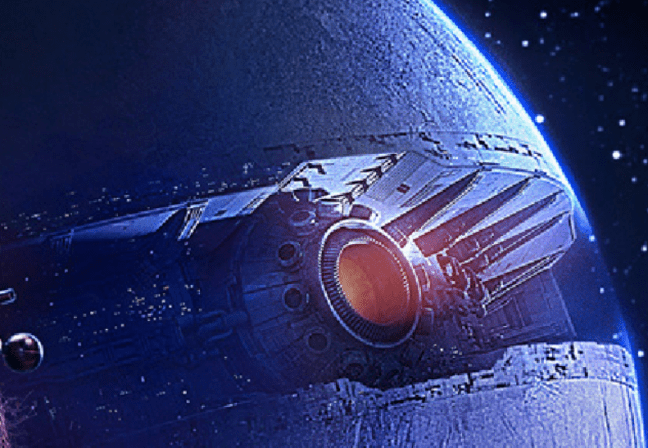
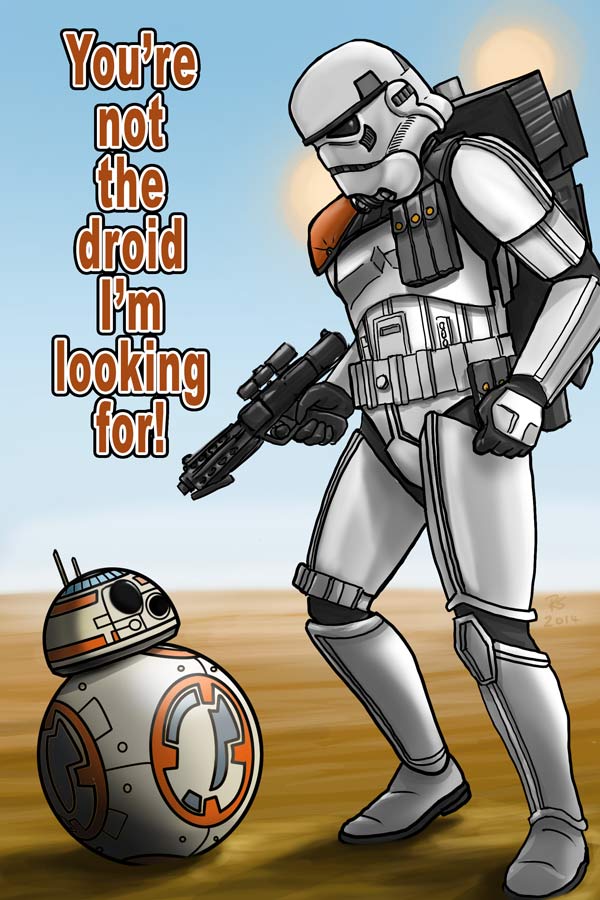
The quotation marks should say everything. Let me give you a premise: members from the Resistance (not the Rebellion – totally different “R” word) have to get a droid that has secret plans to help them stop the First Order (doesn’t even start with an “E”) and stop their use of a massive super weapon capable of blowing up planets.

I'm almost surprised they didn't recreate this sequence as well.
I’m almost surprised they didn’t recreate this sequence as well.

Sound familiar?!

To be fair, the droid this time around does not have the plans to the Death Star, *cough*, excuse me – to the Star Killer, it has part of a missing map to find Luke Skywalker – the man whose absence seems to be dooming the galaxy. Still, the plot unfolds with quite a feeling of retreading. Even Rei’s origins as an orphan on an out-of-the-way desert world seem overly familiar.

And unlike Return of the Jedi, which had a similar structure to New Hope (start on Tatooine, finish by blowing up a Death Star) but different feel… Force Awakens never breaks the New Hope mold. Its climax hits nearly all the same notes as its predecessor.

The worst scene in the movie arguably comes when someone says "is it like the Death Star?" and another responds with "I wish!" So maybe the next movie will have a weapon that can blow up ten planets at a time and is even bigger?
The worst scene in the movie arguably comes when someone says “is it like the Death Star?” and another responds with “I wish!” So maybe the next movie will have a weapon that can blow up ten planets at a time and is even bigger?

Finally, we must mention the (maybe) main villain: Supreme Leader Snoke (voiced by the one and only Andy Serkis). In general, the villains of Force Awakens are a little conceptually weak, but Snoke stands head and shoulders above the others in this regard. Stop me if you’ve heard this before: a shriveled, scarred old man with vague desires of revenge – or some evil motivation – who likely has advanced knowledge of the dark side of the force. But he doesn’t wear a hood – so, you know, totally different from the Emperor.

While I was okay not having Thrawn, using such a boring villain as an alternative was such a shame to see.

At the moment, critics and fans are eating up the “nostalgia” of this movie, but it leaves me worried. Lucas’ prequels may have failed, but at least they were trying to do something different. This movie plays on the “remember how awesome this was/felt” feeling way too much.

For example: the cantina scene in New Hope – iconic. Seeing all the aliens gathered around, drinking and playing games, opened up the idea of a huge galaxy. The Force Awakens has the exact same sequence, intended to create the exact same feeling… except I had seen it before.

Poe Dameron was an interesting character who we really didn't get a chance to get to know.
Poe Dameron was an interesting character who we really didn’t get a chance to get to know.

“Do, or do not. There is no try.” These were the words of Master Yoda in Empire Strikes Back… and they seem to have been the mantra of the movie. Lucas tried and failed to do something new – so don’t try anything new. The Force Awakens is fun, but I have a feeling that – as time goes on – it will lose much of the praise it is currently receiving. It has too many new elements to be a good remake, and too many remake elements to make for a really interesting (or truly great) sequel.

For a universe so rich in original stories (Heir to the Empire, Knights of the Old Republic, Jedi Knight) this may be a sign of the dark side. Disney’s bold plan for a sequel to Avengers was just… recreating the Avengers after all. The vision was lacking. We may never know what Lucas’ original idea for Episode VII was, but I’m going to guess it wasn’t “let’s just do A New Hope again.”

Scene Dissections: The Picnic Love Scene in Star Wars Episode II: Attack of the Clones

All right, here we go: it’s St. Patrick’s and time for an appropriately themed post. That’s right, let’s talk about Star Wars! Oh, you’re saying: not Irish enough? Very well, we’ll focus on Episode II: Attack of the Clones. You have to be stereotypically Irish to enjoy the scenes in that movie. Maybe not every scene, some of the action and effects shots are really well done. It’s just the other stuff… the stuff with the people doing something… it isn’t lightsaber fighting, it’s something else… TALKING! Yes, the scenes with the people talking are frankly, well they’re awful in that movie. And never does the quality sink lower than when Anakin Skywalker (Hayden Christensen) and Padme Amidala (Natalie Portman) are on screen together. I could talk about any of their scenes at length but, let’s just pick at random and go with this one:

https://www.youtube.com/watch?v=Z0Ti9NXc7CM

Did you watch it? Are you so turned on by love that you can’t sit still anymore? If you’ve never seen the movie: there are all like that. EVERY. SINGLE. LOVE SCENE.

But anyway, bashing Episode II is nothing new. By doing this I simply join the dark side of internet geeks trashing a movie they, for some reason, can’t stop talking about. The above scene is a failure, no question, but let’s talk about why. I’m going to break it down by story, acting/direction, and scenery/effects/music. I’m not going to do this in context with the rest of the movie (I might a bit but I’ll try to avoid it). I just want to talk about that sequence, as it is. What went wrong.

STORY: Two people are talking at a picnic. The dialogue isn’t horrible. It’s not riveting either. They’re talking about her crush… from when she was twelve (before the wonders of Star Wars puberty) and Anakin makes it clear that he doesn’t like politics. To be fair, he does this like a typical 19 year old, in the sense that he sounds incredibly naive and dismissive (like 50% of most democratic populations). Here is the first failure: Padme is not put off by this exchange. She is a senator. Someone who has devoted their whole life to the government.

Let’s try an experiment: next time you’re with a politician (or even a political science major) just say: “yeah democracy is a load of crap, people just bicker and stuff. We should totally just have someone in charge who just does right.”  That is para-phrased dialogue from Episode II. Say that to your political friend and see how often they laugh and come onto you (granted there has to be ZERO flirting beforehand… you have to be as cold as they were in that scene… so looking bored in grass).

ACTING/DIRECTION: God do they look bored. There isn’t one second of natural warmth between them. Padme laughs a little and Anakin laughs a little but what are they laughing at? Anakin’s jokes aren’t clever, not to a senator (or anyone) in their early twenties anyway. They act like teenagers at the prom: too scared to make a move and too awkward to look comfortable. Problem: He is 19 and she is 24. It’s okay for him to be awkward because he has spent the last ten years as a sexless monk-knight, but she grew up with luxury: no way she would find it that charming.

Natalie Portman has won an oscar. Hayden Christensen has disappeared. I never saw him in anything else so I don’t know that he’s horrible, but given how unnatural Academy Award-winning, Natalie Portman is acting: this is not a scene to blame on the actors. George Lucas clearly had a vision here: the mono-myth picture of ideal, innocent love. Two children in a field, just enjoying each other’s company. That’s the scene, that is an accurate description of the scene. He directed it like two children, problem is he wrote it for two young adults. Second problem: this isn’t just writing. One of the beauties of film is that it breathes with living performance when done well. When it’s done poorly… it looks like the above scene.

SCENERY/EFFECTS/MUSIC: This goes back to George Lucas’ vision. It is the idyllic field in a land of (at this point) scientifically explained magic and whimsey. Star Wars is no stranger to fantastical backgrounds but both Empire Strikes Back and Return of the Jedi brought a sense of realism to their worlds. The people acted like people. thus drawing attention away from the scenery. No such luck here. The visuals may look impressive (at least until Anakin tries riding one of those… alien cow pigs) but they carry too much of the scene. It’s not good.

One thing truly works here and that is “Across the Stars“. “Across the Stars” is the love theme, composed by the great John Williams. Yes, it is over-the-top but this is Star Wars. The music has never been subtle. In my opinion, this piece is beautiful and captures a brief image of the idealized love that Lucas was going for. Does it sound grounded: nope, but it is the one thing that absolutely doesn’t have to be.

So there you have it: fantasy gone wrong. I guess that sums up the prequels in a nutshell. At least we got some funny Robot Chicken sketches out of it. Like this one:

https://www.youtube.com/watch?v=5DFOE0td1Yw

And this one:

https://www.youtube.com/watch?v=rmTaZd2hIZE

Good times. Anyway, for those out there wondering why I didn’t write an article on St. Patrick’s Day (and the wonderful “political correctness” of Irish stereotypes), I was in the mood to rant so I did something stupid to rant on. The Irish article is coming so… we’ll enjoy that at a later date.