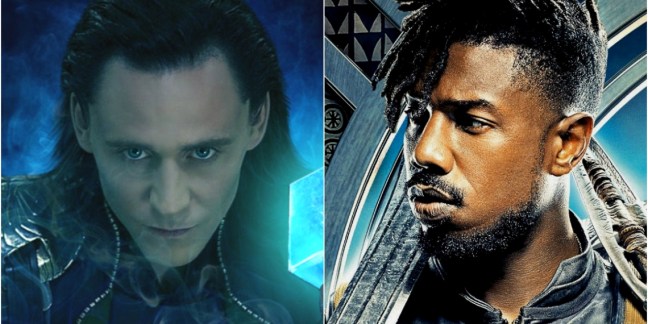
Loki vs. Killmonger: Sympathy vs. Empathy in Villains

Loki Killmonger

I’ve written a lot about villains. Why we like them – why some work better than others – why it can be difficult to follow up one great villain with another. I’ve also written a little about Marvel’s villains and how they…they are. Marvel doesn’t have the best reputation when it comes to creating compelling antagonists. Their idea of a villain is often simply a bad dude with a similar power set to the protagonist. The bar is in fact so low that Josh Brolin’s Thanos is – in my mind – easily in the top three, despite having an overall goal that doesn’t make a lick of sense.

But let’s not talk about number three today. Let’s instead discuss my one and two, AKA Loki and Killmonger. Both defy the Marvel mediocrity and create lasting impressions. I know I’m not the only one who thinks this way – one trip to Google showcases just how many people appreciate and identify with these villains. My question, and the purpose of this article, is: Why? Why do people love Loki and Killmonger? Let’s take a look.

Loki as a sympathetic villain

Before Loki became known as just a snarky, smirking Tom Hiddleston, his character actually had a meaningful arc. One of the reasons that I believe Kenneth Branagh’s Thor stands above the average Marvel movie (of which there are now at least a dozen) is because of how the director approached the subject matter. Branagh has a background in theater – primarily Shakespeare – and I feel he applied this very well to the creation of his Loki.

I never liked Loki in the comics. He’s mischievous and…that’s it. To be blunt, he’s a dick. There’s not much more to him. Sure, he mentions he’s Thor’s brother at least once an issue, but I never believed there was actually anything there. It was a classic storytelling blunder: Telling the reader instead of showing them the relationship.

Thor corrected this problem. Loki is presented first and foremost as Thor’s brother…his overlooked, demeaned brother. The movie makes it very clear early on who Odin loves more, and these problems are only deepened as Loki learns of his secret, problematic origins. In short, he’s spurned and it’s easy to see how he falls.

But he doesn’t seem happy about it – this is the other important factor. Remember how I mentioned Loki’s trademark smirk? He actually doesn’t wear it often in 2011’s Thor. Instead, his face is more this:

Loki sympathetic

A mix of surprise, anguish, and pain. Loki’s world is upended in the first Thor. He is desperate to prove himself to Odin and show that he is every bit as worthy as his brother.

Unlike how he would appear in later movies, we don’t see Loki taking a lot of pleasure in being evil. Instead, it seems like he feels this is his best and only option. Loki is driven, single-minded, and self-destructive.

Upon learning that Thor has had a change of heart and wants no part of genocide, Loki laughs maniacally…and cries. Tom Hiddleston plays a character who is literally coming apart emotionally.

https://www.youtube.com/watch?v=V_tp-sfa1m4

I believe this is what makes Loki compelling. His “mischievous” nature is given reason: He can’t stand a status quo where he is routinely cast to the side in favor of his older, incredibly arrogant brother.

As Thor changes, Loki’s behavior becomes more erratic and he ultimately pushes himself to an extreme downward spiral. I don’t think it is any accident that Thor climaxes with Loki falling into a void, as that symbolizes the completion of the descent that has been happening within the character all movie.

It’s compelling, and it’s sad. We see Loki as horrible to his brother yes, but also caring to his father and mother. He is a monster, but he is a human one. This allows him to be a strong sympathetic villain.

Killmonger as an empathetic villain

And then there’s Killmonger. Erik Killmonger AKA N’Jadaka is not sympathetic, at least not to me – and I’ll explain why. Sympathetic can be defined as eliciting compassion, feeling, or understanding. While I think Killmonger does a great job for the second two, I personally find that he fails at the first – because he is too far gone. In Thor, we see Loki at the start of his fall. In Black Panther, Killmonger is a full blown psychopath.

The character kills indiscriminately, friend and foe alike. He is quick to betray, murdering several unarmed people in cold blood. Unlike Loki, we don’t see Killmonger behaving like a human to any other character in the film – even his own father. When asked if he feels sorrow for the loss of his dad, all Killmonger can say is “everybody dies.”

151f36718ae4570e982584042230
“Erik Stevens. Graduated Annapolis aged nineteen, MIT for grad school. Joined the SEALs and went straight to Afghanistan, where he wrapped up confirmed kills like it was a video game. Started calling him Killmonger.”  – Everett Ross

And while there is some sorrow for how far Killmonger has fallen – since we know he was once innocent – it is too indirect, at least for me. It’s the same problem as showing Darth Vader as a child. Yeah, they’re nice as kids but…they’re kids. Even Hitler was probably fine as a boy.

This is not to say that Killmonger isn’t an effective villain. I think he’s terrific, but he’s serving a different purpose than Loki. Killmonger is an empathetic villain because the audience understands the root of his extremism.

Systematic and overt racism are enormous problems in today’s society, as well as the police state that many people of color feel they are subjected to. Given that Wakanda is a paradise – a technological utopia – Killmonger exists to show just how much of a fantasy that really is.

https://www.youtube.com/watch?v=sw_a0HC6f1s

Given his plight, Wakanda could very easily be Norway or Sweden. Sitting comfortably, claiming to be a bastion of enlightenment, while other human beings suffer. Of course, the fact that Wakanda is an African nation adds incredible emphasis to this point, given the continent’s history of being abused and exploited by the “civilized” European world.

So while Killmonger may be a monster, he is “a monster of our own making” as T’Challa puts it. If Loki is Shakespeare, Killmonger is Shelley. He was created by a person (T’Challa’s father) who wished no responsibility for his actions.

But, like the Frankenstein monster, the audience is left drawing the conclusion that, no matter how right the creature may be about how wronged it was, it is still a danger to the world and the innocent people within.

All Killmonger knows is hatred, so that is all he can bring.

So there you have it, my thoughts and feelings about Loki and Killmonger. I think there’s a lot writers can learn from both characters, especially when it comes to creating compelling villains. Whether it is empathy or sympathy, these antagonists have to create feelings within us to be memorable. If not, well…they’re just this:
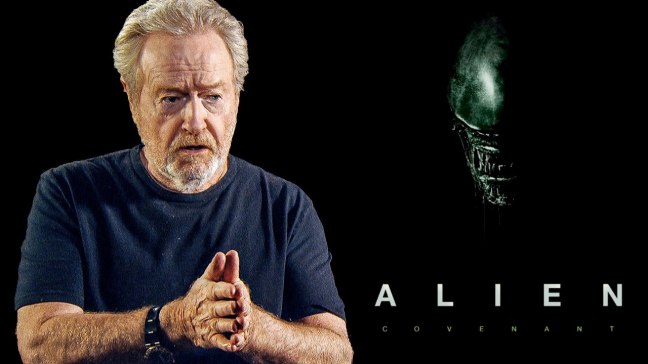
 

Ridley Scott has Murdered the Alien.

Horror franchises age poorly. This is a general rule and there are few exceptions. While John Carpenter’s Halloween is hailed as a classic, not many outside of horror diehards await the next installment. Ditto with genre defining pieces like The Exorcist and Silence of the Lambs. Horror sequels suffer from one inherent problem: It is never as scary the second time you see it.

Now there are some ideas that are more open for exploration and can find new ways to frighten audiences. There are also some horror sequels that are carried by excellent casting, directing, and production design. Then there are some movies that abandon the horror in favor for fun, dumb or otherwise. The Alien franchise is a horror series that has done all three.

But it’s over now.

The lifespan of the alien as a horror icon has ended. Shortened by rampant commercialization and less-than-stellar sequels, the series showed a blip of life with Prometheus before flat-lining in Alien:Covenant.  Director Ridley Scott, channeling George Lucas, has returned to murder the creation that he gave life to decades earlier. Spoiler alert: I f*cking hated watching Alien:Covenant.

The Alien is No Longer Threatening

It is true that the alien design has not been scary for years. That’s what happens with eight movies, video games, and a toy line. It is simply too familiar to be terrifying in the way it was in Alien. That said, solid film-making can overcome this deficiency. But in order to do so, the alien must remain the primary threat. This shouldn’t be hard. After all, it was billed as the “perfect organism” in the first film.

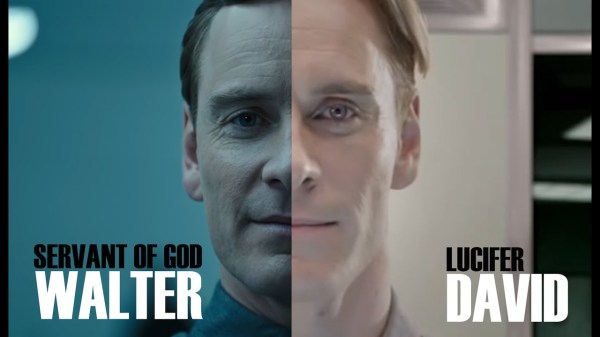
Yet the traditional alien is the least threatening aspect of Alien: Covenant. Sure it still kills ‘people’ and is fast and strong, but let’s examine the other antagonists that the film provides. First off: David, the android from Prometheus appears to have scrambled his circuits and gone insane. He is deceptive, strong, intelligent, manipulative, and can blend into the party of good guys by virtue of looking exactly like one of them.

David more menacing than aliens
Is that Michael Fassbender a friend or a homicidal murder? Seems like an important and persistent paranoia-inducing question.

Alien: Covenant goes further to strongly imply that David created and can control the entire alien race. So really, he is the head of the snake, as well as a much more calculating menace.

In addition to David, we have his weaponized diseases that he took from the Engineer aliens of Prometheus. For my money, this thing is the perfect organism. It is a microscopic disease that travels quickly and is lethal upon contact/penetration with human skin. Sure, it could probably be burned up but no one ever seems to see it coming. They’re just fine until they start spurting blood and hatching monsters.

Alien Covenant Death of Alien
Not as bombastic looking but certainly more effective.

The alien comes across as nothing but a servant of a larger evil – a minion that is replaceable and expendable and, frankly, nothing more than a work in progress.  The perfect organism has fallen very far from grace. Remember that Family Guy sketch about “Bigger Jaws” – that is essentially what Alien: Covenant does. It has one-upped its monster to the point of obscurity.

Killing Prometheus and Originality

I will say this right now: Prometheus was far from a perfect movie. It suffered from a litany of problems that are very amusingly laid out in this video:

That said, Prometheus also represented a bold new direction for the Alien franchise. An attempt to distance the films from the repetitive slump they had fallen into – you know, an evil company trying to exploit the aliens for military gain. Sure we still had the evil company, but this time they’re looking into how humanity evolved and attempting to understand its origin.

Perhaps I am in the minority but I found it profoundly refreshing to not see a traditional alien in Prometheus. As I’ve said before, the design is tired. Exploring another alien race and its relationship to the aliens may be a flawed idea, but at least it was one that was open to originality.

Alien: Covenant murders this promise with the same disdain that the third Pirates of the Caribbean abandoned all ideas established in the second. The Engineers from Prometheus – they’re dead now. Any unanswered questions remain unanswered because, well they’re dead.

Ruining the Engineers in Alien: Covenant
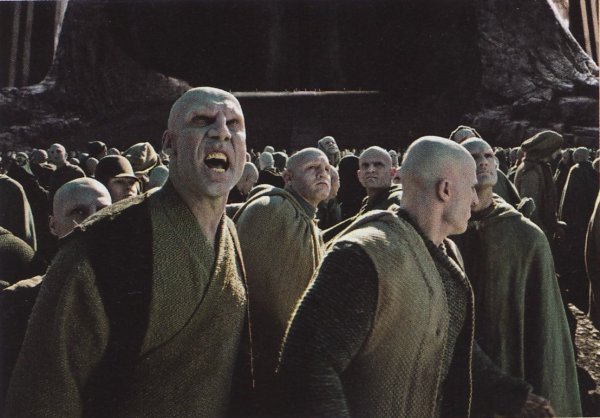
The much more human-like engineers only make a cameo in Alien: Covenant. I have a question: why did they ditch their super advanced technology for monk robes and stone buildings? For such an advanced race that specialized in advanced bio warfare, they sure were open to attack.

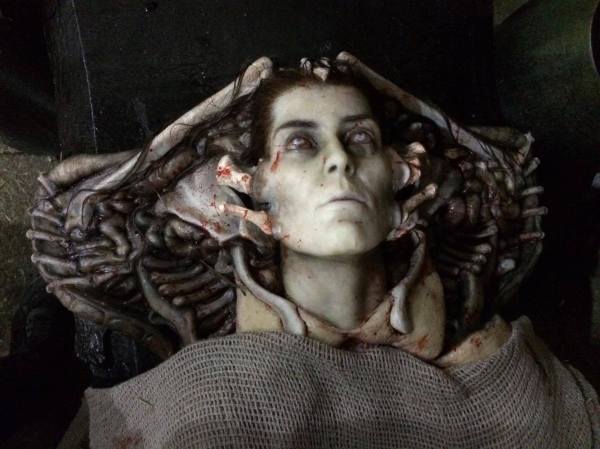
But the Engineers aren’t the only open-ended story path being squashed. Noomi Rapace’s Elizabeth Shaw barely makes a cameo, being killed off-screen in a way reminiscent of Newt and Hicks in Alien 3. Dr. Shaw may have been a flawed character, but I spent all of Prometheus getting behind her and was genuinely curious to see where her character went.

After all, she is portrayed as an idealistic and naive scientist driven by her faith in Prometheus – a faith that is shattered by the horrific events she encounters. Logically, I could have seen her sliding into a homicidal streak more easily than the well-meaning but controlled David.

Alien: Covenant wasted Elizabeth Shaw
Instead, Elizabeth Shaw started trusting David (the android who murdered her husband) for… reasons, and then is betrayed and killed, used in David’s experiments to creation the perfect phallic monster.

Killing her off would have been more acceptable if it was to make way for stronger characters but, well, we’ll get to that in a minute.

For all its flaws, Prometheus opened the Alien franchise to expansion. Alien: Covenant was a film very determined to close off every avenue of that expansion, hastily answer the un-asked question of alien origin, and slam the series back to its tired roots of traditional xenomorph murdering space colonists.

The Lazy Writing of Bad Horror

I have been dancing around this problem throughout my review. Alien: Covenant is bad horror filled with bad horror cliches. Its cast is made up of so many characters – most of whom named – who exist without characterization. They are simply there to die. They don’t feel like people, instead serving as plot mechanics or set dressing.

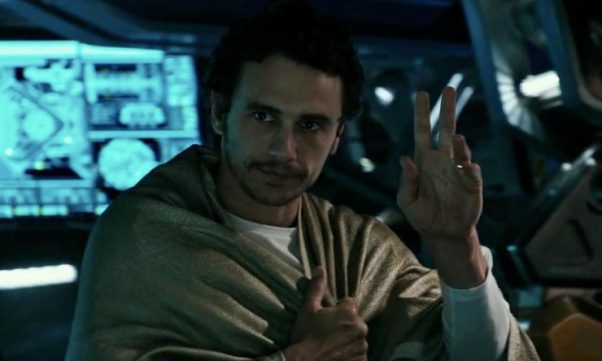
Alien: Covenant does not have characters
The bizarre inclusion of James Franco (who dies immediately in Alien: Covenant) is actually one of the better handled characters in the film.

I’ll perform a test. The main protagonist of the film is Daniels (Katherine Waterson). She is our primary good guy. She is… a woman… who was a wife… and has short hair. I cannot name a single personality trait. She’s good? She kinda looks like a knock-off Sigourney Weaver?

She is the best developed of at least 13 named crew members. Even David cannot keep up with Ridley Scott’s disregard of humanity in this picture.

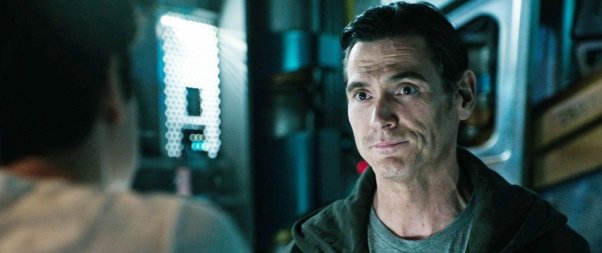
There is another character who I want to point out; Oram (Billy Crudup). Oram is a man of faith, someone who takes his religion very seriously. How do I know this? Not through his personality or meaningful plot action. Instead, I know this because the film tells me – over and over and over again. Literally every scene where someone says something about Oram, they mention his faith. And it is not important at all. Oram does nothing to contribute to the plot, eventually dying to face-hugger.

Poor writing Alien Covenant
“See this face? This is my religious face.”

I’m going to say this as someone who is not particularly religious: If you’re going to write about religion, treat it with respect. Do not tack it on as some afterthought. Perhaps Oram mattered in some version of the script but it just feels like his faith is there to take digs at. It is tacked on. If you want a better written religions figure – maybe try Elizabeth Shaw (whoops – too late for that).

The lack of characterization could have worked in a movie that was only interested in having fun, but Alien: Covenant takes itself too seriously. This is a film clearly far up its own ass with half-baked ideas of Paradise Lost and artificial intelligence. It postures and uses words, the best words, to sound smarter and inflate itself over all the other slasher films on the market.

Oh, one other character to mention – David. I loved Michael Fassbender‘s David in Prometheus. He is complex; a seemingly well-meaning creation who is disregarded by others and abused by his creator. Mary Shelly would have been proud by how well her creation was adapted into a futuristic setting.

In Alien: Covenant, David has ‘gone insane.’ This is the rationale used to justify his behavior. It is also lazy writing 101. Going insane is the overused excuse to get a character to do something that goes against earlier characteristics/motives. In Iron Man, the villain goes insane to switch from scheming business tycoon to rock ’em sock ’em robo-fighter.

It does not add to David’s character to make him pure evil – it detracts from it. He is no longer complex, he is just crazy. He hates humanity but loves its art and creation? Sure?

Alien: Covenant is a perfect example of how not to write an effective horror movie. If people don’t care about the characters then none of the horror can be particularly effective. I don’t care that the alien tore off a woman’s head – I’m still trying to recall who exactly she was.

10-insane-facts-you-probably-didn-t-know-about-heath-ledger-s-joker
For as often as it’s used, insanity is rarely done well in film writing. When it is, the results are truly memorable characters.

Ridley Scott is clearly bored with the alien concept and using it to explore other ideas. The problem is that he seems to have no qualms trashing a universe that has evolved past him. Yes, he directed the first film (and kudos for that) but the series has grown so much since then. If he truly wants to explore AI – then by all means make a film exploring that concept, but leave Alien out of it.

Perhaps he just wants people to see his movies but doesn’t trust his name anymore. Exodus: Gods and Kings was one of the last ‘original’ projects he did and most people remain blessedly unaware/unaffected by the lifeless mediocrity that was that film. Regardless, I have only one request for Mr. Scott: Leave alien and don’t come back. Maybe someone else can give it life. This is what you’re doing to your franchise:

https://www.youtube.com/watch?v=-pZekhEWCHg