Colossal Mistake: Failing to Fully Explore Abuse

I really love giant monster movies. I especially love the ones that are more than just giant monster movies. Yeah, Ishiro Honda’s Godzilla features a giant radioactive dinosaur but that film also nails a commentary on post-war Japan and the horrors of nuclear war. Peter Jackson’s King Kong, while maintaining the original’s Beauty and the Beast storyline, also manages to deliver biting criticism on the idea of zoos.

Colossal is a film where Gloria (Anne Hathaway) discovers that she is directly controlling a giant monster on the other side of the globe. Yet for all the grandeur of that premise, it is much more a film about dealing with different types of abuse. Gloria is a mess, she drinks, she lies, she cannot maintain any kind of self-sustaining lifestyle. When her boyfriend Tim (Dan Stevens) throws her out, Gloria returns home and must try to put her life back together. When she returns, she meets Oscar (Jason Sudeikis); a “nice guy” who is anything but.
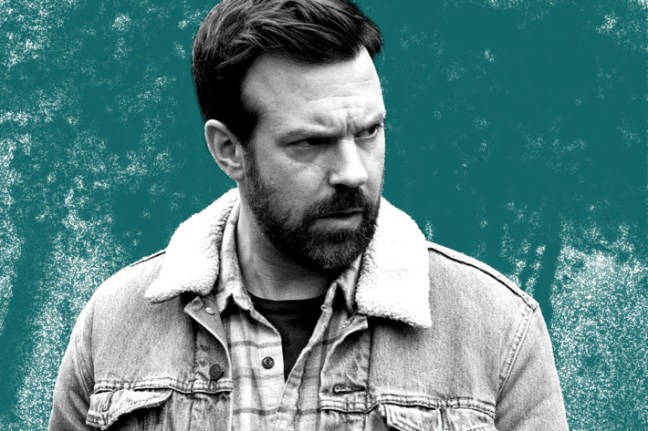
Colossal Oscar abuser
Sudeikis’ Oscar is a compelling character – a perfect union of writing and acting that does an excellent job exploring one kind of abuser.

The abusive relationship between Oscar and Gloria is the primary focus of the film. Oscar manipulates Gloria, setting himself up as her tether to sustainable living. He gives her a job, fills her house with furniture, spends free time with her. On the surface it does not sound bad, but Oscar uses all of this to control Gloria. When she attempts to do something (or someone) he doesn’t like, he gets angry and violent. In the case, the violence is not just against Gloria. Remember that giant monster thing? Yeah, turns out Oscar’s one too – only he has no compunctions against murdering people to keep Gloria in line.

Oscar is a piece of work to say the least and Colossal shines best when it is fully exploring the nature of his abuse. On this level, the movie is certainly a triumph. That said, when exploring Gloria – the movie ultimately falls flat on its giant face.

Gloria the Monster

Gloria is an abuser too. Her relationship with Tim is far from healthy. Since she cannot hold down a job, she is dependent on him. This in itself is not necessarily bad, but Gloria abuses this dependence. The beginning of the film makes it clear that she is not job hunting. Instead, she goes out drinking with friends all night – using either their money or Tim’s to sustain her alcoholism. Whenever confronted on this, she lies or gets angry at Tim for confronting her.
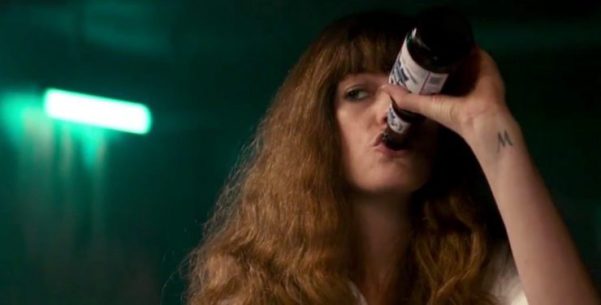
colossal-movie4-740x376
Gloria enjoying her typical nighttime activity.

In addition to this, the film also shows us that Gloria is further abusing Tim by taking advantage of their apartment when he’s not home. Gloria’s plan in the beginning of the movie is to placate her boyfriend out of their apartment and invite her friends in so that they may resume drinking (likely Tim’s liquor). It only falls apart when Tim announces that he can no longer cope with her destructive lifestyle and wants her to move out.

This opening is fine. What happens next creates the problems. Gloria never repairs/admits her abusive role with Tim. Instead, she continues to shut him out throughout the film, choosing instead to reveal her monstrous secret to the people she spends all night drinking with (clearly the responsible ones). This is what helps cement Oscar’s hold over her in the first place.

Tim tries to contact Gloria and talk with her. He scolds, clearly still angry from their bad relationship. He does, however, have one crucial exchange of dialogue with Gloria when he apologizes for always lecturing her and genuinely seems to care about how she’s doing. This shows a painful truth of abuse: It ultimately turns both people ugly. Tim appears not to be the lecturer of choice but by habit – his role in Gloria’s pattern of self-destruction.

We’re never sure about Tim because the movie is not interested in fully exploring his relationship with Gloria. We do know that he cares about her – maintaining contact after she returns home. We do know that he comes for her at some point, worried about her developing home situation. We do know that he lectures her, but with seeming regret that their relationship is not different.

Tim Gloria Colossal abuse
Tim and Gloria’s relationship is a good example of abuse that has become habitual. It has been going on so long that neither person involved is healthy.

The biggest failing comes at the film’s climax, when Gloria flies to South Korea to follow through her plan to neutralize Oscar. She shuts Tim out again through all of this (Tim is expressing worry and concern, even attempting a confrontation against Oscar) but that’s not the problem. The problem is her final phone call. Here is the dialogue (I’m paraphrasing) :

Tim: “I’m worried about you. You owe me an explanation as to what’s going on.”

Gloria: “No I don’t, you threw me out. You said I was too ‘out of control’ – well now I’m more out of control than ever!” *click*

In this final exchange, Gloria resumes her form of abuse. There is no scene in the movie where she really admits and attempts to discuss her problem with Tim. In this last exchange, she abandons her responsibility and throws her problems on him. Worse, she implies that everything that happened to her at home is somehow Tim’s fault.

Gloria never hits Tim but it is clear that she is the source of emotional abuse in their relationship. She is the self-destructive one who cannot handle her emotions and thus decides they are not her responsibility. By not having Gloria ever acknowledge and confront her own history of self-destructive behavior, it completely ruins the redeeming/empowering arch that the film’s writers were attempting to communicate.

Unearned Ending

The failings of Colossal hit me as someone who was a victim of emotional abuse. They also irk the hell of me as a writer. Anne Hathaway does such a fantastic job of playing Gloria that I want to be rooting for her at the end. It also seems like writer and director Nacho Vigalondo wants her story to be empowering, a rise of an abuse victim against the abuser.

And it almost is! That’s the infuriating part. Gloria and Oscar are done so well but the failings of Gloria and Tim ruin it. This, as is, is not the story of a victim rising up but rather the tale of one abuser getting the best of another and then presumably continuing her abusive journey. Who’s the next Tim? Who knows but there is reason to think there will be another.

Gloria Colossal abuse
Nacho Vigalondo clearly understands that Gloria is a monster but appears unwilling to fully explore what that means.

If you’re a writer and you want your protagonist to fix their flaw and be likable at the end, you have to make sure they earn it. Otherwise it feels like you’re forcing an unnatural ending that the story does not support.

Abuse is a complicated subject to tackle as a writer. Believe me, none of my numerous blog posts or short stories have done it justice. It is crucial to understand these basics: there are multiple types of abuse, men and women can be abusers, and abuse is a disease that infects everyone. If you’re not going to tackle all appropriately then be prepared for me to tear your work apart. We need a better dialogue on this serious issue, not half-baked ideas of female empowerment.

Colossal could have been an achievement. Instead, it is an entertaining giant monster movie wishes it was something bigger.

 

Alice: a Visit to Wanderland

Okay, it’s October and I am already well behind my horror blog writing. This month, as with every October, I will be reading exclusively horror – either books that are in the horror genre or have many horrific elements. This year I have chosen to kick things off with Alice: The Wanderland Chronicles by J.M. Sullivan. As some of my more astute readers may have already noticed, Wanderland Chronicles is another book from Dreamcatchers publisher, Pen Name Publishing. Rest assured, I shall endeavor to remain objective.

So, first thing’s first: I don’t care for Alice in Wonderland. It’s not that I hate it, I have just never invested in Lewis Carroll’s universe the way that some others have. While I’m a big fan of fantasy, I’m also a big fan of logic… something that vanishes rather quickly as we journey down the rabbit hole. It is impossible to deny the impact that Carroll has made on writing and on imagination. Nevertheless, it’s never been my tea party.

Alice: The Wanderland Chronicles
I actually liked Tim Burton’s Alice in Wonderland, which I felt brought a more sensible plot to Carroll’s world. That said, I think we can all agree that the film would have benefited from less Mad Hatter.

Yes, but what if there’s zombies?

This the question author J.M. Sullivan asked when she re-imagined Carroll’s world as post-apocalyptic fantasy. Gone are the over-sized rabbits and the disappearing cats. In their place are the Momerath, virus-infected human beings with a bad temper and an appetite for human flesh.

And it’s not Wonderland anymore, it’s Wanderland – or what’s left of Phoenix. No rabbit hole required for entry. All that Alice Carroll (see what she did there?) needs to do to get in is simply walk… and not die. That’s the rules for Wanderland: keep walking, try not to die, and stay on the good side of the Red Queen.

Wonderland vs. Wanderland

While Wanderland Chronicles abandons much of Lewis Carroll’s nonsensical scenery, its characters nearly all have counterparts. Apart from Alice, Wanderland inhabitants include Chess – a boy with unnaturally quick reflexes, Bug – a surveillance expert with a passion for smoking, and Dr. Matt Hatta – I’ll let you figure that one out on your own. And, of course, the kill-happy Red Queen.

For the most part, Sullivan does an admirable job fitting these characters into their new roles in the zombie-filled wasteland. The only unfortunate side effect is that it does make the plot fairly predictable, something that takes all the air out of any tension she is trying to build. We know before she leaves what Alice will find in the Wanderland. Luckily, the book’s climax does add some twists away from the source material.

aliceinzombieland
The idea of mixing zombies into Alice in Wonderland is not new. Wanderland Chronicles, however, does a better job of it than the fanart of the internet.

Writing in Wanderland

J.M. Sullivan crafts strong characters with believable (love triangle excluded) emotions and reactions in Wanderland. Her Alice is a fun protagonist, if one who goes from introvert to extrovert very quickly. Chess, Nate, and the Red Queen round out a compelling support cast. The plot hops along at a brisk pace, never dallying in any location too long.

twdclementine_feature
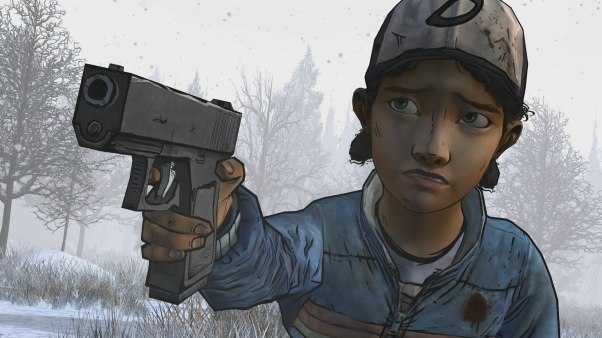
If I were to compare Alice to another protagonist in the world of zombie fiction, it would be Clementine.

If I have any complaint about the writing, it is that it violates the “less is more” rule. This is author J.M. Sullivan’s first book and I could tell that she didn’t trust her language, often repeating or going too simple. I’m from the school that taught me to avoid repetitive words on a page. Never give two sentences of explanation when one will do. Lewis Carroll owned the lingo of his fantasy, but this is the area of all others where J.M. Sullivan feels like a tentative tenant.

I hope that, in the sequel, she finds a stronger voice to suit her strong protagonist.

Alice: The Wanderland Chronicles won’t make you a believer in the zombie genre – it’s not World War Z. For those who don’t care for either Lewis Carroll’s world or horrific undead cannibals, I would advise giving this one a pass. That said, any out there who enjoy a fun zombie-filled romp should sink their teeth in. Wanderland Chronicles is the perfect popcorn to open up a fun-filled October.


Prejudice in Fantasy

Let me say a few quick things before we dive in. This article is not intended to be your last stop on this topic, but your first. This topic is worth researching as it reflects a shift away from Tolkien’s more simplistic fantasy archetype, as well as an important examination into issues that we as a society still struggle discussing. I’m also (with a couple exceptions) going to focus on prejudice portrayed in writing – not in the author. All righty, here we go.

Racism, prejudice, bigotry – whatever you wish to call it – has been reflected in the fantasy fiction genre for many years. Part of this comes from the simplistic nature established by the Tolkien archetype. Orcs are evil because… well, they just are. Their whole race was made from black magic with ill intent. You can read every extensive page of Tolkien lore and never find a good orc, Tolkien never envisioned one.

Tolkien orc prejudice Warcraft
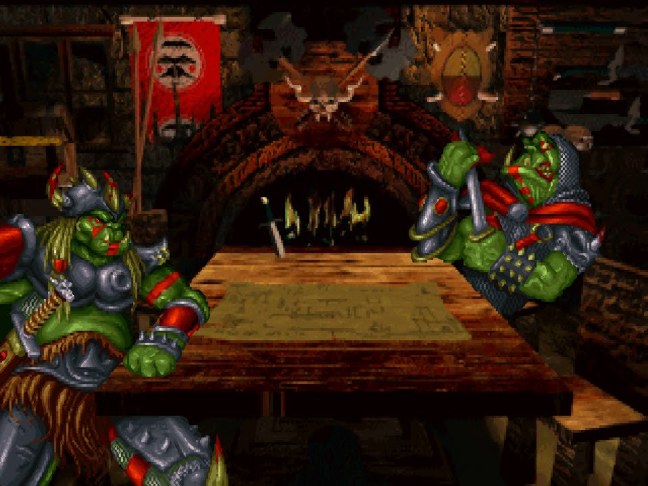
When Blizzard first created Warcraft, its orcs were also stereotypically evil. As the series evolved, this shifted to favor actual characterization and a break from the Tolkien model.

And that’s fine. Middle Earth is not ever intended to be a one-to-one comparison with our actual Earth. Its larger-than-life heroes without flaw are proof of that. The Lord of the Rings has much more in common with Greek mythology than modern day fantasy. After Tolkien, however, the problems really started. Writers, influenced by the grand epic nature of Tolkien’s world, sought to flesh out and humanize their characters… while still maintaining Tolkien’s simplistic world view.

The Unknown Prejudice of Brian Jacques

I grew up reading Brian Jacques‘ Redwall series. Books like Mossflower, Mattimeo, Mariel of Redwall – I loved them all. I was a big fan of mixing epic fantasy with local woodland creatures, somehow it helped make it more believable for me (I say this as someone raised surrounded by woods). As I grew older and the series continued, however, I began to notice things.

Marlfox was the novel where I first really noticed it. It seemed like certain races – rats, foxes, cats – were just destined to be evil. Wickedness appeared hardwired into their lineage. Born a fox – well too bad, you’re a monster! Every good character in Brian Jacques’ Redwall series was relatable. The mythological, Arthurian nature that was present in Lord of the Rings was nowhere here.

The problem manifested again and again with every new book – and perhaps this was the root of it. Jacques likely had never envisioned Redwall as a long-running series (22 main books when all was said and done). It is fine to have a group of murderous rats once or a thieving fox once – but as these character recur endlessly without contradiction, then an ugly commentary on racism becomes apparent.

Prejudice in Redwall
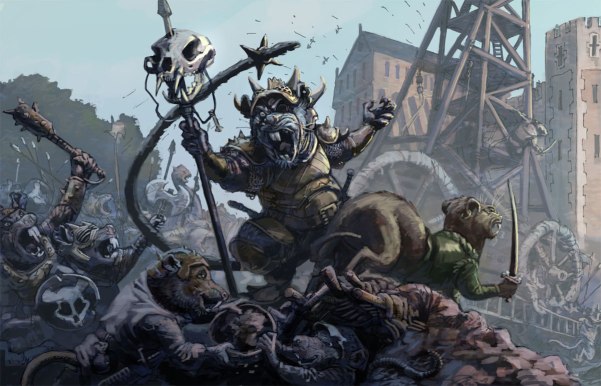
One bad rat is not a problem. A race of bad rats without a single good rat is.

I will not assume motive but the taint on the series is sadly undeniable. Whether intentional or not, Jacques has damaged the enduring charm of Redwall with, at best lazy and at worst racist, villains.

A Better Portrayal of Prejudice

There are many Brian Jacques (and unfortunately some H.P. Lovecrafts) in the fantasy genre. The inherent problem stems from a domination of white voices at the expense of minority ones. This is an issue that troubles multiple genres. A recent (2015) study found that less than 2% of science fiction stories published that year were by black authors. The odds of that happening by chance are practically non-existent.

We need to do better. If literature is as mind-opening as we claim than we have to make sure it is a medium owned by everyone. I say we because last year I attended a writers of color event and discovered – with incredible dismay – that I really had never read books that weren’t from a white author.

While there is nothing wrong with reading white authors, it is innately limiting. That meant that there was a whole perspective, whole dimensions of understanding that I was missing. It was unacceptable to me so I resolved to change it.

The Broken Earth trilogy by N.K. Jemisin is a marked improvement in the examination of prejudice in fantasy literature. Jemisin presents a world where those gifted with earth-related magic (here called orogeny) are treated with distrust, abuse, and torment. Stripped of their humanity, they are seen as less than people and too dangerous/stupid to be left on their own. They must be shackled for the good of all humanity.

Of course, The Broken Earth is told from the perspective of one of these “less-than-human creatures” and the reader can learn firsthand how nightmarish the whole system is. The lazy black-and-white nature that writers like Jacques relied on is gone. The Broken Earth Trilogy sparks thought without hitting very real issues expressly on the nose.

Dragon Age Mage Prejudice
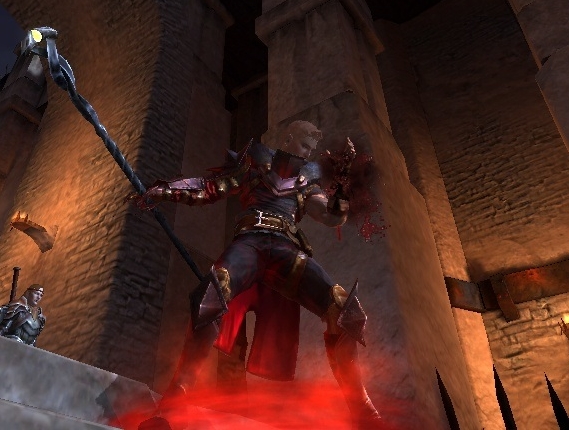
Dragon Age was a fantasy video game series with writing that was initially similar to N.K. Jemisin’s work. Its portrayal of prejudice against mages was thought-provoking and compelling… until it was dropped for the most boring black-and-white conflict that Bioware could imagine.

I believe it is incredibly important to discuss issues like racism and slavery outside of the real world. Trapping them in history confines the reality of what happened and is still happening in the world. While books like Yaa Gyasi’s Homegoing may be fantastic – and it is fantastic – they can be too easily ignored. Sometimes the best way to talk to people on tough subjects is to do so indirectly. It, at the very least, is likely to expand the audience.

I am optimistic that more new voices will enter the literary space and that genres like fantasy will deepen and improve. The presence of writers of color can only strengthen us. They will bring to light issues and ideas that we may have not thought of before and we will strengthen each other by having, for the first time, truly open exchange. Prejudice is a literary topic begging for new and better voices that offer real examination and do not simply attempt to emulate what has come before.