Nintendo's E3 2014 Strategy: oh btw… Pac-Man IS in Smash Bros.

This year’s E3 is upon us and so far… things have been kind of dull. When re-releases like The Last of Us for PS4 and Halo: the Master Chief Collection for Xbox One are getting headlines, there is definitely a lull in excitement. Yes, you (the lucky customer) will be able to buy the same great games all over again – giving your favorite companies more money! I generalize, there have also been some great teases at exciting new games. When I say teases, I mean teases. Look at this new trailer for the new Star Wars Battlefront:

Not a ton of riveting gameplay footage there.

Anyway, in the midst of it all, there is Sony, there is Microsoft, and there is Nintendo. Yes, Nintendo is still peddling that Wii U thing of theirs. The console that has been largely forgotten recently, well up until the release of Mario Kart 8 and the arrival of psychotic Luigi to the internet.

Those eyes.

It is no secret that there hasn’t been much excitement for the Wii U when compared to the PlayStation 4 and the Xbox One. Not that the Wii U does not possess its own growing library of quality games, not that the Wii U doesn’t have the strongest collection of exclusive titles out there, not that the Wii U isn’t the only system this generation to be fully backwards compatible (meaning they can’t do exciting re-releases like the other two… cause you don’t have to re-buy games to play them); it’s just a weird little machine. People are still unsure about the gamepad. People still want more games. Well, here is Nintendo’s Digital Event:

There are games all right, but many titles there were products that we already knew about. Bayonetta 2 is exciting and it is awesome to see the original Bayonetta included as well but, well, where is the new Star Fox? Turns out it was there. As was Mario Party 10 and two other brand new series (currently dubbed Project Giant Robot and Project Guard). Yes, evidently Nintendo believes in saving the best… for sometime other than their national E3 event.

It came off as bizarre to see an entire block devoted to Splatoon, another new game for Wii U, with no official mention made of the other two series. Explanation: these two new series must be (and sound like they are) at a very early stage in development. Plus as these are both new IP concepts for Nintendo, maybe the company does not feel confident enough in them at this stage to broadcast the games to an international audience. That might explain Project Giant Robot and Project Guard, but not StarFox. Heck, Nintendo and Robot Chicken even made a joke about it during their presentation:

It is nice to see Nintendo using their sense of humor but it is still a strange move. Nothing generates hype quite like a trailer and all StarFox received was a blurry video of Shigeru Miyamoto playing the game. The Mario Party 10 trailer was not even included as part of Nintendo’s Digital Event. Is there still hype for these games: of course, but there could be substantially more if Nintendo had given both games a better reveal. Which brings us to Pac-Man…

As seen in the Nintendo Digital Event, there were only two Super Smash Bros. character reveal trailers: The Mii Fighter and Lady Pala – Pale – Palutena (clearly a Nintendo A-lister). Pac-Man was also revealed but at the end of the day, at a non-streamed Nintendo developer roundtable. Now this is really strange. Pac-Man represents the unprecedented third third-party character in a Super Smash Bros. game. Plus, it’s freaking Pac-Man! Players will now be able to have the ultimate retro gaming rumble as Mario, Sonic, Mega Man, and Pac-Man are all together. No, no, show Lady What’s-her-Face, that will get the crowd pumped more.

While it seems that Nintendo has had the most exciting E3 of the large companies (sorry Microsoft and Sony, I’m just not excited to re-buy games from you in the near future), the company is still employing bizarre marketing techniques. It wasn’t all bright and cheer either as Ubisoft announced that they are sitting on completed Wii U games, but are unwilling to release those titles until Nintendo can build more excitement for the Wii U.

Announcing games in bizarre ways outside of your main event may not be the most efficient way to build hype, Nintendo. Just saying.
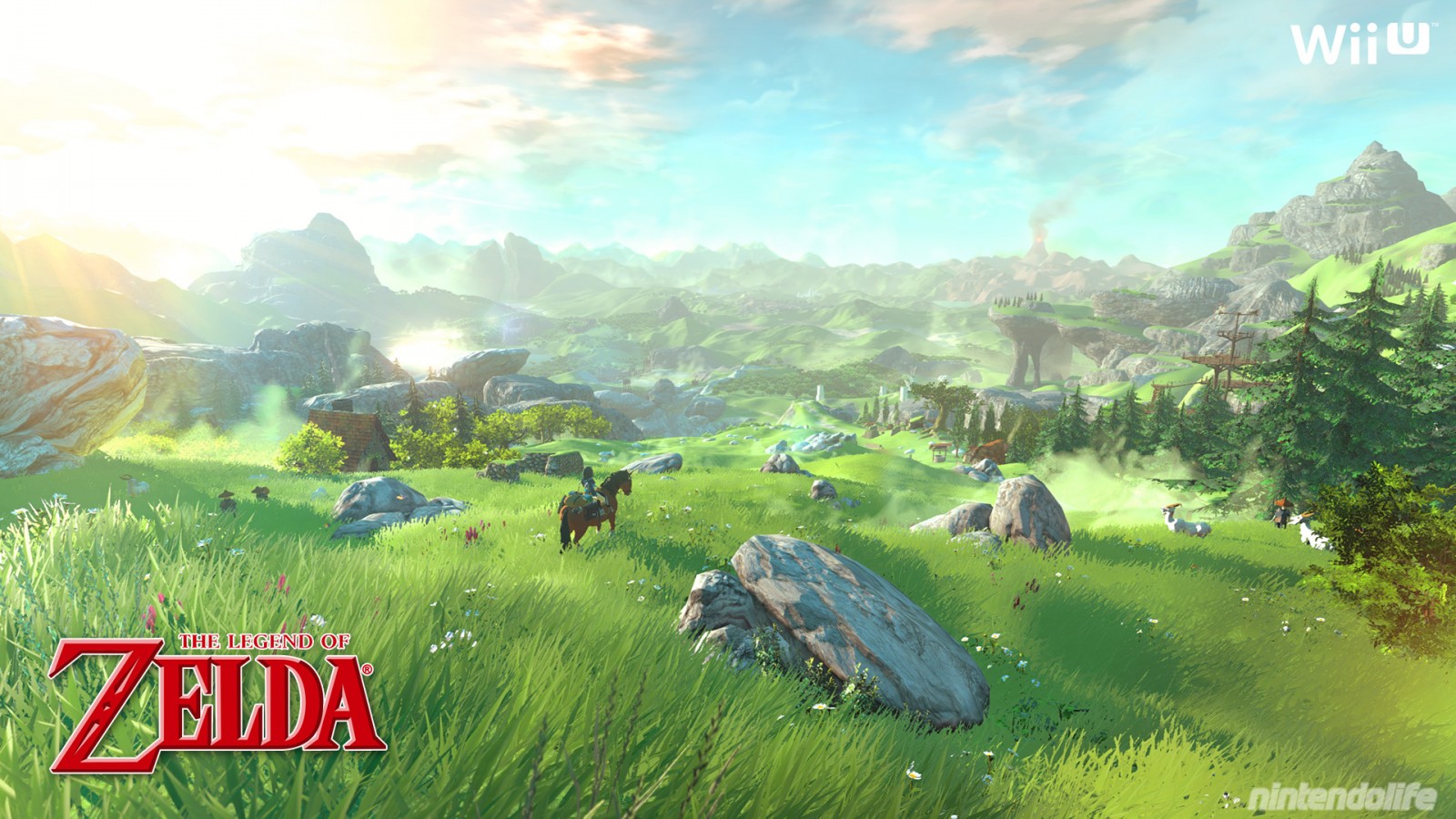
It does help when this is how the new Zelda game will look. No, really, this is confirmed to be in-engine graphics.

South Park: the Stick of Truth vs Saints Row IV

Warning: Video links are NSFW (South Park ridiculousness)

Last year saw the end of one of the larger video game publishers, THQ. The company was responsible for such hits as the Saints Row series, the Darksiders series, and the Red Faction series. Further proof that producing successful games does not guarantee longevity in what can only be described as a cutthroat industry. When THQ went under, two enormous titles, South Park: the Stick of Truth and Saints Row IV, were still in development. The public was excited for both of these titles and, luckily, each found a home with a new publisher. South Park: the Stick of Truth was released courtesy of Ubisoft, while Saints Row IV found new life with Deep Silver. THQ’s last great games would be live to be played be the public. What makes these two titles very interesting, however, is the fact that they deal with similar subject matter. Both are games designed to parody other games. Well, as it happens with any two like products, the question becomes: which one is better?

Spoiler alert: I pick this one.

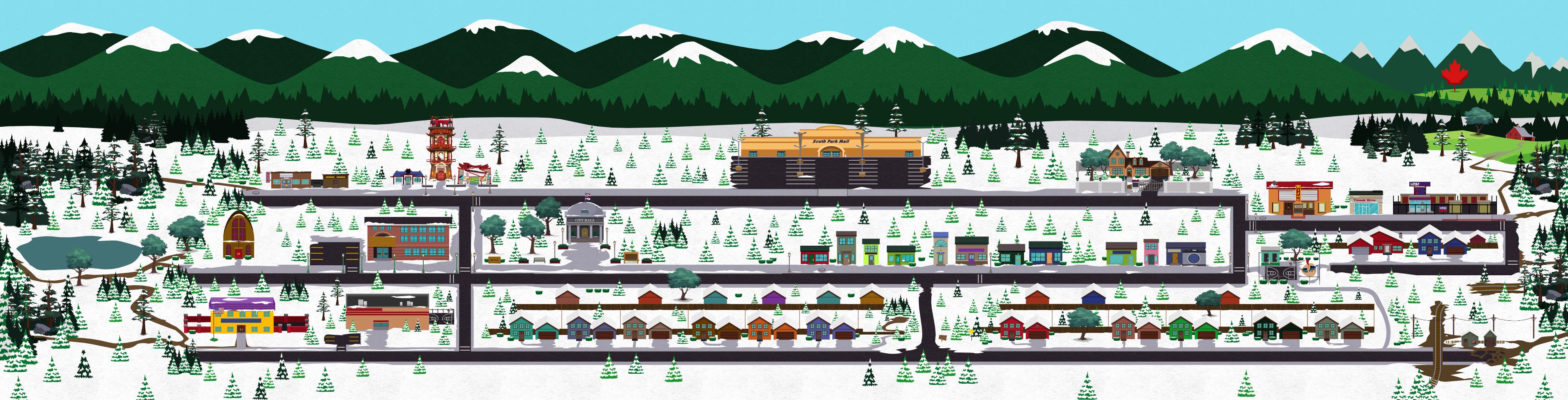
To begin, let’s examine the core games that each title is parodying. South Park: the Stick of Truth was molded to make fun of the traditional RPG (roleplaying game), where a silent protagonist teams up with a team of other, computer-controlled adventurers to complete an epic quest. Think old school Final Fantasy for this one. Heck, just look at how Canada looks in the game:

I love how Quebec is transformed into "the Caverns of Quebec."
I love how Quebec is transformed into “the Caverns of Quebec.”

The game also draws attention to the illusion of choice. There is one sequence in particular where the player character is ambushed by elves (kids dressed as elves). The elves offer a choice: fight or come quietly. Immediately after, one of the elves mentions that the fight is pointless and that the player will be forced to come along no matter what. There are several other instances throughout the game where the player is offered “choice,” and each one unfolds in a similar manner.

There is a point in the game where the player is asked to choose between Kyle and Cartman. This choice is also meaningless as both characters remain in your party.

I have already written and article talking about the Saints Row series but, just to reiterate: this is, at its heart, a spoof of the Grand Theft Auto series. Saints Row IV marks a large departure as series such as Prototype and Infamous become the primary draw for gameplay. While the core game focuses on spoofing those two series, Saints Row IV draws from several other key sources. The Mass Effect trilogy is evoked in two ways. First, Keith David is in the game as… Keith David. The character serves as a comedic stand in for his Mass Effect character, David Anderson.

2494030-keith+david+model

In addition, Saints Row IV pokes fun at Bioware’s relationship system. The idea that your player character is irresistible to everyone else and can have sex just by talking to another person. Where Mass Effect restricted it to one or two partners per playthrough, Saints Row IV allows the player to have sex with everyone in their party (minus Keith David), including one machine. This pokes fun at the idea that the only reason any player ever completed a relationship in a Mass Effect game was for the sex scene “reward” (there will be another, more serious article on this) at the end.

While both games are intelligent parodies, it is Saints Row IV that pulls ahead with simply better gameplay. It is the more fun game to play. While South Park: the Stick of Truth is hilarious, it is only meant to be played a certain way. The player is encouraged to directly complete quest after quest. Wandering (an element central to most RPGs) is discouraged. This is a short game with only a set amount in it. The repetition of things to do becomes apparent to any player who chooses to explore and (uselessly) grind against enemies. While this isn’t a huge knock against South Park, it is a limitation that Saints Row IV does not have (at least not as glaringly).

I feel that this difference is best showcased by comparing game maps, have a look:

The South Park map is exactly what you would expect. There are never more than half a dozen quest markers on screen at a time.
Most of the map for Saints Row IV. There is a much greater variety in mission type. There is also a mode just to see collectables.

Another area where Saints Row IV excels is the intelligence of some of its make-fun segments. For example, there is the moment where Saints Row IV switches to a 2D beat ’em up making fun of Streets of Rage (the segment is called Saints of Rage I believe). It is short and fun and, most importantly, easy. The joke does not overstay its welcome.

South Park: the Stick of Truth is not so smart. Any gamer out there can tell you about the frustrations of button mashing sequences. They are as the name suggestions: hit a button as fast as you can and hope it is fast enough to work. Not big on the skill but high on the tedium. On one level, the South Park game makes excellent fun of this. There is a completely voluntary sequence where the player character can use the bathroom and the player must button mash to complete the task. Fun, easy, and short – all three things. There are also several sequences where the player must button mash to complete boss battles or advance the story. These are not always fun or easy and come dangerously close to exactly copying the games that they are trying to make fun of.

One last point that I will harp on: glitches can ruin games and there are far more game ending glitches in South Park: the Stick of Truth. I encountered one such glitch and the game was nearly ruined for me. I will not dive into this further as I am planning to do a full article on the game production patterns over at Obsidian (the developers of South Park: the Stick of Truth). Suffice it to say, this is not the first Obsidian game to be held back by technical slip-ups.

For players seeking a humorous game experience, neither title will leave you disappointed. However, there are simply more funny jokes in Saints Row IV that are done better. Trey Parker and Matt Stone are geniuses in the world of cartoons, but the good folks over Volition, Inc. have the edge when it comes to properly enabling comedy through video games. There are advantages to being more familiar with your craft.

Child of Light is a Less Terrifying Limbo

Over the past week, I have had the pleasure of playing through Ubisoft’s new game, Child of Light. Using the UbiArt framework (the same framework used for the new Rayman series), the Montreal studio has crafted a joyous platformer that is full of wonder, exploration, and a sense of depth that conveys that the world is larger than anything the player can hope to explore. While playing Child of Light, there were a few things that struck me. One, less is more, not every line has to rhyme… especially when it drags down the dialogue of a game and makes it less engaging to the player. Two, it is possible to make a JRPG (Japanese style Role-Playing Game) combat system still fun and involved. Three, some games really do drip charm. And four, and this was the surprising one, that sense of wonder, exploration, and sense of depth… reminded me a lot of Limbo, just you know – not entirely terrifying.

LOOK AT THAT MOUSE! He is an archer accountant with spectacles... and his name is Robert. I dare someone not to be charmed.
LOOK AT THAT MOUSE! He is an archer accountant with spectacles… and his name is Robert. I dare someone not to be charmed.

I am not going to write how Child of Light and Limbo are the same game. They are not. In a sense,  they are similar as both games center on exploration of a foreign world and feature puzzle mechanics. The puzzle mechanics are a gentle distraction in Child of Light whereas they take front-and-center in Limbo. Also, while the two games share the exploration, the difference in tone is as black and white as Limbo‘s visuals. Actually… maybe it isn’t.

The harsh world of Limbo is a cruel and unforgiving place.

Child of Light begins with the death of the protagonist. I’m really not spoiling anything, that happens within the first cut-scene. That little redheaded girl that the player controls is dead. How she died and why she has awaken in this world of night is unclear. One thing that she learns immediately is that the world is dangerous and full of bizarre hostile creatures. Sounding familiar? True, Child of Light‘s color use is beautiful and vivid, with scenery that is more likely to illicit awe than terror. That said, at the beginning of the game, I encountered that same feeling of helplessness that I remembered so much in Limbo. The player character, Aurora, is walking along when she comes to a small pond. Across that pond is a type of wolf (unlike any found in the real world) that wolf howls and growls but cannot cross the pond. It is threatening but not deadly. I remember this part: I was filled with dread.

In Limbo, the beginning unfolds in a similar manner. The unknown player character awakens in a strange land. This time, the player has no idea what story has proceeded the gameplay. This helps add to Limbo‘s sense of helplessness as the player has no choice but to wonder on and try to survive.

Both games drop the protagonist into larger than life forests, where the player must survive against the creatures who live there.

In Child of Light, the sense of complete helplessness is lost much more quickly. Aurora finds a sword and gains her first companion (a firefly with incredible healing abilities). Tone-wise, nope – there isn’t much linking the two when that happens. Aurora has someone to talk to and an immediate way to defend herself. The unnamed protagonist in Limbo never has either luxury. Nevertheless, a moment does come when the sense of helplessness is lost. The spider. Anyone who played the game, you just shuddered. To anyone unfamiliar, have a look:

As someone with an intense fear of spiders… ugh. Anyway, that thing menaces the player throughout the start of the game. The helplessness of Limbo ends the moment that the player kills that spider. From then on, Limbo is no longer as terrifying as it was before. The focus shifts into more pure puzzle-solving. The player feels enabled, not with a sword mind you, but with their mind. Killing a giant spider will do that.

While both games handle their challenges differently (it is much easier to die in Limbo), it does not change the base similarity. These are quality games with a strong focus on exploration and stories that push relentlessly onward. The depth of their side-scrolling presentation is incredible and I think both games owe something to King Kong (1933).

“Wait, what?” You ask.

Look at this:

Dore Kong Log

The artists who designed Skull Island in the original King Kong were geniuses and managed to create this layered look that brought the fantastical world to life. Child of Light and Limbo share this aesthetic and use the same visual style. If you’re planning to make a video game with a sense of wonder at a world that is both fantastical and threatening, there really is no better source of inspiration.