Let me tell you about Dino-Riders. It is f*cking amazing.
There are dinosaurs with freaking laser beams attached to their heads. I’m not lying. Produced in 1988, Dino-Riders was a TV show that (exactly like Transformers) existed to sell toys. What kind of toys exactly? Have a look:
Literally dinosaurs with laser beams attached to their heads. You see that it was no exaggeration.
Oh and in case you’re wondering what the heck is riding the dinosaurs? Let me tell you:
So the basic premise is this: good-guy humans and bad-guy aliens end up back in time (or on some other planet – who cares?) with dinosaurs. They attach weapons to those dinosaurs and proceed to beat the crap out of each other. This makes the ridiculousness of Jurassic World look like a serious drama.
It is smart: absolutely not. Well, I shouldn’t say that with such certainty. I only ever watched two episodes of the show as a kid a long time ago… but I remember nothing about it besides “good guy is good, bad guy is bad – DINOSAURS.” Yet what needs brains to make a lot of money.
Really, ever since Transformers emerged as a blockbuster juggernaut (again – points for movies that make no sense), Dino-Riders should have been a no-brainer. Well, I’m happy to report that Hollywood might have finally realized what they’re sitting on.
Will it materialize? It had better. Seriously Hollywood – this is a franchise with mindless dinosaur and alien action that is from the 1980s. It has cash cow written all over it.
Oh and apparently there is a video game? It looks fan made. People can also just play Ark: Survival Evolved, which is practically the Dino-Riders game.
Last night HBO completed its fifth season of the hit show, Game of Thrones. This season marked arguably the most controversial of the series as, in addition to its usual highly discussed content, season five marked the largest breakaway from the book series by George R. R. Martin. For most of the season, fans appeared split on the issue. While some (like myself) welcomed the changes that preserved the impending doom and focus of the main plot, others had a different reaction:
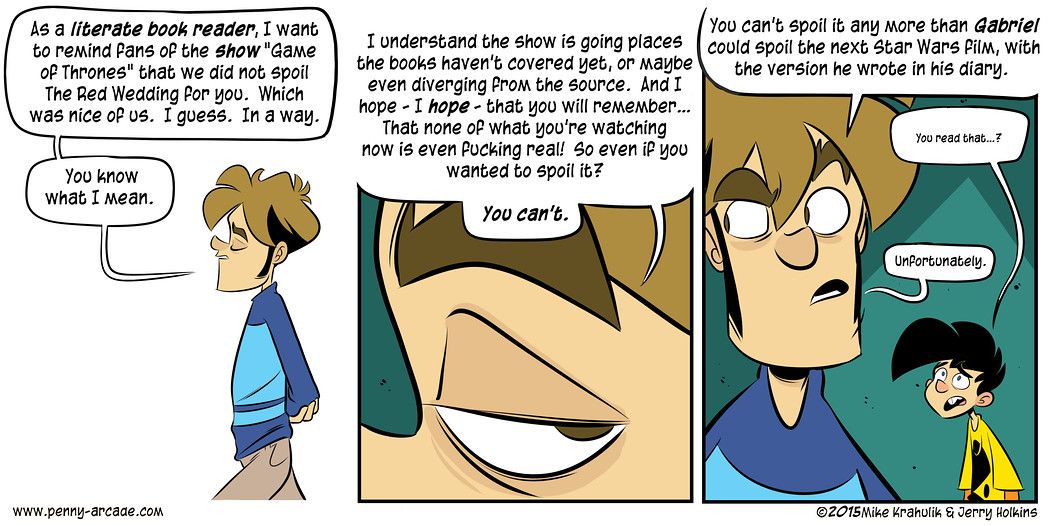
Many reactions from fans of the book to the show’s changes.
Many characters were omitted and most of the plot threads included in the fifth season were truncated versions of their literary counterparts. Yet the show justified this by taking many plot lines beyond where the fifth book, A Dance with Dragons, left them. Yet as the old saying goes, “never leave a job halfway done.”
So let’s talk about this season, in particular last night’s finale. Warning: spoilers.
When season five was announced, one notable absence was announced shortly thereafter: Bran Stark. The show’s head writers sited that the character’s ” immediate future didn’t seem to provide as compelling material.” Fair enough, kind of a dig at Martin’s writing (which covers Bran’s training) but okay – lose a lackluster plot to help preserve the pace….
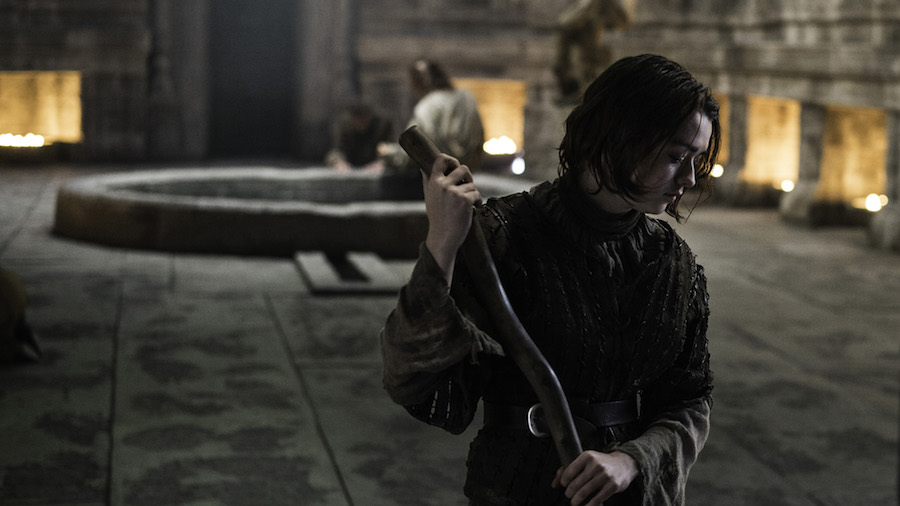
Why watch someone train in magic when you can watch a little girl sweep?
For those out there who missed it, let me some up what Arya does for ALL of season five: washes dead people, watches people, gets told she is not ready, sweeps. Sure, she kills someone in the season finale… but this was compelling? This is what Bran Stark needed to be sacrificed for? Watching an Arya scene in season five felt like watching paint dry… while being told it is not ready to dry. The main story ground to a halt and the same dull message was repeated over and over again (sort of like the Red Skull’s scenes in Captain America).
Hypocritical to call one plot boring and the other riveting. For those wondering, Arya is still following the book’s plot (for the most part). That said, why? In making changes to the show’s content – head writers David Benioff and D. B. Weiss have challenged George R. R. Martin. They know how it ends… and they have reacted by losing characters that Martin called important and making substantial changes to the plot… while still following it.
Lady Stoneheart, the resurrected Catelyn Stark, is one of the most noticeable absences from the show. The show creators essentially saying that the one character George R. R. Martin has brought back to life (so far) is irrelevant… or less interesting than sweeping.
This is what I mean by don’t leave a job half-done. If Benioff and Weiss have problems with Martin’s work, they are not bound to follow it. Yet they for the most part did, and the end result was a finale final hook that fans of the book have known about for a while… and that the author has already essentially debunked.
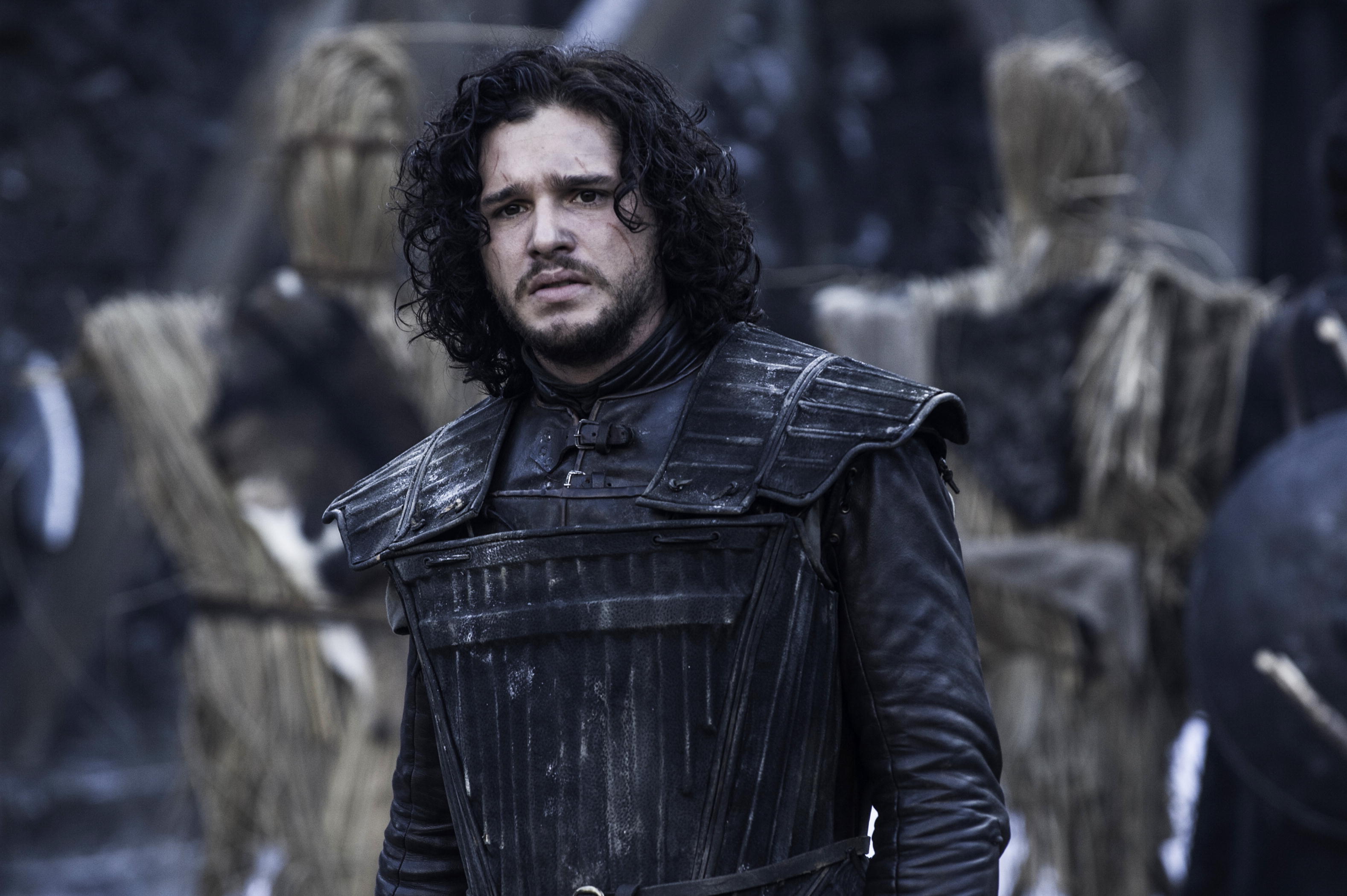
Really Kit? You’re going to write and go into movies? Really?
It is a cliffhanger, and a cheap one. One that hinges on the audience abandoning all reason to believe it is true. Oh if only there was someone… a witch (who conveniently just rode in) maybe, around who could control life and death. Oh drat, all well, on to the next main character driving the Wall/White Walker plot line… oh there isn’t one? That’s odd.
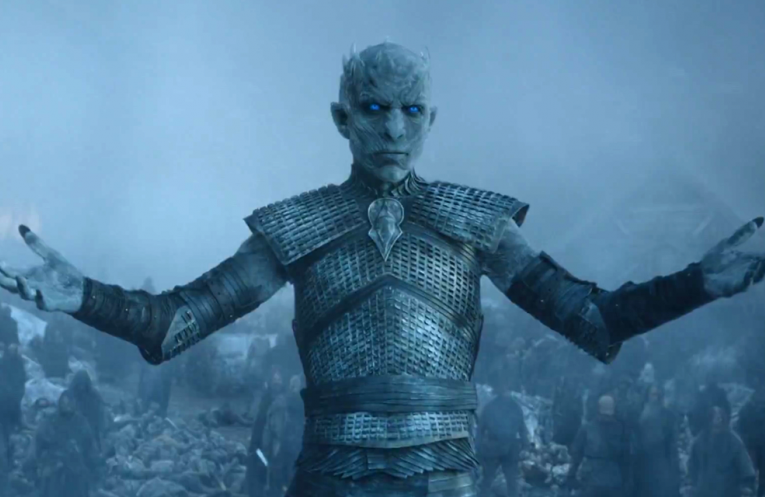
The point is, this is the hook that A Dance with Dragons ended with, but the show is not in the same place. That epic White Walker attack never happened in the books (or if it did we didn’t read about it) so the threat is still far off. In the show, they seem to be like… a day behind John Snow in reaching the Wall. The tension is ratcheted up already, we didn’t need a PSYCHE moment to end the season.
“We already did one thing this season, what more do you want?”
And we didn’t need cliffhangers… oh god the sheer amount of cliffhangers in that last episode was staggering. Forget adapting and source material, that was bad writing.
There was no content in that season finale that served the current season. It was all hook… with no bait. As anyone who watched Lost will tell you, you can’t just ask questions. When the show was winning me over, it was because it wasn’t waiting. Martin’s last two books have entered a holding pattern on the main plot… and it appears that the show ultimately has done the same. At least this time fans know the wait will be finite, but after so much build up – can we still hope for a satisfying payoff?
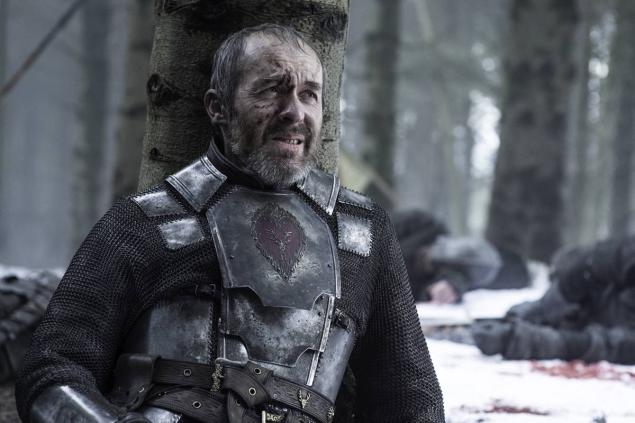
To call Stannis Baratheon’s resolution anti-climactic would be to call Ned Stark’s beheading slightly sad.
The final episode reminded me a lot of the last two books – something big is going to happen… eventually. But for now enjoy more death and nudity, if that still affects anyone watching the show at all.
Reading A Song of Ice and Fire feels like reading five books stretched into seven, and unfortunately for all its big “changes”, watching Game of Thrones is feeling the same way.
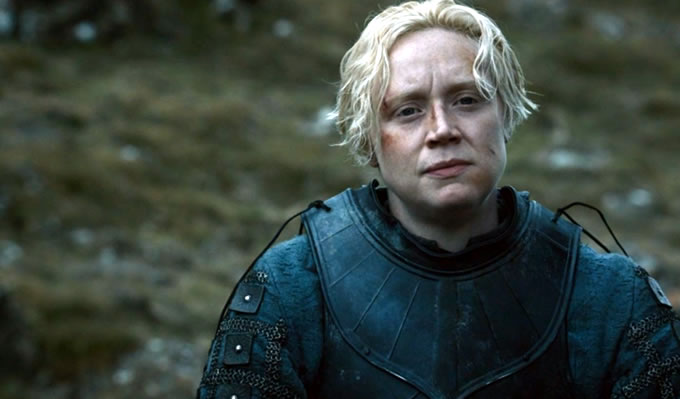
“Hmmm, okay I’m going to abandon Sansa during a battle to go walk a battlefield and hope I can find Stannis, hope he’s still alive, hope there’s no Boltons around and hope I can kill him. Brienne, you are a genius.”
As the world ticks by another March 31st and I celebrate a special birthday, I will take the time to ask a deep-sounding and important question: how does one be a good person? There are so many complications to this question that make it nearly impossible to answer. The largest and most immediate may be “what is my definition of good?” Indeed, ‘good‘ is not a static word in the English language. Nearly any act, from saving a kitten to taking a life can be viewed as ‘good.’ So, where to start? Also, doesn’t this post have something to do with Avatar: the Last Airbender?
Yes, and there is a reason for starting the post with such a board question. As I have mentioned in past character analysis, the best art includes characters that can teach real life lessons. My post on Iroh focused on how he dealt with tragedy, my post on Azula discussed how the tragedy of her life came about and could have been avoided. Well, if we’re talking Fire Nation complexity, we gotta talk Zuko.
Zuko, for those out the who don’t know, is the Fire Nation (bad guy) banished prince. He was meant to be the next Fire Lord before speaking out of turn cost him his home and his title. He was cast out to wander the world in search of the Avatar with only one ship of men and his uncle (Iroh) to help him. Another way to describe Zuko would to be to liken him to Hamlet. I’m basically saying that he has daddy issues and difficulty making up his mind. Also, not the most cheerful guy to be around:
Typical Zuko response.
At the beginning of the series, Zuko is an antagonist. He chases the Avatar with single-minded focus. After all, according to his father, capturing the Avatar is the only way to restore his honor and the only thing that will allow him to return home. Wow, right? He must have done something really bad to get banished in the first place, right?
Turns out the only thing Zuko did was speak out of turn… and in protest of some troops being sent on a suicide mission. As a result, this happened:
Yeah: holy sh*t. Zuko’s own father burned half of his face off… just for speaking out of turn. This gives you an idea as to what kind of childhood Zuko led. He wasn’t raised by loving parents, he did not have a stable environment in which to grow, he did not have many friends or allies who believed in him. In short, Zuko did not come from the house where most storybook heroes are raised.
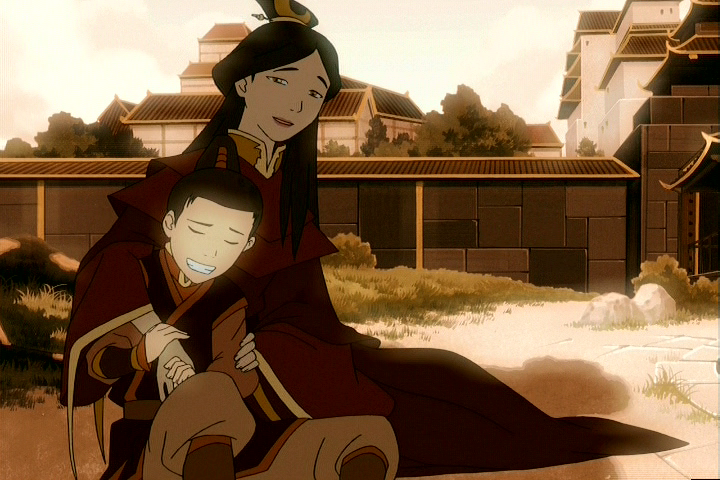
Zuko did have a happy childhood with his mom… until she was exiled.
We all like to think that we’re good people on our own, but the proven fact remains that environment is crucial in child development. It can be an unsettling question to ask: “If I were raised by serial killers, would I view killing as wrong?” Well, Zuko was raised by a killer. Ozai (Zuko’s dear old daddy) essentially arranged the death of his father to further his own politcal career. I’m going to guess that morality talks were not an often occurrence in Zuko’s childhood.
As such, is it such a wonder that he began the series as a ‘villain’? No, the incredible achievement comes in his being a protagonist by series’ end. Of all the characters who transform throughout the series, there is none who grows as much as Zuko. The more incredible fact is that Zuko accomplishes this transformation largely on his own. Yes, Iroh is a powerful positive force for change, but he never forces Zuko to do anything.
There, that’s as forceful as Iroh ever is. Zuko does not rely on his uncle to question him. He is a constant judge of his own emotions and actions. After every major action, there is a reflection. This is one of Zuko’s most positive qualities as it allows him to learn and grow through everything he does.
“For so long I thought that if my dad accepted me, I’d be happy. I’m back home now, my dad talks to me. Ha! He even thinks I’m a hero. Everything should be perfect, right? I should be happy now, but I’m not. I’m angrier than ever and I don’t know why!… I’m angry at myself!”
This awareness, this willingness to look inward and critique is so important for growth. For contrast, Azula never reevaluated her actions. Everything she did was right because… she did it. No one can ever be perfect so it is important to be able to look back and admit mistakes. Yet Zuko’s greatest ability is not his awareness, but his determination to continue to improve himself.
Let’s go back to the serial killer scenario. Even if you still found killing to be wrong, would you ever realize your family was in the wrong? More than that, would you ever act to stop them? Zuko does. He turns on his family, he turns on his father; the man who was pinnacle of authority.
Damn, that takes courage. A large detail not to ignore is that Zuko never distances himself from his family. Yes, he believes the Avatar should kill his father, and he does label his father “a monster,” but Zuko still calls the man ‘father.’ He never separates himself from the people who were so cruel to him. Is there a level of forgiveness there? Probably not, but it is good to see that no sense of superiority comes with Zuko’s change. He is never so high on himself to think he is perfect.
It could be argued that Aang was great because of his childhood and being raised by the Air Nomads. Katara may have found a lot of her strength and caring from her mother. Toph may even be her contradictory self only to spite her parents. Zuko… Zuko is the man he is because that is the man he chose to be, regardless of the negative and positive forces in his life.
Katara mocks but that is actually really impressive.
When asking how to be a ‘good’ person, that might be the answer. Look at all the forces in your life, and then be the force you want to be, since it is always possible.






 Colin McMahon