Okay… let me preface this with a couple disclaimers. One: this is not a personal attack, I’m not accusing James Rolfe or Cinemassacre of sexism, racism,… any kind of “ism” out here. I have never met him. In general, I like his videos (love Monster Madness, looking forward to that again this year). Two: there are much, much, more important things in the world than what one internet critic had to say (or not say) about a movie, and my reaction to those words. Please go to NPR, FiveThirtyEight, or a host of other sites to see what those are. Okay – cool, let’s talk about some silly stuff on the internet. Continue reading Silly Things on the Internet: Calling out Cinemassacre
Godzilla: What Kind of Resurgence will Toho Bring?
I had planned to write a post on the stages of Amiibo addiction, but I’ll save that for another time. A couple of trailers debuted yesterday and I want to talk about this one:
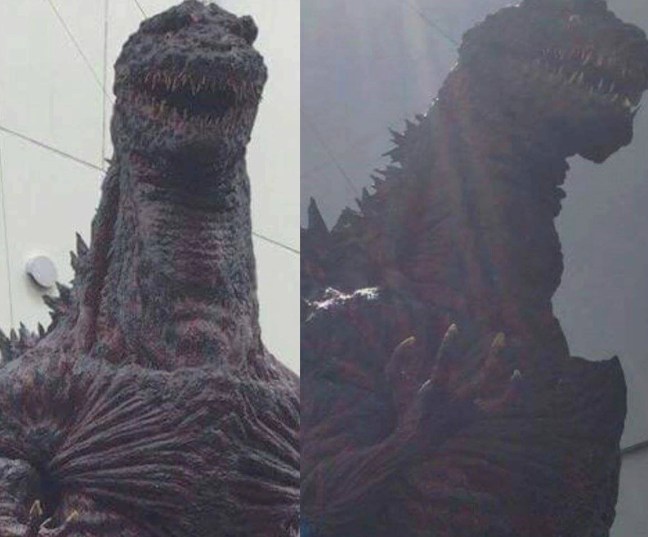
Needless to say, this footage is pretty striking. The images of a glowing, bleeding, gnarled Godzilla frame a stark contrast from the monster last seen by mainstream audiences in 2014. Shin Godzilla, or Godzilla Resurgence as it will be known internationally, is the 29th Toho Godzilla film and the 31st overall iteration in the franchise.

Since his original film in 1954, Godzilla has become an unparalleled film icon. It is the longest running, largest film series of any character (outnumbering even the 26 James Bond films). He is part of the modern mythology of the twentieth and now twenty-first century, and has such seen many interpretations.
Godzilla has been a father, a force of nature, an angry spirit, a protector of Earth, a radioactive mutation, and, most famously, a symbol of man-made nuclear destruction. Watching the trailer for Godzilla Resurgence, it seems fairly obvious that Toho has selected to invoke this original, most striking interpretation of the Godzilla mythology.
Before I continue further, it is interesting to note that, to date, Japan is the only one to pursue this horrible envisioning of Godzilla. When the United States has adapted the King of the Monsters, there is always the tendency to distance his creation from the use of nuclear weapons. The 1998 film actually comes the closest to preserving his nuclear heritage, but even that movie reduces Godzilla to the byproduct of a French nuclear test, and not the direct result of the United States using and testing atomic weapons on its then enemies.
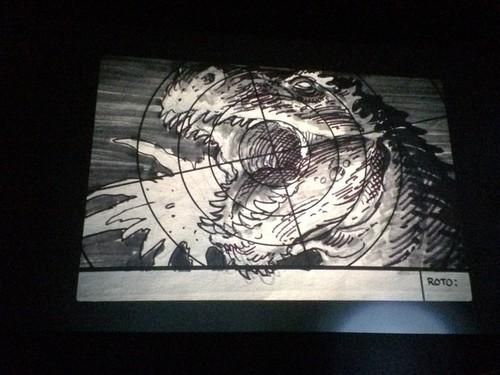
Godzilla Resurgence appears to be a direct sequel to the 1954 film, and by that I mean it will likely not include any of the other films in the Godzilla series in its continuity. This would make it the fourth time that Toho has used a direct sequel to start a new series (yes I am aware of the Millennium series – I will talk more about that in a bit). The others include Godzilla Raids Again, The Return of Godzilla (Godzilla 1985), and Godzilla 2000: Millennium (Godzilla 2000). Of those, this will be the second time that Godzilla has appeared in a movie solo, without fighting another monster – The Return of Godzilla being the only other Godzilla sequel to not feature another monster.
Each of these films began a “series” of Godzilla films. Godzilla Raids Again is the first film in the Showa series, the Godzilla films between 1955 and 1975. The Return of Godzilla launched the Heisei series, covering all Godzilla films between 1984 and 1995. And Godzilla Millennium appropriately launched the Millennium series, spanning 1999 to 2004. Each of these series has their own unique feel.
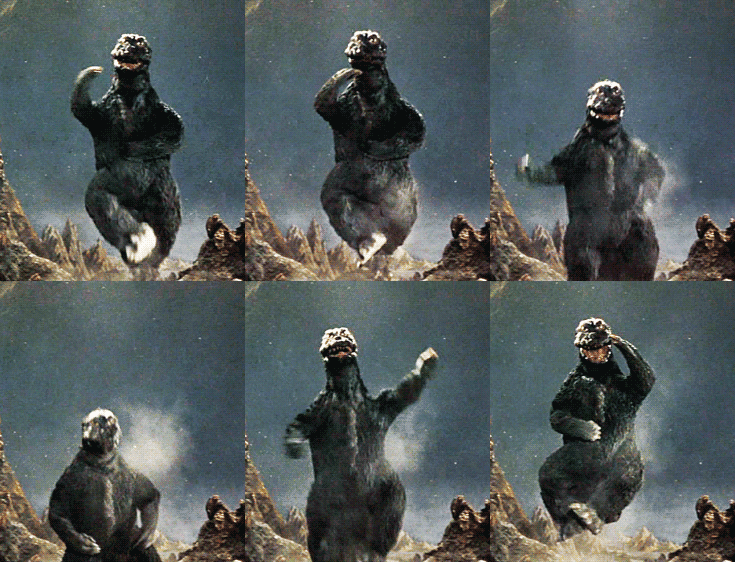
The Showa is historically marked by silliness and “cheapness.” As the first series, this is when the effects looked their “worst.” It also saw Godzilla primarily as a good guy, the defender of Earth against all other monsters. The fights were brawls, typically featuring a lot of wrestling moves. This series saw the most movies, the most monsters, and the greatest range of film style and tone.
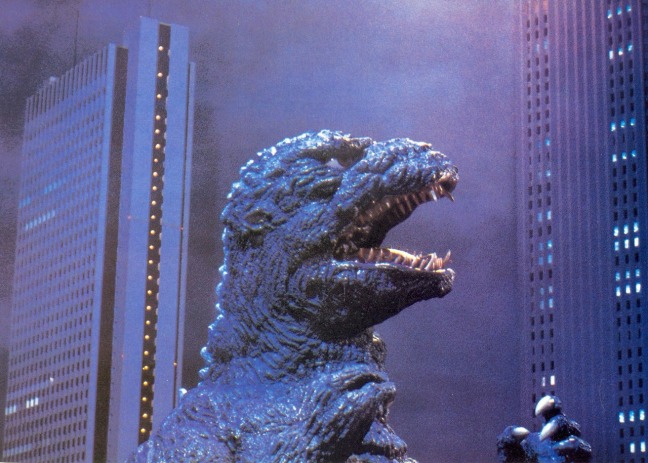
The Heisei series is “serious.” These films feature a continuity, with each clearly happening after the one before it. This is the only Godzilla series where a clear continuity is evident. The costumes became bulkier, Godzilla became meaner and more a force of nature than either villain or hero, and the fights became more beam-oriented and less close quartered.
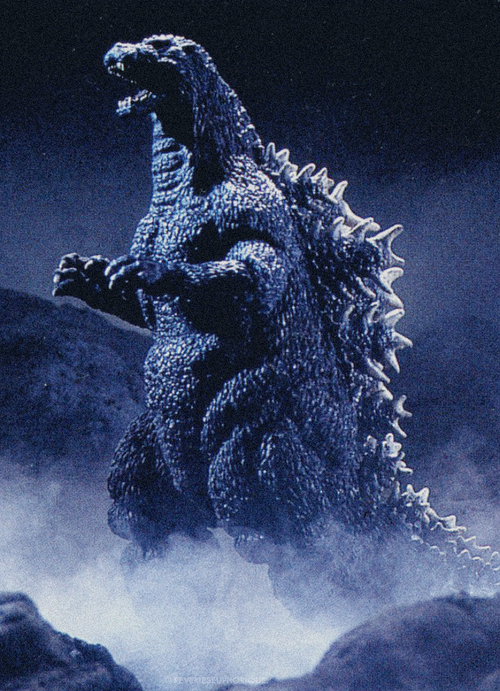
With the Millennium, nearly each film became a direct sequel to the original. Despite this, there is almost a continuity present as nearly all the films share a similar tone (Godzilla, Mothra, and King Ghidorah being the exception). The Millennium series can be described as an interesting mix of what came before. Godzilla is mostly the good guy, although never to the extreme that he was in the Showa series. The films are also, for the most part, less serious – or take themselves less seriously – than the Heisei, although again not to the extent that was seen in the Showa. This is the shortest series and the one to introduce the fewest new monsters to the Godzilla mythology.
I am making a point with this lesson in Godzilla film history (besides my having too much free time), and that is this: the first film does not necessarily echo how the series will be shaped. Godzilla Raids Again had a lot more in common with its 1954 predecessor than did Godzilla’s Revenge, yet both are part of the Showa series. GMK and Final Wars had nothing to do with Godzilla 2000 and were both tonally different films.
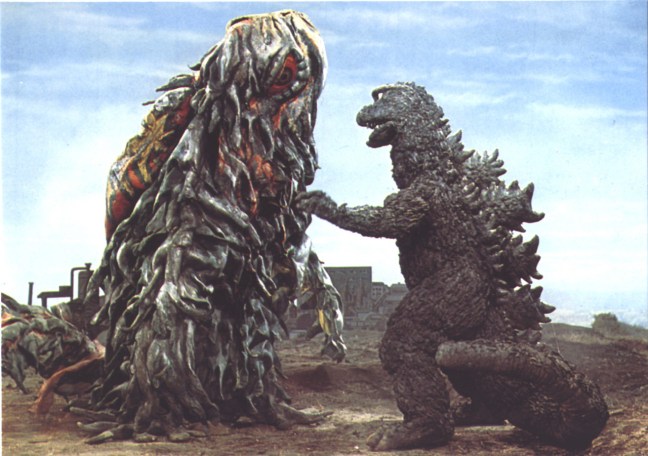
So, while Godzilla Resurgence looks to be bringing back the dark and ratcheting up the horror from the original, it is still too early to say what the spirit of the Shin or Neo (or whatever the fourth series is ultimately called) Godzilla series will be. Will there be continuity or will it be more disjointed (continuity at this point looks less likely given the stark imagination of the Godzilla suit)? Will Godzilla remain a horrifying menace or transform back into the good-guy defender of Earth?
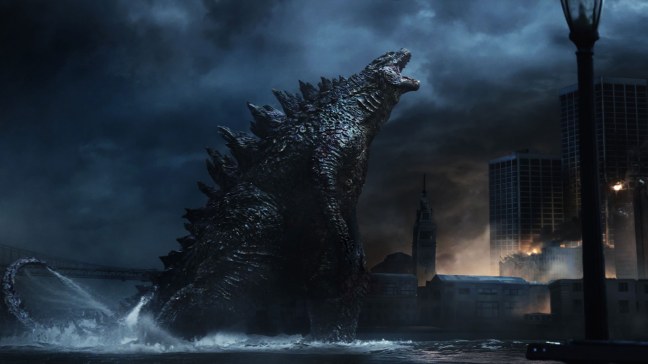
The only thing for sure is that it is unlikely that audiences will be seeing the good-guy anytime soon from Japan. I base this off no definitive information, but rather by looking at the international landscape. For the first time ever, Toho will not be the only company putting out a Godzilla series. “The Legendary Series” as it is already becoming known, will span at least three films, and features a Godzilla who seems to be nearly completely the positive presence. Toho may likely opt to go darker just to form a distinction.
But all this may be getting ahead of ourselves. Let’s hope Godzilla Resurgence is good enough, and successful enough, to spawn a fourth Godzilla series. There are simply some things that Japan still does better than the United States.

Skull Island: More Son of Godzilla than King Kong?
Recently, the first behind-the-scenes look was revealed on Kong: Skull Island, the upcoming reboot to the King Kong franchise. Have a look at it below: … actually, scratch that. It was uploaded by MTV and they don’t like making their videos accessible (that leads to a socialist internet). So here is the link to their site, and below I’ll just stick an IGN recap of what was said. Sound good?
Anyway, so this Kong is a bit different from the one that Peter Jackson brought to life back in 2005. Jackson’s Kong was a remake of the 1933 classic, plain and simple. It told the same story, albeit with minor alterations and updated effects. This new movie is going for something different.
Cinematic universes are all the rage now and Universal and Legendary are looking to make one of their own. As recently confirmed (and accurately guessed on this website long before), Legendary wants to remake King Kong vs. Godzilla, the most financially successful Godzilla movie ever made. Makes a lot of sense.

Yet we all know that good cinematic crossovers need establishing films. When companies just throw a lot of properties into a film without first establishing while the audience should care… well, bad things happen. Kong: Skull Island is meant to establish King Kong in the same universe as Gareth Edwards’ 2014 Godzilla, and set the stage for future monster rumbles.
What does this mean for the movie itself… well, quite a bit. Don’t expect Kong to climb the Empire State Building this time out. Don’t expect Skull Island to be populated with dinosaurs. Don’t expect the relationship between Kong and Brie Larson (the female lead) to be the center of attention. In short: don’t expect a lot of things that you would expect in a King Kong movie. A lot of this has to do with size.
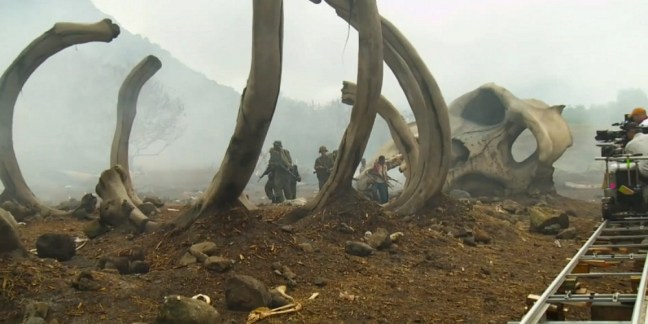
In order to battle the King of the Monsters, Kong needs to go through a growth spurt. Kong is typically 25 feet tall, whereas the newest Godzilla clocked in at about 360 feet tall. That would look like this:

So obviously, bring Kong up to size. They’ve done it before and they can do it again. Yet this creates problems for the typical King Kong mythos. Either Godzilla becomes very mundane or Skull Island cannot be full of super-sized dinosaurs. This means that Kong will either be alone on his island (like he was in the other King Kong film set in the 70s), or they will be other creatures. To spoil what was said in the MTV First Look: There will be other creatures.

Where will these creatures come from? Well, there’s an intriguing possibility here. Let’s look at the facts. Gareth Edwards has long put forth the idea that he would like to establish the concept of Monster Island in his Godzilla movies. For those who don’t know: Monster Island is an island that houses all the Earth’s monsters. Pretty self-explanatory. In the Toho universe, Monster Island is somewhere in the Ogasawara (Bonin) Islands. No location has been given yet for the Legendary universe but hmmm, wouldn’t Skull Island do nicely?
Another fun factoid to know: Legendary has purchased the rights to multiple Toho monsters, meaning that they now have access to the largest famous kaiju (giant monster) library in existence. This sets the stage for Kong to have some noteworthy adversaries in Kong: Skull Island.
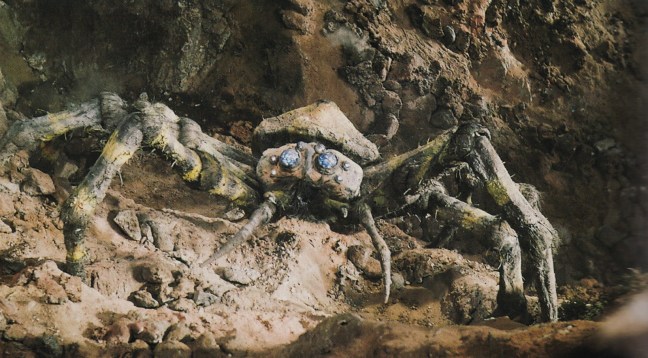
A movie, set on a tropical Monster Island, with giant monsters battling and a team of humans struggling to survive… sounds a lot like 1967’s Son of Godzilla. The movie, which follows a scientific team conducting a weather experiment, seems to line up a lot closer than the original King Kong likely will.

For one thing, Kong will most likely not be traveling to the mainland this time around – as the film is set in the 1970s. If Kong went mainland, and this film shares a universe with Godzilla 2014, how come the army seems unprepared to handle giant monsters forty years after one publicly appeared? It’s not likely. Edwards already tweaked the story of the 1954 Godzilla to avoid a similar situation.
So Kong: Skull Island will likely take place entirely on the island, following a team that discovers, and likely then attempts to escape from, the creatures they encounter. There’s few films like that out there, and Son of Godzilla is one of the better ones. I would not be surprised if that film becomes a blueprint.
 Colin McMahon