Subverting the Fantastic: Why we Love a Song of Ice and Fire (Game of Thrones)

Ask anyone who can read or has HBO: George R. R. Martin is an entertaining man. His series, A Song of Ice and Fire (or Game of Thrones as it is known on television) has taken the world by storm and become an element of culture. Few fantasy series ever achieve this level of fame. While there is no single reason why A Song of Ice and Fire has become as popular as it has, the intelligence of author George R. R. Martin plays a large role. More importantly, his knowledge of the genre and his ability to subvert the common themes/archetypes that readers/audiences have come to expect. Let us examine a few of the new spins that make the series memorable (warning: spoilers to follow).

1. Killing Your Main Character in the Opening Act

“Ah!” You cry, “spoilers!”

… The book, A Game of Thrones came out in 1996, the HBO show aired its first season in 2011. Eddard “Ned” Stark dies. He was played by Sean Bean. This information should surprise no one.

But holy sh*t, this kind of thing does not happen in fantasy often. What’s more, Eddard Stark is the honorable knight lord. He is a man who lives by a code and strives to do what’s right. In most fantasy series, this would be the character that the audience/reader follows throughout. Witness Ned Stark slay the beasts and watch as good triumphs over evil. George R. R. Martin understood this, he understood that no one reading his book would think that Eddard Stark would die – so he killed him off.

While any weary reader/watcher could suspect that Eddard Stark’s initial plan to stop the Lannister’s would encounter hiccups (it was only the first book in the series after all, he couldn’t solve every problem right then), the idea of killing him was simply foreign. By doing so, George R. R. Martin tossed out the idea of the immortal hero and showed that anyone/everyone in his series would be vulnerable. Instantly, every character became that much more interesting. If Ned Stark could lose his head – anything could happen.
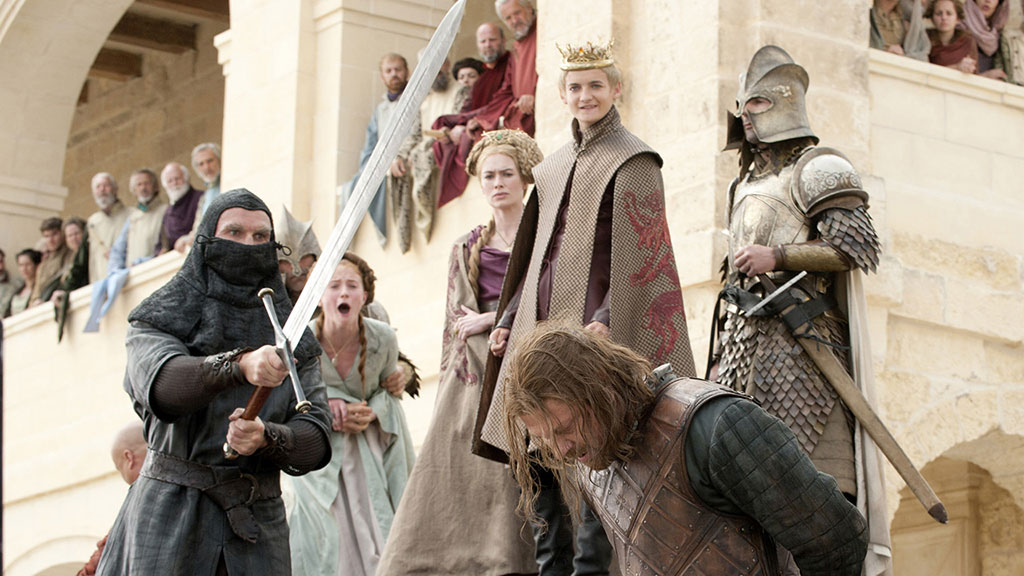
The moment that changed the series.

2. Tyrion “the Imp” Lannister

No offense to Peter Dinklage (I love his portrayal of Tyrion in the show – he is a phenomenal actor) but he was not right for the part of Tyrion. Let me rephrase – he needs makeup for the role. Tyrion Lannister is known as the Imp. Not simply for his short stature but for his deformities. Here is an illustration based on how the books describe Tyrion:

Black and white cannot show his two eye colors but you get the idea.

He is ugly. A small, malformed creature – and a member of (arguably) the most hated house in the series. Following normal fantasy logic, this guy should be the worst one. A treacherous, sneaky little imp that lurks in the dark and preys on the weak. Yet that is not Tyrion Lannister at all. By far the most likeable member of House Lannister, Tyrion operates with more decency and honor than his two attractive siblings.

I could have used any character really to illustrate how George R. R. Martin subverted the common fantasy notion that beautiful people are always fair in every aspect of their personality but I believe no other character illustrates this better than Tyrion. This is a fantasy series where looks tell the audience/reader nothing about the character… save how they appear.
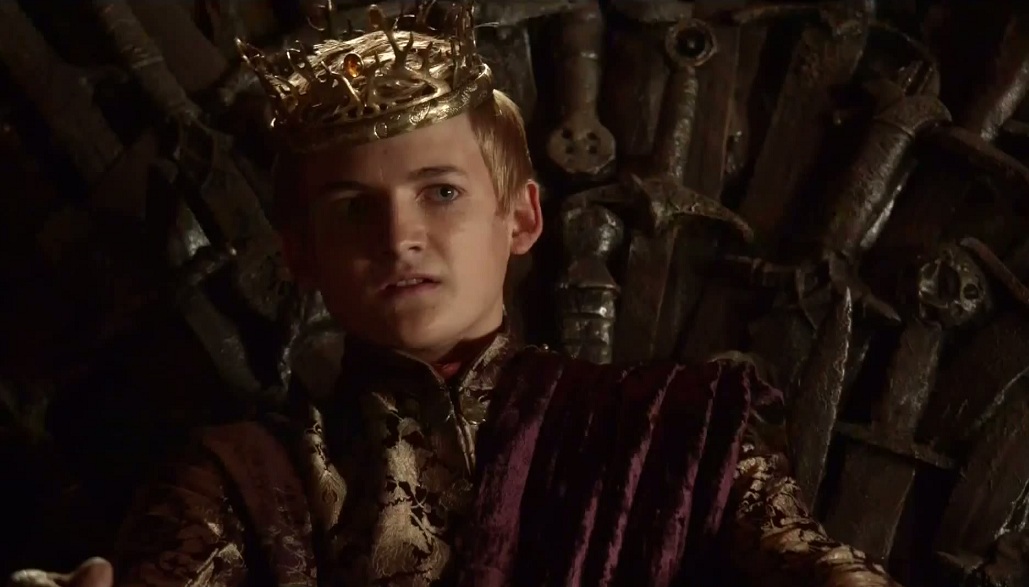
Man, look at this little kid. I bet he is innocent and naive. I hope he finds a knight to mentor him up into a just lord...
Man, look at this little kid. I bet he is innocent and naive. I hope he finds a knight to mentor him up into a just lord…

3. Weddings and Battles

In most fantasy series when main characters do die, it is on the battlefield. In the midst of war they are slain: pierced by a sword in single combat usually. As fair as deaths go, it is a very romantic image. Weddings by contrast usually mark the place of resolution/happily ever afters. The war is over and the danger is passed, time to celebrate with a light affair and end the book.
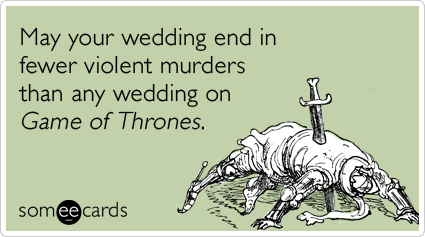
red-wedding-game-of-thrones-murders-wedding-ecards-someecards

When is the last time a main character was killed in a battlefield in A Song of Ice and Fire? No, nothing kills main characters like getting married in a George R. R. Martin series. While some might say this is a manifestation of personal issues (Martin’s first marriage ended in divorce), I like to think it is more of the brilliant subversion that is found throughout the series. As mentioned before with Tyrion Lannister: appearances are not everything.

comics-spoiler-Game-of-Thrones-wedding-734669

4. Female Characters who Actually do Sh*t

Martin can be hailed for creating a series where women are at the center of the action. While this, hopefully, will be the norm for every fantasy series to come: the change has to start somewhere. I am in no way crediting Martin for being the first (there are plenty, including Tolkien, who have incorporated women into an active role). Famous works are an inspiration and this will do far more for advancing female characters in fantasy than a dozen obscure series that are only read by a few.

Given her introduction, few people probably assumed that Daenerys was destined for the power that she has taken.

A Song of Ice and Fire has two books left before completion and the main conflict appears set (White Walkers (Ice) vs. Dragons (Fire)). It has been a long time since George R. R. Martin began his series (the first three books were published within four years, the last two have took eleven) and some (myself included) are starting to doubt whether the quality will be maintained. Ending a series is one of the hardest challenges in writing. There are many characters and audiences/readers will be wanting a satisfying resolution for all of them.

Yet George R. R. Martin has surprised us, time and time again. It is one of the main reasons that we keep reading/watching. The beginning was unorthodox, the middle was turbulent… who is to say that the epic fantasy ending that we are all starting to expect is even coming. This has not been a series to play by the rules. That is why we love it so much.

fire-frost-182x5y1

How to Tell a Story: Why How to Train Your Dragon Works so Well

It seems that Dreamworks Animation has always been the animation company in Pixar‘s shadow. While Pixar was creating films like Ratatouille and Wall-E, Dreamworks produced Shrek the Third and Kung Fu Panda. Not to say that Kung Fu Panda was bad (unlike Shrek the Third), it was just a much more simple story. Dreamworks simply was not producing animated films that contained the same amount of layers as their Pixar counterparts. In 2010, Dreamworks Animation made How to Train Your Dragon while Pixar created Toy Story 3. Yes, Pixar made the better film that year. That said, Dreamworks Animation took a giant step forward as How to Train Your Dragon became one of their greatest films produced. The story was just as simple and uninspired as any of their animated products, yet How to Train Your Dragon proves that quality is found not just in the story, but in how it is told.

First, what is the story in How to Train Your Dragon? As I said before, it is very standard: at its heart, How to Train Your Dragon is about an outcast boy growing up and learning to accept/believe in himself, and how that belief and acceptance catapulted him into much stronger social standing. This is a plot that has been before in animated films. At least once:

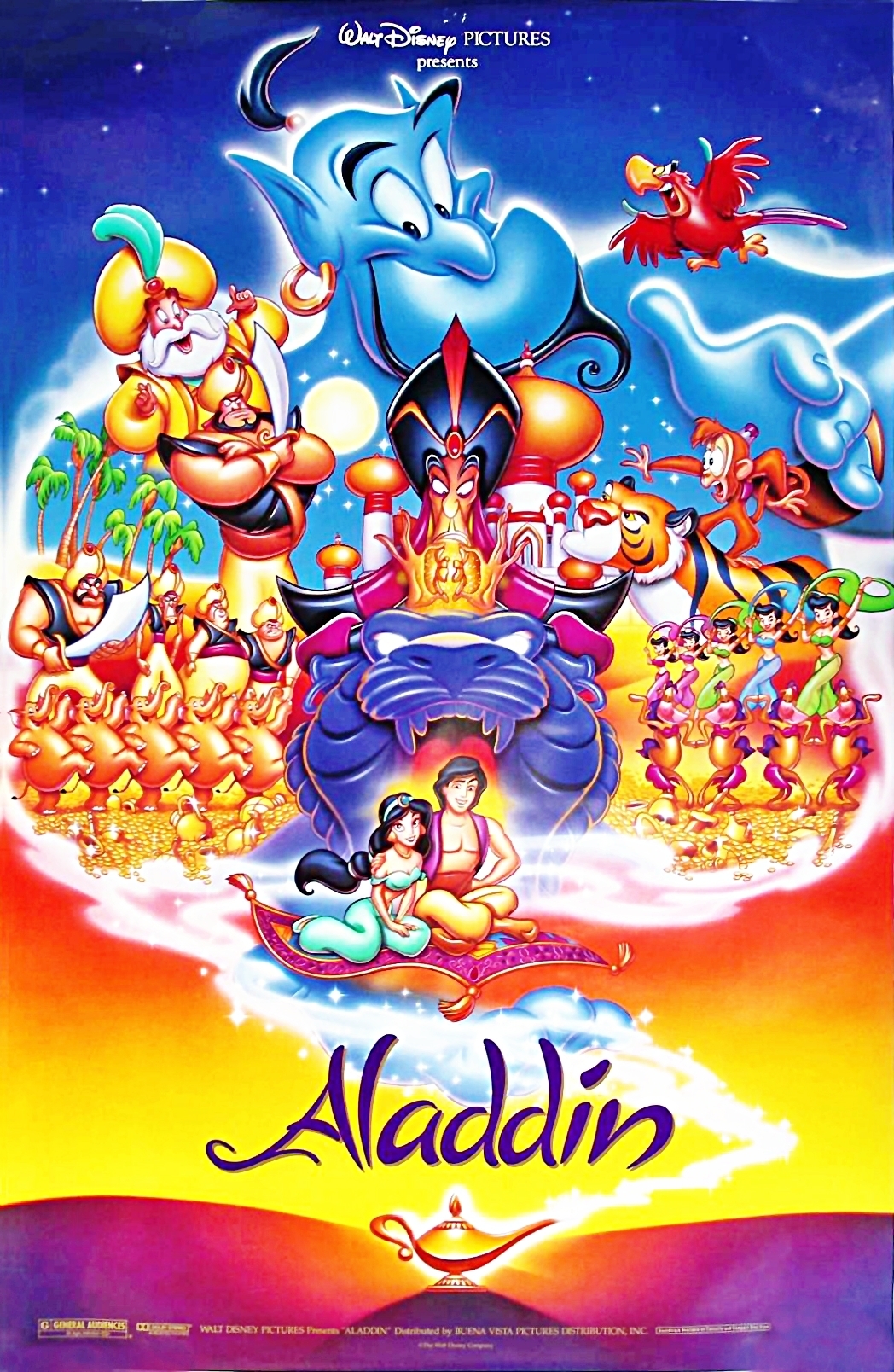
An outcast street-rat learns the value in being true to himself and becomes sultan of a fictional land (with some non-human assistance in the form of a genie.)
An outcast street-rat learns the value in being true to himself and becomes sultan of a fictional land (with some non-human assistance in the form of a genie).

Or twice:

An outcast learns to accept the true strength of his character in order to become a hero (with the non-human assistance of a satyr).

And like, say by Dreamworks the year before:

An outcast learns to be true to himself and becomes the dragon warrior/hero (with the non-human assistance of a turtle and a red panda).

So stories like this are nothing new to the world of animated feature films. Yes, every one of the movies mentioned dresses their story in a different way but all of those films share the same heart. However, these three films also help to illustrate my point: it matters how the story is told. It is possible to like only one of those movies and detest the other two. With How to Train Your Dragon, the strength of the movie lies in its character relationships.

Every story needs vehicles in order to function. The protagonist, the antagonist, the supporting characters, the conflict: every story possesses (at least most of) these traits. The difference between good stories and bad ones is how well these vehicles are disguised. A good writer/storyteller can dress fiction to be real life. In my article criticizing Star Wars Episode II, I (endeavored to) explained that the main reason that the relationship between Anakin and Padme failed was because it appeared as a plot focus and not as an actual relationship between two people. How to Train Your Dragon avoids this pitfall.

One of the main triumphs to examine is Stoick (voiced by Gerard Butler). He is Hiccup’s father and one of (if not the) main antagonist in the story. In a children’s movie, where simple storytelling is sometimes favored, it would be very easy to leave Stoick as simply that: the antagonist. Hiccup’s father who never listens, a bloodthirsty viking looking to kill dragons. Instead, writers William Davies, Dean DeBlois, and Chris Sanders create a complex relationship between Hiccup and Stoick that feels very real (even in a movie that is about taming dragons).

Hiccup has the revelation of where his mindless violent tendencies lead…

At the heart of their conflict is not an argument over what direction to take the plot (to kill dragons or not to kill dragons) but instead the simple problem of communication. Stoick and Hiccup do not know how to communicate with one another. They are both headstrong and stubborn (illustrating similar qualities helps enforce the family connection) and they simply have a hard time relating to one another. Yet throughout the movie it is illustrated that, while the two have their differences, they are a family who loves each other. This adds weight to the conflict and enhances the scenes between them.

…Much earlier than Stoick does.

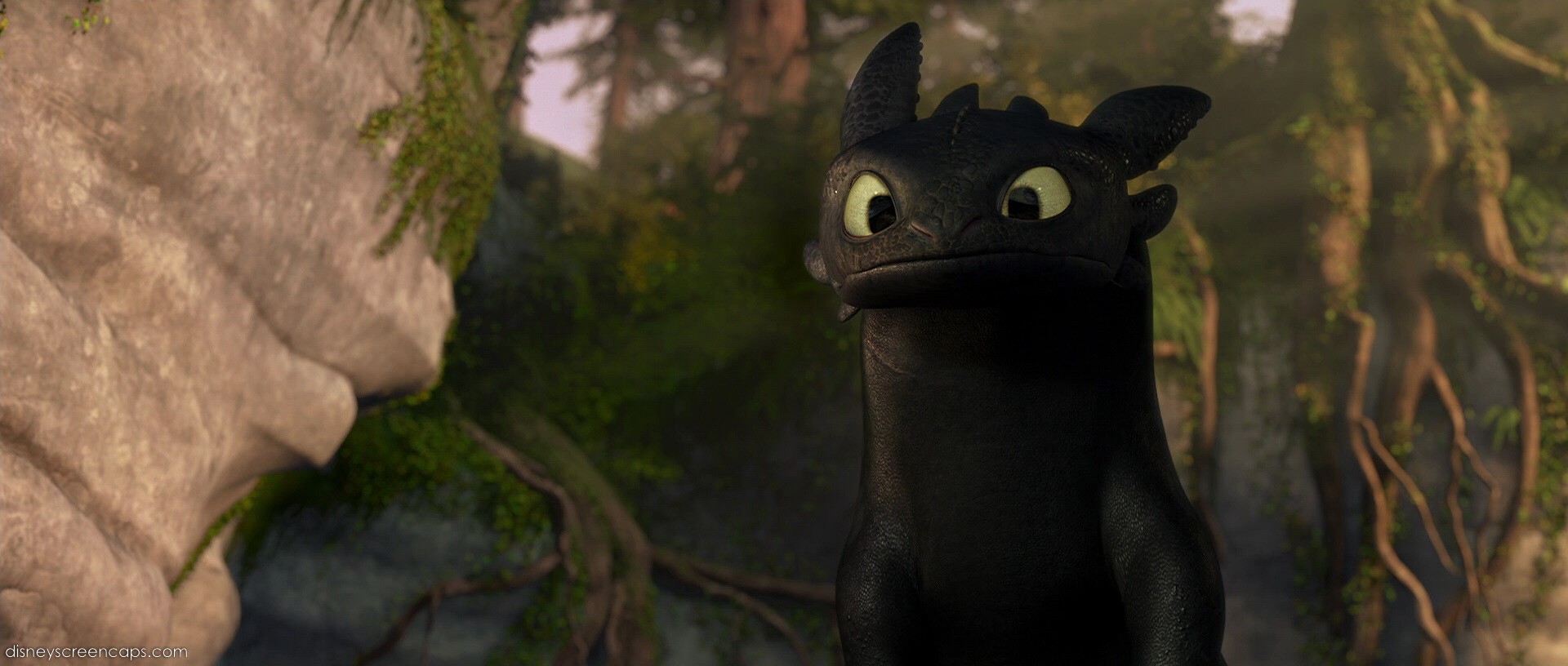
Another strong point is, obviously, the relationship between Hiccup and Toothless. Both Chris Sanders and Dean Deblois created Lilo and Stitch and it is no surprise to see the same quality of human-sentient animal relationship in this film. Toothless is not simply a dragon but brims with personality, which allows Hiccup to exhibit personality as well. If Toothless were simply a dragon (a beast without intelligence), the plot of the film could still proceed but its content would have been weakened greatly.

The animators realized a creature who could fully communicate without speech.

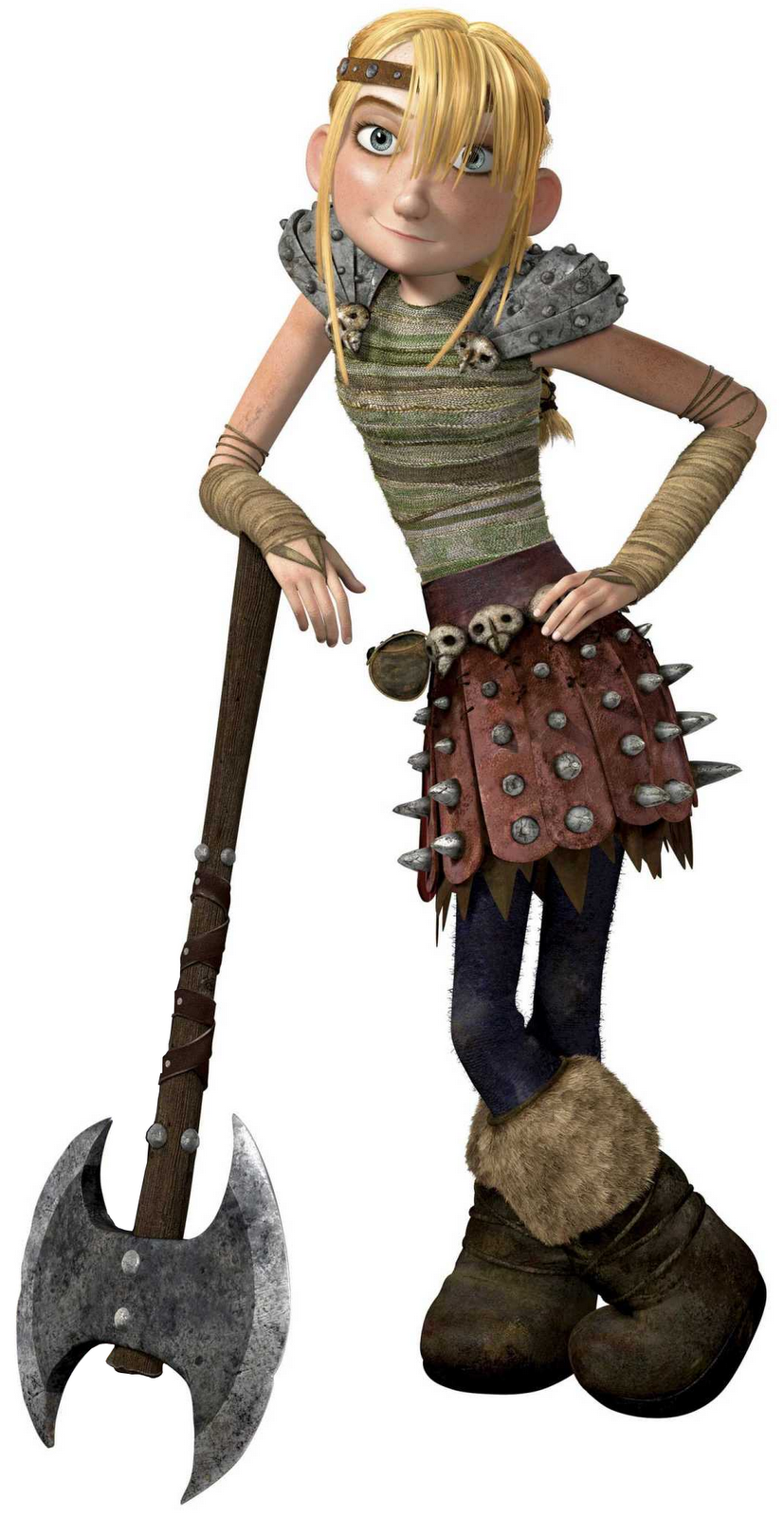
One final relationship I will mention is Hiccup’s relationship with Astrid (voiced by America Ferrera). Yes, Astrid does serve as the love interest, but she is also a character with her own personality. She is revealed to be determined and methodical. There are also several scenes demonstrating her capabilities as a warrior. This gives her personality so that, when she does fall in love with Hiccup, the audience can understand the reason why.

Astrid spends most of the movie with axe in hand.

How to Train Your Dragon is not the best animated film ever by a long shot, but it is a well-made film. There is much more here done right than wrong. The film never panders down to its child audience, never embraces the more flashy-dancey tendencies of other Dreamworks’ films, never does anything to sacrifice story or character. It is part of the proof that it matters more how a story is told, rather than what its content is.

PS – the sequel isn’t bad either.

Nintendo's E3 2014 Strategy: oh btw… Pac-Man IS in Smash Bros.

This year’s E3 is upon us and so far… things have been kind of dull. When re-releases like The Last of Us for PS4 and Halo: the Master Chief Collection for Xbox One are getting headlines, there is definitely a lull in excitement. Yes, you (the lucky customer) will be able to buy the same great games all over again – giving your favorite companies more money! I generalize, there have also been some great teases at exciting new games. When I say teases, I mean teases. Look at this new trailer for the new Star Wars Battlefront:

Not a ton of riveting gameplay footage there.

Anyway, in the midst of it all, there is Sony, there is Microsoft, and there is Nintendo. Yes, Nintendo is still peddling that Wii U thing of theirs. The console that has been largely forgotten recently, well up until the release of Mario Kart 8 and the arrival of psychotic Luigi to the internet.

Those eyes.

It is no secret that there hasn’t been much excitement for the Wii U when compared to the PlayStation 4 and the Xbox One. Not that the Wii U does not possess its own growing library of quality games, not that the Wii U doesn’t have the strongest collection of exclusive titles out there, not that the Wii U isn’t the only system this generation to be fully backwards compatible (meaning they can’t do exciting re-releases like the other two… cause you don’t have to re-buy games to play them); it’s just a weird little machine. People are still unsure about the gamepad. People still want more games. Well, here is Nintendo’s Digital Event:

There are games all right, but many titles there were products that we already knew about. Bayonetta 2 is exciting and it is awesome to see the original Bayonetta included as well but, well, where is the new Star Fox? Turns out it was there. As was Mario Party 10 and two other brand new series (currently dubbed Project Giant Robot and Project Guard). Yes, evidently Nintendo believes in saving the best… for sometime other than their national E3 event.

It came off as bizarre to see an entire block devoted to Splatoon, another new game for Wii U, with no official mention made of the other two series. Explanation: these two new series must be (and sound like they are) at a very early stage in development. Plus as these are both new IP concepts for Nintendo, maybe the company does not feel confident enough in them at this stage to broadcast the games to an international audience. That might explain Project Giant Robot and Project Guard, but not StarFox. Heck, Nintendo and Robot Chicken even made a joke about it during their presentation:

It is nice to see Nintendo using their sense of humor but it is still a strange move. Nothing generates hype quite like a trailer and all StarFox received was a blurry video of Shigeru Miyamoto playing the game. The Mario Party 10 trailer was not even included as part of Nintendo’s Digital Event. Is there still hype for these games: of course, but there could be substantially more if Nintendo had given both games a better reveal. Which brings us to Pac-Man…

As seen in the Nintendo Digital Event, there were only two Super Smash Bros. character reveal trailers: The Mii Fighter and Lady Pala – Pale – Palutena (clearly a Nintendo A-lister). Pac-Man was also revealed but at the end of the day, at a non-streamed Nintendo developer roundtable. Now this is really strange. Pac-Man represents the unprecedented third third-party character in a Super Smash Bros. game. Plus, it’s freaking Pac-Man! Players will now be able to have the ultimate retro gaming rumble as Mario, Sonic, Mega Man, and Pac-Man are all together. No, no, show Lady What’s-her-Face, that will get the crowd pumped more.

While it seems that Nintendo has had the most exciting E3 of the large companies (sorry Microsoft and Sony, I’m just not excited to re-buy games from you in the near future), the company is still employing bizarre marketing techniques. It wasn’t all bright and cheer either as Ubisoft announced that they are sitting on completed Wii U games, but are unwilling to release those titles until Nintendo can build more excitement for the Wii U.

Announcing games in bizarre ways outside of your main event may not be the most efficient way to build hype, Nintendo. Just saying.

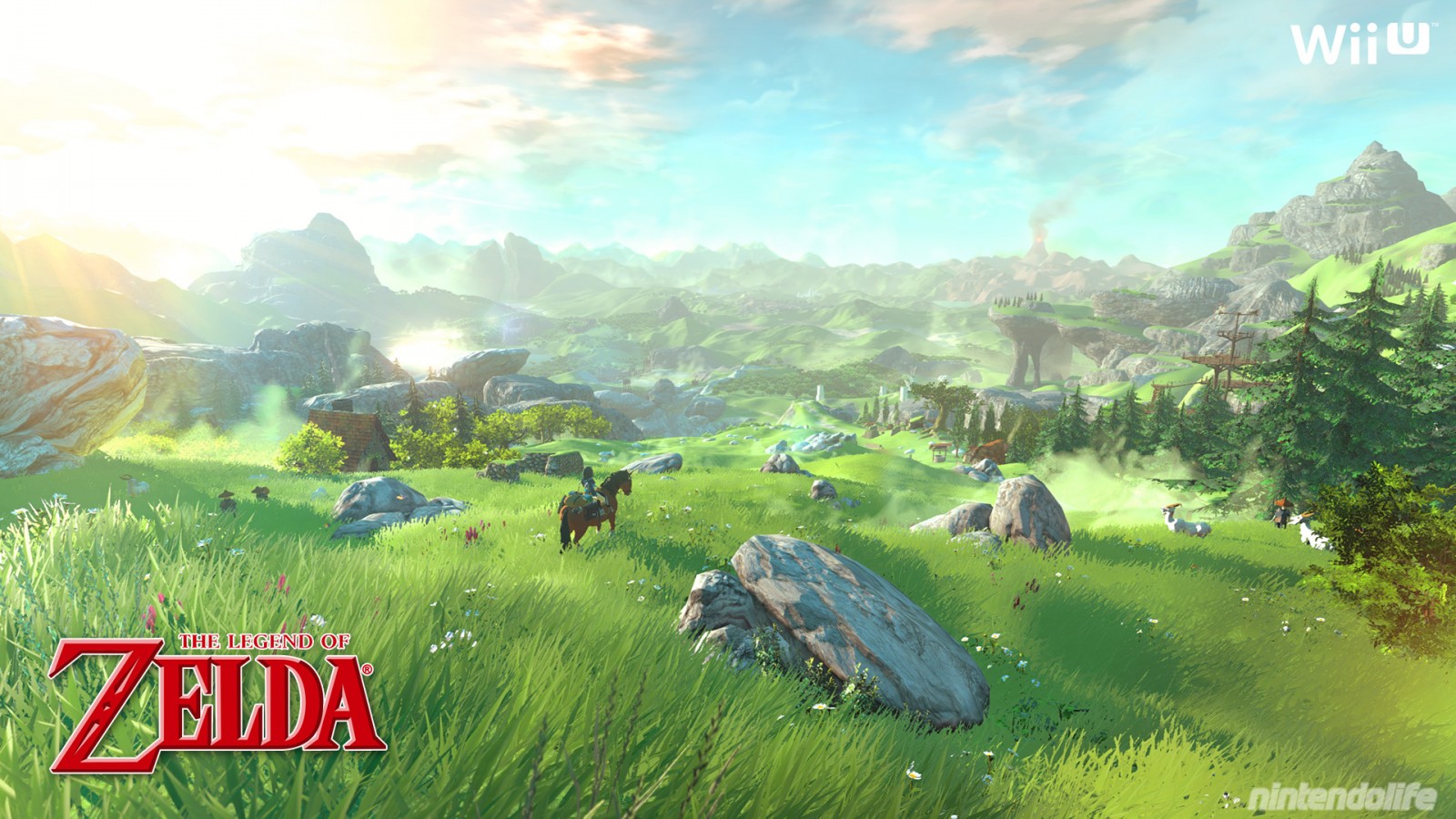
It does help when this is how the new Zelda game will look. No, really, this is confirmed to be in-engine graphics.