What I learned from Hosting a Panel at G-Fest

If you’ve ever been to a convention, you may have gone to a panel. Panels are, as their name suggests, collections of individuals lecturing an audience on a topic. What the panel entails typically relates to what the conference is about. For instance, you are far more likely to hear a panel discussing the life of Arnold Schwarzenegger at a Conan-Con than an expo on marine biology.

This past July, I was fortunate enough to have the chance to lead my own panel at G-Fest, a three-day event centered around the king of the monsters himself, Godzilla. While G-Fest isn’t for everyone, it’s probably my favorite convention among the limited few that I have been to. Events like PAX East and E3 are a little crowded for my taste, even if they do offer the ability to network with some cool people. And, in my opinion, the Montreal Comic-Con was better when it was smaller.

G-Fest is a small, targeted convention focusing on Godzilla’s films, messages, and the kaiju (giant monster) culture at large. Yeah I didn’t have an audience of thousands but that didn’t matter – it was still a blast to put on. As with everything in life, it was a learning experience. So, here is what I learned as I prepared to (then did) host my panel: “Objectively the Best Godzilla Movie EVER. Period.”

G-Fan G-Fest
G-Fest is an extension of G-Fan, the nation’s best Godzilla-related publication (in this author’s opinion).


The Work

For any out there considering hosting a panel, you will need to do work. Whether it’s interview prep or a slideshow presentation, preparing for a panel starts before the event.

In my case, this meant accomplishing a few tasks. First, I had to assemble my fellow panelists. I had no desire for it to just be me sitting up there pontificating about how great my opinion is. Luckily, G-Fest has an event coordinator who helped me get in touch with everyone else who had expressed interest in hosting/speaking on a panel. I didn’t have to do much to gain my three fantastic panel co-hosts.

My second task was communication. Since my panel was going to proceed along a very guided conversation, my fellow panelists and I needed to know how the event was going to go before it began. What was the greatest Godzilla movie? To start, I made this:

Godzilla movie bracket

Just kidding. I made something a lot uglier and simpler. Getting to work was the most important thing in my mind, so I created a working bracket and emailed my fellow panelists.

Over the next few weeks/months, I would reach out to all of them periodically. Since this was democratic panel, we had to go collectively one round at a time. Some responded right away, others…well, life is full and people can get busy. Let me say this: If you’re going to host a panel, you have to be okay with bugging people.

I don’t mean “be a jerk” (don’t be a jerk) but just be prepared to firmly and consistently remind your fellow panelists to help you out. It can be easy to put con prep on the backburner several months away from the event but, as it draws closer, people tend to get busy.

Anyway – while my fellow panelists were hard at work voting on their favorite Godzilla movies, I had to design a PowerPoint. A visual aid can be essential to help generate interesting discussion and I wanted my team engaged, not just with ourselves but with our audience members.

The PowerPoint didn’t take too long – maybe six hours altogether. I think it helped that I spread out its creation. Since I began so far before the event, I had plenty of time to sketch out an initial layout and flush everything out with the right photos and fonts.

Here is my PowerPoint for any who are interested:

Objectively the Best Godzilla Movie EVER

The Fun

Before I knew it, the month was July and I was Chicago-bound for my third G-Fest. The work was done, my panelists were assembled. Now all that I had to do was wait my turn. As a first timer, my panel was on the last day. This was a mixed blessing as it allowed me to focus on the con and gave me a smaller day (Sunday typically has less attendees than Saturday) but, well – I had three days to think about it and imagine all the things that could go wrong.

And there was a complication! No sooner had I stepped up onto that stage than it was discovered the HDMI cable had broken. Luckily, G-Fest also has an IT guy and we were able to solve the problem. I had brought my laptop and a USB key (both with the presentation on them) so we were good to go.

I may be biased but I thought it was a blast. I felt we had the right mix of prepared remarks and impromptu discussion. I was able to poll the audience after several scenarios and – best of all – we didn’t run out of time! After the panel had ended, several audience members came forward to tell me how great they had found everything to be.

As far as learning experiences went, this one definitely ranks in the positive category. I can’t wait to host another panel next year!

G-Fest panel
From left to right: Jessica, Kym, myself, and John all celebrating the successful conclusion of our panel.

My Recommendations

If you’re out there thinking, “I could do this,” then please give it a try! Doesn’t have to be at G-Fest – with geek culture in the spotlight there is no shortage of panels and conventions where you can nerd out about your passion. But if you are going to host a panel, I do have some parting suggestions:

  • Plan ahead
  • Involve the audience
  • Expect a problem
  • Just relax

And there you have it. Panels aren’t major life events like marriages or moving days, so you don’t need to revolve your life around them. The most important thing in any convention is to have fun – otherwise, what’s the point?

Thinking Deeper: Analyzing Star Wars: The Last Jedi

Star Wars: The Last Jedi came out in theaters six months ago and the impact of its release is still being felt. To say the film is controversial appears to be an understatement. Some claim it is the death of Star Wars, a film worse than all the prequels (really?) that shreds the source material. To others, including myself, it is a breath of fresh air and maybe the first true Star Wars “sequel” in quite some time.

One of the main reasons that I love Last Jedi is that the movie generates conversation. I saw Solo last week and am already forgetting it. It wasn’t a terrible film by any stretch, nor was it really good. Solo just exists, checking off all the boxes it has to without feeling particularly inspired or warranted. I feel like there was no deeper subtext or character development. Spoilers: Han Solo is a scoundrel but a good guy. Did I really need to spend $16 just to confirm that?

With Last Jedi, I felt like I was watching a movie that wasn’t content to simply check boxes. It didn’t care that it was a “Star Wars film” and spent more time trying to be a genuine movie. The result is an experience that gives me something new every time I watch it. Here are some of the thoughts and readings I’ve had while watching Rian Johnson’s Star Wars: The Last Jedi:

Luke Skywalker is George Lucas

I know, shocker right – that Luke S. could mean Lucas? Watching Mark Hamill in Last Jedi is fantastic. True to the series’ Kurosawa roots, Luke is no longer the bright-eyed boy on Tatooine but a grizzled, jaded Jedi master. Unlike Harrison Ford’s Han Solo from The Force Awakens, Hamill’s Luke feels different from when we last saw him. His character has been appropriately aged along with himself.

When I was last watching the movie, I paid attention to Luke’s dialogue – in particular his self-loathing. Luke Skywalker did the impossible, he redeemed Darth Vader. Bear in mind, Luke is still fairly young in Return of the Jedi – at most 30. It’s not everyone who saves the galaxy before they can even qualify for a midlife crisis.

Therefore, it’s easy to see how Luke made mistakes. In his hubris, he felt he could do anything after that. It’s a very human reaction. Some would say it’s exactly what happened to Star Wars creator George Lucas after he made the original trilogy.

The struggles of George Lucas in making Star Wars have been widely documented. He had to fight on every decision and ultimately had to shoulder more than his share of the work. Lucas saw someone few people did, perhaps that nobody else did: that Star Wars could be a hit. And he did it. When everyone doubted, George Lucas did it. The man created a property that has impacted the lives of millions and created a devote following (to say the least).

To quote Hamill’s Luke from Last Jedi: he “became a legend.”

Then the time came for George to duplicate his massive success. The year was 1999 and the world was hungry for Star Wars Episode I: The Phantom Menace. Then the movie, and its two sequels came out and…well…lighting did not strike twice. With the introduction of characters like Jar Jar Binks and concepts like midichlorians, many fans thought that Lucas was destroying his creation and tarnishing his legacy.

And not to mention the Special Editions that are widely held as inferior to the original theatrical cuts. On all fronts, it seemed like George Lucas could do no right. Yet still he forged ahead. Why? Because he was George Lucas…a legend.

Until, one day, older and definitely with some bitterness, George Lucas sold Star Wars and retired to his home, essentially becoming a grizzled old hermit himself and completing the character arch that he envisioned for so many of his Jedi heroes.

Did Rian Johnson write Luke S. as a metaphor for Lucas? Who knows. But the similarities are uncanny.

Are sacred texts the expanded universe?
Part of me wonders if the sacred texts are a stand-in for the expanded universe. If so, then Yoda’s dig is even more of a burn…although not entirely undeserved in my opinion.

Kylo Ren really is a Star Wars fanboy

When I first wrote my article declaring Kylo Ren a Star Wars fanboy, I had no idea how right I’d be. In a movie script obsessed with subverting history, Kylo Ren is the character most consumed by it (even more than lonely Luke). Despite his vocal claims to the contrary, Ren cannot let go of the past.

He sees himself as the central figure in the story, a view he asserts on Rey in the following line:

“You have no place in this story; you come from nothing. You’re nothing.”

Charming. Such a wonder why Rey promptly runs away after that exchange. Kylo Ren’s delusions of grandeur aside, his character typifies the negative perception that Star Wars fans feel they “own the trilogy” more than anyone else. This belief (to varying extents) was represented in the documentary, The People vs George Lucas where the filmmakers made the argument that fans owned Star Wars more than its creator.

The story of Star Wars has become so ingrained in pop culture that most everyone knows at least the basics. The heroic Skywalker stands at the center of the galaxy, reshaping it in his image. For both Luke and Vader, this perspective holds weight and no doubt Kylo Ren sees himself as simply a continuation.

He knows how the story will go, how could he not? He believes himself to be the main character. This fits with a large viewpoint in the Star Wars fandom that family lineage matters. Even in the Expanded Universe, the focus was largely on Luke, Han and Leia – not to mention all of their children and spouses.

This idea runs so counter-intuitive to the message of the original film, which showed that heroes could come from anywhere – even a nowhere like Tatooine. Kylo Ren has done very little to declare himself a hero, yet he still clearly sees himself as one.

His expectations and actions based around how he believes the “story” will go reflects the controlling nature of fandom. The cry for newness while wallowing in the familiar. Kylo Ren must be the hero because…well, that’s how he wrote it in his head.

Who owns Star Wars?
Part of me is starting to wonder why we feel the need to “own” things – especially universes that aren’t real. Star Wars has impacted so many people, I’m honesty not sure if anybody can really say they own it more…except Disney.

The toxic masculinity of Poe Dameron

When I first saw The Last Jedi, I had problems with Poe Dameron’s subplot. Specifically, I didn’t understand why Admiral Holdo didn’t just tell him the plan. Was she worried about a spy? Was it subversion just for subversion’s sake?

Since then, I’ve noticed quite a few things in Poe Dameron’s dialogue. Holy hell, is he an asshole. Never mind that he gets nearly the whole bomber fleet killed at the beginning of the movie (an action which gets him justifiably demoted), he refuses to treat Holdo with respect.

His first “not what I expected” conveys a personal disappointment. The feared military hero, Vice Admiral Holdo, is nothing more than a skinny, older, soft-spoken woman who doesn’t convey bravado or really anything. She just sets about doing her job.

Watch Poe’s first conversation with Holdo, look at what he’s saying:

Poe: “Vice admiral? Commander Dameron. With our fuel consumption there’s a very limited amount of time that we can stay out of range of those star destroyers.”

Holdo: “Very kind of you to make me aware.”

Yes, because there is no way that the Vice Admiral of the Resistance fleet already understood the very basic situation. If you’ve ever wondered what “mansplaining” is – this is an example. Poe, who was recently demoted for screwing up royally, still feels entitled to assert himself.

His lack of faith in his superior officers translates into a loss of hope and a dangerous turn that gets more people killed. The First Order learns of the rebel plan partly through Poe’s actions.

Remove the fact that Holdo is a woman and treat it like a standard military operation: A demoted officer immediately undermines his superior’s orders because he feels left out. Granted, we never see if Holdo tells anyone the plan because we’re confined to Poe’s view point.

We see him rebel again and again, not to further any real cause but his own desire for control. It is a subplot that I did not fully pick up on the first time through – mainly because I was so surprised to find it in a film like this.

tumblr_p7nz16lwDy1ub0sqqo1_1280

Visual storytelling: Snoke and Hux

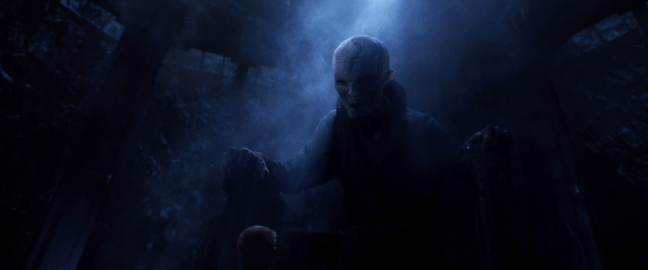
One last point I want to make before I wrap this article up. When I saw Force Awakens, I didn’t have to think about my least favorite characters: Supreme Leader Snoke and General Hux. Snoke, despite the performance of Andy Serkis, came off as Emperor Palpatine 2 – a character who served the story because, well, it’s a Star Wars movie and those need a creepy old dude in a chair.

Hux, by contrast, had the personality of an evil brick. I had no sense of these people as characters, merely as roles. Snoke was the leader and Hux was a general. Got it. Last Jedi greatly improves this without taking serious script time and Johnson does it through visual storytelling.

First, Snoke: Look at that robe! Who wears a fabulous glitter gold robe complete with slippers while overseeing a military operation? Someone who is very arrogant and very much in control – a.k.a. the dear Supreme Leader. By the simplest wardrobe change, Snoke takes on some of his own character and becomes less of a Palpatine clone.

Snoke more interesting in Last Jedi
Best part of Snoke in Force Awakens? When I thought he was 20 feet tall.

Hux, by contrast, has more of his characters conveyed through his unspoken actions. Whether it is the smug sneer he gives Kylo Ren at the start of the film or when he almost pulls a gun on Ren’s unconscious body, the audience understands the relationship between these two characters. No one ever blurts “power struggle” because they don’t have to.

This dynamic gives Hux depth and informs us better of his character.

There’s more to say on Last Jedi but I’ll save it for another day. Suffice it to say, I feel strongly about this movie and I hope Episode IX can live up to its fine example. I’m genuinely sorry for the other Star Wars fans who saw this film and thought it was the worse thing since Jar Jar – but I implore them to give it another go. No, it’s not what you were expecting – but that’s okay. This film still has a heart and, more importantly (at least to me) it has a mind clearly present in its script.

How to Train Your Child to Love Dragons

Dragons have fascinated humanity for millennia. No matter which part of the world you travel to, odds are the indigenous culture had at least one myth devoted to these beasts. While some may run to conspiracy, the logical explanation for widespread dragon mythology is dinosaur bones… or are dinosaurs a cover-up for dragons?!

They’re not. Dinosaurs have always existed but it’s easy to forget that we’ve only started formulating scientific study on these fossils during the last couple centuries. Before then, they were just giant bones – proof that our planet once held strange and amazing animals.

The natural mystery of the dinosaurs gave birth to arguably the greatest fantastical creation of all time. One that symbolizes our creative spirit as a species and adds an element of wonder to our collective consciousness. So, in my mind, passing on this love of dragons is essential in healthy human development.

After all, I love dragons and I consider myself a well-balanced individual (twitch).

Early Childhood

If you’re trying to get your child to love anything then start early. I don’t mean ramming dragons in the face of your baby and screaming “like it!” – rather, maybe just choose books and films that are age appropriate. Luckily, popular culture has you covered.

In terms of movies, recent hits like Pete’s Dragon and The Chronicles of Narnia: Voyage of the Dawn Treader both feature friendly, nonthreatening creatures. Another obvious choice is the How to Train Your Dragon series from Dreamworks Animation.

If I may state a personal preference and a loved childhood memory, I would recommend Flight of Dragons. This light, whimsical fantasy gives dragon flight and fire a pseudo-science explanation and features a lot more elements of the genre. Talking animals? Got it. Ogres – yeah there’s one. James Earl Jones voicing the villain who turns into a giant monster – okay, we’re onto something here.

Also, it’s got this song:

Yeah, that will be in your head awhile. It’s a wonderfully meta film, choosing the author of the source book as a main character. And speaking of books, you don’t get much more famous than The Hobbit. Read that to your child and I guarantee, apart from the giant spiders, Smaug will be a highlight.

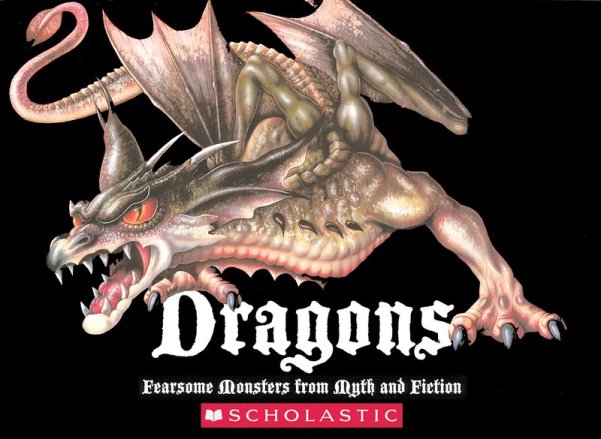
In terms of other books, really you can’t go wrong. There are so many dragon stories out there. I would also advise purchasing those giant picture books – like World of Dragons or something. They’re image focused so literacy isn’t a barrier, and the better ones feature drawings that will compel the development of a healthy imagination.

children dragons
One of the coolest aspects of dragon lore is how many different shapes and designs the creature can take. Try to look for literature that highlights each vision.

The tweens

As kids age, “cool” starts to matter more. Everyone wants to be cool – gotta do the cool things to be cool. However, they’re not quite teenagers yet so, you know, parents have yet to become the exact opposite of cool. So you can still make recommendations but the best bet is just making things available for consumption.

A film like Dragonheart, while rated PG-13, is perfect for this age range. After all, you can’t get much more awesome than Sean Connery voicing a dragon. It’s a little more violent without being Game of Thrones and the sexual innuendos will likely fly over your childrens’ heads… like a dragon, get it? I’m very clever.

Notable books include easy reads like Harry Potter, stuff your child can devour and process easily, helping to fuel not just a love of dragons but a greater affection for reading in general.

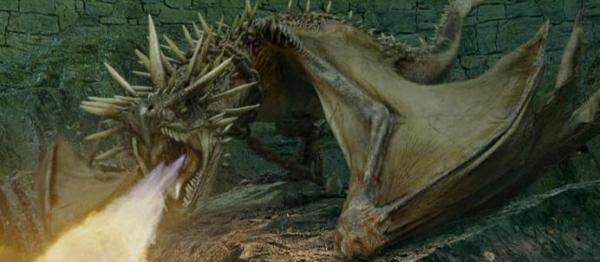
Harry Potter children dragon
Harry Potter ages along with the series, but its never particularly terrifying or overtly mature.

Teenage Years

Okay, now you’re not cool anymore. Being a teenager is all about being rebellious. Are they old enough to watch Game of Thrones? Doesn’t matter, they’ll likely watch it anyway.  However, this desire to revolt can be capitalized on with some appropriate dragon literature.

Gork the Teenage Dragon is every story of young adult high school trauma and liberation only… you know, with dragons. We follow Gork, a young, smaller dragon who is too nice for his own good. This hurts his chances of winning a female for the mating dance (a more straight forward name for “prom”) and impressing his family.

Gork has no idea what he wants to be but he feels the enormous pressure to be great. Typical teenager stuff, just substitute the people for dragons.

teenage dragon books
I feel the cover gives an excellent indication of the overall tone of this story.

The Magicians trilogy also provides dragons in more mature setting, although parents have to be comfortable exposing their child to teenage sex and drug use – if anything, it can be seen as prep for actual high school.

At this point, more scholarly works like Beowulf may also be attempted. Video games like Dragon Age also, as the name suggests, feature dragons very promptly. And I think it’s safe to assume that Skyrim will still be being released on new systems, even ten years from now.

And there you have it. Obviously there’s more to cover. I haven’t even scratched the surface of dragon pop culture.

I don’t claim to be an expert on the subject but I like to think that I still remember what it was like to be a child. Dragons are amazing creatures of power and mystery. These are qualities that I believe are attractive to children. Keep in mind, you don’t always have to go traditional.

As I mentioned in the beginning, dinosaurs are part of dragon lore and can easily expand the overall love of fire-breathing winged beasts. There’s also Godzilla, who is pretty amazing and fights other dragon-like creatures on a regular basis. I’m just saying.