Star Wars Episode VII: We Owe George Lucas an Apology

While waiting to see Star Wars: The Force Awakens this week, I re-watched my least favorite Star Wars film: Episode II: Attack of the Clones. For weeks, as the hype built up and we waited with bated breath to see what director J.J. Abrams would do, I heard a lot of renewed hatred for the prequels.

At least it can’t be as bad as the prequels.

Thank god it won’t have Jar Jar in it.

J.J. can’t do any worse.

People really hate those movies. They have been ripped to pieces in the years since their release. Video reviews (longer than an hour each) have been created to talk about what trash they are. For the record – I think that pretty much every criticism of the prequels is valid. They are a poorly acted, wooden mess of a story. That said… I don’t think that any film, even Attack of the Clones, was outright horrible on its own.

That may be the reason, beyond the fact that it’s Star Wars, that the prequel trilogy inspired such hatred: it’s not entirely awful. There is some good there… but it’s broken. It’s too weighed down with all the problems going wrong to ever let the innocent, fun charm of the story shine through. I’ve seen – and forgotten about – many films that are just crap. The prequels, for all their faults, stand at least as memorable.

They attempted to add something real and new to the Star Wars universe. They failed.

I read the reviews, the hype of Episode VII: The Force Awakens. It sounded like J.J. had done it, that he had done what Lucas could not and given fans the sequel we wanted.

Then I saw the movie… (minor spoilers to follow)

Let me say this up front: Star Wars: The Force Awakens is not a bad film. It’s fun, it has great performances (particularly Daisy Ridley as Rei and Adam Driver as Kylo Ren), and it has a lot of the heart that was missing from Lucas’ CGI heavy prequels. I absolutely would recommend seeing it in theaters.

The mix of practical effects and CGI give the film an excellent look, one that is evocative of the originals while still allowing sequences that used to be impossible to film.

That being said – this is not the “sequel” I was looking for.

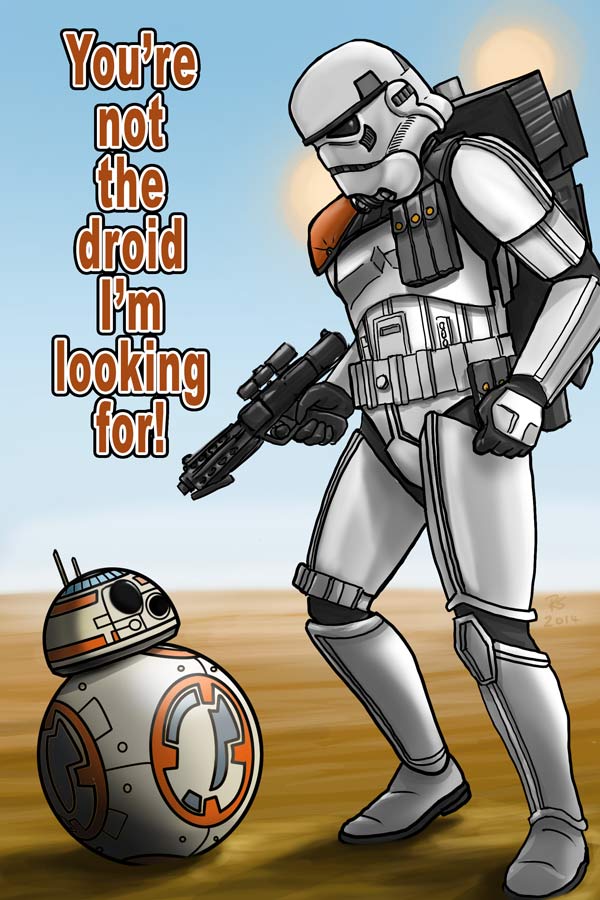
The quotation marks should say everything. Let me give you a premise: members from the Resistance (not the Rebellion – totally different “R” word) have to get a droid that has secret plans to help them stop the First Order (doesn’t even start with an “E”) and stop their use of a massive super weapon capable of blowing up planets.
I'm almost surprised they didn't recreate this sequence as well.
I’m almost surprised they didn’t recreate this sequence as well.

Sound familiar?!

To be fair, the droid this time around does not have the plans to the Death Star, *cough*, excuse me – to the Star Killer, it has part of a missing map to find Luke Skywalker – the man whose absence seems to be dooming the galaxy. Still, the plot unfolds with quite a feeling of retreading. Even Rei’s origins as an orphan on an out-of-the-way desert world seem overly familiar.

And unlike Return of the Jedi, which had a similar structure to New Hope (start on Tatooine, finish by blowing up a Death Star) but different feel… Force Awakens never breaks the New Hope mold. Its climax hits nearly all the same notes as its predecessor.
The worst scene in the movie arguably comes when someone says "is it like the Death Star?" and another responds with "I wish!" So maybe the next movie will have a weapon that can blow up ten planets at a time and is even bigger?
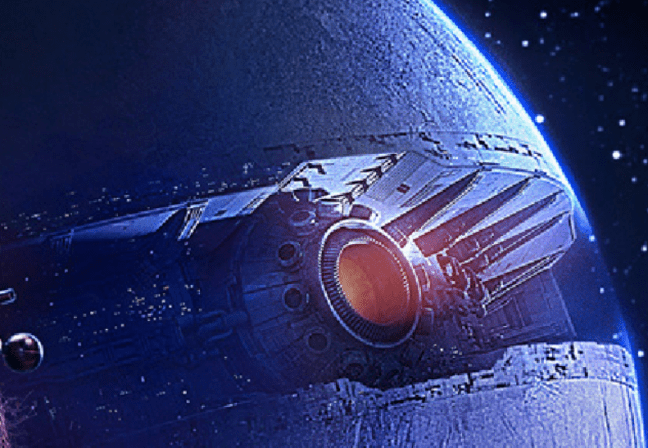
The worst scene in the movie arguably comes when someone says “is it like the Death Star?” and another responds with “I wish!” So maybe the next movie will have a weapon that can blow up ten planets at a time and is even bigger?

Finally, we must mention the (maybe) main villain: Supreme Leader Snoke (voiced by the one and only Andy Serkis). In general, the villains of Force Awakens are a little conceptually weak, but Snoke stands head and shoulders above the others in this regard. Stop me if you’ve heard this before: a shriveled, scarred old man with vague desires of revenge – or some evil motivation – who likely has advanced knowledge of the dark side of the force. But he doesn’t wear a hood – so, you know, totally different from the Emperor.

While I was okay not having Thrawn, using such a boring villain as an alternative was such a shame to see.

At the moment, critics and fans are eating up the “nostalgia” of this movie, but it leaves me worried. Lucas’ prequels may have failed, but at least they were trying to do something different. This movie plays on the “remember how awesome this was/felt” feeling way too much.

For example: the cantina scene in New Hope – iconic. Seeing all the aliens gathered around, drinking and playing games, opened up the idea of a huge galaxy. The Force Awakens has the exact same sequence, intended to create the exact same feeling… except I had seen it before.
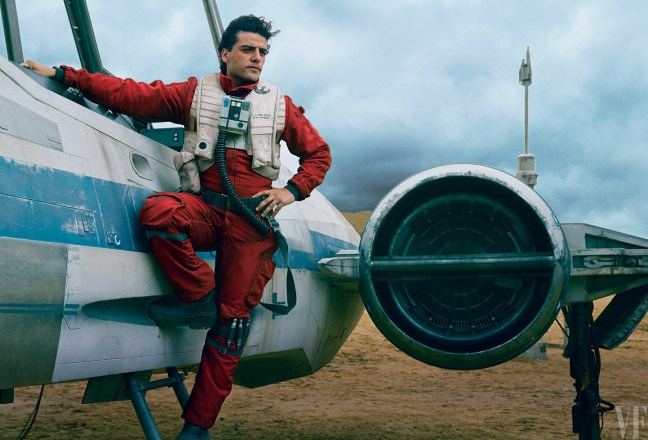
Poe Dameron was an interesting character who we really didn't get a chance to get to know.
Poe Dameron was an interesting character who we really didn’t get a chance to get to know.

“Do, or do not. There is no try.” These were the words of Master Yoda in Empire Strikes Back… and they seem to have been the mantra of the movie. Lucas tried and failed to do something new – so don’t try anything new. The Force Awakens is fun, but I have a feeling that – as time goes on – it will lose much of the praise it is currently receiving. It has too many new elements to be a good remake, and too many remake elements to make for a really interesting (or truly great) sequel.

For a universe so rich in original stories (Heir to the Empire, Knights of the Old Republic, Jedi Knight) this may be a sign of the dark side. Disney’s bold plan for a sequel to Avengers was just… recreating the Avengers after all. The vision was lacking. We may never know what Lucas’ original idea for Episode VII was, but I’m going to guess it wasn’t “let’s just do A New Hope again.”

Joss Whedon: Age of Ultron's Directing Marvel

When February 22nd rolls around next year, I can guarantee that Avengers: Age of Ultron will not be nominated for Best Picture. Nor should it be for, in my opinion, the movie always has too much going on to ever come together in a complete and fully rewarding way. That said, I can also guarantee that Joss Whedon will miss a nomination as Best Director, and this will be a far greater oversight. That is because while Avengers: Age of Ultron may not be an incredibly “good” movie, it is still a really fun and well-made one. Considering the weight of characters, plot threads, action sequences, and emotional threads that all had to be balanced: this is an achievement, one that is not likely to be repeated this year (and perhaps ever).

Alas, Whedon will have to contend with simply being adored by fans as a great director and a leader in the feminist human rights movement... what a shame.
Alas, Whedon will have to contend with simply being adored by fans as a great director and a leader in the feminist human rights movement… how will he sleep at night?

To give a rundown: Age of Ultron is the continuing adventures of Captain America, Iron Man, the Incredible Hulk, Thor, Black Widow, Hawkeye, and Nick Fury – meaning all these characters are in the movie. Oh, and let’s not forget the three new Avengers: Quicksilver, Scarlet Witch, and the Vision (of these characters begin the movie as villains). Okay, got them too. Oh and let’s not forget the cameos and supporting characters: War Machine, Falcon, Maria Hill, Stan Lee (cause apparently he needs at least one scene), Peggy Carter, Heimdall, Erik Selvig, Baron Strucker, Ulysses Klaue, and many others… seriously – there are others. I’m just done listing them. Oh, and OH YEAH – Ultron… and Thanos too…

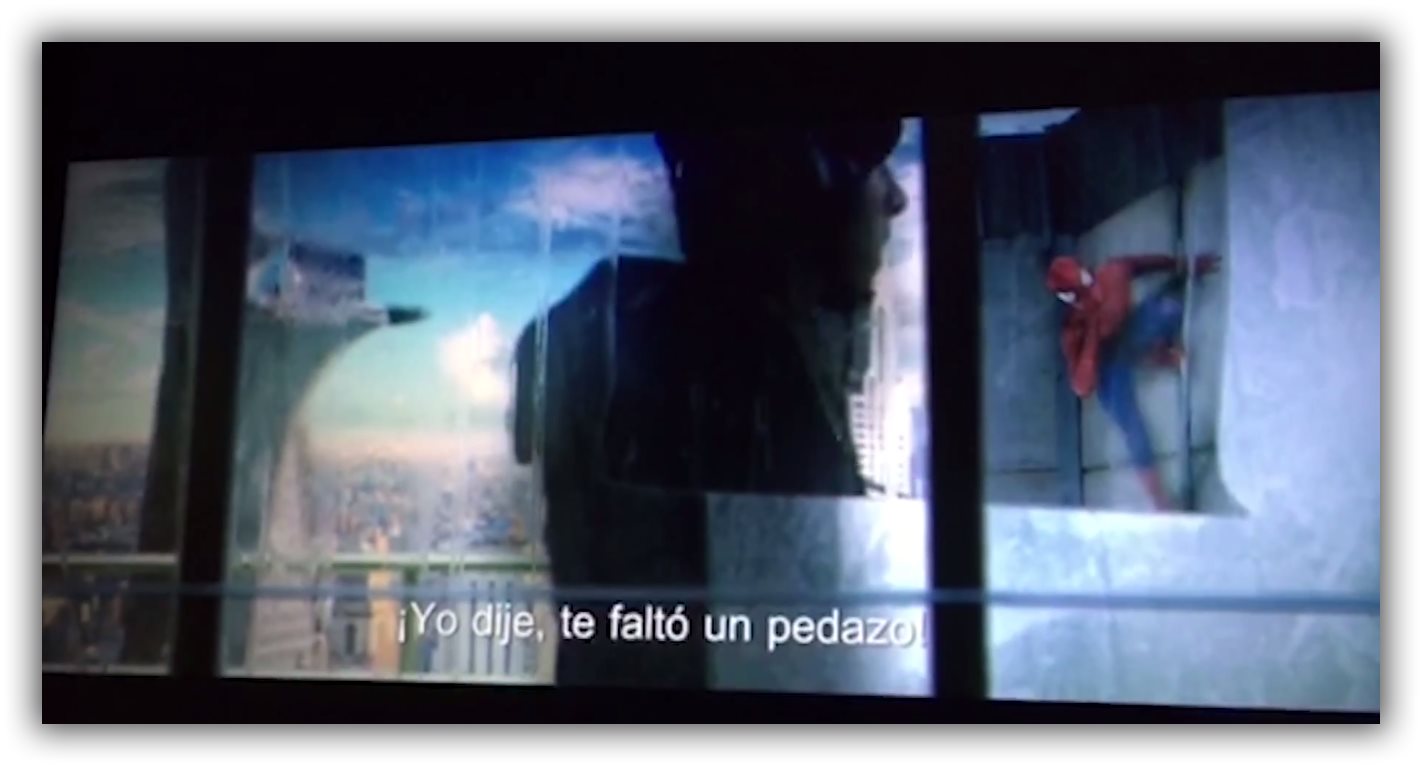
There was even evidence to support a cameo from your friendly neighborhood wallcrawler... but sadly, this video has been exposed as a skilled fake.
There was even evidence to support a cameo from your friendly neighborhood wall-crawler… but sadly, this video has been exposed as a skilled fake.

I just named enough random names in a row to sound like part of the book of Genesis.

For those wondering, the film has a running time of 141 minutes, or two hours and twenty-one minutes, which is not that long. To give a comparison, if I may; The Hobbit: the Desolation of Smaug ran 161 minutes… and that did not even contain the whole story of a children’s book. Damn.

And it works, that is the single most impressive thing I can say about Avengers: Age of Ultron. It does not always work well – indeed there are several sequences where the mass of the movie appears poised to explode out and bury the plot – but this never happens. In part because Whedon stuck again to basics (like he did in the first movie).

A major flaw in film stories today is that they fail to cram too much complexity into their two and a half hour run time. Whedon wisely sticks to doing this model well.
A story has a simple bone structure and Whedon is skilled at sticking to – and knowing when to pad – this frame.

Ultron is a simple villain, but still well done. His plan is not complicated, his emotions are not buried under layers of psychosis. He is a refreshingly human robot with a simple dream… a dream of killing all humans. The voice work of the wickedly talented James Spader helps bring the character to life, as well as a beautifully tragic birth sequence.

A simple main conflict allows Whedon time to work with his characters – and work he does. Rising tension between Captain America (Chris Evans) and Tony Stark (Robert Downey Jr.), fluttering eyelashes between Bruce Banner (Mark Ruffalo) and Black Widow (Scarlett Johansson), Thor (Chris Hemsworth) questioning his purpose and his actions, and arguably the best scenes of all saved for Hawkeye (Jeremy Renner) – and a path from villain to hero for Quicksilver (Aaron Taylor-Johnson) and Scarlet Witch (Elizabeth Olsen). Samuel L. Jackson‘s Nick Fury is the only returning star who feels a little left out in the cold.

Hawkeye may be lacking in cool powers, but Whedon knows the character well enough to bring out exactly why he is a member of the team.

Of course… this is a summer movie – and that means action. Those looking for it will get their fill. A castle raid, an oil tanker brawl, Hulk vs. Hulk Buster, Avengers vs. Ultron: the movie brings it all in spades. By the end, one might even be a little sick of slow motion sequences of our heroes beating up on robots… but one can also get sick from eating too much ice cream.

In terms of spectacle, it does not disappoint.

Joss Whedon has done the near impossible, wrestling this much comic book into one movie. Time will tell exactly how much of his background as a comic book writer and official super geek helped him achieve this – or whether others who don’t share this background can do the same (Marvel is certainly hoping they can). Whedon’s familiarity with the characters and source material has clearly helped him to do more with less in his past two mega superhero mash-ups.

It is simply too bad that he will not be returning for the sequels. Time will see if the Avengers can triumph without their real leader.

The Ultimate Mixed-Bag: Dragon Age II

The release of Dragon Age: Inquisition is upon us. Bioware‘s third in its series of medieval fantasy role-playing games looks impressive, and has already amassed a slew of favorable reviews before its release.  This is the first Dragon Age game since 2011. It is odd in this day to find such a high-budget video game release being given so long a development schedule. To put it simply: four Call of Duty games have been released in that time. Of course, the counter argument could be that EA lets Bioware take longer to develop their games but… that is not true.  Mass Effect 3 was released just over two years after the initial release of Mass Effect 2 (not including the dlc release dates), and that title was delayed. Dragon Age: Inquisition‘s long development time might have a lot more to do with the reaction to its predecessor, 2011’s Dragon Age II.

Dragon Age II received positive reaction from critics, but to look at the game’s user feedback is a different story. Many fans of the series condemned the sequel, calling it a rushed, cheap cash-in attempt on the first game. While not all the response was that critical, it came as a personal surprise to me. I am a big fan of Bioware, I love their games and quite enjoyed playing through Dragon Age II when it was released. That said, the game undeniably has weaknesses. While video game taste will always be a matter of perception and personal taste, there are a few areas where it is very possible to be objective. Let us examine the definite negatives and positives of Bioware’s most controversial release.

Level Variety

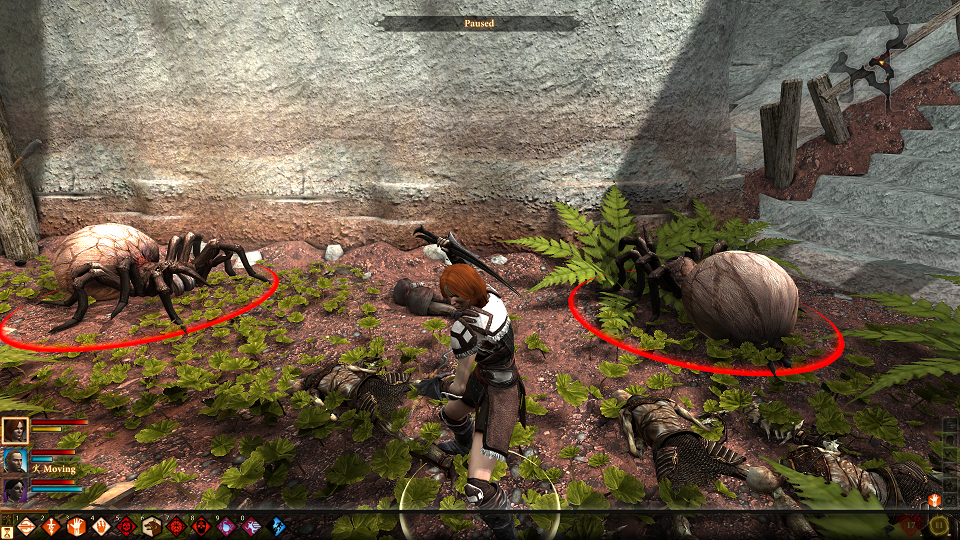
This is the first and largest negative aspect of Dragon Age II. The first game, Dragon Age: Origins, was known for its sprawling world and massive amount of dungeons. Last night, my friends and I tried to remember all the different dungeons in Dragon Age II. We concluded that their were basically six… in a game that took at least twenty hours to beat. The number is not the problem, if each dungeon was vast and took a lot of time and felt unique, that would be one thing. Dragon Age II recycles the same six small dungeons over and over again for its quests. The player better enjoy each dungeon’s design, because they will be seeing them a lot. True, there are a few others that are called in for special occasions but really it is difficult to overlook the impression this leaves. Reused dungeon design gives the definite feeling of a rushed game and chips away at the feeling of immersion. “Let’s go into this alley? Oh, you mean the alley that looks identical to every other alley in the city? Sure… why not.”

Get used to the one cave outside of Kirkwall that you revisit over and over again before the game is done.

Glitches

Glitches can make or break any game. The best video game’s can be tarnished and company’s reputations ruined over releasing products full of bugs. Unfortunately, Dragon Age II is such a game. Having completed multiple play-throughs, I personally encountered multiple glitches both times. These were not simply graphical errors either, where the models and textures go wonky. On several occasions, the game encountered errors which prevented quests from being completed or even attempted. In a game where going on quests is essential (the main drive of the entire video game), this is unacceptable. What made it worse was that Bioware and EA put out several expansions of paid dlc… without ever fixing the bugs in the main game. Don’t worry, the downloadable content contains errors too. It is a tough sell to continue to support a game that its own maker can’t even be bothered to fix.

I encountered a glitch in one play-through that prevented me from completing any of Fenris' side missions. An entire chunk of the game was removed due to this error.
I encountered a glitch in one play-through that prevented me from completing any of Fenris’ side missions. An entire chunk of the game was removed due to this error.

These are the only two clear failings of the game but – they are large failings. Whether a player liked the story is subjective. Whether a player liked the companions is subjective. Not being able to complete quests due to poor design – that is a very objective complaint. But anyway, about those companions…

The Companion Archs

Not to say that Dragon Age: Origins had poor companions, it did not. That said, certain mechanics of the system felt tacked on and were easy to manipulate. Companion loyalty simply came down to gift giving, it served to undermine the organic nature of forming a party. This was thankfully no longer true in Dragon Age II. While still not perfect, the companion system felt more natural this time around. Everything came down to how the player protagonist interacted with the companions. Gifts still played a role but it was reduced. The resulting effects caused the player to more carefully consider their options, especially given that companions could turn to enemies given the right circumstances.

Like its predecessor, each character had their own personality. Unlike its predecessor, there was no magic way to make them instantly all your friend.

The Art Style

Like it or not, there is no denying how much more creative the art style appeared in Dragon Age II. Each race became more distinctive looking. Quanari, for instance, became much more easily identifiable. While Origins was not weak on design, Dragon Age II did a lot to improve it. The game is definitely stylish.

Each race grew more distinct in 2.

Ultimately, Dragon Age II is bizarre in the fact that it is exceptional in both respects. What works in the game works very well and what does not fails miserably. There was no middle of the road in Bioware’s second fantasy epic. At the end of the day, however, this game might be one of the finest mixed bags ever made. It is certainly one of the few I can honestly say I would recommend to people looking for high quality… just watch out for the low.