What Writers can Learn from Netflix’s Godzilla Trilogy

Godzilla anime trilogy

When you’re a writer, every and any piece of writing can serve as a lesson for how to write (or in this case not write) a story. We often think of books as natural learning tools – after all, a common message for writers is that every writer must do two things: write a lot and read a lot. That said, lessons come from every form of storytelling, including comics and screenplays.

The Godzilla franchise is the longest running major motion picture series in existence. With a current 34 movies released (one more due out in May), Godzilla has firmly resonated with international audiences for decades. That’s a success story that any storyteller should note. Recently, the king of the monsters went animated for the first time in his film history.

The results…pretty mixed. Reviews and fans are divided on what to think of Polygon Pictures’ anime trilogy. It’s widely available on Netflix so if you haven’t seen it, you can give it a watch. I personally can’t  really recommend it for entertainment purposes.

For writing instruction, however, well – this new Godzilla series provides some cautionary tales of what can go wrong during scripting.

The Importance of Building a Protagonist

Every story revolves around some kind of a protagonist. They don’t need to be a hero – they don’t even need to be good – they are simply our point of view character. The entirety of the story is laid out through their perspective (bias). The best protagonists resonate with the audience.

We feel their struggles, experience their doubt, and want them to succeed. Think of Charlie Brown – we want him to do well and be happy, even when we know he won’t. He’s endearing to us as readers.

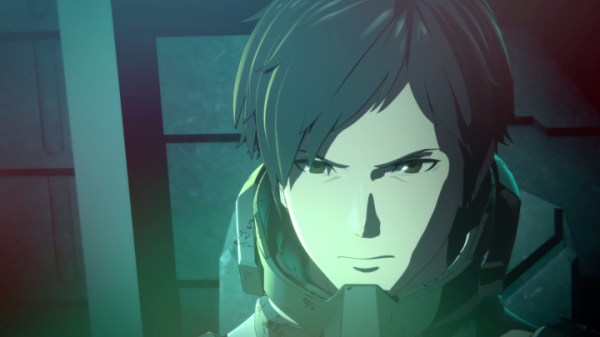
In the Netflix Godzilla anime trilogy, we get Haruo:
Godzilla Haruo

In case you’re wondering, he’s as charming as his disposition suggests. I put it forth that Haruo is not a strong protagonist. He struggles sure – he is up against Godzilla, one would hope there is a challenge. Haruo, however, is not sympathetic – but I get the impression they want him to be.

Right away, we’re introduced to a young Haruo as he loses his parents to Godzilla. Shortly thereafter, Haruo also loses his grandfather. That’s a lot of loss. No wonder he scowls all the time.

The problem with Haruo, in my opinion, is that he feels artificial. In each film, he can be characterized via one emotion. In the first film, it’s determination. Haruo is driven to kill Godzilla, so much so that we never see him reflect on anything else. Yeah there’s brief flashes to his life before (and we’re told how much Haruo hates living in defeat), but we don’t really see his struggle. This is in part because the whole crew seemingly loves him – everyone supports Haruo, even the people who don’t.

Despite opening the film by being incarcerated, Haruo is always at the center of the action and often in a position of power. Without seeing his struggle – besides cliche “my parents are dead!” moments – Haruo does not seem to have reason for his mad passion.

Let this be a lesson: It is okay to have zealot protagonists, but the danger here is they may be unreliable/unsympathetic and feel one dimensional. To get the audience firmly behind them, we have to see exactly where they came from/what lead them to this path. If we don’t, then they may be better off as a side character.

Ahab is fascinating in Moby Dick, but part of that is because he is seen through Ishmael’s eyes.

Bad Character Writing can be Sexist

I make no assumptions about the writers/directors of these movies. I am not calling them (as people) sexist. Their writing, however…geezy creezy.

Female characters are few and far between in this trilogy. There is an obligatory female soldier, the two Mothra priestesses, and…that’s it. Three movies, three female characters – and two of them are interchangeable twins.

It’s more than this, though, that raises the “sexism” flag. When writing a character, you must always keep in mind agency. What is agency? How the character pushes or changes the plot.

For instance, in the second movie – the female soldier (Yuko), falls into a trap and must be rescued. She has no agency in this scene, merely serving to establish a scenario for Haruo to be the hero. Despite being a trained soldier, she squeals and does very little in the way of self-preservation.

Oh, she is also romantically interested in Haruo…as are the priestesses. Yep, evidently he’s just a lady killer. Must be all that talk about how Godzilla must die – really compelling stuff.

Haruo Yuko Godzilla
There’s a lot of chemistry here. Look at how their scowls match.

To be fair, all the characterization in these films is pretty weak (remember when I said Haruo gets one emotion per movie?) but the danger comes when doing female characters. Sexism is real and has a long sad history and, if you’re not careful as a writer, you can add to it.

I don’t know if the writers of these movies were aware of just how token their female representation was, or just how many stereotypes it played into, but nevertheless – here we are.

How to Manage Audience/Reader Expectations

One of the biggest reasons that many Godzilla fans dislike these anime movies is the lack of, well, Godzilla. The Big G is more of a presence in the films than an actual character. While he has a fair amount of screen time, most of it is spent with him just standing around or walking very slowly.

Since the films take place on a forest-covered future Earth, there’s no real destruction either. It removes the stakes as Godzilla trudges on. Yeah, he’s probably stepping on trees but…who cares?

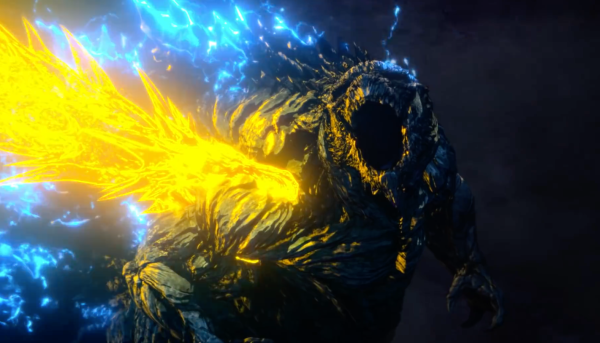
In addition, Godzilla films are known for their monster fights and the anime film teased all of Godzilla’s biggest rivals (Ghidorah, Mothra, and Mechagodzilla) returning in prominent roles. And Godzilla fights…exactly one of them, if this can be called a fight:
Godzilla Ghidorah Planet Eater
To be clear, an actual video of this footage would not feature much more in the way of movement.

I for one am okay when Godzilla films subvert expectations (there are 34 movies, after all). That said, I understand the audience frustration when – after teasing Mechagodzilla for a film – we only get a generic futuristic battle city that we’re told was once Mechagodzilla (really).

It also reduces the threat of Godzilla to portray him as a colossally slow, rarely active threat. I know he’s giant but the Earth is a big place – couldn’t they just avoid him?

The trilogy was sold as a story about a world ruled by Godzilla, a “planet of monsters.” It felt like a truly barren (read as boring) world.

The Dangers of Exploring High Concepts

So what does the Godzilla trilogy do with its three films since it isn’t developing characters or showcasing monster brawls? IDEAS!

Get ready for three long philosophical outpourings, some of it lecture, some of it debate. And, to be fair, some of it works. I especially enjoyed the climax of the second film, where the question becomes “Is it worth it to give up your humanity to destroy a monster?” The plot implies that, by crossing this line, Haruo will become the very thing he has sworn to destroy. It’s interesting and it feels specific enough in the context to be an intelligent espousal on common Godzilla themes.
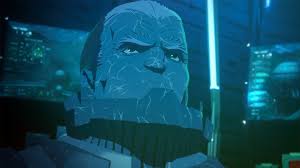
Godzilla philosophy anime
One of the alien races decides to turn itself into machines to defeat Godzilla.

However, this film trilogy shoots for the stars more than once, and – more ofen than not – ends up missing entirely. Unfortunately, the biggest disaster comes at the end when the film tries to imply that all forms of human ingenuity and technological curiosity are evil and will only end with the creation of a monster.

Yep – all inventions lead to war. That seems to be the closing lesson. If it sounds like general, broad-based garbage, it is because it is. What’s sad is this lesson has been done in films – and done correctly. The original Planet of the Apes is famous for how well it handles man’s self-made destruction.

The film directly creates ties between nuclear war and the apes ascension. The Godzilla trilogy tries to do this as well, only Godzilla does not appear until well after the first usage of nuclear weapons. He comes in the 21st century for…reasons? It is very unclear and therefore creates a number of causes. Is it war? Climate change? Pollution?

Something awakens Godzilla and the final film tries to tell us it was the atom bomb…but he woke up sixty years too late. Of course, if he had risen directly post WWII, well then they never could have done all the space stuff. I mean they could have but it would all have had to look retro and stylized – you know – visually interesting.

When tackling high thought concepts, everything needs to be air-tight. Get specific, get down into the details. Don’t just have characters talk about war and peace like they want to be Tolstoy.

Overall, the Godzilla anime trilogy on Netflix is an interesting failure. There are some things I enjoy very much but the films trade too much for too little. I personally would have preferred more developed characters and a more living world to all the lecturing and science-babble that takes place in the films. The dueling alien philosophies were interesting but ultimately felt overbearing and plot controlling – mostly because they were the main focus rather than being a charming side addition to world lore.

Of course, the wonderful thing about art is its all subjective! If you don’t agree with me, that’s cool. I just hope you take the lessons I suggested with you on your writing – they will most definitely help.
 

What I learned from Hosting a Panel at G-Fest

If you’ve ever been to a convention, you may have gone to a panel. Panels are, as their name suggests, collections of individuals lecturing an audience on a topic. What the panel entails typically relates to what the conference is about. For instance, you are far more likely to hear a panel discussing the life of Arnold Schwarzenegger at a Conan-Con than an expo on marine biology.

This past July, I was fortunate enough to have the chance to lead my own panel at G-Fest, a three-day event centered around the king of the monsters himself, Godzilla. While G-Fest isn’t for everyone, it’s probably my favorite convention among the limited few that I have been to. Events like PAX East and E3 are a little crowded for my taste, even if they do offer the ability to network with some cool people. And, in my opinion, the Montreal Comic-Con was better when it was smaller.

G-Fest is a small, targeted convention focusing on Godzilla’s films, messages, and the kaiju (giant monster) culture at large. Yeah I didn’t have an audience of thousands but that didn’t matter – it was still a blast to put on. As with everything in life, it was a learning experience. So, here is what I learned as I prepared to (then did) host my panel: “Objectively the Best Godzilla Movie EVER. Period.”

G-Fan G-Fest
G-Fest is an extension of G-Fan, the nation’s best Godzilla-related publication (in this author’s opinion).


The Work

For any out there considering hosting a panel, you will need to do work. Whether it’s interview prep or a slideshow presentation, preparing for a panel starts before the event.

In my case, this meant accomplishing a few tasks. First, I had to assemble my fellow panelists. I had no desire for it to just be me sitting up there pontificating about how great my opinion is. Luckily, G-Fest has an event coordinator who helped me get in touch with everyone else who had expressed interest in hosting/speaking on a panel. I didn’t have to do much to gain my three fantastic panel co-hosts.

My second task was communication. Since my panel was going to proceed along a very guided conversation, my fellow panelists and I needed to know how the event was going to go before it began. What was the greatest Godzilla movie? To start, I made this:

Godzilla movie bracket

Just kidding. I made something a lot uglier and simpler. Getting to work was the most important thing in my mind, so I created a working bracket and emailed my fellow panelists.

Over the next few weeks/months, I would reach out to all of them periodically. Since this was democratic panel, we had to go collectively one round at a time. Some responded right away, others…well, life is full and people can get busy. Let me say this: If you’re going to host a panel, you have to be okay with bugging people.

I don’t mean “be a jerk” (don’t be a jerk) but just be prepared to firmly and consistently remind your fellow panelists to help you out. It can be easy to put con prep on the backburner several months away from the event but, as it draws closer, people tend to get busy.

Anyway – while my fellow panelists were hard at work voting on their favorite Godzilla movies, I had to design a PowerPoint. A visual aid can be essential to help generate interesting discussion and I wanted my team engaged, not just with ourselves but with our audience members.

The PowerPoint didn’t take too long – maybe six hours altogether. I think it helped that I spread out its creation. Since I began so far before the event, I had plenty of time to sketch out an initial layout and flush everything out with the right photos and fonts.

Here is my PowerPoint for any who are interested:

Objectively the Best Godzilla Movie EVER

The Fun

Before I knew it, the month was July and I was Chicago-bound for my third G-Fest. The work was done, my panelists were assembled. Now all that I had to do was wait my turn. As a first timer, my panel was on the last day. This was a mixed blessing as it allowed me to focus on the con and gave me a smaller day (Sunday typically has less attendees than Saturday) but, well – I had three days to think about it and imagine all the things that could go wrong.

And there was a complication! No sooner had I stepped up onto that stage than it was discovered the HDMI cable had broken. Luckily, G-Fest also has an IT guy and we were able to solve the problem. I had brought my laptop and a USB key (both with the presentation on them) so we were good to go.

I may be biased but I thought it was a blast. I felt we had the right mix of prepared remarks and impromptu discussion. I was able to poll the audience after several scenarios and – best of all – we didn’t run out of time! After the panel had ended, several audience members came forward to tell me how great they had found everything to be.

As far as learning experiences went, this one definitely ranks in the positive category. I can’t wait to host another panel next year!

G-Fest panel
From left to right: Jessica, Kym, myself, and John all celebrating the successful conclusion of our panel.

My Recommendations

If you’re out there thinking, “I could do this,” then please give it a try! Doesn’t have to be at G-Fest – with geek culture in the spotlight there is no shortage of panels and conventions where you can nerd out about your passion. But if you are going to host a panel, I do have some parting suggestions:

  • Plan ahead
  • Involve the audience
  • Expect a problem
  • Just relax

And there you have it. Panels aren’t major life events like marriages or moving days, so you don’t need to revolve your life around them. The most important thing in any convention is to have fun – otherwise, what’s the point?

How to Train Your Child to Love Dragons

Dragons have fascinated humanity for millennia. No matter which part of the world you travel to, odds are the indigenous culture had at least one myth devoted to these beasts. While some may run to conspiracy, the logical explanation for widespread dragon mythology is dinosaur bones… or are dinosaurs a cover-up for dragons?!

They’re not. Dinosaurs have always existed but it’s easy to forget that we’ve only started formulating scientific study on these fossils during the last couple centuries. Before then, they were just giant bones – proof that our planet once held strange and amazing animals.

The natural mystery of the dinosaurs gave birth to arguably the greatest fantastical creation of all time. One that symbolizes our creative spirit as a species and adds an element of wonder to our collective consciousness. So, in my mind, passing on this love of dragons is essential in healthy human development.

After all, I love dragons and I consider myself a well-balanced individual (twitch).

Early Childhood

If you’re trying to get your child to love anything then start early. I don’t mean ramming dragons in the face of your baby and screaming “like it!” – rather, maybe just choose books and films that are age appropriate. Luckily, popular culture has you covered.

In terms of movies, recent hits like Pete’s Dragon and The Chronicles of Narnia: Voyage of the Dawn Treader both feature friendly, nonthreatening creatures. Another obvious choice is the How to Train Your Dragon series from Dreamworks Animation.

If I may state a personal preference and a loved childhood memory, I would recommend Flight of Dragons. This light, whimsical fantasy gives dragon flight and fire a pseudo-science explanation and features a lot more elements of the genre. Talking animals? Got it. Ogres – yeah there’s one. James Earl Jones voicing the villain who turns into a giant monster – okay, we’re onto something here.

Also, it’s got this song:

Yeah, that will be in your head awhile. It’s a wonderfully meta film, choosing the author of the source book as a main character. And speaking of books, you don’t get much more famous than The Hobbit. Read that to your child and I guarantee, apart from the giant spiders, Smaug will be a highlight.

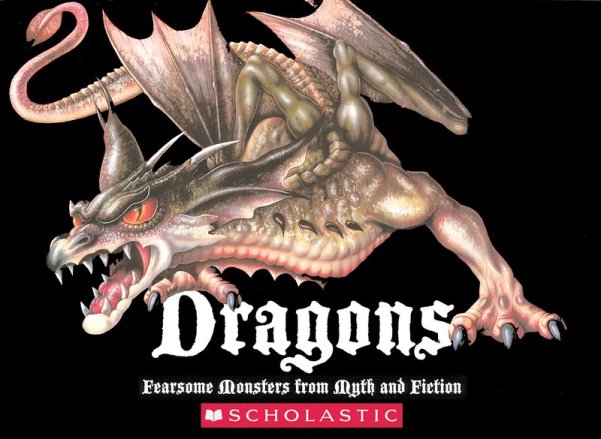
In terms of other books, really you can’t go wrong. There are so many dragon stories out there. I would also advise purchasing those giant picture books – like World of Dragons or something. They’re image focused so literacy isn’t a barrier, and the better ones feature drawings that will compel the development of a healthy imagination.

children dragons
One of the coolest aspects of dragon lore is how many different shapes and designs the creature can take. Try to look for literature that highlights each vision.

The tweens

As kids age, “cool” starts to matter more. Everyone wants to be cool – gotta do the cool things to be cool. However, they’re not quite teenagers yet so, you know, parents have yet to become the exact opposite of cool. So you can still make recommendations but the best bet is just making things available for consumption.

A film like Dragonheart, while rated PG-13, is perfect for this age range. After all, you can’t get much more awesome than Sean Connery voicing a dragon. It’s a little more violent without being Game of Thrones and the sexual innuendos will likely fly over your childrens’ heads… like a dragon, get it? I’m very clever.

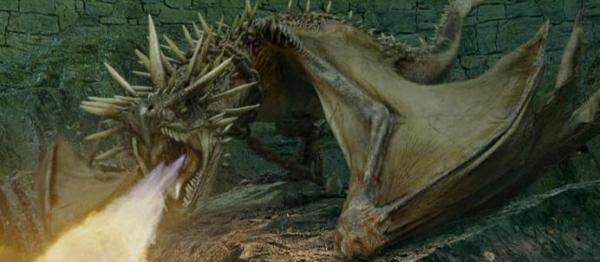
Notable books include easy reads like Harry Potter, stuff your child can devour and process easily, helping to fuel not just a love of dragons but a greater affection for reading in general.

Harry Potter children dragon
Harry Potter ages along with the series, but its never particularly terrifying or overtly mature.

Teenage Years

Okay, now you’re not cool anymore. Being a teenager is all about being rebellious. Are they old enough to watch Game of Thrones? Doesn’t matter, they’ll likely watch it anyway.  However, this desire to revolt can be capitalized on with some appropriate dragon literature.

Gork the Teenage Dragon is every story of young adult high school trauma and liberation only… you know, with dragons. We follow Gork, a young, smaller dragon who is too nice for his own good. This hurts his chances of winning a female for the mating dance (a more straight forward name for “prom”) and impressing his family.

Gork has no idea what he wants to be but he feels the enormous pressure to be great. Typical teenager stuff, just substitute the people for dragons.

teenage dragon books
I feel the cover gives an excellent indication of the overall tone of this story.

The Magicians trilogy also provides dragons in more mature setting, although parents have to be comfortable exposing their child to teenage sex and drug use – if anything, it can be seen as prep for actual high school.

At this point, more scholarly works like Beowulf may also be attempted. Video games like Dragon Age also, as the name suggests, feature dragons very promptly. And I think it’s safe to assume that Skyrim will still be being released on new systems, even ten years from now.

And there you have it. Obviously there’s more to cover. I haven’t even scratched the surface of dragon pop culture.

I don’t claim to be an expert on the subject but I like to think that I still remember what it was like to be a child. Dragons are amazing creatures of power and mystery. These are qualities that I believe are attractive to children. Keep in mind, you don’t always have to go traditional.

As I mentioned in the beginning, dinosaurs are part of dragon lore and can easily expand the overall love of fire-breathing winged beasts. There’s also Godzilla, who is pretty amazing and fights other dragon-like creatures on a regular basis. I’m just saying.

https://www.youtube.com/watch?v=bNdCT6Tx5sg