This past summer, I went to the movie theater and watched Ant-Man and the Wasp. I remember thinking that it was a fun way to pass two hours. It came out in July – only three months ago – yet ask me to remember anything else about it and I’d have to think for a minute. I know there was action and cool scenes of things changing sizes…but as to what actually happened – it’s a bit of a blank. Again, it’s only been three months. Ant-Man and the Wasp is a terrific example of what happens when stories lacking theme, or execute that theme in a really superficial way.
When Star Wars Episode I: The Phantom Menace released in 1999, reception was mixed to put it lightly. While many children (including myself) enjoyed the movie, it sent ripples of anger through the more adult Star Wars fanbase and drew ire from movie critics overall. While many, many, many…many dissections of Phantom Menace have been completed since that 1999 launch – what’s one more?
For my own examination into the film, I want to focus primarily on Jar Jar Binks – a side character who drew particular ire for what many fans saw as his annoying nature or tendency to devolve the film into dirty humor (fart and poop jokes). Let me say this now – this is not intended to be a “hate” essay. I have nothing but respect for Ahmed Best, who has suffered more than enough at the hands of harassing jerks and jackasses claiming to be Star Wars fans.
This article is intended to view only how Jar Jar Binks was written. Let’s examine what kind of character Jar Jar was supposed to be and what function he may have been intended to serve in the story. For those who have seen the film and want a refresher, here is a rundown of every scene with Jar Jar Binks present:
What type of character was Jar Jar supposed to be?
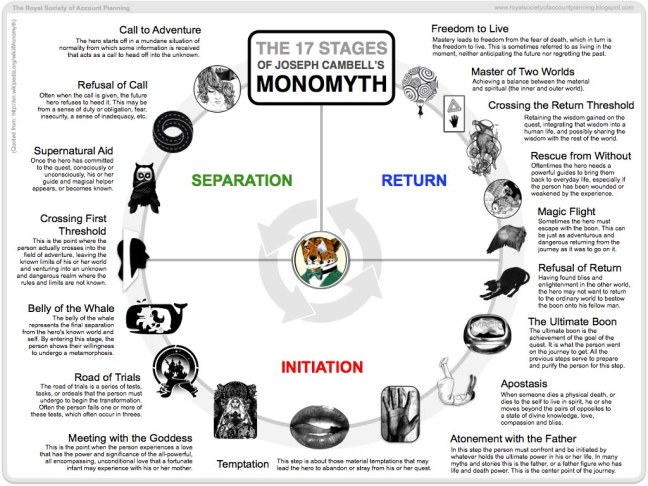
When George Lucas first conceived of Star Wars, he drew a great deal from the past. One of his primary inspirations was Joseph Campbell, a renowned mythologist who had spent years analyzing ancient myths from across the world. Campbell believed in the idea of the “monomyth” or that every heroic tale from the past has a common core and can be broken down into similar elements.
For instance, many heroes begin their journey as outsiders, drawn into a larger conflict rather than being present with it from the very beginning. Going on said hero journey challenges the protagonist, who ultimately returns victorious but a changed person. Lucas used this idea and many others from Campbell in his original Star Wars trilogy, and the themes have been present in the series ever since.
Using Campbell and this idea of monomyth means relying on established archetypes. An archetype is a typical example of certain person or thing, or an idea that has been replicated many times over. For instance, a bully is a character archetype. Every bully shares certain traits – namely intimidation and an abusive nature. The idea of a bully has become so ingrained in society that simply saying the word evokes a near complete image.
When Lucas created his characters for Star Wars, he used archetypes to form the foundation. Luke Skywalker – the heroic outsider, Obi Wan Kenobi – the wise old mentor, Han Solo – the scoundrel with a heart of gold, Princess Leia – the princess in distress: All of these characters came from an already established foundation of traits and personality. When Lucas wrote the prequels, he attempted the same thing. It is easy to read Shakespeare’s Othello in the tragedy of Anakin Skywalker or Oedipus in his desire to alter a prophecy.
Regardless of how well it worked, Lucas clearly had visions of grandeur on his mind. So, what about Jar Jar? Where does he fit in?
Jar Jar as the fool
A popular character archetype that owes a lot to Shakespeare is the fool or clown. This character is, by nature, ridiculous and outwardly very stupid. They are usually of low stature and aren’t doing well in their life. However, they are apart from the situation – no one directly trusts the fool, but the fool is typically present. This can give them wisdom, as they tend not to have subtly. When a fool speaks, they state the obvious, which can include information that the protagonist has overlooked.
A famous fool includes Dory from Finding Nemo. What she may lack in brains, she makes up for in wisdom, directly stating the flaws in Marlin’s parenting techniques.
Many fools tend to be sidekicks, giving them ample opportunity to travel and communicate with the main character.
Is Jar Jar a fool? He is certainly ridiculous enough to qualify on that level. Jar Jar is clumsy, clownish and prone to self-deprecation. However, what wisdom does he bring?
There two scenes that may qualify. The first comes at his introduction, right after he has met Obi Wan Kenobi and Qui Gon Jinn. Jar Jar suggests that they seek the gungan city for shelter and to hide from the droid army.
In the second scene, an anxious Padme is reflecting on the plight of her people. Jar Jar happens to mention that his race, the gungans, have a huge army that can challenge the invading droid forces. While Jar Jar never directly states that the gungans can help, Padme uses this information later to make her plan to fight back.
Jar Jar also states that relations between the naboo and gungans are strained but really doesn’t elaborate further. As far as this writer’s recollection, these are the only moments where Jar Jar may fit the mold of a fool.
Jar Jar as the heart
A more recent character archetype is the heart. Born out of many television ensembles, the heart is a member of the team that has no real special talent or skill. However, they serve as a moral compass, helping every other character around them maintain equilibrium and a healthy psyche. Hearts can be smart or stupid, strong or weak – but their primary strength must always lie in their emotional capacity.
The character Bolin from The Legend of Korra is a heart. While never stated, it is implied that he is not as strong a fighter as Korra or Mako, nor is he particularly smart. Instead, Bolin is trusting and giving, always there for friends that need a hand. His primary motivation comes from a desire to help others, a trait common in many heart characters.
The Heart can be similar to a fool, but with more positive intentions.
At first glance, Jar Jar Binks may look like a likely heart. However, there are problems with this fit. Jar Jar is often reluctant to help, oftentimes being volunteered for assignments he didn’t ask for. Also, apart from the Padme scene, Jar Jar is rarely shown comforting another character.
Jar Jar as the unlikely hero
At the heart of Star Wars is a love for the unlikely hero. Anakin, Luke and Rey have all come from humble origins to take center stage in galactic affairs. The same can be said of Han Solo, Finn, and Rose. None of these people began with the traditional, noble heritage of a hero – they instead earned their place through courageous acts or unnatural talent.
David, in his fight with Goliath, became one of the first and most famous unlikely heroes.
Jar Jar Binks definitely fits this bill, at least on the surface. He comes from nothing – an outcast of his own people. By the end of the film, however, he is a victorious general and well on his way to becoming a senator that will represent Naboo on the galactic stage. From a storyboard perspective, Jar Jar fits this archetype to the letter.
But let’s look closer: Is Jar Jar a hero? Does he in fact do anything to really save the day? Jar Jar’s role in the finale is to lead the gungan army against the droids. It is intended as a diversion to allow the other protagonists to act. Jar Jar loses this battle and is captured. Faced with this development, he promptly surrenders.
When Anakin destroys the droid control ship, the droids are deactivated and the gungans saved. Given how he acted, I say it is reasonable to compare Jar Jar more to a character in distress rather than an active hero. He is never looking beyond his personal safety.
Writing exercises: How would you improve Jar Jar Binks?
I personally believe that Jar Jar Binks has elements of all three character archetypes above. I believe his character suffers from poor implementation of these ideas into the script. He certainly has the negative elements of a fool but is not given enough opportunity for the positive. He appears well meaning but is never anyone’s emotional center. And he is given countless opportunities to perform a heroic action but never rises to the challenge.
He, like many elements of George Lucas’ prequel trilogy, feels like a rough draft of a competent character.
So, rather than dwell on the failure – how can we fix him? Well, I for one believe that all strong character writing begins at the three scales: competency, sympathy, and productivity. A well written character has a mix of these traits on a scale system. For instance, a character can be very competent but unsympathetic or vice versa. Most writers tend to use middle degrees on these scales rather than turning one all the way up or down.
Fixing Jar Jar begins with looking at his three scales, all of which are too far down (in my opinion). Altering these scales alters Jar Jar. Writers should be careful to keep the original idea in tact. It’s easy to fix Jar Jar by transforming him into someone else entirely, but more challenging to simply make alterations.
If Jar Jar is supposed to be the fool, turn his sympathy and productivity up to have him make more emotional impact. To be an unlikely hero, turn up the competency. However you approach it, keep your archetype goal in mind.
This exercise can be a simple scene rewrite or a full plot makeover. If you’re curious to see how you did, I recommend posting on FanFiction.net. You can use a pen name and the feedback can be helpful.
Jar Jar Binks may have earned the fan’s hatred (not that it takes much) but I believe he is a character built on solid bones. Looking at his failure requires studying character construction and plot development, two things that can only make you a stronger writer. Best of luck!
Horror franchises age poorly. This is a general rule and there are few exceptions. While John Carpenter’s Halloween is hailed as a classic, not many outside of horror diehards await the next installment. Ditto with genre defining pieces like The Exorcist and Silence of the Lambs. Horror sequels suffer from one inherent problem: It is never as scary the second time you see it.
Now there are some ideas that are more open for exploration and can find new ways to frighten audiences. There are also some horror sequels that are carried by excellent casting, directing, and production design. Then there are some movies that abandon the horror in favor for fun, dumb or otherwise. The Alien franchise is a horror series that has done all three.
But it’s over now.
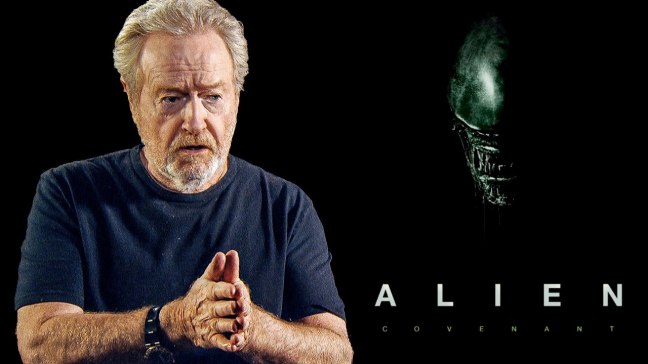
The lifespan of the alien as a horror icon has ended. Shortened by rampant commercialization and less-than-stellar sequels, the series showed a blip of life with Prometheus before flat-lining in Alien:Covenant. Director Ridley Scott, channeling George Lucas, has returned to murder the creation that he gave life to decades earlier. Spoiler alert: I f*cking hated watching Alien:Covenant.
The Alien is No Longer Threatening
It is true that the alien design has not been scary for years. That’s what happens with eight movies, video games, and a toy line. It is simply too familiar to be terrifying in the way it was in Alien. That said, solid film-making can overcome this deficiency. But in order to do so, the alien must remain the primary threat. This shouldn’t be hard. After all, it was billed as the “perfect organism” in the first film.
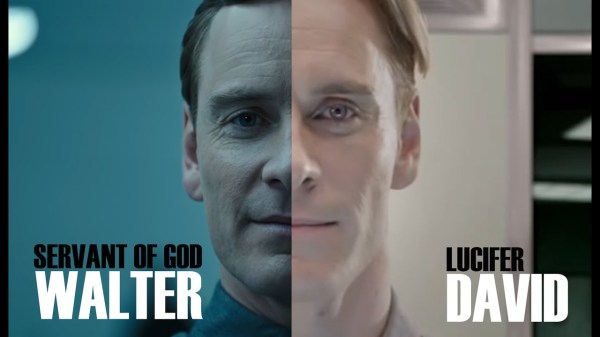
Yet the traditional alien is the least threatening aspect of Alien: Covenant. Sure it still kills ‘people’ and is fast and strong, but let’s examine the other antagonists that the film provides. First off: David, the android from Prometheus appears to have scrambled his circuits and gone insane. He is deceptive, strong, intelligent, manipulative, and can blend into the party of good guys by virtue of looking exactly like one of them.
Is that Michael Fassbender a friend or a homicidal murder? Seems like an important and persistent paranoia-inducing question.
Alien: Covenant goes further to strongly imply that David created and can control the entire alien race. So really, he is the head of the snake, as well as a much more calculating menace.
In addition to David, we have his weaponized diseases that he took from the Engineer aliens of Prometheus. For my money, this thing is the perfect organism. It is a microscopic disease that travels quickly and is lethal upon contact/penetration with human skin. Sure, it could probably be burned up but no one ever seems to see it coming. They’re just fine until they start spurting blood and hatching monsters.
Not as bombastic looking but certainly more effective.
The alien comes across as nothing but a servant of a larger evil – a minion that is replaceable and expendable and, frankly, nothing more than a work in progress. The perfect organism has fallen very far from grace. Remember that Family Guy sketch about “Bigger Jaws” – that is essentially what Alien: Covenant does. It has one-upped its monster to the point of obscurity.
Killing Prometheus and Originality
I will say this right now: Prometheus was far from a perfect movie. It suffered from a litany of problems that are very amusingly laid out in this video:
That said, Prometheus also represented a bold new direction for the Alien franchise. An attempt to distance the films from the repetitive slump they had fallen into – you know, an evil company trying to exploit the aliens for military gain. Sure we still had the evil company, but this time they’re looking into how humanity evolved and attempting to understand its origin.
Perhaps I am in the minority but I found it profoundly refreshing to not see a traditional alien in Prometheus. As I’ve said before, the design is tired. Exploring another alien race and its relationship to the aliens may be a flawed idea, but at least it was one that was open to originality.
Alien: Covenant murders this promise with the same disdain that the third Pirates of the Caribbean abandoned all ideas established in the second. The Engineers from Prometheus – they’re dead now. Any unanswered questions remain unanswered because, well they’re dead.
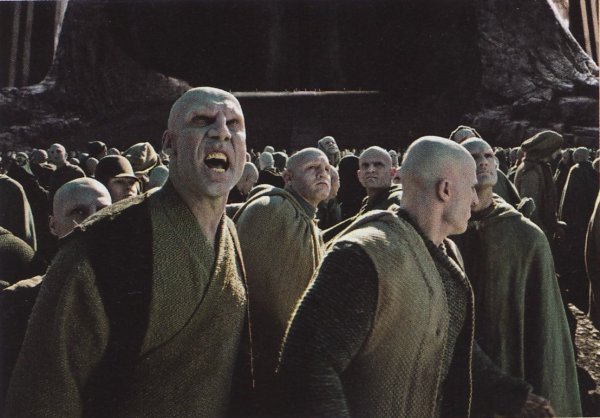
The much more human-like engineers only make a cameo in Alien: Covenant. I have a question: why did they ditch their super advanced technology for monk robes and stone buildings? For such an advanced race that specialized in advanced bio warfare, they sure were open to attack.
But the Engineers aren’t the only open-ended story path being squashed. Noomi Rapace’s Elizabeth Shaw barely makes a cameo, being killed off-screen in a way reminiscent of Newt and Hicks in Alien 3. Dr. Shaw may have been a flawed character, but I spent all of Prometheus getting behind her and was genuinely curious to see where her character went.
After all, she is portrayed as an idealistic and naive scientist driven by her faith in Prometheus – a faith that is shattered by the horrific events she encounters. Logically, I could have seen her sliding into a homicidal streak more easily than the well-meaning but controlled David.
Instead, Elizabeth Shaw started trusting David (the android who murdered her husband) for… reasons, and then is betrayed and killed, used in David’s experiments to creation the perfect phallic monster.
Killing her off would have been more acceptable if it was to make way for stronger characters but, well, we’ll get to that in a minute.
For all its flaws, Prometheus opened the Alien franchise to expansion. Alien: Covenant was a film very determined to close off every avenue of that expansion, hastily answer the un-asked question of alien origin, and slam the series back to its tired roots of traditional xenomorph murdering space colonists.
The Lazy Writing of Bad Horror
I have been dancing around this problem throughout my review. Alien: Covenant is bad horror filled with bad horror cliches. Its cast is made up of so many characters – most of whom named – who exist without characterization. They are simply there to die. They don’t feel like people, instead serving as plot mechanics or set dressing.
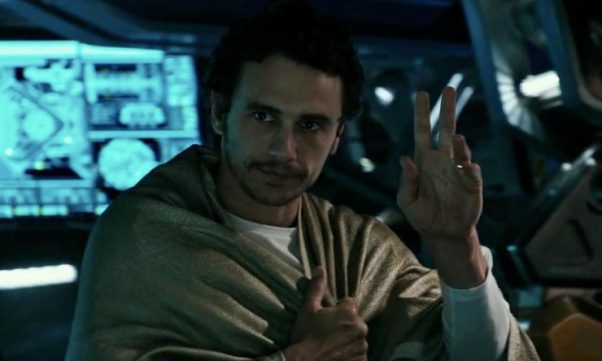
The bizarre inclusion of James Franco (who dies immediately in Alien: Covenant) is actually one of the better handled characters in the film.
I’ll perform a test. The main protagonist of the film is Daniels (Katherine Waterson). She is our primary good guy. She is… a woman… who was a wife… and has short hair. I cannot name a single personality trait. She’s good? She kinda looks like a knock-off Sigourney Weaver?
She is the best developed of at least 13 named crew members. Even David cannot keep up with Ridley Scott’s disregard of humanity in this picture.
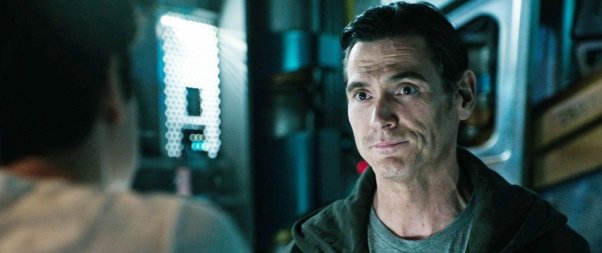
There is another character who I want to point out; Oram (Billy Crudup). Oram is a man of faith, someone who takes his religion very seriously. How do I know this? Not through his personality or meaningful plot action. Instead, I know this because the film tells me – over and over and over again. Literally every scene where someone says something about Oram, they mention his faith. And it is not important at all. Oram does nothing to contribute to the plot, eventually dying to face-hugger.
“See this face? This is my religious face.”
I’m going to say this as someone who is not particularly religious: If you’re going to write about religion, treat it with respect. Do not tack it on as some afterthought. Perhaps Oram mattered in some version of the script but it just feels like his faith is there to take digs at. It is tacked on. If you want a better written religions figure – maybe try Elizabeth Shaw (whoops – too late for that).
The lack of characterization could have worked in a movie that was only interested in having fun, but Alien: Covenant takes itself too seriously. This is a film clearly far up its own ass with half-baked ideas of Paradise Lost and artificial intelligence. It postures and uses words, the best words, to sound smarter and inflate itself over all the other slasher films on the market.
Oh, one other character to mention – David. I loved Michael Fassbender‘s David in Prometheus. He is complex; a seemingly well-meaning creation who is disregarded by others and abused by his creator. Mary Shelly would have been proud by how well her creation was adapted into a futuristic setting.
In Alien: Covenant, David has ‘gone insane.’ This is the rationale used to justify his behavior. It is also lazy writing 101. Going insane is the overused excuse to get a character to do something that goes against earlier characteristics/motives. In Iron Man, the villain goes insane to switch from scheming business tycoon to rock ’em sock ’em robo-fighter.
It does not add to David’s character to make him pure evil – it detracts from it. He is no longer complex, he is just crazy. He hates humanity but loves its art and creation? Sure?
Alien: Covenant is a perfect example of how not to write an effective horror movie. If people don’t care about the characters then none of the horror can be particularly effective. I don’t care that the alien tore off a woman’s head – I’m still trying to recall who exactly she was.
For as often as it’s used, insanity is rarely done well in film writing. When it is, the results are truly memorable characters.
Ridley Scott is clearly bored with the alien concept and using it to explore other ideas. The problem is that he seems to have no qualms trashing a universe that has evolved past him. Yes, he directed the first film (and kudos for that) but the series has grown so much since then. If he truly wants to explore AI – then by all means make a film exploring that concept, but leave Alien out of it.
Perhaps he just wants people to see his movies but doesn’t trust his name anymore. Exodus: Gods and Kings was one of the last ‘original’ projects he did and most people remain blessedly unaware/unaffected by the lifeless mediocrity that was that film. Regardless, I have only one request for Mr. Scott: Leave alien and don’t come back. Maybe someone else can give it life. This is what you’re doing to your franchise:






 Colin McMahon