Luke Skywalker will Likely Die in Star Wars: The Force Awakens

I am currently writing a new post discussing the various approaches to haunted house style movies, but then this came out:

Man, Star Wars: The Force Awakens looks awesome. Yet there is one person missing from the trailer, and from the official poster, that has people talking. The question on every Star Wars fanboy’s lips is: Where is Luke Skywalker?

Well… he’s in it. Mark Hamill is confirmed to be in Star Wars: the Force Awakens. He narrated the second trailer, and appears in this shot from the trailer:

The metal hand kinda gives it away.

So yeah, he’s in it, but what will his role be? Brace yourselves people… Luke Skywalker is very likely going to die. And this is a good thing, at least in terms of the sequel trilogy (episodes 7,8, and 9) standing on their own feet. But let’s examine the evidence from the trailers, as well as the evidence from good storytelling.

Trailer Evidence

Okay, as seen above – Luke is on a volcanic looking planet with ash flying everywhere. It genuinely does not look like a happy place to be. The final trailer also gives us viewers a glimpse of who else visits that planet: namely the Empire (or what’s left of it) led by new main bad guy, Kylo Ren.

Definitely looks like the same planet to me.

So they are in the same spot, and the empire is there in force. And then there is this:

Almost looks like an execution. He is likely stabbing down at someone. So yeah… not good. Yet while Luke’s life is in jeopardy, this actually is a good indicator that The Force Awakens might be the high quality Star Wars film that fans have been waiting for.

Thematic Planets

George Lucas was a big fan of using the setting to enhance the principle intended emotion of a scene. There is no greater example of this than Mustafar from Revenge of the Sith. This planet is hell, a reflection of the dark depths that Anakin Skywalker has sunk to. It is here that Anakin Skywalker meets his end, and Darth Vader is truly born.
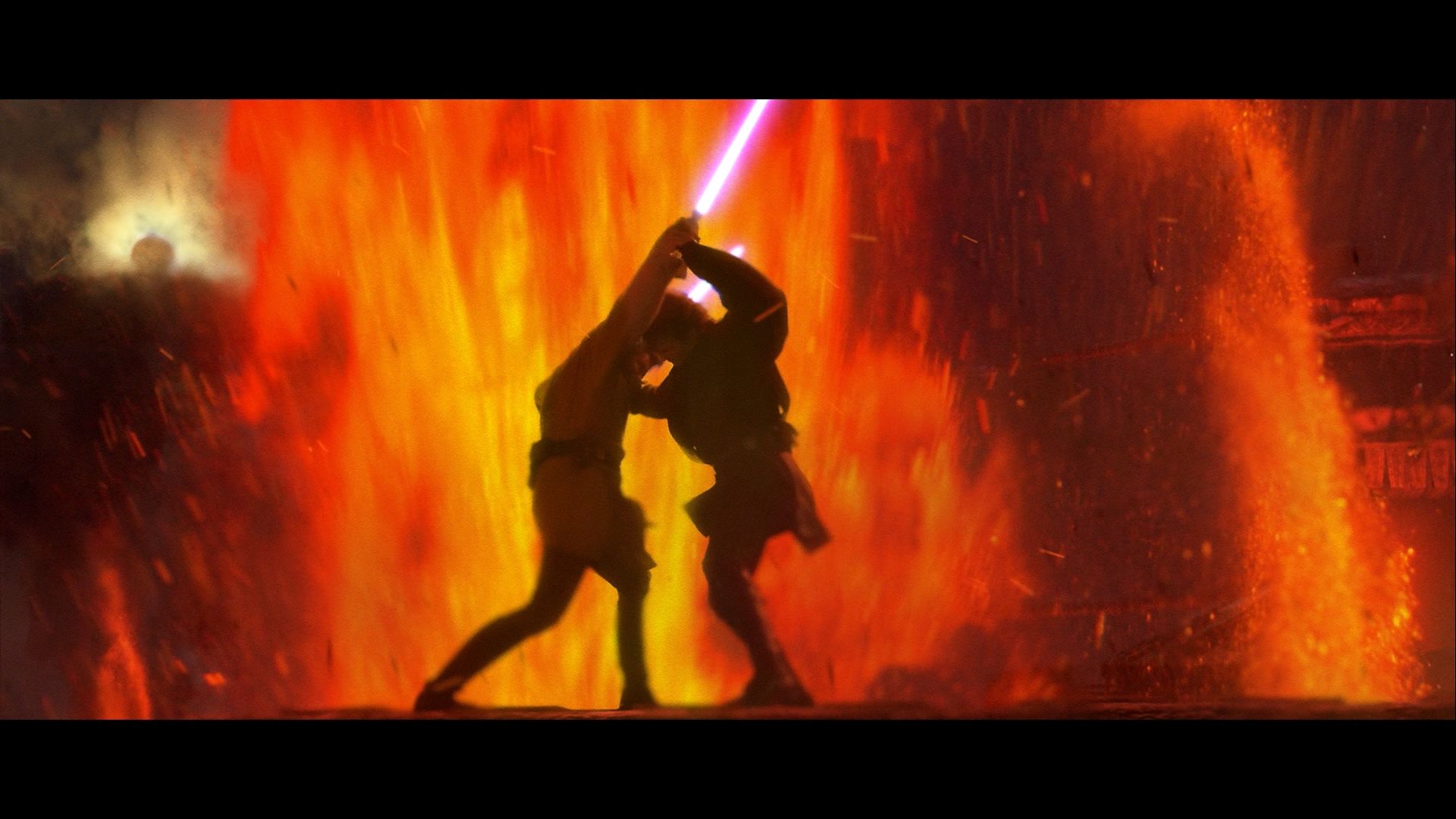
Say what you want about George Lucas, but the man does know about visual storytelling.

This new planet looks very similar, yet not as full of rage as Mustafar. It is a grim landscape, but one that is not literally exploding fire and lava every few seconds. This grim certainty may add a powerful element of Luke’s grim acceptance of his fate, and his refusal to fully give in to the anger that destroyed his father.

The Old Hero Dies at the Beginning of a New Trilogy 

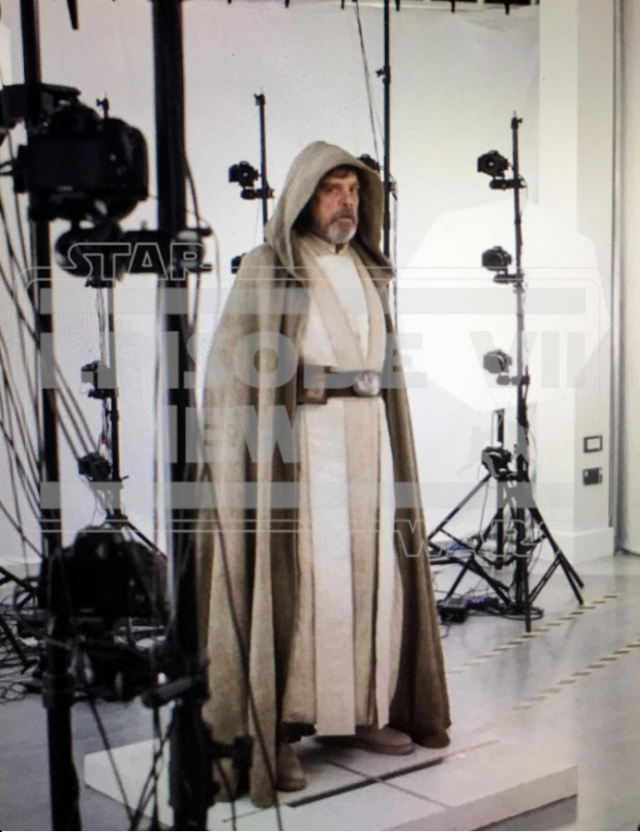
Here is a shot of Luke in costume from The Force Awakens:
screen-shot-2015-08-13-5-49-25-pm

As many have noticed, it is reminiscent of Alec Guinness‘ Obi Wan Kenobi, and I agree. There is a resemblance. Now what happened to Obi Wan in A New Hope?

And what happened to Obi Wan’s mentor, Qui Gon Jinn at the start of the prequel trilogy?

Oh yeah. At the time, this was the killing off of a side character. Yet in the prequel trilogy, Obi Wan Kenobi was the main hero. Unlike Anakin, he never falls to the dark side – making him the only person (who lives) that the audience can constantly root for. Yet in the original trilogy, Obi Wan has to go. There are two very important reasons for this:

Establish the Villain

Man, Darth Vader became a real threat in that moment. He was always intimidating (thanks to great costume design and his ability to telepathically choke the life out of people) but once he kills Obi Wan, the audience knows that the stakes have been raised: characters can die. It was a great example of showing us how dangerous Vader was, rather than Obi Wan being like “he helped the empire hunt down and destroy the Jedi, and he betrayed and murdered your father… maybe.” It always does more to have the villain commit a heinous act on-screen.

So now we have Kylo Ren, and if he is going to be our villain for the next three movies – he needs to be dangerous. He’s already cool looking, got that great look going. You know who else was cool looking – Jango Fett, and General Grievous. Yet none of these characters was particularly threatening because they never did anything. Jango Fett was supposed to be a feared bounty hunter, but his battle tactics (fly towards the guy with the sword) left a lot in question. Grevious was the leader of the droid army who stayed alive by… running away for three years? I’m shaking.

(this interpretation of Grievous would have made a more interesting villain.)

Of course, those two were helped with by other villains (namely Darth Sidious) who kept the tension high. Now it’s only Kylo Ren… and shiny stormtrooper Captain Phasma. Unless there is a shadowy mastermind waiting to be revealed – the audience needs to hate and fear Kylo. What better and quicker way to establish this by having him kill Luke Skywalker?

Establish the Heroes

What’s the greatest problem that shows like Teen Titans and Young Justice had (at least in concept)? They were shows about sidekicks. Batman was always around, Superman was always around. There was this cushion – that existed by just the nature of the main characters – that said: someone else can get it if you fail. Luke Skywalker is currently that someone else. He is the head jedi hauncho, the guy who beat the Empire. Who cares about Rey, Finn, Poe Dameron, and anyone else you’re trying to establish? The audience already knows who the hero is.

Unless that hero isn’t there anymore…

Han Solo can survive in a supporting role because really – he’s just an old guy with a blaster. Ditto for Chewbacca. Leia might never have really trained to become a jedi (she likely focused more on being a political leader) so she cannot physically hope to overpower Kylo and his baddies. There is still room for these people, while allowing the new characters to occupy the main roles.

To use a comparison – Legend of Korra would not have worked if Aang was still alive. There needs to be only one avatar. There needs to be one main jedi who is getting things done:

lightsaber

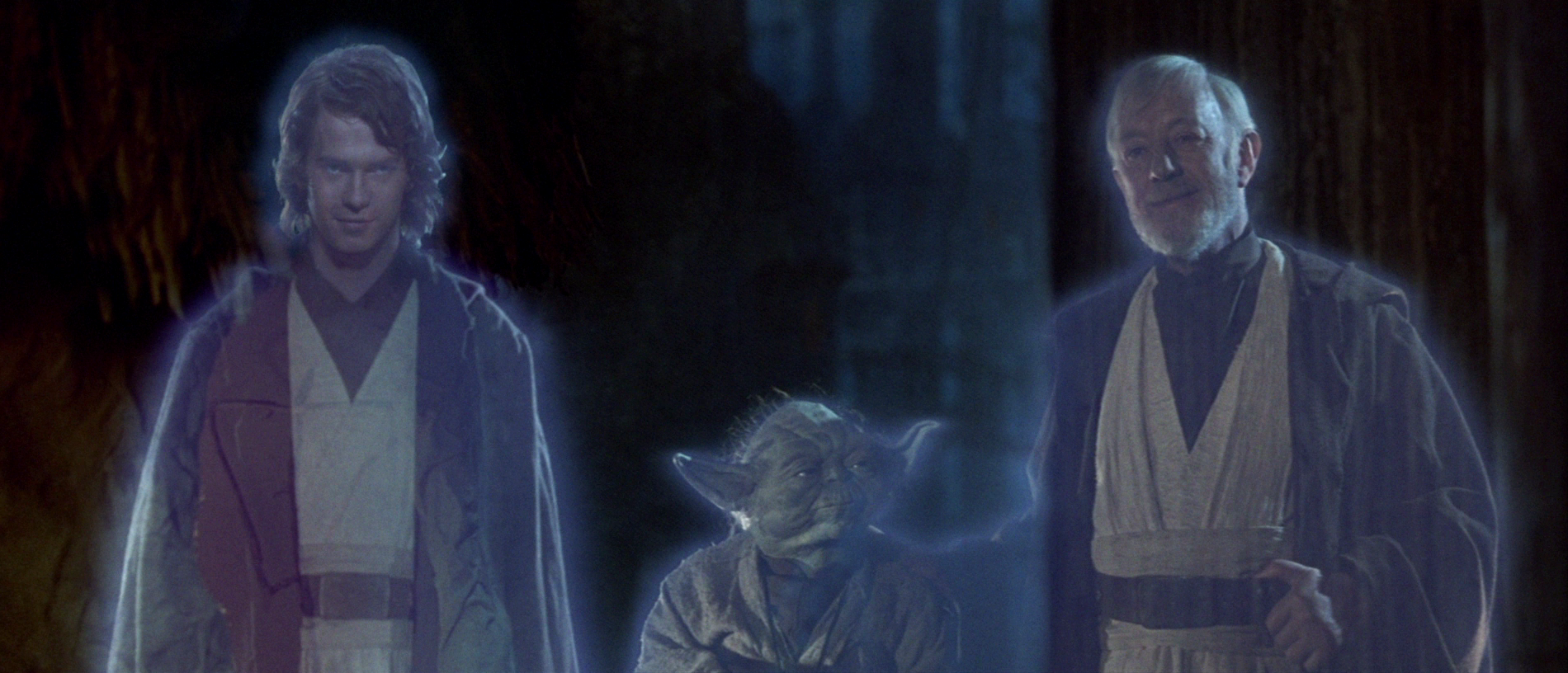
Time for the new heroes to step up. Time for the force to awaken and the saga to begin again… and probably time for fans to bid a teary goodbye to Luke Skywalker. But no worries, after all – since when does death stop a jedi?
JediGhosts-ROTJ


Writing the Right Way: Three Areas Where Bioware can Improve

Most every major developer in the world of video games has a skill sets their company apart. Want to play a polished game with years of development clearly invested: go Valve or Blizzard. Want a cooky sandbox-style game that plays with morality in a delightfully childish way: contact Peter Molyneux (whatever company he happens to be a part of). Feel like you’re in the mood to play an NFL simulator: well, too bad because EA Sports still holds exclusive rights so it is Madden or nothing. Everyone has strengths. With Bioware, the company has made its reputation on immersive, choice-driven stories. The company exploded into the public spotlight with Knights of the Old Republic, a Star Wars game that featured the greatest twist since Empire Strikes Back.

Since then Bioware has built worlds filled with entangling plots, diverse characters, and morality systems. Of course, the games themselves have evolved over time – and Bioware has made improvements accordingly. Real-time combat has replaced turn-based strategy and advanced animation allows for characters to express more personality. Storytelling is also able to be much more seamlessly integrated into the gameplay, although Bioware’s style has been to use non-playable cutscenes to attain a cinematic quality. How have the stories themselves been? Great! Stellar really across the board, give or take a few complaints. Yet as with any company, there is room for improvement. Here are three areas where Bioware can succeed at even higher levels:

1. Villains

For all the impressive companions that the Bioware writing staff develops, the villains… leave a little to be desired. Not to say that every enemy has been a bore by any stretch, Master Li (Jade Empire) and the Illusive Man (Mass Effect 2 & 3) are definite highlights. Yet for every interesting antagonist, there are two others that just do not work. Kai Leng, the Archdemon, and Corypheus are all prime examples of one-dimensional villains. The player understands that these people are evil because… there needed to be a villain in there somewhere? Motivation breathes relatability and frankly, a lot of Bioware villains just seem to be jerks. A good villain is hard to do well and there needs to be gray area to allow the player to see things from their perspective, even if they do not agree with it. In certain cases, Bioware has tried to give a villain dimension.

Kai Leng looks like he leapt right out of the pages of fanfiction.

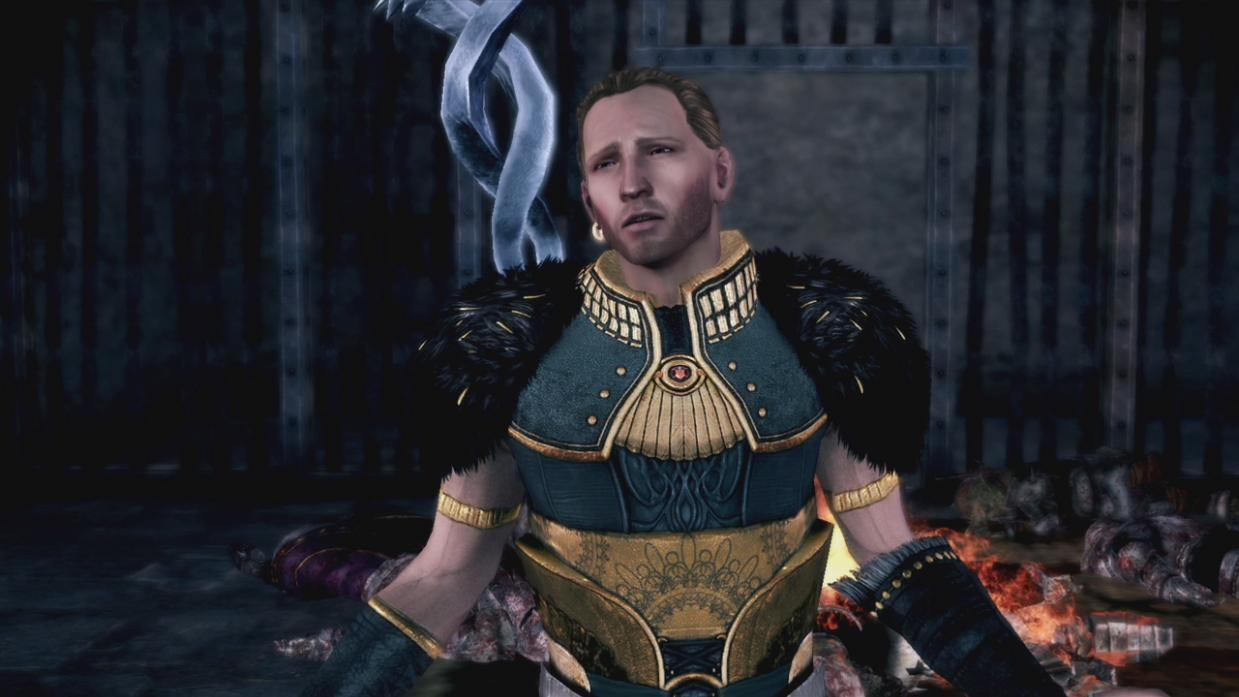
The greatest example is Teyrn Loghain, one of the main antagonists in Dragon Age: Origins. Early in the game, the player is trying to help the king win a battle against the darkspawn (the bad guy of the game). The player has to light a torch, signaling Loghain to come in and help with all his men. Here is what happens:

Apparently, Loghain had deemed the battle lost and blames it all on the player. Of course, he clearly did everything he could. Just look at him try and… what a dick. Yes, for all Bioware’s efforts – this attempt did not work. The only thing they succeeded in doing was creating an immense feeling of satisfaction when the player finally had the choice to kill Loghain. As you can imagine, many people chose to do so. Not that this is not an achievement, but given the depth of character writing Bioware exhibits, it is a shame to see so many cardboard cutouts when it comes to the bad guy.

Anders might be the best villain Bioware has ever created. He is certainly the most relatable in the sense that he is a good guy for most of the game.

2. Character Consequences

A lot of Bioware writing has creates consequences to be sure. The main one I am highlighting is best shown in Mass Effect 2. For those out there not in the know, the plot of Mass Effect 2 involves summoning a team of experts to take on a highly dangerous suicide mission. Seriously, this mission is super dangerous – like 99% chance of failure. No one really has any hope of… what, everyone lived? Oh, okay then.

People can die. Can, but don't have to.
People can die. Can, but don’t have to.

Perfection is not perfect. Saving everyone does not breed the best storyline, in fact it can create some real problems with a lot of leftover characters (just look at how they had to handle things in Mass Effect 3). Sure, having an achievement for surviving with everyone is nice but really – it’s dumb and it takes away from the realism and the intensity of the story. Make the player make choices that will get people killed. You can’t make an omelet without breaking a few eggs as they say.

Better example: imagine there was a way to play through Telltale’s The Walking Dead without anyone dying. How much less engaging and emotional of a story would that be?

https://www.youtube.com/watch?v=cDtGgE3E3Jo

There is no way to save Carley. That’s what makes it memorable.

3. More Mature Relationships

No, I don’t mean more sex. Bioware has come a long way with this but there is still almost a juvenile obsession with the player’s love life. It can be amusing and make for some great scenes but – with everything that is usually going on in these games, why do people really care? Also, why is it only the player character who ever enters into a relationship? Why not two party members? Yes, Mass Effect toyed with this concept a little but more could be done.

The kiss was the first climax in Bioware relationships.

Also, the game places an unhealthy standard by claiming that the sex scene is the climax. As a player, you romance a party member, have sex with them and – that’s it. You’ve won, right? That’s totally how relationships work in real life. It reduces the problems and emotions involved. There are a lot of avenues here like having the player already begin the game in a relationship.

Bioware did this in Mass Effect 3 but it did not feel genuine. Even if the player’s love interest was on the ship, they stayed in their own area and did not really ever interact as a couple. This could have been more due to programming difficulty and time limitations more than anything else. Still, Bioware has pioneered a lot of relationship mechanics in games, it would be nice to see them take the next step in making it more believable, and less about getting laid. Not that there is no place for certain scenes like that: