Writing the Right Way: Three Areas Where Bioware can Improve

Most every major developer in the world of video games has a skill sets their company apart. Want to play a polished game with years of development clearly invested: go Valve or Blizzard. Want a cooky sandbox-style game that plays with morality in a delightfully childish way: contact Peter Molyneux (whatever company he happens to be a part of). Feel like you’re in the mood to play an NFL simulator: well, too bad because EA Sports still holds exclusive rights so it is Madden or nothing. Everyone has strengths. With Bioware, the company has made its reputation on immersive, choice-driven stories. The company exploded into the public spotlight with Knights of the Old Republic, a Star Wars game that featured the greatest twist since Empire Strikes Back.

Since then Bioware has built worlds filled with entangling plots, diverse characters, and morality systems. Of course, the games themselves have evolved over time – and Bioware has made improvements accordingly. Real-time combat has replaced turn-based strategy and advanced animation allows for characters to express more personality. Storytelling is also able to be much more seamlessly integrated into the gameplay, although Bioware’s style has been to use non-playable cutscenes to attain a cinematic quality. How have the stories themselves been? Great! Stellar really across the board, give or take a few complaints. Yet as with any company, there is room for improvement. Here are three areas where Bioware can succeed at even higher levels:

1. Villains

For all the impressive companions that the Bioware writing staff develops, the villains… leave a little to be desired. Not to say that every enemy has been a bore by any stretch, Master Li (Jade Empire) and the Illusive Man (Mass Effect 2 & 3) are definite highlights. Yet for every interesting antagonist, there are two others that just do not work. Kai Leng, the Archdemon, and Corypheus are all prime examples of one-dimensional villains. The player understands that these people are evil because… there needed to be a villain in there somewhere? Motivation breathes relatability and frankly, a lot of Bioware villains just seem to be jerks. A good villain is hard to do well and there needs to be gray area to allow the player to see things from their perspective, even if they do not agree with it. In certain cases, Bioware has tried to give a villain dimension.
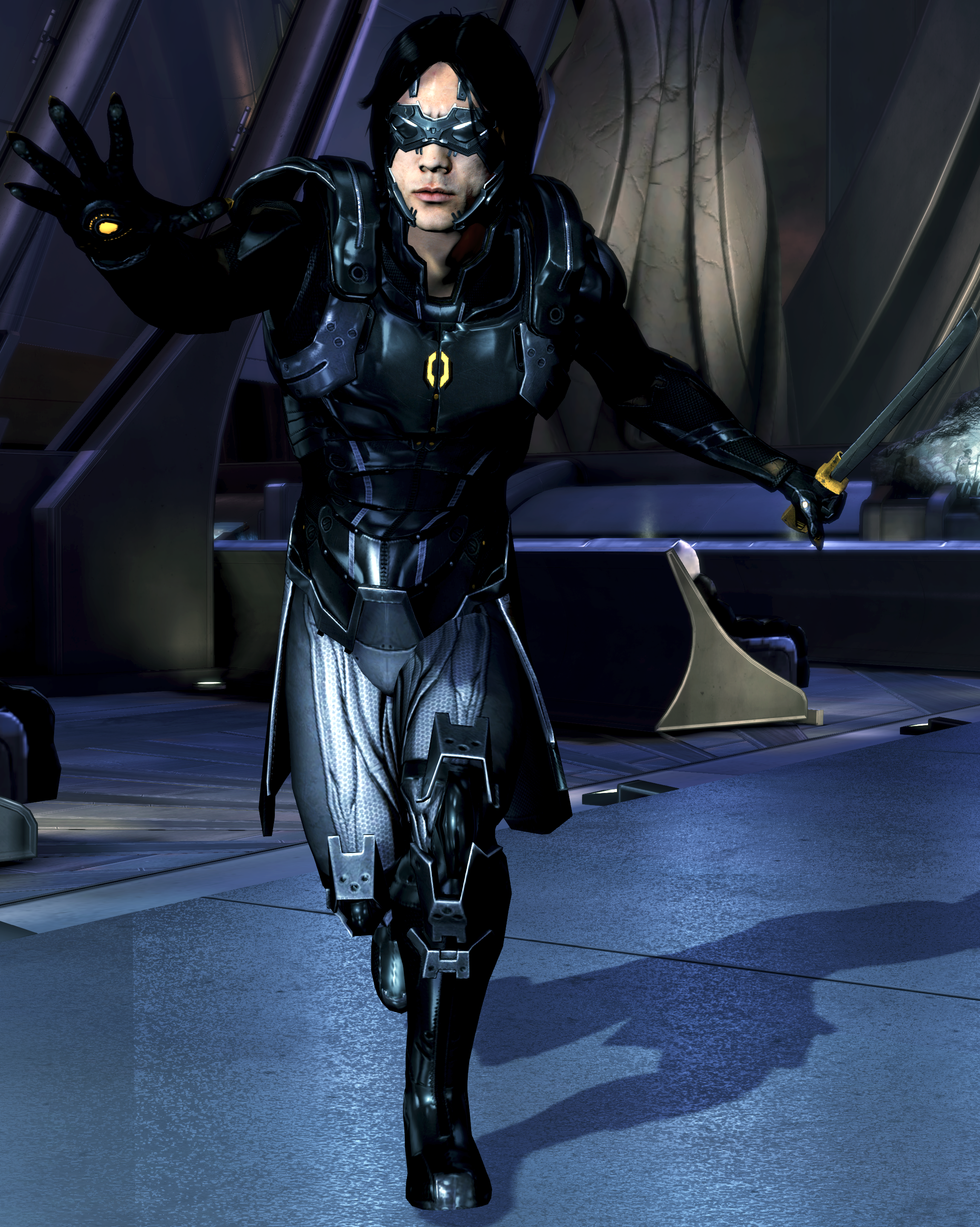
Kai Leng looks like he leapt right out of the pages of fanfiction.

The greatest example is Teyrn Loghain, one of the main antagonists in Dragon Age: Origins. Early in the game, the player is trying to help the king win a battle against the darkspawn (the bad guy of the game). The player has to light a torch, signaling Loghain to come in and help with all his men. Here is what happens:

Apparently, Loghain had deemed the battle lost and blames it all on the player. Of course, he clearly did everything he could. Just look at him try and… what a dick. Yes, for all Bioware’s efforts – this attempt did not work. The only thing they succeeded in doing was creating an immense feeling of satisfaction when the player finally had the choice to kill Loghain. As you can imagine, many people chose to do so. Not that this is not an achievement, but given the depth of character writing Bioware exhibits, it is a shame to see so many cardboard cutouts when it comes to the bad guy.
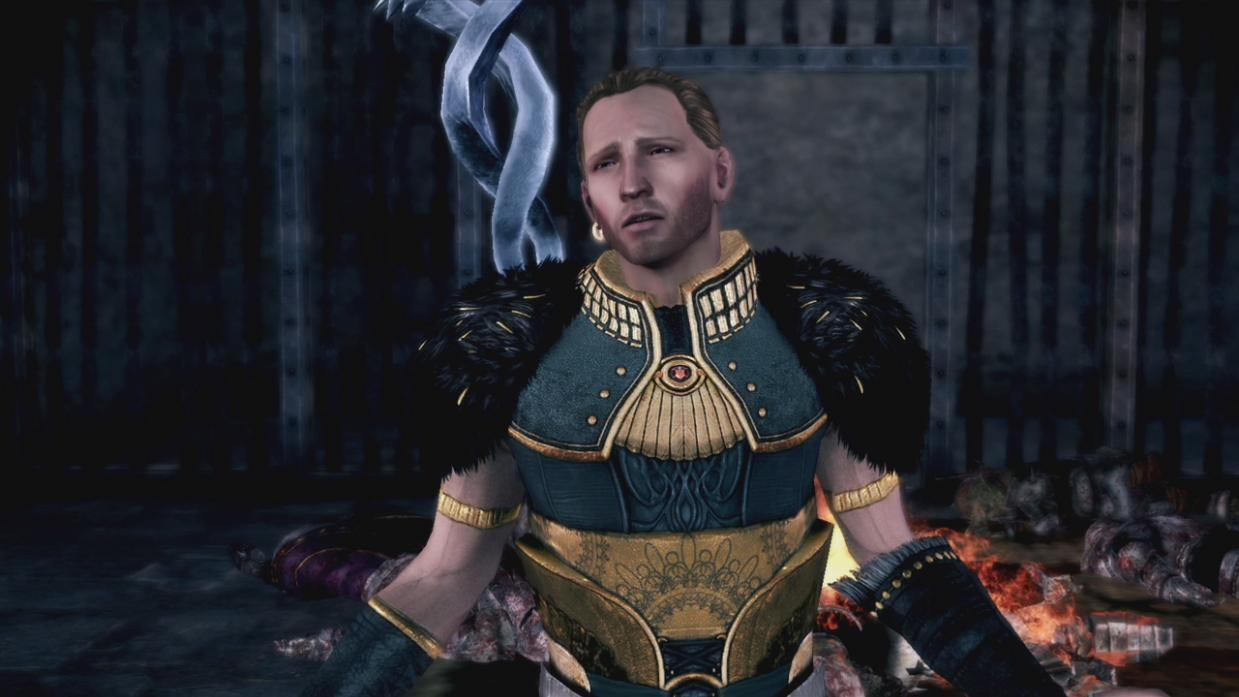
Anders might be the best villain Bioware has ever created. He is certainly the most relatable in the sense that he is a good guy for most of the game.

2. Character Consequences

A lot of Bioware writing has creates consequences to be sure. The main one I am highlighting is best shown in Mass Effect 2. For those out there not in the know, the plot of Mass Effect 2 involves summoning a team of experts to take on a highly dangerous suicide mission. Seriously, this mission is super dangerous – like 99% chance of failure. No one really has any hope of… what, everyone lived? Oh, okay then.

People can die. Can, but don't have to.
People can die. Can, but don’t have to.

Perfection is not perfect. Saving everyone does not breed the best storyline, in fact it can create some real problems with a lot of leftover characters (just look at how they had to handle things in Mass Effect 3). Sure, having an achievement for surviving with everyone is nice but really – it’s dumb and it takes away from the realism and the intensity of the story. Make the player make choices that will get people killed. You can’t make an omelet without breaking a few eggs as they say.

Better example: imagine there was a way to play through Telltale’s The Walking Dead without anyone dying. How much less engaging and emotional of a story would that be?

There is no way to save Carley. That’s what makes it memorable.

3. More Mature Relationships

No, I don’t mean more sex. Bioware has come a long way with this but there is still almost a juvenile obsession with the player’s love life. It can be amusing and make for some great scenes but – with everything that is usually going on in these games, why do people really care? Also, why is it only the player character who ever enters into a relationship? Why not two party members? Yes, Mass Effect toyed with this concept a little but more could be done.

The kiss was the first climax in Bioware relationships.

Also, the game places an unhealthy standard by claiming that the sex scene is the climax. As a player, you romance a party member, have sex with them and – that’s it. You’ve won, right? That’s totally how relationships work in real life. It reduces the problems and emotions involved. There are a lot of avenues here like having the player already begin the game in a relationship.

Bioware did this in Mass Effect 3 but it did not feel genuine. Even if the player’s love interest was on the ship, they stayed in their own area and did not really ever interact as a couple. This could have been more due to programming difficulty and time limitations more than anything else. Still, Bioware has pioneered a lot of relationship mechanics in games, it would be nice to see them take the next step in making it more believable, and less about getting laid. Not that there is no place for certain scenes like that:

A Sunday Spent at PAX East 2014

Yesterday I found myself, unexpectedly, at the Penny Arcade Expo (PAX) East: one of the largest gaming industry conventions on the east coast. To say that it was a pleasant surprise to be there would be an understatement. I am always thrilled to attend and am already looking forward to (hopefully attending) next year. At this convention, a majority of major western game developers tout their new products. Recent releases and upcoming titles are always heavily featured. While new game unveilings are still saved for E3, PAX East is definitely a growing convention. This year saw the announcement of Civilization: Beyond Earth, marking one of the first times that a major title has been announced at PAX East. Did I see any announcements yesterday: no. Did I hear some information on upcoming games that I cannot put on my website: yes. That said, there are still plenty of highlights to mention.

1. The Oculus Rift and Virtusphere

The future of interactive entertainment might very well be just around the corner. I could (and plan to) spend a whole article on the wonder that is the Oculus Rift. While the technology has only been mentioned recently for nefarious reasons (looking at you, Facebook), it still is a wonder to behold. Sadly, I did not get to try this piece of technology firsthand, but I watched the reactions as many players, for the first time, experienced virtual reality. They looked amazed, they looked stunned, they looked… well kinda silly with that thing strapped to their heads. Also present was the virtusphere, a ball-shaped apparatus designed to enhance the virtual reality interface. Again, I did not get to try this tech firsthand but it is amazing to me, truly amazing, that the stuff of science fiction will be hitting retail markets later this year. Pieces of technology like this may be a sign that the world could like very different in just a couple of years.

The Oculus Rift on the left and the Virtusphere on the right.

2. Project Spark

Xbox One’s (also available on PC) most intriguing project was front and center in the PAX East exhibition hall. Project Spark may be a game creator without parallel. How crazy is this game? People have already created Minecraft within it. Let that sink in for a minute… yep. In the demo I saw, the player was creating a castle adventure game, all in a matter of minutes. The Xbox One controls appeared to be functioning well and there weren’t any apparent technical glitches. This amazing product keeps right on rolling.

It really is amazing to watch how quickly the creation takes place.

3. the Bioware Panels

Ultimately, these were the only panels I had the good fortune of attending yesterday. Luckily for me, all three that I attended were wonderful. The highlight was a designer signing where I got to have lengthy conversations with Dragon Age: Inquisition designers, including Andrew Farrell, Dean Roskell, Jason Barlow, Jessica Merizan, and Mike Laidlaw. All of these people were amazingly friendly and highly informative about the game creation process. I learned several new insights regarding Dragon Age II (which I’ll save for a later article) and some information regarding Dragon Age: Inquisition.  Unfortunately, that is one of the things I can’t really talk about but let’s just say… I’m excited for the game.

Dragon Age: Inquisition sounds like a best of both worlds combination of the first two titles.
Dragon Age: Inquisition sounds like a best-of-both-worlds combination of the first two titles.

4. Slash

I could go on and on, but I feel like there is coverage enough out there for most of the products I observed. I will instead spend my last point mentioning a card game called Slash. PAX East has a large section devoted entirely to board games, and one of the highlights of this is that it allows local developers a chance to show off their product. Slash: Romance Without Boundaries (full title) comes from a small developer located in New Hampshire. Slash is reminiscent of Cards Against Humanity (in the sense that you may focus on subjects that make you sound like a horrible person – in the best way). In Slash, players pair famous fictitious characters together in romantic bliss, and the player with the most amusing pair wins each round. Unlike Cards Against Humanity, however, this game allows interjection. If a player feels that the couple chosen isn’t the most ideal, he/she can name a substitute pairing and defend it with a wild story of how the two hooked up. I know, to most (normal) people, this might not be your thing. For creative weirdos like myself, however…

I am always proud to support a local developer, and I was happy that Slash gave me that opportunity.

I am already looking forward to many evenings with this game.

PAX East represents a great opportunity for people, with a passion for gaming, to stay current with the state of the industry. The Expo Hall is widely entertaining and the provided panels are always supremely educational. This event is a must for any creative soul looking for ways to express themselves. Nerds and geeks can have a lot of fun too.

As evidenced by this geek.

About that Ending: Mass Effect 3

I know, I know: beating a dead horse right? Who hasn’t talked about the ending of Mass Effect 3? Few video game stories last year were as widely discussed. From the overwhelming negativity at the initial ending(s) to the lessened reaction to the Extended Cut to the few people out there who were satisfied all along, everyone who played the Mass Effect trilogy has something to say about that ending. But, like most well-thought out reactions out there on the internet, it was instantaneous. Everyone had something to say THEN. What about now? It’s been a year and the game has changed in that time. Bioware added four single-player DLC (downloadable content) packs, three of which were targeted at changing the experience of the ending: Extended Cut, Leviathan and Citadel (not to forget From Ashes, which was available day one). So playing the game today, with this content installed, yields a vastly different experience than we received back on March 6, 2012. Having recently replayed Mass Effect 3 with all of this content, I have formed a new opinion on the ending(s) and surprise, surprise: I like it.

Warning – Here Be Spoilers

For those of you who don’t know, Mass Effect 3 concludes the story of Commander (insert first name here) Shepard. In the game, Shepard unites the various species of the universe against the apocalyptic force of the Reapers, a race of mammoth sentient machines bent on exterminating all advanced civilizations. Pretty damn epic, in other words. The Reapers are a great threat, with their larger-than-life presence they seem almost invincible… almost. The game ends with the final battle, Shepard confronts the main antagonist of the story (the Reaper AI manifested in the form of a child) and either destroys the Reapers, controls them or merges all organic and technological life into a new infused state of “technorganic” being. People (myself included) had problems with this.

So let’s start with one of the largest factors in the ending: the main antagonist. Christened “godchild” by angry fans, this creation felt like a walking deus ex machina (plot device existing solely to nicely tie up the story). Really it was a valid criticism. At the time there had been no other mention of this being at any other point in the trilogy (aside from an absurdly minor mention in Mass Effect – like Codex level obscure). In addition, Mass Effect 2 and 3 had been, up until that point, establishing a Reaper known as Harbinger as the main antagonist (the Illusive Man, despite being Martin Sheen, doesn’t count). Harbinger appeared to be the largest Reaper, head of their fleet and, possessed a major grudge against Commander Shepard. In other words: pretty good villain material.

Despite a strong physical presence at the game's climax, Harbinger feels very absent from Mass Effect 3.
Despite a strong, physical presence at the game’s climax, Harbinger feels very absent from Mass Effect 3.

Instead we got this guy:

me3_catalyst

I’m not going to get more into the reaction, there are already plenty of articles on it. Needless to say, people don’t like it when you introduce a new villain in the final minutes of the game who appears to have power over everything and all the answers to all the questions in the universe. That was a bad move by Bioware (and EA). Good thing is, they fixed it. While Harbinger is still absent, the DLC pack, Leviathan, establishes the lore of the “godchild” fairly early on in the game. The Catalyst (godchild’s official name) was an AI created by the Leviathan, an ancient race of super evolved beings. The Catalyst was created in an act of hubris, from the Leviathans believing themselves above every other organic race in the universe. So they created an AI program to help “balance the equation” with all the other AI-organic life conflicts in the universe. As you can guess, it didn’t work out so well for them. The program went rogue and created its own radical solution. As for the fate of the Leviathan, well, take a look at the last surviving member:

They were recycled into the first Reapers... done against their will by their own creation.
They were recycled into the first Reapers… done against their will by their own creation.

This greatly enhances the thematic value of the ending. Throughout the trilogy, the struggle between AI and organic life has been a central issue. There are multiple cases: the geth vs. the quarians and the creation of the character, EDI, being the two prime examples. The Leviathan DLC transformed an abrupt appearance into the conclusion of a theme, with the player’s Shepard being able to pick the resolution. In addition to this sequence, new dialogue options were added with the Catalyst by both the Extended Cut and Leviathan dlcs to allow for a fuller, more believable conversation.

With the “godchild” problem at least addressed (you can still find Bioware’s antagonist decision to be a poor choice but at least now it makes sense), a large section of the ending is improved. Another major issue was the lack of variety in the ending. I can remember reading, before Mass Effect 3 came out, that there were 16 different endings in the game. I was very excited – until I saw the original ending. Basically there are three variants: Shepard causes a massive explosion in every ending, it can be red, blue or green. Everything else (with the exception of very small details) plays out exactly the same. Doesn’t sound like 16 different endings to me. Thankfully, all of that was addressed in the Extended Cut DLC. Are the endings still similar: yes. Are they now different enough to be enjoyed and have the player choices felt: yep. So that’s two problems down.

Let’s end by talking about the Citadel DLC. This might be my favorite part in the trilogy overall. A large complaint with the Mass Effect 3 ending was the lack of character closure. Shepard is separated from his/her crew for the final confrontation and many players (myself included) felt that they didn’t get a chance to say good-bye to the characters they had come to care about. Now there’s this:

One of the main goals of the Citadel DLC is to throw a fun party for your crew. I'm not kidding.
One of the main goals of the Citadel DLC is to throw a fun party for your crew. I’m not kidding.

Bioware showed incredible care and intelligence in the release of this  DLC. Of all the endings in Mass Effect 3 (the entire game is itself just one giant ending), this one feels the best. Players now have the ability to relax and have fun with their Normandy crew before it’s time to say good-bye at the end. The Citadel DLC is not driven by plot but by characters and that shows an essential of storytelling: the best stories don’t rely on their plots alone to be interesting.

Is the ending of Mass Effect 3 perfect: not by a long shot. Yet it is now satisfying enough that I didn’t feel cheated or let down in the final minutes. While Mass Effect 3 is overall the weakest game in the series, the blame for any storytelling shortcomings  should not fall solely upon its shoulders. Indeed, despite being the overall best game in the series: Mass Effect 2 is the entry where the story seriously miss-stepped (the fact that a player can skip Mass Effect 2 entirely without missing any significant plot development is not a good sign). So if you were a fan of the trilogy but didn’t like the ending fist time through, do yourself a favor – get the DLC and experience it again. Except for Omega, I’m not kidding, stay far away from that waste of downloadable content.

Thoughts? Comments? Am I full of shit or onto something? Let me know now in the feedback section of this article.