The Nintendo Wii U does not appear, on the surface, to be leaving much of a legacy. With the code-name NX console slated for next year, the door is set to close on Nintendo’s eighth generation console. Its current claim to infamy: the Wii U (to date) is the worst-selling Nintendo home console, at 12.8 million units (the previous title owner was the Gamecube at 21.7 million units). Yet I believe history may show a silver-lining for the Wii U. In many ways, its unique, ambitious, and ultimately underutilized controller concept has prototyped the way that the industry may play in the immediate future. In a lot of cases, the Wii U controller screen was used like a virtual reality (VR) headset.
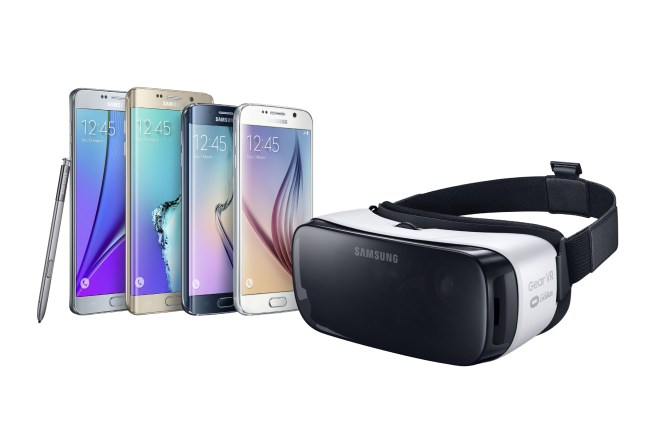
This last Saturday, I made a purchase. Having long been following the growth in the emerging virtual reality (VR) market, it made sense that I finally dive in. My purchase: a Samsung Galaxy S7 Edge smart phone and a Samsung Gear VR headset. At the time, I worried that, given how busy my weekend was, I wouldn’t find a lot of time to fiddle in the new realm of virtual reality. Turns out, the Samsung Gear VR has no problems capturing and holding attention.
It took a short while to set up. From getting my phone/headset to being ready to go probably took roughly two hours (for the record – most of this was time spent copying over phone data and driving to/from my house). For those looking to get one of these things, I definitely recommend doing it in the morning, so that VR can occupy the rest of your day.
The Gear only works with newer Samsung products (Galaxy 6 and up) so you may need to upgrade your phone to play.
Jumping in, I was immediately impressed by… the shopping menu screen. Sounds weird, right?
The menu itself was fairly standard. A collection of input boxes like “Store” and “Library” that would not give anyone with any electronics experience pause. No, what made the menu captivating was the fact that, after putting on my Gear VR, I was suddenly in a house that wasn’t my own. Moreover, it was a fancy, futuristic home. While I can’t move around it (to my knowledge) I could look to the kitchen, the pool, out the sunroof – anywhere I wanted.
Part of the future house is visible in the background. No 2D picture, however, is able to do this justice.
The couch I was sitting on felt far away and, despite the far-from-perfect resolution, I actually found part of my brain believing that I was really there. Again I want to stress – this was a storefront.
My first actual experience was a Cirque Du Soleil program that came free when I installed the Oculus storefront. When it began, I was in an empty auditorium, sitting in either the front row or directly on stage. Many of the Cirque Du Soleil clowns came towards me, dancing and laughing (as clowns do). Those with clown-related fears, be warned – they come right towards you and hang around at your left and right for the remainder of the show.
Then a rope swing descended above me and I watched as two other performers appeared. They mounted the rope swing and it ascended, giving me a front-row seat to their short performance. They swirled and twirled and did all manner of acrobatic feats in the short time I was able to watch them. This performance, like most VR experiences was on the shorter side, and it was over before I knew it.
I hadn’t even played a game yet, and already I was sold on the experience. With most movies – you watch. That appears obvious to type. Watching Captain America: Civil War – I watched a bunch of heroes fight. I didn’t just watch Cirque Du Soleil – I experienced it. Was it a perfect substitute for reality – no, it was in a place in-between.
This was made clearer by Nomads, a VR-only show that takes the user around the world to three nomadic tribes. It was a short documentary without any narration, yet was still an incredibly immersive experience. I felt like was canoeing through villages, visiting their homes, watching them cook food. VR’s ability to place me within the world led to an incredible, personal, voyeuristic experience.
This was one of the perspectives experienced in Nomads. Sadly the video quality was not usually at this resolution when I played.
Remember when the Nintendo 64 and PlayStation came out and suddenly 3D… er limited 3D was possible? Characters were still confined to a 2D screen, but were able to move around freely and explore like never before. VR is an experience similar to this breakthrough, only on such a grander scale. The Gear even enhances 2D experiences like Netflix – I was taken to a cabin in the mountains and provided with a theater-sized screen to watch movies on, surrounded by portraits of the characters from Netflix’ original programming (my favorite was the portrait of Bojack Horseman). I have yet to watch a full movie in Netflix VR – but it is definitely on my to-do list.
In the Netflix VR app – you’re on that couch. The TV looks a lot bigger from that perspective.
Another program, Milk VR, allowed me to play personal movies from my phone as if I were in a theater. I can’t tell you how amazing it was to see my dog as a puppy again, chasing her tail right in front of me.
To tell the truth, I didn’t spend much time in the games. I have ordered a controller and am waiting on that to dive in – but let me just say this: Minecraft exists on this thing. If it is anything like the other experiences I have had, I will not be playing Minecraft outside of VR from now on. (I have already written an article on how Minecraft may be the definitive app for VR).
The games I did play included a temple-run style space game, where I controlled a ship by leaning my head to the left and to the right, and a coral reef adventure game where I swam around in a virtual undersea world. I didn’t play much of the undersea one as it appears to be an experience that will be better with a controller. Even with the limitation – it was still a lot of fun.
I also installed Sisters… but haven’t mastered the courage to play it yet.
There are some drawbacks to the device – so far, I haven’t found any terrific social apps – so it can be a little isolating in the VR world. I have installed Altspace, but the one time I have tried it, I could not get past a loading screen (at least I think it was a loading screen). Some of the apps can also be a little nauseating, although that problem too has been going away the more time I spend in VR. Also, while the controls on the side of the headset aren’t bad – it would be nice if controllers were more available. The phone can also get hot if it’s made to do too many things at once – this problem has only been experienced once so far.
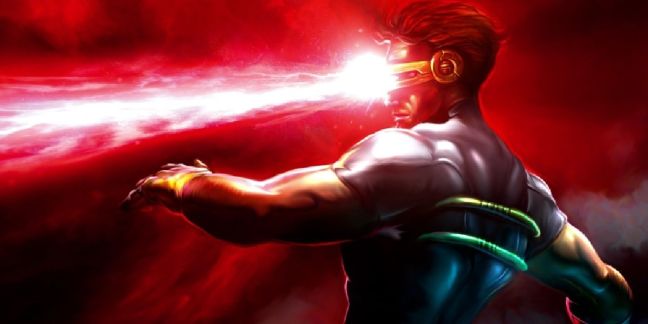
One last note – where is the X-Men Cyclops game for this? It is the ultimate no-brainer. Get on that, Marvel.
It makes all the sense.
In short, the Gear is one the cheapest “true” VR device on the market. It cannot do the things that the Oculus Rift and HTC Vive can… but it is still an incredible device that shows how wondrous the future will be. The age of virtual reality is upon us, with all its strengths and challenges. I advise everyone to dive in as soon as possible, and the Gear VR is a great way to do so.
It is no secret that Nintendo has seen better days. While the company is far from in trouble financially, the Wii U and 3DS have not matched the high profitability of the Wii and DS. Part of this is the normal rise and fall of the video game industry (think Xbox-Xbox 360-Xbox One). Yet there is another sign that the Big N might be in trouble that is actually far more worrisome than lackluster hardware sales.
Nintendo is a rarity in today’s video game climate. It is a company that survives largely without the support of third-party developers. Want to play Grand Theft Auto, BioShock, Star Wars Battlefront – buy another system. This absence would doom most video game console developers, but Nintendo has been able to fire back with the likes of Mario, theLegend of Zelda, Super Smash Bros., and Pikmin. They are a company that carries itself on its first-party (in-house) software library.
A sales chart in 2014 for the Wii U shows a predictable pattern: a top-selling list dominated by Nintendo titles.
In short: if Nintendo first-party games don’t sell, the company hasn’t got a chance. So far this hasn’t been a problem, since Nintendo games usually gather near-unanimous praise from gamers and critics alike. This past year, however, has seen a disturbing trend. Several first-party games have been released to less than stellar reviews, some of them coming from Nintendo’s most prominent series.
Mario Tennis Ultra Smash
Beginning on the Virtual Boy, the Mario Tennis series went big with its Nintendo 64 entry. Since then, the series has been a staple of fun sports games done well. While it never rose as high as Mario Kart, the series enjoyed success on the Gamecube, the Gameboy Advance, the Wii, and on the 3DS. Yet the Wii-version was just a redone Gamecube release and fans could not wait for the next console entry to continue the series’ high standard.
They’re still waiting.
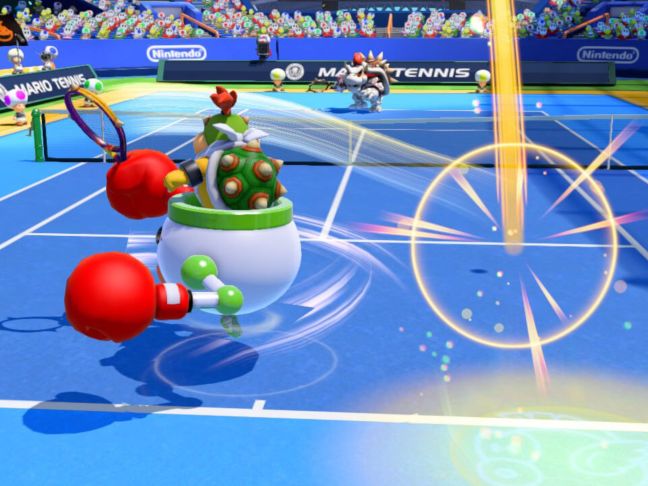
Mario Tennis was a series that prided itself on its variety of modes and diverse game types, features that were completely missing in the lackluster Mario Tennis Ultra Smash. The result was immediately seen in the critical response. On Metacritic, while previous games averaged a 77, Mario Tennis Ultra Smash manged only a 58 (5.2 out of ten user score). This is a dramatic drop, and not just in review score. In its first month, Mario Tennis Ultra Smash sold just 18,000 copies (compared to Yoshi’s Woolly World at 97,000 which only debuted a few weeks prior). Mario Tennis had a reputation, and it was severely damaged by this lackluster entry.
This was a gorgeous, vibrant looking game. It’s a real shame.
Animal Crossing: Amiibo Festival and Happy Home Designer
How do you follow-up the surprising success of Animal Crossing: New Leaf on the 3DS? Apparently, Nintendo opted for a mediocre handheld game (which many critics said felt more like a mini-game) and a console release that convinced many gamers that amiibos were the stuff of gimmicks.
While New Leaf received near-universal praise (88 on Metacritic with a 8.7 user rating), Happy Home Designer managed only a 66 (6.7 user score) and Amiibo Festival was worse at 46 (4.4 user score). In two games, Nintendo was able to erase nearly all the goodwill established with New Leaf. Now, when the next Animal Crossing game is released – customers will likely check to see if it is an actual new game, or another gimmick trodden out to pad game release numbers.
Most gamers would agree that the strengths of Animal Crossing lie in the player’s ability to do a wide range of tasks and challenges. These two newest titles have gone strongly away from that – without adding any real depth.
To look at the units sold, it’s even worse. New Leaf sold a strong 8.87 million units. Happy Home Designer has only sold 2.83 million, and Amiibo Festival has yet to break a million (at this point it is unlikely that it will). Ouch.
The Legend of Zelda: Tri-Force Heroes
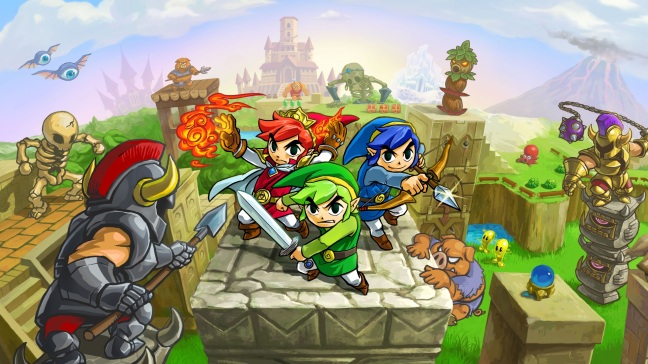
While this game did not receive the negative reviews of the others, it is worth mentioning because it is a Zelda game. Specifically, I believe that this game features the lowest average review score of any Zelda game made by Nintendo (these don’t count). The Legend of Zelda: Tri-Force Heroes earned only a 73 on Metacritic (user score was 75). To put that in perspective, the average of the other Zelda games, just on page one, was 92. Again, that is a large drop off in quality (far down from A Link Between Worlds, which earned a 91.
More players felt that the focus on three-player gameplay hurt rather than helped the franchise.
To look at units sold, Tri-Force Heroes sits currently at just over a million, whereas A Link Between Worlds is just under three million. Again, it is not incredibly troubling, but to release even an “okay” Zelda game damages the brand of one of Nintendo’s biggest franchises.
Star Fox Zero
I include this last one with an *. As of now, Star Fox Zero has not been released to the public yet in North America, but reviews are coming in. Currently, it is a 72 on Metacritic, which is not terrible (currently above Star Fox Assault). That said, Star Fox Zero was the first game since 64 that directly involved legendary creator Shigeru Miyamoto – so expectations were a little higher.
The dual screen gameplay appears to be receiving very different reactions.
Time will tell exactly how well this new Star Fox sells and is received by fans. Star Fox Assault, the last console Star Fox game, sold just over a million units, so that is the number to beat.
Of course, there are those out there who would argue that the series has been in decline for quite a while.
It is no surprise that higher review scores translate to higher sales numbers. In a world that is overloaded with games, it is tough to make a case to own any game that is less than good. Nintendo has survived on its brands and will continue to do so. Every misstep is costly. Series like Legend of Zelda will no doubt recover from Tri-Force Heroes, but when will we see another Mario Tennis game? To give a comparison, Rogue Squadron was a staple Star Wars franchise… that is until Rebel Strike came out.
The damage done by lackluster games cannot be understated. Here’s hoping that Nintendo rightens the ship before it is too late. Perhaps they are saving all their big ideas for the NX.
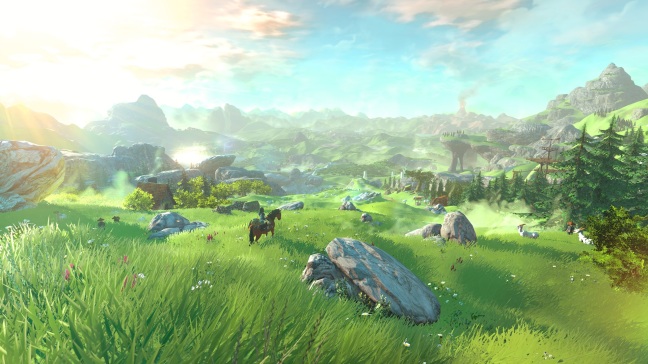
The new Legend of Zelda is a game that Nintendo cannot afford to misstep on.







 Colin McMahon