How Merchandising Killed the Alien

In 1979, one of the most iconic monster designs hit the screens. Ridley Scott’s Alien brought a creature never before seen. An unholy mix of insect, snake, scorpion, and human skull – the alien looked nothing like anything ever before made. The work by artist H. R. Giger in creating the alien cannot be overlooked. It was terrifying, it made people scream and today… today it is one of the most mainstream, tired looking creatures out there. Wow, how the mighty have fallen in the past thirty-five years.

Close ups and shadow shots allowed the alien to remain largely unseen throughout most of the first movie. A great way to enhance the terror.

The destruction of the alien’s ability to terrorize did not happen overnight and is not determined by any single factor. For one thing, and this is true of any creation: the novelty wore off. Alien was brand new in 1979, but the creature has reappeared in five (kinda six) sequels since. Some of those films, such as Alien: Resurrection and AVP: Alien vs. Predator belong more in the action genre than in horror, so the alien was not always portrayed in the same terrifying way in those films. Horror sequels always suffer from the basic principle of ‘it’s never as scary the second time you see it.’

Yet there is another factor, one that separates the alien from many of the other iconic horror figures of the last forty years: merchandising. Merchandising that began back in 1979 with the release of this toy from Kenner:

alien+box_lgYes, there is no better way to undermine terror than to put it into the hands of a child. Yet this in itself was not the downfall. The toy did not receive a wide release and has become something of a collector’s item. Obviously parents were less than thrilled with the creation of an action figure for an R-rated movie and… well, it also does not look like a thing that most young kids would want to cuddle with at bedtime. So this toy, while it is the first, is not the creation responsible for taking the terror out of Alien. It is simply where the merchandising began.

New Alien figures would not exist again until 1992. This time Kenner released a whole slew of toys, ones that included very obvious changes. The Alien was not scary anymore. Nothing could make that more clear than this:

This is series 1 of Kenner's launch of Alien toys.
This is series 1 of Kenner’s launch of Aliens toys.

Based off the second movie, this line featured the gorilla alien, the scorpion alien, and the bull alien: all designs that were never featured in any movie. They were created in admittance of one thing: the original alien design was looking kinda old at this point. To keep kids interested, Kenner would have to continually reinvent the image, adding a new animal every time. This line of logic is nearly identical to Hasbro’s Transformers line. Yes, by 1992 – Aliens were the new Transformers. It did not stop there. Kenner would continue to create toys over the next few years, eventually bringing in the Predator franchise as well (years ahead of the crossover films).
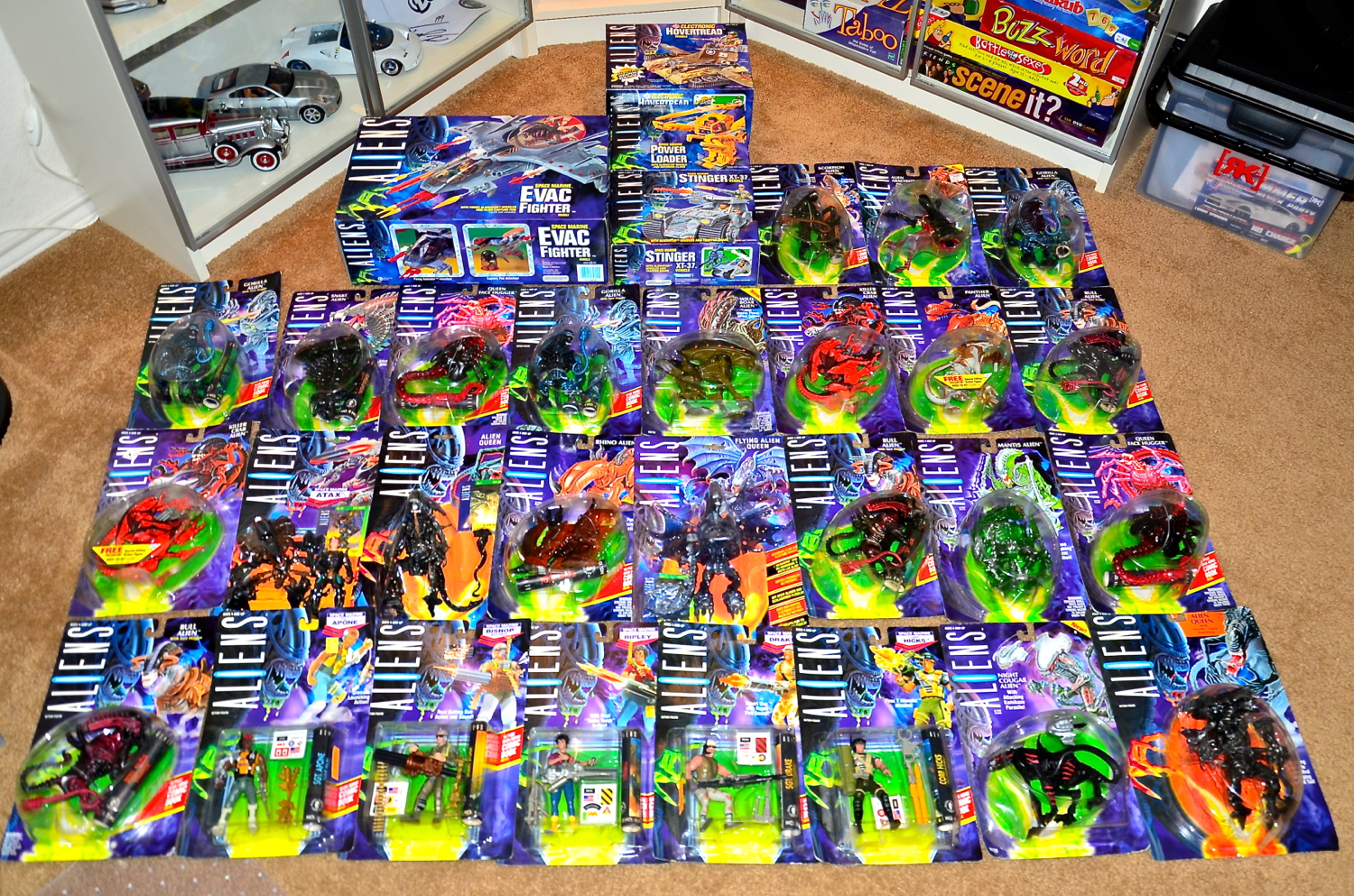
I don't think this is every toy... but you get the idea.
I don’t think this is every toy… but you get the idea.

With the Alien image already gone, the merchandising eventually shifted away from children’s action figures to video games. There are twenty games based off the Alien franchise alone – without involving the Predator. For the most part, this video games were geared toward an older audience. Kids who had grown up playing with Kenner toys (like myself) could now take their experience interactive. The franchise has enjoyed several really well-made video games, with my personal recommendation having to be 2001’s Alien vs. Predator 2. The series has also suffered through low moments. Well, just look at Aliens: Colonial Marines

Behold the terror!

It is interesting to note that this year features the first Alien ‘horror’ experience in quite some time. Alien: Isolation tries to recreate the horror of the first movie, with the player taking on the role of a human who is trying to avoid and survive a single alien. The game has received wildly mixed reviews, with some calling it the return to horror that the franchise has been needing and others calling it a second Colonial Marines. Personally, I have not played the game so I cannot give it a review. It simply appears that the developers are trying to do the impossible. After all –

alien_isolation_6-100371845-origHow can this really be scary anymore? Just look at how terrifying Giger’s mighty alien has already become:
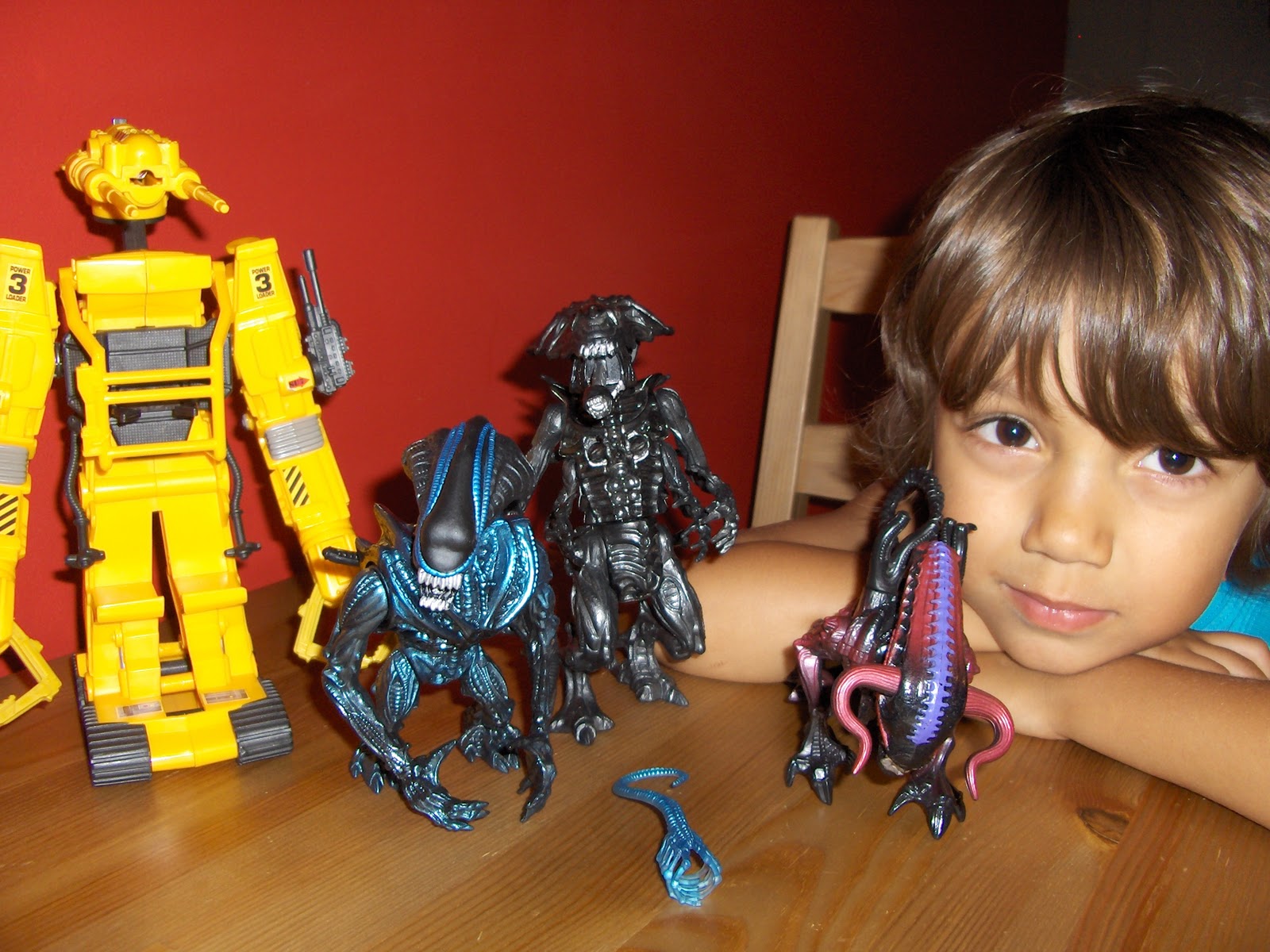
That child looks soooo afraid... that he won't get another toy.
That child looks so afraid… that he won’t get another toy.

If it wasn’t as scary the second time, how can it still be scary the fifty-second time?
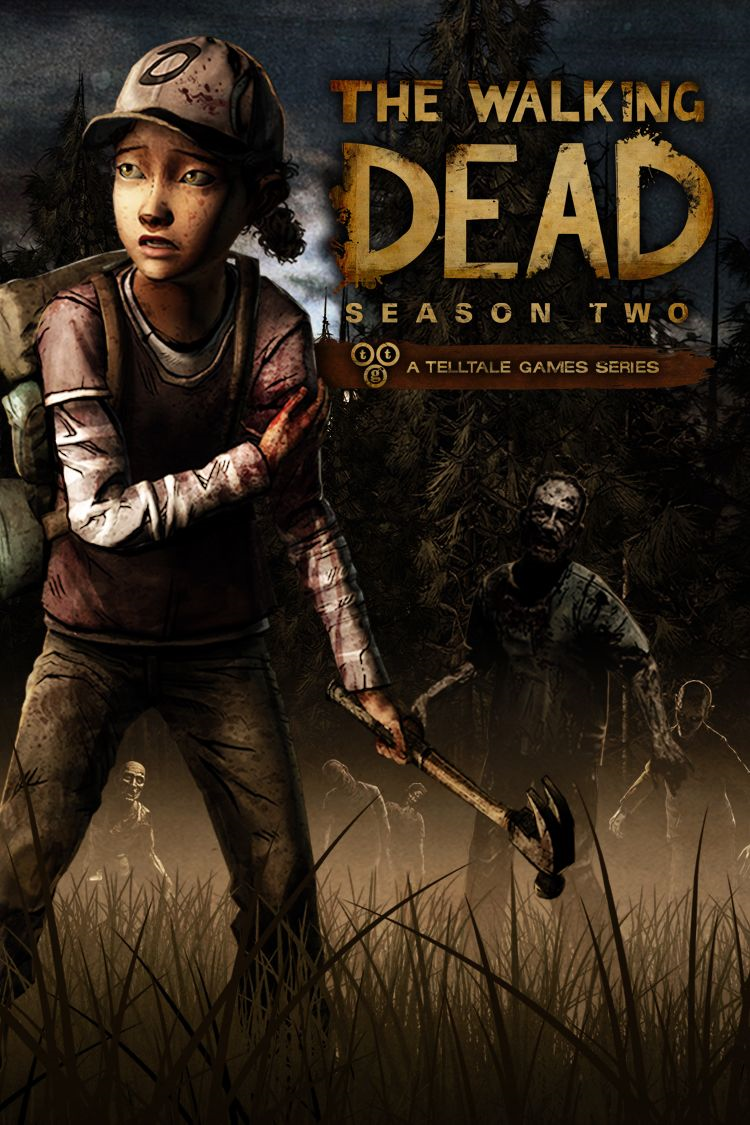
Through the Eyes of a Child: The Triumph of Telltale's Walking Dead Season Two

When Telltale completed Season One of its The Walking Dead in mid 2012, the clear question emerged: how could the sequel be better? The Walking Dead: Season One was heralded as one of the best games of the year, with many people dubbing it the greatest adventure game ever made. Now, whether that second part is true or not is a debate for another day. Regardless, Telltale had set the bar high. The company had successfully rebounded from the edge of collapse (remember Jurassic Park: the Game?) and had climbed into more mainstream gamer attention. Unlike the original, which came out of nowhere, The Walking Dead: Season Two would have expectations. In meeting these exceptions, Telltale had to create something both incredible and unlikely: a zombie story that did not sound too familiar. The succeeded with a simple twist in the traditional story-arch. An idea that has never been fully utilized in the genre before: a child protagonist.

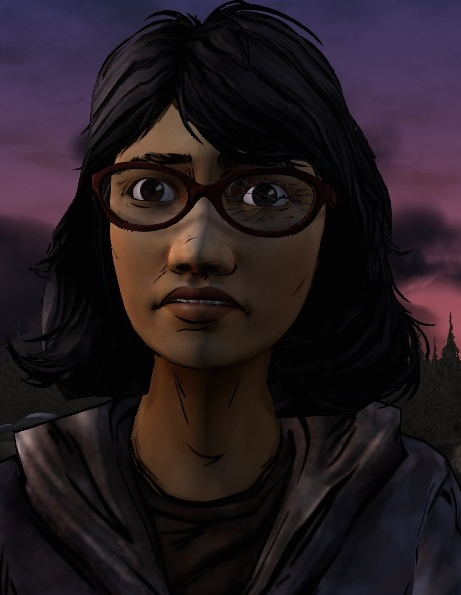
Marketing quickly established that this would be Clementine's story.
Marketing quickly established that this would be Clementine’s story.

This is not to say that children have not played a large role in the stories of zombie apocalypse before. From Carl on AMC’s The Walking Dead to Ellie in The Last of Us, children have been playing important supporting roles for sometime. Yet the main protagonist remained an empowered adult, with the child either functioning primarily as the embodiment of innocence, conscience, or some other ‘pure’ element of humanity. At eleven years old, Clementine breaks the mold that she had served in Season One.

Of course, a child protagonist poses problems – namely in the aspect of perspective storytelling, or point of view. Children do not experience the world in the same way that adults do. They live different lives, are ignorant of many issues, and concerned with priorities that not all adults would relate to. It was the triumph of Season Two‘s storytelling (headed by Nick Breckon and Andrew Grant) that allowed Clementine to be a relatable protagonist, while still maintaining the believable personality of a child. In discussing Clementine, the strengths and weaknesses of her portrayal must be observed.

WHERE THEY FALTERED

Since the flaws are so few, they will be highlighted first. As mentioned, problems can emerge with an 11-year old protagonist, namely: just how empowered are they? In a zombie apocalypse, why would the words of a child matter against bigger, stronger human beings? For the most part, Telltale handles this challenge well. Clementine is depicted as friendly and mature while having the all-important ability to keep her head in a crisis. The player sees the adult supporting characters appreciating these traits and trusting Clementine, which leads them to confide in her. Clementine is then able to use the influence she attains to either subtly or directly influence the group. She never brute forces any situation, and when a character does not want to listen to her – there’s little she can do about it.

That said, there was one event early on where the illusion of child protagonist is damaged. In the first episode, “All That Remains“, Clementine has an encounter with a grown woman named Rebecca. Here is the encounter:

There are several reasons why I personally do not believe this scene holds up at all with the nature of narrative perspective. It mainly comes down to the overly aggressive yet frightened attitude expressed by Rebecca. Clementine is a small, young girl who has just entered the group. She can pose no physical challenge and, at that point, it is very difficult to see her having a place of influence. Rebecca’s reaction is too strong and the lack of subtly causes the player to almost scoff at the encounter. This sequence would have fit much better if Season One‘s protagonist, Lee was still the player character. However, that reaction to a child is more laughable than tension-building.

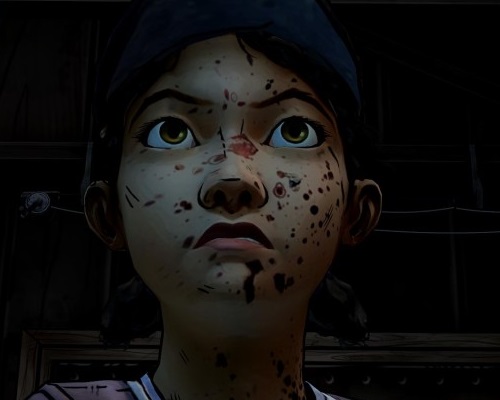
The face of an adult's greatest threat in a zombie apocalypse.
The face of an adult’s greatest threat in a zombie apocalypse.

Quick note – that scene has another problem as Rebecca believes Clementine to be a spy for Carver, a man they are all fleeing. Yet, as Rebecca was a former member of Carver’s group… she would (and later does) know all his people. Another reason why this scene is more contrived than anything else.

WHERE THEY SUCCEEDED

Without spoiling the entirety of The Walking Dead: Season Two‘s plot, the writers at Telltale essentially made it a coming-of-age story. Throughout the course of the story-arch, Clementine is exposed to three (or really two) supporting characters who serve to showcase wildly different mentors. Each believes that Clementine must behave a certain way if she wants to live in a post-apocalyptic world. This style of character interaction allows the player a very clever way to look at the consequences of action, and how actions over time shape an individual’s identity.

Jane serves as one of Clementine's mentors in Season Two. She is also a reflection of who Clementine might grow to be.
Jane serves as one of Clementine’s mentors in Season Two. She is also a reflection of who Clementine might grow to be.

In addition to this, Clementine’s personality has already been greatly influenced by Lee during the events of Season One. There are many moments where the player, like Clementine, find themselves asking “What would Lee do in this situation?” It is a brilliant piece on the importance of influence and how no one grows up alone. Throughout most of the game, the player feels like they are making a human being. Clementine already developed significantly in Season One, but Season Two finishes her growth arc. By the end, it is very clear what type of person Clementine has become – and the player feels like they had a strong role in that act of creation.

Sarah is a character used to contrast Clementine. At 15, she is considerably older, yet far less adult.
Sarah is a character used to contrast Clementine. At 15, she is considerably older yet far less adult.

Yet through it all, Clementine’s innocence and childish ignorance is touched upon. There is perhaps no more memorable scene than one of the final moments of ease in Season Two‘s story. Everyone is relaxing around a fire and joking around (needless to say, alcohol is involved). The subject of conversation turns to sex and everyone suddenly becomes very cautious around Clementine, who defies them by saying that she knows they’re talking about “kissing stuff.” This is not only a great moment in managing tension but a wonderful reminder of who Clementine is. She has had to grow up a lot to survive in a harsh world, but still maintains her child disinterest in anything to do with sex.

The Walking Dead: Season Two surpasses its predecessor with a unique protagonist and a very well-structured storyline. Is it perfect: no, but it is close. There is now a new question to be asked: how is Season Three going to top this?

Regardless of player choices, Clementine grows into a powerfully strong protagonist.

Ubisoft's Plan to Fail on Wii U

Ubisoft wants to make money. I think everyone can understand that. After all, it is hard to run a business when you’re not making money. Recently, Ubisoft CEO Yves Guillemot declared that Watch Dogs would be the last mature game released for the Wii U. His reasoning is that Wii U owners don’t buy “mature” games. Sounds like a reasonable statement. I haven’t seen the charts on Wii U sales for games like Assassin’s Creed IV, but I bet they’re not good. Unfortunately, Yves Guillemot’s reasoning isn’t as sound as he would like. There is another reason why Nintendo fans don’t buy “mature” games on the Wii U, and it has more to do with Ubisoft than anything else.

Ubisoft has released a lot of poor, sub-quality ports of “mature” games for the Wii U. Indeed, the company is playing the part of the sad friend while acting like a disinterested party. In examining the history of Ubisoft releases on the newest Nintendo platform, shocking similarities begin to emerge. Let’s take a look at some of the big “mature” releases, starting with the Assassin’s Creed series. Assassin’s Creed III and IV were released for the Wii U. Assassin’s Creed III was actually a launch game. Let’s look at how well Ubisoft handled the marketing:

Hmmm, there is one console missing there. I wonder how come no one would buy it for Wii U, looking at this billboard?

Wow, way to showcase the release on a new console, Ubisoft! Fun fact: I could not find a single billboard or poster that advertised the Wii U version. All I could find were media-created mockups like this below:

AssassinsCreed3_WiiUWell, that was Assassin’s Creed III. I’m sure when it did not sell well on the Wii U, Ubisoft’s marketing department re-evaluated their strategy and bolstered Assassin’s Creed IV sales!

There's the special PS4 edition, did the Wii U get a special edition?
There’s the special PS4 edition, did the Wii U get a special edition?

It did not. Not only that, before the game was released – Ubisoft revealed that the Wii U edition would receive no dlc. That’s right. Hypothetical question: why would any gamer buy for that system, knowing that their purchase will not be supported? Ubisoft, I think I’m starting to see more clearly why people aren’t buying your games on Wii U.

But wait, there’s so much more! Let’s talk about Splinter Cell: Blacklist!

If only there were two screens!

Again, before the game was released – Ubisoft declared that there would be no offline co-op available for the Wii U version. Strangely, online co-op was included. Well, I guess that makes sense. I mean, it’s not like the Wii U has two screens by default – making it a great system to explore co-op on. It’s not like that’s the case at all. Starting to see a pattern, Yves Guillemot? Good, cause I’m about to predict the future:

Watch Dogs will not sell well on the Wii U.

The Wii U is not even getting Watch Dogs until November, months after it’s been available on other platforms – but that’s not all! Loyal Nintendo gamers will be rewarded for the patience with – wait for it – NO DLC for the Wii U version! It is so staggering to understand why people would not line up to buy a crappy, incomplete port of a six-month old mediocre game. Man, I guess mature gamers just don’t like Wii U! Or wait – that’s not it at all, is it?

The real question is: if you're going to do such a poor job, why bother?
The real question is: if you’re going to do such a poor job, why bother?

Well, Yves Guillemot might counter that not enough Wii Us have been sold! Ubisoft has stated that they will release more Wii U games when more systems are sold. Well, so far over 7 million Wii Us have been sold. That’s millions more than Xbox Ones – yet Ubisoft isn’t threatening to cut off support to Microsoft. So much for that being a valid reason.

At least Ubisoft is not being foolish enough to sit on completed Wii U games, instead of releasing them to make a profit. Wait – they are? Not really seeing the logic in that one, what with this being the year of Mario Kart 8 and Super Smash Bros. It would be like if they said that animating female characters was substantially harder and less important than animating male ones. Wait they did say that – oh fantastic!

Ubisoft, if you don’t like working with Nintendo – just say so. It’s not like they are a perfect company, everyone knows they have serious handicaps when dealing with online infrastructure. Just stop all this “we’re trying to help” attitude and making outrageous statements like Wii U owners don’t buy mature games. Smart gamers don’t buy your mature Wii U games – cause they’re kinda sh*t.

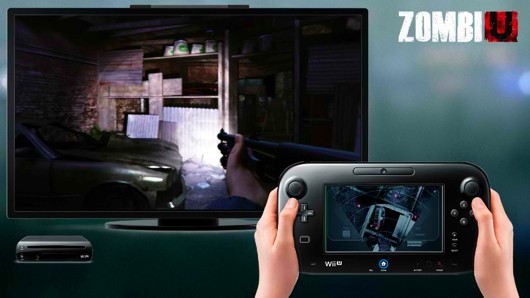
Too bad it doesn't look like there will be a Zombiu 2. That game was actually pretty good - still could have used some dlc support though.
Too bad it doesn’t look like there will be a Zombiu 2. That game was actually pretty good – still could have used some dlc support though.