Defining Slasher or Five Films You Did Not Know Were Slashers

Before getting into this article, one definition must be clarified. Specifically: what is a “slasher” movie? What are the criteria, what makes them different from regular horror films? There are variations on the definition. This is the Wikipedia definition:

“A slasher film is a subgenre of thriller and horror film, typically involving a psychopathic killer stalking and murdering a sequence of victims in a graphically violent manner, often with a bladed tool such as a knife, machete, axe, scythe, or chainsaw.”

It is not a terrible definition, but personally I do not feel it covers the entire genre. Here is another from Urban Dictionary:

“A horror movie usually with one central homicidal maniac who usually uses cutlery to systematically slaughter his victims.”

Closer but I am still not on board with it. I guess my complaints at “slasher” definition come from the fact that the poor movies seem to have defined the genre. Critic Roger Ebert used to refer to slasher films as simply “dead teenager movies.” However, I feel to let the low-quality define is to do a disservice to the genre. It would be akin to defining dramatic films as “movies featuring multiple emotional breakthroughs, often done in an over-the-top, cathartic manner.” Are there more bad slasher films than good: absolutely. The ratio is probably similar to the amount of Spartans vs. Persians at the battle of Thermopylae. Still, let’s expand this definition a little.

In my mind, I have never considered the choice of weapon relevant to the “slasher” definition. “Slashing” simply refers to the high body count these movies typically have. This does not mean that many people have to die, just that a high portion of the cast is no longer present by film’s end – due solely to the actions of that film’s “slasher.” Hmm, actually – all this use of the word slasher is getting confusing. Maybe there is a better way to explain my point. Below are five films I feel are slashers – which are left off using the standard definition.

5. Predator

There ain’t no teenagers in this movie. Released in 1987, Predator stars Arnold Schwarzenegger and follows the struggle of a team of special forces against an alien with super-powered technology. This alien stalks the team one-by-one as they try to make their way through a savage and isolated jungle. There is no sex, no real drug use beyond tobacco, and no nudity to speak of. Yet, boiled down: Predator is a killer hunting people in the forest. It is not a stretch to label this film a slasher, even if it is in the realm of science fiction.
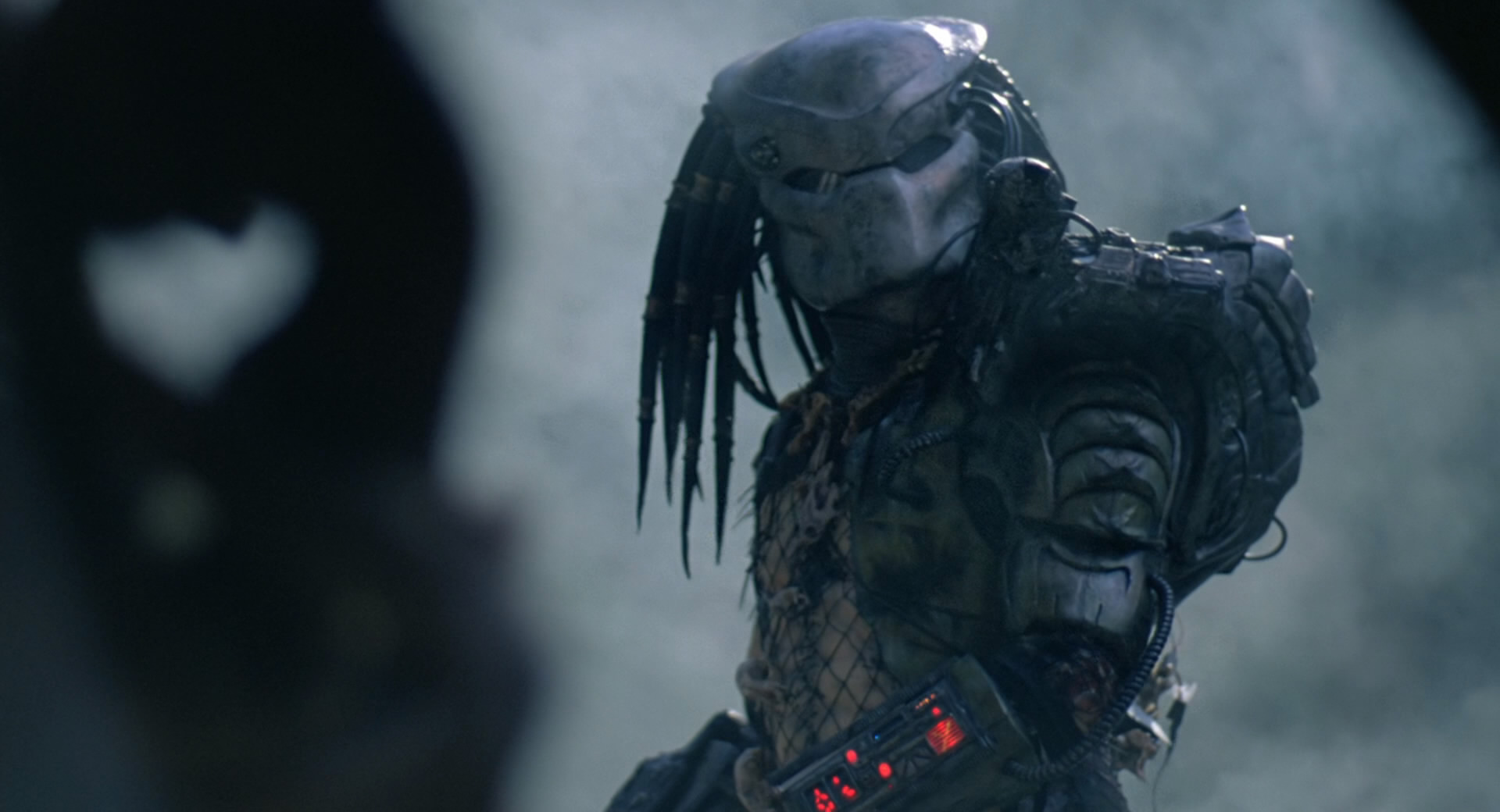
Oh look at that, he's even wearing a mask!
Oh look at that, he’s even wearing a mask!

4. The Terminator

More Schwarzenegger, only this time he is the unstoppable superhuman killer. Arnold plays the terminator – a robot sent back in time to kill a young woman. The Terminator is perhaps the best example of a slasher movie embracing the “indestructible” nature of the killer. In the more traditional slasher films, the police are always seen as a source of safety. Once they arrive, it is all over. Later slasher movies would shatter this illusion of strength but none so effectively as The Terminator.
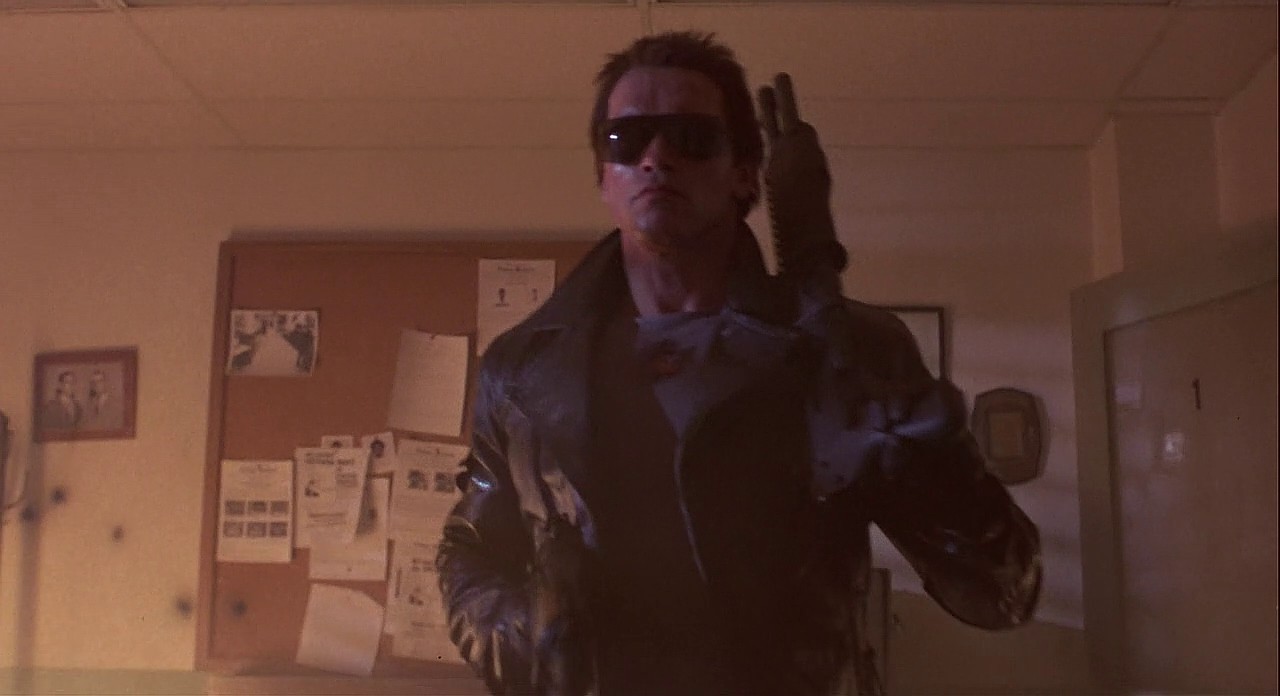
This is the most famous example of a killer walking into a police station and just demolishing it.

He does not ever use a knife, yet that metallic arm that reaches for Linda Hamilton‘s character at the end can be seen as an equivalent weapon, at least in terms of its threatening presence.

3. Alien

Well, if Predator was a slasher…

I have actually already talked about this movie at length in an article I wrote some time ago. To recap: Alien uses the isolation of space to put a superhuman antagonist against a group of unsuspecting people. Notice that this ‘superhuman’ nature of the killer is a definite recurring theme in all of these movies, as is the setting’s feeling of isolation.
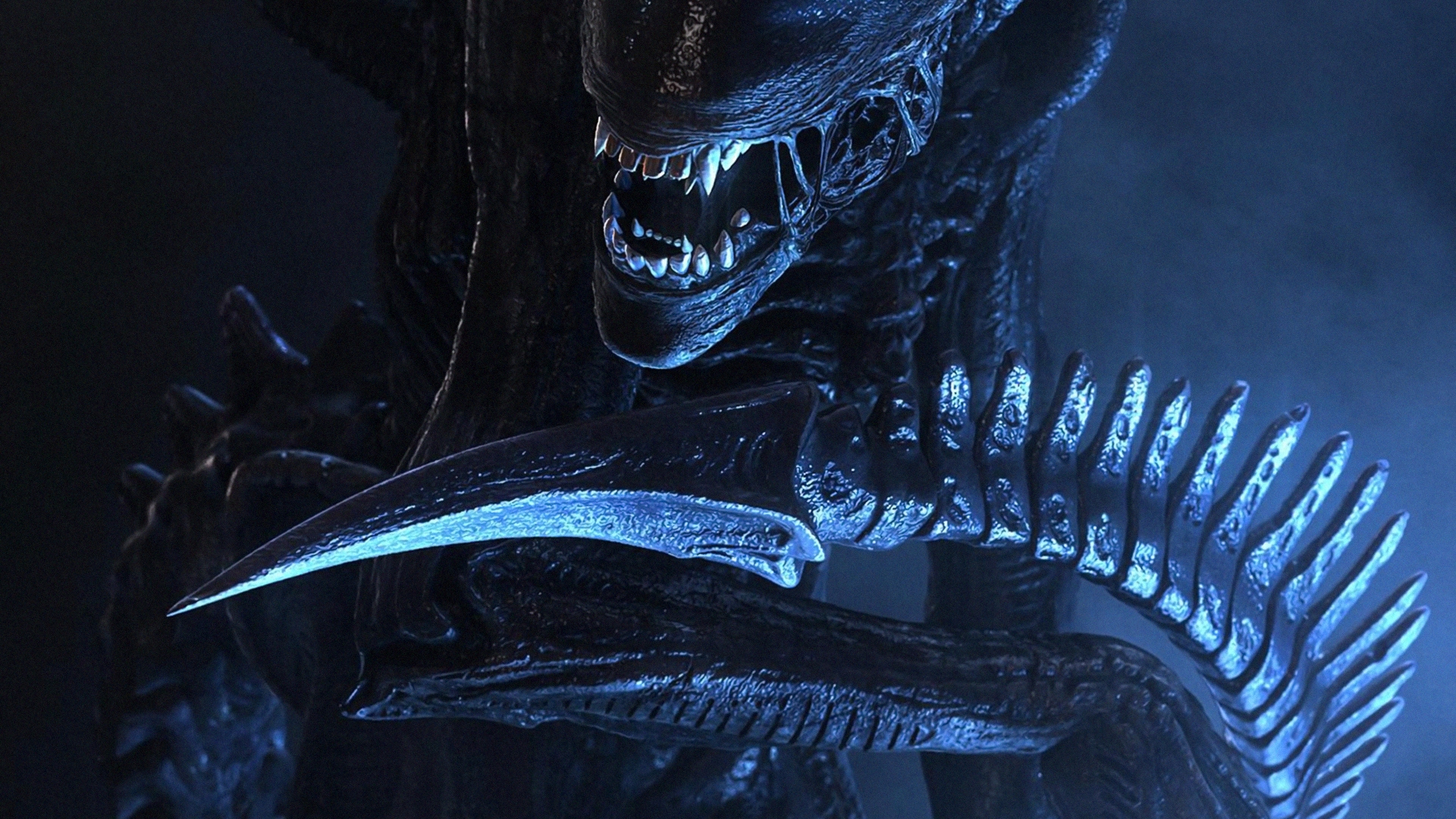
The scorpion-like tail can be seen as the alien's slasher weapon.
The scorpion-like tail can be seen as the alien’s slasher weapon.

2. JAWS

Made in 1975, Jaws predates Halloween by three years. The plot of Jaws is simple: a shark terrorizes an island and the local authorities have to respond. Yet it does appear to be a regular shark, made superhuman only by the fact that it is a great white in water. The true superhuman element comes from Spielberg’s directing. The shark is presented as both an animal and a thinking opponent. There is an intelligence to it that emerges in the second half of the film. The shark may not have a ton of actual screen time, but John Williams’ score makes it a presence throughout the movie. This is no simply shark, it is a slasher.

He's either very smart or very dumb.
He’s either very smart or very dumb.

1. Willy Wonka and the Chocolate Factory

So odds are, this is the one you’ve been waiting to read about. How could Willy Wonka and the Chocolate Factory be a slasher? It’s a family film, with wonderful heart-warming sequences like:

Yeah, this movie is terrifying. Willy Wonka is a superhuman individual who picks children off in his chocolate factory. The kids vanish, never to be seen again. Sure, Wonka says they are all right (and they probably are) but it does not matter. For all intents and purposes, he is murdering those kids in really over-the-top style. Willy Wonka is never clearly described as a good guy and actually, plot-wise, he functions as an antagonist of the film. Charlie must survive his challenges and pass his test.
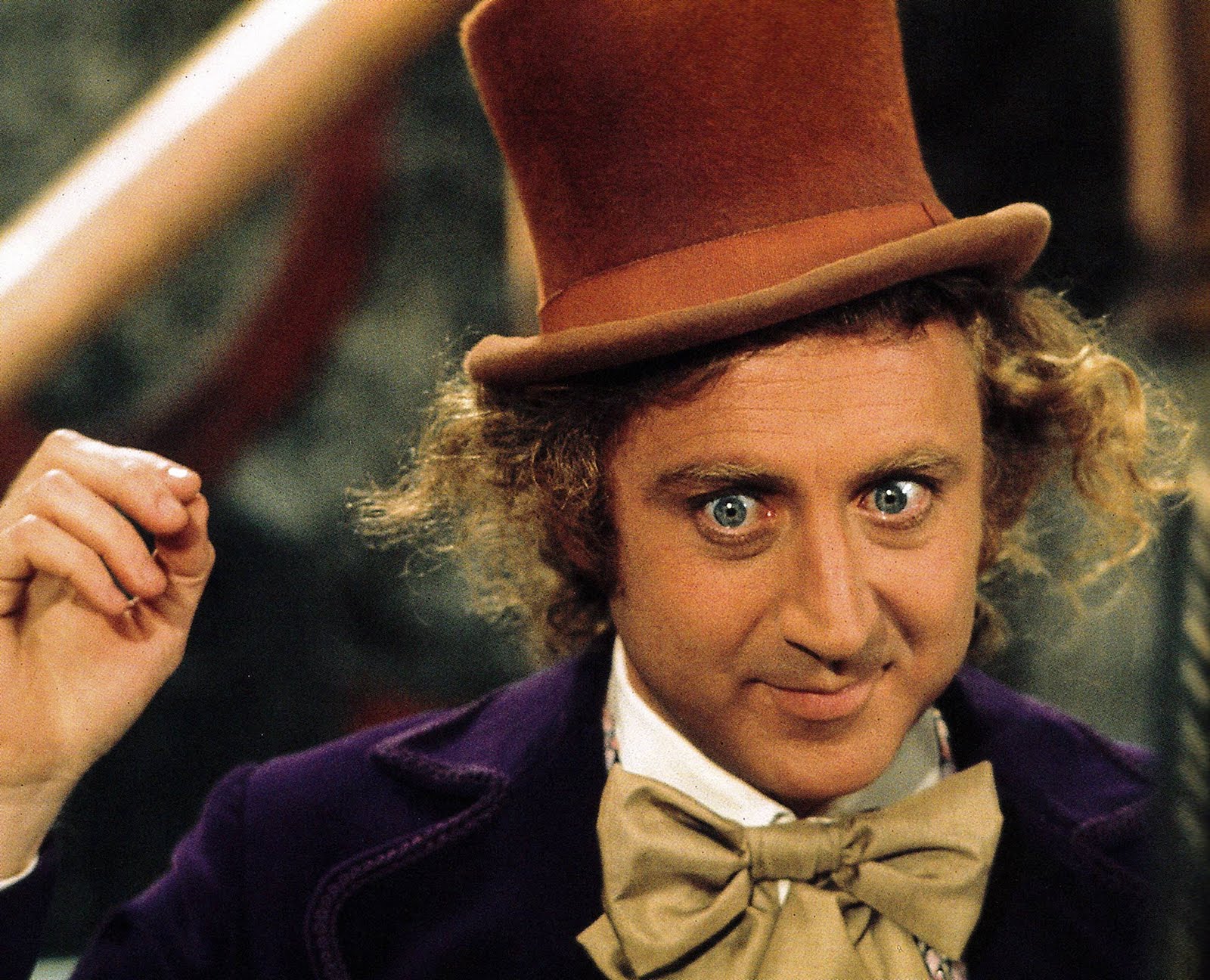
"I knew that from then on the audience wouldn't know if I was lying or telling the truth," - Gene Wilder on Willy Wonka's old and feeble introduction
I knew that from then on the audience wouldn’t know if I was lying or telling the truth,”
– Gene Wilder on Willy Wonka’s old and feeble introduction.

Made in 1971, this is the first slasher (that I know of).

So what is a slasher? Does it even have to be a horror film or is it just a set of guidelines?

Here, let me make right now the official Red Rings of Redemption definition of a slasher movie:

“A slasher film is any movie, usually set in an isolated area, that focuses on a superhuman antagonist who preys on a comparatively high number of victims.”

There we go. I might refine that as time goes on but for now – let it stand.
In Defense of Kate Capshaw's "Willie"

Look at that title, I’m so clever!

Anyway…

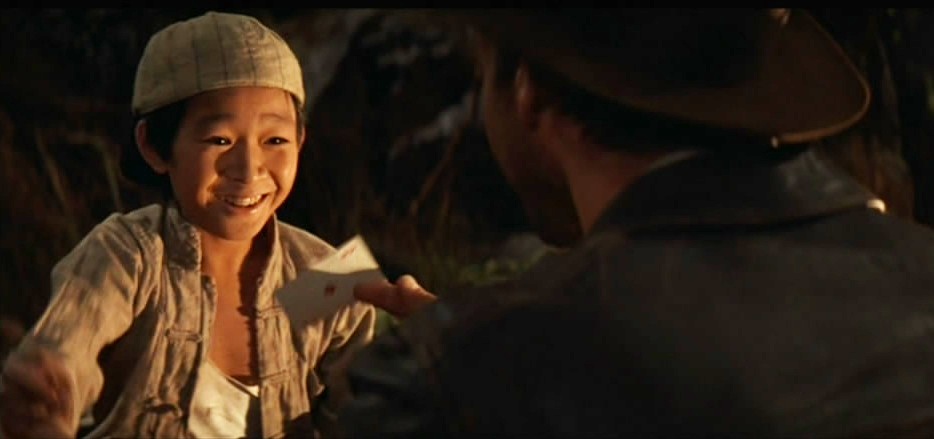
Indiana Jones and the Temple of Doom, one of the first big-budget Hollywood prequels in history (yes, it takes place years before Raiders of the Lost Ark) is a film featuring two characters that frankly were not well-received. The first I will mention is Short Round (played by Jonathan Ke Quan or Data from The Goonies). To say that Short Round incorporates Chinese stereotypes is to say that McDonald’s burgers are slightly unhealthy. It is a bit of an understatement.

"Feels like I step on fortune cookie!" That is an actual line from the film.
“Feels like I step on fortune cookie!”
That is an actual line from the film.

Yet Short Round is not the main focus of this article. Instead look to Wilhelmina “Willie” Scott (played by Kate Capshaw, the future wife of Steven Spielberg). Every Indiana Jones movie has its ‘Indy girl‘ and many people consider Willie to be, by far, the worst one. For anyone who is not familiar with the film (all two of you), Willie is forceful and opinionated, no matter how dire the situation. She is a nightclub singer by trade and does not care for the outdoors. Sounds like a great fit for Indiana Jones, right?

Many people have labeled Willie as whiny and say that she does little more than scream to be rescued throughout the entire movie. On one level, this is very true. Anyone looking for a tough, go-getter of a girl who can fight her way out of any situation, please see Marion Ravenwood instead. Yet Willie has been labeled as a simple helpless damsel-in-distress, and I think this criticism goes too far. Willie appears as a perfectly capable woman, when she is in her element. Let’s examine the opening sequence, the nightclub.

As with any Indiana Jones movie, it opens with an action sequence. Indiana gets into a shootout with some Chinese gangsters over a diamond, poison, and some antidote. There’s a lot of confusion and shooting. Tables get upturned, balloons get dropped, people get impaled with kabob skewers. Through it all, Willie is… going for the diamond. Yes, she likes fancy jewelry (and things worth a lot of money) and does not let a nightclub shootout get in her way of getting what she wants. She does not need to be saved but is rather abducted by Jones during his getaway. Not typical damsel-in-distress behavior.

I know what you’re saying: one instance does not a believable character make.

Also: who writes articles about Indiana Jones characters?

I will only answer the first point. True, Willie is never again at that level of assertive peak (possible exception in the seduction scene), but look at it this way: she is a nightclub dancer dropped into the jungle and dragged along into the Temple of Doom. How many people, outside of Indiana Jones, would have any more impact? It isn’t like she screams over nothing.

M8DINJO EC011
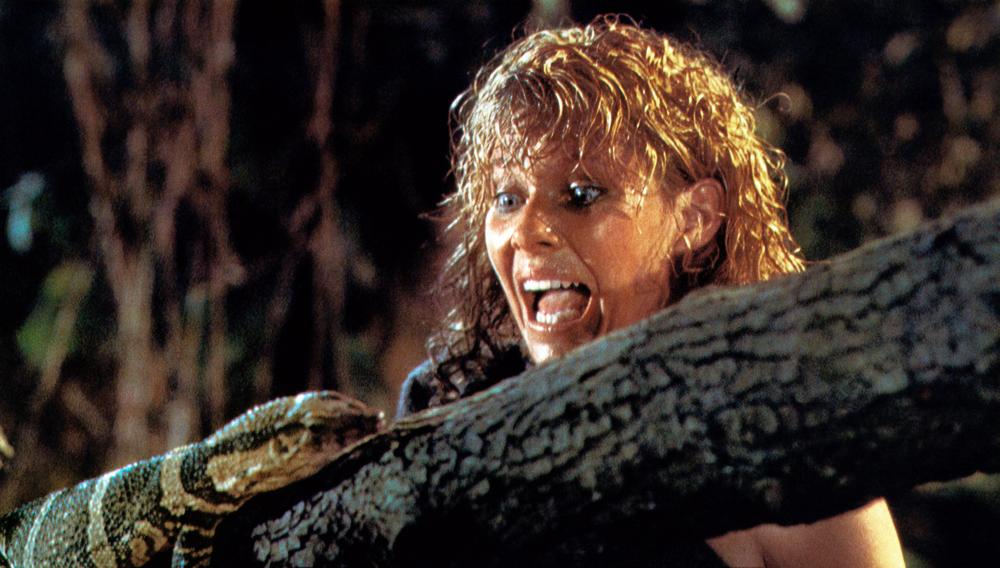
Trying to go to bed in a jungle full of wild animals – not the easiest thing in the world.

Willie is your typical fish-out-of-water character. She reacts with fear and hostility to everything new she encounters. This is not the optimal reaction, but it is a believable one. Not every human being is capable of handling the more extreme aspects of the world. Capshaw isn’t playing the rough and tumble character, she is playing a nightclub dancer.

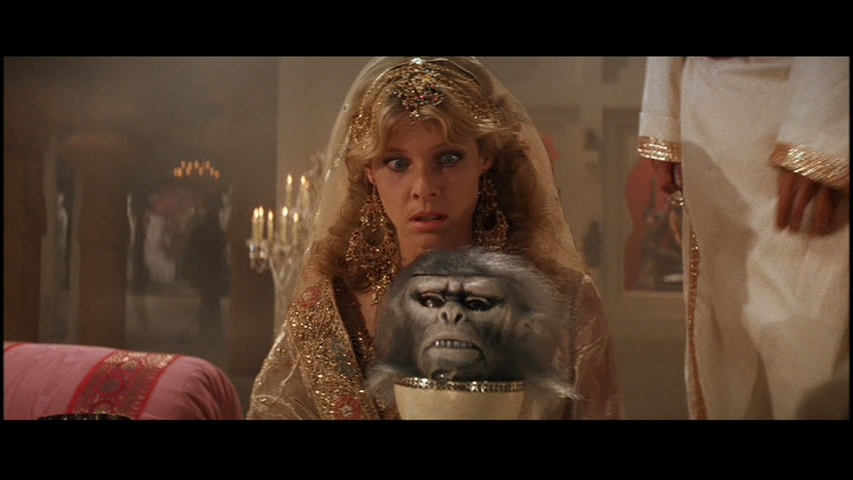
Bro, is that even food?

To say that Willie’s character is annoying is a matter of opinion. To label her as useless and mere visual appeal is to, I feel, project a larger agenda onto a simple film. Is Willie Wonder Woman? Not even close. She is the audience. Let’s face it – we’d all be screaming for Indiana Jones to save us if we were we in her shoes.

Ha, listen to her scream as she's lowered to her death. What a whiner!
Ha, listen to her scream as she’s lowered to her death. What a whiner!

What Does Stardust Have to Say on Abusive Relationships

In 2007, Paramount Pictures released Stardust, a high-spirited family fantasy film… that no one saw. Seriously, the film was made for $90 million (before advertising) and didn’t even generate $140 million. This was a shame as many people, myself included, find it to be a fun and well put together movie. Based on a Neil Gaiman book by the same name, Stardust follows the life of young Tristan Thorn (Charlie Cox). It is the classic man-of-destiny story. Tristan needs to grow from a boy into a man in order to take his place in a newly discovered magical kingdom. Sounds pretty generic by fantasy standards – but still well done. What Stardust does that I find worth mentioning is how it handles the abusive relationship in the story. Oh yes, not everything is happy in the land of enchantment. Specifically the relationship between these two:

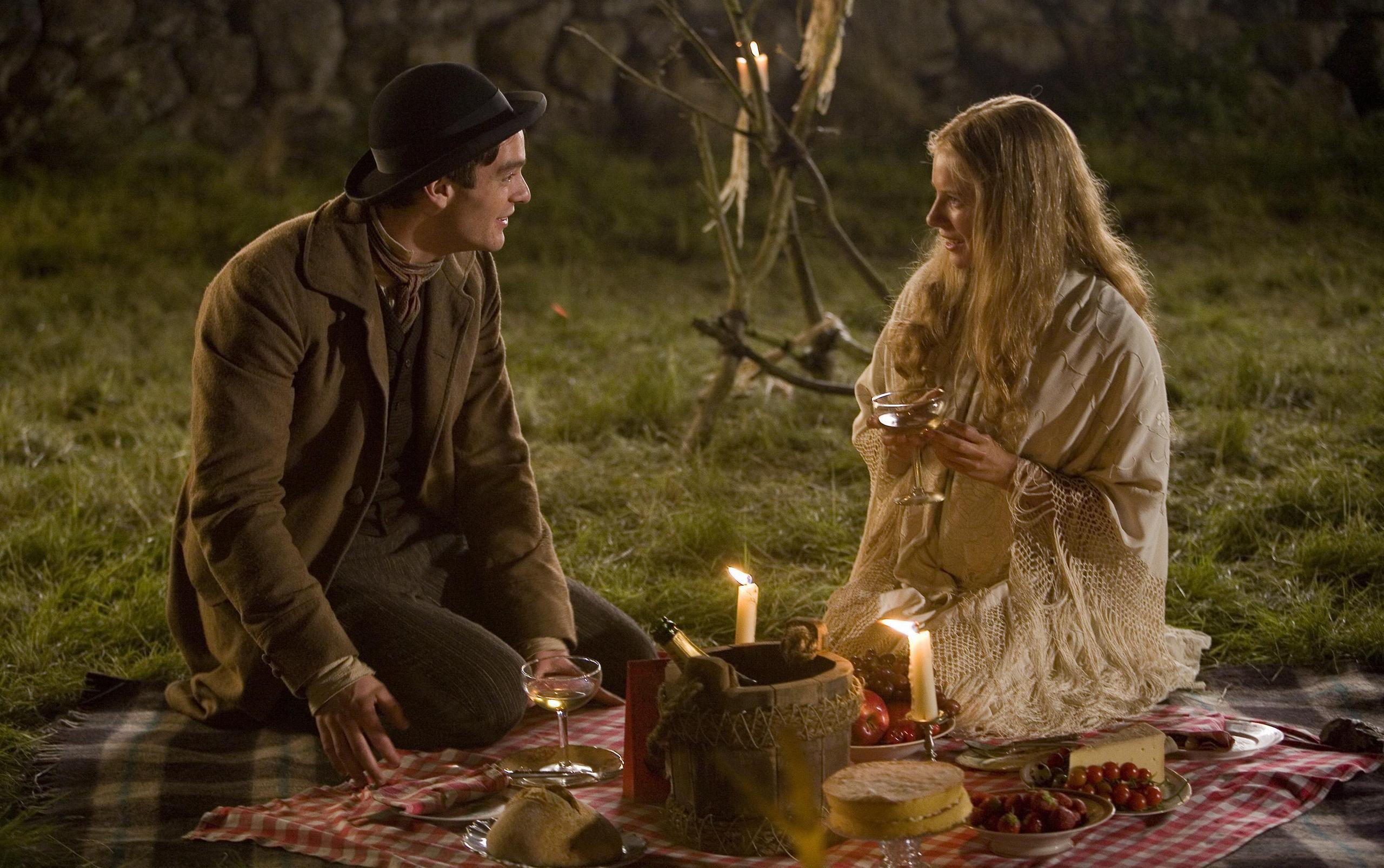
Tristan Thorn and his "true love," Victoria.
Tristan Thorn and his “true love,” Victoria.

Tristan Thorn has grown up in a small town and seems to know most everybody. Problem is that he’s kind of a nobody. He’s not exactly the man to exude confidence or strength or anything like that – just more of your average nice guy. Then there is Victoria (Sienna Miller). Victoria is not as subtle a personality as Tristan. She is loud, center-stage and appears to adore being the center of attention. Case in point: she stands idly by and Tristan and another suitor, Humphrey (Henry Cavill – wait, seriously?) attempt to win her hand.

This right here could be opportunity to criticize Hollywood for yet another ditzy woman character who does not ever take an active role in her romantic life. Yet Victoria is not completely voiceless. She is not presented as the empty-headed “I don’t know what I should do” type. Instead, she is far more sinister.

The abusive relationship between Tristan and Victoria is more subtle than most plot point/character interactions in this movie. Victoria is not overtly evil. She has no dastardly plan designed to hurt Tristan. She is instead presented as immature – self-centered to be more specific. In the movie, the audience learns very quickly that Victoria is at the center of her world.

In a sequence near the beginning of the film, Victoria enters a shop to buy things. Tristan is manning that shop and there is already a very long line of customers waiting to be served. Victoria sees fit to use her advantage, Tristan’s infatuation with her, to bypass said line and be served immediately. Of course Tristan does it – the abusive relationship always needs a bully and a victim. The resulting action costs Tristan his job. Not to worry though, Victoria says she’s sorry about it the next time she sees him.

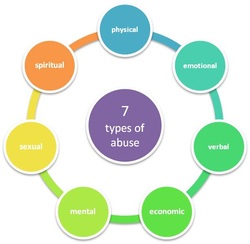
Apparently there are actually seven. No clue about spiritual abuse but all right.

There are six main types of abuse that occur within relationships and Victoria appears to be using both emotional abuse as well as mental abuse. She is essentially keeping Tristan within her power. She knows she can make him do things by just using a few simple words. Is Tristan to blame for his behavior? Not really. True, he is a bit of a pushover (especially in the beginning) but that really is no excuse for Victoria to use him. It is the classic “dangling carrot” scenario. Anyone with a horse knows how this works: dangle a carrot on a rope in front of a horse. The horse will move forward to try and get the carrot. The carrot that Victoria is dangling in front of Tristan is quite simply – her.

For the entirety of the film’s opening half, many of Tristan’s actions are driven by the desires of Victoria. He is so desperate to “win her affections” that he will do just about anything to impress her. Granted, these actions by themselves do not mean abuse. Tristan could simply be a helpless romantic. It is that, like the horse with the carrot, Tristan has no chance of winning Victoria – but she is too busy enjoying using him to inform him of that, and he is too trapped to see it for himself.

Yes, Victoria and Tristan are fictional characters but the movie is showing a real abusive relationship - and, more importantly, how to overcome it.
Yes, Victoria and Tristan are fictional characters but the movie is showing a real abusive relationship – and, more importantly, how to overcome it.

Victoria wants to marry Humphrey, it is very obvious to everyone (except Tristan). Later in the film, after Tristan has left on his journey – a journey he only initially leaves on to impress Victoria – and met Yvaine (Claire Danes), he finally begins to learn what is it to have an actual relationship:

Yvaine: Tell me about Victoria, then.
Tristan: Well, she… she… There’s nothing more to tell you.
Yvaine: The little I know about love is that it’s unconditional. It’s not something you can buy.
Tristan: Hang on! This wasn’t about me buying her love. This was a way for me to prove to her how I felt.
Yvaine: Ah… And what’s she doing to prove how she feels about you?

Again, this lesson is very applicable to real life and I really feel that the movie should be applauded for having it. Too often in movies, abusive relationships are blown out of proportion for dramatic effect (Looking at you, Prince Hans). While many elements of Stardust are unbelievable, the movie has some very well written relationships. Tristan’s unhealthy attachment to Victoria can serve as a both a warning and a beacon of hope. He escapes the cycle and learns who he really is.

I will make one thing clear: I am not using this post to simply show how women can abuse men. This type of abusive relationship can occur between people of any gender. Stardust happens to showcase an abusive female, but that is not to say that it is only women who can mentally abuse other human beings.