Dear Bill Watterson: Thank You… but You're Out of Touch with Comics

Recently, I sat down and watched Dr. Mr. Watterson, a documentary made on the subject of Bill Watterson and, more specifically, his creation, Calvin and Hobbes. Now, I normally am not a huge fan of documentaries: I find that they tend to present only a very skewed perspective (save for the better ones). Dr. Mr. Watterson was a light, nostalgic, gush over one of the greatest newspaper comics of all time. It was entertaining but without much depth. A quick history lesson for anyone unfamiliar with the story between the panels.
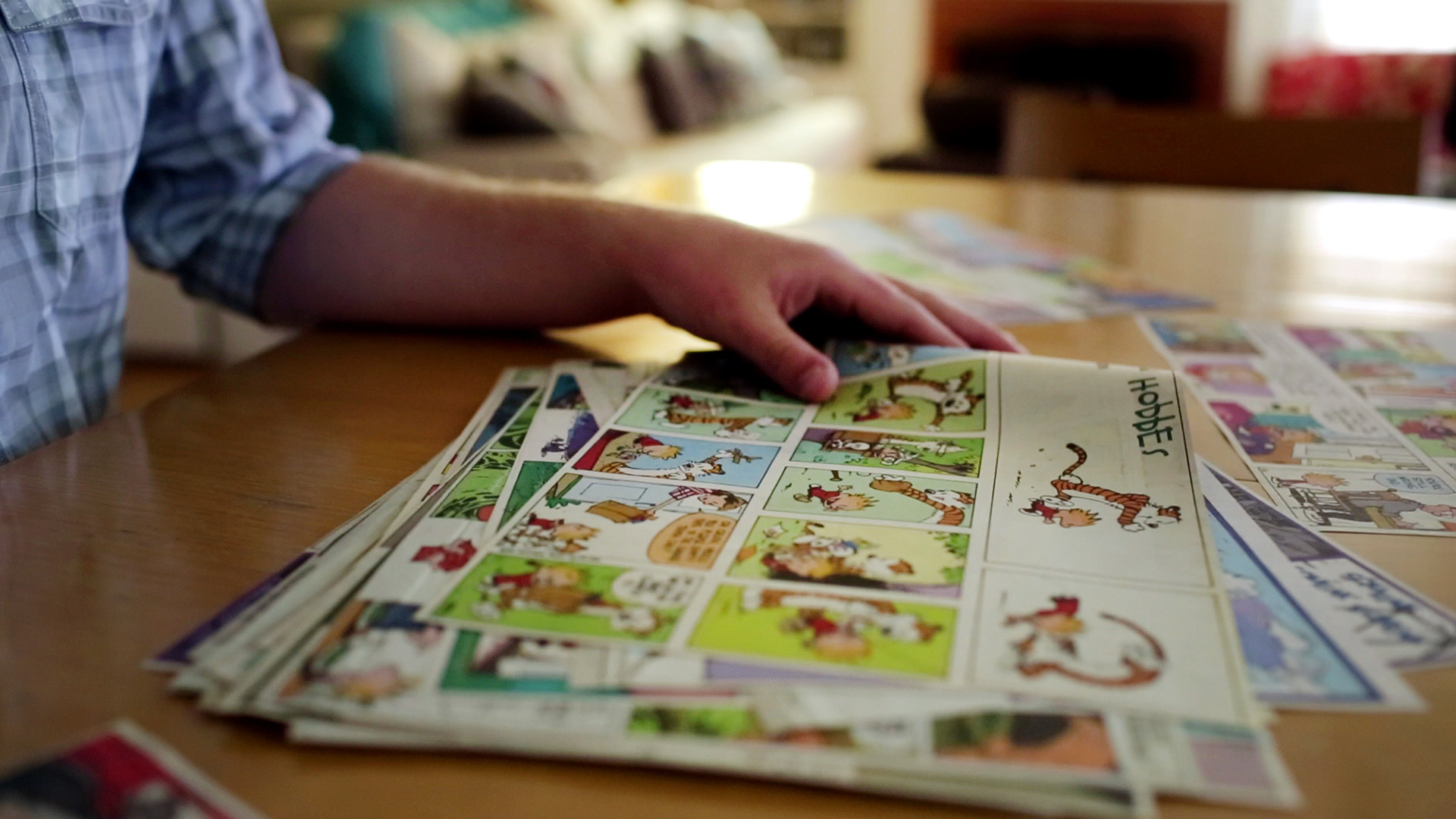
A lot of love clearly went into Dr. Mr. Watterson, unfortunately it obscures the storytelling aspects at times and prevents the documentary from offering up anything truly insightful.

The most interesting part of the documentary was a brief interview with cartoonist Stephen Pastis (creator of Pearls Before Swine). What makes this interesting? Just months after the release of Dr. Mr. Watterson, Bill Watterson would make a brief resurgence into the world of cartoons, illustrating several strips of Pearls Before Swine, as well as voicing the character Libby. That’s right: Bill Watterson came out of retirement… for a week. No new Calvin and Hobbes but hey – it’s still pretty awesome. Between June 2nd and June 7th, Watterson highlighted the world of Pearls Before Swine. So, what did he have to say:

Evidently, Watterson still doesn't think much of the future of comics.
Evidently, Watterson still doesn’t think much of the future of comics.

There is a sad truth that I will make clear right now: Bill Watterson is not perfect. I love Calvin and Hobbes, I find it to be one of the most appealing and insightful creations ever made. To create something that amazing is an incredible feat and Bill Watterson has nothing left to prove to anyone. He is an artistic genius and the world is a brighter place with him in it. That said…

Bill Watterson is out of touch. For those out there unfamiliar with the reasons why Calvin and Hobbes ended: there are two. One, Watterson felt that the comic was starting to repeat itself and wanted to end it on a high note. Two, Watterson felt that newspaper comics were a dying art form as the space was becoming too restricted to allow great art to be drawn. He also felt that the lack of space greatly limited the storytelling potential.
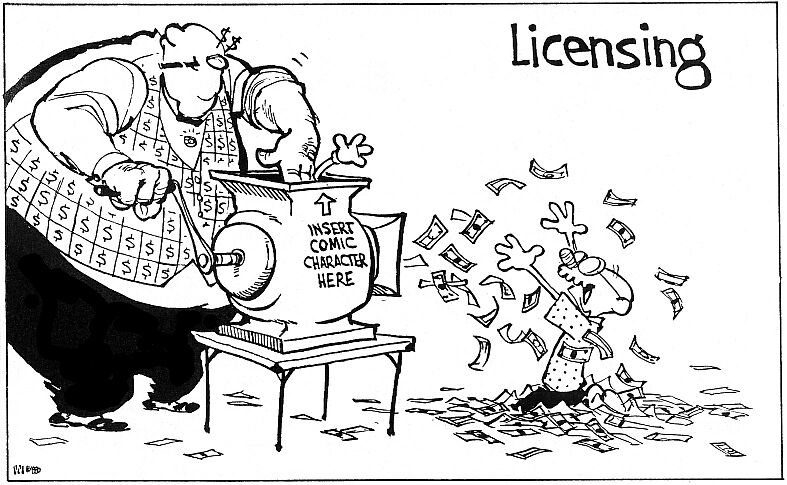
Watterson also did not think much of merchandising, which explains why you've never seen any official Calvin and Hobbes merchandise anywhere.
Watterson also did not think much of merchandising, which explains why you’ve never seen any official Calvin and Hobbes merchandise anywhere.

Now as to that first reason: it is the best reason ever to end something. Anyone can create art for the sake of a paycheck (how many years has Garfield been running… is anyone out there still laughing?). To end Calvin and Hobbes at the height of its popularity remains a bold move and has insured that its legacy was never tarnished with sub-par material. It is a shame that more creations don’t follow Calvin and Hobbes‘ lead in that area (looking at you, Simpsons).
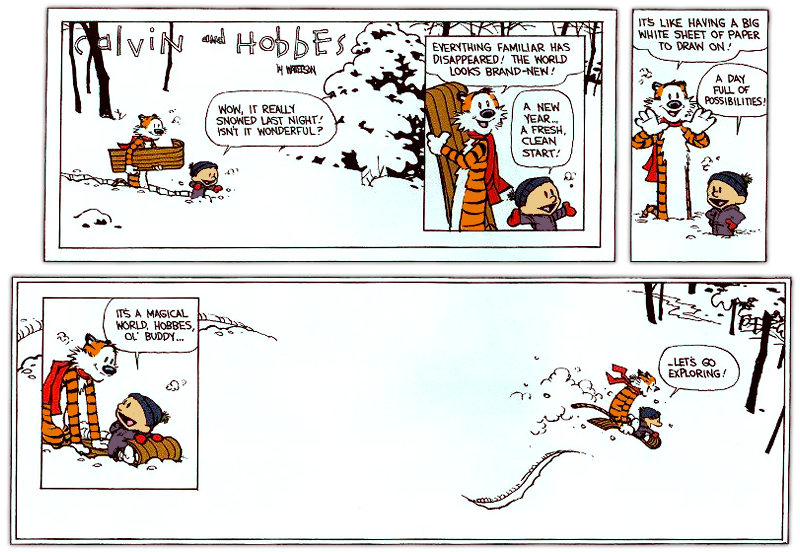
This may also be one of the best endings out there. It is perfect and poetic.

Regarding reason number two: also extremely valid. Anyone who has looked at the newspaper comics recently knows that they do not receive a lot of room. Not that there are not a couple of really talented artists still illustrating for newspapers… but it’s a newspaper. That medium as a whole is in its twilight era. Watterson was correct to label newspaper comics as a dying platform, but the world has changed since 1995.

Behold… the INTERNET! One of the main areas not addressed in Dear. Mr. Watterson was the evolution of the comic medium. Everyone interviewed simply talked about how the glory days had passed and that we’ll never have something like Calvin and Hobbes again. While that may be true (there will only EVER be one Calvin and Hobbes), comics are far from dead. Simply ask this question: how did you read Pearls Before Swine when Watterson reappeared? Did you open your door and uncurl the newspaper to find the comics section? I know I didn’t. I went online and viewed the panels on a website. That is where the comics have gone.

Regardless of how you feel about it, there is no denying that the art in Penny Arcade has benefited greatly from a lack of physical space restriction.
Regardless of how you feel about it, there is no denying that the art of Penny Arcade has benefited greatly from a lack of physical space restriction.

The art form is not dying, it has found a new home. Watterson’s declarations in Pearls Before Swine highlight how out of touch with technology he is. Granted, this is not too surprising from the man who created a character such as Calvin’s father:

Calvin's father may very well echo Watterson's own distrust of technology, specifically interaction with media.
Calvin’s father may very well echo Watterson’s own distrust of technology, specifically interaction with media.

Now, for the record: I do not think that Bill Watterson has any obligation to return to the world of comics. He has done enough. Yet his second reason for ending Calvin and Hobbes is simply no longer valid. Yes, newspaper comics have severe space limitations but who cares? We have the internet! That is where all the truly great new comics appear. There are no limitations on a webpage… and no deadlines either. It is one of the primary wonders of digital technology: worrying about space is a thing of the past.

Sigh, you do Mr. Watterson. You literally have unlimited space if you know how to take advantage of it.

Bill Watterson’s time as a contributing artist may be done… who knows what the future will bring. Personally, I hope that he finds the time to learn about the internet and create something truly wonderful. Calvin and Hobbes is over (don’t hold out hope for that animated movie), but Bill Watterson is still alive and still a terrific artist. He just is a little out of touch… he needs to learn to do the things with the computers.
http://www.youtube.com/watch?v=zHjCE040aYU

Subverting the Fantastic: Why we Love a Song of Ice and Fire (Game of Thrones)

Ask anyone who can read or has HBO: George R. R. Martin is an entertaining man. His series, A Song of Ice and Fire (or Game of Thrones as it is known on television) has taken the world by storm and become an element of culture. Few fantasy series ever achieve this level of fame. While there is no single reason why A Song of Ice and Fire has become as popular as it has, the intelligence of author George R. R. Martin plays a large role. More importantly, his knowledge of the genre and his ability to subvert the common themes/archetypes that readers/audiences have come to expect. Let us examine a few of the new spins that make the series memorable (warning: spoilers to follow).

1. Killing Your Main Character in the Opening Act

“Ah!” You cry, “spoilers!”

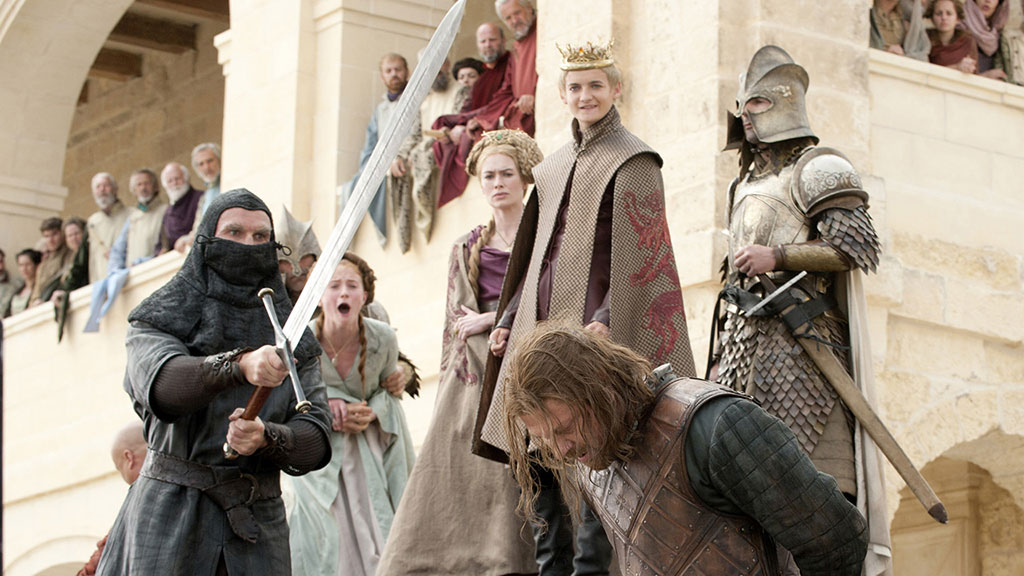
… The book, A Game of Thrones came out in 1996, the HBO show aired its first season in 2011. Eddard “Ned” Stark dies. He was played by Sean Bean. This information should surprise no one.

But holy sh*t, this kind of thing does not happen in fantasy often. What’s more, Eddard Stark is the honorable knight lord. He is a man who lives by a code and strives to do what’s right. In most fantasy series, this would be the character that the audience/reader follows throughout. Witness Ned Stark slay the beasts and watch as good triumphs over evil. George R. R. Martin understood this, he understood that no one reading his book would think that Eddard Stark would die – so he killed him off.

While any weary reader/watcher could suspect that Eddard Stark’s initial plan to stop the Lannister’s would encounter hiccups (it was only the first book in the series after all, he couldn’t solve every problem right then), the idea of killing him was simply foreign. By doing so, George R. R. Martin tossed out the idea of the immortal hero and showed that anyone/everyone in his series would be vulnerable. Instantly, every character became that much more interesting. If Ned Stark could lose his head – anything could happen.

The moment that changed the series.

2. Tyrion “the Imp” Lannister

No offense to Peter Dinklage (I love his portrayal of Tyrion in the show – he is a phenomenal actor) but he was not right for the part of Tyrion. Let me rephrase – he needs makeup for the role. Tyrion Lannister is known as the Imp. Not simply for his short stature but for his deformities. Here is an illustration based on how the books describe Tyrion:

Black and white cannot show his two eye colors but you get the idea.

He is ugly. A small, malformed creature – and a member of (arguably) the most hated house in the series. Following normal fantasy logic, this guy should be the worst one. A treacherous, sneaky little imp that lurks in the dark and preys on the weak. Yet that is not Tyrion Lannister at all. By far the most likeable member of House Lannister, Tyrion operates with more decency and honor than his two attractive siblings.

I could have used any character really to illustrate how George R. R. Martin subverted the common fantasy notion that beautiful people are always fair in every aspect of their personality but I believe no other character illustrates this better than Tyrion. This is a fantasy series where looks tell the audience/reader nothing about the character… save how they appear.

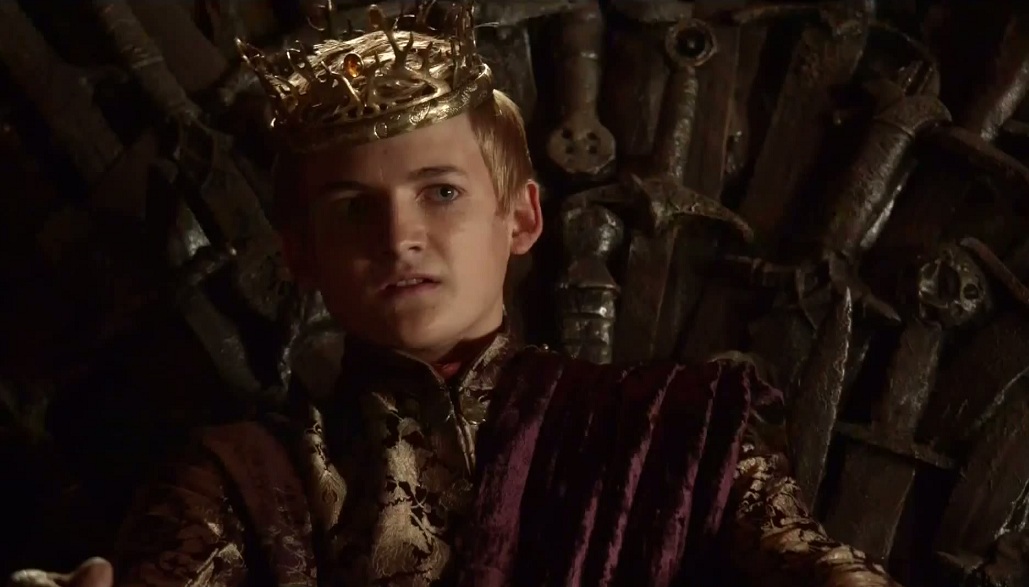
Man, look at this little kid. I bet he is innocent and naive. I hope he finds a knight to mentor him up into a just lord...
Man, look at this little kid. I bet he is innocent and naive. I hope he finds a knight to mentor him up into a just lord…

3. Weddings and Battles

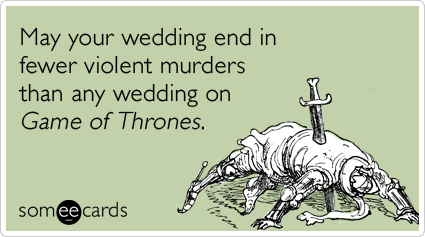
In most fantasy series when main characters do die, it is on the battlefield. In the midst of war they are slain: pierced by a sword in single combat usually. As fair as deaths go, it is a very romantic image. Weddings by contrast usually mark the place of resolution/happily ever afters. The war is over and the danger is passed, time to celebrate with a light affair and end the book.

red-wedding-game-of-thrones-murders-wedding-ecards-someecards

When is the last time a main character was killed in a battlefield in A Song of Ice and Fire? No, nothing kills main characters like getting married in a George R. R. Martin series. While some might say this is a manifestation of personal issues (Martin’s first marriage ended in divorce), I like to think it is more of the brilliant subversion that is found throughout the series. As mentioned before with Tyrion Lannister: appearances are not everything.

comics-spoiler-Game-of-Thrones-wedding-734669

4. Female Characters who Actually do Sh*t

Martin can be hailed for creating a series where women are at the center of the action. While this, hopefully, will be the norm for every fantasy series to come: the change has to start somewhere. I am in no way crediting Martin for being the first (there are plenty, including Tolkien, who have incorporated women into an active role). Famous works are an inspiration and this will do far more for advancing female characters in fantasy than a dozen obscure series that are only read by a few.

Given her introduction, few people probably assumed that Daenerys was destined for the power that she has taken.

A Song of Ice and Fire has two books left before completion and the main conflict appears set (White Walkers (Ice) vs. Dragons (Fire)). It has been a long time since George R. R. Martin began his series (the first three books were published within four years, the last two have took eleven) and some (myself included) are starting to doubt whether the quality will be maintained. Ending a series is one of the hardest challenges in writing. There are many characters and audiences/readers will be wanting a satisfying resolution for all of them.

Yet George R. R. Martin has surprised us, time and time again. It is one of the main reasons that we keep reading/watching. The beginning was unorthodox, the middle was turbulent… who is to say that the epic fantasy ending that we are all starting to expect is even coming. This has not been a series to play by the rules. That is why we love it so much.

fire-frost-182x5y1

Three-Pronged Protagonists: Garion from Pawn of Prophecy

There is a writing podcast out there, on the interwebs, called Writing Excuses. For anyone passionate in the world of literature, I recommend checking it out. One of the first episodes that I listened to had to deal with an issue called “three pronged character development.” I will let their words do the summarizing, as I feel that they provide a simple explanation:

“We talk about characters a lot, which is fitting since character are what make things go in most of our favorite books. [There is] a new model for examining characters in which three primary attributes – Competence, Proactivity, and Sympathy – are contrasted. We treat each one as if controlled by a fader or slider, like on a mixing console, and we look at what the relative positions of those sliders do to a character.”

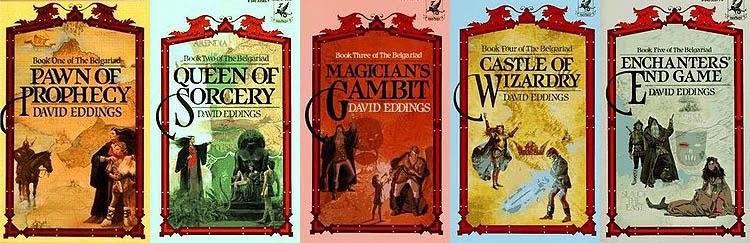
So there it is: a system of attribute management used to determine the strength of a created character. Personally, I love the idea of this model and have used it in my own writing ever since. That said, if the model is a genuine tool then it must be applicable when it comes to characters created in the past. For this post, I have chosen Garion, the protagonist from David Eddings‘ fantasy series, The Belgariad (anyone out there looking for fantasy but not simply wanting to reread the Lord of the Rings should check this out). As there are five books in the series, let this be an examination of Garion in Pawn of Prophecy (the first book in the series).

The five books in the main series. Apparently, Eddings was like Tolkien and wrote other material set within the universe that he had created.

Garion is your standard unknowing chosen one. He is the titular pawn of prophecy. In the book, Garion is a young teenager (there are also several early chapters where he is younger). Introducing his age brings us to the first point that I have chosen to cover: competence. Garion is a young boy who has been raised on a farm. He does not know how to read and spent a large portion of his childhood cleaning kitchens. So far this is not sounding like an especially competent character (unless the villain is defeated by poor kitchen hygiene). Nevertheless, Eddings takes great care to show the reader that Garion is merely ignorant, not stupid.

Ignorance fits with his character background, but Garion does not stay that way for long. While the plot moves forward without Garion being aware of its significance (despite his best efforts), the protagonist learns a great deal on his journey. From a hidden sign language to beginning his tutelage with a sword, Garion keeps active. He is not the best at his skills (it is only the first book) but he applies himself and does not shirk responsibility. Where Garion’s competence truly shines, however, is his ability to sneak. No one teaches Garion how to move without being noticed, he is simply naturally talented. This gives Garion a certain believability as most people out there have natural strengths and weaknesses (Garion does possess all the arrogance and self-centered attitude that one might expect a young person to have). Overall, I believe that, if we were to examine the model of Garion’s attributes, competence would be set close to the middle – with a slight inclination towards “high competence.”

Garion may not know much at the beginning of the Belgariad, but he is not simply a farmboy either.
Garion may not know much at the beginning of the Belgariad, but he is not simply a farm boy either.

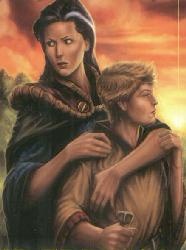
Next we come to sympathy – this would undoubtedly be Garion’s highest attribute setting. Garion is an orphan. His parents were killed (violently as he learns) when he was just a baby, and he was sent to live with his aunt. While Aunt Pol is not a wicked relative by any stretch, she is very strict. It is obvious to everyone in the story (Garion included) and to the reader that Pol is keeping her nephew on a very tight leash. While she does praise him occasionally, Aunt Pol is far more likely to point out everything in the situation that he did wrong.

Aunt Pol does love Garion, no question. That said, she can easily be described as "over protective."
Aunt Pol does love Garion, no question. That said, she can easily be described as “over protective.”

Add to this the fact that Garion is a pawn. His life is out of his hands entirely. While he is not overly sad to leave his farm and begin his quest, Garion has little choice in the matter. Think back to the beginning of Harry Potter and the Sorcerer’s Stone: Harry has little influence on his life in the beginning. He did not choose to be a wizard or to begin his learning at Hogwarts (not that he wasn’t very eager to do so). Garion is like Harry… only Garion never gets to choose his classes… or whether to play Quidditch, or how to stop Professor Quirrell. Garion is held, throughout the book, as an observer to his fate, and not the active participant. This generates sympathy as the reader experiences a protagonist whose life is outside his control.

The last attribute is Garion’s proactivity. This is the lowest factor of his personality. As said before: Garion is a pawn. Yes, there are moments in the story where he is active and contributes to the plot (even foiling an attempted coup at the end of the novel). That said, even when Garion is alone, he is not acting solely on his influence. He is semi-controlled by a “dry voice” in his mind, separate from his own consciousness. This “dry voice” is the closest that the novel comes to deus ex machina. It exists for little more than to explain why Garion does not do certain obvious actions at certain times. Is there a fantastical explanation for this voice: of course.

The idea of prophecy is nothing new in fantasy series.
The idea of children bound to prophecy is nothing new in fantasy series.

For the record, I cannot say for certain that Garion’s attributes change throughout the course of the series (I have only completed the first book), however, it is beyond likely that they do so. This attribute scale provides not only a great way to measure the start of a character, but also a tool to chart their growth. Characters with low sympathy may very well gain exceptional amounts of humanity as the story unfolds (think Quenton from the Magicians series). While I do not know for certain, I am willing to bet that Garion develops into a much more proactive protagonist by the end of the Belgariad. He is, after all, the chosen one.

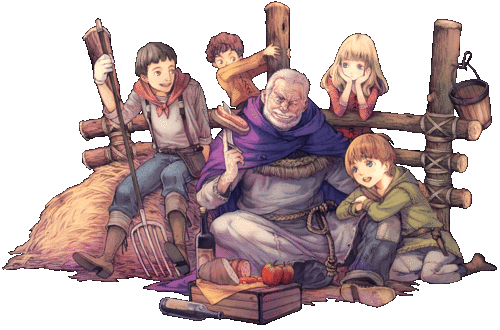
I don't know who this character is but something tells me that I'm going to like her!
I don’t know who this character is but something tells me that I’m going to like her!