Blog

A Game of Cliffhangers: A Song of Book and Show

Last night HBO completed its fifth season of the hit show, Game of Thrones. This season marked arguably the most controversial of the series as, in addition to its usual highly discussed content, season five marked the largest breakaway from the book series by George R. R. Martin. For most of the season, fans appeared split on the issue. While some (like myself) welcomed the changes that preserved the impending doom and focus of the main plot, others had a different reaction:
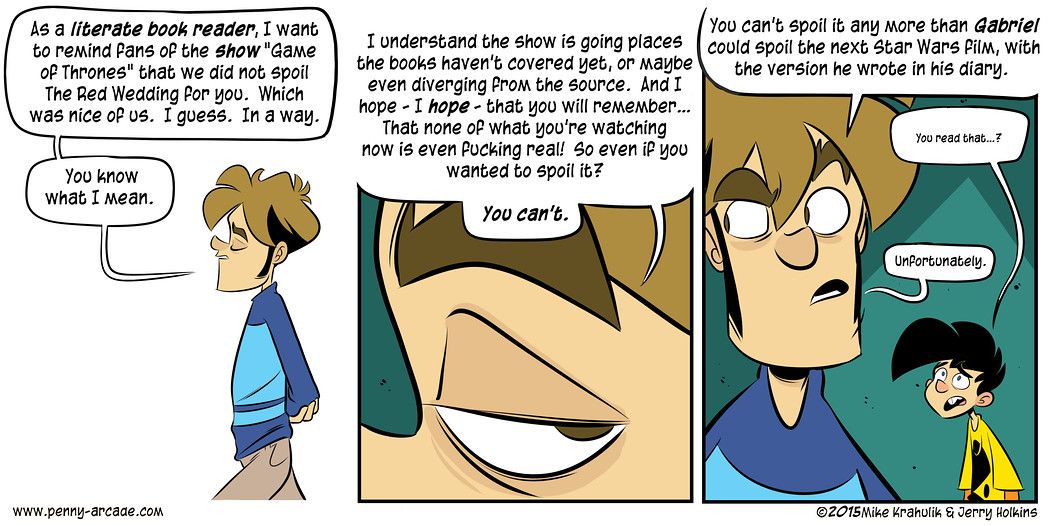
Many reactions from fans of the book to the show's changes.
Many reactions from fans of the book to the show’s changes.

Many characters were omitted and most of the plot threads included in the fifth season were truncated versions of their literary counterparts. Yet the show justified this by taking many plot lines beyond where the fifth book, A Dance with Dragons, left them. Yet as the old saying goes, “never leave a job halfway done.”

So let’s talk about this season, in particular last night’s finale. Warning: spoilers.

When season five was announced, one notable absence was announced shortly thereafter: Bran Stark. The show’s head writers sited that the character’s ” immediate future didn’t seem to provide as compelling material.” Fair enough, kind of a dig at Martin’s writing (which covers Bran’s training) but okay – lose a lackluster plot to help preserve the pace….

But what about Arya?
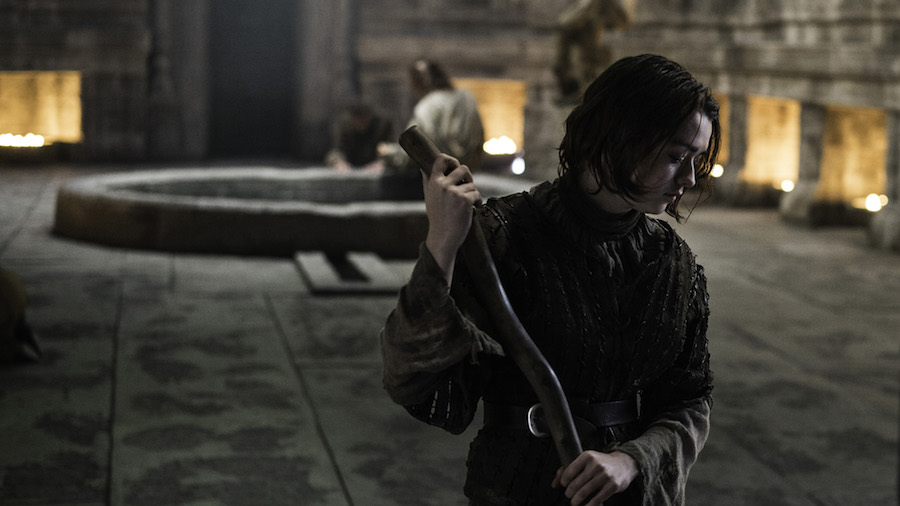
Why watch someone train in magic when you can watch a little girl sweep?

For those out there who missed it, let me some up what Arya does for ALL of season five: washes dead people, watches people, gets told she is not ready, sweeps. Sure, she kills someone in the season finale… but this was compelling? This is what Bran Stark needed to be sacrificed for? Watching an Arya scene in season five felt like watching paint dry… while being told it is not ready to dry. The main story ground to a halt and the same dull message was repeated over and over again (sort of like the Red Skull’s scenes in Captain America).

Hypocritical to call one plot boring and the other riveting. For those wondering, Arya is still following the book’s plot (for the most part). That said, why? In making changes to the show’s content – head writers David Benioff and D. B. Weiss have challenged George R. R. Martin. They know how it ends… and they have reacted by losing characters that Martin called important and making substantial changes to the plot… while still following it.

Lady Stoneheart, the resurrected Catelyn Stark, is one of the most noticeable absences from the show. The show creators essentially saying that the one character George R. R. Martin has brought back to life (so far) is irrelevant.
Lady Stoneheart, the resurrected Catelyn Stark, is one of the most noticeable absences from the show. The show creators essentially saying that the one character George R. R. Martin has brought back to life (so far) is irrelevant… or less interesting than sweeping.

This is what I mean by don’t leave a job half-done. If Benioff and Weiss have problems with Martin’s work, they are not bound to follow it. Yet they for the most part did, and the end result was a finale final hook that fans of the book have known about for a while… and that the author has already essentially debunked.

Yes, John Snow is dead… but don’t count on him to stay that way.
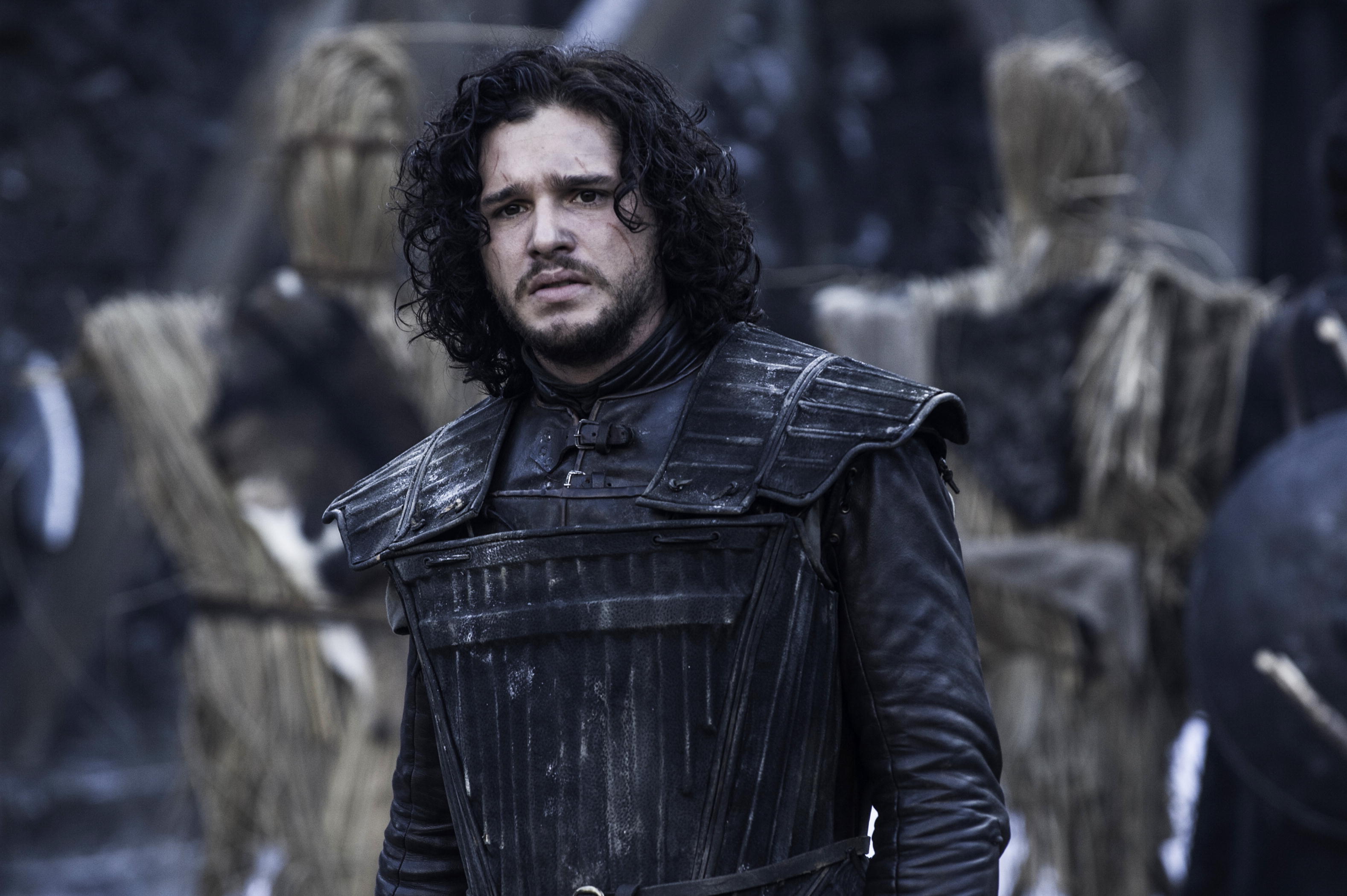
Really Kit? You're going to write and go into movies? Really?
Really Kit? You’re going to write and go into movies? Really?

It is a cliffhanger, and a cheap one. One that hinges on the audience abandoning all reason to believe it is true. Oh if only there was someone… a witch (who conveniently just rode in) maybe, around who could control life and death. Oh drat, all well, on to the next main character driving the Wall/White Walker plot line… oh there isn’t one? That’s odd.

The point is, this is the hook that A Dance with Dragons ended with, but the show is not in the same place. That epic White Walker attack never happened in the books (or if it did we didn’t read about it) so the threat is still far off. In the show, they seem to be like… a day behind John Snow in reaching the Wall. The tension is ratcheted up already, we didn’t need a PSYCHE moment to end the season.
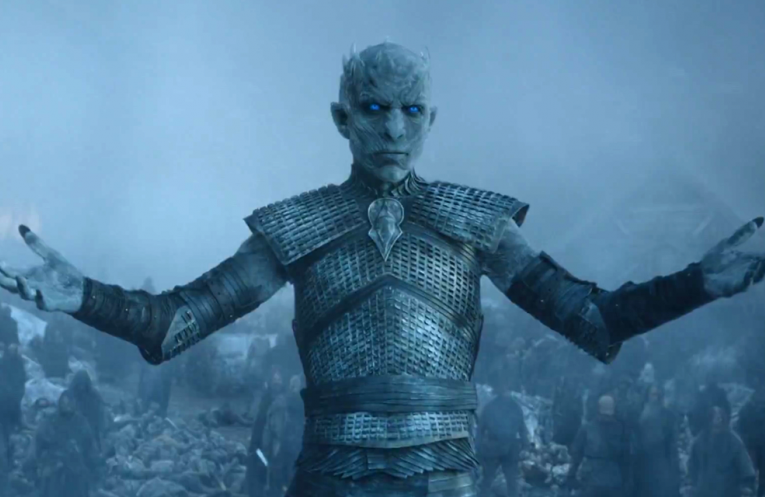
"We already did one thing this season, what more do you want?"
“We already did one thing this season, what more do you want?”

And we didn’t need cliffhangers… oh god the sheer amount of cliffhangers in that last episode was staggering. Forget adapting and source material, that was bad writing.

Is Stannis really dead? What about Sansa and Theon? What’s going to happen in Dorne? What’s Jaime going to do? What’s going to happen to Aria? What’s going to happen to Daenerys? What’s going to happen with Tyrion? What’s Cersei going to do next? Is John Snow dead? Do we even still care?

There was no content in that season finale that served the current season. It was all hook… with no bait. As anyone who watched Lost will tell you, you can’t just ask questions. When the show was winning me over, it was because it wasn’t waiting. Martin’s last two books have entered a holding pattern on the main plot… and it appears that the show ultimately has done the same. At least this time fans know the wait will be finite, but after so much build up – can we still hope for a satisfying payoff?
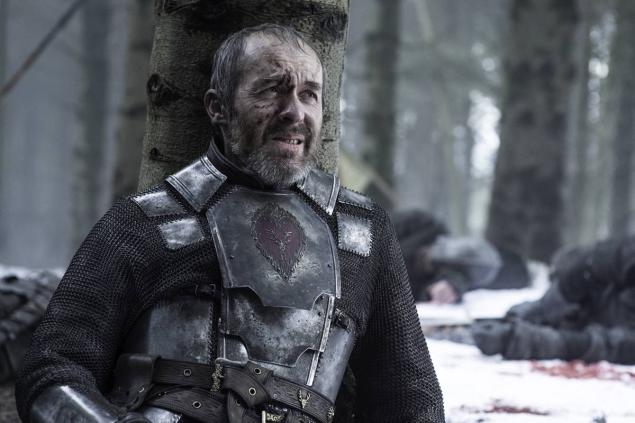
To call Stannis Baratheon's resolution anti-climactic would be to call Ned Stark's beheading slightly sad.
To call Stannis Baratheon’s resolution anti-climactic would be to call Ned Stark’s beheading slightly sad.

The final episode reminded me a lot of the last two books – something big is going to happen… eventually. But for now enjoy more death and nudity, if that still affects anyone watching the show at all.

Reading A Song of Ice and Fire feels like reading five books stretched into seven, and unfortunately for all its big “changes”, watching Game of Thrones is feeling the same way.
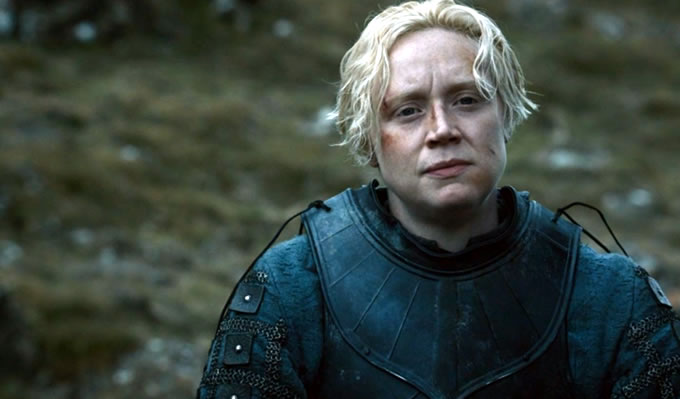
"Hmmm, okay I'm going to abandon Sansa to go walk a battlefield and hope I can find Stannis, hope he's still alive, hope there's no Boltons around and hope I can kill him. Brienne, you are a genius."
“Hmmm, okay I’m going to abandon Sansa during a battle to go walk a battlefield and hope I can find Stannis, hope he’s still alive, hope there’s no Boltons around and hope I can kill him. Brienne, you are a genius.”

Marketing Method: Jurassic World

Fourteen years ago, Jurassic Park III hit theaters (yes, you are that old). The film received mixed reviews with many people calling it more fun than The Lost World… but also more stupid. The “they’re not monsters, they’re animals” approach championed by Steven Spielberg was gone, replaced instead with “here’s a new dinosaur… bigger and more terrible than T-Rex.” Granted, Jurassic Park III never pretended to be anything more than a simple thrill ride, just watch the trailer:

Three big things to take away from that trailer: 1. Dr. Grant is back!!!!!!! 2. Raptor intelligence. 3. New dinosaur – bigger and meaner than Tyrannosaurus.

While some enjoyed this approach, it is worth noting that Jurassic Park III was both the worst reviewed critically of the series (49% on Rotten Tomatoes and 42 on Metacritic) and the least profitable. The film grossed only 368 million with a 93 million budget, Lost World by comparison grossed 618 million with a 73 million dollar budget.

So while the film was an experiment, it does not seem like one the producers would like to repeat. Let’s look at the trailer for the brand new entry, Jurassic World:

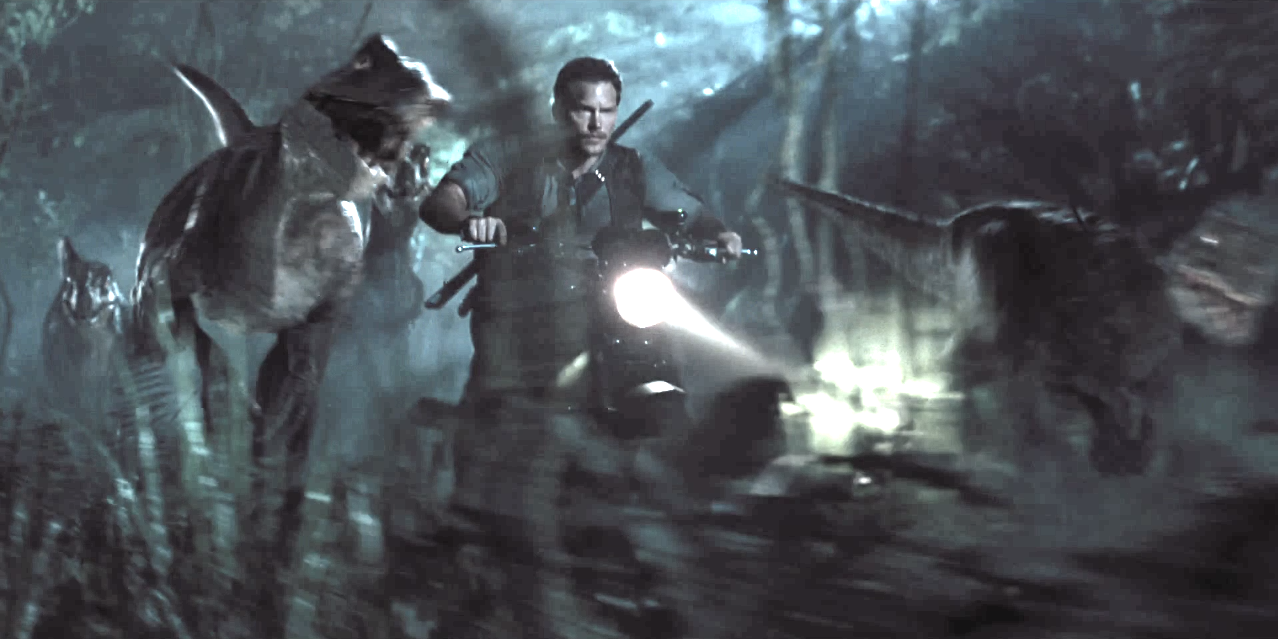
Three big things to take away from that trailer: 1. Star-Lord is in Jurassic Park!!!! 2. Raptor Intelligence. 3. New dinosaur – bigger and meaner than Tyrannosaurus.

Wait…

Yeah, it seems like at least one part of the Hollywood machine, Jurassic World‘s marketing, is very content to recycle the old hooks of Jurassic Park III. Both films also share a similar “over the top” approach. Jurassic Park III includes shots in a river, in a giant bird-cage, in a lot of environments to add spectacle. Jurassic World shows much the same… adjusted from 2001 to 2015 (over the top means so much more today).

It is hard to claim you are making any kind of serious movie when this is a shot in the trailer.

This marketing move is perplexing, given how the last film was received. While some fans enjoyed Jurassic Park III‘s ride, many wanted a return to the more intelligent Spielberg approach. Instead, audiences will be treated to Indominus Rex, the new dinosaur created by genetic modification… of all the largest and most dangerous dinosaurs into one… cause that sounds intelligent.

They should have just gone all out and added the DNA of Adolf Hitler... cause it might look cool with a mustache.
They should have just gone all out and added the DNA of Adolf Hitler… cause it might look cool with a mustache?

Indeed Indominus Rex has found itself at the center of Jurassic World’s marketing, and the controversial reaction to it. While some have expressed excitement, others have voiced the same critical words that Chris Pratt’s character states in the trailer: “doesn’t seem like a good idea.”

Escalation is a typical strategy in Hollywood sequels: bigger means better. Jurassic Park has been a film franchise that has followed this philosophy with every sequel. One T-Rex became two, became a Spinosaurus, became an Indominus Rex. What’s next? Two cloned dinosaurs… are they planning to give it wings? The problem with this approach is that it all says one thing: what is there isn’t exciting without something new added. In this case dinosaurs… dinosaurs are not exciting without new and better dinosaurs. What?

Dino Riders: the logical conclusion. Also, why has no one made a Dino Riders movie yet?

Granted, the story arch of the first Jurassic Park does not lend itself well to sequel material. There is a park that makes dinosaurs, dinosaurs get out, dinosaurs eat people – cut and we’re done. It isn’t an idea that demands “what comes next?”. The Lost World tried to change the formula, adding messages of conservation and naturalism vs. profiteering… to mixed results. Jurassic World looks squarely back in the first movie’s camp, however the trailer does contain some self-awareness that may be a sign that audiences are in for a treat. After all, Jurassic Park III had no character calling out how inane its central plot mechanic was.

Director Colin Trevorrow is untested, and that can be a good thing when it comes to injecting freshness into a series. However, two recent developments have further damaged excitement towards Jurassic World. Trevorrow has already said he has no plans to return for a sequel, which can be taken as either creative vision to do something else… or the studio was less than pleased with the final product. By itself, it is easy to assume the former, until we look at the early reviews… or lack thereof. As of right now: no critical review has been received on either Rotten Tomatoes or Metacritic. This is odd for a movie with such an imminent release. Pixar’s new film, by contrast, does not release until later than Jurassic World – and that already has reviews pouring in.

Time will tell what type of movie Jurassic World is. One thing seems already certain though, the Jurassic Park franchise marketing department needs to go extinct.

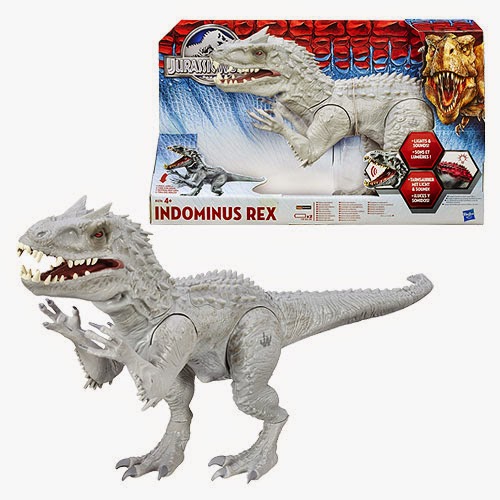
Unrelated note but am I the only one who also thinks these new toys are terrible? Seriously, it just looks like a mess of hard, jagged, plastic. Yeah, I want my child to play with that.
Unrelated note but am I the only one who also thinks these new toys are terrible? Seriously, it just looks like a mess of hard, jagged, plastic. Yeah, I want my child to play with that. I miss the old style figures.

Tomorrowland: Brad Bird's Bioshock

When the second trailer for Disney’s Tomorrowland was released, various websites on the Internet began to spot an interesting similarity between the new live-action picture and one of the most popular video game series in the past decade. Director Brad Bird‘s optimistic opus about the potential of the future bore an eerie resemblance to Bioshock, a game series about dystopia and the different ways ideology can be taken too far. Some found the similarities so uncanny as to create a mash-up trailer combining elements from both properties:

Marketing does not always reflect the reality of the movie. That said, having seen Tomorrowland and played through all three Bioshock games, all I can say is: yep.

Warning: mild spoilers to follow.

The most obvious similarity exists in the concept. A futuristic society is created with the desire of being “better” than the rest of the world. Something goes wrong and it is up to an outsider to fix it. Right there I have just described the basic premise to both Tomorrowland and every Bioshock game. Yet the comparison does not stop there.

The movie opens with a young Frank Walker (the boy who will grow to be George Clooney), an inventor who arrives at the 1964 World’s Fair to show off his invention: the jetpack. Frank meets a mysterious girl, Athena (played very well by Raffey Cassidy) and is able to ascertain passage to Tomorrowland. What does the passage look like? Frank gets on a boat on the “It’s a Small World” ride. Halfway through, the waterway drops out and brings Frank to a seemingly endless body of water with a single walkway leading to a bathysphere. Sound familiar?

Depending on who you ask, "It's a Small World" is more or less ominous than a solitary lighthouse in the middle of the ocean.
Depending on who you ask, “It’s a Small World” is more or less ominous than a solitary lighthouse in the middle of the ocean.

Frank is next transported to Tomorrowland, a society founded and driven by one man: Governor Nix (Hugh Laurie). Nix is a leader who appears to have forsaken the rest of the world in favor of building his own vision of a better tomorrow. While his philosophy is slightly different, Nix is very comparable to the likes of Andrew Ryan and Zachary Comstock.

"You've got simultaneous epidemics of obesity and starvation, explain that one. Bees butterflies start to disappear, the glaciers melt, the algae blooms. All around you the coal mine canaries are dropping dead and you won't take the hint! In every moment there's a possibility of a better future, but you people won't believe it. And because you won't believe it you won't do what is necessary to make it a reality. " - Governor Nix
“You’ve got simultaneous epidemics of obesity and starvation, explain that one. Bees and butterflies start to disappear, the glaciers melt, the algae blooms. All around you the coal mine canaries are dropping dead and you won’t take the hint! In every moment there’s a possibility of a better future, but you people won’t believe it. And because you won’t believe it you won’t do what is necessary to make it a reality. “
– Governor Nix

Yes a disconnected world with lofty ideals and an extremist leader – what could go wrong? The nature of the exact problem with Tomorrowland is partly what separates it from other dystopias like Rapture and Columbia. The stubbornness and unfeeling nature of Nix aside, Tomorrowland has created a technology that is interfering with the rest of the world. I won’t spoil what it is exactly, other than to say it ties in strongly with the overall theme of the movie (similar to how the problems with Rapture and Columbia tied in to the themes of those games).

The last comparison really worth mentioning is Athena, the single agent acting against the wishes of her master and bringing in outside help to Tomorrowland. She accompanies the heroes throughout the entire plot, chipping in where she can and providing evidence that not everything in Tomorrowland has gone wrong. She also plays an essential role in how the story is resolved. Sound familiar:

Athena does not throw coins to either George Clooney or , proving that she is not as financially useful as Elizabeth.
Athena does not throw coins to either George Clooney or Britt Robertson, proving that she is not as financially useful as Elizabeth.

Almost forgot: there are also nonhuman guardians protecting Tomorrowland, and its secrets, from intruders of the outside world. Do they look as cool as this:

bioshock_big_daddy_and_little_sisterNope, they look more like this:

a-scene-from-tomorrowland

It is difficult to say whether or not the wealth of similarities between Tomorrowland and the Bioshock series is anything more than coincidence. I have searched for information on whether or not Brad Bird is a gamer, and I have found none. Given his age (57), and where he is in life – I do not believe he has ever played Bioshock. Yet Damon Lindelof, who co-wrote Tomorrowland, may very well have – again I cannot be sure. The idea of the Bioshock series is not so revolutionary that it is impossible to believe other creative minds did not come up with it on their own. Humanity has been discussing utopia and dystopia for centuries.

And alike as they are, Tomorrowland and Bioshock do enjoy their differences. The main story arch is different between them, and Tomorrowland enjoys an optimism (that some reviewers have labeled preachy while this reviewer found refreshing) that Bioshock does not possess.

It could be argued that Disney should have embraced the Bioshock comparison more openly, as their movie is currently struggling for financial success.