Ubisoft's Plan to Fail on Wii U

Ubisoft wants to make money. I think everyone can understand that. After all, it is hard to run a business when you’re not making money. Recently, Ubisoft CEO Yves Guillemot declared that Watch Dogs would be the last mature game released for the Wii U. His reasoning is that Wii U owners don’t buy “mature” games. Sounds like a reasonable statement. I haven’t seen the charts on Wii U sales for games like Assassin’s Creed IV, but I bet they’re not good. Unfortunately, Yves Guillemot’s reasoning isn’t as sound as he would like. There is another reason why Nintendo fans don’t buy “mature” games on the Wii U, and it has more to do with Ubisoft than anything else.

Ubisoft has released a lot of poor, sub-quality ports of “mature” games for the Wii U. Indeed, the company is playing the part of the sad friend while acting like a disinterested party. In examining the history of Ubisoft releases on the newest Nintendo platform, shocking similarities begin to emerge. Let’s take a look at some of the big “mature” releases, starting with the Assassin’s Creed series. Assassin’s Creed III and IV were released for the Wii U. Assassin’s Creed III was actually a launch game. Let’s look at how well Ubisoft handled the marketing:

Hmmm, there is one console missing there. I wonder how come no one would buy it for Wii U, looking at this billboard?

Wow, way to showcase the release on a new console, Ubisoft! Fun fact: I could not find a single billboard or poster that advertised the Wii U version. All I could find were media-created mockups like this below:

AssassinsCreed3_WiiUWell, that was Assassin’s Creed III. I’m sure when it did not sell well on the Wii U, Ubisoft’s marketing department re-evaluated their strategy and bolstered Assassin’s Creed IV sales!

There's the special PS4 edition, did the Wii U get a special edition?
There’s the special PS4 edition, did the Wii U get a special edition?

It did not. Not only that, before the game was released – Ubisoft revealed that the Wii U edition would receive no dlc. That’s right. Hypothetical question: why would any gamer buy for that system, knowing that their purchase will not be supported? Ubisoft, I think I’m starting to see more clearly why people aren’t buying your games on Wii U.

But wait, there’s so much more! Let’s talk about Splinter Cell: Blacklist!

If only there were two screens!

Again, before the game was released – Ubisoft declared that there would be no offline co-op available for the Wii U version. Strangely, online co-op was included. Well, I guess that makes sense. I mean, it’s not like the Wii U has two screens by default – making it a great system to explore co-op on. It’s not like that’s the case at all. Starting to see a pattern, Yves Guillemot? Good, cause I’m about to predict the future:

Watch Dogs will not sell well on the Wii U.

The Wii U is not even getting Watch Dogs until November, months after it’s been available on other platforms – but that’s not all! Loyal Nintendo gamers will be rewarded for the patience with – wait for it – NO DLC for the Wii U version! It is so staggering to understand why people would not line up to buy a crappy, incomplete port of a six-month old mediocre game. Man, I guess mature gamers just don’t like Wii U! Or wait – that’s not it at all, is it?

The real question is: if you're going to do such a poor job, why bother?
The real question is: if you’re going to do such a poor job, why bother?

Well, Yves Guillemot might counter that not enough Wii Us have been sold! Ubisoft has stated that they will release more Wii U games when more systems are sold. Well, so far over 7 million Wii Us have been sold. That’s millions more than Xbox Ones – yet Ubisoft isn’t threatening to cut off support to Microsoft. So much for that being a valid reason.

At least Ubisoft is not being foolish enough to sit on completed Wii U games, instead of releasing them to make a profit. Wait – they are? Not really seeing the logic in that one, what with this being the year of Mario Kart 8 and Super Smash Bros. It would be like if they said that animating female characters was substantially harder and less important than animating male ones. Wait they did say that – oh fantastic!

Ubisoft, if you don’t like working with Nintendo – just say so. It’s not like they are a perfect company, everyone knows they have serious handicaps when dealing with online infrastructure. Just stop all this “we’re trying to help” attitude and making outrageous statements like Wii U owners don’t buy mature games. Smart gamers don’t buy your mature Wii U games – cause they’re kinda sh*t.
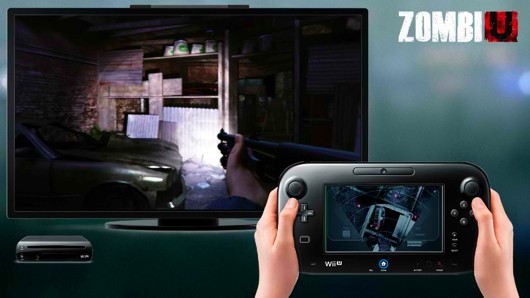
Too bad it doesn't look like there will be a Zombiu 2. That game was actually pretty good - still could have used some dlc support though.
Too bad it doesn’t look like there will be a Zombiu 2. That game was actually pretty good – still could have used some dlc support though.

Please Lev Grossman: Don't Give the Magicians to Syfy!

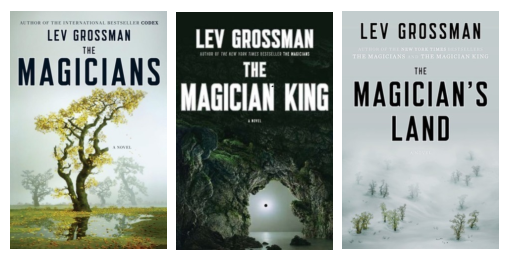
Back when I wrote my article on untapped potential series for HBO, there were many strong intellectual properties that I left out. One such I.P. was The Magicians trilogy, written by Lev Grossman. For those out there who are unfamiliar with this series, picture a far more adult/realistic interpretation of Harry Potter. A world where being wizards does not stop children from engaging in drug use, alcohol, sex, and all the other stupid crap kids tend to do as they grow older. Add to this an incredibly smart parody of the Chronicles of Narnia series and you have the essence of what The Magicians trilogy is about. This past summer saw the end of the trilogy with the final book, The Magician’s Land, being released in August. Like many fans of the series, I went through typical post-book depression once reaching the end before looking out to see what future, if any, the series might have. Grossman is, at the moment, insisting that this is the end for the series (I’m not so sure) so book-wise prospects were limited. There is a planned television show, however! Huzzah! Who is making it? Netflix? HBO? Hulu? Syfy? Really – Syfy… okay, not sure how to feel there.

A fantastic little trilogy of books for anyone looking for well-written fantasy.

Actually I do know how to feel: not confident. The network formally known as Sci-Fi has not been the recent name in terms of quality programming. To look back at it, the last Syfy show that anyone even talked about was Battlestar Galatica and that ended (rather poorly) in 2009. Since then Syfy has produced shows such as Haven, Defiance, and Z Nation. None of these shows have enjoyed terrific critical reception. It seems that since Battlestar Galatica, Syfy is still scrambling to find a show that garners a stronger reaction than: “Z Nation, that sounds a lot like the Walking Dead!”

In fact, there is only one recent series that Syfy is famous for: Sharknado. Yes, for those out there looking to gauge just how intelligent the usual Syfy programming is, look no further than Sharknado. For those poor souls out there who are unaware what Sharknado is… it is exactly what it sounds like. A movie about a tornado – made of sharks. Two movies actually, with a planned third on the way. Not to criticize Sharknado, on a personal level I love it for the wonderfully, intentionally stupid movie series that it is. That said, “From the network that brought you Sharknado comes the Magicians” just sounds wrong on so many levels.

Yeah, this is what to expect from Syfy these days.

The point I am trying to make is that the Magicians is smart, and it is that intelligence that made the series work. On the face of it, there have been numerous fantasy books that have tried to bring that ‘adult edge’ to the Harry Potter scenario – and most of them have failed miserably. These books did not rely on their sex or occasional brutal violence to tell a story, they relied on the charm and wit that Lev Grossman installed into their characters.

In particular there is a special challenge with the series protagonist, Quentin Coldwater (I love that name). Quention is nothing like Harry Potter. He is much more your typical hormone-filled adolescent. He makes mistakes, a lot of them, and he is not likeable through the first part of the trilogy. This character is realistic but hard to write. Grossman was able to give Quentin humanity and sympathy – which was very tough when his character was best described as a person who has everything: magic, a woman who loves him, a school to grow his talents, a portal to a magical world… and he manages to thoroughly f*ck everything up through his immaturity and inability to take responsibility. That may not be a tough protagonist to make relatable, but he is not the easiest guy to root for – not in the beginning anyway.

One of the main lessons that Quentin needs to learn throughout his journey.

Writers John McNamara and Sera Gamble have their hands full in handling the pilot of this adaptation. McNamara’s career is long but not filled with any real highlights (Lois & Clark is not something to be proud of). Gamble at least has Supernatural under her belt. It is not a guaranteed failure, but the odds appear stacked against the Magicians being a show on the same level as the book series it is based off of.  I am only hoping to be proved wrong.


On a quick side note, how funny is it how much the dialogue has changed on shows?

“Is there a new show coming out?”

“Yeah.”

“Think it will be any good?”

“Well… they’re airing it on cable TV.”

“F*ck! I was hoping for Netflix!”

The Minecraft Expectation

Well, it is over. With the 2.5 BILLION (yes, BILLION) sale of Mojang to Microsoft, Markus “Notch” Persson’s five-year relationship with his independent game phenomenon, Minecraft, has come to an end.  This essentially means that, without Notch, Microsoft paid a couple billion dollars to own Minecraft. Oh, and Scrolls too. That is insane. It showcases just how essential Microsoft believes Minecraft is to the future of gaming. Many gamers have had mixed-to-negative reactions to the purchase. Indeed, Minecraft is the most successful ‘indie’ (independently-made) video game in history. To have it swallowed up by a mammoth corporation like Microsoft is… well, we’ll see what happens. There is one person, however, who is very happy that Minecraft is now in Microsoft hands, and that is Notch:

"I’ve become a symbol. I don’t want to be a symbol, responsible for something huge that I don’t understand, that I don’t want to work on, that keeps coming back to me. I’m not an entrepreneur. I’m not a CEO. I’m a nerdy computer programmer who likes to have opinions on Twitter."
“I’ve become a symbol. I don’t want to be a symbol, responsible for something huge that I don’t understand, that I don’t want to work on, that keeps coming back to me. I’m not an entrepreneur. I’m not a CEO. I’m a nerdy computer programmer who likes to have opinions on Twitter.”

That is from a letter written by the Swedish programmer on his departure (the rest can be found here). It highlights the unrealistic expectation of Minecraft, and why we, as gamers, should try not to have ‘the Minecraft Expectation’ when it comes to games – especially indie ones. When I say the Minecraft Expectation, I refer to the supported belief that Notch was expected to keep working on Minecraft, without ever charging gamers for this additional content. This game has changed dramatically since its unveiling as a PC alpha test (earliest playable version – not technically a finished product) back in 2009. Minecraft was not even available for profit until 2011. And then it costs roughly twenty bucks to purchase. In the three years since there has been patch after patch of new and rebalanced content added to the game. And it has all been free.

New creatures, areas, and even worlds have been added since the initial release.

On the face of it, this is awesome for gamers. Nearly everyone hates paid dlc (downloadable content), especially when it feels like the retail game would be incomplete without it. What happened with Minecraft, I believe, is the opposite end of that dlc spectrum. Yes, there are games that withhold content and appear to delight in charging for every last dollar they can get from the consumer. But Notch was too nice. He had become bound to game he didn’t want to keep adding content to, and people treated him as a traitor if he even thought about doing something else.

Paying for content that feels like it should have been part of the original game is never a way to build a good relationship with the gaming community.

Independent developers do not have much money to finance their projects. Some use Kickstarters and paid early access to supplement funding. The only way that Minecraft has been able to continue this level of content and support is because, well… it’s worth around 2.5 billion dollars. Is it reasonable to expect a quality, finished product for the investment – absolutely. Is it reasonable to expect continued support and patching without ever needing to pay more for said content – not really. Not unless the game is a cultural event like Minecraft. How many of those come along?

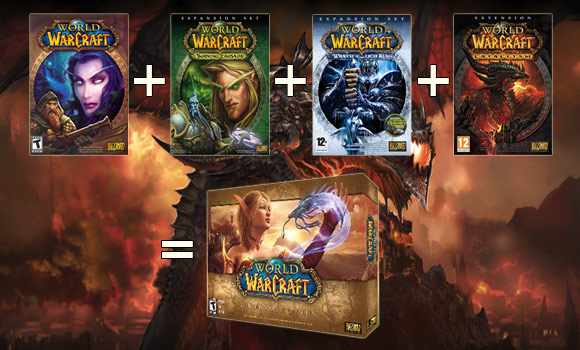
There is a good balance and I believe companies like Blizzard Entertainment do it well. They provide continued free support for their games, while at the same time releasing the occasional paid expansion pack. Their retail games never feel incomplete, like the expansion is needed. It is just a way for devoted fans to explore new content, while paying the developer’s salary.

World of Warcraft is supported and expanded regularly, yet the game has also seen a wealth of retail expansions.

Yeah, games are fun. They are art, they are expression, they are a sublime form of escapism. That said, they are also part of someone’s job. As gamers, there is a responsibility to fiscally support the products we want and to reject those we don’t. At this point, no one “owes” anyone any continued support of Minecraft. If Microsoft never releases additional content and goes straight for Minecraft II, who can blame them? So long as that game is a quality experience like the first – Microsoft has held up their end of the deal as a developer.