How to Tell a Story: Why How to Train Your Dragon Works so Well

It seems that Dreamworks Animation has always been the animation company in Pixar‘s shadow. While Pixar was creating films like Ratatouille and Wall-E, Dreamworks produced Shrek the Third and Kung Fu Panda. Not to say that Kung Fu Panda was bad (unlike Shrek the Third), it was just a much more simple story. Dreamworks simply was not producing animated films that contained the same amount of layers as their Pixar counterparts. In 2010, Dreamworks Animation made How to Train Your Dragon while Pixar created Toy Story 3. Yes, Pixar made the better film that year. That said, Dreamworks Animation took a giant step forward as How to Train Your Dragon became one of their greatest films produced. The story was just as simple and uninspired as any of their animated products, yet How to Train Your Dragon proves that quality is found not just in the story, but in how it is told.

First, what is the story in How to Train Your Dragon? As I said before, it is very standard: at its heart, How to Train Your Dragon is about an outcast boy growing up and learning to accept/believe in himself, and how that belief and acceptance catapulted him into much stronger social standing. This is a plot that has been before in animated films. At least once:
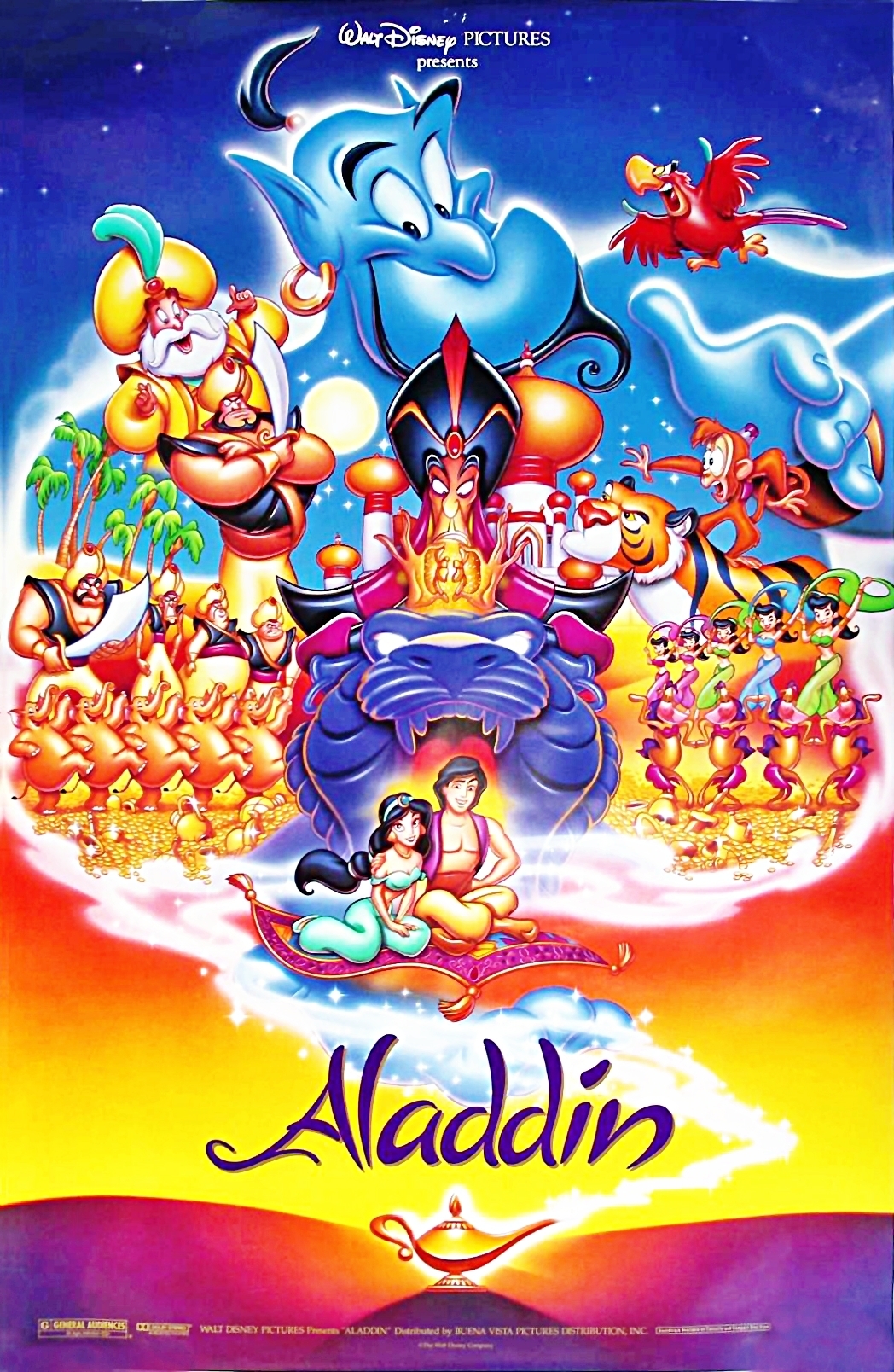
An outcast street-rat learns the value in being true to himself and becomes sultan of a fictional land (with some non-human assistance in the form of a genie.)
An outcast street-rat learns the value in being true to himself and becomes sultan of a fictional land (with some non-human assistance in the form of a genie).

Or twice:

An outcast learns to accept the true strength of his character in order to become a hero (with the non-human assistance of a satyr).

And like, say by Dreamworks the year before:

An outcast learns to be true to himself and becomes the dragon warrior/hero (with the non-human assistance of a turtle and a red panda).

So stories like this are nothing new to the world of animated feature films. Yes, every one of the movies mentioned dresses their story in a different way but all of those films share the same heart. However, these three films also help to illustrate my point: it matters how the story is told. It is possible to like only one of those movies and detest the other two. With How to Train Your Dragon, the strength of the movie lies in its character relationships.

Every story needs vehicles in order to function. The protagonist, the antagonist, the supporting characters, the conflict: every story possesses (at least most of) these traits. The difference between good stories and bad ones is how well these vehicles are disguised. A good writer/storyteller can dress fiction to be real life. In my article criticizing Star Wars Episode II, I (endeavored to) explained that the main reason that the relationship between Anakin and Padme failed was because it appeared as a plot focus and not as an actual relationship between two people. How to Train Your Dragon avoids this pitfall.

One of the main triumphs to examine is Stoick (voiced by Gerard Butler). He is Hiccup’s father and one of (if not the) main antagonist in the story. In a children’s movie, where simple storytelling is sometimes favored, it would be very easy to leave Stoick as simply that: the antagonist. Hiccup’s father who never listens, a bloodthirsty viking looking to kill dragons. Instead, writers William Davies, Dean DeBlois, and Chris Sanders create a complex relationship between Hiccup and Stoick that feels very real (even in a movie that is about taming dragons).

Hiccup has the revelation of where his mindless violent tendencies lead…

At the heart of their conflict is not an argument over what direction to take the plot (to kill dragons or not to kill dragons) but instead the simple problem of communication. Stoick and Hiccup do not know how to communicate with one another. They are both headstrong and stubborn (illustrating similar qualities helps enforce the family connection) and they simply have a hard time relating to one another. Yet throughout the movie it is illustrated that, while the two have their differences, they are a family who loves each other. This adds weight to the conflict and enhances the scenes between them.

…Much earlier than Stoick does.

Another strong point is, obviously, the relationship between Hiccup and Toothless. Both Chris Sanders and Dean Deblois created Lilo and Stitch and it is no surprise to see the same quality of human-sentient animal relationship in this film. Toothless is not simply a dragon but brims with personality, which allows Hiccup to exhibit personality as well. If Toothless were simply a dragon (a beast without intelligence), the plot of the film could still proceed but its content would have been weakened greatly.

The animators realized a creature who could fully communicate without speech.

One final relationship I will mention is Hiccup’s relationship with Astrid (voiced by America Ferrera). Yes, Astrid does serve as the love interest, but she is also a character with her own personality. She is revealed to be determined and methodical. There are also several scenes demonstrating her capabilities as a warrior. This gives her personality so that, when she does fall in love with Hiccup, the audience can understand the reason why.

Astrid spends most of the movie with axe in hand.

How to Train Your Dragon is not the best animated film ever by a long shot, but it is a well-made film. There is much more here done right than wrong. The film never panders down to its child audience, never embraces the more flashy-dancey tendencies of other Dreamworks’ films, never does anything to sacrifice story or character. It is part of the proof that it matters more how a story is told, rather than what its content is.

PS – the sequel isn’t bad either.

No Love Lost for Valentine's Day

Let me make one quick comment at the beginning of this post: I do not hate Valentine’s Day. I don’t love it either – it’s a day. Valentine’s Day, as a date of measured time, has never done anything to personally advance or hinder me so I bear it no feeling. For those out there hating Valentine’s Day, here you go. So why am I talking about it then? This is a blog dedicated to media’s (marketing/advertising/pop culture) impact on the world. I can’t entirely ignore it.

In many ways, Valentine’s Day is like every other major holiday. It has a history, it has a focus group. Many out there will claim that Valentine’s Day was invented simply to make money. Well, they’re right. In the same way that Santa Claus was invented for Christmas and costumes purposed for Halloween: there is a definite money-making angle associated with Valentine’s Day. Yet Valentine’s Day, for the record, is not a Hallmark celebration.

According to internet history a.k.a. Wikipedia, Valentine’s Day is a feast celebrating the life of St. Valentine. Which St. Valentine you may ask: good question, there may have been at least three so… all of them? The particular one people celebrate lived during the time when Christians and Romans were anything but bros. In fact helping Christians was a crime back then… yeah, Roman Emperor Claudius II had no time for these new crazy Jesus folk. In fact, St. Valentine was arrested for marrying Christian couples – Christian marriage back then being entirely illegal. Boy, if only there was a modern day equivalent for that:

Maybe all those people out there calling Valentine's Day "gay" are just being historically insightful.
Maybe all those people out there calling Valentine’s Day “gay” are just being historically insightful.

So anyway, St. Valentine got arrested. He was ultimately put to death for trying to convert the emperor (Claudius II had taken a liking to his prisoner just not in the way: “I like (will switch my faith) like you”). There it is: the official reason for Valentine’s Day. Celebrating a man who was jailed for helping others find love. That’s an excellent cause for celebration but probably not what most people take offense to.

Nothing says long-lasting love like an endangered species doomed to extinction.

Merchandising. Corporations are making a nice profit today, specifically florists, card makers, chocolate makers, and restaurant owners. For them, their valentine is small and green and smells like money. But here is the thing: nearly every holiday out there has been marketed to death (thank God for Thanksgiving) so Valentine’s Day isn’t unique. This isn’t even an invented tradition, people have been giving “valentines” to each other for hundreds of years.

This is a 13th century painting of the Valentine's Day hipster: giving hearts before it was cool.
This is a 13th century painting of the Valentine’s Day hipster: giving hearts before it was cool.

For those out there protesting corporate intrusion into something as personal as love: that I can support. Good thing there’s an easy remedy: don’t buy sh*t. Seriously, if anyone out there in a relationship can’t think of anything more personal than chocolates and flowers for their significant other… how well do they know each other?

Roses aren't even the only red flower in existence. At least be a little creative.
Roses aren’t even the only red flower in existence. At least be a little creative.

Yet I think there is more to the Valentine’s Day resentment than just the commercialization. This is day celebrating the joy of sharing love. Many out there don’t have another human being they feel that way about so naturally: there are feelings of exclusion. Again, I blame this on marketing. They’ve been better with other holidays:

Christmas: the Christian holiday for everyone.

Unfortunately here is the principle of marketing: making you, the individual, want something. Valentine’s Day is the double-dose of this principle. Since the day itself is purported to be  about celebrating love with a significant other – there is already a need for someone else. Now Valentine’s Day advertising says that someone else isn’t enough, the consumer must buy things to please that other. And if buying things make the other happy than not buying things might make them sad and so on… it’s a rabbit hole: don’t go down it.

You know the most precious thing about love: it cannot be commodified. Every love is unique. Asking a corporation or really anyone else to make a gift for your significant other is like asking a stranger to decorate your house or name your child. They have no way of knowing. It doesn’t make them soulless or evil, just outmatched. If you are in a relationship: you are the only person capable of getting your significant other what they truly want. Don’t ask Hallmark – they don’t know.

Hey, it's the best a stranger can do.
Hey, it’s the best a stranger can do.

And for those out there without a significant other: your love is still special, so you’re part of the celebration. Doesn’t really matter if you love another person or your job or something else in this wonderful world of ours – Valentine’s Day is about celebrating that healthy love. I say healthy because there are those out there just in relationships because they don’t know how to be alone… that is one romantic love that should be anything but celebrated.

Yes, marketing can make single people feel bad about themselves today. Marketing can (and does) make people feel bad about themselves every day: that’s their job (really sick when you think about it). Don’t blame Valentine’s Day, it’s just a day. And really: could be worse. Take Korea for instance, not only do they have two days for couples, they also have a day where single people are required to eat black food in mourning of their lack of relationship. Yikes.

It's Actually Better the Second Time Around: Korra and Mako

Like many people out there, I am a huge fan of the Avatar: the Last Airbender animated series. Also like many people, I was really excited when the creator’s of said show announced their new, sequel project, The Legend of Korra. However, you may remember in another article that I wrote, that I expressed my feelings on some rather serious concerns with this new series. Much of the great character writing that had highlighted the first show was missing and The Legend of Korra suffered quite a few problems that held it back from being anything close to great, at least in taking the first season by itself.

And then there's these two.
And then there’s these two.

One of my chief problems was the relationship between protagonist, Korra and non-existent character, Mako. I’ll try not to repeat myself too much here: I simply never felt the relationship worked. Mainly because Korra (being hot-headed, quick-tempered, loves-to-argue) did not make sense to match up with Mako (more serious, level-headed, dumps-his-first-girlfriend-as-soon-as-she’s-poor… didn’t-really-have-much-character-beyond-that). Yes, you could understand an initial attraction, but a long term relationship seemed a more outlandish idea than bending the elements.

Part of what makes this season an improvement is that they begin to define the character of Mako and give him some much needed personality.

So let’s get into season two, set a full six months after season one and Korra and Mako are still together… somehow. The audience gets the sense that not much conflict has happened in this time, which makes the idea of the two of them surviving together more believable. The peace is not long to last though as wild spirits show up and tensions arise between Korra and the two parental male figures in her life: Tenzin (her mentor) and Tonraq (her father).

In comes Mako to diffuse the situation… with expected results. Korra explodes at him and the two get into a heated argument, every time. Mako even admits that he doesn’t feel comfortable expressing himself around Korra, asking essentially if she would to hear his opinion or simply something she would agree with. The signs are there that the relationship is not in paradise but… it keeps going.

This is the common pose of the season for Korra and Mako.

Meanwhile Bolin has entered into a relationship with Eska, Korra’s cousin from the Northern Water Tribe. Eska is very obviously manipulative, controlling, and all-around crazy so Bolin naturally seeks advice on how to end the relationship. He goes to his older brother and the two have a conversation that is one of the smarter scenes in the entire season. Mako advises Bolin to simply break off, that dragging out a bad relationship is like allowing a leech to hang onto skin. Great advice but the audience wonders if Mako should be listening to himself talk.

Poor relationships are actually a common theme in the season as it is revealed that Aang did not have the best relationship with his children.

Here is where the great realistic writing reenters the series. Mako is communicating thoughts that he is already subconsciously feeling but having trouble expressing directly: his brother’s crappy relationship echoes his own but is not his, so he can see it clearer and be more objective.

It’s not hard to see where this is going: eventually Korra and Mako get into a serious fight and Mako announces that he is finished. Korra goes off and does some Avatar stuff (losing a chunk of her memory in the process… boy I hope that doesn’t arbitrarily create drama later) and Mako rekindles his relationship with Asami. Why Asami is so quick to take him back is beyond me but at least the two of them have some chemistry together.

The final argument that breaks up Korra and Mako. Told you it was a common pose.

But anyway, remember how I mentioned that Korra lost a bit of her memory? Guess which part exactly. So Korra comes back, thinking everything’s fine and Mako… rekindles that relationship as well, dramatically hurting Asami in the process.

Asami looking both hurt and angry at Mako's inability to be mature and decide his relationships.
Asami looking both hurt and angry at Mako’s inability to be mature and decide his relationships.

I know I prefaced this as “arbitrary drama” but I actually think that the writing staff deserves a lot of credit for accurately portraying bad relationships: sometimes they’re hard to get out of. Mako dodges the harder conflict in favor of an easier one but just ends up creating more problems for himself.

Korra, of course, regains her full memory at the end of season two and confronts Mako about the break up. Here is the first moment where Korra genuinely becomes the strong character she has been purported to be all series. She is the one to directly come out and state that they, despite loving each other, do not work as a couple and that they are romantically done.

“I think we both know that this… us… doesn’t work” – Korra “You’re right. I’ll always love you, Korra.” – Mako “And I’ll always love you.” – Korra

This is a powerful moment that shows how much Korra has evolved since the start of the series. She has matured and is learning to calm her temper, while also learning to trust her instincts as a person and not just as the Avatar. Mako, by contrast, is revealed as the less mature of the two: someone who still needs to learn how to be more direct with his feelings and take more responsibility for his actions.

Again, I cannot praise the romantic writing (at least in regards to Korra and Mako) enough this season. First and foremost: this is a show intended for all audiences and Korra is a wonderful role model this season. Too often media (television shows and movies in particular) goes only the dramatic route of ending relationships – just look at Disney’s Frozen for an example of that. The Legend of Korra takes the more complex approach: the idea that two people can love each other but not be right for one another. Korra and Mako are not done as friends and they are not done in each others lives.

There was no drama, no unnecessary turn of character traits. No one became evil. The Legend of Korra has started writing its characters as people, and that bodes really well for the remaining three seasons.

Also they brought back Uncle Iroh, that's just awesome.
Also they brought back Uncle Iroh, that’s just awesome.