Reading Ernest Cline’s Ready Player One is like hunting through a futuristic virtual Chocolate Factory from Willy Wonka.
Ready Social Commentary One
Reading Ernest Cline’s Ready Player One is like hunting through a futuristic virtual Chocolate Factory from Willy Wonka.
2015 saw many terrific video games. From the moral complexity of Witcher 3 to the creative freedom of Super Mario Maker, and everywhere in between, 2015 was a strong year for the video game industry. Yet, as with any year: there were duds. Arguably the biggest flop of all was Godzilla for the PlayStation 4. Lumbering, unwieldy controls, boring past-generation map design, and a complete lack of any interesting fighting system (and local multiplayer) made this a challenge to call “fun.” This game was panned nearly across the entire board, with one small group providing the only positive spin. They were, of course, the Godzilla fans and they found a lot of good things to say.
Just to say upfront: Obviously, all art is subjective. No one is an idiot for liking this game. The following is just my opinion.
Now, I have watched every single Godzilla movie (in English and Japanese where applicable). I own an entire large crate full of action figures and collectibles. I am attending G-Fest in Chicago this summer. I have a tattoo of Godzilla on my body. Do I say all this to prove that I am the coolest guy in the universe – that’s besides the point. My point is, I am a huge Godzilla fan, I grew up on this stuff. Here is my message to other Godzilla fans: this game is garbage. It doesn’t matter if you love Godzilla or not. Please stop defending this piece of crap, we deserve better.
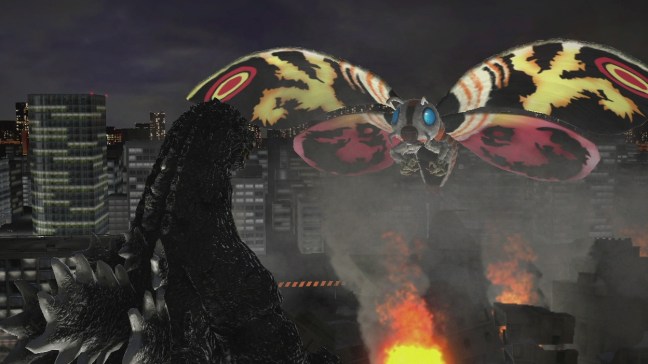
A lot of the praise for this “game” comes from fans describing how faithful it is. Godzilla moves with purpose, like the large mass he is. Some fans have even contrasted it favorably against the three most recent Godzilla fighting games that were released for the GameCube, PlayStation 2, Xbox (original), and Wii. This is true. In those games, Godzilla moved a lot faster. He was agile, quick, and could run from one side of the map to another. All of these changes reflecting a desire to create a more fluid fighting game. Yes, Godzilla is slower and more like his movie self in the PS4 game… but is this a good thing from a game making perspective?

Let me give an example: In the PS4 game, you have to collect “data” from various points in the map. Let’s say I missed one on one side of the level and now I must walk back.
STOMP.
Here I come.
STOMP.
Getting closer.
STOMP
Almost there.
STOMP.
…. still almost there.
Does this sound fun? There is no way to run. There is a “charge” option where Godzilla lowers his head and plows forward for a few steps like a charging bull (or a blind football player) but this animation looks awkward to say the least. I can only imagine the commentary of the spectating citizens.

“Oh, there he goes! Nothing can stop him! Wait… what… what is he doing? Why is he doing that over and over again?”
So yeah, Godzilla walks like in the movie – kudos on making that happen, but it also illustrates exactly why it should be changed to create a good video game experience.

Another feature that Godzilla fans have praised is the focus of the game. As Godzilla, the player wrecks cities and fights monsters. This sounds awesome and exactly what a good Godzilla game needs to have. In this game, the city smashing takes front and center, with other monsters only showing up occasionally. This would be fun but here is the problem: the city smashing is really not satisfying. Godzilla hits the buildings a couple of times with one of four attacks (charge, weak attack, strong attack, or radiation breath) and then the building goes into a generic “fall” animation before disappearing entirely. It does the same “fall” animation no matter how Godzilla attacks it. There is nothing, no variation, no sense that your choice mattered. The same thing – over and over again.

Yes, this was a PlayStation 3 game originally but even so – this looks bad. The ones on PS2 and GameCube could do this, and there smashing buildings was not the primary objective but just a fun side option. Godzilla: Unleashed for the Wii had better building destruction than this. If my memory serves correctly, the player could occasionally knock pieces of the building off with basic melee attacks in that one.
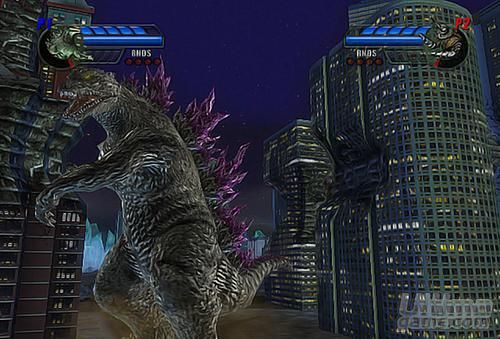
The level design is bare. While Bandai Namco and Natsume do deserve some credit for recreating environments from the movies, they are really small stages. Normally, I would complain more about this – but it takes ten minutes to walk across one as is. It’s not just the size, however. Gone are the power-ups and hidden secrets from the previous games. There is nothing to do but that boring smash and gathering “data” (which amounts to freezing in place for twenty seconds while the camera cuts to a more cinematic angle). Having the Smog Monster fly around or being able to summon in Mothra or Battra were cool options. Again – decisions that reflected actual game design as opposed to “well what did it look like in the movies?”
Last but not least, let’s talk about the monster fights. Well, first and foremost – this is a fighting game without a health bar. Yep. Curious as to how you’re doing? Too bad, you’d ruin the immersion with crap like that. The only indication you get is the screen starting to go red as you get close to death. Well, at least that helps right? Let’s you know when to start blocking attacks?
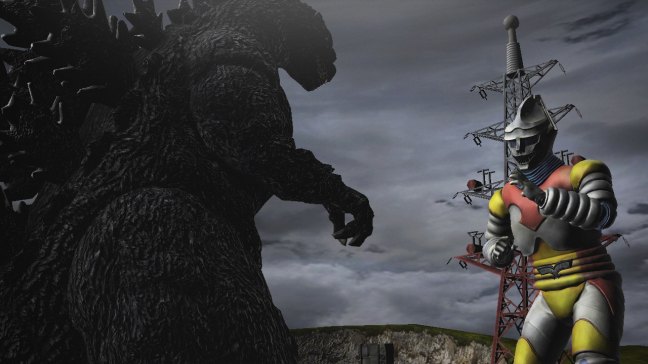
You can’t block either.
Well, shit. Want to pick up a building and throw it at your enemy? Can’t do that.
Want to play with the person sitting next to you? Can’t do that.
Want a comprehensive system of fighting moves and clear differences between how the monsters handle? Try another game.
The “fighting” system was added into the PlayStation 4 version, to help justify the sixty-dollar (I bought this for $10 and felt cheated) price tag that this game released with. Some games add new modes with depth and meaning, and with some it feels quickly tacked on. Guess which this is.
John Ryan of IGN gave this game a negative review but said that “the spirit of the old-school monster movie is where Bandai Namco absolutely nails it.” I disagree, and frankly wonder what movies John is talking about. The original Godzilla is a work of art that is exceptional in quality and crafting – so this game isn’t it. The subsequent sequels were goofy fun that usually did not take themselves too seriously. This isn’t those either.
Fans looking for a genuine experience of a Godzilla movie should watch a Godzilla movie. The 29th Japanese film will be released later this year. There are a lot of these. This “game” feels like watching the very worst of Godzilla, and is even less fun to play. Godzilla fans have had better games in the past – and need to not allow crap like this to get a pass for being “authentic.” Batman fans were harsh and eventually got Arkham Asylum. Just saying.
2011: The Muppets hits theaters. Critics are overjoyed, with some people calling it one of the best films of the year. Jason Segel, who wrote and starred in the film, accomplished his dream project. A $45 million dollar film that grossed over $165 million and became a critical darling. The Muppets was so successful that a sequel was immediately rushed into production. Fast-forward three years and…
Muppets Most Wanted grosses a paltry (by Hollywood standard) $78 million. An achievement made even more disappointing given the film’s additional $5 million budget. So… what happened? Where did all the Muppet love go?

At first glance, the answer appears obvious: critical reception. I mean, who didn’t hear about how good The Muppets was when it came out? I can remember the film being considerably hyped, I also cannot recall another film in the franchise ever earning that much critical praise. When Most Wanted hit screens, the review buzz was slightly different. “Worse than the first,” “a step down;” these were some of the common complaints. I can only speak personally, but I know my excitement dwindled when I heard that reaction.
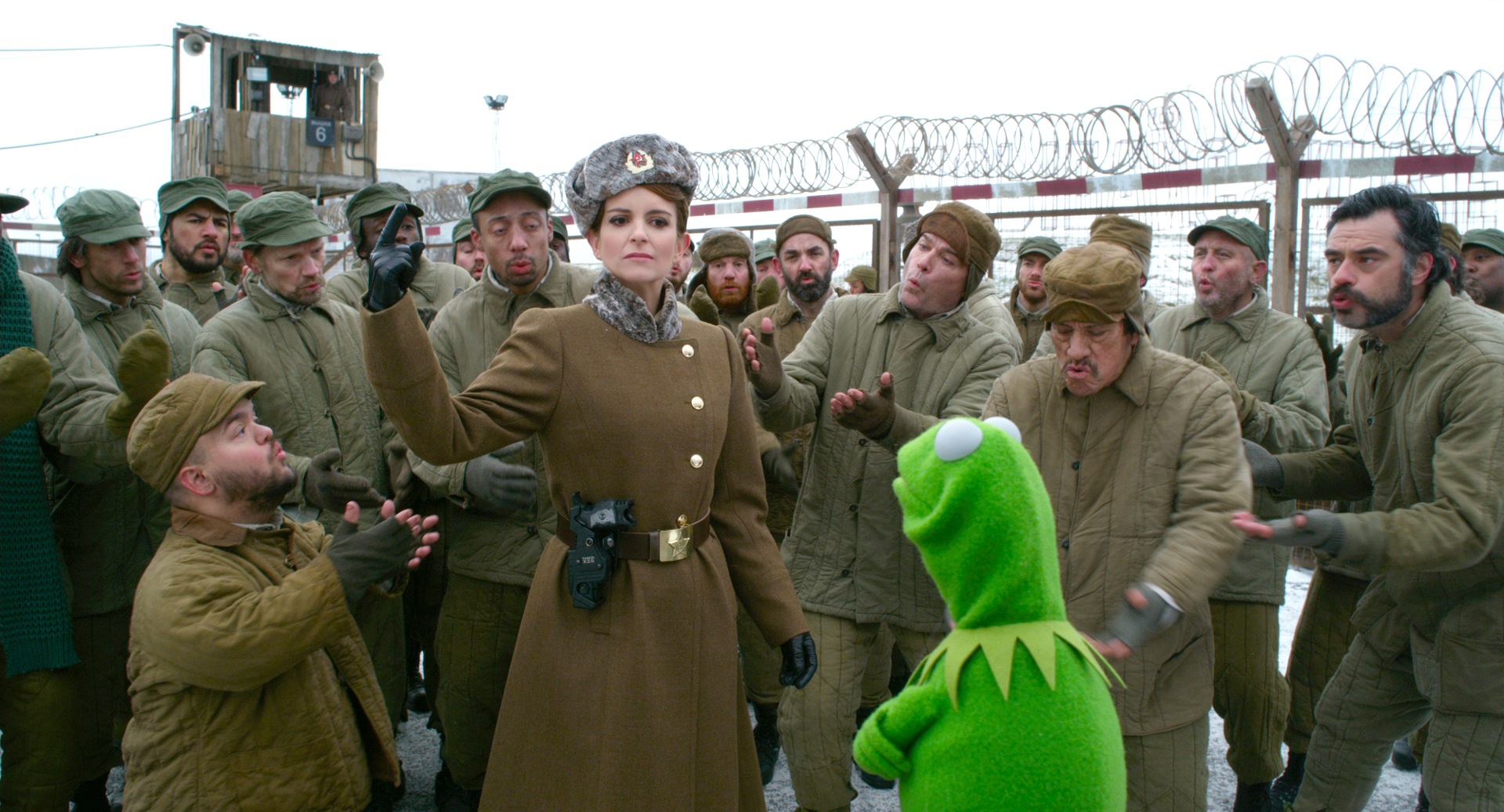
Yet how differently were these films really received? Rotten Tomatoes points to the largest discrepancy. The Muppets earned a whopping 96% while Muppets Most Wanted managed only a 79%. That is a large drop… but 79% still is far from terrible. Yet on other critical scales, the gap was far smaller. IMDB rankings give The Muppets a 7.2 and Muppets Most Wanted a 6.5. Likewise, Metacritic scored The Muppets at 75 and Muppets Most Wanted at 61. Yes, there is a drop in all three cases but not as drastic as Rotten Tomatoes suggests.
Therein may lie the answer.

Rotten Tomatoes is by far one of the most popular movie review sites on the web. Yet the system they use is very simple: a movie is either fresh or rotten, reviews are sorted as either good or bad. This allows for a skewing of numbers. If a large number of critics think a movie is just “good” (not great, not anything special), the movie will appear more highly rated than it really is. Likewise if the majority of critics declare a film “mediocre,” the score will reflect more negatively. Rotten Tomatoes actually also uses a system very similar to Metacritic, but hides the number under the “Average Rating” heading, located in small print under the overall score.
So good movies can appear great… or not so great. Certainly it explains the difference in the two numbers and could contribute to another huge factor concerning why Muppets Most Wanted so underperformed: a lot of people (myself included) felt that the 2011 film was overrated. Not terrible by any stretch but this was, according to Rotten Tomatoes, supposed to be the highest rated film of the year. That is a huge expectation to live up to.
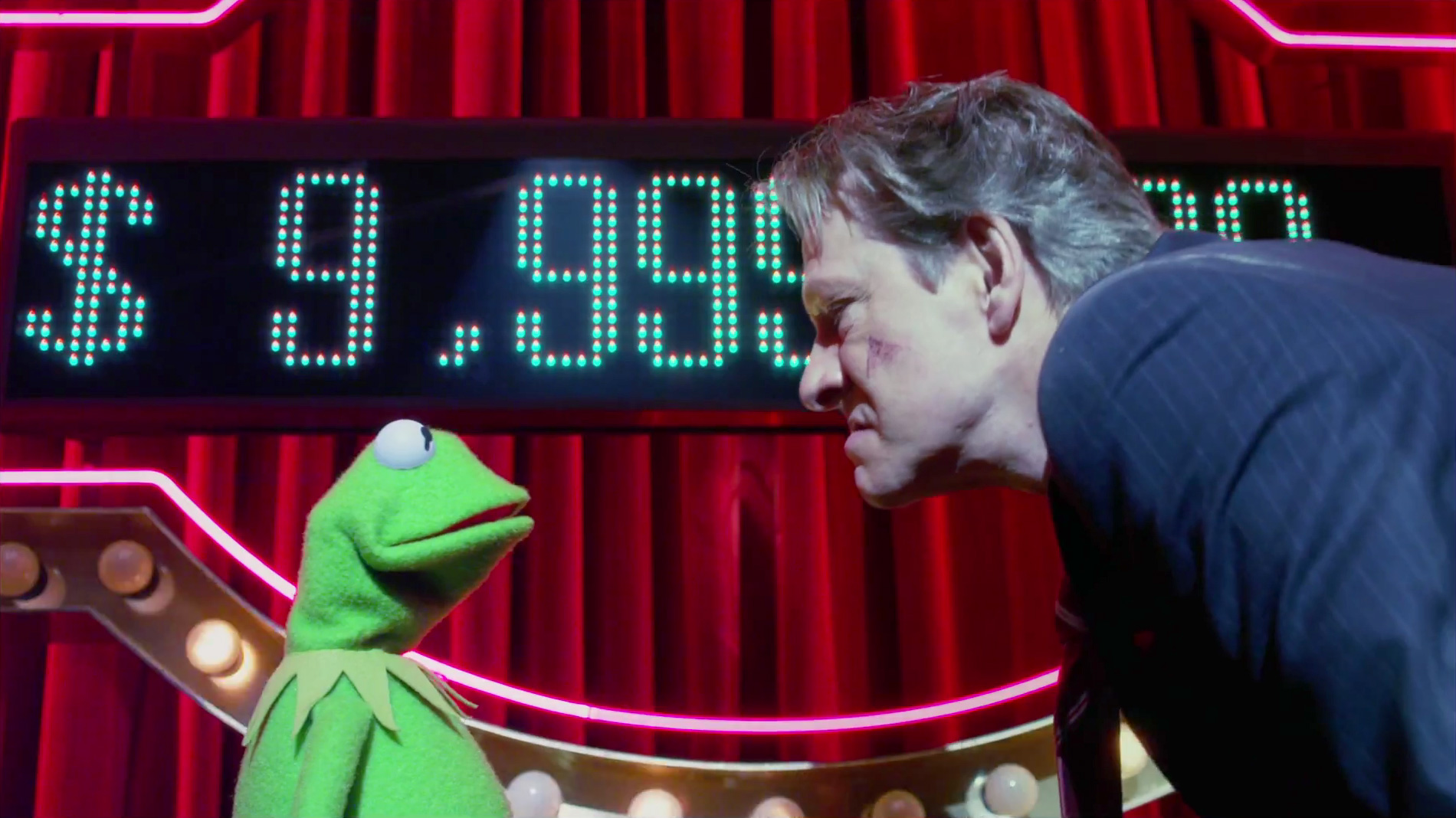
The Muppets was a good film, but far from perfect. Legitimate criticisms existed and many people felt that it was too praised. When Muppets Most Wanted came out, it is a good bet that at least a few critics were venting frustration at just how talked about The Muppets became. With something as subjective as film review, it is very difficult to say but I can say that, when I finally watched Muppets Most Wanted: I enjoyed the film more than I was expecting. While overall I would call it worse than its predecessor (overlong and slow in places), the film had superiority over the 2011 film in several areas.

Most notably: the Muppets. There was a lot more Muppet action going on in this film. Gone were Jason Segel and Amy Adams, the stars were only the Muppets themselves (along with Ricky Gervais and Tina Fey in supporting roles). Not as much star power sure, but shouldn’t a Muppet movie be about the Muppets first? That would be like making a Transformers movie that was more about the people than the robots…
The plot is simple (maybe too simple for the runtime) but the jokes are funny. Anyone who likes the Muppets will not be disappointed, and those looking for good family entertainment could do far worse. Yet, for probably no singular reason, the Muppets’ future is again uncertain. What happened to that nostalgic love so present in the 2011 film? Did it evaporate so quickly? Maybe it really, truly, is not that easy… being green.

 Colin McMahon