You're Not Alone Part Two: A Plan of Hope to Escape the Cycle of Emotional Abuse

When I wrote You’re Not Alone almost a year ago – I thought I was letting go. I thought by putting what happened out there, it would be out of my mind and into the world, where it could help those who needed it, and bring responsibility to any who identified with it. I thought that by declaring myself the victim, I was taking strength and rising above what happened to me. I was wrong. What I wrote months ago only reflected a first step, and nothing more.
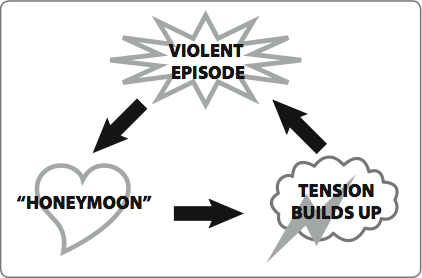
The cycle is simple but incredibly hard to break.

That first step was admittance, and it is a large one. Too often those who suffer from emotional abuse rationalize or justify the abusive behavior. After all, if someone is treating you poorly: have you not done something to deserve it? Most of the time we have, but our action was not large enough to justify our treatment. If for instance I forget to get my work done on time, it is a natural response to be cross and disappointed in myself. But everything in context: if I label myself a failure and say that I am hopeless because I did not do my work one day – I have gone too far. This is a disproportionate reaction that likely comes from another source… and that is in large part what emotional abuse is. People who have not properly dealt with their emotions so that they boil up and spill over at the wrong time. Please know that, when I say people: I include myself.
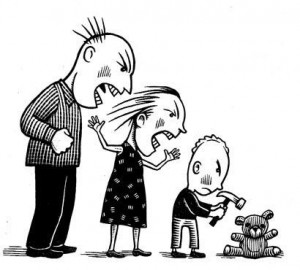
In emotionally abusive relationships, if the abuser is not confronted - the cycle continues on to the next unsuspecting person.
In emotionally abusive relationships, if the abuser is not confronted – the cycle continues on to the next unsuspecting person.

In my last article, I assigned a lot of blame to the actions of Sinda, a woman I shared an emotionally abusive relationship with. I am not apologizing for calling out her actions. That was the first part in my recovery. That said, it was out of balance. I called Sinda out, true, but I  inappropriately judged her as well. I only mentioned briefly that I didn’t think she was a bad person for what she did. I made no effort to fully understand Sinda… and in that regard, I did not move forward, but rather joined the cycle.

Not all emotional abuse is alike. Like anything, there are different shades. When I spoke of Sinda, I made an attempt to understand, but not identify with her. In fact I did the opposite. I was the victim, she the abuser: two roles carved in stone. I was sympathetic, Sinda was antagonistic. While this was not a complete lie, it was not the whole truth. In knowing Sinda the way I do, I forgot one very important thing: she is a victim too.

By labeling myself as victim and Sinda as abuser, I was not confronting what actually happened. I was simplifying it in a way that made me feel better.
By labeling myself as victim and Sinda as abuser, I was confronting what happened. That said, I was simplifying it in a way that made me feel better.

This does not excuse her actions or give her a free pass to continue destructive trends on herself and other people… and it doesn’t give me one either. Yes, this is the main reason I am writing part two. By not fully identifying with Sinda, by judging and labeling her as something different from myself: I left myself fully open to adopting the characteristics of an emotional abuser, and adopt I did.

Conscious vs. Subconscious

When I wrote part one, I consciously moved past it. As I said, my intention was to get the thoughts out of my head and it worked. I stopped thinking about what had happened so much and was able to move forward… on a conscious level. Conscious is our logical thought, the part of the mind that we are aware of. When we consciously make a decision, it means that we are thinking about it. If I decide to go out for a jog: that is a conscious decision, but one I might make for subconscious reasons.

The subconscious cannot think to communicate, that by nature is what it is. Yet this does not mean the subconscious plays no part in decision-making. I make the decision to go jogging but why am I doing that: a subconscious desire to remain in good shape; a subconscious fear of becoming unattractive; a subconscious fear of becoming unhealthy; or a mix of all three? We rarely think about our reasons for doing things… at least not until after the action has happened.
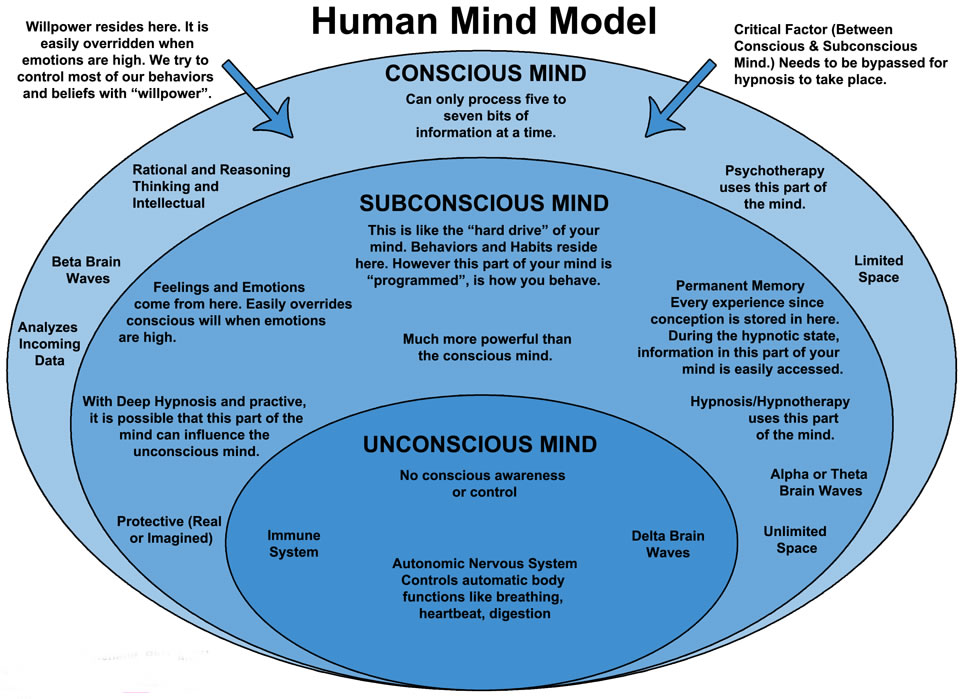
I'm not even going into the unconscious mind. It is simply important to be aware that even the simplest decision is not a simple one.
I’m not even going into the unconscious mind. It is simply important to be aware that even the simplest decision is not a simple one.

I mentioned in part one my moving on to other relationships after Sinda… and my performance in those relationships. I was distant, I was uncaring, I kept them controlled. Well holy shit: sounds emotionally abusive to me. But that was fine, right? Because I was just coming out of an emotionally abusive relationship with Sinda. It was not fine. For calling Sinda out on every little thing she did, I completely glossed over everything I did. Was I using justification, I do this because of my past? Sounds a lot like what Sinda said to me.

But I was consciously aware – at least in terms of the article. I knew what emotional abuse was, I had put a name to my pain… but I had not processed it. Indeed, my very action of simply moving into another relationship spoke volumes about how little I had allowed myself to process what had happened. Was that also not a thing I was criticizing Sinda for?

I had a conscious desire to feel better, as I’m sure we all do when we’re hurt. But I wasn’t fully asking myself: why do I need to feel better so quickly? Why, in a lifetime of being relatively happy on my own, was I now feeling enormous pressure to hop from person to person. A small part of it was external: people telling me I had to move on. The larger part was internal: me telling me I had to move on. But does moving on mean?
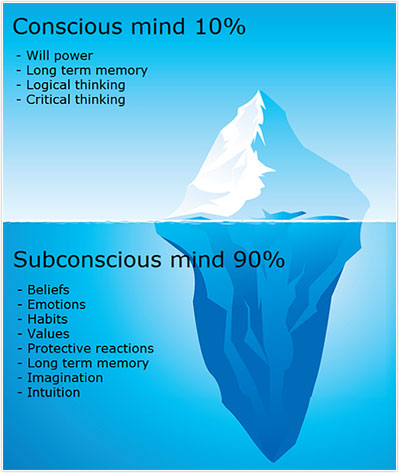
While the conscious mind controls your words, the subconscious surfaces through your actions. If you are a person who often says one thing yet does another, this reflects a disconnection on the subconscious level.

I don’t know about all people, but I hate to feel pain and misery. After Sinda, I felt those two emotions a lot. At the time, I did not fully understand why. I knew that someone I loved had hurt me badly, and I couldn’t understand why she had done it. I felt anger at her for leaving; anger at myself for pushing her away; anger at everyone else who didn’t seem to see what had happened, or if they did, dismissing it as what was standard in a relationship. In short, I was angry and I was in pain… and jumping into another relationship fixed that, how?

Distraction

We live in the age of instant gratification, and I bring that up because I feel it has created all sorts of unreasonable expectations. We watch shows where conflict is solved in 20-40 minutes, or at most over multiple seasons (a hundred hours). Many of our questions can be answered in seconds, by just putting the question into Google. There, there’s the answer. Life solved.

We live in a world that teaches us it is okay to expect something the instant we want it.

Except that’s not how it works, at least in my experience. In fact, it can lead to very poor results. As I said, feeling sad, hurt, hopeless, depressed – these are all horrible ways to feel. It is natural to want to do anything to move past them. Unfortunately, there is only one way that seems to permanently work: facing them head on and looking inward at oneself. Why am I angry? Who am I angry at? Why am I angry at this person? Was it even their fault?

These are hard questions because they relate to our sense of identity. I don’t like looking inward sometimes, especially when I know I’m going to see things I don’t like.

Much of Freud's psychology is out of date but this remains true. If you don't deal with something, it does not become magically done. It remains undone and affects you until it is resolved.
Much of Freud’s psychology is out of date but this remains true. If you don’t deal with something, it does not become magically done. It remains undone and affects you until it is resolved.

The alternative? Have a drink! Take a joint! Have a smoke! Here, here is this nice person – or someone who seems hot. Imagine all the distraction a relationship provides. Suddenly I had someone else to think about, someone else to focus on. My life was more full. I had someone to share my bed with, someone to make me feel good.

And that pain and anger… stayed. Where was it going to go? How was it being addressed. It wasn’t. I was ignoring it, the way I child may ignore vegetables in hopes they might disappear off her/his plate. Yeah, I was being a child, at least in the emotional sense. My subconscious was trying to tell me something, and my conscious heard it, but not properly. All it heard was: “I don’t want to feel this way.” I never asked: “why am I feeling this way?”

So the cycle continued. I hurt others and I felt my self-esteem grow worse and worse as I did.

For the record, I am not saying to ignore these things completely, just approach them with a healthy and honest knowledge of who you are and what you really need most. It is important to remember: you will never be 100% ready for something like a relationship.

Full Circle

I am lucky in a way many who have been abused are not: I got an apology. Sinda read my words and reached out to me. I feel it is a human thing to want catharsis, to want closure. I thought, with an apology, my wounds would go away. They didn’t, and it has taken me a while to realize why.

Part of me forgave Sinda when she apologized – the conscious part. But again, subconsciously I had still not dealt with it. This created a ridiculous disconnect. I told Sinda all was forgiven, that I knew she hadn’t meant to hurt me and that I still cared for her – but yet, as soon as Sinda made a mistake, I was quick to bring up the past. Thankfully, she called me out on this and I was able to realize consciously what I was doing, but subconsciously I felt embarrassed and put down. My emotions were still there, stronger than ever. More pain into the well I still had not looked at.
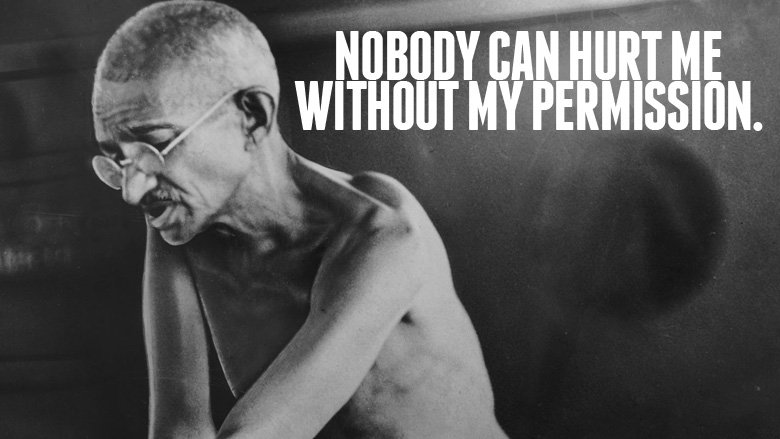
This quote may sound nice but really - it isn't true. If anything, it reflects a desire to be controlling. People hurt us all the time without our permission. It is not weakness to admit this. It is foolish to believe you will not have a natural reaction to being hurt.
This quote may sound nice but really – it isn’t true. If anything, it reflects a desire to be controlling. People hurt us all the time without our permission. It is not weakness to admit this. It is foolish to believe you will not have a natural reaction to being hurt.

Sinda and I tried to create a better present together, but our past kept us from making it so. In the end, anger boiled up on both sides and we drove each other apart… again. The cycle repeated itself, and the only difference was that I played a larger role than I had before.

Let this be a cautionary message: even if you have the best intentions, your actions will inevitably reflect what your subconscious is feeling. I was still terrified of Sinda. Terrified she would hurt me again. That fear turned to anger, since of the two emotions: anger is the one I feel more comfortable with. I ended up hurting someone I cared about, and events continued cycling.

Moving Forward

Anyone involved in an abusive relationship likely began as the victim. I do not think I have ever met a person who, in knowing how to treat people both positively and negatively, has consciously chosen negatively every time. This is why the nature of emotional abuse is so vicious. It creates a false reality, a world where this is just the way things are. In a way, this is part of the mechanism I told myself to feel better. Sinda didn’t choose to hurt me, it was just the way our relationship worked out. While part of this is true, part of it is not. Sinda DID NOT mean to hurt me, but that still didn’t make it a healthy relationship. Relationships are not like that. The entire idea of relationships in the first place is to find someone who makes us happy, who accepts us as we are while still encouraging all the best qualities we have.

Notice that loving a person is not the essential part of a healthy relationship. Equality and respect are just as important.
Notice that loving a person is not the essential part of a healthy relationship. Equality and respect are just as important. Seek a relationship that has all of these. Never settle for anything less by “saying good enough for me.” We are all born deserving the best.

But to do this, I had to learn to do something harder: I had to learn to properly love myself (and by that I mean accept myself). It appears easier to “love” another, or to find someone who “loves” us. But really, most of the time this “love” simply means “giving/receiving positive attention.” That is what we yearn for. I was giving myself negative attention. Telling myself there was something wrong with me, that there had always been something wrong with me. That life wasn’t fair and I was the one being shit on. Why should I try so hard to make others happy if I was always left miserable? F*ck it.

Sound familiar? It is a pattern of thought that unfortunately comes from being abused. “Sticks and stones may break my bones but words can never hurt me” – this is bullshit. It can true if say you cut someone off in traffic and they flip you off – who really cares? You’ll get mad for a bit but… whatever. You didn’t know them. You’ll probably never see that person again.

BUT

If your parent says that, or a sibling, or a significant other: these are people we love. To love someone is to give them power. When I love Sinda, I am saying “you matter to me.” That includes actions and words spoken. When a mother or father says something like “you’re worthless” or doesn’t want to spend time with you, they are sending the message that you aren’t worthy of their love. This is a horrible thing to do to someone who loves you. Especially when it comes to parents, there is no excuse for this behavior. A child relies on his/her parents for love and stability, after all it is our parents who make the largest impression on our early years – and it is our early years that play a large role in shaping who we become.
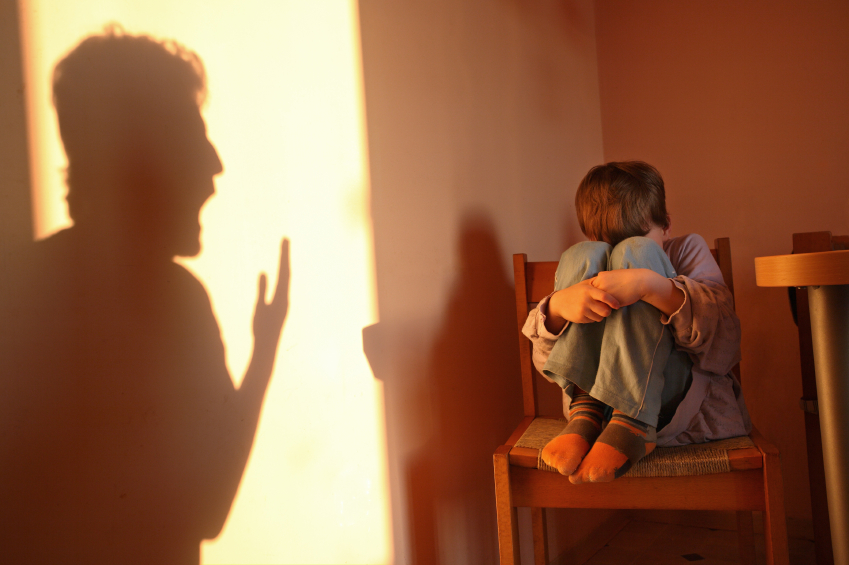
Childhood emotional abuse is arguably the worst kind. A child has no experience, no knowledge of the world. An abusive parent blinds them to all the positive the world provides.

So when someone you love hurts you, it REALLY hurts. There is deep damage done, on the subconscious level. Our sense of self and our notion of worth are both damaged. This is the subconscious level, and until it is corrected, there is an imbalance between inner and outer self. I know I said many things but communicated with different actions. I have said I cared for someone, and then pushed them away – this action does not make sense. I have felt not worthy of another’s love and attention – this is not healthy, and reflects a distrustful nature of others.

But it can be fixed

Facing the Subconscious

I am still learning this one, so please be advised that nothing I am saying comes from a place of real authority. In fact, that is part of recovery: admitting that I don’t have and will never have all the answers. This admittance got me looking for them. I didn’t fully understand myself, or what was happening to me. I reached out to therapists and to friends to help me gain a fuller understanding of myself, but that was not enough.

Facing my inner self (subconscious) meant asking a lot of personal questions, and I truthfully didn’t even know what most of those were. Here is my first recommendation: if you feel you have been emotionally abused, learn as much as you can about what that means. I recommend going to books written by doctors, or people who have spent years studying the field. Google can help but usually it is just basic info. I also recommend staying away from anything that gives an offensive label to your abuser. This I learned from Sinda: I regret labeling her as an abuser. It distanced my humanity and gave me a wrongful air of superiority. My personal recommendation is Hope and Healing from Emotional Abuse. The book rightfully places the focus on accepting oneself and learning forgiveness. It also draws attention to every part of life, including that of faith – something that today can be too glossed over. The book also includes many helpful activities to teach the proper questions to ask to learn the truth of when the abuse started and how to move past it.

The activities are the best part of the book. You want something that directly engages thought patterns.

I can also personally recommend meditation or hypnotherapy (guided relaxation that takes the self into the body and makes it more aware). Meditation shuts out of the outside world and allows the mind to focus in. Both also provide crucial moments of healing when the body is able to actively relax and feel okay. Most of the time we’re too busy running around or trying to do five million things: it pays to check in sometimes and put everything in perspective.

Do Not Be Afraid of Your Negative Emotions

The pain I was feeling from what happened with Sinda (and what happened from my earlier life) was not a bad thing. It was natural, my body was taking time to process. Facing negative emotions can be an unpleasant idea. Looking back into painful memories sounds just like that – painful. Yet it is possible to do without judging yourself, as long as you go into it with an open mind. In fact, the process is very healthy.

Looking back at my time with Sinda and my time since then, I had to face a lot of inconvenient truths. While trying to be the hero of my own story was a good thing, it went too far if it meant I overlooked or minimized all the mistakes I had made. It made me seem not human and apart from everyone else. In a way, by not accepting my weaknesses and shortcomings, I was adding to my feelings of isolation and loneliness.

Even the hero makes mistakes from time to time. Even the hero knows sadness, most heroes come from a life of sadness. We are all human, and that is beautiful.

Doing this step is hard since it means turning away from distractions. I say this as someone who fully knows. I wanted to be in a relationship. I wanted it so badly, I wanted to bring love and caring and all the best parts of me to the person I care most about. But facing my emotions means being honest, and honestly – that goal was  not possible. I have a natural urge to help others, and this is good. Yet if I am out of balance or in a dark place, then I don’t full know how to do that and what should be a good part of me emerges instead as control.

I also wanted to be in a relationship to make myself feel better. To distract me from what I was feeling. To make myself feel “complete.” This is selfish, and relationships, especially with people I love, should never be driven by selfish impulse. I can’t be fully honest with another human being without first being fully honest with myself. That’s a good rule of thumb with relationships.

Accept True Forgiveness

This goes hand in hand with being fully honest. When I tried to forgive Sinda, I had yet to forgive myself – so I couldn’t. True forgiveness comes from not just forgiving the person who hurt you (whether they apologize or not), but for forgiving yourself for being involved. For a time, I hated that I loved Sinda. What did it say about me that I brought her into my life? This woman who everyone told me was a mistake to date.

These two words can be incredibly powerful when said with sincerity. Sinda was beyond brave for admitting her mistakes and apologizing. I wish I had been as brave as her.
These two words can be incredibly powerful when said with sincerity. Sinda was beyond brave for admitting her mistakes and apologizing. She is my inspiration moving forward in this area.

It wasn’t a mistake. I was not stupid or wrong for falling in love with her. Sinda is not some mustache-twirling villain seeking to hurt me. She never was. Forgiveness means letting go of labeling judgment. I wanted to judge Sinda as bad because she hurt me. While her actions were wrong, it didn’t mean she was terrible. It’s life. No one knows how to be perfect.

No one fully knows how love works, but one relationship beyond all choice is parental. No one chose their parents, so you can’t be blamed if your parents were lacking, or not there when you needed them to be, or actively abusive. That action is on them, not you. They are the adult, they chose to have you. If you come from an abused childhood, it is so important to recognize it, and to understand that, while it affected you greatly, what happened was not your fault.

Focus on You

This has already been strongly hinted at. A lot of us go through life doing what is expected or what we are told to do. What do you want to do? It’s a question worth asking. But it is important to keep active.

For myself, this meant making a schedule. Anyone who knows me will tell you how much I hate routine. I am a creative person, I love following my passions. But doing it too much meant I had too much unstructured time… or time to sit and dwell on my thoughts. While it is good to think, it is bad to dwell. Dwelling keeps the past alive and prevents one from being fully present. I kept bringing up the pain from Sinda, and in doing so – I made it more and more a part of who I was. I don’t want to be defined by that. I want to learn from it, accept it, and continue to become who I am.

Luckily, abuse is not the only cyclical pattern in life.

Human beings are bizarre creatures in this way. We cling to the familiar, even when the familiar is horrible. Focusing on you means thinking: who are you, and what do you want? Is this life the life you want, or the life someone else has tried to force onto you? Are you who you are because you want to be, or because you were raised to be? Going forward can be scary, as can letting go. I owned my pain from Sinda – it was mine, by letting it go – who am I now? Such a simple thing with clear positive results, but I was afraid to go there.
My limited life experience has taught me this. I wish more than anything I had let go earlier.

Someone who has been abused their whole life owns it as part of their identity, how could they not? Letting go of it means letting go of a large portion of themselves. The good news is that allowing anger and sadness to pass does not leave you feeling empty. I say that from personal experience. It’s scary: you will leave your comfort zone, but you grow as a result.

Mind and Body

My grandfather used to tell me that I needed to preserve mind and body. At the time, I didn’t understand him. Surely the mind was more important, the body was just a vehicle. The mind was where I was me, after all.

But I have learned some things from experience. For example: thinking about painful memories while walking or running feels a lot better than thinking about them while sitting down. I approached this topic with my therapist and he told me it was because the action of moving forward helped to send a subconscious message to the mind and body. I wasn’t sitting with my thoughts, I was actively moving forward with them. And I have found this true, my mind appears to function and process far better when I am exercising than when I sit still.

Benefits-of-Exercises1

Sitting still also usually opens the distraction of food or drink or other substance. As someone who used to indulge in food a lot when he was sad or feeling bored, this can have long-term effects on image and energy.

Be Patient

I made mistakes. I went through setbacks. I hurt people when I absolutely did not mean to. I did everything under the sun and I have been working at this for over a year. I know how frustrating it can be. Just know that everyone has setbacks. You are not alone if you are trying to do something and failing. Trying is the important thing. Never stop trying. Go easy on yourself: the reason people can heal super fast in books and movies is that they’re not real.

2013_04_29_DHW_FBPM

Don’t make excuses for yourself, don’t lose the drive to change. Just be patient in the meantime. If it were this easy to end the cycle, we would not still be talking about emotional abuse in 2015.

Restore Balance

That is the purpose of all of these things. Restore balance to yourself. While it can be argued that no one person can change the world, we definitely all can change ourselves. I feel this is a responsibility, hell it might even be our only one. No matter what relationships I have: the person I was born with was me. I will be with myself until the day I die, I had better learn to accept and love myself as a person. That will affect my whole existence and my whole experience of life.

We are our mind, we are our body. We are conscious and subconscious. When all of these things are aligned, I believe I will be in a healthier spot, and able to put the negative of what happened behind me. I don’t want to live my whole life as a “victim.” The word sounds weak, like someone not in control of their life. I also certainly don’t want to be an abuser, someone who is trying to control too much of their life.

"Listen, [Visions of Amon, Unalaq, and the Red Lotus appear as the camera pans from Toph to Korra.] what did Amon want? Equality for all. Unalaq? He brought back the spirits. And Zaheer believed in freedom. The problem was, those guys were totally out of balance and they took their ideologies too far." The Legend of Korra is an excellent show when it comes to illustrating mental growth and recovering from abuse.
“Listen, what did Amon want? Equality for all. Unalaq? He brought back the spirits. And Zaheer believed in freedom. The problem was, those guys were totally out of balance and they took their ideologies too far.”
The Legend of Korra is an excellent show when it comes to illustrating mental growth and recovering from abuse.
I want to take this moment to apologize to everyone I have hurt along the way. I was no monster (I don’t think) but I didn’t treat you with full respect. Know that it wasn’t anything you did. I take full responsibility for my actions and my pain. I am sorry I brought it to your lives.


We can all be victims, we can all be abusers. We also all have the power to rise above it and end the cycle. I choose this option.

Part three here.

You're Not Alone: A Message of Support for Victims of Emotional Abuse

Update (4/7/2015): a revised version of this post is pending. I will not be taking down the original as I do not believe in whitewashing. A link will be provided when the new version is published.

This blog post is not like any other. While Red Rings of Redemption continues to be a site targeted at examining the way that media shapes our world, it is also a site dedicated to insuring that abuse and human rights’ violations do not go unreported. In the past, I have written about many injustices taking place. It has been my hope to add my voice to a positive movement for change and equality. It is because of that that I am writing this. Watching the courage around the world of young men and women standing up, unafraid of being who they are – it has inspired me. I am coming out as a victim of mental and emotional abuse, and I am going to tell my story so that others out there will know that they are not alone, and that there is always a way out.

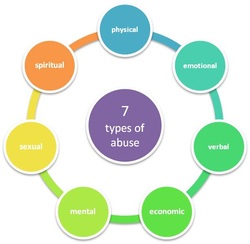
There are many different types of abuse in the world. They all hurt in their respective ways. Even though this chart is designed for teens, it is appropriate for all ages.

The following is an account of actual life events. I have altered the names to protect those involved. I am not writing this to point fingers or assign blame. I do not wish to demonize while sanctifying myself. I will try to be completely honest with what happened to me. One last note: I am including pictures and links to help boost this post’s reach. It is not my intention to dilute the message with flashy distractions, I simply want as many people as possible to be able to access this if they need to.
To begin with, I suppose I better summarize how the relationship started – to give everything that follows context. In college, I was lucky: gifted with many friends. One of my best friends was dating this woman (let’s call her Sinda for this article). Sinda and I quickly became great friends. We had a lot in common and enjoyed playing games and going for drinks together. Everything was kept very simple by the fact that Sinda was dating my best friend. There was no drama: I was there for her and she was there for me.
Then they broke up.
Anyone who is friends with a couple knows how hard dealing with a breakup is. You never want to take sides; you do not want to lose friends. It sucks when two people who have been together suddenly aren’t anymore. However, breakups happen for a reason and are usually for the best.
Months went by and Sinda and I kept talking. I began to see sides of her I never had before. As she shared more and more of her life with me, I began to realize something: this was someone who I truly cared for . Really, my first sign should have been how reluctant she was… or moreover how she spoke:
“You don’t want someone like me.”
I may be paraphrasing but I remember that main reason very clearly. On the face of it, it does not make sense… but it was a warning sign. People with healthy self-esteems do not ever say that about themselves. After all: why wouldn’t someone be wanted? It confused me greatly as I did know her, and more than that – I knew I wanted someone exactly like her…
Over the months that followed, our relationship grew before ultimately ending. I will cover that more in the proceeding paragraphs. Right now I am going to list some of the signs of an abusive relationship and explain how they related in this particular case. This is to help those out there who are unsure… although really, you can always feel when something is innately wrong.

The Control
This is the big one. It will serve as a factor for most of the following points and is, in my opinion, the most dangerous element of an abusive relationship. I was saving it for last but really, it has to be addressed. Everything was used as control, and she let nothing happen that was not within her power to fully tweak or change at a moment’s notice. To put in bluntly: our relationship never existed when she was not okay with it.
What do I mean by that?
I told my friends when she and I started dating. How could I not? I was so excited. This was someone I was really crazy about. We were spending a lot of alone time together – going out for drinks, to watch movies, etc. She had at this point told me she loved me and I had told her I loved her. Yet when we talked about my friends, she labeled it as “boasting” and definitively told me that the two of us were not – nor had ever been – in a relationship. Not only did this hurt emotionally, but it pulled the rug out from under my feet.
Had I been wrong? It certainly felt like we were dating. Months later when I detailed exactly what had happened between us to my friends, I was met with the universal “that sounds like dating to me.” To be fair, I used the term boyfriend/girlfriend once to stop someone at a party from hitting on her. I should not have done that as we were not using those labels. However, she and I had arrived at that party together and would leave together that night. Yes, maybe we were not “boyfriend/girlfriend” but we were two people who had said “I love you” and were together.
Sinda wanted desperately to control my level of comfort in the relationship and she succeeded beautifully. By always being kept on my toes, I could never relax around her. This stopped me from taking any real risk in advancing the relationship – allowing it to stay exactly where she presumably felt comfortable.
The Isolation
I mentioned before that she dated my best friend before me… so you can imagine that things were a little awkward. What made it worse was that I could tell my best friend nothing, NOTHING, about my new relationship without enraging Sinda. Again the words “bragging” or “boasting” were used often. In the end, Sinda asked that I let her tell my best friend, as the two of them had been in a prior relationship. I agreed and kept silent. It wasn’t until after the relationship had ended that I learned that Sinda had never told my best friend anything. As a result, when the relationship ended and I went to my best friend for solace – it wasn’t there.
Indeed, I later found out that Sinda had told my best friend (and several other friends) that nothing had ever existed between us and I had made the whole thing up. To hear that someone who said “I love you” now tell your friends that you were crazy… I did feel a little insane. She wasn’t describing the relationship I remembered but… what if it all was in my head? It would not be until over a year later when she finally admitted to a couple of my friends how much she had lied in regards to her words.

94e29108363dc779f52dec41abb1e21b
That said, her initial denial and subsequent lies by omission to my best friend put them in a spot that no one should ever be in. Two people telling radically different stories? It creates drama… unnecessary drama. I love a good conflict as much as anyone but senseless drama is just that. In a sense, it was the same manipulation and control described above, except directed at my best friend instead of me. By keeping everyone unsure, she controlled the reactions. My best friend could not really be there for me… if they weren’t sure I was telling the truth.
By inserting doubt with my friends, my support network was effectively taken away from me. This was incredibly challenging to battle through, but luckily friends are not called friends for no reason. Don’t worry: Lies have a tendency to change over time and to be exposed for what they are.

Punishment for Affection
Yeah, I’m not making that up. Right away you might be thinking “affectionate” in a sexual context but no, I’m talking about saying things as simple as “I love you” or making breakfast. At times, it appeared fine to let Sinda know just how much I cared for her. Other times, she berated me for it.
She insisted that I only loved her because “I didn’t know her” (we had known each other for over two years at this point) and that I was just seeing what I wanted to see. In one respect, she may have been right. I was insulted or put off whenever I was open with my feelings. She trampled on my words and created this feeling of fantasy where none existed. I was essentially told that I was stupid for caring, although I don’t think she was ever that direct.
These actions deflated my esteem and added to my feelings of unease. In any healthy relationship: you want to make your partner feel good. I wasn’t trying, I was simply saying the positive emotions that I was feeling… and I was trampled for it.

Everything was an argument… and not usually a small one
If you can’t tell from my blog, I am opinionated. I love debating people, playing devil’s advocate, engaging in friendly arguments. This was a ballooning. Simple misunderstandings derailed entire evenings and most of the time it did not appear like there was any reason for fighting. In many cases we both seemed to just be trying to express that we cared. Yet when two people say they love each other, what follows next should never be tears.

a0badec9418c378d16d3c34bfa425df7

An Emotional Roller Coaster
As miserable as Sinda could make me feel, she also elevated me to new heights. When things were good, they were wonderful; when they were bad, they were terrible. It was not until much later that I realized the full impact of the lack of median. With nothing ever feeling “stable”, there was no way to get comfortable. Again, this prevented me from feeling like myself and created traumatic after effects.

This can become a far too common state of those who suffer from this kind of abuse. It eats you from the inside out.

The Double Standard
One of the main points of punishment came from the “double standard.” If I said anything ever that implied I anything less than loved her, my claims of emotion were labeled as complete lies. In anger, truth is usually said… but nearly always in a distorted way. With Sinda, anger was the only truth and everything else was a lie. Part of the fantasy she convinced me that I was living in.
Yet she in the relationship (and after) frequently went between “I love you” and “so there were some things I said last night.” In the end, I am unsure how she ever felt about me. I can only spin the tale: actions speak louder than words.

Sadly, the abused tend to take an idea that they are to blame. Often, it works to remove yourself from the situation and pretend if things were reversed - or think of an imaginary couple.
Sadly, the abused tend to take an idea that they are to blame. Often, it works to remove yourself from the situation and pretend if things were reversed – or think of an imaginary couple.

The No-Win Scenario
This is where nice people, truly nice people, get trapped. Being with someone who tells you that you make them feel so special is a wonderful emotion. It makes you feel overjoyed and fills you with the happiness that can only come from making another human being happy. Yet this can be dangerous in abusive relationships. It can be used to create an unrealistic standard and a “no win scenario.”
With Sinda, my no win scenario was this: if we did not have a happily ever after, I was full of crap. In our relationship, I said things like “I will always be for you” and “You will always be special to me.” Only to be met with:
“You cannot make those promises. You are lying.”
Now, it is true that life can throw some curve balls and that we can lose the people we care about. That said, those extreme cases aside – life actually is not that complicated to at least manage. If you care about someone, it is very easy to make time for them.
With Sinda, she was convinced that I was only saying those things as a “spur of the moment” or that I would only love her until she pushed me away. In this way, I began to feel superhuman – and not in the good way.
I was either going to be labeled as the savior – the first man to see her for who she truly was – or just some lying jerk who only wanted to take advantage. In relationships, it is always best to be seen as just a person – a regular, fallible person.
I could not win by being supportive and loving, I could not win by being myself.

relationship-quotes-life-sayings-pics-pictures

Predetermination
In going with what has been mentioned above, there is another dangerous sign here. With Sinda, it always felt like we were already over. I later found out that she “always felt we would never work out anyway.”
If you are with someone with that outlook: do not start anything. Our perceptions shape the world around us, and someone who is dominated by a negative outlook will inevitably be a negative person. Again, the positive was treated like a fairy tale, something that went against the truth of the negative: we weren’t going to work out anyway.
My true “no win” turned out to be in a relationship with someone who was already convinced it was a bad idea.

It was Never Her Fault
Her hometown, her parents, her upbringing; eventually every person has a choice: be the person you were raised to be OR be the person you want to be. With Sinda, she avoided blame in every action by passing the torch to someone else. If it was not those three things, it was me. I provoked her, I said something stupid, I acted the wrong way… I was lead to believe that it was always my fault.

The problem with a lot of these behaviors is how cyclical they are. It is a perfect trap that is rarely seen before one is caught in it.

So Now What?
I will take a break from revealing my experiences to address the area where I feel that internet help is weakest: now what? Listing traits of emotional abuse is all well and good but it renders the relationship far too black and white. People are gray. Even when the relationship is abusive – you still care about the abuser. They are not some devil come to inflict pain. They are often a screwed-up mess themselves.
“Just get out.”
That’s what your friends and family will say – and they are right to say it. Sometimes though, the truth can be very hard to swallow. If you are with someone who makes you feel that level of superhuman positive, it can be difficult to walk away, even with the devastating accompanying negative.
In society, we are raised to believe that being in a relationship is part of an end goal. Everyone wants to be together, to be by yourself is lonely. This is not entirely true. While healthy relationships are wonderful experiences, being in an abusive relationship is worse than being alone. Let me repeat that: worse. In an abusive relationship, there is no way to ever be yourself. True, being single can force one to confront a lot about themselves, but that is all part of the process of being your true self. That still occurs in healthy relationships as well.

376435_603724069645037_1587696284_n
This may be hard to accept (it was for me), but even if you’re staying for the best intentions, it is not worth it. An emotional abusive person will take and take until there is nothing left. You cannot devote yourself to pleasing another human being at the expense of yourself. Being nice is a virtue, a goal to strive for. Being a pushover is a vice, it is a self-destructive weakness that will ultimately leave you crippled when it comes to actual relationships.
Loving someone means doing what is best for them, true. Really though, is allowing an abuser to stay comfortable in that level what’s best? It is prolonging a sick joke that was never funny. We all want to have our faith rewarded. Fun fact is that it usually is… just maybe not in the way we’re expecting.

agathachristie
Someone who loves you will never force you into such a defeated and powerless state. Remember that. Take responsibility for yourself and your behavior. Doing the right thing and doing the easy thing are seldom the same thing. There will be no medal for walking away from an abusive relationship. Your life will not turn magically and instantly better. Your friends and family may not understand what happened and may not be there for you right away. This not a movie, not a video game. Healing takes time – real time. It may not be easy, there will be periods of loneliness and sorrow. The good news is that it does work, and surrounding yourself with a healthy support network of people who care is one of the best tools to help break free.

The fears of getting hurt again can become a double-edged sword. It is okay to feel pain, as long as it is not forced on to someone else.

The Cautionary Tale: What Happened After
I am a romantic. I have said this on the site before. I love to believe in the best of people, and I believe I am good at seeing the true potential in every person. I love being supportive, friendly, and open. In short – I like being who I am.
With Sinda, after it ended, it did not take her long to begin dating someone else. Over the course of that relationship, I would sometimes receive texts: “I love you”, “I miss you”, “I made a huge mistake”. I wanted to believe in these things. Sinda even went so far as to come over my apartment and spend the night. She told me that night how she had made a mistake and she loved me far more than the person she was dating… then she went right back to dating him.
Months later she convinced me to stay for drinks. She told me how lucky she had been to date someone like me and that she believed we were soul mates. The following day, she went right back to dating him.
So many nights, so many texts. I was part of a cheating relationship… one that was still as abusive as ever.
Eventually they broke up and Sinda and I agreed to talk again. Almost immediately the old habits re-emerged. Sinda kept me controlled, declaring that she needed to be alone for a while and to fix the emotional issues she was struggling with.
“I am doing this so that you and I can have the chance to be together.”
I will never forget those words. I will also never forget these:
“I love you… I didn’t mean to tell you that so soon.”
She said both of those things to me that night. Less than a month later, I was informed that she had gone out and gone home with some random guy. In the two weeks that followed, she resumed what sounded like its own form of abusive relationship with her ex-boyfriend. Sinda never told me any of this. I had to find it all out on my own.
“I am doing this so that you and I can have the chance to be together.”

The Irony
In truth, part of me believes that Sinda did what she did out of pure fear. Love is not a controllable emotion. When someone you love hurts you… it really hurts. The part of me that believes Sinda did love me… feels that she was so afraid I would hurt her, so afraid I would stop loving her and leave her for someone else… that she did it to me first. Fear can make a person do truly terrible things.

The Message of Hope
I will not lie and say that this relationship did not leave a scar. In a way, it left a very ironic one. In the months that followed Sinda – I only engaged in relationships that I could begin and end on my terms. I kept things simple and unemotional. I did not share feelings, I did not tell the person I cared, I did not trust that they would not hurt me like Sinda had. I started to become what had hurt me. Luckily, I had friends, loved ones, and the ability to step back and seriously examine my behavior and my reasoning.
I have been forever altered by what happened to me. There are many events… some truly tragic ones… that I have omitted due to irrelevance. To be fair, there were beautiful times as well, and it is important to never forget those.  When someone you love hurts and leaves you, it leaves a hole. Heart break no longer sounds cliché but rather like a very apt description. It actually hurts – there is a scientific reason for it. When you truly love someone, you never stop. But there is a difference in loving someone and being used by someone.
Someone who truly loves you back will never use you. You do not exist to make them feel better or even to make them feel loved. You exist as a person. Love is not a condition; it is not something that is negotiated or controlled. It simply exists and either a person is brave enough to embrace it and trust it… or they are not.
And it is still out there.

emotionally-strong
For we who have been abused, it is the easiest thing in the world to shut everyone else out. To believe that love is a lie and that things like it only exist in fairy tales: to become cynical and unfeeling, to become emotionally distant, to build a wall so strong and so thick that no one will ever be able to tear it down. Sure, you won’t be close to anyone… but at least they can’t hurt you.
I think that beliefs like that are how Sindas get created.
Am I able to love as freely and as openly as I could before. No. But I’m working on it.
That is the message to take away from this. Do not abandon your beliefs simply because someone took advantage of you. People like Sinda are the exception, not the rule. Believe that people are basically good and trusting and seek out those who seem to emit this positive energy. That quality you have to love, don’t blame it for what happened. If you’re like me and are ever the optimist – don’t lose that optimism… just remember to keep a level head and an open heart when dealing with people. Also: do not demonize the person who hurt you – but also make sure you see them for who they are, and for the behavior patterns they follow.
I do not hate Sinda, she is still incredibly dear to me. I simply know that, people take time to change (if they change at all) and right now, it is damaging for me to be near her. I will always trust, I believe in giving the benefit of the doubt to people. These are not parts that anyone who has been in an abusive relationship should want to give up.

Inspirational-Quotes-Recovery
Those people who are able to be emotionally there and open with their feelings, they are out there. In finding new and healthy relationships, you will find people to help open your eyes to what loving can be. It isn’t easy and there is no quick happily ever after… but the key is to keep trying. Every day is a new adventure. It is limited only by what you believe can happen (and also reality but you see my point). That is what I have started. In doing so, I have begun to heal, and where there will always be scars… I refuse to be afraid of getting hurt again. Life is about risk and love is the greatest risk of all. We’re only alive once as ourselves, and living without regrets appears like the best option. Do not let past abuses fill you with regret. Take the chance: you are worth it.

Part two further outlines a plan to escape the cycle of emotional abuse, and a warning to be more aware of your potential role within it.

What Does Stardust Have to Say on Abusive Relationships

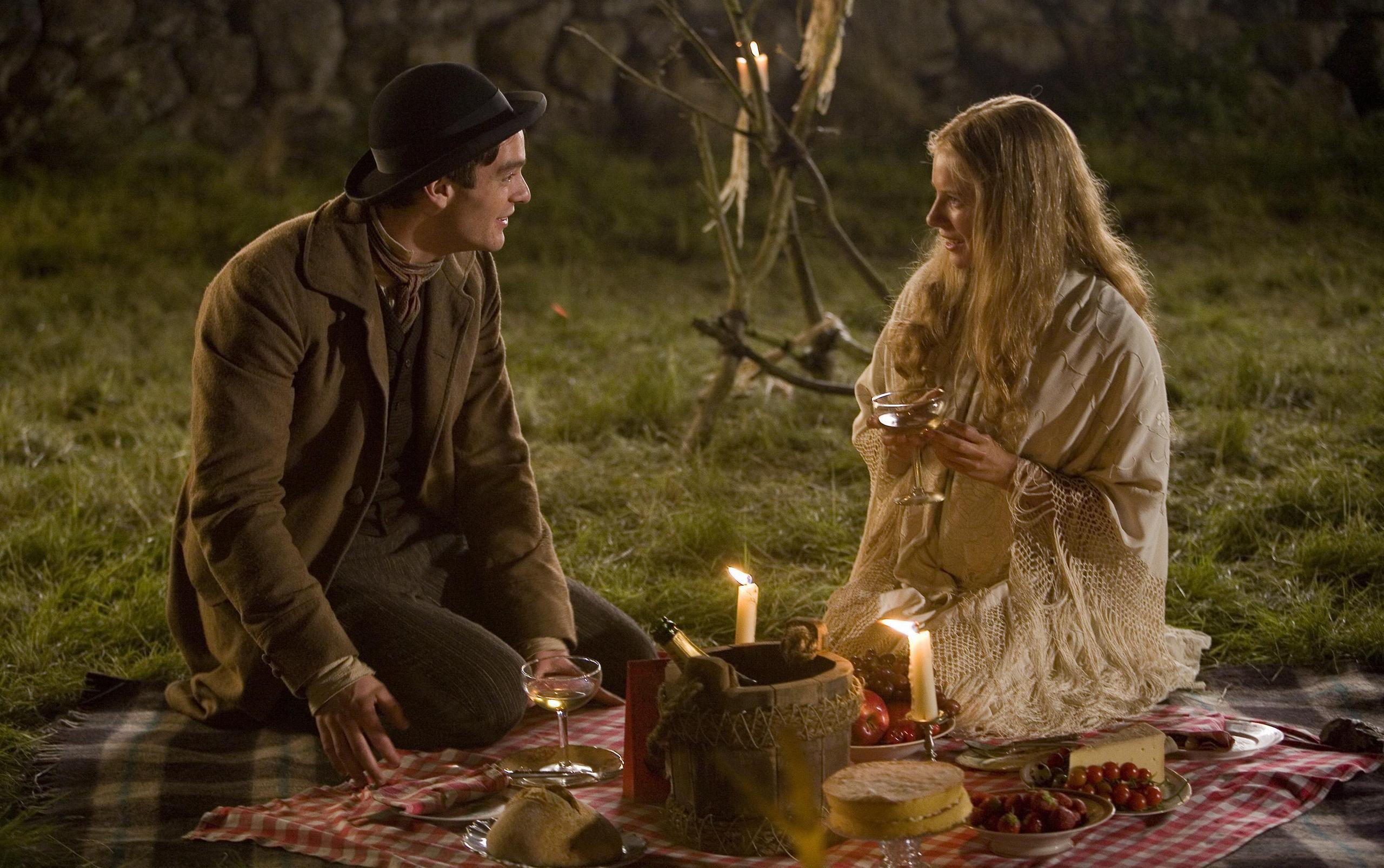
In 2007, Paramount Pictures released Stardust, a high-spirited family fantasy film… that no one saw. Seriously, the film was made for $90 million (before advertising) and didn’t even generate $140 million. This was a shame as many people, myself included, find it to be a fun and well put together movie. Based on a Neil Gaiman book by the same name, Stardust follows the life of young Tristan Thorn (Charlie Cox). It is the classic man-of-destiny story. Tristan needs to grow from a boy into a man in order to take his place in a newly discovered magical kingdom. Sounds pretty generic by fantasy standards – but still well done. What Stardust does that I find worth mentioning is how it handles the abusive relationship in the story. Oh yes, not everything is happy in the land of enchantment. Specifically the relationship between these two:

Tristan Thorn and his "true love," Victoria.
Tristan Thorn and his “true love,” Victoria.

Tristan Thorn has grown up in a small town and seems to know most everybody. Problem is that he’s kind of a nobody. He’s not exactly the man to exude confidence or strength or anything like that – just more of your average nice guy. Then there is Victoria (Sienna Miller). Victoria is not as subtle a personality as Tristan. She is loud, center-stage and appears to adore being the center of attention. Case in point: she stands idly by and Tristan and another suitor, Humphrey (Henry Cavill – wait, seriously?) attempt to win her hand.

This right here could be opportunity to criticize Hollywood for yet another ditzy woman character who does not ever take an active role in her romantic life. Yet Victoria is not completely voiceless. She is not presented as the empty-headed “I don’t know what I should do” type. Instead, she is far more sinister.

The abusive relationship between Tristan and Victoria is more subtle than most plot point/character interactions in this movie. Victoria is not overtly evil. She has no dastardly plan designed to hurt Tristan. She is instead presented as immature – self-centered to be more specific. In the movie, the audience learns very quickly that Victoria is at the center of her world.

In a sequence near the beginning of the film, Victoria enters a shop to buy things. Tristan is manning that shop and there is already a very long line of customers waiting to be served. Victoria sees fit to use her advantage, Tristan’s infatuation with her, to bypass said line and be served immediately. Of course Tristan does it – the abusive relationship always needs a bully and a victim. The resulting action costs Tristan his job. Not to worry though, Victoria says she’s sorry about it the next time she sees him.

Apparently there are actually seven. No clue about spiritual abuse but all right.

There are six main types of abuse that occur within relationships and Victoria appears to be using both emotional abuse as well as mental abuse. She is essentially keeping Tristan within her power. She knows she can make him do things by just using a few simple words. Is Tristan to blame for his behavior? Not really. True, he is a bit of a pushover (especially in the beginning) but that really is no excuse for Victoria to use him. It is the classic “dangling carrot” scenario. Anyone with a horse knows how this works: dangle a carrot on a rope in front of a horse. The horse will move forward to try and get the carrot. The carrot that Victoria is dangling in front of Tristan is quite simply – her.

For the entirety of the film’s opening half, many of Tristan’s actions are driven by the desires of Victoria. He is so desperate to “win her affections” that he will do just about anything to impress her. Granted, these actions by themselves do not mean abuse. Tristan could simply be a helpless romantic. It is that, like the horse with the carrot, Tristan has no chance of winning Victoria – but she is too busy enjoying using him to inform him of that, and he is too trapped to see it for himself.

Yes, Victoria and Tristan are fictional characters but the movie is showing a real abusive relationship - and, more importantly, how to overcome it.
Yes, Victoria and Tristan are fictional characters but the movie is showing a real abusive relationship – and, more importantly, how to overcome it.

Victoria wants to marry Humphrey, it is very obvious to everyone (except Tristan). Later in the film, after Tristan has left on his journey – a journey he only initially leaves on to impress Victoria – and met Yvaine (Claire Danes), he finally begins to learn what is it to have an actual relationship:

Yvaine: Tell me about Victoria, then.
Tristan: Well, she… she… There’s nothing more to tell you.
Yvaine: The little I know about love is that it’s unconditional. It’s not something you can buy.
Tristan: Hang on! This wasn’t about me buying her love. This was a way for me to prove to her how I felt.
Yvaine: Ah… And what’s she doing to prove how she feels about you?

Again, this lesson is very applicable to real life and I really feel that the movie should be applauded for having it. Too often in movies, abusive relationships are blown out of proportion for dramatic effect (Looking at you, Prince Hans). While many elements of Stardust are unbelievable, the movie has some very well written relationships. Tristan’s unhealthy attachment to Victoria can serve as a both a warning and a beacon of hope. He escapes the cycle and learns who he really is.

https://www.youtube.com/watch?v=vM7CUc8wSHQ

I will make one thing clear: I am not using this post to simply show how women can abuse men. This type of abusive relationship can occur between people of any gender. Stardust happens to showcase an abusive female, but that is not to say that it is only women who can mentally abuse other human beings.