How to Tell a Story: Why How to Train Your Dragon Works so Well

It seems that Dreamworks Animation has always been the animation company in Pixar‘s shadow. While Pixar was creating films like Ratatouille and Wall-E, Dreamworks produced Shrek the Third and Kung Fu Panda. Not to say that Kung Fu Panda was bad (unlike Shrek the Third), it was just a much more simple story. Dreamworks simply was not producing animated films that contained the same amount of layers as their Pixar counterparts. In 2010, Dreamworks Animation made How to Train Your Dragon while Pixar created Toy Story 3. Yes, Pixar made the better film that year. That said, Dreamworks Animation took a giant step forward as How to Train Your Dragon became one of their greatest films produced. The story was just as simple and uninspired as any of their animated products, yet How to Train Your Dragon proves that quality is found not just in the story, but in how it is told.

First, what is the story in How to Train Your Dragon? As I said before, it is very standard: at its heart, How to Train Your Dragon is about an outcast boy growing up and learning to accept/believe in himself, and how that belief and acceptance catapulted him into much stronger social standing. This is a plot that has been before in animated films. At least once:
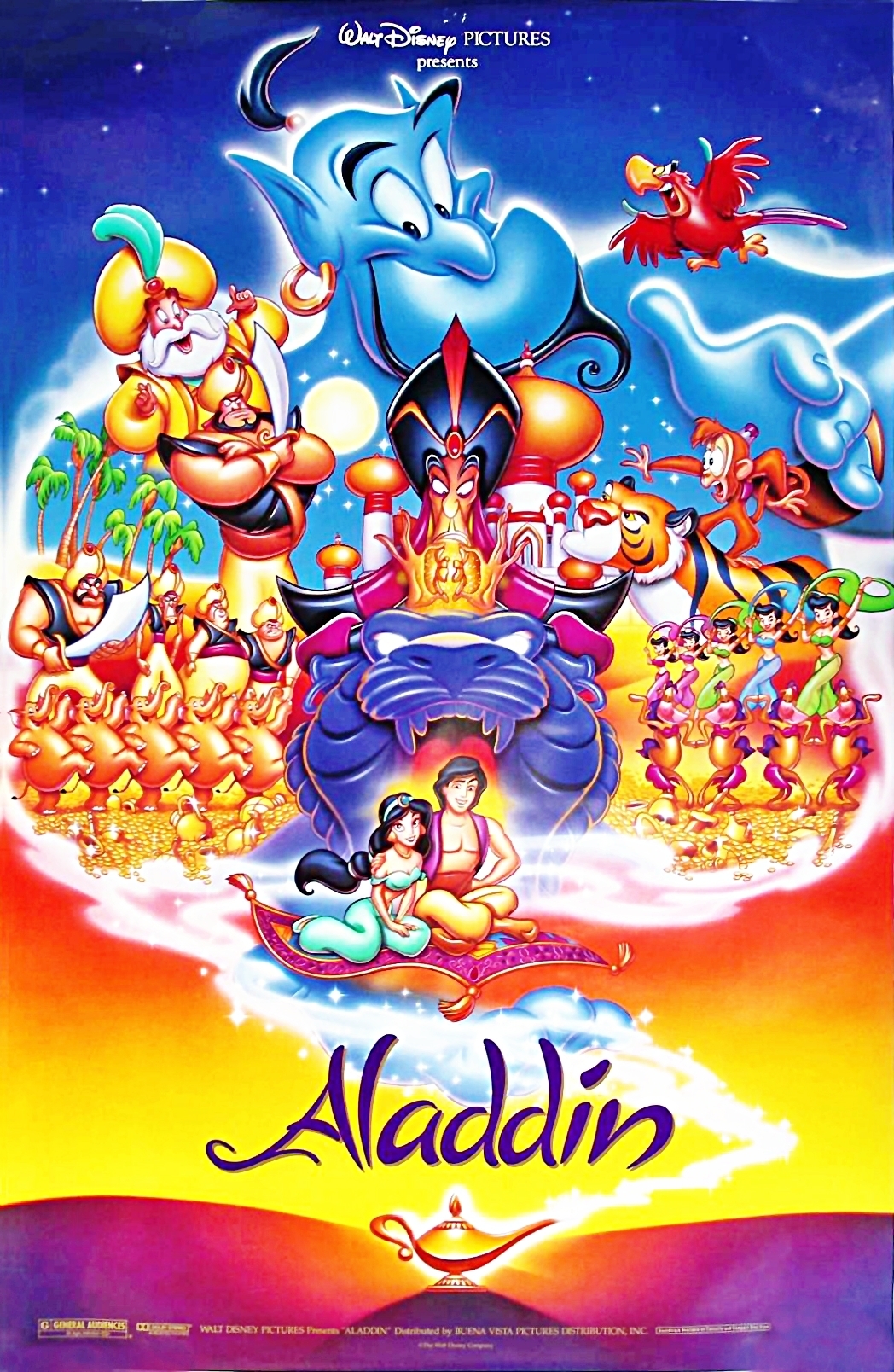
An outcast street-rat learns the value in being true to himself and becomes sultan of a fictional land (with some non-human assistance in the form of a genie.)
An outcast street-rat learns the value in being true to himself and becomes sultan of a fictional land (with some non-human assistance in the form of a genie).

Or twice:

An outcast learns to accept the true strength of his character in order to become a hero (with the non-human assistance of a satyr).

And like, say by Dreamworks the year before:

An outcast learns to be true to himself and becomes the dragon warrior/hero (with the non-human assistance of a turtle and a red panda).

So stories like this are nothing new to the world of animated feature films. Yes, every one of the movies mentioned dresses their story in a different way but all of those films share the same heart. However, these three films also help to illustrate my point: it matters how the story is told. It is possible to like only one of those movies and detest the other two. With How to Train Your Dragon, the strength of the movie lies in its character relationships.

Every story needs vehicles in order to function. The protagonist, the antagonist, the supporting characters, the conflict: every story possesses (at least most of) these traits. The difference between good stories and bad ones is how well these vehicles are disguised. A good writer/storyteller can dress fiction to be real life. In my article criticizing Star Wars Episode II, I (endeavored to) explained that the main reason that the relationship between Anakin and Padme failed was because it appeared as a plot focus and not as an actual relationship between two people. How to Train Your Dragon avoids this pitfall.

One of the main triumphs to examine is Stoick (voiced by Gerard Butler). He is Hiccup’s father and one of (if not the) main antagonist in the story. In a children’s movie, where simple storytelling is sometimes favored, it would be very easy to leave Stoick as simply that: the antagonist. Hiccup’s father who never listens, a bloodthirsty viking looking to kill dragons. Instead, writers William Davies, Dean DeBlois, and Chris Sanders create a complex relationship between Hiccup and Stoick that feels very real (even in a movie that is about taming dragons).

Hiccup has the revelation of where his mindless violent tendencies lead…

At the heart of their conflict is not an argument over what direction to take the plot (to kill dragons or not to kill dragons) but instead the simple problem of communication. Stoick and Hiccup do not know how to communicate with one another. They are both headstrong and stubborn (illustrating similar qualities helps enforce the family connection) and they simply have a hard time relating to one another. Yet throughout the movie it is illustrated that, while the two have their differences, they are a family who loves each other. This adds weight to the conflict and enhances the scenes between them.

…Much earlier than Stoick does.

Another strong point is, obviously, the relationship between Hiccup and Toothless. Both Chris Sanders and Dean Deblois created Lilo and Stitch and it is no surprise to see the same quality of human-sentient animal relationship in this film. Toothless is not simply a dragon but brims with personality, which allows Hiccup to exhibit personality as well. If Toothless were simply a dragon (a beast without intelligence), the plot of the film could still proceed but its content would have been weakened greatly.
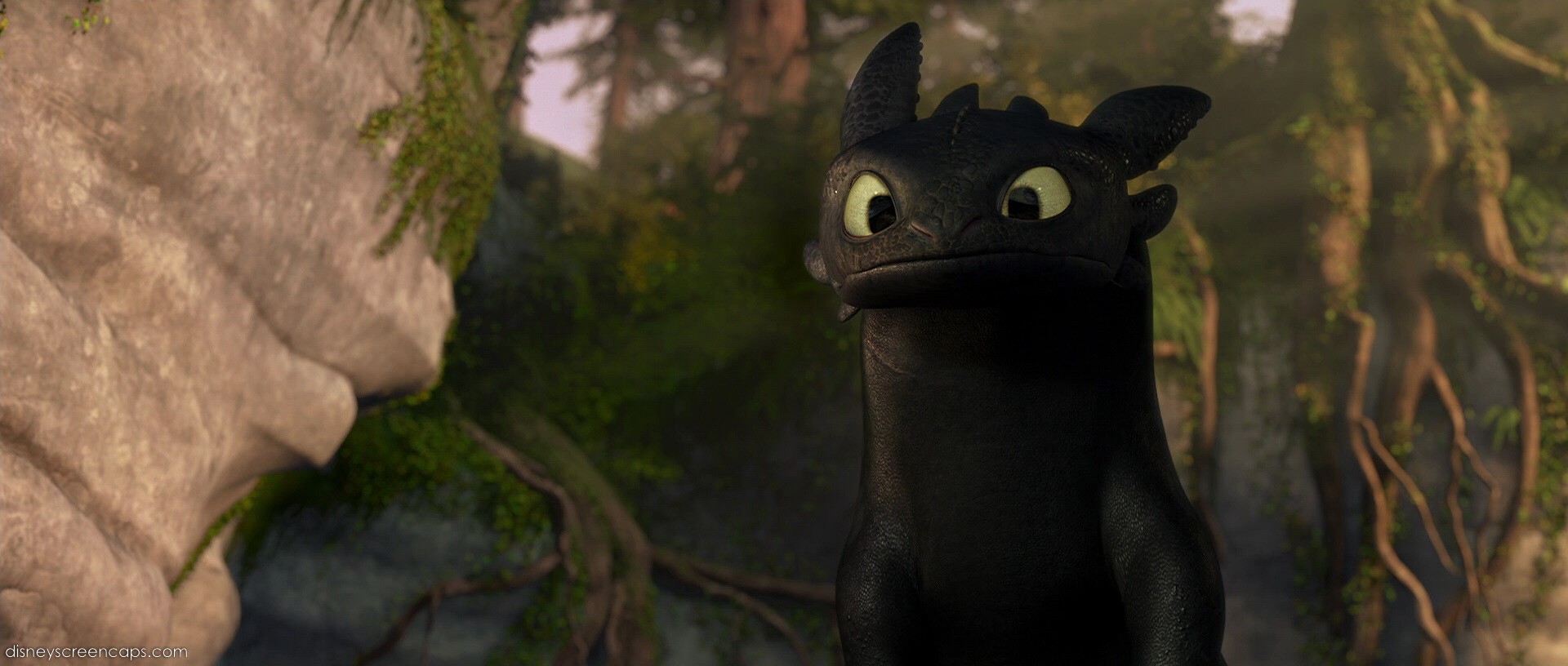
The animators realized a creature who could fully communicate without speech.

One final relationship I will mention is Hiccup’s relationship with Astrid (voiced by America Ferrera). Yes, Astrid does serve as the love interest, but she is also a character with her own personality. She is revealed to be determined and methodical. There are also several scenes demonstrating her capabilities as a warrior. This gives her personality so that, when she does fall in love with Hiccup, the audience can understand the reason why.
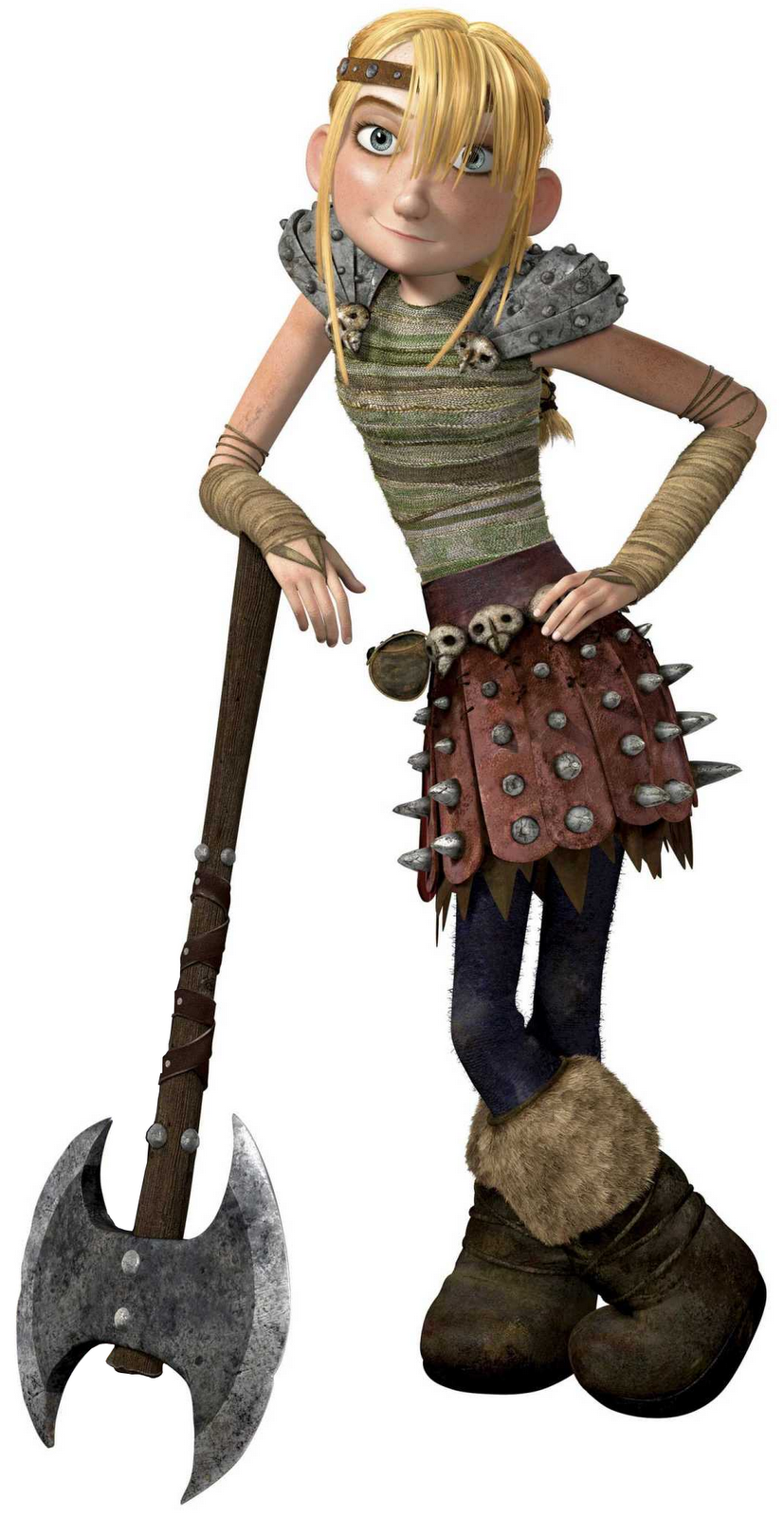
Astrid spends most of the movie with axe in hand.

How to Train Your Dragon is not the best animated film ever by a long shot, but it is a well-made film. There is much more here done right than wrong. The film never panders down to its child audience, never embraces the more flashy-dancey tendencies of other Dreamworks’ films, never does anything to sacrifice story or character. It is part of the proof that it matters more how a story is told, rather than what its content is.

PS – the sequel isn’t bad either.
Three-Pronged Protagonists: Garion from Pawn of Prophecy

There is a writing podcast out there, on the interwebs, called Writing Excuses. For anyone passionate in the world of literature, I recommend checking it out. One of the first episodes that I listened to had to deal with an issue called “three pronged character development.” I will let their words do the summarizing, as I feel that they provide a simple explanation:

“We talk about characters a lot, which is fitting since character are what make things go in most of our favorite books. [There is] a new model for examining characters in which three primary attributes – Competence, Proactivity, and Sympathy – are contrasted. We treat each one as if controlled by a fader or slider, like on a mixing console, and we look at what the relative positions of those sliders do to a character.”

So there it is: a system of attribute management used to determine the strength of a created character. Personally, I love the idea of this model and have used it in my own writing ever since. That said, if the model is a genuine tool then it must be applicable when it comes to characters created in the past. For this post, I have chosen Garion, the protagonist from David Eddings‘ fantasy series, The Belgariad (anyone out there looking for fantasy but not simply wanting to reread the Lord of the Rings should check this out). As there are five books in the series, let this be an examination of Garion in Pawn of Prophecy (the first book in the series).

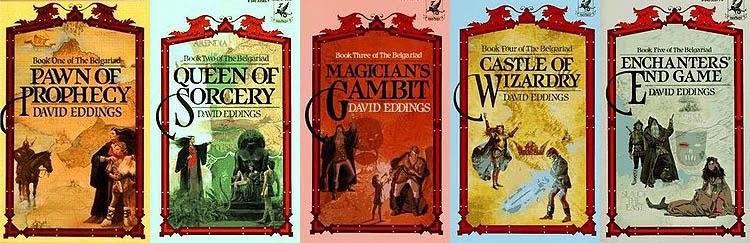
The five books in the main series. Apparently, Eddings was like Tolkien and wrote other material set within the universe that he had created.

Garion is your standard unknowing chosen one. He is the titular pawn of prophecy. In the book, Garion is a young teenager (there are also several early chapters where he is younger). Introducing his age brings us to the first point that I have chosen to cover: competence. Garion is a young boy who has been raised on a farm. He does not know how to read and spent a large portion of his childhood cleaning kitchens. So far this is not sounding like an especially competent character (unless the villain is defeated by poor kitchen hygiene). Nevertheless, Eddings takes great care to show the reader that Garion is merely ignorant, not stupid.

Ignorance fits with his character background, but Garion does not stay that way for long. While the plot moves forward without Garion being aware of its significance (despite his best efforts), the protagonist learns a great deal on his journey. From a hidden sign language to beginning his tutelage with a sword, Garion keeps active. He is not the best at his skills (it is only the first book) but he applies himself and does not shirk responsibility. Where Garion’s competence truly shines, however, is his ability to sneak. No one teaches Garion how to move without being noticed, he is simply naturally talented. This gives Garion a certain believability as most people out there have natural strengths and weaknesses (Garion does possess all the arrogance and self-centered attitude that one might expect a young person to have). Overall, I believe that, if we were to examine the model of Garion’s attributes, competence would be set close to the middle – with a slight inclination towards “high competence.”

Garion may not know much at the beginning of the Belgariad, but he is not simply a farmboy either.
Garion may not know much at the beginning of the Belgariad, but he is not simply a farm boy either.

Next we come to sympathy – this would undoubtedly be Garion’s highest attribute setting. Garion is an orphan. His parents were killed (violently as he learns) when he was just a baby, and he was sent to live with his aunt. While Aunt Pol is not a wicked relative by any stretch, she is very strict. It is obvious to everyone in the story (Garion included) and to the reader that Pol is keeping her nephew on a very tight leash. While she does praise him occasionally, Aunt Pol is far more likely to point out everything in the situation that he did wrong.

Aunt Pol does love Garion, no question. That said, she can easily be described as "over protective."
Aunt Pol does love Garion, no question. That said, she can easily be described as “over protective.”

Add to this the fact that Garion is a pawn. His life is out of his hands entirely. While he is not overly sad to leave his farm and begin his quest, Garion has little choice in the matter. Think back to the beginning of Harry Potter and the Sorcerer’s Stone: Harry has little influence on his life in the beginning. He did not choose to be a wizard or to begin his learning at Hogwarts (not that he wasn’t very eager to do so). Garion is like Harry… only Garion never gets to choose his classes… or whether to play Quidditch, or how to stop Professor Quirrell. Garion is held, throughout the book, as an observer to his fate, and not the active participant. This generates sympathy as the reader experiences a protagonist whose life is outside his control.

The last attribute is Garion’s proactivity. This is the lowest factor of his personality. As said before: Garion is a pawn. Yes, there are moments in the story where he is active and contributes to the plot (even foiling an attempted coup at the end of the novel). That said, even when Garion is alone, he is not acting solely on his influence. He is semi-controlled by a “dry voice” in his mind, separate from his own consciousness. This “dry voice” is the closest that the novel comes to deus ex machina. It exists for little more than to explain why Garion does not do certain obvious actions at certain times. Is there a fantastical explanation for this voice: of course.

The idea of prophecy is nothing new in fantasy series.
The idea of children bound to prophecy is nothing new in fantasy series.

For the record, I cannot say for certain that Garion’s attributes change throughout the course of the series (I have only completed the first book), however, it is beyond likely that they do so. This attribute scale provides not only a great way to measure the start of a character, but also a tool to chart their growth. Characters with low sympathy may very well gain exceptional amounts of humanity as the story unfolds (think Quenton from the Magicians series). While I do not know for certain, I am willing to bet that Garion develops into a much more proactive protagonist by the end of the Belgariad. He is, after all, the chosen one.

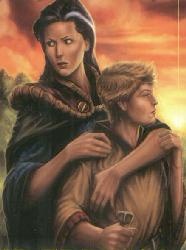
I don't know who this character is but something tells me that I'm going to like her!
I don’t know who this character is but something tells me that I’m going to like her!


Mutants are Powers, Not People: A Critical Look at the X-Men Film Franchise

There have been seven mutant movies: seven. Five “focusing” (use the word lightly) on the X-Men, and two centered (even more) on Hugh Jackman – I mean, Wolverine. The latest of these, X-Men: Days of Future Past, was released this past Friday. This latest installment serves as a series reboot in a similar vein to J.J. Abrams’ 2009 Star Trek. The timeline is changed, but with reverence given to the original material… which may have been a mistake. Warning: the following contains spoilers regarding the plot of X-Men: Days of Future Past.

Abrams did not want to undo the original movies so I created a cool idea to reboot them. Apparently Bryan Singer loves the first two X-Men movies more than anyone else on the planet.
Abrams did not want to undo the original movies so I created a cool idea to reboot them. Apparently, Bryan Singer loves the first two X-Men movies more than anyone else on the planet.

First, a brief history regarding the X-Men films. They began in 2000 with the release of X-Men, the first of the blockbuster superhero movies. Bryan Singer directed this movie, beginning his long involvement with the series. Singer would return to direct X-Men 2 (or X-Men United or X2 or whatever you want to call it) in 2003. This installment was hailed as superior to the first and it seemed like the X-Men series was gaining momentum. That said, Singer’s success with the X-Men had been noticed and he was offered the chance to direct the new Superman reboot (what would turn into Superman Returns). He abandoned the X-Men series and Fox sought another director. What we ultimately got was Brett Ratner and X-Men: the Last Stand… things had gone wrong very quickly.

Oh awesome! A movie with cool action that focuses too much on Wolverine. You're amazing, Bryan Singer!
Oh awesome! A movie with cool action that focuses too much on Wolverine. You’re amazing, Bryan Singer!

But were they ever right?

Oh damn, a movie that focuses too much on Wolverine AND has only mediocre action scenes! Cruse you, Brett Ratner!

X-Men 2, X-Men: First Class, X-Men: Days of Future Past – these are hailed as the “good” X-Men movies. That said, as someone who grew up watching the X-Men in the 1990s and who has read Joss Whedon’s Astonishing X-Men (seriously, if you ever read a superhero comic book, read these), I have always found the films disappointing. Here, look at this:

https://www.youtube.com/watch?v=FC9l3U5PEqg

Okay, this intro gets the X-Men right more than the movies do. I say that for two reasons: the team, and the handling of Wolverine. There have been five X-Men movies: who has the team been? Well in the first one you had Cyclops, Wolverine, Jean Grey, Rogue, Ice Man, Storm, and a couple others. The second movie added Nightcrawler and moved the plot away from the team and more onto Wolverine (dealing with his past). The third movie lost Nightcrawler and Cyclops (for all intents and purposes) while adding Angel, Beast, Colossus, and Shadowcat (and moving even more focus onto Wolverine). First Class was a prequel and couldn’t have anyone important besides Prof X, Magneto, Mystique, and Beast. You get my point: there’s a lot of fluctuation. This is easy to do in television and comics, where there is a lot more time, but very unwise in movies.

Even in the comics (or TV series), there is almost always a core group that remains unchanged. This allows whoever is writing to focus strongly on these characters.

The result is that the audience never gets too familiar with who is on screen. Everyone out there knows the film iteration of Wolverine. He is by far the most defined character in the film series (he has two films that do not pretend to focus on other people AND he is the large focus of two of the X-Men movies). Yet who is the next most defined character, Professor X? Well he is the founder of the X-Men so that makes sense. Then who… Storm? She has weather powers… Cyclops shoots things from his eyes… Jean Grey is the telekinetic love interest…. starting to see my point?

Scott Summers has existed since 1963 with no real changes made. His power isn't the coolest... so that's not what keeps him around. There is more here than just "that dork with glasses who dates Jean Grey."
Scott Summers has existed since 1963 with no real changes made. His power isn’t the coolest… so that’s not what keeps him around. There is more here than just “that dork with glasses who dates Jean Grey.”

There aren’t people in the X-Men movies, there are powers. Does say, Ice Man, possess certain qualities. He does: he liked Rogue and then Shadowcat. Primarily though… he is the ice guy who beat up the fire guy. There’s also a lot of cameos… a lot of sequences created to showcase powers. Look at Nightcrawler in X-Men 2… does anyone remember anything about him other than his really cool teleporting sequence at the beginning of the movie? I feel like the same can be applied to Quicksilver in X-Men: Days of Future Past (his action piece is arguably the coolest thing in the film).

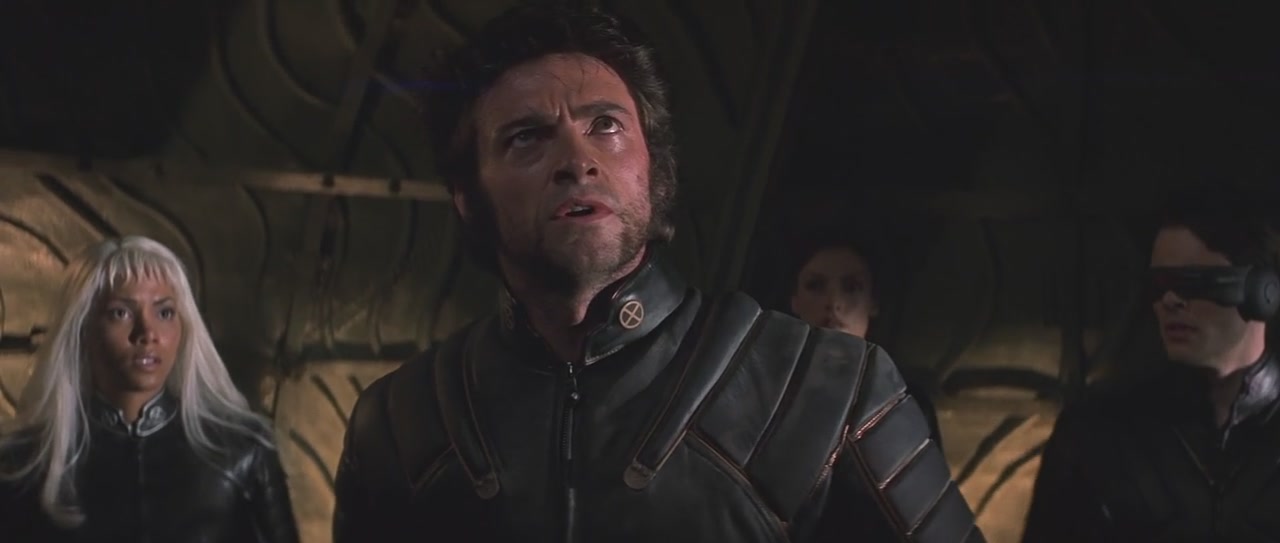
Man, there's a lot of tension here with the mutants facing extinction. I really care about... wait, who are these guys? I'm saying this after seeing the movie... seriously, who were these people?
Man, there’s a lot of tension here with the mutants facing extinction. I really care about… wait, who are these guys? I’m saying this after seeing the movie… seriously, who were these people?

This works for creating entertaining movies but ultimately eliminates the chance for a great movie. Wolverine is the only member of the X-Men that anyone cares about, and that was made clear in X-Men: Days of Future Past. In that film, they are fighting to save the future: to make sure that the X-Men are not wiped out by the sentinels, and to make sure that X-Men: the Last Stand never happened (Singer appears to hate that film more than anyone else). And they succeed! Huzzah, the future is saved. X-Men: Days of Future Past ends with a sequence – Wolverine walks through the halls and sees all the old X-Men back alive. This, more than anything else, draws attention to how little the audience really knows any of these characters. It also shows how old everyone is (2000 was 14 years ago).

While Days of Future Past isn't boring, First Class should have been the reboot film (it was initially intended to be). That would have made more sense and made it so we didn't have to sit through a movie populated by boring no-names who we know make no significant contribution.
While Days of Future Past isn’t boring, First Class should have been the reboot film (it was initially intended to be). That would have made more sense and made it so we didn’t have to sit through a movie populated by boring no-names who we know make no significant contribution.

Great, there was a reboot movie to fix the old timeline… which wasn’t worth saving. After seeing a fantastic team movie like the Avengers, which shows the coolness of the powers AND the strength of the characters (Steve Rodgers, Tony Stark, and Bruce Banner are far more interesting than just guys in costumes), the X-Men films just come off as flat. Audiences have seen seven movies of Wolverine and the X-Men… how about seeing the X-Men once. They are a team of people… not a team of powers.