As audiences, we see these words a lot. Recently, I was at the cinema seeing The Imitation Game and these were the first words to greet me on the screen. It gave everything in the film a sense of gravity and added weight. I was not watching fanciful creations but someone’s actual life, dramatized because of its significance… or so I thought. Afterwards, I immediately inquired further into the validity of The Imitation Game‘s information. There were inconsistencies to say the least. This is not to say anything negative against the movie as a film, or to single it out as the only culprit when it comes to twisting reality. This happens a lot. Books, movies, even video games all love to use the tagline: based on a true story. Well cool – what’s it mean?
For those who do not know, Fatal Frame is a game where you take pictures of ghosts with a camera… yeah, cause that totally happens.
After some digging, I was able to find a legal definition in regards to the phrases “based on a true story” and “inspired by a true story.” Keep in mind, this is in regards to literature (although safe bet that similar stature exists for the other media types):
“A core of truth” does not go far to keep a story grounded in reality. Essentially, what that means is that one significant aspect of the story must be true. If one is making a film about a real life killer for instance – a killer will be in the movie. Does the movie killer have to be related to the actual killer? Look no further than Ed Gein vs. Leatherface for the answer to that one.
As the definition suggests, legal trouble can also arise from uses of the term. Families and living relatives often take issue with film portrayals of their ancestors (let’s use The Imitation Game again as an example). In the case of the atrocious film, The Fourth Kind, many newspapers and an entire city were angered over the film’s liberal use of “based on a true story.” Argo might hold some kind of record since it angered the majority of Canada by downplaying the country’s role in the “true” events depicted on-screen.
So, with all the trouble that can come of “based on a true story,” why do they use it?
Because we love it.
In many cases, this phrase appears associated with either drama or horror, leveraging that all important aspect of audience relatability. What could be scarier or more moving than something that actually happened? The chills of a “real-life” psychopath will get the adrenaline flowing better than any fictional boogeyman. Anyone experiencing either the rush or low of a relationship will take solace in knowing there are other people out there who went through similar situations.
The use of real life characters adds more weight to certain genres of storytelling.
Is it real… well does it need to be? “Based on a true story” is used to heighten emotional reaction. The upside is, this technique clearly works as more and more films adapt it into their hits. The (potential) downside: some people actually believe it while it further increases the cynicism of others.
The Internet: proof that some people will believe anything.
So who is responsible? While some blame Hollywood and publishers for their overzealous use of phrase, I believe that it is the audience’s responsibility to be informed. It is a lazy mind that takes everything it sees or reads at face value. That is not to say that they have the right to lie or slander individuals at will. Let’s keep those laws we have working for us.
If anything, “based on a true story” should be taken as an invitation to do some research. Heck, if you already thought the subject was interesting, why not look into it a little more?
We are many of us, gamers. What began as a small minority of people thirty-forty years ago has ballooned into a large portion of the present population. Games are everywhere. Computers brought them into the home. Consoles like the Atari 2600 and the Nintendo Entertainment System (NES) brought them to our TVs. Today, smartphones allow many people to carry a large game library around in their pockets. And of course, before that: there were board games. As time passed, the gaming population grew and diversified. People who were never “gamers” before suddenly found themselves glued to the screen. Basically: change.
The Nintendo Wii was the first console to explode gaming into entirely new markets.
With change comes great things. More gamers = more games. No two ways about it. The industry has exploded and now we have major publishers and casual people all making games together. Choices. Choices. Choices. New technologies, new controllers, new concepts. More gamers have greatly increased the variety of experiences to be found when gaming. Has there been a negative?
Of course: Gamergate (not to be confused with GamersGate… which is a really unfortunate name to have right now).
For those out there who don’t know, I will summarize. Indie game developer Zoe Quinn created Depression Quest, a game designed to help people struggling with depression. Following the suicide of actor Robin Williams, Quinn elected to release her game for free on the popular gaming marketplace, Steam. She charged people only “what they wanted to pay” and gave all proceeds to charity. I know, sounds like the pillar of controversy so far.
There were some who felt Quinn was using Williams’ suicide for personal gain, despite the before mentioned facts. Her largest detractor, however, came in the form of her ex-boyfriend, who alleged that Quinn had a relationship with Nathan Grayson in order to receive a favorable review for her game. Was there a relationship: yes. Did Grayson ever write a review: no. Did he write an article about Quinn: yes, months before the relationship.
Regardless, some people felt that the ethics of video game journalism had been violated. This is not the first time such accusations have come up. Popular gaming review site Giantbomb was founded after a critic gave a bad review to a game that had wanted to receive a good one. The reviewing bias of other AAA titles, such as Grand Theft Auto IV, Call of Duty, Destiny, and others has also been called into question.
If we are to believe the most positive spin on Gamergate, it was misdirected anger after all of the other breaches in the ethics of video game journalism. Really though, even if those allegations were true: are we really getting mad at the person who designed a game that helps people with depression? A game she released for free? “What a bitch” are not the words that come to mind.
There are some who feel that games really are not a big deal and really should not be used in most areas of political and civil strife.
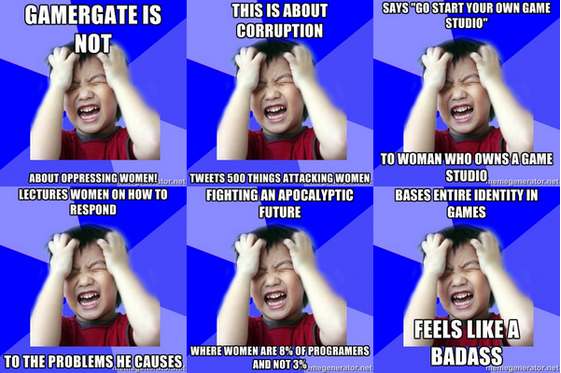
That’s the positive spin. In reality, Gamergate is nothing more that the extreme hateful reaction of a small minority in the face of change. In the weeks following the lies against Zoe Quinn, many people were targeted by Gamergate. To say there was a pattern in which people were targeted would be an understatement. Do a check right now. If you are a woman, you would have been targeted. Men: not so much.
Because receiving death threats and having information leaked is the most sensible way to make money.
I am not going to try to give the event a balanced spin because I do not feel it deserves one. Regardless of the state of video game journalism, Gamergate was wrong and, in some cases, illegal. People were threatened with physical violence and it even went as far as death threats. I say people but really: women were the target. Whether it was Quinn, Anita Sarkeesian (who I personally do not agree with), Felicia Day, Brianna Wu (again, notice the pattern), Crimes were committed against each of these women and that is never excusable.
Gamergate punched a black eye in the public image of gaming culture. Let me stress one more time: whoever leaked personal information, threatened to hold a shooting, made death threats: these are all serious crimes. I hope these individuals are tracked, found, arrested, and persecuted to the full extent of the law. Forget leaking nude photos, this is much more serious.
Chris Kluwe, one of the harshest critics of Gamergate, was not targeted. I could say more but please: read his words.
Okay, that said: Gamergate means nothing exceptional to gaming culture. It has been the actions of a few radicals, not the overwhelming majority. In the months following these unfortunate incidents, many in the industry have been very public in their condemning of Gamergate. Many gamers have also stepped forward and voiced their support of Quinn and the other victims involved.
To go back to what I wrote in the beginning: gamers are everywhere. If you have a population of at least hundreds of millions, some of them are bound to be a**holes. That’s just a fact. I do not say that to excuse the behavior, but let’s examine some other examples of large cultures reacting to certain situations.
Gay Rights
Popular opinion: whether you’re for Gay Marriage or not, most people conclude that homosexuals are human beings like everyone else. They are entitled to the same treatment of respect and courtesy, and really – being gay is (thankfully) no longer the incredible taboo it once was, in certain areas at least. Okay, here is the extreme:
Interracial Marriage
Popular opinion: sure, why should color of skin matter if two people love each other? Well, let’s ask this enlightened soul:
Immigration
Popular Opinion: Okay, very complex issue. There’s a lot of opinions out there. Safe to assume though, most people don’t think like this:
Gaming
Popular opinion: everyone is entitled to play games, they are for everyone.
Well f*ck.
There will always be idiots, in any culture. A vocal minority, composed of the worst humanity has to offer, who will spew their vile hatred at pretty much anything that offends/scares them. The good news is that: most are not championing their cause but rather speaking and acting against them. This is progress. Gaming is changing, becoming more inclusive every year. People are going to have to deal with that.
Being a “gamer” means nothing more than the fact that you play games. It is not an elite group, it is not something to be proud of or ashamed of. Men are gamers, women are gamers, children are gamers. Heck, even this lizard:
Hmmmm, actually now that I think about it, that lizard may have slept with someone to get a popular Youtube video. #Lizardgate
Most every major developer in the world of video games has a skill sets their company apart. Want to play a polished game with years of development clearly invested: go Valve or Blizzard. Want a cooky sandbox-style game that plays with morality in a delightfully childish way: contact Peter Molyneux (whatever company he happens to be a part of). Feel like you’re in the mood to play an NFL simulator: well, too bad because EA Sports still holds exclusive rights so it is Madden or nothing. Everyone has strengths. With Bioware, the company has made its reputation on immersive, choice-driven stories. The company exploded into the public spotlight with Knights of the Old Republic, a Star Wars game that featured the greatest twist since Empire Strikes Back.
Since then Bioware has built worlds filled with entangling plots, diverse characters, and morality systems. Of course, the games themselves have evolved over time – and Bioware has made improvements accordingly. Real-time combat has replaced turn-based strategy and advanced animation allows for characters to express more personality. Storytelling is also able to be much more seamlessly integrated into the gameplay, although Bioware’s style has been to use non-playable cutscenes to attain a cinematic quality. How have the stories themselves been? Great! Stellar really across the board, give or take a few complaints. Yet as with any company, there is room for improvement. Here are three areas where Bioware can succeed at even higher levels:
1. Villains
For all the impressive companions that the Bioware writing staff develops, the villains… leave a little to be desired. Not to say that every enemy has been a bore by any stretch, Master Li (Jade Empire) and the Illusive Man (Mass Effect 2 & 3) are definite highlights. Yet for every interesting antagonist, there are two others that just do not work. Kai Leng, the Archdemon, and Corypheus are all prime examples of one-dimensional villains. The player understands that these people are evil because… there needed to be a villain in there somewhere? Motivation breathes relatability and frankly, a lot of Bioware villains just seem to be jerks. A good villain is hard to do well and there needs to be gray area to allow the player to see things from their perspective, even if they do not agree with it. In certain cases, Bioware has tried to give a villain dimension.
Kai Leng looks like he leapt right out of the pages of fanfiction.
The greatest example is Teyrn Loghain, one of the main antagonists in Dragon Age: Origins. Early in the game, the player is trying to help the king win a battle against the darkspawn (the bad guy of the game). The player has to light a torch, signaling Loghain to come in and help with all his men. Here is what happens:
Apparently, Loghain had deemed the battle lost and blames it all on the player. Of course, he clearly did everything he could. Just look at him try and… what a dick. Yes, for all Bioware’s efforts – this attempt did not work. The only thing they succeeded in doing was creating an immense feeling of satisfaction when the player finally had the choice to kill Loghain. As you can imagine, many people chose to do so. Not that this is not an achievement, but given the depth of character writing Bioware exhibits, it is a shame to see so many cardboard cutouts when it comes to the bad guy.
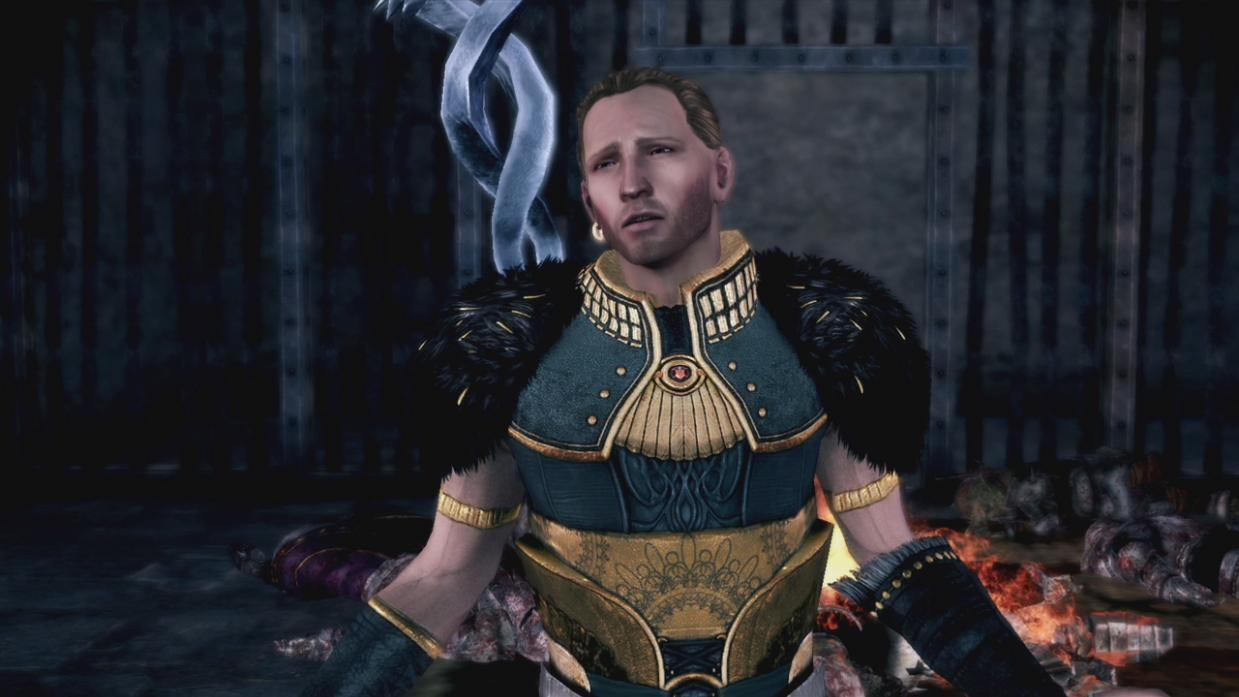
Anders might be the best villain Bioware has ever created. He is certainly the most relatable in the sense that he is a good guy for most of the game.
2. Character Consequences
A lot of Bioware writing has creates consequences to be sure. The main one I am highlighting is best shown in Mass Effect 2. For those out there not in the know, the plot of Mass Effect 2 involves summoning a team of experts to take on a highly dangerous suicide mission. Seriously, this mission is super dangerous – like 99% chance of failure. No one really has any hope of… what, everyone lived? Oh, okay then.
People can die. Can, but don’t have to.
Perfection is not perfect. Saving everyone does not breed the best storyline, in fact it can create some real problems with a lot of leftover characters (just look at how they had to handle things in Mass Effect 3). Sure, having an achievement for surviving with everyone is nice but really – it’s dumb and it takes away from the realism and the intensity of the story. Make the player make choices that will get people killed. You can’t make an omelet without breaking a few eggs as they say.
Better example: imagine there was a way to play through Telltale’s The Walking Dead without anyone dying. How much less engaging and emotional of a story would that be?
There is no way to save Carley. That’s what makes it memorable.
3. More Mature Relationships
No, I don’t mean more sex. Bioware has come a long way with this but there is still almost a juvenile obsession with the player’s love life. It can be amusing and make for some great scenes but – with everything that is usually going on in these games, why do people really care? Also, why is it only the player character who ever enters into a relationship? Why not two party members? Yes, Mass Effect toyed with this concept a little but more could be done.
The kiss was the first climax in Bioware relationships.
Also, the game places an unhealthy standard by claiming that the sex scene is the climax. As a player, you romance a party member, have sex with them and – that’s it. You’ve won, right? That’s totally how relationships work in real life. It reduces the problems and emotions involved. There are a lot of avenues here like having the player already begin the game in a relationship.
Bioware did this in Mass Effect 3 but it did not feel genuine. Even if the player’s love interest was on the ship, they stayed in their own area and did not really ever interact as a couple. This could have been more due to programming difficulty and time limitations more than anything else. Still, Bioware has pioneered a lot of relationship mechanics in games, it would be nice to see them take the next step in making it more believable, and less about getting laid. Not that there is no place for certain scenes like that:











 Colin McMahon