How Mass Effect 2 Failed the Trilogy

The Mass Effect Trilogy stands as an unparallelled achievement in video game history. A closely joined story arch that spanned three games and included a multitude of different scenarios, characters and outcomes based on player action. On the whole there is little emotion I can express for this work other than admiration. However, Mass Effect was not perfect. Mistakes were clearly made. Many people out there will tell you that the largest failure came in the ending, with Mass Effect 3. I do not share this belief. Yes, Mass Effect 3 is likely the worst game in the series (which is not to label it “bad” by any stretch) however I will argue that the greatest failings, at least in terms of character and story development, came in Mass Effect 2. I know: the game that is the best in the series is also the worst.

The question of how that is possible is best broken into three parts: character, story, and construction. I will address them in that order. Anyone familiar with Mass Effect will tell you that one of the highlights of the trilogy is its characters. Commander Shepard is an incredible protagonist who maintained his/her own identity despite the player influence. The first Mass Effect also introduced its audience to an incredible squad makeup that included Garrus Vakarian, Liara T’Soni and Tali’Zorah nar Rayya (just Tali for short). The squad wasn’t large, only six members total: including one destined to not finish the game alive. The result created a very personal atmosphere with clearly defined characters who each made a powerful impact. This is the squad size in Mass Effect 2:

masseffect2squad

Clearly there are more to be counted. Compared to the six in the first game, twelve potential crew members filled out this roster. There were also certain decisions in the game that could be made to give the player alternatives to certain squad mates (Samara OR Morinth). Expanding the central cast is always a dangerous move when designing a story. Any writer will tell you that there should never be more characters than necessary. The characters in Mass Effect 2 are well-written, realistic and flushed out creations, they are in large part what made the second installment the best. However, when their place in the trilogy is determined, nearly every character introduced in Mass Effect 2 has little to no impact on the overall story. This is a failing in writing and has largely to do with Mass Effect 2‘s construction, so I’ll come back to it.

Miranda Lawson is one of many characters introduced as a major new presence, only to simply lose significance in Mass Effect 3.

Let’s examine the story in Mass Effect 2: a suicide mission against the threat known as the Collectors. Commander Shepard must assemble the most dangerous people in the galaxy to stop the Collectors before it is too late for humanity. That’s a compelling story on its own but already there is a problem: no mention of the Reapers. The Reapers are the main threat of the Mass Effect Trilogy. They are hulking, nigh-indestructible ancient machines that have periodically extinguished all civilized life in the galaxy. Yes, the Collectors are working for the Reapers and yes, the Collectors pose a threat to humanity but the Reapers are bigger than that. The first Mass Effect concluded on a larger scale with one Reaper nearly eradicating the hub of galactic civilization. It was a bizarre move to lower the scale and try to tell a smaller story in Mass Effect 2. The result is that everything of real importance happens in Mass Effect 3, causing the final game of the trilogy to have to rush at a mad pace to try and resolve everything on its own.

The Collectors, even with the influence of Harbinger, are simply not vital to the main story in any way.

It isn’t that the story in Mass Effect 2 isn’t entertaining, it just doesn’t matter. Nothing, from the cybernetic rebirth of Commander Shepard, to the Tali mission concerning a dying star, to the reveal of a human Reaper, really impacts the trilogy. Every question raised in Mass Effect 2 goes unanswered. Worse still, most of the questions: such as how the galaxy will react to the Reaper invasion (a question raised at the end of the first Mass Effect) are left for Mass Effect 3.

Cool final boss fight: check. Adding significance to the plot: ...
Cool final boss fight: check. Adding significance to the plot: …

This all comes down to construction. The writers of Mass Effect 2 set out to tell a small story of a man who assembles a team and stops a threat. The game succeeds brilliantly at telling this story but, was it the story that should have been told? In many ways, Mass Effect 2 would have worked better as a first game rather than a middle installment. The “suicide mission” mechanic would ultimately prove disastrous for Mass Effect 3. In a game with the largest squad possible: any person could die. Even Commander Shepard, if the player did not prepare enough, could meet his/her end during the finale. The problem with “anyone could die” is that it leads to this: “everyone can live“. Meaning, from a game design perspective, that there are twelve what-ifs that people will care about in the final game. None of them can impact the story too drastically (because they might not be there) but all of them must be mentioned in some way. So everyone was treated to bizarre cameos in Mass Effect 3 where the character returned but never really did anything. The result was unsatisfying and sadly: easy to see coming. Rather than design an achievement structure which rewarded saving everyone, Mass Effect 2 should have instead opted for more scenarios like the first game: certain people have to die whether the player likes it or not. It was supposed to be a “suicide mission” after all.

Boldly left with nothing to do.

On its own, Mass Effect 2 is a brilliant game. In the trilogy, it was a foolish mistake. Yes, one can argue that if EA had not rushed Bioware in the development of Mass Effect 3, the writing staff may have found a way to better rationalize the two. However, the writers at Bioware did nothing to help themselves out. Mass Effect 2 was simply too low scale in an epic trilogy. It’s great to personalize the characters but not at the price of the story. Its a fundamental problem that largely prevented one of the most towering achievements in video game history from reaching even greater heights.

The final Mass Effect 2 DLC "Arrival" had more to do with the main plot than anything in the central game: think about that.
The final Mass Effect 2 DLC “Arrival” had more to do with the main plot than anything in the central game: think about that.

Top Five Third-Party Developers Nintendo Should Court in 2014

Watching the Nintendo Direct this morning, I was reminded of one thing: how much the Wii U needs games. It’s no secret. Ever since it’s launch last year, the console has been plagued by unfortunate software shortcomings. Pikmin 3 missed the launch window, as did Rayman Legends (which subsequently went multi-platform, causing Nintendo to lose an exclusive it badly needed). Aliens: Colonial Marines, which at one point boasted the “best graphics” on the Wii U, came out and was so horrible that the Wii U version was ultimately abandoned all together. Three big “ifs” that all went ultimately against the big N. But that was a year ago, time to move on and address the new concerns, namely: “where is the third-party support?”

For those of you unfamiliar to the video game industry, a third-party developer is a video game maker that doesn’t owe a specific allegiance to any real hardware. They’ll make games for Microsoft, Sony, Nintendo, Apple – doesn’t matter. As long as there is a dollar value, they’ll sell it. Here is the Wii U’s problem. It lacked the initial launch punch of other platforms (a mixture of non-standout software and miserable marketing campaign attributed to that) so it’s not selling well. Third-parties care about profits (understandably) and don’t want to risk poor sales – poor sales of any one game can mean death to a video game developer.

Ubisoft: one of the few third-party developers who continues to support the Wii U.

So Nintendo needs to convince people to buy, and not just the consumers. They need to sell their product to third-parties. It’s a tough sell, but properly done, Nintendo can accomplish it. Here are my five recommendations for third-party developers that Nintendo should really look to secure relationships with in 2014.

5. Telltale Games

Telltale Games pulled a rarity in the industry. They went from worst (Jurassic Park: the Game) to first (Walking Dead: Season One) in just a year. That is an impressive turnaround and fortunate for a company that could have easily been lost to bankruptcy. In short, Telltale should know what it’s like to be the underdog. Now, it’s smooth sailing with titles like Walking DeadSeason Two and Fables: The Wolf Among Us. These games are heavy on the quality but light on the horsepower, meaning the Wii U wouldn’t need to strain itself to incorporate ports. Telltale has indicated a desire to work with the Wii U in the past but has gone quiet on the console in the past year. If I were Nintendo, I wouldn’t want to miss out on the games coming from this third-party publisher and would even consider a lucrative deal (say rights for Telltale to create the next Earthbound) to secure a partnership.

Telltale is expanding with new franchises and it would be wise for Nintendo to be there.

4. Platinum Games

I know what you’re saying: Platinum Games already creates content for Nintendo. The Wonderful 101 and Bayonetta 2 are arguably the only third-party exclusives that the Wii U has going for it right now. I fully agree. This is a different type of relationship I’m proposing: Nintendo should buy Platinum Games. The two companies currently enjoy a very friendly working relationship. Platinum owes Nintendo a debt of gratitude after the big N agreed to publish their titles (Sega dropped Platinum and the company was in desperate need for a little bit). This past year Nintendo lost the exclusive rights to Ubisoft’s Rayman Legends. Losing Bayonetta 2 to Microsoft or Sony might put the final nail in the big N’s coffin. Purchasing Platinum Games would ensure more quality content exclusive to the Wii U. Something Nintendo strongly needs to secure a relevant place in today’s video game industry.

Don't lose this to Sony or Microsoft.
Don’t lose this to Sony or Microsoft.

3. Crytek

On the surface it doesn’t make sense. Crytek (creators of the widely popular Crysis trilogy) is a company known for packing horsepower into their games. While the Wii U isn’t a weak system, the PS4 and Xbox One are both capable of superior graphics. However, there are indicators to believe a relationship is possible and has even been pursued already. Earlier in the year, Crytek was quick to point out that their new graphics engine functioned on the Wii U. Nintendo also recently hired a a former member of Cyrtek’s staff to a position in their company. Add to that all the rumors of Crysis 3 being full developed for the Wii U, only to be cancelled at the last minute thanks to the Nintendo-EA breakdown. Oh, and also Crytek consists of the remnants of Free Radical, a developer who, at one point, was creating the next Timesplitters exclusively for the Nintendo Wii. It would be wise if Nintendo were to pursue that project into this generation.

This game would be an excellent addition to the Wii U's shooter library.
This game would be an excellent addition to the Wii U’s shooter library.

2. Mojang

Microsoft has lost exclusive rights to Minecraft. The game was just released on the PlayStation 3 with plans to come to the PS4. There have been numerous requests to bring the system to Nintendo consoles. Gamers have created tributes to Nintendo creations in the world of Minecraft. Notch himself, the man behind all of Mojang’s success, has stated in a tweet, that he supports Minecraft created for Nintendo consoles. There is no reason this should not happen. Nintendo: make it happen.

Seriously, do it.
Seriously, do it.

1. Rockstar

It’s funny how most of life’s complicated problems can be solved with simple solutions. Don’t like the person you’re dating – dump them, your dinner is too hot – let it cool, touching a porcupine makes your hands bleed – stop touching the porcupine. If the problem is say, your console isn’t selling and you (for some reason) don’t want to put Pokemon on it – put Grand Theft Auto on it instead. Really, if Nintendo had been smarter in securing a port of Grand Theft Auto V this past year, I believe the Wii U would be in a different position than it is now. Just the impact of bringing GTA to the Wii U would open the door to so many other third-party developers. That impact can still be made if Nintendo can negotiate for a version on its console. Yeah, I know they already have Lego City: Undercover, but let’s be serious here. If Nintendo was serious at all with their plan to “win back the hardcore”, then this game belongs on the Nintendo console. End of story.

So many problems would be solved so quickly.

Animal Crossing: A Unique Game that Can't Be Played All at Once

Everyone knows the feeling of getting a new AAA game. You run to the store at midnight (or first thing in the morning), wait in line, get the game before racing back home. Primary thought on everyone’s mind at that moment: “well, there goes my social life for the next few days”. Maximum a week usually, that game will dominate your time as you seek to complete it. But you will, that’s the point. Even with huge games like Bethesda’s Fallout or Elder Scrolls series, you will complete at least the majority of it in a relatively short time period (you will also become a hermit and your friends and family will begin speaking of you in mythological terms). The Animal Crossing series isn’t like that. Simply put: it isn’t like any other major video game release out there.

For the purposes of this article, the majority of my comments will be directly based upon my recent experiences playing Animal Crossing: New Leaf for the Nintendo 3DS. I have played every Animal Crossing game released so far, but there are a few things in New Leaf that I want to focus on. Plus, it’s the Animal Crossing game that is freshest in my head.

So let me summarize what happens in an Animal Crossing game: you play as a young human who moves into a town full of bipedal humanoid animals. You are given a small house and few possessions. There are stores where you can buy things, clothing stores where you can design new clothes, a museum where you can donate bugs, fossils, fish and paintings. In short, the town feels alive. It is full of things to do. The catch: you’re a broke foreigner. You have to make friends and acquire currency… because you will be in debt in this game. A lot of debt. Hundreds of thousands of dollars in debt.

Tom Nook is the creature you will owe so much money to in these games. He may not be a villain in the traditional sense but rest assured: he has grown fat off your blood, sweat and tears.

So it’s kinda like The Sims. Kinda but not really. There is another catch with any Animal Crossing game: they all take place real-time, whether you’re playing or not. That means that right now in my Animal Crossing game, the town is waking up and starting to move. Doesn’t matter that I’m not playing. Just as it is 8:11 as I write this, it is 8:11 in my game. Kinda crazy when you think about it.

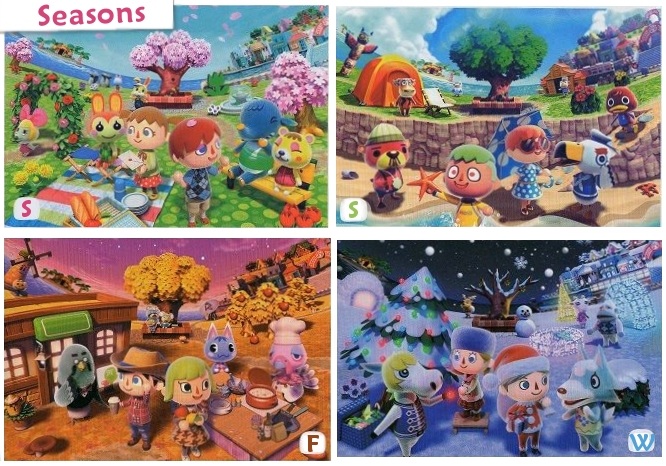
Just like in real life, there are different seasons in Animal Crossing. I will have to wait till December to experience December in the game. No other game does this.

So what does this mean for gameplay? Essentially it means I can binge-play all I want but time is going to prohibit how much I can do. There is only so much one can do in a day, this is true in both life and Animal Crossing. This makes Animal Crossing unique. Even in the Sims series, one can always fast-forward or slow down time. There is that degree of control. Here, no. If you say you’re going to meet someone in the game in eight hours and then forget to show up – that experience is gone. Furthermore, they will remember that you weren’t there and be angry at you the next time you talk to them.

Sounds a little too life-like, doesn’t it?

Good news: it still feels like a game. While certain aspects render Animal Crossing as a second-life simulator, this is still a different life than most of us will ever lead. In Animal Crossing, you spend your days catching fish and bugs. You dig up dinosaur bones. You run errands for friends. You can buy new things at your leisure, even when massively in debt. You don’t need to eat, you don’t need to sleep. Oh and Animal Crossing: New Leaf adds something extra to the formula – you’re the mayor.

As mayor you fund public works and can enact ordinances to shape your town and all of its inhabitants.

This gives more power to the player. Not much more mind you, that damn raccoon is still going to own your money and your soul before you can possibly pay off your debt. Still, it’s nice to see a game changing up the formula and adding new gameplay mechanics. The time limitations come into play here as well. For instance, in my game I have just enacted my first ordinance, which was a desire to increase the amount of money you get from selling items (very useful when paying off debt). I enacted it yesterday morning. It took effect this morning, exactly 24 hours after I enacted it. So I had to wait a day… which makes me want to play today because I want to see exactly what it is that I just did.

The stores in Animal Crossing are not open 24/7. This also slows progress as you can collect so much at a certain time but sell nothing. Being mayor allows you to extend the store's hours, should you so choose.
The stores in Animal Crossing are not open 24/7. This also slows progress as you can collect so much at a certain time but sell nothing. Being mayor allows you to extend the store’s hours, should you so choose.

Playing an Animal Crossing game is incredibly relaxing. Maybe it is the fixed time that renders the effect but I honestly think it’s more than that. Part of it comes from the fact that, even though it is so close to reality, (especially if you’re a recent graduate with debt filling your life), there is no time table. Play Animal Crossing if you want to experience a world run by money but not dominated by it. Despite the passage of time, my character will never die. He cannot get hurt or have his ambitions ruined. Everything he works for: he achieves. In short, that makes the Animal Crossing series the perfect propaganda for capitalism.

If that’s true than that makes Tom Nook the 1%… funny how much shared hatred is in there.

How it feels being several hundred thousand dollars in debt... to a raccoon.
How it feels being several hundred thousand dollars in debt… to a raccoon.

Thoughts? Comments? Am I full of it or onto something? Let me know now in the feedback section of this article.