Dear Godzilla Fans: Please Stop Defending that PS4 Game

2015 saw many terrific video games. From the moral complexity of Witcher 3 to the creative freedom of Super Mario Maker, and everywhere in between, 2015 was a strong year for the video game industry. Yet, as with any year: there were duds. Arguably the biggest flop of all was Godzilla for the PlayStation 4. Lumbering, unwieldy controls, boring past-generation map design, and a complete lack of any interesting fighting system (and local multiplayer) made this a challenge to call “fun.” This game was panned nearly across the entire board, with one small group providing the only positive spin. They were, of course, the Godzilla fans and they found a lot of good things to say.

Just to say upfront: Obviously, all art is subjective. No one is an idiot for liking this game. The following is just my opinion.

Now, I have watched every single Godzilla movie (in English and Japanese where applicable). I own an entire large crate full of action figures and collectibles. I am attending G-Fest in Chicago this summer. I have a tattoo of Godzilla on my body. Do I say all this to prove that I am the coolest guy in the universe – that’s besides the point. My point is, I am a huge Godzilla fan, I grew up on this stuff. Here is my message to other Godzilla fans: this game is garbage. It doesn’t matter if you love Godzilla or not. Please stop defending this piece of crap, we deserve better.
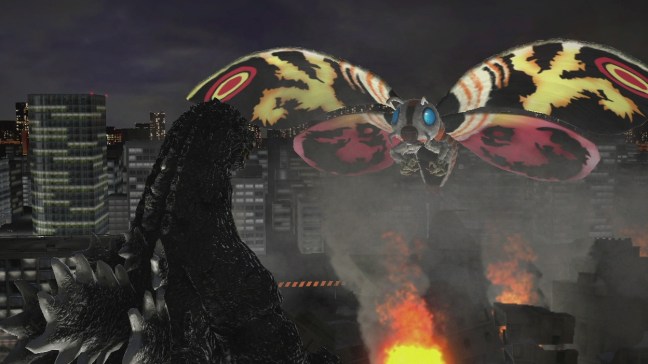
While the other art is the best it's ever been, that just acknowledges that graphics have gotten better in ten years.
While the monster model design is the best it’s ever been, that just acknowledges that graphics have gotten better in ten years.

A lot of the praise for this “game” comes from fans describing how faithful it is. Godzilla moves with purpose, like the large mass he is. Some fans have even contrasted it favorably against the three most recent Godzilla fighting games that were released for the GameCube, PlayStation 2, Xbox (original), and Wii. This is true. In those games, Godzilla moved a lot faster. He was agile, quick, and could run from one side of the map to another. All of these changes reflecting a desire to create a more fluid fighting game. Yes, Godzilla is slower and more like his movie self in the PS4 game… but is this a good thing from a game making perspective?

"It makes you think of how unauthentic previous Godzilla "fighter" games (Save the Earth, Unleashed..) were." - a poor, misguided Godzilla fan
“It makes you think of how unauthentic previous Godzilla ‘fighter’ games (Save the Earth, Unleashed..) were.” – a poor, misguided Godzilla fan

Let me give an example: In the PS4 game, you have to collect “data” from various points in the map. Let’s say I missed one on one side of the level and now I must walk back.

STOMP.

Here I come.

STOMP.

Getting closer.

STOMP

Almost there.

STOMP.

…. still almost there.

Does this sound fun? There is no way to run. There is a “charge” option where Godzilla lowers his head and plows forward for a few steps like a charging bull (or a blind football player) but this animation looks awkward to say the least. I can only imagine the commentary of the spectating citizens.

“Oh, there he goes! Nothing can stop him! Wait… what… what is he doing? Why is he doing that over and over again?”

So yeah, Godzilla walks like in the movie – kudos on making that happen, but it also illustrates exactly why it should be changed to create a good video game experience.

Speedy: yes. Fun: yes.

Another feature that Godzilla fans have praised is the focus of the game. As Godzilla, the player wrecks cities and fights monsters. This sounds awesome and exactly what a good Godzilla game needs to have. In this game, the city smashing takes front and center, with other monsters only showing up occasionally. This would be fun but here is the problem: the city smashing is really not satisfying. Godzilla hits the buildings a couple of times with one of four attacks (charge, weak attack, strong attack, or radiation breath) and then the building goes into a generic “fall” animation before disappearing entirely. It does the same “fall” animation no matter how Godzilla attacks it. There is nothing, no variation, no sense that your choice mattered. The same thing – over and over again.

Yeah, you don't have to spend time destroying ever single thing, but the game punishes you if you don't. Destruction makes Godzilla "bigger" and more powerful so... sigh, destroying a city should never be an obligation.
Yeah, you don’t have to spend time destroying ever single thing, but the game punishes you if you don’t. Destruction makes Godzilla “bigger” and more powerful so… sigh, destroying a city should never be an obligation.

Yes, this was a PlayStation 3 game originally but even so – this looks bad. The ones on PS2 and GameCube could do this, and there smashing buildings was not the primary objective but just a fun side option. Godzilla: Unleashed for the Wii had better building destruction than this. If my memory serves correctly, the player could occasionally knock pieces of the building off with basic melee attacks in that one.
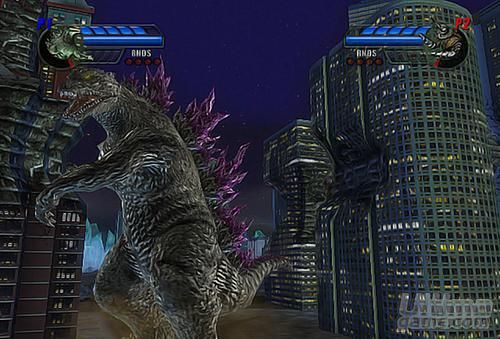
Yep, the weak Wii had a game with better building destruction.

The level design is bare. While Bandai Namco and Natsume do deserve some credit for recreating environments from the movies, they are really small stages. Normally, I would complain more about this – but it takes ten minutes to walk across one as is. It’s not just the size, however. Gone are the power-ups and hidden secrets from the previous games. There is nothing to do but that boring smash and gathering “data” (which amounts to freezing in place for twenty seconds while the camera cuts to a more cinematic angle). Having the Smog Monster fly around or being able to summon in Mothra or Battra were cool options. Again – decisions that reflected actual game design as opposed to “well what did it look like in the movies?”

Last but not least, let’s talk about the monster fights. Well, first and foremost – this is a fighting game without a health bar. Yep. Curious as to how you’re doing? Too bad, you’d ruin the immersion with crap like that. The only indication you get is the screen starting to go red as you get close to death. Well, at least that helps right? Let’s you know when to start blocking attacks?
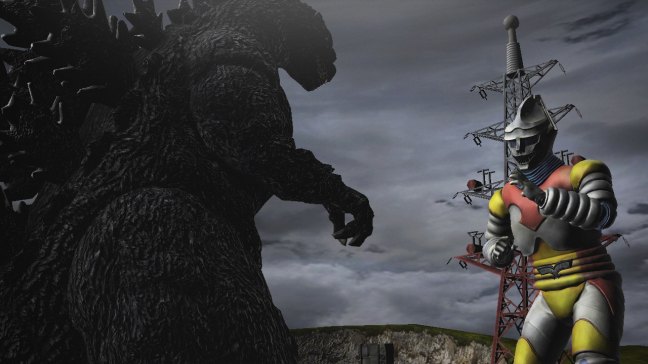
Health bars? We don't need no stinking health bars!
Health bars? We don’t need no stinking health bars!

You can’t block either.

Well, shit. Want to pick up a building and throw it at your enemy? Can’t do that.

Want to play with the person sitting next to you? Can’t do that.

Want a comprehensive system of fighting moves and clear differences between how the monsters handle? Try another game.

The “fighting” system was added into the PlayStation 4 version, to help justify the sixty-dollar (I bought this for $10 and felt cheated) price tag that this game released with. Some games add new modes with depth and meaning, and with some it feels quickly tacked on. Guess which this is.

John Ryan of IGN gave this game a negative review but said that “the spirit of the old-school monster movie is where Bandai Namco absolutely nails it.” I disagree, and frankly wonder what movies John is talking about. The original Godzilla is a work of art that is exceptional in quality and crafting – so this game isn’t it. The subsequent sequels were goofy fun that usually did not take themselves too seriously. This isn’t those either.

Fans looking for a genuine experience of a Godzilla movie should watch a Godzilla movie. The 29th Japanese film will be released later this year. There are a lot of these. This “game” feels like watching the very worst of Godzilla, and is even less fun to play. Godzilla fans have had better games in the past – and need to not allow crap like this to get a pass for being “authentic.” Batman fans were harsh and eventually got Arkham Asylum. Just saying.
Hype can Hurt: Until Dawn

While October 2015 has ended, that is no reason to (completely) stop talking about horror. This year the PS4 had the good fortune to host an ambitious exclusive called Until Dawn, a choose-your-own-adventure game very much in the style of the recent Telltale series. The player makes choices and the game “changes” based on those choices. In this case, Until Dawn is essentially like playing out every cheesy slasher horror film you’ve seen. A group of teenagers go to a cabin in the woods and horror ensues. As the player, you will have direct control over who lives and who dies. Sounds like fun?

It is.

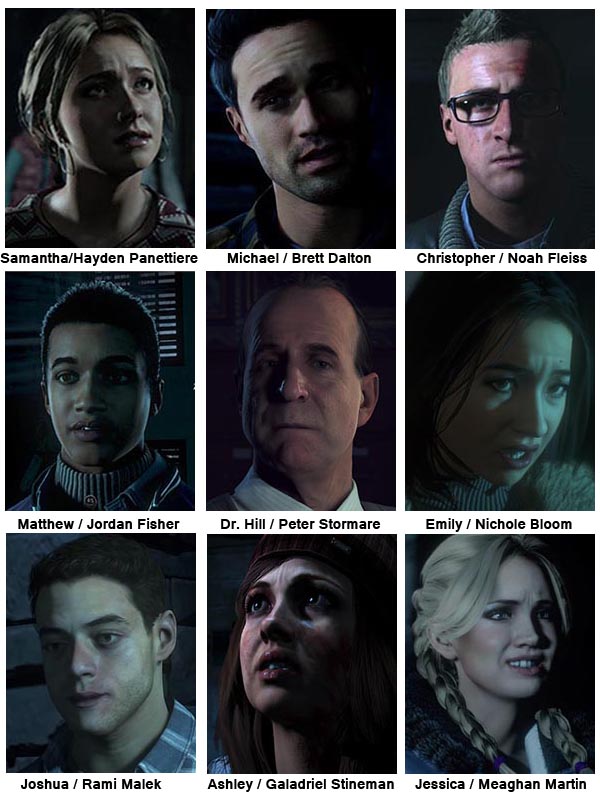
Until Dawn's cast includes all the stereotypes that would be expected in a horror movie.
Until Dawn‘s cast includes all the stereotypes that would be expected in a horror movie.

Yet when my brother and I played through Until Dawn, we were left feeling ultimately disappointed, particularly at the latter portion of the game. Looking back on it, however, our feelings of frustration had less to do with the game and more with the hype that surrounded its initial release. Warning: spoilers to follow.

If you have some time to kill, here is a lengthy example of a look at Until Dawn:

Here are a couple others if you don’t have a full fifty minutes to watch a bit of the video game (namely to hear the players’ comments toward the end). The point is that most reviews were kind to Until Dawn, maybe unfairly so. As mentioned earlier, this is a game that is very similar to the recent Telltale series (Walking Dead Season One on). One of the larger criticisms with the Telltale series is that they are not as choice-dependent as they let on. Rarely  does the player’s choice has any real impact on the story beyond a slight variation in presentation.

This can be seen as an unfair criticism, as there is no such thing as a video game with free choice. Even something like Minecraft, with its complete lack of story and vast open world of possibilities, has its limits as to what the player can do. What video games are about is largely the illusion of choice (with no game making this point more directly than BioShock). As long as the player feels like they are involved and in-charge, the experience works.

Yet some reviews of Until Dawn (like the quicklook above) really make it seem like the game is doing the impossible. That gamer’s choices actually really matter and there are so many really different ways it can go. To an extent this is true, but in reality  Until Dawn is bound by many of the same type of restrictions as the Telltale games… and in several cases handles them worse. The are two main ways that Until Dawn drops the ball, and both have to do with the writing.

Too Many Useless Characters

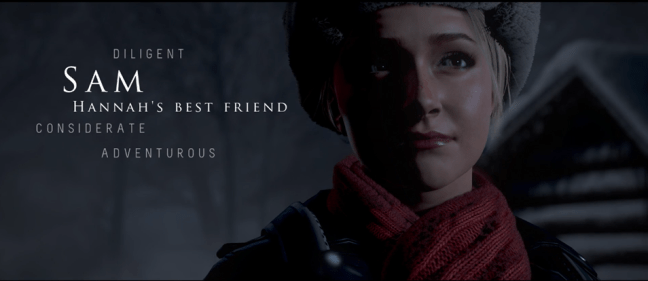
When my brother and I started playing, we were psyched to see who our main character would be. Of these eight teenagers, which one would rise to be the (potentially) last standing against the killer? Right away, we’re introduced to Sam (Hayden Panettiere):

SamPersonality

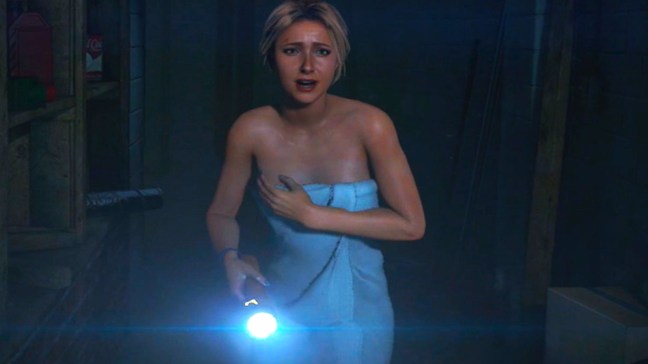
While the player may not know it: this is your hero. She is one of the few characters who cannot die until the very end of the game. Making every bad decision, screwing up every prompt will not matter. Sam isn’t going anywhere… which is a shame because she is arguably the most bland character in the game. Sam is barely in it! It seems like the longest segment the player has with the character, is this right here:

Gee, I wonder why?
Gee, I wonder why?

She’s just really not involved until the very end. Instead the player controls largely the other seven, getting to know those characters a whole lot more… which is a real shame because none of them (save one) do anything.

Here’s the big spoiler: the game ends with two characters either escaping or one or both dying. These two characters are always the same (Michael and Sam). The other six? Well they’re either dead or… not contributing to the plot in any way, shape, or form. They appear to adopt the “stand there and look pretty” mentality of life.

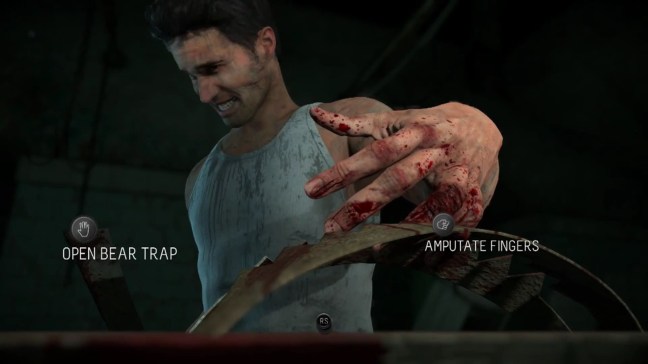
When I played, I managed to keep nearly all the characters alive. It felt really disappointing to watch them vanish as the game went on. What was my reward for making the choices that kept them alive? It didn’t seem to matter. At one point, I was convinced that Emily (the stereotypical bitch character) would step into the role of main character with the right choices. Hahaha nope!

Michael Breaks Every Horror Rule

Mike is the god damn worst. With the side character problem, I can see limitations. Sure, everyone wants to make a game with vastly branching storylines, but the developer only has so much money. Yet many, many, many, many reviews called this a perfect horror simulator, and on that I call bullsh*t. Mike breaks nearly every one of the rules for surviving a horror movie during this game.

He frequently runs off on his own (including into a blizzard – at night – without a jacket), and his decision-making (let’s go find the key from Josh) needlessly puts everyone in danger during the second half of the game – a decision that you do not have the option to call him out on. Oh, and while wandering on his own – he goes into the creepy abandoned asylum and proceeds to touch every single thing he can find.

Yet for all this, Michael is the other character who cannot die until the end of the game. What a load of crap.

Oh, and he can murder Emily for no reason (she might turn into a wendigo – ’cause why not)… something else which everyone else just seems to go along with.

At least he gets punished for touching everything in the creepy abandoned asylum.

For all its flaws, Until Dawn is still a lot of fun, especially if you’re a fan of horror movies. It’s not as good as some of the more impressive Telltale games, but it’s also no failure by any stretch.

What is impressive is that the biggest failings of Until Dawn can easily be fixed with DLC that expands the second half of the game and allows for more characters to make an impact.

… or just make a first-person VR shooting segment… I guess that’s cool (this is actually close to how the game originally looked for PS3).

Batman: Arkham Joke(r)

With the recent release of Batman: Arkham Knight – we are now officially four games into the Arkham series (yes, Arkham Origins counts). Through the years, audiences have been following Rocksteady and Warner Bros. Montreal and their efforts to tell a series of interesting stories around the Batman. Well, four games and six years after the release of Arkham Asylum and one thing has become clear: Batman has only one villain worth talking about… at least according to these two developers.

Batman has truly met his match, in terms of popularity at least.

Yes, in their efforts to expand and expound upon Batman mythology, Rocksteady has instead created a world that feels ironically small. It seems like nothing happens in Gotham without the clown prince of crime playing at least one of (if not the only) significant roles. While no one would argue that the Joker is Batman’s best and most iconic villain, I think quite a few people would disagree that he is the only interesting one.

Wow, that's a lot of villains who are only fit for side roles.
Wow, that’s a lot of villains who are only fit for side roles.

Yet this was the narrative told over and over again throughout the course of these games, and it was not told simply by having the Joker take central spotlight. It was cemented by the developer’s shrugging off of every other villain’s development. Let’s look at Two-Face, for instance. The former district attorney with dual personalities first appeared in Arkham City – where he was all about putting Catwoman on trial… for some reason. Probably because she’s the worst villain around since she’s kind of a good guy. Batman and Catwoman stop him and Two-Face spends the rest of the game… occupying museums until captured. Don’t worry! He’s back in Arkham Knight with a grand plan to… rob banks… really… how devious.

Justice is one of the interesting stories to explore with Harvey Dent. At least figuring out his identity would be more interesting than "guessing" who the Arkham Knight is.
Justice is one of the interesting stories to explore with Harvey Dent. At least figuring out his identity would be more interesting than “guessing” who the Arkham Knight is.

Granted, the most interesting thing about Two-Face is his origin (an origin skipped in Arkham Origins – cause we needed more Joker time). Still, Harvey Dent has not fallen quite so far as to be an ordinary thug. His dual nature can be used in interesting ways, and a slew of stories exist around the character that bear exploring.
Dent is one of many characters that Rocksteady appears thoroughly unimpressed with. A villain who is worth a quick punch and nothing more. After all, who can measure up to the Joker’s insanity, his genius for evil plans, and (spoilers) his ability to be the main villain in a game where he is already dead. Yeah, the main villain of Arkham Knight is… the Joker… again.

Nice trying to look cool Two-Face, but you can't fool me. You're no clown.
Nice trying to look cool Two-Face, but you can’t fool me. You’re no clown.

Scarecrow is the villain all over the game. Batman hears his voice every few minutes, telling him over and over again that he will lose. On the surface, Rocksteady tells the player that Scarecrow is to be feared, that he is a threat – but that is all it is: telling. There is never a moment where the player feels that Scarecrow is, well, scary. It’s never shown. The master of fear appears to be doing little to frighten Batman, other than creating visions of the Joker… or is it the Joker disease doing that? Honestly, the story in Arkham Knight is as hokey and full of holes as any Adam West led sitcom.

The Scarecrow sequences in Asylum may have had control issues but they were at least interesting. No such luck with Arkham Knight.

So the player is told how Scarecrow must be stopped, all while trying to stop the Joker. Scarecrow stands instead as a straw man (get it?), a plot device waiting to be fulfilled at the end of the game to signal that the main storyline is over.
But wait, what of the Arkham Knight, the titular villain of the game? Without giving anything away – let’s just say that the Arkham Knight’s creation and defeat both revolve entirely around – you guessed it – the Joker.

Never has a villain tried so hard to be cool and failed so completely. At least he is faithful to his secret identity.

Really, this wouldn’t feel so tired if it wasn’t the fourth time. While every game after the original has claimed to split the villain billing, it has become truly boring to climax every adventure with a Joker fight. Arkham City did the best job creating a world of multiple villains, but even that still ultimately failed to create a world larger than two people. The game was Joker centric enough to make the climax a scene of Batman carrying the Joker’s lifeless body, despite the fact that Talia, Batman’s “beloved,” was just murdered.

Sorry Talia, Batman evidently follows the Bro Code.

Arkham Origins was able to bring Bane to the table in a way that Rocksteady never cared to do, but that only lasted until Bane felt compelled to take memory-erasing, mentally-debilitating drugs in order to physically beat Batman. I’m not kidding, Rocksteady had created such a stupid, uninteresting version of Bane that, in order to reconcile Arkham Origins as a prequel, the writers had to invent a way to make him dumber. Wow.

So it has been the Joker, and only the Joker, who has occupied the Batman games… and that needs to change. With Rocksteady hopefully exiting the Batman market (at least for a game or two to recharge) and the Arkham series reaching its “end” game, the time is here to reflect and examine how to make future Batman games better. The answer is simple. Make it bigger. I don’t mean the city this time – I mean the world. Explore these characters and give gamers a story without the clown prince pulling all the strings. It may take a little bit more work, but the results will be worth it.
Also no more Riddler trophies. I’m not kidding; collecting those has become the opposite of fun.