Remembering Robin Williams: Lessons Learned from Hook

I really wish I could write better news today. As everyone is, I’m sure, already aware: the world has lost a great man in the passing of actor/comedian Robin Williams. To lose him so suddenly is gut-wrenching, the fact that he likely took his own life is heart-breaking. In moments like these, the importance of one man is paramount. Everywhere I went last night on the internet had tributes, memorials, and people expressing their shared grief. It is true that many die each day, but not many live a life like Robin Williams. He brought joy and laughter to everyone he touched. You didn’t have to know him, you didn’t even have to meet him in person. He possessed a rare gift that many of us yearn to have – the focus of attention – and he used it to bring happiness to the world.

Not everyone changes a culture the way that Robin Williams did.

In writing a tribute, I have decided to focus on the first Robin Williams movie I can remember seeing. I did not know him as a person, I only knew he liked video games since he named his daughter Zelda. Like so many, I only knew him through his craft. That can be a distorted picture because, as an actor, Williams inhabited many characters he did not create. He did not write them, he did not direct the scenes. Yet the gift of a good actor is the personal touches they bring to each role, and in this Robin Williams transferred a little of himself to each movie he was in. In this way, I believe that this is a very appropriate time to talk about Hook.

For those who do not know, Hook tells the story of an adult Peter Pan (Robin Williams) who has left Neverland to live in the real world. He is a married lawyer with two young children. His life is not perfect as Peter has become consumed in his work. He neglects his children, his family, and himself. If that was not bad enough, everything is hurled into chaos when Hook returns and kidnaps his children. With the help of Tinkerbell and the Lost Boys, Peter must rediscover his true self and defeat Captain Hook to return home. It is not a complicated plot, and is a fair adventure movie in its own right.

What I feel makes this movie so relevant to write about is that it is essentially a film about rediscovering the joys of life. In the beginning of the movie, Williams looks miserable. He is irritable towards everyone and clearly stressed about his life situation. Essentially, he is a man so concerned about doing well at life that he has… well, forgot how to live. To him – money is all that matters. It is likely that Peter initially only wanted to be successful to support his family and provide a good life for them, but he has gone to the extreme of shutting everyone out in order to focus. Through his performance, Robin Williams conveys the appropriate isolation and misery that this lifestyle brings and thus serves as a warning for the audience.

Even on vacation, Peter is never separated from the unsatisfied desire to do more.

Where Williams really shines, however, is conveying the beauty of relearning what it means to enjoy life. I can remember watching Hook as a kid and the one scene that perhaps sticks out the clearest is when Peter Pan rediscovers how to fly.

http://www.youtube.com/watch?v=Jy3DsyvhrSQ

Look at his face throughout the entire sequence. It is joy, the simple joy of being and feeling alive. It is common to yearn to recapture some of that childhood innocence. Robin Williams was one of the few people who seemed able to express it freely. In becoming Peter Pan again, he recaptures the essence of life. He re-learns how to have fun and not take everything so seriously. He becomes a kid again, in the best way possible. While Hook has its problems as a movie, Robin Williams’ performance is so charming that it cannot be anything less than enjoyable.

The movie teaches that finding the smile is finding the true self. Cool lesson.

What makes make Hook perfect is that, while Robin Williams’ Pan embodies the wonder of life, Dustin Hoffman’s Captain Hook symbolizes the grim reality of death. He is a character obsessed with it throughout the film. Bitter and lonely, Hook embodies everything that Peter was becoming while he was astray. Hook has no friends, no family, no real zest for living. He simply wants to kill and die.

Watching Peter Pan defeat Hook is watching life triumph over death. Of course, the inevitably of dying is addressed, to which Williams responds with the great line: “to die would be a great adventure.” While Hook remains consumed with the destination, Peter remains free to appreciate the journey. The movie ends with a new celebration and appreciation for time spent alive.
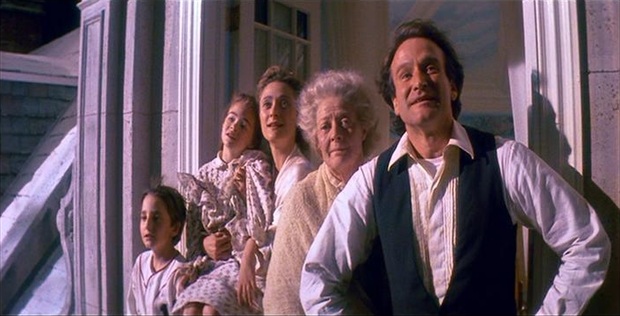
"To live... to live will be an awfully big adventure."
“To live… to live will be an awfully big adventure.”

Robin Williams brought this same zest for life to every role he played. I think that is really how he delivered such an impact on so many people. It is easy, in this world, to get bogged down and lose sight of happiness. To have someone who so constantly reminded us of the simple wonder of smiling… he will be missed. There really are too few people who devote their lives to making other people, even complete strangers, happy. He is a role model who will never be forgotten. He lives on in his performances, where that essence of being alive continues to be expressed.
 

The Road to Hell is Paved with Good Intentions: An Apology to Brendan Eich (Former CEO of Mozilla)

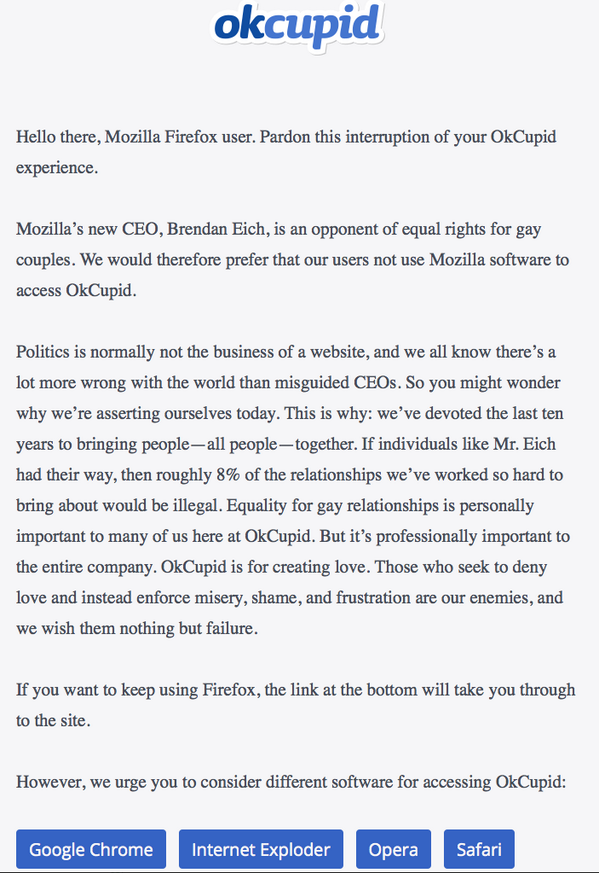
I will begin this with important context: in the past, I have made it very clear that I support gay marriage and human rights for everyone. There is no group that I would deny basic freedoms to… including those I disagree with. That said, I must make clear that I did not join in the celebration that took place yesterday. The Mozilla Corporation announced that new CEO Brendan Eich was stepping down from his position. The decision was not Mr. Eich’s idea but rather came after enormous public outcry against his promotion to CEO. People were angry that, in 2008, Brendan Eich donated $1,000 to support Proposition 8 (an anti-gay marriage bill in California). Eich’s promotion to CEO prompted several other high-ups at Mozilla to leave the company, and spurred OkCupid to institute a disclaimer on their site for Firefox users. The reaction to this awareness campaign was swift and Eich was forced out. Wew, score one for LGBT… right? I don’t think so.

OKCupid's message to people operating on the Firefox browser. The message did not prohibit Firefox users from using the site but informed them of Mr. Eich's past actions.
OkCupid’s message to people operating on the Firefox browser. The message did not prohibit Firefox users from using the site but informed them of Mr. Eich’s past actions.

The United States of America promotes two things above all else: a belief in democracy and a belief in capitalism. How people personally feel about those two subjects is irrelevant, they have long been a part of the U.S. heritage. These two issues do not always agree. History is full of instances where the two clash and conflict continues today (look at the 1% vs. the Occupy Movement). In 1976, the Supreme Court determined that spending money was the equivalent to freedom of speech. Based on the information out there, I believe the Mr. Eich’s right to free speech was violated.

When I first saw the issue through my Facebook newsfeed, one question in particular peaked my curiousity. Had Eich spent his own money or had he made an investment on behalf of Mozilla? These two things are very different. If the donation had been made in Mozilla’s name, then the entire company would be held responsible. Corporations recently have won some of the rights of people (so, so bad for democracy) but, if they want the rights, they can deal with the responsibilities. That said, it seems silly to me to punish an entire corporation based off the actions of one individual. Sure, boycott Mozilla because they have a homophobic CEO, boycott X-Men: Days of Future Past because it contains at least one gay actor, boycott Walmart… actually that’s not a bad idea. Point is: corporations are huge and not responsible for what employees do in their free time. Eich did not do anything illegal, he committed (I believe I am using the technical term here) a dick move. Is he an asshole for spending money to stop people from getting married: yes. Should he be fired for that… well, if yes then so should a lot of other people.

Based on the information I have found, I believe the donation was made in Eich’s name, and with his own money. Money that, according to the United States Constitution, he is allowed to spend any way that he wants, so long as it is not illegally. To condone or condemn an individual, based solely on his/her purchase history, does not sound like democracy to me.

“Okay, sure but he was homophobic! Surely this man should not be allowed to lead a company!”

Do you know him? I don’t, but let’s look at the facts. It is public record that 2008, Eich donated to a homophobic campaign. Six years ago he did that. No question. Done deal. Here is a statement from Mr. Eich made last week. If Brendan Eich’s public statement is to be believed, then he was a reformed man who acknowledged his mistakes and was trying to work forward. Granted, he might be lying and it might have been a PR stunt… but it might not have been. Forgiveness is a large part of modern society. There is a commonly held believe that everyone deserves at least a second chance. The world has changed radically in recent times, especially concerning the public view of LGBT rights.

“But wait, there were issues at Mozilla. People there were angry and left the company. He wasn’t reformed!”

Again, the public does not know for certain why those people resigned over Eich’s promotion. It is not uncommon for several other higher-ups to resign after one is promoted to CEO. The perception is that, if that person was just promoted, he isn’t going anywhere in the near future. Their leaving could simply be a career move. Mozilla themselves came out against the claim that there was any personal rift at all that caused the leavings. Granted, Mozilla could also have been denying it in an attempt to avoid the scandal that they just suffered.

Let’s flash back to 1998. Bill Clinton was on trial, a trial that could have cost him the Presidency of the United States. He was accused of lying under oath. On the surface that sounds like a very serious crime. However, the issue that former President Clinton lied about was, frankly, none of the country’s business and was in no way connected to his abilities as a world leader. Clinton was charged with lying about adultery (the Monica Lewinsky scandal). Does that say something about Bill Clinton as a husband, yes. Did it have anything to do with him as a president, no. I feel that this case is similar.

I am not defending the past homophobic actions of Brendan Eich. His old views on the LGBT community are backward, and if he hasn’t truly reformed then he is still a bigot. It is simply a very dangerous sign when moral judgment dictates society and policy. No one is clean, everyone has done something wrong. If Eich is still homophobic, I highly doubt that this has done anything to enlighten his views. That is the real tragedy. To use parody, I believe the South Park character, Big Gay Al, put it best:

“Look, I appreciate what you kids did. I really do. But this isn’t what I wanted. I’m proud to be gay. And I’m proud to be in a country where I’m free to express myself. But freedom is a two-way street. If I’m free to express myself, then the scouts have to be free to express themselves too. I know these [scout leaders]. They are good men. They are kind men. They do what they think is best for the kids. No matter how wrong we think they might be, it isn’t right for us to force them to think our way. It’s up to us to persuade and help them see the light, not extort them to? I will continue to persuade them to change their minds, but this is the wrong way to do it. So, I am hereby dropping my case and allowing the scouts their right to not allow gays into their private club.”
“Look, I appreciate what you kids did. I really do. But this isn’t what I wanted. I’m proud to be gay. And I’m proud to be in a country where I’m free to express myself. But freedom is a two-way street. If I’m free to express myself, then the scouts have to be free to express themselves too. I know these [scout leaders]. They are good men. They are kind men. They do what they think is best for the kids. No matter how wrong we think they might be, it isn’t right for us to force them to think our way. It’s up to us to persuade and help them see the light, not extort them to? I will continue to persuade them to change their minds, but this is the wrong way to do it.”
Forcing other people to think a certain way is never the right answer. Punishing an opinion, even a wrong one, is useless without teaching the correct one. That is what happened… that is the best case scenario for what happened (otherwise a man trying for redemption was crucified for past mistakes). Oh, and anyone celebrating that justice was really done: he stepped down as CEO, he was not fired. I have read nothing that makes me think that Brendan Eich no longer has a job with Mozilla. I may be wrong, that is simply my thinking after reading.

I was homophobic once too. I grew up with ignorant views. My eyes were opened and I have learned how wrong I was, thankfully before I was ever in the position to deny anyone their rights. This can be done the right way, the world is already changing. Fast communication is a double-edged sword: it can cause quick action, like in the case of Eich. However, if people are not properly educated and make informed decisions, there will always be room for prejudice and bigotry. Let us simply not replace one kind with another.

For now, with the information available, I feel that Brendan Eich is owed an apology.

I Love the Woman: an Analysis of Love, Power, and the Character of Irene Adler (Sherlock)

Call me a sucker for bizarre romances, but this one is special. Irene Adler is a character who has seen many incarnations, only three of which I am really familiar with. The first is the Irene Adler from the stories by Sir Arthur Conan Doyle. She is barely in them (only appears in A Scandal in Bohemia). If one reads that story looking for a steamy romance between Holmes and ‘the Woman’, prepare for disappointment. The romance was an invention that came later. The second Irene Adler I encountered was portrayed by Rachel McAdams in the Sherlock Holmes movies starring Robert Downey Jr. She had the physical attractiveness of Irene Adler but none of the mental presence. To be fair to Ms. McAdams, that was more the script that turned her into a damsel-in-distress, rather than her acting. Okay, two Irenes out of the way, let’s talk about Lara Pulver‘s powerful performance from the BBC series, Sherlock (specifically the episode: A Scandal in Belgravia).

Proof that beauty does not equal presence.
Rachel McAdams: Proof that beauty does not equal presence.

She is one of the best characters I have ever seen on screen, hands down. I will begin with a description of her character: character in this case being shaped by the script and Pulver’s acting. Irene is sexy and she knows it. I know that there is a modern view that power, in the female sense, comes from sex appeal (and knowing how to control it). I really do not agree with this statement and it does not apply at all to Irene Adler. She is sexy, true, and she knows it. This Irene Adler is intelligent, cunning, and unafraid to do what she needs to do to get what she wants. The fact that she has any attractiveness is simply another tool for her to use.

Pulver's Adler always looks composed. More importantly, she is doing something in nearly every scene. She does not exist to simply stand there and look pretty.
Pulver’s Adler always looks composed. More importantly, she is doing something in nearly every scene. She does not exist to simply stand there and look pretty.

The Irene Adler, in this incarnation, is a dominatrix (children, don’t ask your parents what this means) who is (spoiler alert) under the employ of James Moriarty. Moriarty is the arch-nemesis of Sherlock Holmes, in case anyone out there was wondering. Anyway, Moriarty hires Adler to seduce Holmes and get him to give her information. Anyone even remotely familiar with the character of Sherlock Holmes knows this is not an easy task. He is known as “the world’s greatest detective” a.k.a. “not a moron.” Nevertheless, Irene Adler matches wits against Holmes… and wins and loses.

She succeeds in manipulating Holmes. He is attracted to her (the two share a phenomenal chemistry) and is foolishly tricked into giving her the information that Moriarty wants. Irene Adler is set to walk free at the end of the episode, having manipulated Sherlock completely without getting involved… except she did get involved. Part of the great success of the BBC Sherlock series is that genius characters are still human characters.

In one of the many scenes to showcase their similarities, Adler and Holmes prepare for battle. Both understand that appearance is important... but they look at it as part of the power struggle rather than simply looking pretty for one another.
In one of the many scenes to showcase their similarities, Adler and Holmes prepare for battle. Both understand that appearance is important… but they look at it as part of the power struggle rather than simply looking pretty for one another.

“Brainy is the new sexy.” Irene’s words to Sherlock near the beginning of their encounter. It is true, for both parties. Sherlock is attracted to Irene’s intelligence, Irene is attracted to Sherlock’s intelligence. The wonderfully tragic element emerges in who both of these characters are. Sherlock Holmes, in any portrayal, is always slightly ostracized from other human beings because of his intelligence. In the BBC edition, Sherlock is a high-functioning sociopath. He does not (outwardly) care about people or even acknowledge emotions. Irene is a dominatrix, someone so in control of herself that she is afraid of feeling helpless more than anything. Both are in constant struggle for power in their relationship, and the power comes from the appearance of not caring. He is how it climaxes:

For those out there who haven’t seen the episode and are curious as to the context: go watch it (seriously do, it’s wonderful). I will give brief background – the phone was Irene’s challenge to Holmes. She gave him time and opportunities to figure out the password and he almost bungled it until… well, you saw what happened.

“But wait,” you say, “that didn’t look like a romance. Sherlock didn’t care.” Really? That’s the power struggle. In that scene Irene has lost, her emotions are betrayed and Sherlock has the advantage. If he didn’t really care he could just walk away and that would be the end of it. Irene Adler would be killed and the world spins on. She is nearly killed… until this happens:

They both lose the game… and they are okay with it. Sherlock, in the most bizarre way possible, gives a very important lesson about love. When two people love each other, they are at their most vulnerable. Logic, intelligence: these things fall to impulse and emotion. I feel that this theme is the center of A Scandal in Belgravia, and is reflected even in the music. The love theme between Sherlock and Irene fluctuates in intensity, similar to the way emotion works. It embraces, then pulls back, only to ultimately embrace again. Feel free to disagree but please, listen to it in its entirety (“The Woman” and “Irene’s Theme” are also part of this):

This Irene Adler is the most compelling because she is the only one I have seen who manages to stay equal to Sherlock Holmes. Both characters have their moments of triumph and defeat. For brilliant people, they make a mess of love. Luckily they are smart enough to sort it out in the end. I remain cautiously optimistic for Adler’s return in the series. Irene Adler was only in one book, but maybe that was simply because that incarnation was less interesting.

There is one line from the episode that I quickly want to touch upon. It is a dialogue exchange between John Watson (Martin Freeman) and Mycroft Holmes (Mark Gatiss). I am simply paraphrasing here so apologies if I get a line wrong:

Mycroft: “Closed forever. I am about to go and inform my brother—or if you prefer, you are—that she somehow got herself into a witness protection scheme in America. New name, new identity. She will survive—and thrive. But he will never see her again.”
Watson: “Why would he care? He despised her at the end. Won’t even mention her by name. Just ‘The Woman’.”
Mycroft: “Is that loathing or a salute? One of a kind, the one woman who matters.”
Watson: “He’s not like that. He doesn’t feel things that way. I don’t think.”
Mycroft: “My brother has the brain of a scientist or a philosopher, yet he elects to be a detective. What might we deduce about his heart?”
Watson: “I don’t know.”
Mycroft: “Neither do I. But initially he wanted to be a pirate.”

This perfectly encapsulates the nonsensical nature of love. It really never can be explained. If it could, I doubt it would be as powerful (I know, I’m a romantic, humor me). Point is that, at the end this is a blog post, and if it can impart any wisdom it is: love is not always portrayed correctly in media, but when it is, it is powerful. That said, it will never be as powerful as – you know – the love you will experience in your actual life. So if there is a ‘the woman’, ‘the man’, or whomever out there, let them know. Whether traditional flowers or something as screwed up as Sherlock Holmes and Irene Adler, love is worth noting – even if it is just in a small way.

Anyway, sorry to get sidetracked at the end. A Scandal in Belgravia: see it if you want to see a version of Irene Adler who earns the title of ‘the Woman’ and not just some damsel-in-distress.

Probably says more about me than I would like that this is one of my favorite written romances.

Mycroft: Closed forever. I am about to go and inform my brother—or if you prefer, you are—that she somehow got herself into a witness protection scheme in America. New name, new identity. She will survive—and thrive. But he will never see her again.
Watson: Why would he care? He despised her at the end. Won’t even mention her by name. Just The Woman.
Mycroft: Is that loathing or a salute? One of a kind, the one woman who matters.
Watson: He’s not like that. He doesn’t feel things that way. I don’t think.

Mycroft: My brother has the brain of a scientist or a philosopher, yet he elects to be a detective. What might we deduce about his heart?
Watson: I don’t know.
Mycroft: Neither do I. But initially he wanted to be a pirate.

– See more at: http://www.planetclaire.org/quotes/sherlock/series-two/a-scandal-in-belgravia/#sthash.HWfmwkuG.dpuf

Mycroft: Closed forever. I am about to go and inform my brother—or if you prefer, you are—that she somehow got herself into a witness protection scheme in America. New name, new identity. She will survive—and thrive. But he will never see her again.
Watson: Why would he care? He despised her at the end. Won’t even mention her by name. Just The Woman.
Mycroft: Is that loathing or a salute? One of a kind, the one woman who matters.
Watson: He’s not like that. He doesn’t feel things that way. I don’t think.

Mycroft: My brother has the brain of a scientist or a philosopher, yet he elects to be a detective. What might we deduce about his heart?
Watson: I don’t know.
Mycroft: Neither do I. But initially he wanted to be a pirate.

– See more at: http://www.planetclaire.org/quotes/sherlock/series-two/a-scandal-in-belgravia/#sthash.HWfmwkuG.dpuf