Remembering Robin Williams: Lessons Learned from Hook

I really wish I could write better news today. As everyone is, I’m sure, already aware: the world has lost a great man in the passing of actor/comedian Robin Williams. To lose him so suddenly is gut-wrenching, the fact that he likely took his own life is heart-breaking. In moments like these, the importance of one man is paramount. Everywhere I went last night on the internet had tributes, memorials, and people expressing their shared grief. It is true that many die each day, but not many live a life like Robin Williams. He brought joy and laughter to everyone he touched. You didn’t have to know him, you didn’t even have to meet him in person. He possessed a rare gift that many of us yearn to have – the focus of attention – and he used it to bring happiness to the world.

Not everyone changes a culture the way that Robin Williams did.

In writing a tribute, I have decided to focus on the first Robin Williams movie I can remember seeing. I did not know him as a person, I only knew he liked video games since he named his daughter Zelda. Like so many, I only knew him through his craft. That can be a distorted picture because, as an actor, Williams inhabited many characters he did not create. He did not write them, he did not direct the scenes. Yet the gift of a good actor is the personal touches they bring to each role, and in this Robin Williams transferred a little of himself to each movie he was in. In this way, I believe that this is a very appropriate time to talk about Hook.

For those who do not know, Hook tells the story of an adult Peter Pan (Robin Williams) who has left Neverland to live in the real world. He is a married lawyer with two young children. His life is not perfect as Peter has become consumed in his work. He neglects his children, his family, and himself. If that was not bad enough, everything is hurled into chaos when Hook returns and kidnaps his children. With the help of Tinkerbell and the Lost Boys, Peter must rediscover his true self and defeat Captain Hook to return home. It is not a complicated plot, and is a fair adventure movie in its own right.

What I feel makes this movie so relevant to write about is that it is essentially a film about rediscovering the joys of life. In the beginning of the movie, Williams looks miserable. He is irritable towards everyone and clearly stressed about his life situation. Essentially, he is a man so concerned about doing well at life that he has… well, forgot how to live. To him – money is all that matters. It is likely that Peter initially only wanted to be successful to support his family and provide a good life for them, but he has gone to the extreme of shutting everyone out in order to focus. Through his performance, Robin Williams conveys the appropriate isolation and misery that this lifestyle brings and thus serves as a warning for the audience.

Even on vacation, Peter is never separated from the unsatisfied desire to do more.

Where Williams really shines, however, is conveying the beauty of relearning what it means to enjoy life. I can remember watching Hook as a kid and the one scene that perhaps sticks out the clearest is when Peter Pan rediscovers how to fly.

Look at his face throughout the entire sequence. It is joy, the simple joy of being and feeling alive. It is common to yearn to recapture some of that childhood innocence. Robin Williams was one of the few people who seemed able to express it freely. In becoming Peter Pan again, he recaptures the essence of life. He re-learns how to have fun and not take everything so seriously. He becomes a kid again, in the best way possible. While Hook has its problems as a movie, Robin Williams’ performance is so charming that it cannot be anything less than enjoyable.

The movie teaches that finding the smile is finding the true self. Cool lesson.

What makes make Hook perfect is that, while Robin Williams’ Pan embodies the wonder of life, Dustin Hoffman’s Captain Hook symbolizes the grim reality of death. He is a character obsessed with it throughout the film. Bitter and lonely, Hook embodies everything that Peter was becoming while he was astray. Hook has no friends, no family, no real zest for living. He simply wants to kill and die.

Watching Peter Pan defeat Hook is watching life triumph over death. Of course, the inevitably of dying is addressed, to which Williams responds with the great line: “to die would be a great adventure.” While Hook remains consumed with the destination, Peter remains free to appreciate the journey. The movie ends with a new celebration and appreciation for time spent alive.
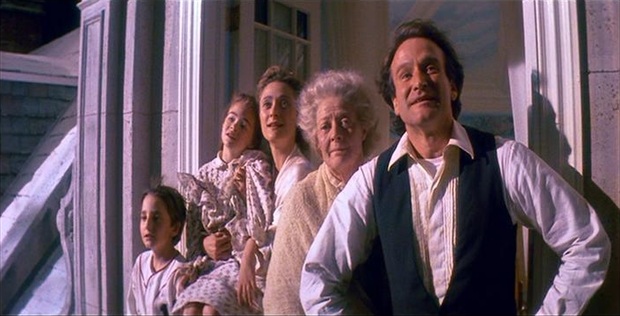
"To live... to live will be an awfully big adventure."
“To live… to live will be an awfully big adventure.”

Robin Williams brought this same zest for life to every role he played. I think that is really how he delivered such an impact on so many people. It is easy, in this world, to get bogged down and lose sight of happiness. To have someone who so constantly reminded us of the simple wonder of smiling… he will be missed. There really are too few people who devote their lives to making other people, even complete strangers, happy. He is a role model who will never be forgotten. He lives on in his performances, where that essence of being alive continues to be expressed.
 

The Emerging Genre: Science Fiction Films Then vs. Now

In the past, I have made mention to the gradual genre shift occurring in cinemas. While the superhero movie still reigns supreme at the box office, there is a new genre taking a larger and larger focus in the spotlight. Simply put, it is an excellent time to be a fan of science fiction. First off, what is meant by “science fiction”? It is a large term with many possible applications. The Merriam-Webster definition is as follows:

Stories about how people and societies are affected by imaginary scientific developments in the future.

So obviously we’re talking about a lot more than just little green men here.

Yet with science fiction films, I feel that there is an important distinction to be made, and that is plot vs. setting. There has never been a real shortage of movies with science fiction settings. By that definition, a movie with any amount of sustained space travel is a science fiction film. Yet if the plot does not focus on it, I make the case that it is not really in the science fiction genre. Let’s look at the newest Star Trek movies from J.J. Abrams. Love them or hate them, there is little attention paid to the technology and cultural advancements. Much of the focus in those movies is on the action/adventure elements, so that would be the genre I would place them in. Years ago, there were a lot more films like Abrams’ Star Trek: sci-fi in setting only. I aim to provide a brief analysis focusing on how cinema has gone more sci-fi friendly in the recent years.

Planet of the Apes (2001) vs. Rise of the Planet of the Apes (2011)

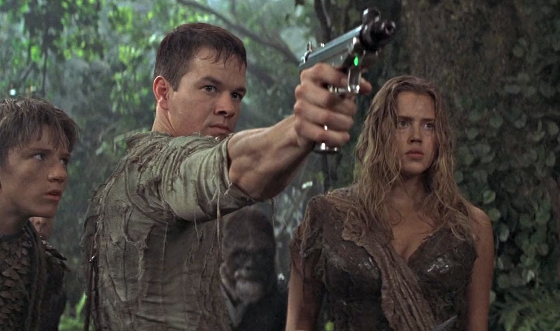
This is a great example. Tim Burton’s Planet of the Apes was very much a science fiction movie in setting only. When the plot is broken down, there is little that really hinges on anything involving the science fiction element. Mark Walberg plays an outcast who visits a foreign land and leads a rebellion against the established order. The questions of morality and social order (so present in the original film) are greatly downplayed to help the plot along to its conclusion – a great big fight that solves all the conflicts.

While the idea of equality and slavery is tossed around, the movie never really focuses any scenes on exploring it. There's a lot more time spent on running and shooting things.
While the idea of equality vs. slavery is tossed around, the movie never really focuses any scenes on exploring it. There’s a lot more time spent on running and shooting things.

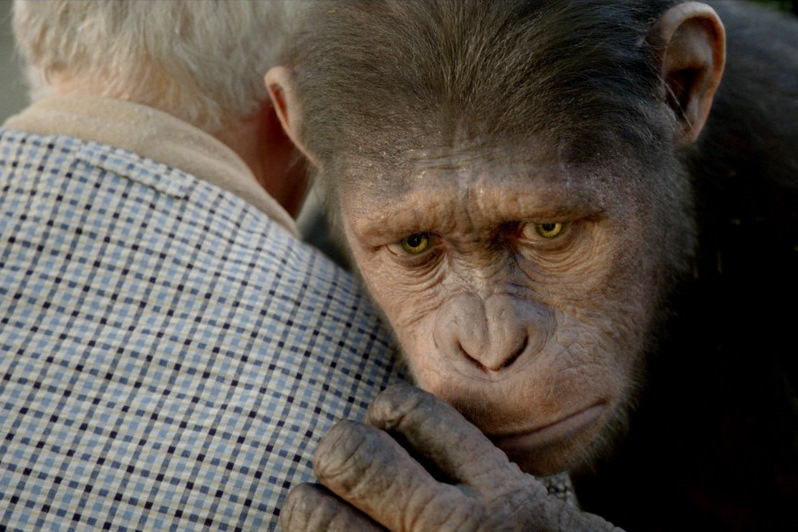
Ten years later and audiences would see a very different film. Rise of the Planet of the Apes tells the story of Caesar, a being created as the bi-product of experimentation. Caesar must find his place in the modern world, and the movie focuses largely on the challenges therein. Does the film still climax with an action sequence: yes, but the real attention is not on the fact that the apes are fighting their way free. The movie does not build to it, it simply occurs as the next step in Caesar’s path to finding his home.

Rise of the Planet of the Apes could also be summarized as a movie telling the effects of a fictional new drug.

Sunshine (2007) vs. The Europa Report (2013)

This is a little trickier but I think it proves a good example. Sunshine is, in large part, a pure science fiction movie. The plot centers on an imagined problem: the sun is dying. To try and save itself, mankind has dispatched two ships to try and resurrect the sun with use of a plasma bomb (or some such fictional technology). The first ship disappeared, so the movie focuses on the second. What makes it worth mentioning is that the conflict in the movie does not really relate to any of the science fiction elements. A crazy man boards the ship and stalks the crew. This bizarre injection of horror takes away from the sci-fi nature of the film. It is almost as if director Danny Boyle felt the movie was too weak to stand on just the thrills and dangers of a deep space mission to the sun.

The problem with the villain in Sunshine is that he isn't needed. Interjecting a religious fanatic proved to be a fantastic way to make the story less interesting. That said, it made this movie feel like Doom, just better than the actual Doom movie.
The problem with the villain in Sunshine is that he isn’t needed. Interjecting a religious fanatic proved to be a fantastic way to make the story less interesting. That said, it made this movie feel like Doom, just better than the actual Doom movie.

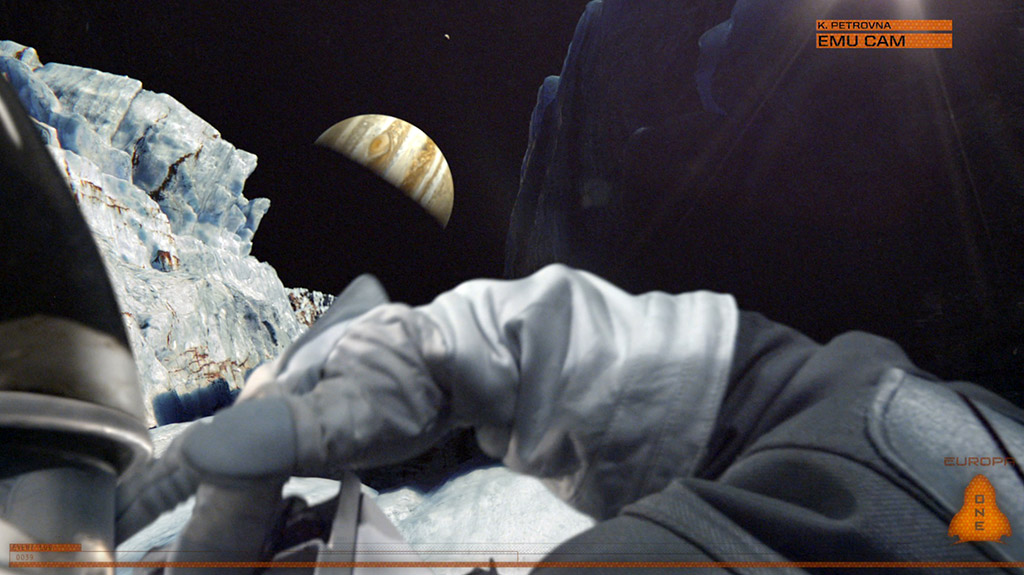
The Europa Report is a very similar movie with one crucial difference: the horror has been removed. This movie also tells of a deep space mission, though this one is to examine Jupiter’s moon, Europa, for any signs of life. The entire movie revolves around this mission and the complications that arise during it. There is no external force, no bad guy needed to force a conflict. It is in this omission that the movie is allowed to pursue different questions. How would human beings hold up to long isolation? What problems would arise naturally in deep space travel? What would it be like to try and land on a strange planet that we know very little about? What would we find on Europa? These are the questions being pursued in The Europa Report, rather than just saying “watch out for that crazy guy.”

The Europa Report is constantly walking the line between horror and wonder. In that regard, it perfectly nails the feeling of exploring a great unknown for the first time.

I, Robot (2004) vs. Robot and Frank (2012)

I know what you’re saying: how am I really comparing these two movies? I base this comparison on the fact that both plots involve robots interacting with morality, and both films center on friendships between humans and robots.

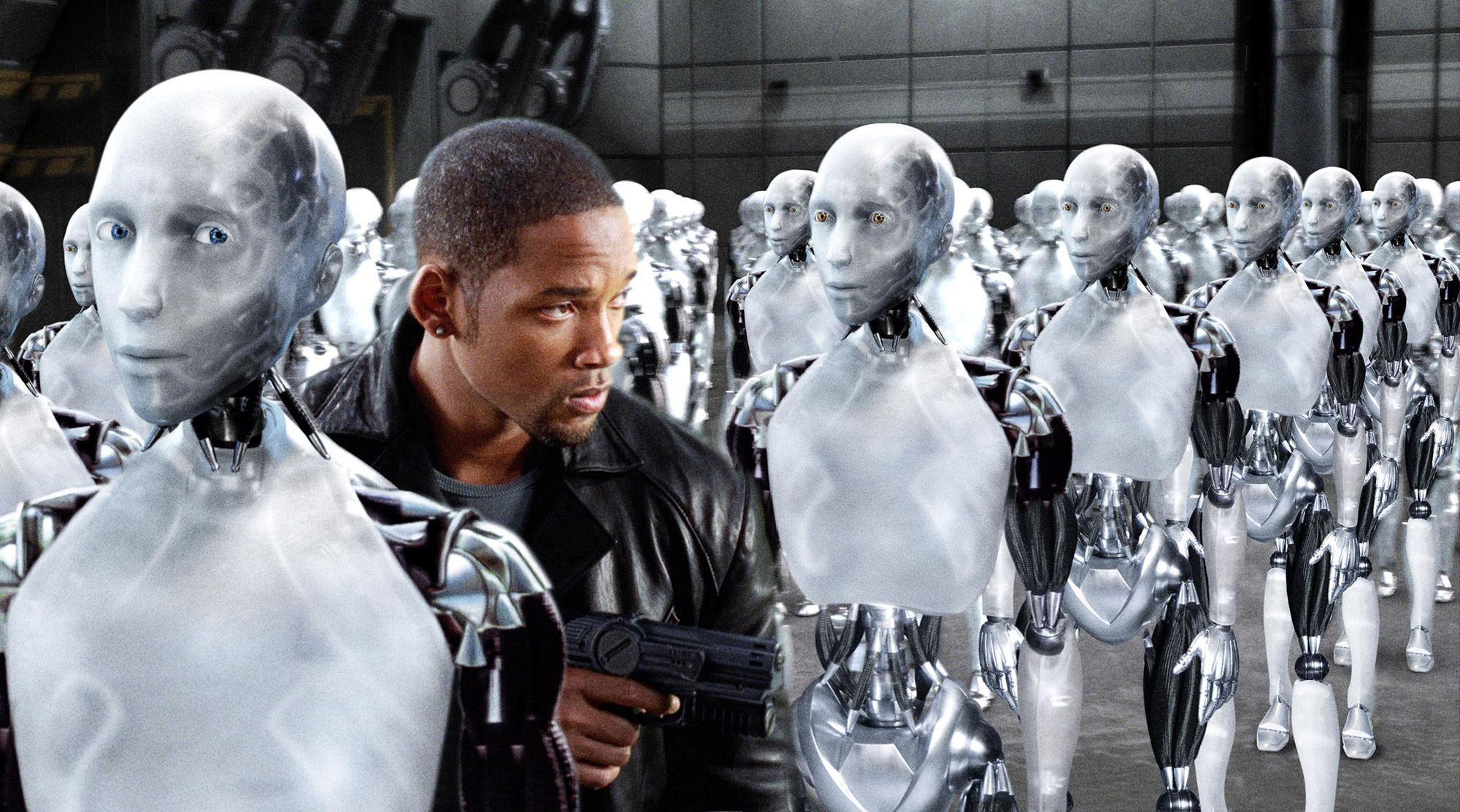
I, Robot is, at its heart, a thriller. Will Smith plays a detective investigating a murder believed to have been committed by a robot. The movie does explore a lot of science fiction questions involving robots and morality, but ultimately still feels driven by the typical constraints of a mystery thriller. Chase sequences and robot fight scenes abound. Is there a villainous robot to destroy to save all mankind? Of course.

There is more to this movie than just the mystery - but the thriller is always center stage.
There is more to this movie than just the mystery – but the thriller is always center stage.

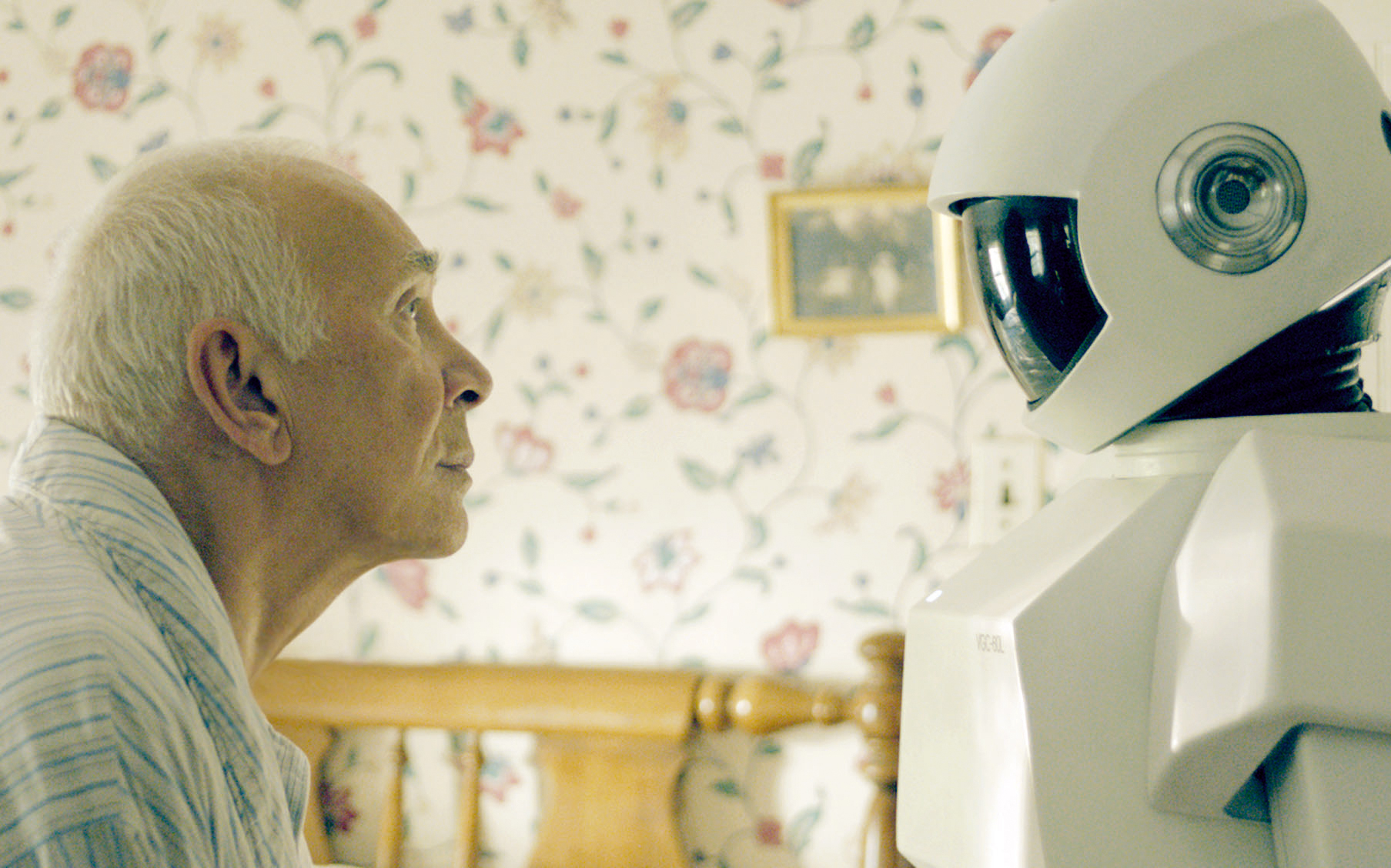
Robot and Frank tells the story of an elderly man suffering from alzheimer’s, and the robot brought it to help him regain a life. The twist is that said man is also a jewel thief, and he wants to teach the robot to be his accomplice. This movie is much more focused on the question: do robots have morality and what would that be like? Throughout the entire film, the audience joins Frank in wondering just how human the machine is. There is a constant blurring between the line of appliance and friend. Yes, Frank is a jewel thief and the movie devotes time to that as well, but the robot feels essential and not just like dressing to the story.

This film plays a lot with the concept of memory being tied to identity.

There are countless others but I will stop at three. I may do a follow up to this piece in the future. The point is this: science fiction is becoming more and more integrated into today’s film culture and, while there are a lot of films that still only use it as dressing, it is increasingly becoming a strong ingredient to the plot.

Harry Realities: Voldemort is a Dweeb

Lord Voldemort: the Dark Lord, He-Who-Must-Not-Be-Named, You-Know-Who… That Guy. Everyone knows the story of Harry Potter (available in seven books or eight movies). Lord Voldemort is the evil villain and main antagonist of the books. He is a murderer, his most prominent victims being Harry’s parents. Many people have drawn comparisons between Voldemort and the likes of Hitler and Satan. At first glance it makes sense, I mean he did bring the wizarding world to its knees before being defeated by a conveniently resurrected teenage Messiah. Hold on one moment… teenage? Yes, J.K. Rowling may want Voldemort to come off as threatening but really – who is she kidding? Let’s take a good look at “the Dark Lord” of the Harry Potter universe as he is presented.

The Dark Mark

Here is the definition on the Harry Potter Wiki (of course there’s one): “The Dark Mark is the symbol of Lord Voldemort and his Death Eaters. It refers both to a magically induced brand that every Death Eater bears on his or her inner left forearm, and to the same symbol conjured in the air by the spell Morsmordre.

Sounds pretty cool, like an evil-summoning rally cry. How does it actually look?

tumblr_l3rqmoHB4n1qc0dffo1_400Oh wow… a snake and a skull. That’s really bad-ass. Not the type of thing that would be included in EVERY SINGLE WASHABLE TATTOO SET FOR KIDS EVER.

I'm going to guess that Voldemort was either at a dollar store or a pharmacy when he came up with the design.
I’m going to guess that Voldemort was either at a dollar store or a pharmacy when he came up with the design.

This does not look like an evil logo. This is trying too hard. It is the type of thing that someone named Devlin would get when he is sixteen to “express his dark and tortured soul.” Evil does need to try and be evil. It can look as simple as this:

SwastikaMoving on.

The Death Eaters

The Death Eaters… was the name given to followers of Lord Voldemort. The group primarily consisted of wizards and witches who were radical pure blood supremacists and who practised the Dark Arts with reckless abandon and without regard to or fear of wizarding law.

Every villain needs followers and Voldemort is no exception. As a man obsessed with power and blood supremacy, it only makes sense that he would call his followers “death eaters”… except that it doesn’t. Where did that name come from? Were “Doom Bringers” and “Pain Makers” taken? Do they feed off the death they create – are they cannibals? I’m going to guess it just sounded better than “Evil Evildoers.”

At least they look cool right?

Someone's ready for the Slayer concert.
Someone’s ready for the Slayer concert.

The Name “Voldemort”

God, how smug is the Tom Riddle when he explains this to Harry:

Ladies and gentlemen: Lord Voldemort has some daddy issues. Seriously, first the tattoo and now a new name? How much of this is screaming “you’re not the boss of me!” to anyone who will listen.

Tom Riddle Sr: “Tom, pick up your clothes. Did you clean your room like I told you?”

Tom Riddle Jr: “My name is Voldemort, dad! Voldemort! I am a great wizard!”

Tom Riddle Sr: “Sounds like one ‘great wizard’ isn’t getting any pizza this evening.”

Tom Riddle Jr.: “I hate you so much!”

Seriously, it would be like if Adolf Hitler renamed himself Nazi Maximus.

The Snake Thing

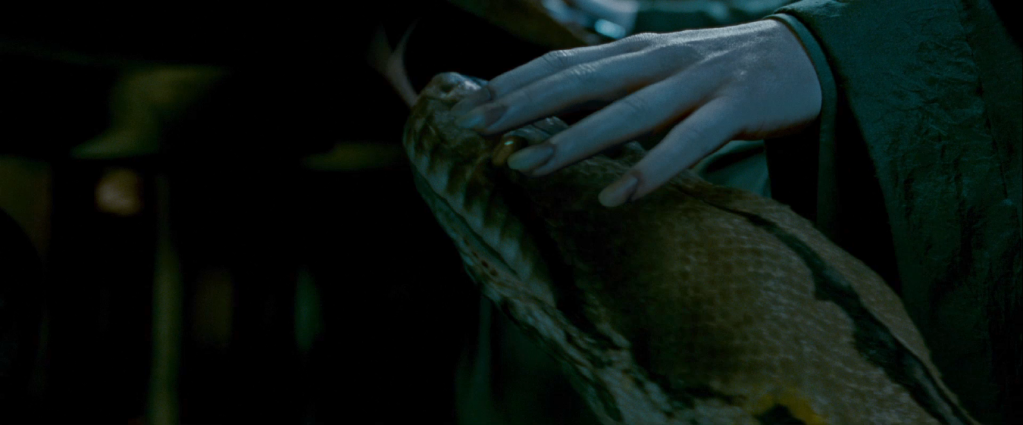
Every edgy teenager who wants to be taken seriously needs an edgy pet. Dogs and cats: only conformists have the loyalty of those creatures. Voldemort got into snakes in a big way. He has a pet snake (not an innuendo), he can speak to snakes, he even received body modification to make himself look more like a snake. Voldemort’s kind of a big deal in the snake world.

We get it man, you like snakes. No one cares.

I get it, snakes are a symbol of evil in the Old Testament. J.K. Rowling was going biblical in her villains. It is just a little silly in this day and age. You know what else was evil in the Old Testament: women. Seriously, they were the source of a lot more problems than the snake. They were even closely involved in the whole snake debacle in the garden. So if Voldemort really wanted to be Old Testament evil, he should have lost his “snake” and gone for an operation.

Voldemort playing with his pet snake... still no innuendo.
Voldemort playing with his pet snake… still no innuendo.

He is Evil to Everyone

Voldemort was a psychopath will all the classic traits: lack of empathy, incapacity for remorse, grandiosity, selfishness, and violence. He was highly intelligent, as evidenced by his top performance at Hogwarts and his tremendous magical achievements, but his interests were narrowly focused on the usefulness of people, objects, and powers to his goals. His inability to see the larger picture and inattention to events and powers that were not immediately useful to him was a serious flaw that led to most of his setbacks and ultimately his downfall.

Yeah… people like that never gain a lot of power. In a world where people can be killed with a wand and a couple words (or a gun), fear is not enough to attain sublime power. Even if readers believe that Voldemort is the most powerful wizard who ever lived (and the next point speaks against that), he is still not immortal. Sure, he has the horcruxes so he will come back to life… eventually, but still – Voldemort is just one man. Every dictator in history has possessed the ability to manipulate. Voldemort is just too busy trying to be cool – I mean evil.

Bellamort-3-bellatrix-lestrange-29908270-499-408Harry Potter

Last but not least, a villain can be defined by the protagonist he is opposing. Voldemort, supposedly the greatest wizard who ever lived, has a teenager for an arch-enemy. Sure, Harry is supposed to be gifted… but seriously. There is still a gap between strong student and greatest ever. It would be like if Stephen Hawking battled a college student with a strong G.P.A. Harry is not even the most intelligent person among his friends and yet: he is still able to outwit the Dark Lord on a regular basis.

Yeah, Voldemort is really terrifying. Remember that time he lost to an eleven year old?

Does this look like the face of mercy to you?

Bottom line: J.K. Rowling tried too hard. Voldemort is a cartoon bad guy, complete with evil laugh and sidekick. It is simply not possible to take him seriously. Yes, he is a murderer, yes he hurts people… but seriously – he is kind of a dweeb. Maybe Voldemort will amount to something when he finally grows


On a more serious note, I uncovered an excerpt from an interview with J.K. Rowling that I would like to share:

“Ravleen: How much does the fact that voldemort was conceived under a love potion have to do with his nonability to understand love is it more symbolic

J.K. Rowling: It was a symbolic way of showing that he came from a loveless union – but of course, everything would have changed if Merope had survived and raised him herself and loved him. The enchantment under which Tom Riddle fathered Voldemort is important because it shows coercion, and there can’t be many more prejudicial ways to enter the world than as the result of such a union.”


Yes, it seems like sex matters to J.K. Rowling, and bad people only come from loveless unions… or single parents. I may be reading too much into this but I stand by that: every time J.K. Rowling opens her mouth, the magic of Harry Potter dies that much more.