Is the Conjuring Misogynistic?

Short answer: no.

Longer answer: While reading a review of Annabelle in the Boston Globe, I came across an unfamiliar accusation. Peter Keough opened his critique with the following:

“Some praised “The Conjuring” (2013), James Wan’s film about the exorcism of a possessed house, for being scary without resorting to gore or special effects. Others, myself included, found the scariest aspect of the film to be its misogyny.”

I have seen The Conjuring multiple times and enjoy the film very much. I find it to be a well-written, well-acted, retro film of demonic horror. Personally, I had never noticed the misogyny that Keough referred to. After a little digging, the internet was revealed to have a few writers with opinions similar to the Globe. Andrew O’Hehir‘s article,The Conjuring”: Right-wing, woman-hating and really scary, appeared to be the most notable piece of criticism. In it, O’Hehir damns The Conjuring for its portrayal of the Warrens, its use of female antagonists, and its implied message that the Salem Witch trials were justified. He also reveals that he had mixed feelings on the film.

Okay… slow down.

For the record, O’Hehir is not the only one to feel this way, there are other reviews that echo his own sentiments… but let’s look at the accusations. First off, the Warrens. For those out there reading this without seeing the movie, The Conjuring follows the horror standard of “based on a true story.” Ed and Lorraine Warren were real-life Christian demon hunters who roamed the land and looked for evil to exorcise. In short: they were/are religious extremists. The kind of people who are more likely to believe in the devil than Darwin.

Criticisms of The Conjuring take issue with the film’s validating portrayal of the Warrens. In the film, the couple’s faith is shown only as their greatest weapon. It is what allows them to defeat the demon and save the family from harm. While admittedly, the Warrens were not this positive in real life, I am curious as to what the solution here would be? In order for The Conjuring to work as a haunted house horror film – the Warrens have to be more than just religious kooks. The entire threat of the movie would vanish if the Warrens weren’t valid in their beliefs.
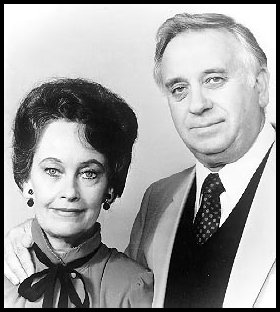
The real Warrens were probably wackos... but they are not in the movie.
The real Warrens were probably wackos… but they are not in the movie.

I feel that here is an instance where O-Hehir and other critics are projecting unreasonable expectations onto The Conjuring. EVERY MOVIE that uses the line “based on a true story” is fictitious. It is not the responsibility of any film maker to ever whisper to their audience “just remember kids, this isn’t real.” If The Conjuring were attempting a more meta approach, this criticism would be valid. As such, this is clearly a pure Hollywood thrill ride. The script does not address the fourth wall so director James Wan has no reason to either. It’s not that type of movie – these aren’t the real Warrens. They did not look like Vera Farmiga or Patrick Wilson either. Calm down about the portrayal.

Now, about the female portrayal:

Yes, the evil spirit haunting the house is a woman. A female antagonist does not misogyny make. It would as ridiculous as the claim that all black villains promote racism. Two of the main protagonists are women as well. Elaine Warren (who is depicted as the more essential of the couple) helps Lili Taylor‘s Carolyn defend her family from evil. O’Hehir seems to feel that the film labels women and their behaviors/identity as the source of all evil in the world. Again, this feels like a forced intrusion of perspective. Carolyn is not targeted for possession for neglecting her wifely duties – her family moved into a haunted house! If the ghost had attacked the husband, would that be a vengeful man-hating ghost uber-feminist? No, that would be a ghost.
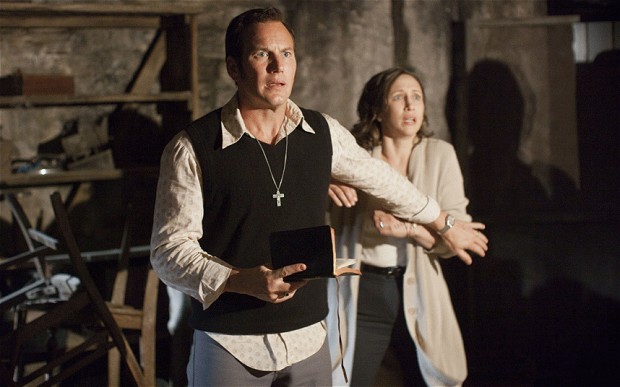
What do you see? A man protecting a helpless woman or a husband trying to guard his wife? Perspective makes a difference.

But Carolyn is saved by the power of maternal instincts!

Carolyn is saved by loving her children and not wanting to kill them… you know, not becoming a monster. Could a person project opinions/commentaries of maternal identity onto this action – of course. Yet at its heart, it is a parent refusing to abandon their child, and fighting off an evil force to do it. It is the climax of the film.

Yes, this is a movie that projects religious salvation over evil – because it is a movie about exorcism. Is it validating conservative roles and proclaiming religious faith is the ultimate way to go? Sure… if any audience member actually fights a real demon in their day-to-day life.

The last criticism I would like to address is the charge that The Conjuring validates the Salem Witch trials. This is both a serious charge and a baseless accusation. By claiming (in a fictional movie) that one real witch existed in the 1800s, The Conjuring is somehow saying that those poor victims deserved what they got in the 1600s. There is no line of dialogue that refers to the Salem Witch trials. There is nothing to connect the dots at all. Having a witch in the movie does not condone horrible crimes that happened in real life. There are several witches in Wizard of Oz, and yet I do not think that film is looking to serve as a commentary either.

Yes, witches were totally real. Just look at all the totally real stuff they could do.

The Conjuring, despite its marketing campaign, is not trying to be fact. There are many films that cross that line far worse (The Fourth Kind comes to mind). It is not as intelligent as certain horror gems like The Exorcist, but it is not trying to be either. It is fine to not like a movie, that is a very acceptable situation. That said, projecting an unreasonable set of expectations – and labeling the film as misogynistic – when it fails to follow them, goes too far. Certain people will see scenarios where none exist. Certain people will read novels in the blank spaces between the lines.

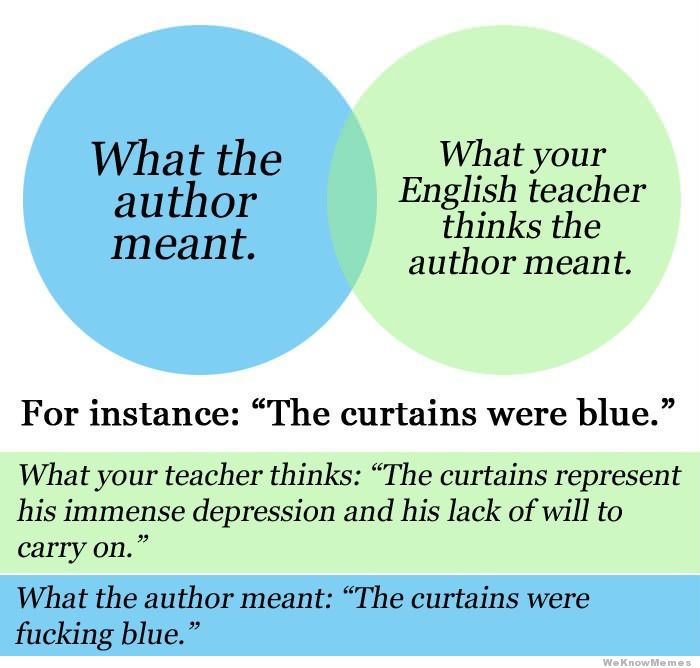
There are people out there who feel King Kong was made as a commentary on racism. Sure, if one discounts the people who made it - that is an acceptable thesis.
There are people out there who feel King Kong was made as a commentary on racism. Sure, if one discounts the people who made it – that is an acceptable thesis.

In certain cases, there is something to it. That said, The Conjuring is popcorn. You either like popcorn or you don’t. Just don’t go calling it milk duds. Do not go looking for sin where none exists. That sounds like a witch hunt.
How James Wan probably reacted to the criticism.

Cinemassacre's Monster Madness is a Horror Fan's What-to-Watch

It’s October and that means horror, well at least for some people. Personally, I was grown on horror movies. Being the youngest sibling in the house, I would sometimes walk into things “I was not old enough for.” Let me tell you: with horror, I agree with the age limitations. I saw part of Evil Dead II when I was six years old – the scene where Henrietta bursts through the cellar floor. Needless to say, my basement and I became distant acquaintances for the next few years. Yet despite this (or maybe because of), I grew up loving horror films. The mark of any effective piece of art is its ability to leave an impression on the viewer. There is a real talent in being able to terrify someone with – essentially – nothing. Even the best horror movies have nothing on reality, yet they still leave audiences trembling. The problem is this: horror is a cheap genre to film. There is a plethora of horror cinema out there and most of it is not very enjoyable or scary. So what to watch? Thankfully, one man has taken it upon himself to answer that question.

Unfortunately it's this guy. Yes, this is the least flattering photo I could find.
Unfortunately it’s this guy. Yes, this is the least flattering photo I could find.

James Rolfe, more famously known as the Angry Video Game Nerd, created Cinemassacre.com years ago. An amateur (now going professional) filmmaker, Rolfe clearly enjoys horror films more than the average theater goer. For the past seven years, Rolfe has been bringing a thorough and usually very insightful compendium to the horror film genre. He calls it: Cinemassacre’s Monster Madness. Every October, Rolfe creates a daily entry, which is usually confined to examining (in fair depth) one single horror movie. Most years have themes. In his first run, he outlined a history of horror. In this second run, there was the Godzillathon, and so on and so forth.

Many people have reviewed movies, just ask Youtube. More reviews than anyone can shake a stick at – some presented well, others not so much. What sets Monster Madness apart from the throng of other material is the sense of perspective that Rolfe brings to his work. Anyone can review a movie, but listening to Rolfe almost feels like a short lesson in film history. This is not simply some fanboy rattling off all the movies everyone HAS to see before they die. The writing instead contains a well thought-out approach, and does not overstay its welcome.

Rolfe shows versatility in being able to switch off his 'persona,' in order to give a cooler approach.
Rolfe shows versatility in being able to switch off his ‘persona,’ in order to give a cooler approach.

This ability to edit and show self-restraint sets Rolfe apart from a lot of other internet personalities. The viewer gets the sense that he is not doing this for himself, but rather from the simple love of a well put together creation of art. It is also refreshing to see him break from his Angry Video Game Nerd personality to actually provide more direct and reasoned critique.

Halloween puts people in a mood for scary, there’s no two ways about it. With Cinemassacre’s Monster Madness, audiences can at least know how to navigate the sludge of sub-par films they are bombarded with. Interested in checking out a new thrill? Ask James Rolfe. He’ll always give you something (spoiler-free) to think about. And that, is a job well done.

https://www.youtube.com/watch?v=lxLZkjbPMZs

Forgotten Classics: A Nightmare on Elm Street (2010)

Samuel Bayer and Fede Alvarez have one thing in common: they were both no-names who got the chance to direct big budget horror. Alvarez used his opportunity to bring new, gory life to Evil Dead, while Samuel… Samuel, Samuel, Samuel. Our buddy Samuel directed the A Nightmare on Elm Street remake. Let the record show: I think the original is just all right. Granted, it has been a few years since I last saw Wes Craven‘s most famous horror movie but I still feel like I can remember all the good parts (and the bad parts – namely Heather Langenkamp’s acting). But let’s not talk about Wes Craven, not right now anyway. Let’s talk about Samuel Bayer and the lovely little film he made a few years ago.

I just watched the new A Nightmare on Elm Street yesterday and boy, I knew I had a winner within the first ten minutes. It’s not ever script that opens a movie with dialogue like:

Girl: “Dreams aren’t real.”

Guy: “No, you don’t understand. This dream is real.”

Girl: “No, dreams aren’t real.”

That’s from the opening couple. You can tell, from witty dialogue like that (thank you for your script, Wesley Strick and Eric Heisserer… two people wrote this????) that these two must have a dynamite relationship. Rest assured, it isn’t just the script that’s top notch. Bayer is obviously one stellar director and has gathered a terrific cast. Look at how frightened actor Kellen Lutz appears in this scene:

He perfectly captures the look of someone who just realized he left the water running at home.

Yes, that is how terrified people look in their nightmares… or when they realize there’s still eighty minutes left to go. Better get used to a lot of young teen (all played by people in their twenties) stares in this film. Really though, they have such classic material to work with. The original film has several memorable moments, with none more than the rise of Krueger’s glove from the bath tub. Rest assured – that scene is in the movie.

A-Nightmare-on-elm-street-2010-trailer-a-nightmare-on-elm-street-10674845-1366-768Rest assured, it has nothing to do with anything else. In the original, this sequence helped escalate the tension that Freddy was actively stalking the protagonist, Nancy. Tension and protagonists are so 1984.

In fact, this film does not feel the need to really introduce the audience to the main character until the 45 minute mark in the movie. That’s right: for the first three-quarters of an hour you are watching characters whose actions have no real consequence on the plot. Doesn’t that just sound engaging? Bayer must have mimicked the Rob Zombie approach when it came to protagonists: not needed because the killer is just SO interesting.

Let’s talk about Freddy Krueger then (played by Jackie Earle Haley…).

First off: what is the point of remakes? It’s a big question but I’m sure that most would agree that one such function is to update a film to the modern era. Sure, Freddy Krueger was scary but that was way back in 1984! Let’s have a look:

Hmmm, actually that doesn't hold up too badly.
Hmmm, actually that doesn’t hold up too badly.

Well, if that’s what they could do in 1984 then 2010 must be –

nightmareelmstreet12126…………………… it looks like the Cowardly Lion had a really bad shave.

Yes, 2010 also knows that make-up is a thing of the past and nothing looks more believable than computer graphics on a man’s face. Jackie Earle Haley is kind of a creepy guy, anyone who has seen Shutter Island can attest to that. Obviously the best thing to do with a talented actor is to cover him in CGI until nothing can be seen of his face or performance. Well, if his visual performance is anything to go on, how is his acting?

Before you ask, at least 90% of his dialogue is delivered in that same monotone, gravely voice. Acting is also for the 1980’s.

Another function of remakes can be to put a new spin on a character. In this case, the movie sets up Freddy Krueger as an innocent victim. A man wrongfully burned by over-zealous parents. This arguably makes for a better origin than this original roots. If Krueger were innocent than the movie could show how people always make the worst monsters, as well as expressing the dangers of mob justice. That is – until the final twenty minutes when the movie reveals that yes, Freddy still did it. Mob justice is the best justice, who needs the police? Great morals for today’s society.

If any out there remained unconvinced that this movie is worth checking out, allow me to share a favorite scene. Nancy is badly injured by Freddy and romantic hopeful, Quentin, rushes her to the hospital for care. There Nancy meets her mother and says she doesn’t want any sedation. The doctors prepare to sedate her anyway so Quentin rescues her from the hospital…. that’s the sequence. What bearing does it have on the story (other than extending it for five more minutes): Quentin steals some shots of adrenaline. Yes, because there are no other sources of energy out there – everyone knows you have to go to the hospital to receive a pick-me-up.

In the age of talented-but-unknown horror directors (like Adam Green and Ti West), it is great Samuel Bayer got the chance to leave his mark on such a famous horror franchise. He did to A Nightmare on Elm Street what Freddy Krueger did to his victims. Karma.