Joe Biden’s Three Biggest Failures

Joe Biden

So, like at least 74 million of my fellow Americans out there, I wasn’t thrilled with how this past election turned out. That actually may be the most understated sentence I’ve written on this blog. My actual thoughts drift closer to “Holy hell, how did we end up here again?”

I’m not the only person thinking that. There is no shortage of pundits out there who, despite how wrong they may have been about how the election was going to go, now confidently turn back and say “It was clear because of [insert reason here] that Kamala Harris was going to lose.” In my opinion, the best immediate reaction was Jon Stewart’s:

So I’m not here to claim to be the smartest person in the room. Heck, right now the only one sharing the room with me is a cat – and he definitely seems more on top of his life than I do at this moment. That said, I do pay a lot of attention to what goes on in the world – and I watched Joe Biden’s performance with great interest.

For the record, I think Joe Biden did a f*ck ton of good things he currently does not get enough credit for, including but not limited to:

All that’s pretty good, right? Not to say there weren’t dark spots – I mean, that’s the point of this article. For the record, I’m going to focus more on flaws that were present from day one and not specific policies. That said, I must mention Biden’s disastrous response to Israeli prime minister Benjamin Netanyahu’s war of aggression in the Middle East, which has led to a horrific humanitarian crisis and shows no signs of slowing down. Holy hell, way to leave innocents to die, Joe.

But this incident happened in the final year and a half of Biden’s presidency and, while definitely helping to aid the return of Donald Trump, is not – in my view – the reason many in America fear for the future. So let’s talk about the three biggest failures of Joe Biden’s presidency, starting at number three and working our way up.

Biden’s Ego

Everyone who runs for President of the United States has an ego. I mean, you’d have to – right? We’re a nation of over 350 million people and if you’re sitting here going “I bet I could make this place better” then you have a healthy opinion of yourself. Nothing wrong with that.

The issue comes when the thinking changes from “I bet I could make this place better” to “Only I can make this place better.” While many focused on Trump’s ego – as he has made this statement or statements like it throughout his political career, he is not unique.

In fact, I would argue things turned significantly worse for America’s future when, in April 2023, Joe Biden announced his re-election bid. AT 80 years old, Joe Biden felt confident he was the best person to be president of the United States for the next six years. More than that, there was a central message emanating from the Biden campaign: Only Joe Biden can beat Trump. This was gospel despite every bit of external data suggesting that the American public wanted someone else. Heck, the Biden-Trump rematch was the most poorly anticipated presidential election in decades, and that is saying something.

When Joe Biden ran in 2020, he told Americans he would be the bridge to a new generation of leadership. He was almost 78 when he said that, so please forgive the most of us who assumed that statement did not imply a two-term bridge.

Ego is one of those aspects of personality that must be kept in balance. Biden was fine when he believed he could beat Trump. The situation soured the minute he believed that, not only was he the only one who could beat Donald Trump, the majority of Americans really wanted him to try again.

Merrick Garland and the Gaslighting of America

A president is judged by their cabinet. The complexities and vastness of America are simply too much for any one person to handle. Given the extraordinary first presidency of Donald Trump, which climaxed in a despicable attempted insurrection on January 6th, a crime that unfolded on national TV, across social media, and in full view of everyone. We all saw it happen, from start to finish.

For this crime to remain an anomaly, swift and decisive justice would be needed on every level. Trump needed to be held accountable for his role – as did every other mastermind not physically arrested in the nation’s capital.

So, Joe Biden nominated Merrick Garland, the once-spurned supreme court nominee, to lead this effort. And what happened? Absolutely nothing for more than a year. Garland resisted and delayed at every turn, not wanting to seem eager or partisan in his approach to Trump’s blatant misdeeds. When finally – FINALLY – pressured by the January 6th committee, Garland finally lurched into action… by nominating someone else to actually… do the action.

Merrick Garland failure
If only Biden had known someone more familiar with prosecuting to serve as AG. Like a former prosecutor turned senator…alas, no such political maverick was found.

Yes, despite happening on January 6th, 2021, the case into Trump’s corruption didn’t fully begin until November 18th, 2022, when Garland appointed government corruption specialist Jack Smith to oversee all Trump’s potential misdeeds in one clump. Because nothing says speed or efficiency like giving multiple cases of work to one person.

So, rather than beginning on day one – the most important prosecution of Biden’s presidency didn’t start in earnest until after the mid-terms. From there on, the inevitable delays pushed the cases into the election cycle, where Garland’s efforts to depoliticize the investigations exploded in his face.

You cannot blame the public for shrugging at January 6th when your own Attorney General had to be peer pressured into doing his job. The failure of Merrick Garland may well reverberate for decades to come. And, when the buck stops at the top, the failure of Merrick Garland is just another way of saying the failure of Joe Biden.

Communication (or the one lesson to learn from Donald Trump)

Sometimes you know there will be problems from day one, and I still remember watching the inauguration of Joe Biden and going “uh oh.” On the surface, nothing bad happened. Biden did as he promised. Right after taking the Oath of Office, he signed a flurry of executive actions – on camera. The move was mundane. He sat down at his desk, took out his pen, and just did it. The tone was clearly “Americans elected me to do a job and I’m here to do it. No fuss.”

Except, that’s not how a politician leads in today’s climate. The 21st century is on beset by information. It flies at us all the time from practically every direction. You can find news on TV, on your computers, on your phones. At a time when everyone was shouting, Biden seemed very content to quietly do his work, without making any signs of showmanship or posturing.

Trump, by contrast, would have grandstanded each of those accomplishments, as well as the many others that came over the four years. This is the one area where Donald Trump should be emulated. The man knows how to show off. He’s not the first politician or president to do it, but Trump excels at communication. Case in point, we’re about to hear that the economy is actually awesome and that everything is going great. That switch will come, day one, in January 2025. Nothing will have actually changed, mind you – but that won’t stop Trump.

Whether due to his age, his stutter, or just his disposition, Biden was unwilling or unable to meet the communication challenge of modern America. His administration seemed opaque and muffled – as if it were trying to hide something. Even before the 2024 election, Biden gave few interviews and made infrequent media appearances. When he did speak, it was through exclusively traditional channels.

And, when it came time to strut his stuff, Biden failed to effectively tell the American public what he’d done – with the exception of a pretty decent State of the Union address. The lack of communication, however, was not the only issue.

Biden appeared as isolated as Trump from the criticisms of his presidency, dismissing much of it as mere partisanship. The inflation crisis that gripped America was never properly addressed. In fact, Biden – at multiple times throughout the last year – championed the economy, talking about how amazing it was. On many levels – he was right. In 2024, America’s economy has been seen as the envy of the world. The stock market is strong, job growth robust. Hurray… right?

By missing (or perhaps refusing to see) how much inflation was hurting people, Biden’s messaging felt off. Unfortunately, this messaging was largely passed on to Kamala Harris’ campaign during its mad 100-day dash to try to salvage victory. Too little was changed, too late. With a more savvy communicator in the White House, who knows what would have been different?

America now faces a very uncertain future. Even many of those who voted for Trump don’t appear to know what exactly they’ve gotten themselves into. Google searches into “what is a tariff” have spiked following the election and many companies are preparing for the worst. As always, pundits and “experts” have a take.

As for me, this is my two cents on Biden. I promise I’ll be writing about plenty of non-political things in the future but well, I have kids and I care. I hope I’m wrong, that’s all I’ll say. Unfortunately – I’ve said it before… and I wasn’t. But for now, the horse was hired back into the hospital.
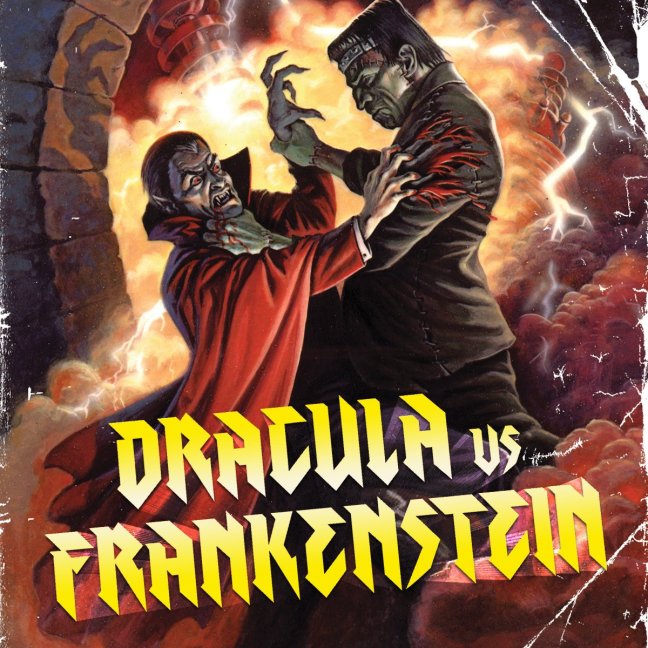
Frankenstein vs. Dracula: The Battle for Social Progress

I might as well lower everyone’s hopes right now. No one is actually fighting in this essay. If you want to see Frankenstein’s monster duke it out with the Count, I recommend tracking down this film instead. No, today I’m more concerned with the theme than the monster used to showcase it. In particular, I’m going to be discussing how two of the western world’s most famous monster stories have polar opposite themes, and how they have informed (American) society in the past century.

Frankenstein: Humanity before Progress

Those who have not read Mary Shelley’s 1817 novel or witnessed the 1994 film adaptation by Kenneth Branagh may be surprised to learn that the story of Frankenstein is, in part, bookended by the story of Captain Robert Walton, a failed writer turned would-be explorer out to “discover” the North Pole in the name of scientific progress – ice and freezing temperatures be damned. It is through this misadventure that Walton meets Dr. Frankenstein and hears the tale of the creation of the creature.

After learning of how Frankenstein’s blind ambition and irresponsibility destroyed his family and cost lives, Walton has a choice to make: Push on or turn back. Victor Frankenstein, near death though he is, urges everyone to keep going. After all, forward progress must be maintained! Walton, however, decides to not listen to his newly discovered nutcase friend and instead orders the ship to return. Frankenstein dies shortly thereafter, but not before telling Walton “happiness in tranquility and avoid ambition.”

It’s pretty on the nose. Dr. Frankenstein is depicted as someone controlled by his desire to keep going, his ambition toward discovery, progress, and knowledge. Responsibility, and by extension, humanity, come second. Even after the creature has murdered and destroyed, Victor still wants to go on. He’s not someone to say “enough is enough.”

Dracula: Humanity due to Progress

In Bram Stoker’s 1897 novel Dracula, by contrast, depicts progress in a much more positive light. It is a man of learning, Professor Abraham Van Helsing, who leads the charge against Dracula. Moreover, Van Helsing and his vampire hunters use technological advances (such as the railroad) to outmaneuver Dracula and arrive in Transylvania ahead of him. This allows the vampire hunters to set a trap, killing the Count before he can return to his castle.

In this way, Dracula actually shares something in common with another famous monster, King Kong. Both are shown to be apex predators in their native lands, killing with impunity and dominating the local people. Once they enter modern civilization, however, they are met by forces they do not understand, forces that – while at first appear weaker – have an understanding of technology that prove to be fatal to the would-be invader (it is worth noting that Dracula comes to civilization willingly, while Kong is forced).

This is not to say technology is the sole good guy. Indeed, Stoker’s approach is far more nuanced. Many of the techniques used by Van Helsing are spiritual tools, rather than scientific instruments – and the professor himself chastises many of his scientific colleagues for being too dismissive of possibilities (such as the existence of vampires) if science cannot offer an immediate answer. That said, I feel that Van Helsing’s attitude, his “let’s keep an open mind and gather all the facts” is intrinsically a scientific mindset, and he is simply being critical of human weakness, it’s ability to lapse into “easy answers, no questions” rather than continuing to progress, even if it means challenging pre-existing beliefs.

In this way, Dracula is an even more progressive book, as takes a man of scientific height in society as showcases him as a hungry learner, someone who is never content to just listen to what other people have done, but who must earn the knowledge himself.

Dracula’s Adaptations: The Loss of Progress

The reason I focus on the role of technology in Dracula (the book has numerous other critical interpretations) is because it is often overlooked. Heck, the Wikipedia page of Dracula doesn’t even include modernization and technology as a major theme. To date, I have never seen a film or television adaptation of Dracula that actually preserves this aspect of the novel. Most are too concerned with the women’s necklines or the allure of a sexual predator to even think about what the heroes are doing.

While pretty much every adaptation preserves the cautionary conservatism of Mary Shelley’s Frankenstein, very few (none judging by what I’ve seen) deem Van Helsing and co.’s use of modern science to defeat Dracula as worth keeping. Perhaps it is because the latter is more timely than the former. After all, few readers in 2021 are reading about phonographs and railroads and going “wow, the future is here, man!”

And yet, given the larger body of American horror cinema, I can’t help but wonder if the fear of the new just lends itself better to horror. Let’s take a look.

Legacy in America: Dangerous Progressives

Okay, I know everything in America is political today (including so much that shouldn’t be – vaccines, climate change, freaking He-Man), but I want to stress that when I say progressive and conservative, I’m not talking Democrats and Republicans. Heck, I’m not even talking about anything new. Just look at the 1950s, an era when fears of radiation and communism dominated American horror cinema. Invasion of the Body Snatchers, Them!, The Beast from 20,000 Fathoms – all of these and more essentially said “hey look at this new idea, it’s pretty scary when you think about it!”

It carries over, even today, into “liberal” Hollywood. Thanos, the most famous movie villain in recent memory, can be seen as a metaphor for climate extremists. And he’s not alone: Kingsmen: The Secret Service (2014) and Godzilla: King of the Monsters (2019) also feature similar antagonists. Those who wish to upend the status quo are often seen as villains, even if their motives are just:

It’s very common and shows no signs of slowing down. This is not to say that conservative ideas are never depicted as villainous – heck, while Disney is doing dangerous progressives in Marvel, they often save evil conservatives for their animated feature films. In general, however, I feel that the Frankenstein theme of “progress must be checked constantly by humanity or else disaster ensues” is more prevalent than Dracula‘s “yeah science isn’t perfect but we can vanquish a lot of longstanding evils with modern tools and weapons.”

Of course, every now and then you get a work of fiction that goes for a more complicated route…something more challenging and thus, more difficult to pull off. I encountered one such work recently, which is why next time we’re going to be talking about Ready Player Two.

They Lost the Power: Revelation

Well people of all ages, it’s that time again: Time for a creator to bring a new and creative spin to an existing franchise…and time for some “fans” to freak out about it. The most remarkable thing about any of this is that it’s actually not Star Wars for once. So what franchise are the woke elite after today? None other than:

Is nothing sacred!?!

Yes, today’s victim of the cruel SJW agenda is none other than He-Man, beloved action figure, not even remotely homoerotic hero of Eternia. I recently sat down to watch creator Kevin Smith’s new take on the Masters of the Universe…and really loved it. Like yeah, I hope the ending doesn’t stink but I’m very much onboard with this new exploration.

But of course, I never really watched the original show. It was a bit before my time (He-Man being really popular from roughly 1981 to 1987). I had the toys though, by virtue of having two older brothers. Oh lord did we have the toys. I’m honestly not sure if there was anything we didn’t have – we had all the characters, all the playsets, it was awesome. I say this to give my background as a He-Man “fan”…someone who likes the universe but really never got into it beyond as an action figure line, at least until Noelle Stevenson’s excellent She-Ra series came along in 2018.

Db4E4brX0AMGSJj
Had all these and so much more!

After all these years, it’s wonderful to see such awesome stories coming from Eternia and Etheria. What’s less wonderful? Seeing continued toxic reactions to the efforts to update He-Man and She-Ra for the 21st century. I wish I could say it was a new phenomena, but sadly this has been around for a while.

He-Man and the Masters of Sexism

And you don’t need to take my word for it! Just give the He-Man episode from the Netflix show The Toys that Made Us a watch. One of the creators involved basically blames She-Ra for He-Man losing popularity. It’s been a while so I won’t try to quote, but what he said basically boiled down to “once girls had the power it wasn’t fun anymore.”

Boy does that seem to have some real truth to it now, doesn’t it? It truly does appear that certain people only care about having the power so long as it means taking it away from someone else. When women have the power? Ah they ruin everything! Just look at this planet largely ruled by men…hey wait a minute…

Not to get dramatic about it, but this is so tiring. First She-Ra “ruins” He-Man by daring to exist (all to bring more money to Mattel). Then Noelle Stevenson “ruins” She-Ra by daring to draw the character as anything less than a super feminine goddess. Now, even super geek Kevin Smith has managed to “ruin” He-Man by focusing and expanding upon a character that the old show was happy to have only as window dressing: Teela.

she-ra-header
For the record…this was the She-Ra image that sparked the controversy. Wow, right? What a thing to get angry at.

I can’t wait to see how the upcoming cgi series manages to “ruin” the series next.

Change: A Never-Ending Story

As American culture continues into the roaring (or maybe frothing?) 2020s, it has become clear that the backlash against change will endure. Many “fans” have taken it upon themselves to become guardians and gatekeepers of the art they love and are willing to turn incredibly hostile whenever they perceive something new aka threatening.

And of course, since it’s the age of the internet, trolls are along for the ride, striking whenever and however they can. Some of these trolls are random idiots with nothing better to do. Others, well let’s say they have a bit more funding from a foreign source. Russia. I’m talking about Russia.

All of this to create a sort of constant culture war whenever anyone dares try to bring something new to an established property. And when I say something new, I mean something that doesn’t neatly fit into the original patriarchal image. See He-Man has been remade and rebooted before, once in the early 1990s and again in the early 2000s. I actually watched the latter. It was…a show? Like totally fine but not at all exceptional in any real way, at least in my opinion.

But both of those remakes were relatively safe. Both kept the focus exactly where it had been when interest dried up in 1987. Neither tried to really bring in anything new. Hey do you want to see He-Man fight Skeletor again? Well you’re in luck! Everyone else who doesn’t care about He-Man (aka the majority of audiences) went right on with their lives. This is why He-Man sank from a pop culture icon to toy collector obscurity. As American scholar Michael G. Cornelius puts it: He-Man is a narrow definition of masculinity, one that is only really focused on physical strength.

Can We End the Review Bomb?

Okay very witty, but what can we do? Well, the good news is that – so long as people keep their heads – we shouldn’t have to do much. Toxic people and trolls love to review bomb. It is their first weapon in the war to shut down the scary new. Next they will allude to these obviously fake reviews on their social media, thus trying to legitimize them in their own social circles.

Does it work? Oh yeah – been working like a curse in the American political space. Just say something is true and that everyone believes it over and over again without ever providing real proof until it is suddenly part of the cultural narrative. Masters of the Universe: Revelation is currently being review bombed on Rotten Tomatoes, IMDB, and probably Metacritic (I haven’t checked but it is super easy to review bomb on Metacritic).

Just as a refresher: review bombing does not mean that many actual people are complaining (that almost never happens so quickly). What it does mean is that a select few people are using bots and other online tools to create fake accounts for the sole purpose of driving down overall scores. Since many review sites now use aggregates to give first-glance appraisals, review bombs can have immediately visible consequences. For example, if I recall correctly – Last of Us II, a 20+ hour game, already had over 250,000 negative reviews on Metacritic inside of 12 hours of release.

Now we as normal people can’t really do much about this apart from writing said aggregate sites and asking them to improve their internal policies to stop this before it gets rolling. Rotten Tomatoes tends to purge every now and then, as does Metacritic – I’m not really sure what if anything IMDB does.

But sadly, Masters of the Universe: Revelation may have the same “controversial” label as The Last Jedi, Ghostbusters 2016, The Last of Us II, and anything else in the near future that dares take a property some “men” have dubbed theirs and empower women within the storytelling.

Is it a correct narrative? Hardly ever, but it is the one they’re desperate to keep us talking about. Why? Because someone else now also has the power, and that really upsets them. Personally, I can’t wait to talk about the themes of Masters of the Universe: Revelations once the story concludes in Part 2.

Oh, and since Netflix is doing so many new takes on He-Man, can this be a show:

Also for the record, nothing in this article was directed at those who actually watched Masters of the Universe: Revelations and just didn’t care for it. I’m specifically talking about the idiots who made up their minds before the show aired and were ready to start review bombing right away. You know, the people who heard the word “Teela” and immediately dubbed the show “woke.” That crowd.