How to Tell a Story: Why How to Train Your Dragon Works so Well

It seems that Dreamworks Animation has always been the animation company in Pixar‘s shadow. While Pixar was creating films like Ratatouille and Wall-E, Dreamworks produced Shrek the Third and Kung Fu Panda. Not to say that Kung Fu Panda was bad (unlike Shrek the Third), it was just a much more simple story. Dreamworks simply was not producing animated films that contained the same amount of layers as their Pixar counterparts. In 2010, Dreamworks Animation made How to Train Your Dragon while Pixar created Toy Story 3. Yes, Pixar made the better film that year. That said, Dreamworks Animation took a giant step forward as How to Train Your Dragon became one of their greatest films produced. The story was just as simple and uninspired as any of their animated products, yet How to Train Your Dragon proves that quality is found not just in the story, but in how it is told.

First, what is the story in How to Train Your Dragon? As I said before, it is very standard: at its heart, How to Train Your Dragon is about an outcast boy growing up and learning to accept/believe in himself, and how that belief and acceptance catapulted him into much stronger social standing. This is a plot that has been before in animated films. At least once:
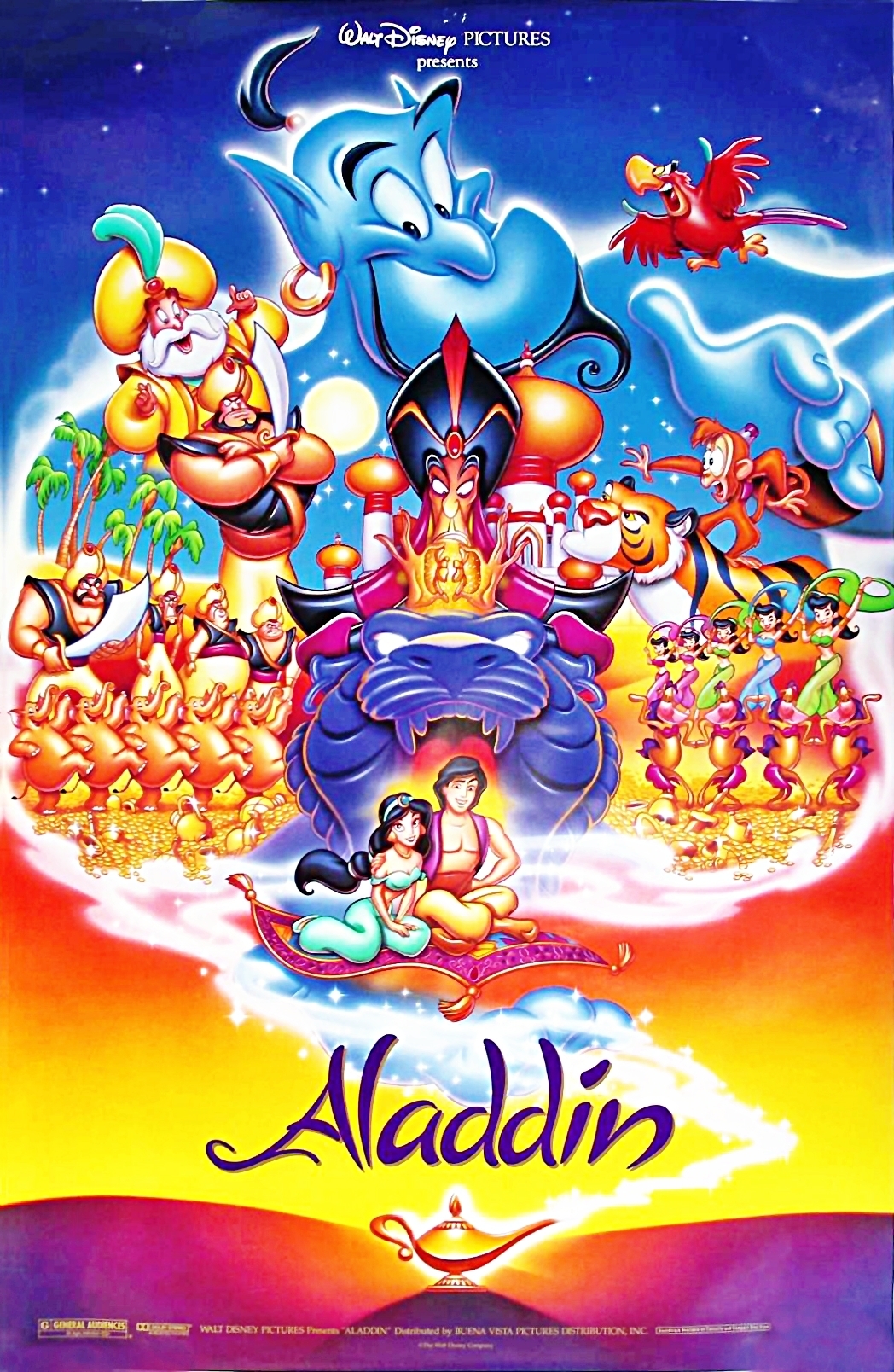
An outcast street-rat learns the value in being true to himself and becomes sultan of a fictional land (with some non-human assistance in the form of a genie.)
An outcast street-rat learns the value in being true to himself and becomes sultan of a fictional land (with some non-human assistance in the form of a genie).

Or twice:

An outcast learns to accept the true strength of his character in order to become a hero (with the non-human assistance of a satyr).

And like, say by Dreamworks the year before:

An outcast learns to be true to himself and becomes the dragon warrior/hero (with the non-human assistance of a turtle and a red panda).

So stories like this are nothing new to the world of animated feature films. Yes, every one of the movies mentioned dresses their story in a different way but all of those films share the same heart. However, these three films also help to illustrate my point: it matters how the story is told. It is possible to like only one of those movies and detest the other two. With How to Train Your Dragon, the strength of the movie lies in its character relationships.

Every story needs vehicles in order to function. The protagonist, the antagonist, the supporting characters, the conflict: every story possesses (at least most of) these traits. The difference between good stories and bad ones is how well these vehicles are disguised. A good writer/storyteller can dress fiction to be real life. In my article criticizing Star Wars Episode II, I (endeavored to) explained that the main reason that the relationship between Anakin and Padme failed was because it appeared as a plot focus and not as an actual relationship between two people. How to Train Your Dragon avoids this pitfall.

One of the main triumphs to examine is Stoick (voiced by Gerard Butler). He is Hiccup’s father and one of (if not the) main antagonist in the story. In a children’s movie, where simple storytelling is sometimes favored, it would be very easy to leave Stoick as simply that: the antagonist. Hiccup’s father who never listens, a bloodthirsty viking looking to kill dragons. Instead, writers William Davies, Dean DeBlois, and Chris Sanders create a complex relationship between Hiccup and Stoick that feels very real (even in a movie that is about taming dragons).

Hiccup has the revelation of where his mindless violent tendencies lead…

At the heart of their conflict is not an argument over what direction to take the plot (to kill dragons or not to kill dragons) but instead the simple problem of communication. Stoick and Hiccup do not know how to communicate with one another. They are both headstrong and stubborn (illustrating similar qualities helps enforce the family connection) and they simply have a hard time relating to one another. Yet throughout the movie it is illustrated that, while the two have their differences, they are a family who loves each other. This adds weight to the conflict and enhances the scenes between them.

…Much earlier than Stoick does.

Another strong point is, obviously, the relationship between Hiccup and Toothless. Both Chris Sanders and Dean Deblois created Lilo and Stitch and it is no surprise to see the same quality of human-sentient animal relationship in this film. Toothless is not simply a dragon but brims with personality, which allows Hiccup to exhibit personality as well. If Toothless were simply a dragon (a beast without intelligence), the plot of the film could still proceed but its content would have been weakened greatly.
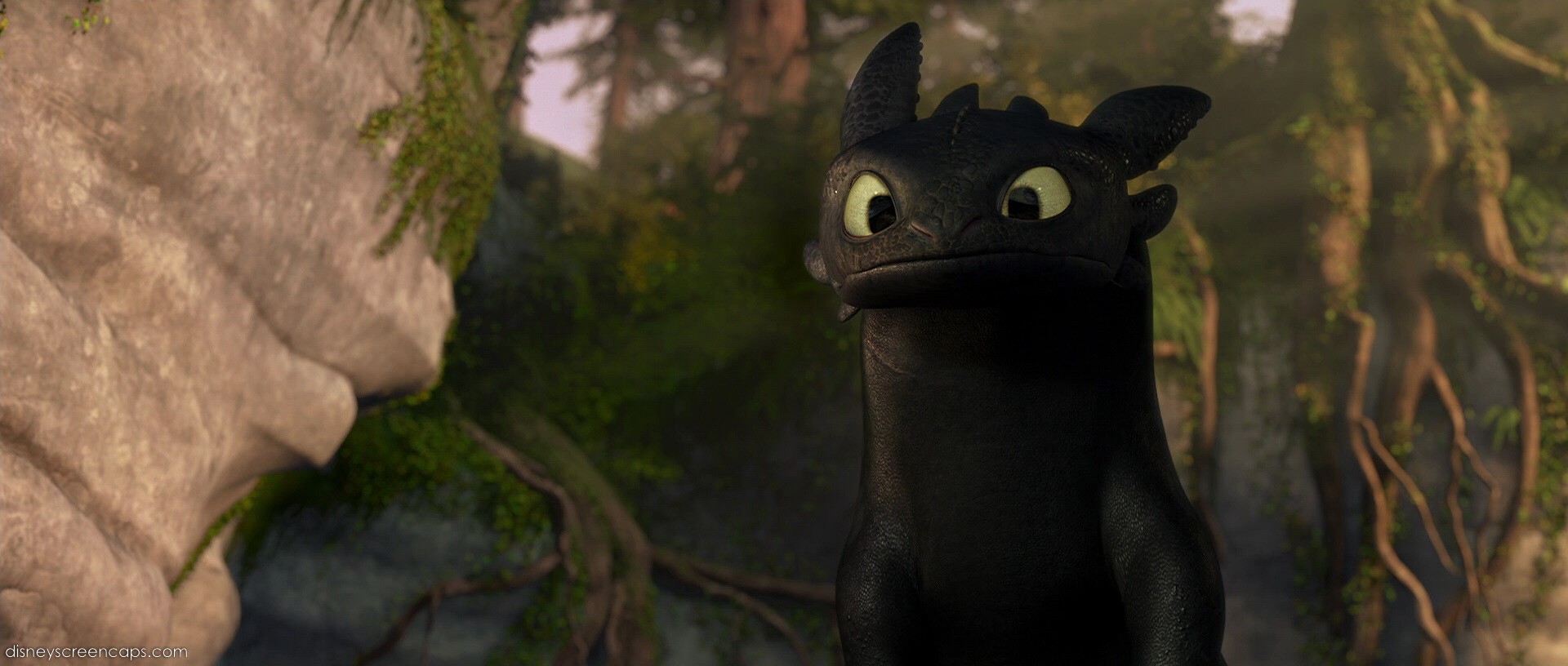
The animators realized a creature who could fully communicate without speech.

One final relationship I will mention is Hiccup’s relationship with Astrid (voiced by America Ferrera). Yes, Astrid does serve as the love interest, but she is also a character with her own personality. She is revealed to be determined and methodical. There are also several scenes demonstrating her capabilities as a warrior. This gives her personality so that, when she does fall in love with Hiccup, the audience can understand the reason why.
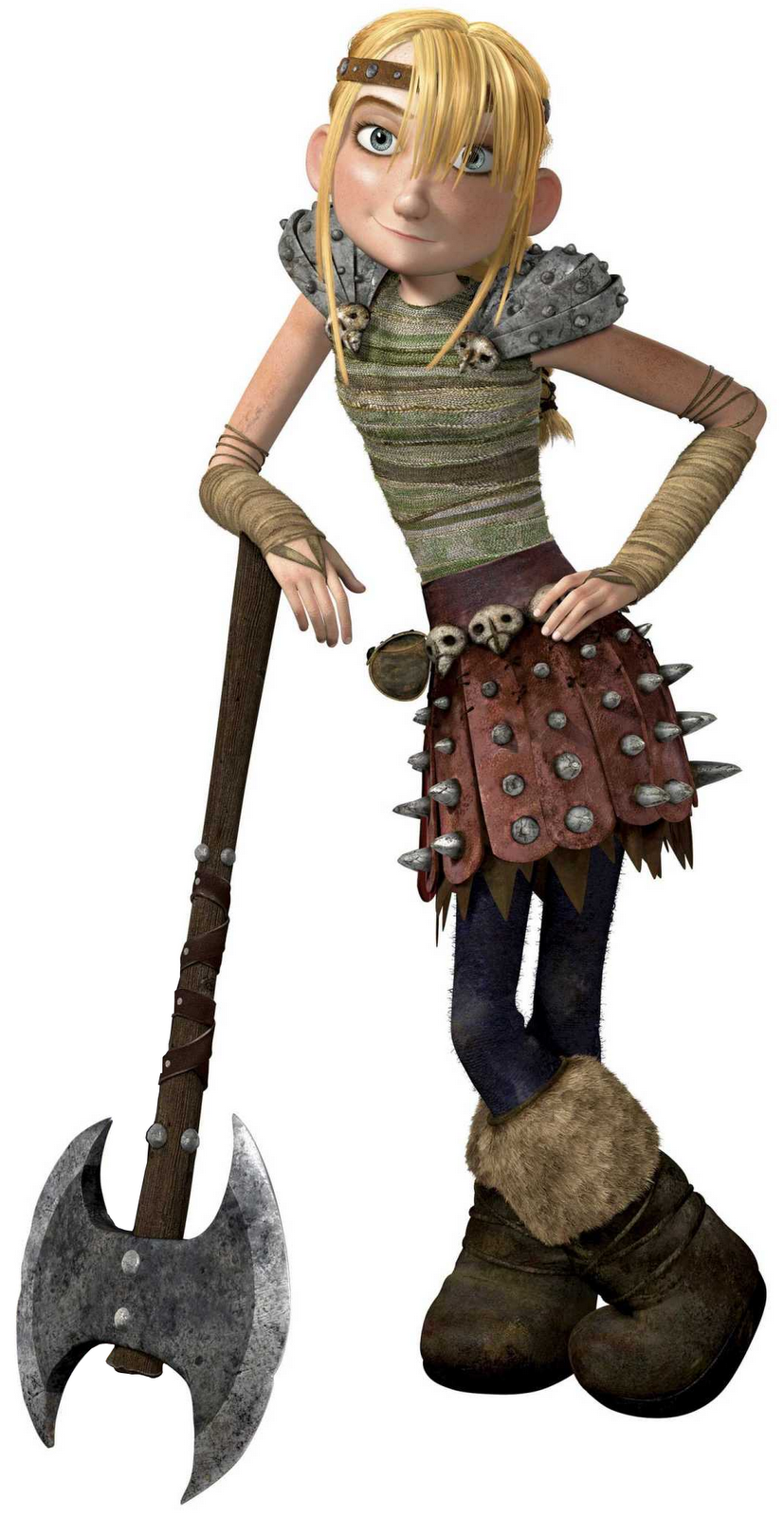
Astrid spends most of the movie with axe in hand.

How to Train Your Dragon is not the best animated film ever by a long shot, but it is a well-made film. There is much more here done right than wrong. The film never panders down to its child audience, never embraces the more flashy-dancey tendencies of other Dreamworks’ films, never does anything to sacrifice story or character. It is part of the proof that it matters more how a story is told, rather than what its content is.

PS – the sequel isn’t bad either.

Silly Things Written on the Internet or Frozen is NOT About Gay Marriage (Sorry)

The internet really is a wonderful place. It is an actual fact that, with the internet, all the knowledge in the world is at your fingertips (what does that say about you being here?). People use the internet for a variety of reasons: knowledge, pleasure, and voice being among the top three. In this article, I will focus on the third: voice. Everyone is entitled to an opinion, that is a fact. That said, not every opinion is valid, and no – acting on non-valid opinions is not okay (e.g. – let’s say a father decides his kids shouldn’t eat more than once a week, that is his opinion and he is a monster). There is nothing wrong with sharing ideas or talking things out, it is how the mind stays active.
All of that said: I think that this article is pretty silly, and not well-thought out at all. For the record, I do not think that Willie Muse is a stupid person or an idiot in any way… but there are a few flaws in his argument. For those out there too lazy to click on the link, first off: really? Second, Muse is arguing that last year’s Disney film, Frozen, is an allegory supporting gay marriage. His argument hinges on three parts: 1) Elsa Represents Gay People; 2)The Film Shows Flaws of Traditional Marriage; 3)Alternate Family Structures (are) Very Favorably Presented. Three points… let me rebuttal.

To start: this.
To start: this.

1) I will acknowledge that there are certain parallels between Elsa and a repressed gay adolescent. That said, note how I had to use the adjective ‘repressed’ to make the comparison work? If that gay adolescent grows up in an open and accepting household, then this whole comparison goes out the window. Generally, if one detail dislodges an argument: it’s not a great argument. Ignoring Elsa’s repression to say “that’s what being gay is like” can be insulting to all the other forms of repression that are out there. By the logic used, I can also say that Remy from Ratatouille represents gay people. I suppose he kinda does……. Maybe? That would ignore the much larger message though in favor of a smaller perspective. Remy, for instance, is dealing with issues of identity not connected to sexuality but rather with artistic freedom vs. social expectation. People are much more complicated than just their sexuality but to diminish Elsa’s real problem is too miss a good chunk of the movie: ELSA HAS ABUSIVE PARENTS. Seriously, she is living with people who (while not being evil) are incapable of accepting Elsa for who she is. Elsa could represent any child was is abused for being different (whether that difference is sexual, medical, religious, or countless others). Elsa could be a representation of someone with severe anxiety issues who is afraid to leave her home or be herself around anyone until one day she just LETS IT GO and realizes that living paralyzed with fear isn’t a way to live… wait. See, while saying that Elsa represents gay people isn’t the most ridiculous thing, it isn’t a great building block for a strong argument.

You don't have to be gay to suffer through repression and anxiety about who you are.
You don’t have to be gay to suffer through repression and anxiety about who you are.

2) NO. This is the one I take the most issue with. Prince Hans and Anna do not represent “traditional marriage” at all. They represent the fairy tale notion of one-look true-love destined to be together trope of a large portion of folklore (and early Disney animated features). The only “traditional” element of this relationship is that it involves a man and a woman. Also, while it is true that, in medieval times, marriage was often a political move, Hans does take it a couple steps past political takeover and into full-blown-I-Would-Run-Over-Your-Dog-Too-If-I-Could evil mode (I’ve already written about this in an earlier post). So the film really isn’t showing the flaws of traditional marriage, it is showcasing the obvious flaw of fairy tale marriages: namely don’t marry someone you just met (DUH). For the record, it would be much more like a “traditional marriage” if Hans and Anna were being forced into it (similar to the plot of Brave) but, just the fact that it is Anna’s choice… women didn’t make choices like that back then.

Man, the Lion King has some real bad things to say about "traditional" uncle-nephew relationships.
Man, the Lion King has some real bad things to say about “traditional” uncle-nephew relationships.

3) I don’t really feel that the trolls are an alternate family structure. They are not Kristoff’s real parents, sure, but that only makes them his ADOPTIVE parents. While I’m no expert on troll physiology (nor do I want to be), there appear to be male and female trolls present in the group. Grandparents, parents, kids: all age tiers are present. Looks like one giant, loving family all living together. Is it superior to Elsa’s and Anna’s parents: absolutely. Funny how having love and supportiveness in a family dynamic will do that. Yeah though, how are they really different from Aunt May and Uncle Ben in the Spider-Man universe? Just because parents adopt children doesn’t make it “an alternate family structure.” If anything (and I acknowledge this is a stretch), the argument could be made that Anna, Elsa, and Olaf represent the alternate family structure… and don’t show it favorably. Two women (sisters no less) bringing life to a snowman through some form of “unnatural” magic, and the resulting creation has no social awareness and just wishes (unconsciously) for quick death at  the change of seasons. For the record, I don’t think this is a serious message to be taken from the movie, I’m just saying it to make a point.

Look at how confused he is! This is what happens when a snowman has two mommies!

Frozen has received a lot of attention, maybe more than it deserves. There can be no question, however, that it is a culturally significant film. A lot of analysis has been, and will be applied to this movie. Some of it will be really insightful and shed lead on why this film had the impact that it did. Some of it… will just be silly.

All joking aside, I may be crazy to say that Frozen is a movie about the power of family love and acceptance and the relationship of two sisters. I could be crazy for thinking this.
All joking aside, I may be crazy to say that Frozen is a movie about the power of  love and acceptance, and the relationship of two sisters. I could be crazy for thinking this.


The Good, the Bad, and the Ugly in Brother Bear

Everyone is in love with Disney Animation right now. Frozen has melted the hearts of everyone who has seen it. Building off of a revival that began with Princess and the Frog back in 2009, Walt Disney has returned to relevance. They are no longer simply the studio that produces Pixar movies. However, things were not always so wonderful in the House of Mouse. Turn back time ten years and you get what many consider to be the darkest period for Walt Disney Animation. The studio was dying: the ill-fated Home on the Range was about to be released and the name Disney meant “cheap sequel” to everyone who knew them and “another word for Pixar” to those that didn’t. In short: not great. The studio just wasn’t producing hits anymore. Even the surprising Lilo & Stitch wasn’t enough to turn things around. When Brother Bear was released in 2003, it was to mediocre reviews. The film was seen and forgotten. Today when people list the Disney Classics, Brother Bear is not a film on anyone’s lips.

And that’s a shame. Not because I think the film was a classic (NOPE) but because it was close to being something really special.

Let’s start with the good: the story. The dramatic conflict in this film had incredible potential. Kenai (voiced by Joaquin Phoenix) is unique among Disney protagonists. Remember in The Lion King, when Simba thought he was responsible for his father’s death (spoilers)? Well Kenai actually is responsible for the deaths of his loved ones. How is that for a flawed protagonist? The tragic event that claims his older brother’s life in the beginning of the film results directly from Kenai’s childish nature and then inability to accept responsibility for his actions.

The relationship between the three brothers is believable and part of the film's strong emotional core.
The relationship between the three brothers is believable and part of the film’s strong emotional core.

Later on, when Kenai has been bear-ified, he meets a cub named Koda (Jeremy Suarez). Koda is lost, having been separated from his mother. Kenai is lost: having just killed a bear, only to be turned into one by his now-spirit brother. By the way if you think it’s a horrible coincidence that Koda lost his mother at roughly the same time Kenai killed a bear… yeah: flawed protagonist, remember?

Kenai's transformation as a man is what drives the film. The visual change is a nice touch.
Kenai’s transformation as a man is what drives the film. The visual change is a nice touch.

But this is the triumph of the movie: I didn’t hate Kenai. Functionally he serves as the villain. He is the reason for the setbacks in the movie, for himself, for Koda – pretty much for everyone. Yet these conflicts are not the result of malice but the consequences of a child’s immature actions. Kenai is young and needs to grow up. Brother Bear faces the fact that every protagonist is capable of doing the wrong thing. What makes Kenai the hero is how he responds to his actions. I would love to be able to tell you exactly how he responded but… we’ll get to that in the “ugly”.

For now: the bad. This movie suffers from “Genie” syndrome. Genie syndrome, for those out there who aren’t familiar, applies to animated movies which feel the need to include a loud, in-your-face, pop-culture  side character; regardless if it contributes to the story in any meaningful way. Everyone wanted to recreate the Genie after Aladdin: that was lightning that never struck twice. So in Brother Bear we have:

Rutt and Tuke. No I can't tell you which is which. No, it doesn't matter.
Rutt and Tuke. No I can’t tell you which is which. No, it doesn’t matter.

They’re not as horrible as some of the others but they do not serve any real function other than to let the audience know that the plot will be stopping for a few minutes to have some horrible, Canadian-stereotype humor. I enjoy making fun of Canadians as much as the next guy but please: they give us better material than this. Okay, here comes the ugly:

55nowayoutcdde

F*cking Phil Collins. For the record, I don’t usually hate Phil Collins as much as other people. I really enjoyed his songs in Tarzan. But in this: the use of his music single-handedly makes the film noticeably worse.

I praised the emotional conflict that fuels this movie. Kenai’s acceptance of responsibility could have been one of the most powerful scenes in Disney Animation. This is the studio that turned “The Snow Queen” into a moving drama. Yet here is how the climax is handled in Brother Bear:

Aside from those written lyrics (which draw attention to the horrendous, ACTUAL lyrics): that is the exact sequence from the movie. There is no consequence, no resolution, just a crappy music number to gloss over every important action in the film. It is impossible to only blame Phil Collins. Someone approved of this. The directors approved of this. There is no dramatic punch in this film, just Phil Collins trying (and failing) to get another Academy Award. I wish I could say that this was the only bad song in the movie but the music is lackluster throughout. Again: shocking for a Disney movie.

Could have been so much more satisfying.

Yet despite all this: I didn’t hate Brother Bear. It’s fate is, in some ways, far worse than being hated. Hated films earn a place in memory. Brother Bear instead is banished to the nether of average. Eleven years later and it is nearly forgotten. There is nothing really to say about it in the end other than it could have been better, could have been worse. Ouch.

Don't worry, it got a completely unneeded sequel. As I said: these were the times for Disney.
Don’t worry, it got a completely unneeded sequel. As I said: these were the times for Disney.