Animal Crossing: A Unique Game that Can't Be Played All at Once

Everyone knows the feeling of getting a new AAA game. You run to the store at midnight (or first thing in the morning), wait in line, get the game before racing back home. Primary thought on everyone’s mind at that moment: “well, there goes my social life for the next few days”. Maximum a week usually, that game will dominate your time as you seek to complete it. But you will, that’s the point. Even with huge games like Bethesda’s Fallout or Elder Scrolls series, you will complete at least the majority of it in a relatively short time period (you will also become a hermit and your friends and family will begin speaking of you in mythological terms). The Animal Crossing series isn’t like that. Simply put: it isn’t like any other major video game release out there.

For the purposes of this article, the majority of my comments will be directly based upon my recent experiences playing Animal Crossing: New Leaf for the Nintendo 3DS. I have played every Animal Crossing game released so far, but there are a few things in New Leaf that I want to focus on. Plus, it’s the Animal Crossing game that is freshest in my head.

So let me summarize what happens in an Animal Crossing game: you play as a young human who moves into a town full of bipedal humanoid animals. You are given a small house and few possessions. There are stores where you can buy things, clothing stores where you can design new clothes, a museum where you can donate bugs, fossils, fish and paintings. In short, the town feels alive. It is full of things to do. The catch: you’re a broke foreigner. You have to make friends and acquire currency… because you will be in debt in this game. A lot of debt. Hundreds of thousands of dollars in debt.

Tom Nook is the creature you will owe so much money to in these games. He may not be a villain in the traditional sense but rest assured: he has grown fat off your blood, sweat and tears.

So it’s kinda like The Sims. Kinda but not really. There is another catch with any Animal Crossing game: they all take place real-time, whether you’re playing or not. That means that right now in my Animal Crossing game, the town is waking up and starting to move. Doesn’t matter that I’m not playing. Just as it is 8:11 as I write this, it is 8:11 in my game. Kinda crazy when you think about it.
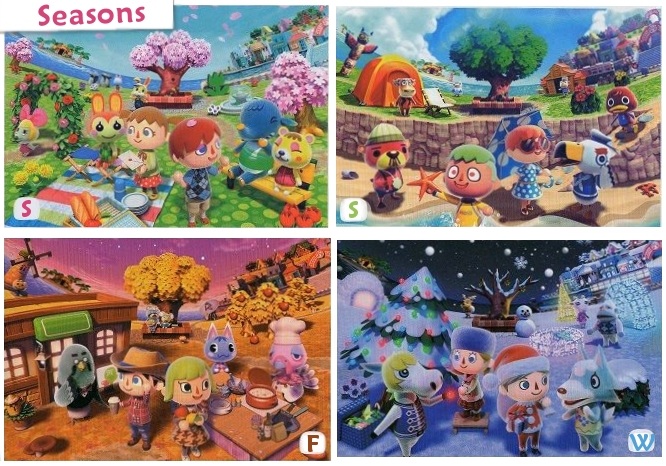
Just like in real life, there are different seasons in Animal Crossing. I will have to wait till December to experience December in the game. No other game does this.

So what does this mean for gameplay? Essentially it means I can binge-play all I want but time is going to prohibit how much I can do. There is only so much one can do in a day, this is true in both life and Animal Crossing. This makes Animal Crossing unique. Even in the Sims series, one can always fast-forward or slow down time. There is that degree of control. Here, no. If you say you’re going to meet someone in the game in eight hours and then forget to show up – that experience is gone. Furthermore, they will remember that you weren’t there and be angry at you the next time you talk to them.

Sounds a little too life-like, doesn’t it?

Good news: it still feels like a game. While certain aspects render Animal Crossing as a second-life simulator, this is still a different life than most of us will ever lead. In Animal Crossing, you spend your days catching fish and bugs. You dig up dinosaur bones. You run errands for friends. You can buy new things at your leisure, even when massively in debt. You don’t need to eat, you don’t need to sleep. Oh and Animal Crossing: New Leaf adds something extra to the formula – you’re the mayor.

As mayor you fund public works and can enact ordinances to shape your town and all of its inhabitants.

This gives more power to the player. Not much more mind you, that damn raccoon is still going to own your money and your soul before you can possibly pay off your debt. Still, it’s nice to see a game changing up the formula and adding new gameplay mechanics. The time limitations come into play here as well. For instance, in my game I have just enacted my first ordinance, which was a desire to increase the amount of money you get from selling items (very useful when paying off debt). I enacted it yesterday morning. It took effect this morning, exactly 24 hours after I enacted it. So I had to wait a day… which makes me want to play today because I want to see exactly what it is that I just did.

The stores in Animal Crossing are not open 24/7. This also slows progress as you can collect so much at a certain time but sell nothing. Being mayor allows you to extend the store's hours, should you so choose.
The stores in Animal Crossing are not open 24/7. This also slows progress as you can collect so much at a certain time but sell nothing. Being mayor allows you to extend the store’s hours, should you so choose.

Playing an Animal Crossing game is incredibly relaxing. Maybe it is the fixed time that renders the effect but I honestly think it’s more than that. Part of it comes from the fact that, even though it is so close to reality, (especially if you’re a recent graduate with debt filling your life), there is no time table. Play Animal Crossing if you want to experience a world run by money but not dominated by it. Despite the passage of time, my character will never die. He cannot get hurt or have his ambitions ruined. Everything he works for: he achieves. In short, that makes the Animal Crossing series the perfect propaganda for capitalism.

If that’s true than that makes Tom Nook the 1%… funny how much shared hatred is in there.

How it feels being several hundred thousand dollars in debt... to a raccoon.
How it feels being several hundred thousand dollars in debt… to a raccoon.

Thoughts? Comments? Am I full of it or onto something? Let me know now in the feedback section of this article.

Repetition vs. Atmosphere: Luigi's Mansion: Dark Moon

In 2001, Nintendo released Luigi’s Mansion for the Gamecube and it was good. The definition of a short and sweet video game, Luigi’s Mansion didn’t didn’t take longer than four hours to beat but was enjoyable enough to warrant multiple play-throughs (I think I beat it like seven times over the past twelve years). People liked Luigi’s Mansion, it was something new from Nintendo, and it would take twelve years before it would see a sequel.  Yet the wait is over as Luigi’s Mansion: Dark Moon was released for the Nintendo 3DS this past March. The verdict: it’s pretty good. If you were a fan of the first game, I highly recommend you check it out. That being said, today’s article aims to explore a decision in the design and the positives and negatives that came with it. I’m going to talk about one of the greatest changes that separates Luigi’s Mansion: Dark Moon from its predecessor: the level design.

As I said before, Luigi’s Mansion was a pretty short game. Luigi’s Mansion: Dark Moon is a good deal longer. I believe my initial play-through of the story mode took me roughly fifteen hours (nearly four times longer than the first game). So anyone out there who thought Luigi’s Mansion was too short, this is the game for you. Yet there is no giant mansion to explore this time. Probably a good thing as I am unsure if anything smaller than say, the mansion from Resident Evil, would be large enough to keep players entertained for fifteen hours. No, instead Luigi’s Mansion: Dark Moon opts for five mansions. None of them feel as large as the one from the first game but between the five: this is a bigger game.

There is no one mansion in Dark Moon that holds a candle to the original.

Yet Luigi’s Mansion: Dark Moon is designed for a portable system, not a console. This platform decision necessitated a different type of level design. Anyone who played Luigi’s Mansion remembers wandering the halls of the original mansion, unlocking rooms, backtracking and only being pulled out to save at the end of every act (there were also Toads scattered throughout the grounds who served as save points). Basically, there was a degree of immersive exploration to the gameplay. The original could get away with it too as it was a console game: meaning a game the player had to sit down to play.

Portable games today are designed to be played on the go, for those fifteen minutes of free time between stops. Look at Super Mario 3D Land (also for the 3DS), no level in that game takes longer than five minutes to complete. In the case of mobile games like Angry Birds, levels can take only seconds to clear. It’s smart design for portable systems. Frequent save points insure that progress can be made in relatively short time, allowing the player to progress without investing hours in a single sitting. Makes sense but what does that mean for Luigi’s Mansion: Dark Moon? It means you can expect to get pulled out of the mansions – a lot.

Expect to see Professor E. Gadd every twenty minutes or so.

Again this makes sense given recent portable game design but I don’t feel it was the right way to go for a Luigi’s Mansion game. The result is that the exploration feels a lot more like a mechanic than an organic part of gameplay. Remember when you completed an act in the first Luigi’s Mansion and certain things would reset (who could hunt for treasure in places you hunted for treasure before)? That happens every time you are pulled out by E. Gadd. This results in a lot of backtracking, backtracking that frankly feels nothing but tiresome after fifteen hours. I know I did not find everything in Luigi’s Mansion: Dark Moon but that’s because I didn’t want to. Vacuuming a vase or a table just looses its appeal after you’ve done it five times.

The levels are smartly designed but expect to revisit them multiple times in search of elusive collectables.

More than that, Luigi’s Mansion: Dark Moon has been slightly simplified since the first game. Remember the elemental spirits Luigi could suction up in order to shoot fire, ice, or water from his vacuum (it’s Nintendo logic, just go with it)? Well they’re not present in Dark Moon. So every puzzle can be solved by either sucking, blowing, or shining one of two light choices. The puzzles are still fun to solve, don’t get me wrong (even if there are one too many of them) but this is the long awaited Luigi’s Mansion sequel, I was expecting everything to be bigger and better. So yeah, you’re doing less but you’re doing that less more often.

The rainbow-spectrum dark light is the new attraction. Works like your normal like but with more rainbows (and it reveals hidden objects).

Don’t get me wrong, I really do like Luigi’s Mansion: Dark Moon. It oozes so much charm that it dares the player not to like it, and the controls work very well. The exploration mechanic was simply one of my favorite parts of the first game and I think this new one really loses atmosphere by making the levels must shorter and more objective based. In Luigi’s Mansion it felt like the player was being encouraged to wander, in Dark Moon there is more a feeling of being lead around. Does it make more sense given portable game design: yes. But why not just stick with what the first game did? A toad on every floor was fine for the quick save (a few more could have been added to insure there was always one around). I liked exploring, it made Luigi’s Mansion a great treasure hunting game in addition to the best Ghostbusters game ever made.

Another personal nitpick: while I like the ghost designs in Dark Moon, I really miss the painting-style ghosts from the first game.

Oh yeah, treasure hunting, that brings me to my final point. Remember in Luigi’s Mansion how there was a point to it? The player collected gold and gems and then at the end of the game was rewarded with a house (maybe a mansion, maybe a tree house) based on how much treasure was collected. That is gone from Dark Moon. Instead, the money is used to unlock upgrades for the Poltergust 5000. This would be great if there were enough to keep the player unlocking. There are very few upgrades and you will have them all by the halfway point of the game. After that, there really is no point to the money. It strikes me as a very strange decision. On one hand: money gathering is more focused on thanks to the repeat gameplay. On the other: it matters a lot less and has no bearing on the game after a certain point. That is a decision that baffles me. If I’m going to be encouraged to do something over and over, I would like to be rewarded for doing it over and over.

Nitpicks aside though, this is still the Luigi’s Mansion sequel and it is a great game. Personally I like the first one better (for the reasons just highlighted) but that’s just me. If you’ve been craving more Luigi for the past twelve years, you’ll be happy to know that the folks over at Nintendo (the publishers) and Next Level Games (the developers) did him justice. Now if we can just get one for the Wii U without waiting another twelve years… that would be great.

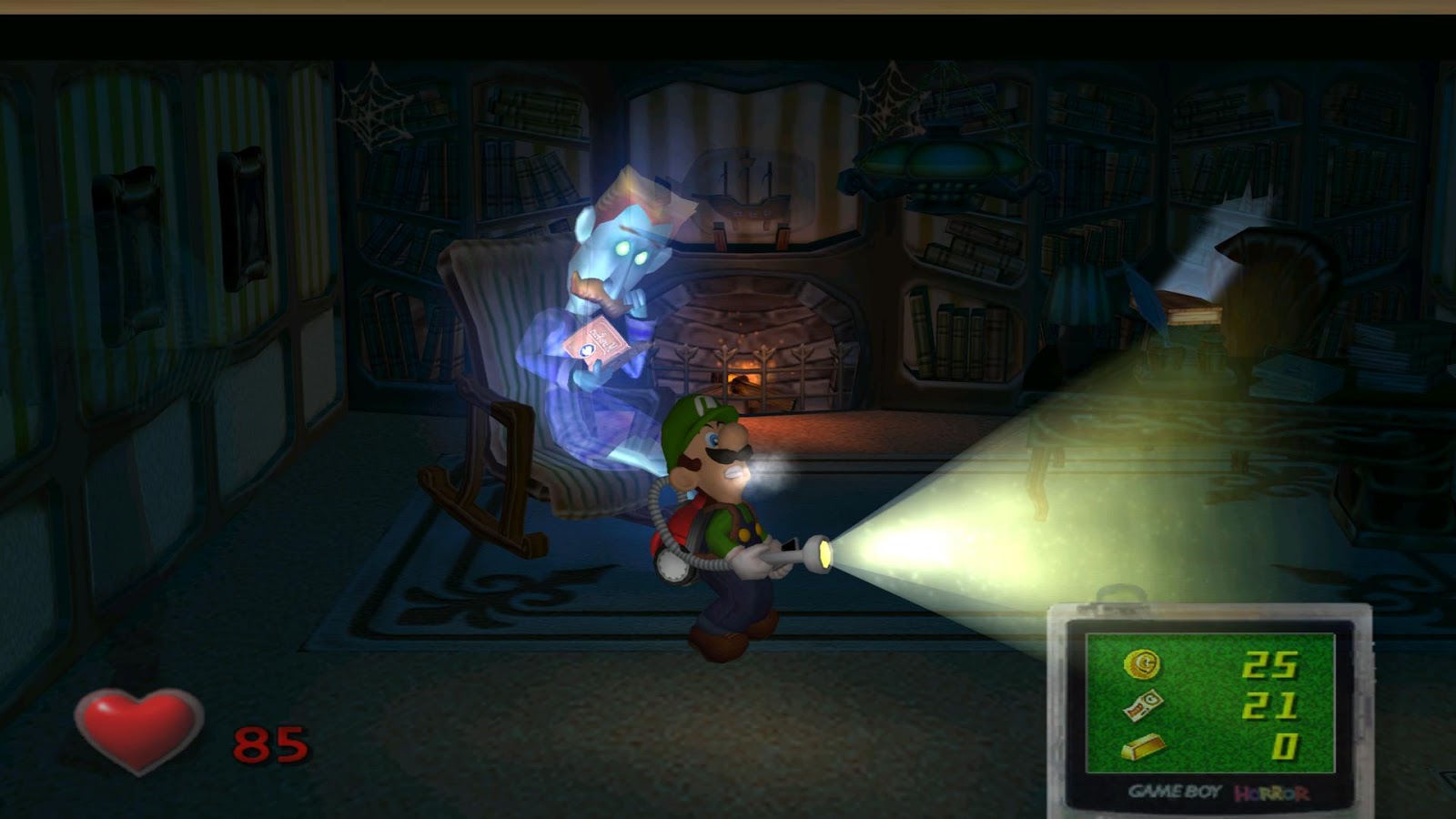
Pictures like this really make me want to see a fully HD Luigi's Mansion 2 for the Nintendo Wii U.
Pictures like this really make me want to see a fully HD Luigi’s Mansion 2 for the Nintendo Wii U.

Thoughts? Comments? Am I full of it or onto something? Let me know now in the feedback section of this article.

Sonic & All-Stars Racing Transformed is a Poor Man's Mario Kart… But is that a Bad Thing?

With game releases being slow this time of year (tons of announcements, not much in the way of things to play), I have decided to try and insure that my Wii U goes at least a couple more weeks before it begins to collect dust. Sonic, in this day and age, might not be the first name that comes to mind when one speaks of extending hours spent playing video games. The once-AAA mascot has seen his name fade into obscurity over the past decade with sub-par titles such as Sonic the Hedgehog (a 2006 reboot for the 360 and PS3 that gave Sonic a human love interest… not kidding), Sonic Unleashed (he was a werewolf in that one, excuse me: werehog), and Sonic Free Riders (just no). It is with his new underdog cult status that Sonic has attempted to rebuild his legacy over the past couple years (Sonic Colors and Sonic Generations serving as beacons of hope). Simply put, when 2D platformer games go 3D, they sometimes do not have a smooth transition. Sonic is the best example of this case. He has been without identity since Sonic Adventure debuted on the Dreamcast back in 1998. It is in this spirit of seeking identity (and not finding it) that I will discuss Sonic & All-Stars Racing Transformed.

This game came out for everything: Wii U, Xbox 360, PlayStation 3, PC, 3DS, Vita… literally every major platform on the market. This turned out to be a very good thing as I don’t think this game would hold quite the same appeal if it had been say a Nintendo exclusive. Why is that: because about twenty minutes in it becomes very apparent what type of game you’re playing.

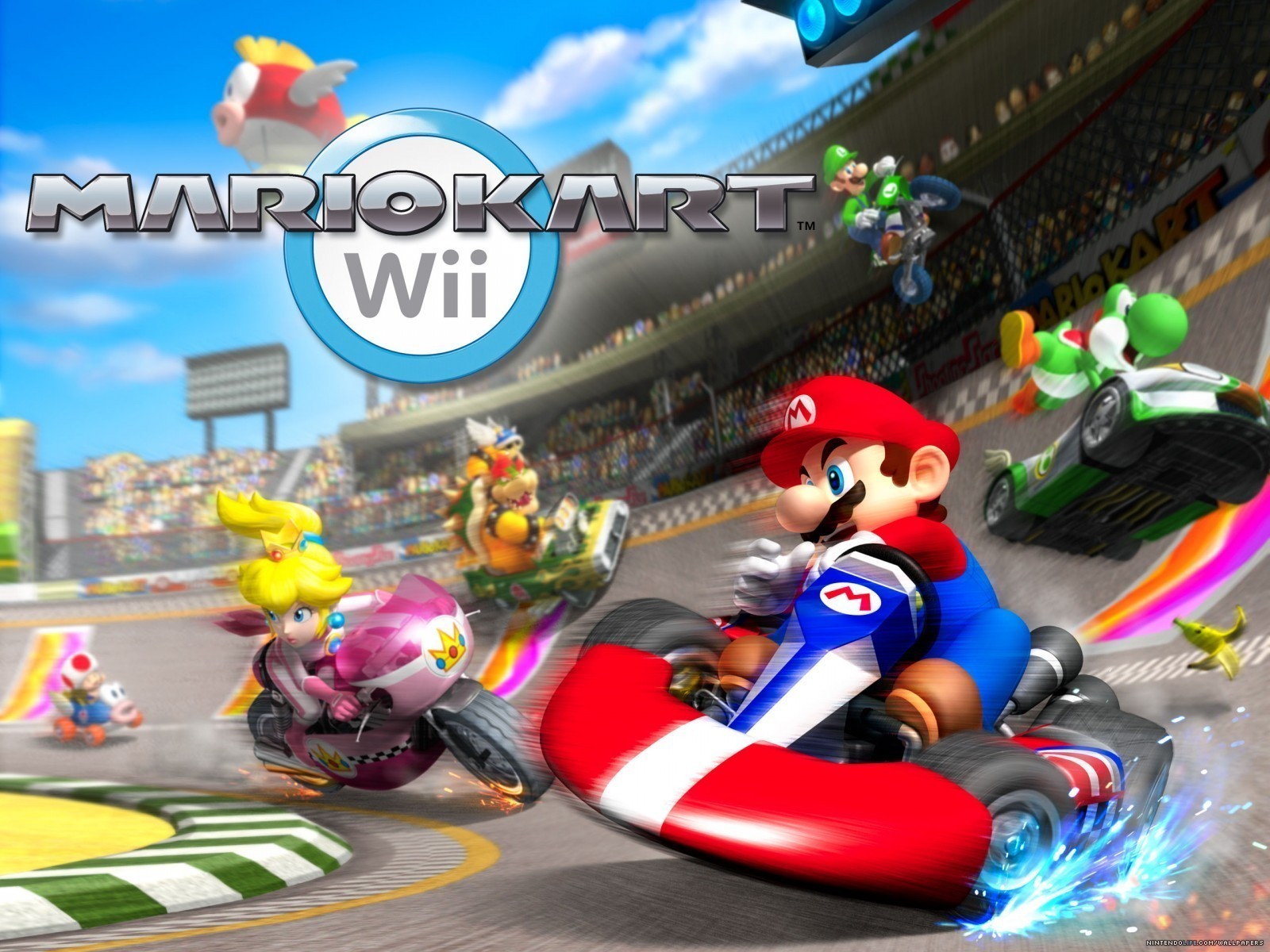
Now substitute with Sonic characters and lower expectations accordingly.

This game really feels like a Mario Kart entry. From the racers to the courses to the power-ups, it has everything we have come to expect when Nintendo gets behind the wheel. However, like most of Sonic’s recent outings: this game doesn’t hold a candle to the Mario product.

Before I start analyzing the game I want to mention the name. Sonic & All-Stars Racing Transformed, sequel to Sonic & Sega All-Stars Racing. Now here’s a series with a name that just rolls right off the tongue, huh. There’s not many more ways you could screw up a title (see Wii U and Xbox One for more ways to screw up a title). Problem number one: competing brands. This problem was in some ways solved by the sequel as it removed Sega from the title. I will argue, however, that this was not the way to go. Sonic is not the name he once was: his titles are no longer synonymous with quality (if anything the opposite). Since this is a game with multiple Sega characters, I suggest simply sticking sonic to the box and calling all future entries Sega All-Stars Racing. Comes out a lot better. I don’t think I’ve said this title’s full name once while describing it in conversation (I’ve taken to simply calling it Sonic All-Stars Racing). When you’re trying to build a brand, you need a brand name. When challenging Mario Kart, you need something that encompasses the essence of the game just as quickly and easily. Sonic & All-Stars Racing Transformed has way too much going on to be marketable.

A title so long it is obscured by the game's roster.
A title so long it is obscured by the game’s roster.

This brings me to my next topic: the characters. We got a lot more going on than Sonic in this game. Characters from properties like Super Monkey Ball, Jet Set Radio, Nights into Dreams, Shinobi, and even Skies of Arcadia feature in the racing roster. If you are unfamiliar with all of those series… now you know why Sonic is in the title. Even Wreck-It Ralph (from Disney’s new movie of the same name) makes it into the cut. I know this is a nitpick but can I just show you Wreck-It Ralph’s racer real quick:

Wreck-It-Ralph-in-Sonic-All-Stars-Racing-Transformed

There’s nothing wrong with it. Cool little truck there. What about this though:

wreck-it ralph disney movie ralph builds racecar for Vanellope von Schweetz sugar-rush

There was an actual race car in Wreck-It Ralph, racing was actually kind of a big part of the movie. Including this racer would have been a much cooler tie-in as well as allowing Vanellope von Schweetz a roster highlight as well. Before you ask, there is no Sugar Rush stage either. Pretty disappointing use of license there, Sega. Hopefully it will feature into the next Mario Kart.

But anyway, back to the character roster. The point I’m making is that it’s kinda weak, despite the fact that it reaches across Sega’s entire library. They really don’t have the character roster the way Nintendo does. Like Mario Kart doesn’t even dip into the full Nintendo library yet it contains more racers that I would be interested to play as. God help Sega if Nintendo even decides to take the Smash Bros. series into racing games (please Nintendo, make it happen).

But racing games go far beyond their drivers. Let’s talk about the stages. This is where Sonic & All-Stars Racing Transformed really doesn’t measure up to the Mario Kart series. The stages kinda suck. They’re long and vibrantly colorful but too much so in both areas. Without the transforming mechanic, the race ways feel very dull (this becomes obvious in the last grand prix, which is made up of stages from the first game). Even with the transforming, I still don’t feel the same draw to the raceways. Too bad because they are doing everything in their power to be memorable. There is so much going on on the courses that it can become distracting. At one point I stopped racing because I simply didn’t know which way to go. There was no immediate road that looked more real that anything else going on in the background. I had to wait for other racers to come and crash through the wall in front of me (don’t make it so you have to crash through walls in one course in a racing game) so I knew where to go. This is not the best design.

When the races do work they are original and gorgeous.

These tracks are not horrible by any stretch. There is nothing, however, on the level of say a Bowser’s Castle or a Rainbow Road in the bunch (or even a Toad’s Turnpike). They’re all flashy so the effect kind of wears out after a while. Really I could have used one or two more down-to-earth stages to help the more epic raceways stand out. That’s enough about the courses though, got to talk about the power-ups.

The power-ups in this game are bland imitations of the power-ups in Mario Kart. Wow, that didn’t take as long as I thought. Okay I’ll go more into it. They’re not bad, they do their job. There is nothing as devilishly fun as hitting someone with lightning or dispatching the blue shell of death. Instead of that we get bees… and puffer fish… and fireworks… what do these have to do with Sega? For instance: we got a Shinobi course and racer so why is there no ninja star? Just off the top of my head right there.

I know I’ve been very negative in this review but I’m just proving a point. This game is not the AAA challenger to Mario Kart. It is, however, still a very fun racer and as close as you will most likely come to experiencing Mario Kart without purchasing a Nintendo console. So for all the Microsoft, Sony and PC owners out there who want a fun racer: this game is pretty good. For us Nintendo owners: it is enough to satisfy until the main event arrives (Nintendo is unveiling Mario Kart Wii U on June 11th, get excited).

Oh and if there was anyone out there hoping this game would be the next Diddy Kong Racing: it’s not.

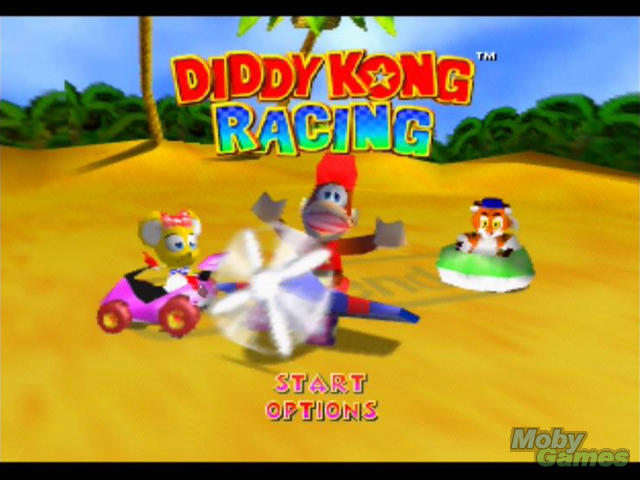
Diddy Kong Racing allowed for multiple vehicle-types on the same course. Sonic & All-Stars Racing Transformed regulates it to sections.

Oh, one last thing to include: does it seem odd to anyone else that Sonic needs a race car to go fast? Am I the only one who wonders about that?

Thoughts? Comments? Am I full of it or onto something? Let me know now in the feedback section of this article.