Blog

The Purpose of Genre

Writing is an act of creation. When we put pen to the page (or fingers on keys), we created worlds of characters and give them a meaningful plot to propel their lives. They can fall in love, discover treasure, fight a mummy, fly to far off worlds, or all of the above. With writing, we’re really only ever limited by our imagination.

Then it’s time to publish.

I have said it before and I will say it again: publishing is a very different animal from writing. Whereas writing is a passion, publishing is a business. It operates on rules and logic. In a publisher’s eyes, the best writing is the world is worthless unless people read it. It is from this desire to connect writing to readers that we get genre.

Genre is essentially the characterization of narrative. It is the neat boxes that our wild writing is driven into. While this sounds restrictive, it is actually very helpful to the writer. Writing can be unwieldy. If we write with only passion then we will have stories that shoot wildly in many directions. Genre, and the logic behind it, helps focus our narratives on a desired goal. In writing a romance, the main drive of the plot has to be the protagonist’s relationship. In writing science-fiction, the writer must fully explore their idea of a non-existent technology and its impact on society.
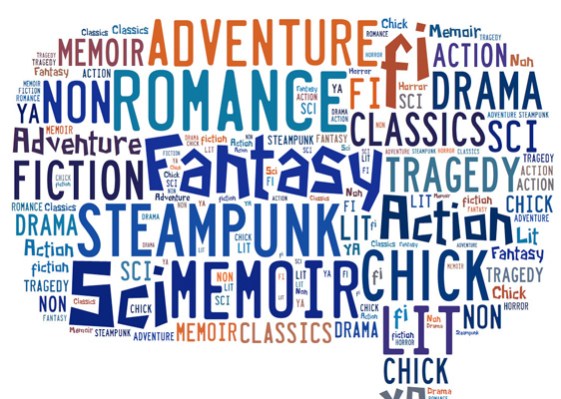
book genres
There are many many many genres in literature. The above does not even list all of them.

The writer who tells you “I have a story for everyone” in fact has a tale for no one (at least that’s how agents and publishers see it). To date, not a single work has been written that has been liked by the entire population. As of 2014, The Holy Quran had sold over three billion copies but I’m willing to bet that we could find people who don’t like it (even if they’ve never read it). Every work of art has a finite audience and genre is an excellent tool in this regard.

That said, I would not get too caught up on genre while writing. For one thing, there are many layers. At the broadest is Fiction and Non-Fiction – simply put, is this a true story or not? Then there’s tone, romantic or realistic? Am I seeing any heroes this time around? Next is form – am I reading a novel or a short story, or is this a graphic novel? What age group is this for?

I asked all those questions without getting to “genre” as most people think of it. When writing, it is best to remain as out of your head as possible so these are not questions I would concern myself with too much. Most of them answer themselves as the process unfolds.

Hobbit genre
Yes The Hobbit is fantasy. It is also a romantic children’s comedy novel. Isn’t genre fun?

When I would think of genre, however, is when I encountered writer’s block. If my story was struggling and I didn’t know where to go next, then examining its main idea makes sense. If I’m writing a horror story but my last couple chapters have done nothing to build dread then I’ve gone off topic. A solution to my writer’s block may be to backtrack several chapters and rewrite in a new direction, one that keeps my hopeful genre in mind. Genre can be a guidance system that helps the writer see through their process.

This is the first of many blog posts that I’ll have on genre, in large part since it is my primary topic in this year’s South Shore Writing Initiative class schedule. I’ll be diving deeper into genre in future posts, looking at specific categories and their definitions. I will also provide the same writing exercises that I give my class.

Genre is a part of publication but it is still a writer’s friend. Being aware of genre can help a lot in regards to the writing process. Genre is a pathway to the audience. Use it to frame a narrative, play tricks with audience expectations, or help keep focus. It is far more a tool than a hindrance.

Why I Support Universal Healthcare

I feel like there’s two types of Americans when it comes to current system of healthcare: Those who believe in it and those who have actually had to use it. I believe its failings stem from an inherent problem in its design. When most people think healthcare, they think doctors and healing. After all, isn’t that what healthcare is designed to do – to keep the population healthy.

Not in America. In the U.S.A., this is a secondary goal. The main objective of the current U.S. healthcare system is to make money. If you cannot pay, you cannot have service. It’s that simple.

And on the surface that sounds fair. After all, those working in healthcare must earn a living. They have bills to pay too. Yet healthcare cannot be treated like an average commodity because it is essential. When Wonder Woman came out on blu ray, nobody had to own it. They could buy it if they wished. Most people don’t want to have surgery. They have it only because they need it.

This makes healthcare an essential service, much like the police and fire department. These are not people you call upon on a whim. They are called to provide a crucial service that preserves your quality of life. Supply & demand breaks down and always skews in favor of the seller when everyone has to demand the product or put themselves at serious risk.

Let me put it another way: imagine we’re standing together on a hot summer day and I offer you a bottle of water for a dollar. You turn me down because – hey it’s not that hot and you’re not really thirsty. I nod and proceed to set you on fire. That bottle of water now costs $1,000 and you’re going to need more than one. Pay or die. It’s no longer capitalism, it’s cruelty.

And to give full perspective on the current American system – yes, there are other people offering to sell you water, but $1,000 is now the lowest available price being offered to you – since you have a job. If you were/are unemployed, that water bottle now costs at least $2,000. No one is offering the water bottle at a reasonable price because we know that you need to pay us in order to live.

drugpices
Greed has taken “making a living” and turned it into “the search for higher profits.” We should not have to pay more for the exact same medicinal care.

To return to the comparison of fire departments for one second. Fun fact: they were not always a public service.

The point being is that we have a broken system that only really works for the people who manage to stay healthy (who are not unexpectedly set on fire). Once anything serious happens to you, you’re at the mercy of a system that will gladly help, but only so long as you keep handing over your hard earned money.

“Ah,” you say, “But I have insurance!”

“Cool,” I respond, “so you’ll only have to pay hundreds instead of thousands when you need an ambulance ride. That is – so long as everything is covered in your plan.”

So I believe there is a better way. More than believe it – I’ve seen it. In my lifetime, I have been fortunate to live abroad. My host country was Canada – Quebec to be more specific. In Canada, healthcare is a government service. Every citizen pays taxes so every citizen is covered.

Simple.

Having had lived in both systems, I can honestly say which one I believe works better. I say this as someone who is a citizen of the United States but not of Canada. This means that, while I “enjoy” the best of American healthcare, I “suffered” the worst of the Canadian system.

Addressing Healthcare Fears
Yes, Canadian emergency rooms still have long lines but – just like America – this is based on need. If you’re dying or need immediate care, you’ll be seen quickly. I say this as someone who has spent time in both. The biggest difference is the bill (or lack thereof) at the end.

And Canada still has a better approach to the problem. Not a perfect approach but a better one. One that, should we as Americans devote ourselves to it, we can improve upon.

In my opinion this is our greatest strength as Americans: our ability to examine ideas, in our states and abroad, and select the best ones to incorporate for ourselves. We did not invent democracy but we adapted it and used its principles to write arguably the greatest doctrine on protected rights that the world has ever seen.

We can do something similar regarding healthcare. Canada’s system was better but far from perfect. For one thing, many of its treatments and services seemed more reactive than preventative – which is always ultimately more costly. I also personally think we should endeavor to include dental and mental healthcare as well.

Yes, it will be harder and yes, it will be more expensive, but these are costs we already pay. Americans have a broken conversation on taxes, one that is dictated by the question “Aren’t you paying too much!?!” rather than “What would you like your government to do for you?” One of these questions provokes much more thoughtful conversation than the other.

Truthfully, I would rather pay an additional % in taxes and be done with it than have hundreds out of my paycheck every week to cover healthcare – healthcare that I can lose with the loss of a job. By tying healthcare to employment, we cripple our fellow Americans who wish to take risks. I can only wonder how many people have been trapped into employment they hate by the fear of losing their ability to pay medical bills.

I also believe that this will help small businesses grow as employers will no longer have to pay thousands just to cover the few employees they have. This is not an employer responsibility – this is a citizen’s responsibility.

We are caring people as Americans but strangely heartless. We are far too inclined to view our fellow citizens as leeches. However, most of us do not view ourselves this way, even when we need help. Regarding healthcare, we all will need help at some point.

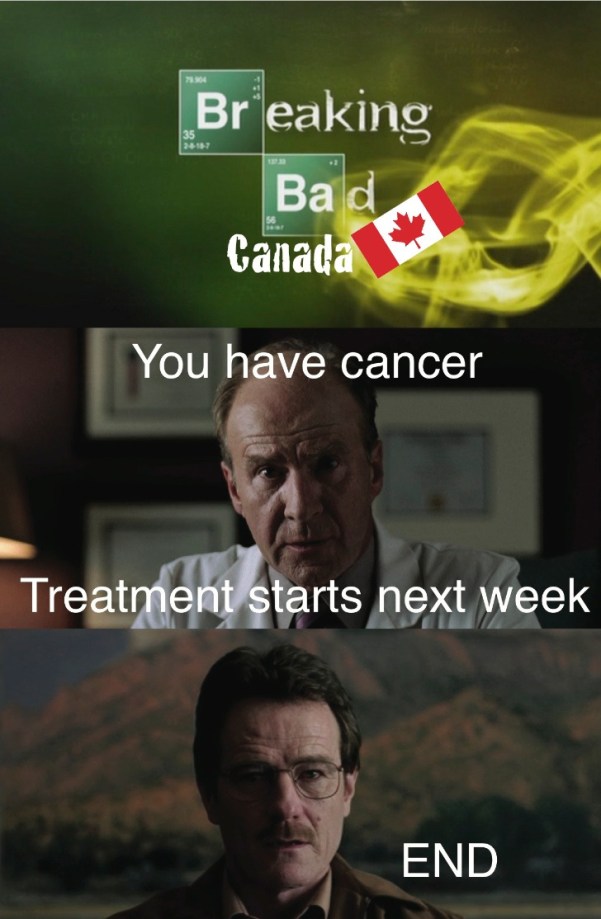
Other countries – similar countries – are doing this and I believe we can improve upon it. We can create a system that does not destroy the privatized healthcare industry (keep your private insurance only if you want to) but removes its fangs. A comprehensive coverage system that renders dramas like Breaking Bad pure fantasy. A system that empowers the American spirit to better pursue dreams and happiness.

MKybStQ

I support a system like the one proposed by Senator Bernie Sanders and I encourage you to do so as well. Yes, this challenge is hard – but that is why we must do it. We’re Americans, we’re not known for backing down from fights. We must win the war for healthcare so that we may devote more time to tackling the zounds of other important issues on this planet.

At least, this is what I believe. Healthcare should be about healing, not about profits. Period. We can make this work guys – if we all put in together.

30f8dabc7c15cad87477d039d26de176--bernie-sanders-social-justice


Rebels’ Thrawn: Turning Genius into Competency

At this point, I feel my appreciation of Timothy Zahn’s Grand Admiral Thrawn is well documented. The villain first appeared in the Star Wars universe as the direct follow-up to Darth Vader and Emperor Palpatine. The success of Thrawn came from the fact that he met two conditions: 1) He had very different character traits from Vader or Palpatine. 2) He came off as no less dangerous.

Thrawn is a villain without the Force. Indeed, physically, he is not intimidating. He can fight – sure, but against a jedi it would not be a contest. Thrawn’s weapon is his intellect. He can stand in a room with Luke Skywalker and Luke will be unable to touch him, because Thrawn has calculated every scenario and anticipated every plan. The Grand Admiral’s own designs have layers upon layers upon layers of intricacy. Simply put: Thrawn has no intellectual equivalent.

Thrawn outsmarting jedi
From a graphic novel adaptation of Heir to the Empire. Thrawn’s research leads him to a way to disrupt the Force.

At least, that is how he was in the Heir to the Empire trilogy – the novels that sparked the Star Wars expanded universe (long before Disney or the prequels). Author Timothy Zahn crafted compelling new characters (Grand Admiral Thrawn and Mara Jade) that breathed life back into the Star Wars fandom. About 24 years later, Disney is rebooting the Star Wars expanded universe – hoping to capture the brilliance while whittling out the…well the not-great ideas.

I was overjoyed to hear that Grand Admiral Thrawn was to be made officially canon in Star Wars Rebels. After seeing season three (Thrawn’s introduction) however, I have doubts that the show writers are up to the task of capturing what made Thrawn compelling.

Thrawn in Rebels

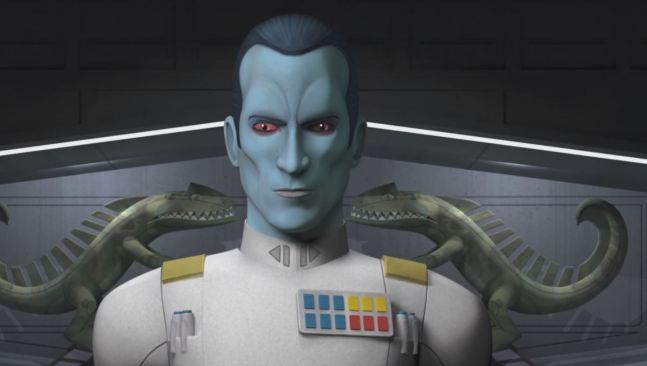
Grand Admiral Thrawn is assigned into Rebels after the unexplained departure of Darth Vader (he is hunting the rebels until he isn’t). For much of season three, Thrawn is present but passive. He observes but rarely acts. When he interacts with the rebels, one of two things happens. Thrawn “lets them go” or he turns over their handling to a subordinate…who promptly fails, allowing the rebels to escape. Neither of these courses of action paint Thrawn as a genius.

Plans without Payoff

The former could have done so with appropriate payoff. Early on in the season, Thrawn captures a family heirloom of Hera’s and seems very intent on learning about her family and culture. Later on, Thrawn lets Commander Sato escape after learning the extent to which the man values family.

The problem here is that neither of these developments are revisited in season three. Thrawn never utilizes his knowledge of Hera’s family to out-think her and never manipulates Sato’s dedication to family. Nope, instead he just finally figures out where the rebel base is and attacks it. That’s it. For a master of planning, Thrawn is incredibly simple.

Dork-Side-Rebels-Review-Zero-Hour-7
Given Commander Sato’s death at the end of season three, it is very unlikely that Thrawn’s information gathering will ever be worth it.

So…why does Thrawn let them escape? It comes off as masked incompetence rather than cleverness. Thrawn is merely spinning his failures to sound more positive. “I didn’t let them get away… I wanted this! Yeah, yeah that’s it!”

In addition, a subplot of season three centers around Agent Kallus, an imperial agent turned rebel spy. While Thrawn learns of Kallus’ true loyalties fairly quickly, he does nothing to use this information to his advantage. This despite a scene where Thrawn says he will do exactly that. I believe the line is “Agent Kallus will have far more use as a rebel spy” or something like that. But nothing comes of it in terms of payoff – Thrawn never feeds Kallus false information and Kallus eventually leaves to join the rebels. In literary terms, this is loading a gun without ever firing it. What was the point?

Star-Wars-Rebels-Thrawn-Featured-03202017
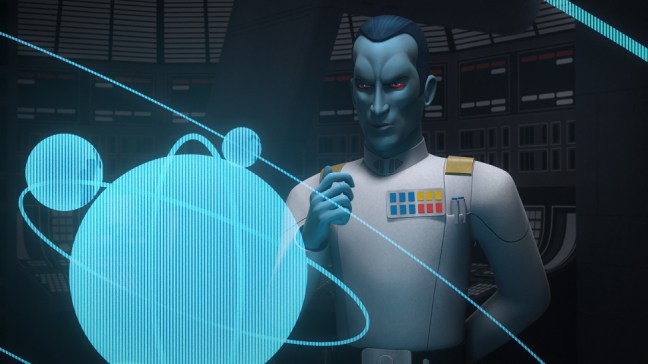
I also find it hard to believe that Thrawn, who meticulously studies art, would not immediately notice a removed planet in a map he had been researching.

The “Stupid Watson” Syndrome

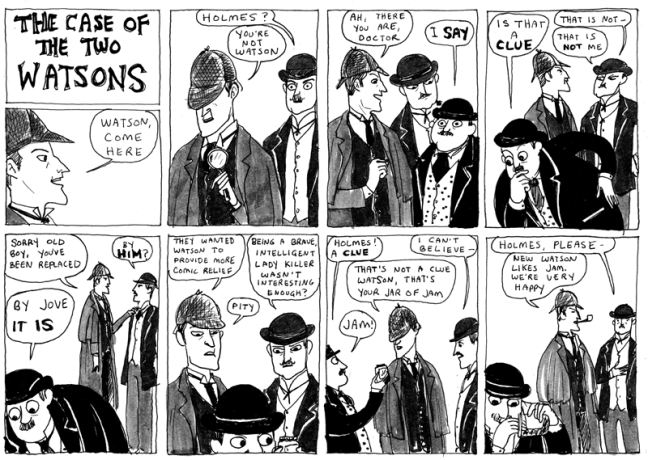
I credit pointing out the “Stupid Watson” syndrome to author and cartoonist, Kate Beaton. In the early Sherlock Holmes movies of the 20th century, Watson is re-imagined from a clever doctor to a bumbling sidekick with juvenile-or-senile levels of intellect. While it’s good for a chuckle, it raises a question: “Why does Holmes hang out with this guy? Isn’t this creating more work for him?”

Stupid Watson syndrome

The answer is that it was lazy writing. Rather than make Holmes look like the genuine genius he is, they paired him with a moron to amplify his competence and make even mundane actions look intelligent. In Rebels, the show writers did a similar thing with Thrawn.

Thrawn continually hands off command to people who promptly screw up – much as Sherlock Holmes in the old movies continually gave Watson tasks, which he promptly screwed up. The problem here is that the genius stops looking smart when he repeatedly places idiots in charge.

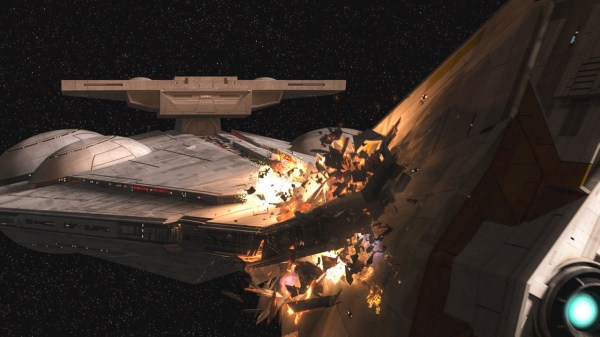
It also is uncharacteristic of a mastermind. In the season three finale, Thrawn begins by overseeing command of the bombardment of the rebel base. He then hands off that command to go down to the surface so that he can accept the rebel surrender. For a macro-manager, this is an odd choice. Why abandon the position of control? It also gives the writers an easy way out. Thrawn didn’t lose the battle – Governor Price did. This isn’t Price’s first failure so why – with the situation so crucial – does Thrawn again give her command?

Star-Wars-Rebels-Thrawn-1-09202016
Only fools keep around other fools whom they can pass the blame onto.

It would be one thing if this new Thrawn was supposed to be different from the original, but Disney has taken pains – including bringing back Timothy Zahn to write a new origin story – to recapture Thrawn’s evil genius. They want the compelling character who gave birth to the expanded universe. Unfortunately, at least in season three, Rebels writers have not been up to the task of writing genius. The Thrawn in Rebels is so far only a pale shadow of his literary predecessor – he is nowhere near as interesting and less than half as threatening. Let us hope they can turn it around in season four.