Sequels We Didn't Need: Cloudy with a Chance of Meatballs 2

In 2009, Phil Lord and Christopher Miller brought Cloudy with a Chance of Meatballs to the screen. The film told the charming story of Flint Lockwood and how his weather-to-food invention changed his life and the lives of those around him. Using visual, vaudeville-style humor and endearing character development, Lord and Miller were able to bring a soul to Cloudy with a Chance of Meatballs that elevated it beyond a mediocre 3D effects fest. It is a great little movie and worth a watch to anyone out there who hasn’t seen it (and still has enough of a child’s wonder left to appreciate food falling from the sky). Fast-forward to 2013 when Cloudy with a Chance of Meatballs returned to the screen. The aptly named Cloudy with a Chance of Meatballs 2. It is a sad realization to understand that Hollywood’s response to anything successful is this: make more until it isn’t. Sequels are just an inevitability these days. As audiences, we can only hope that they’re good. Cloudy with a Chance of Meatballs 2… is not such a sequel.

Wait, what went wrong? It is such a dynamite concept! I mean, food falling from the sky – that’s at least eight films right there…

3 could be about the evolution of food people and 4 could be about them leaving Earth to find their own planet! And then you have a trilogy of fighting food aliens! Brilliant.

Yeah, for anyone who hasn’t seen the first film, I will just say that it ends without the feeling that there is something more to tell. Certain movies, like Back to the Future and the Incredibles, close with a tease: the promise of more exciting adventures to come. Flint Lockwood’s story was done at the end of Cloudy with a Chance of Meatballs. He had grown up, realized that he didn’t need to prove himself to everyone when the people who mattered already supported him. The weather-to-food machine (yes, I’m aware it has a more creative name) is destroyed and life returns to normal. There and back again: adventure complete.

Things literally ended with sunshine and rainbows.

That is not to say that all sequels to complete stories are bad. Look at the Toy Story trilogy: each one of those is a complete adventure on its own. Yes, they use the same characters but there is no overarching plot. It is just three separate toy stories that work really well together. So Cloudy with a Chance of Meatballs 2 was not dead in the water. It even gained a fun life in its new idea: a Jules Verne-style island of living food. Sort of a next mutation phase to Flint’s invention.

Where Cloudy with a Chance of Meatballs 2 falls off is its continuing character development. Here in lies one of the greatest pitfalls for sequels. You can always tell if a sequel is driven by writing or by marketing. For instance, in a sequel driven by writing (Toy Story 2), not every character returns from the first movie. There is no desire to create a “hey, do you remember how cool this was last time?” moment, since the story has enough to tell on its own. In a sequel driven by marketing, everyone comes back regardless if they have anything to contribute to the current story. Case in point:
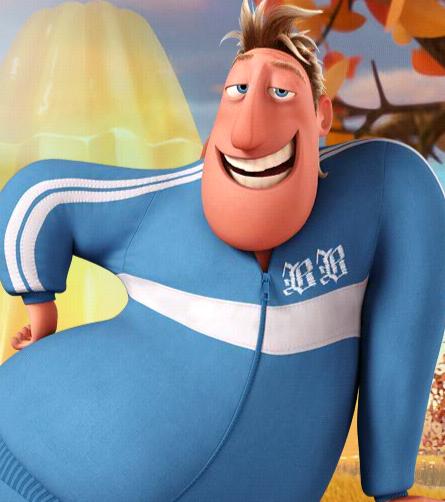
This guy.
This guy.

Brent was a character who had a purpose in the first movie: he was the guy Flint Lockwood wanted to be. He was popular and people liked him. The first film was also clever enough to showcase the failings of Brent’s type of “popularity” (no one really cares about him as a person, just about one thing he did) and use it to teach Flint what true acceptance was. In the sequel… he’s just there. Really, there isn’t anything that he does that is vital to the plot. I love Andy Samberg but… yeah could have done without him.

The real failing though is with Flint Lockwood. Like I said, his journey in the first film was one of acceptance. He felt like he had to prove himself and didn’t realize that he was already cared for. There was an evil mentor figure (the Mayor, voiced by Bruce Campbell) who led Flint along: pushed him to do more than he was comfortable with, to betray his own instincts just to satisfy others. Luckily by the end of the movie, Flint knows better. He is not looking for acceptance from the wrong places anymore and knows that there is more to life than pleasing everyone. Well, good thing that’s over and done with… right?
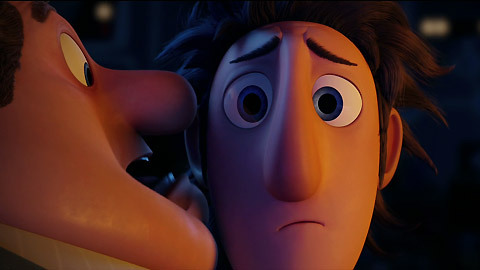
Certainly this will never happen again.

Wrong. The sequel re-does that same character growth. The new villain, Chester V (voiced by Will Forte) is essentially the Mayor from the first movie. Wait, no: he’s Flint Lockwood’s childhood inspiration… wait, I thought that was his mom? No matter, rather than evolve Flint – the film regresses him back to a place of insecurity that is well, boring. We already saw that movie.

And it happened again.

This writing decision prevents any of the other characters from growing as well and basically keeps the movie in an unnatural holding pattern that exists solely to move the plot along. There was potential here as Chester V comes off in the vein of Steve Jobs. A more clever film would have examined the idea of selling scientific advancement for profit vs. knowledge for the good of all mankind. Sadly, this is what we got.

So if you haven’t seen the first Cloudy with a Chance of Meatballs, do yourself a favor and give it a watch. If you have, liked it, and want to see more: watch the original again. The sequel is just the same story… that, like a joke, isn’t as great the second time that you hear it.

Also Sam is a non-character in the sequel. I mean, to be fair she's already been a love interest so what more is there... right? Sigh...
Also Sam is a non-character in the sequel. I mean, to be fair she’s already been a love interest so what more is there… right? Sigh…

Dear Bill Watterson: Thank You… but You're Out of Touch with Comics

Recently, I sat down and watched Dr. Mr. Watterson, a documentary made on the subject of Bill Watterson and, more specifically, his creation, Calvin and Hobbes. Now, I normally am not a huge fan of documentaries: I find that they tend to present only a very skewed perspective (save for the better ones). Dr. Mr. Watterson was a light, nostalgic, gush over one of the greatest newspaper comics of all time. It was entertaining but without much depth. A quick history lesson for anyone unfamiliar with the story between the panels.

A lot of love clearly went into Dr. Mr. Watterson, unfortunately it obscures the storytelling aspects at times and prevents the documentary from offering up anything truly insightful.

The most interesting part of the documentary was a brief interview with cartoonist Stephen Pastis (creator of Pearls Before Swine). What makes this interesting? Just months after the release of Dr. Mr. Watterson, Bill Watterson would make a brief resurgence into the world of cartoons, illustrating several strips of Pearls Before Swine, as well as voicing the character Libby. That’s right: Bill Watterson came out of retirement… for a week. No new Calvin and Hobbes but hey – it’s still pretty awesome. Between June 2nd and June 7th, Watterson highlighted the world of Pearls Before Swine. So, what did he have to say:

Evidently, Watterson still doesn't think much of the future of comics.
Evidently, Watterson still doesn’t think much of the future of comics.

There is a sad truth that I will make clear right now: Bill Watterson is not perfect. I love Calvin and Hobbes, I find it to be one of the most appealing and insightful creations ever made. To create something that amazing is an incredible feat and Bill Watterson has nothing left to prove to anyone. He is an artistic genius and the world is a brighter place with him in it. That said…

Bill Watterson is out of touch. For those out there unfamiliar with the reasons why Calvin and Hobbes ended: there are two. One, Watterson felt that the comic was starting to repeat itself and wanted to end it on a high note. Two, Watterson felt that newspaper comics were a dying art form as the space was becoming too restricted to allow great art to be drawn. He also felt that the lack of space greatly limited the storytelling potential.

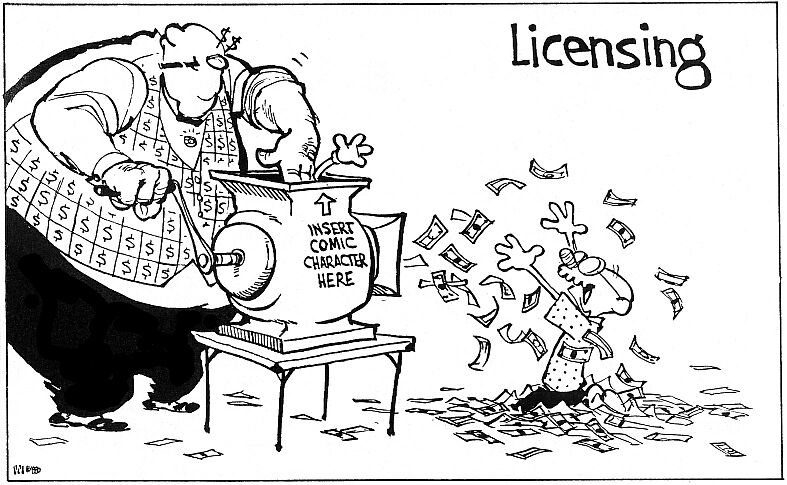
Watterson also did not think much of merchandising, which explains why you've never seen any official Calvin and Hobbes merchandise anywhere.
Watterson also did not think much of merchandising, which explains why you’ve never seen any official Calvin and Hobbes merchandise anywhere.

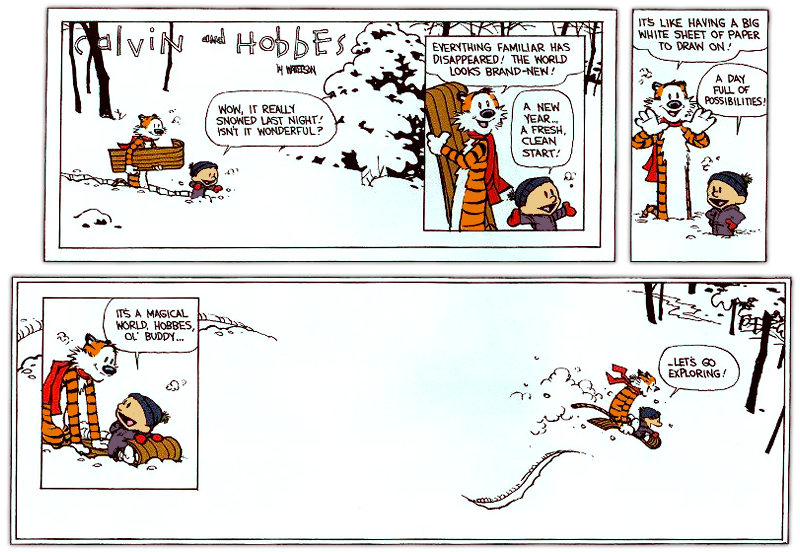
Now as to that first reason: it is the best reason ever to end something. Anyone can create art for the sake of a paycheck (how many years has Garfield been running… is anyone out there still laughing?). To end Calvin and Hobbes at the height of its popularity remains a bold move and has insured that its legacy was never tarnished with sub-par material. It is a shame that more creations don’t follow Calvin and Hobbes‘ lead in that area (looking at you, Simpsons).

This may also be one of the best endings out there. It is perfect and poetic.

Regarding reason number two: also extremely valid. Anyone who has looked at the newspaper comics recently knows that they do not receive a lot of room. Not that there are not a couple of really talented artists still illustrating for newspapers… but it’s a newspaper. That medium as a whole is in its twilight era. Watterson was correct to label newspaper comics as a dying platform, but the world has changed since 1995.

Behold… the INTERNET! One of the main areas not addressed in Dear. Mr. Watterson was the evolution of the comic medium. Everyone interviewed simply talked about how the glory days had passed and that we’ll never have something like Calvin and Hobbes again. While that may be true (there will only EVER be one Calvin and Hobbes), comics are far from dead. Simply ask this question: how did you read Pearls Before Swine when Watterson reappeared? Did you open your door and uncurl the newspaper to find the comics section? I know I didn’t. I went online and viewed the panels on a website. That is where the comics have gone.

Regardless of how you feel about it, there is no denying that the art in Penny Arcade has benefited greatly from a lack of physical space restriction.
Regardless of how you feel about it, there is no denying that the art of Penny Arcade has benefited greatly from a lack of physical space restriction.

The art form is not dying, it has found a new home. Watterson’s declarations in Pearls Before Swine highlight how out of touch with technology he is. Granted, this is not too surprising from the man who created a character such as Calvin’s father:

Calvin's father may very well echo Watterson's own distrust of technology, specifically interaction with media.
Calvin’s father may very well echo Watterson’s own distrust of technology, specifically interaction with media.

Now, for the record: I do not think that Bill Watterson has any obligation to return to the world of comics. He has done enough. Yet his second reason for ending Calvin and Hobbes is simply no longer valid. Yes, newspaper comics have severe space limitations but who cares? We have the internet! That is where all the truly great new comics appear. There are no limitations on a webpage… and no deadlines either. It is one of the primary wonders of digital technology: worrying about space is a thing of the past.

Sigh, you do Mr. Watterson. You literally have unlimited space if you know how to take advantage of it.

Bill Watterson’s time as a contributing artist may be done… who knows what the future will bring. Personally, I hope that he finds the time to learn about the internet and create something truly wonderful. Calvin and Hobbes is over (don’t hold out hope for that animated movie), but Bill Watterson is still alive and still a terrific artist. He just is a little out of touch… he needs to learn to do the things with the computers.

Five Ideas for Potentially Fantastic New HBO Series

And when I say five ideas, I of course mean five intellectual properties that already exist… so five ideas that are not mine.

HBO has a long history of stellar television programming. Since the mid-1970s, HBO has created shows such as Oz, The Sopranos, Fraggle Rock (not kidding), The Wire, and Flight of the Concords. Their current broadcasting line-up includes Game of Thrones, Boardwalk Empire, and True Detective. In short: they make a lot of kick-ass shows. What does the future currently hold? Well, there is a post-rapture series known as The Leftovers in the works… that sounds interesting. Sadly, a miniseries based on Neil Gaiman’s American Gods has just officially fallen through so that will not be happening.

Not that HBO needs help but American Gods would have made for a very interesting series (to say the least). There are other known series out there floating around, some are currently trying to land television networks. Here are five ideas for existing series that would be perfect for HBO to adapt into television:

Honorable Mention: Dune

Essentially Game of Thrones on a desert planet with giant worms. Look it up.

5. The Sandman

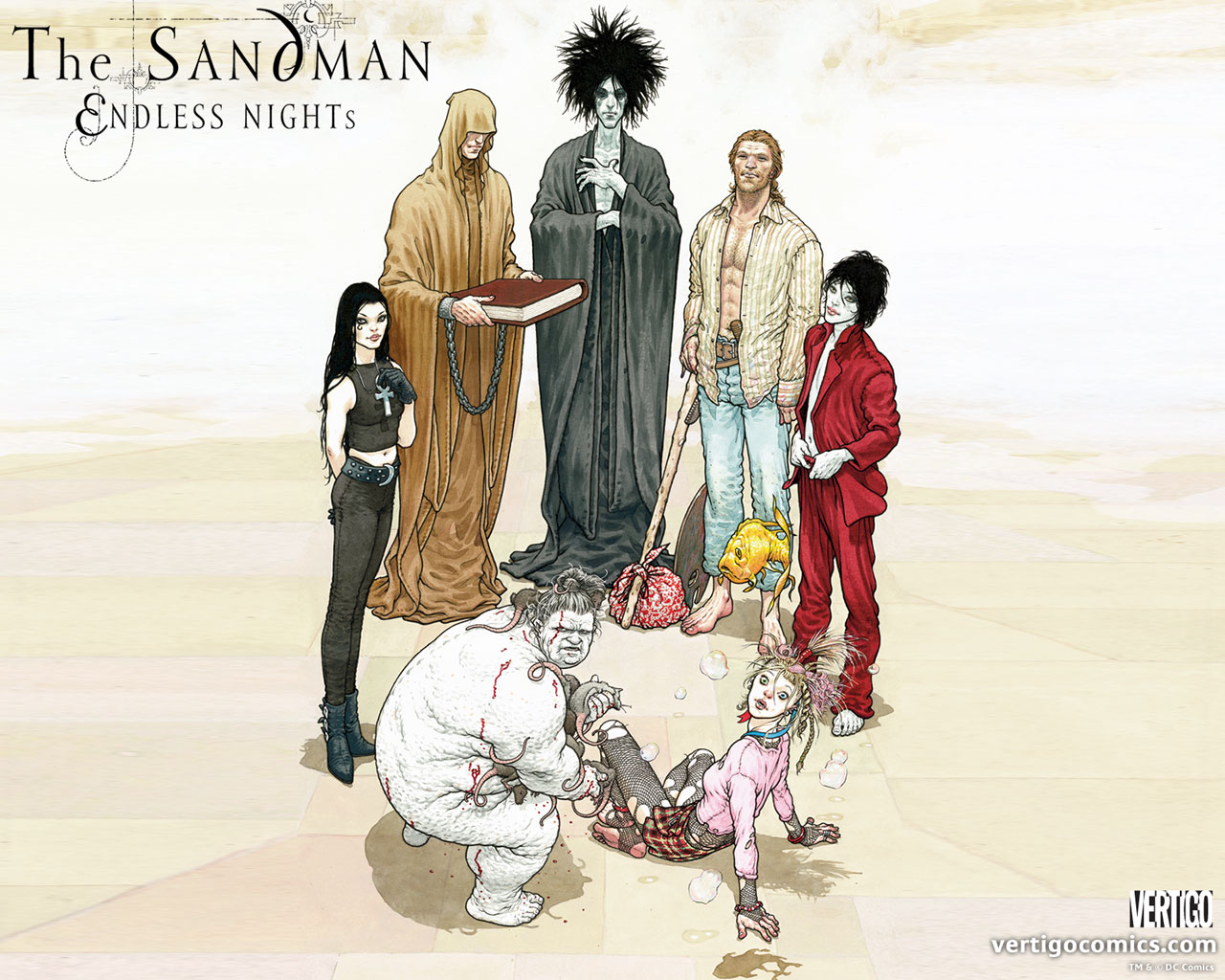
Forget American Gods, if there is any Neil Gaiman series that would make a killer show: it is The Sandman. This series of graphic novels is arguably the best piece of created work in that medium ever (sorry Watchmen). The plot revolves around a protagonist called Dream, who is one of the Endless (others include Destiny, Desire, Death, Despair, Delirium, and Destruction). Their names reflect their role in the world of humanity, which is obviously separate from their own. It sounds complicated because it is, and there really is no better way to understand the Sandman than to read it.

I could make sense of this image but I stand by my "just read it" philosophy.
I could make sense of this image but I stand by my “just read it” philosophy.

Unfortunately, this one is very unlikely. Two reasons: the first being that HBO already tried to get the show off the ground in 2010. It is unclear why the pitch fell through but, needless to say, it didn’t happen. Second, Hollywood (with the help of Joseph Gordon-Levitt) have acquired the rights for a movie, due out at the end of 2016. Can the Sandman even work as a movie? I am very skeptical (this is a 75 issue series with a lot going on), nevertheless, this appears to be the direction that the adaptation is heading in.

4. Fables

The comic series by Bill Wilmington may be overstaying its welcome at this point (ending next year) but it is still perfect for a gritty HBO series. The story primarily follows Bigby Wolf (the Big Bad Wolf) who is the sheriff of a community of fables living in our world. They are outcasts, driven from their homelands. Bigby, along with the rest of his community, must try to keep themselves hidden as they plot to reconquer their homeland and defeat the unknown empire that has set up there.

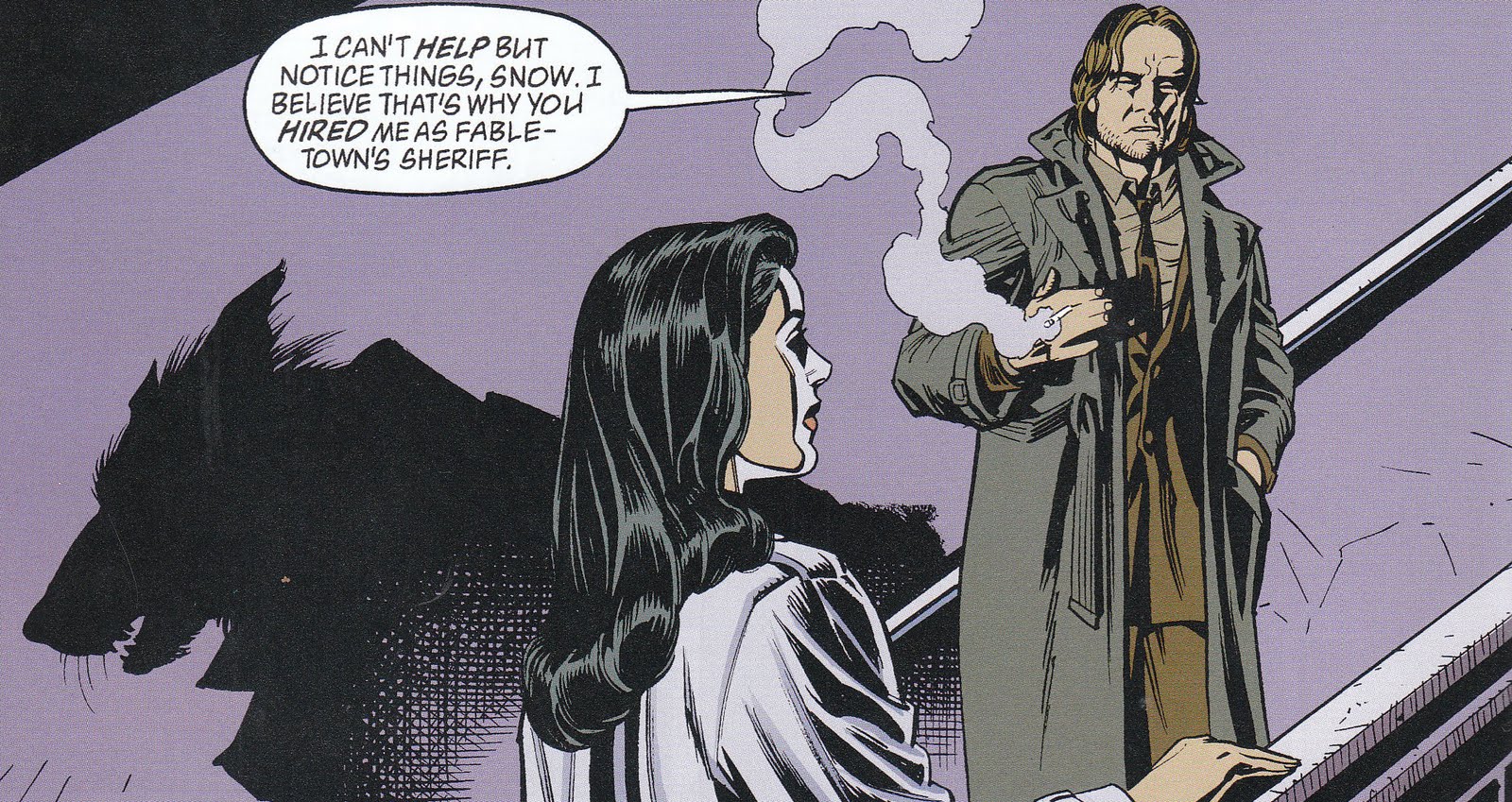
Bigby is a very likeable protagonist, and his relationship with Snow White is one of the biggest "awwwws" in the series.
Bigby is a very likeable protagonist, and his relationship with Snow White is one of the biggest “awwwws” in the series.

While dealing with fantastical characters, this series handles everything in a very realistic manner, so it would not be one of those ideas torpedoed by budget costs. Apparently, a television series was already pursued on NBC without achieving any results. There is also a movie in very early stages. Fables would be at its best as a series. There are multiple protagonists and multiple villains.


Okay, that’s it for the safe choices. Now let’s get to the great untapped world of video game adaptations.

3. Metroid

The idea of an HBO series coming from a video game (made by family-friendly Nintendo) is untested. It has never been done. In Metroid, I believe the potential exists to create a very cool sci-fi drama revolving around bounty hunter Samus Aran. For those unfamiliar, in the Metroid series, Samus goes from planet to planet, looking for her targets. It is a very cold and solitary existence, which might present problems in terms of the supporting cast.

Still one of the biggest moments in gaming when Samus first removed her helmet and players realized that the badass they had been controlling was a woman.
Still one of the biggest moments in gaming when Samus first removed her helmet, and players realized that the badass they had been controlling was a woman.

In the past, Nintendo has tried to solve the problem in multiple ways. First, the hunters: they are simply other bounty hunters that Samus competes with. Secondly, in Metroid: Other M, her squad and trainer were introduced. However, I would stay away from this group as it was used to rob Samus of her agency in Other M. The feared bounty hunter suddenly became a little girl who had to ask permission from her superior male officer to use her weapons… it sounds like I’m exaggerating but that game was kinda sexist (it was bad).

Metroid is a risk but, the science fiction genre is huge right now and people love a strong female protagonist. Metroid could be a fantastic and unique series if done right.

2. BioShock

Arguably the most intellgient AAA game made in recent years, BioShock would be perfect for a dark horror/sci-fi series. The setting of Rapture, the city at the bottom of the sea, would be challenging but not impossible to pull off with modern day visual effects. Andrew Ryan’s (no relation to Ayn Rand) world of capitalism gone wild and elaborate gene splicing would create a welcome newcomer to television.

This series was already tried as a movie but failed. The primary reason was the dark nature of the subject material. Simply put: there is no way to make a true BioShock movie without it earning the R rating, something that companies shy away from as it tends to drive profits down. Solution: HBO series. Sex, grotesque murder, insane characters, children in danger… why that’s all the best parts of HBO right there.

Best part is the spinoff is already taken care of with BioShock Infinite.

1. Mass Effect

Stop me if this sounds familiar: a world consumed by politics while greater dangers come in from areas outside the political focus. Sounds so far-fetched right? Mass Effect follows the story of Commander Shepard, the man (or woman) trying to save the galaxy from itself…. and also a massive indestructible army of space squid called the Reapers. Shepard must travel from planet to planet, forging allies and eliminating enemies before time runs out. His crew: aliens from essentially every major race out there. His boss: occasionally the government (known as the Citadel), occasionally pro-human terrorists (Cerberus), and occasionally the military (he is a commander after all).

Mass Effect really would be perfect. The only thing holding it back is the budget requirements. This would be an expensive show. That said, it is still well within the realm of possibility. With the movie adaptation floundering under script difficulties (this is a massive story to condense into three two-hour segments), it seems like a well-made TV show is the way to go. If this is done right, it would be the next Star Trek… only, you know, popular when it initially airs.

So there they are, five ideas for HBO to pursue. Of course, if one is looking for actual quality television to watch, I recommend starting here.