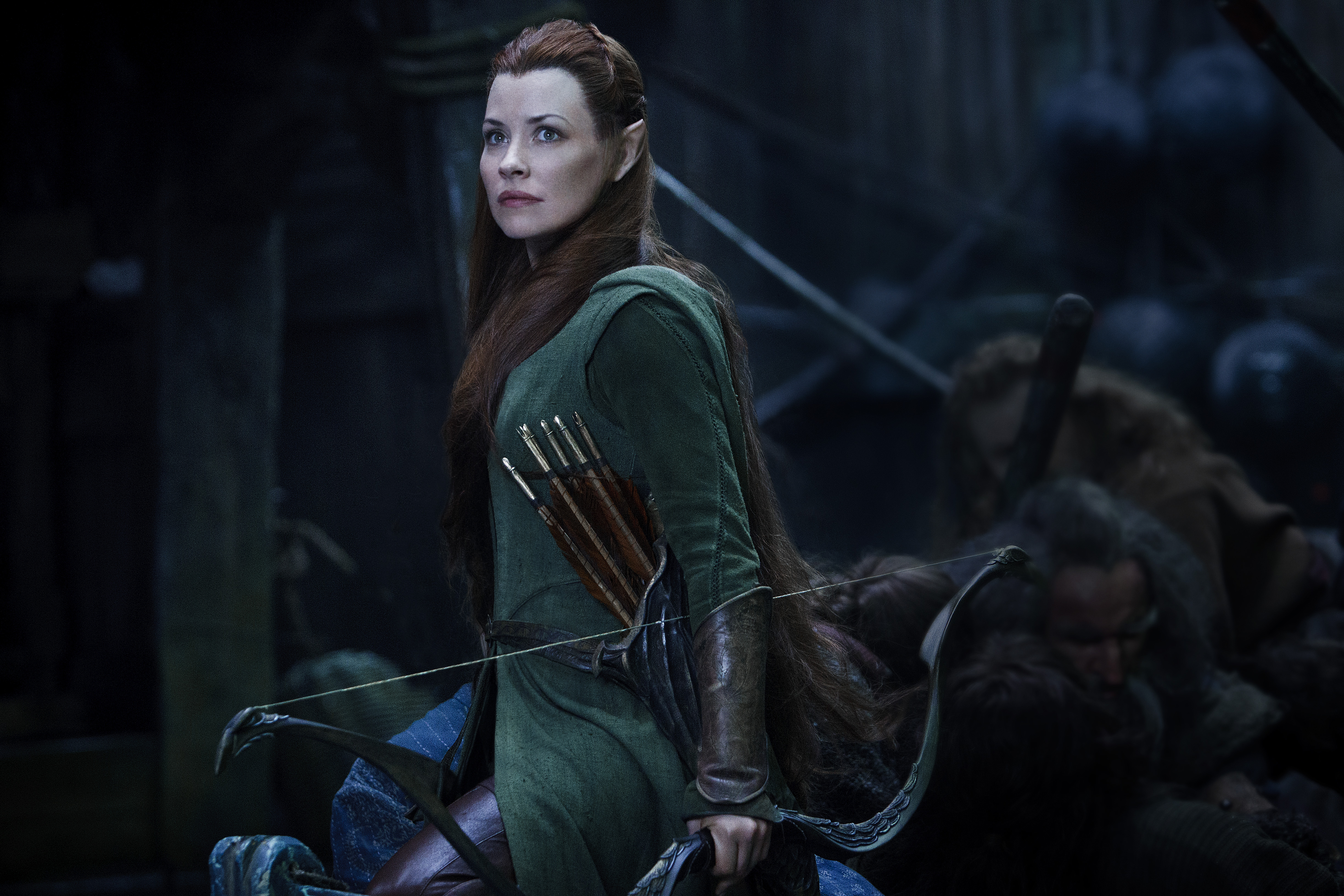
Hobbit Changes Part One: In Defense of Tauriel

Well, it is done. Peter Jackson’s Hobbit movies are out. Love them or hate them: the journey is over. Now comes the time for internet reflection. As with any hyped production, there were a lot of gut reactions to The Hobbit. One casting decision in particular appeared to irk some fans. In 2011, Evangeline Lilly was announced as Tauriel, a wood elf of Mirkwood. To say that the majority of people reacted with a “hmmm, that’s interesting, let’s wait and see” attitude would be a bit of an overstatement. The immediate reaction came more in the form of comments like these. There was even a wonderful little song put together, have a look:

Fun fact: that video was published on December 15th of 2013, just two days after The Hobbit: the Desolation of Smaug was released. Either these artists were very moved to write, shoot, edit, and release a song in two days or… it was made before any of them had even seen the film. For the record, there is nothing innately wrong with this. People are allowed to have opinions and reactions of any kind to fictional characters – there are bigger problems in the world to deal with.
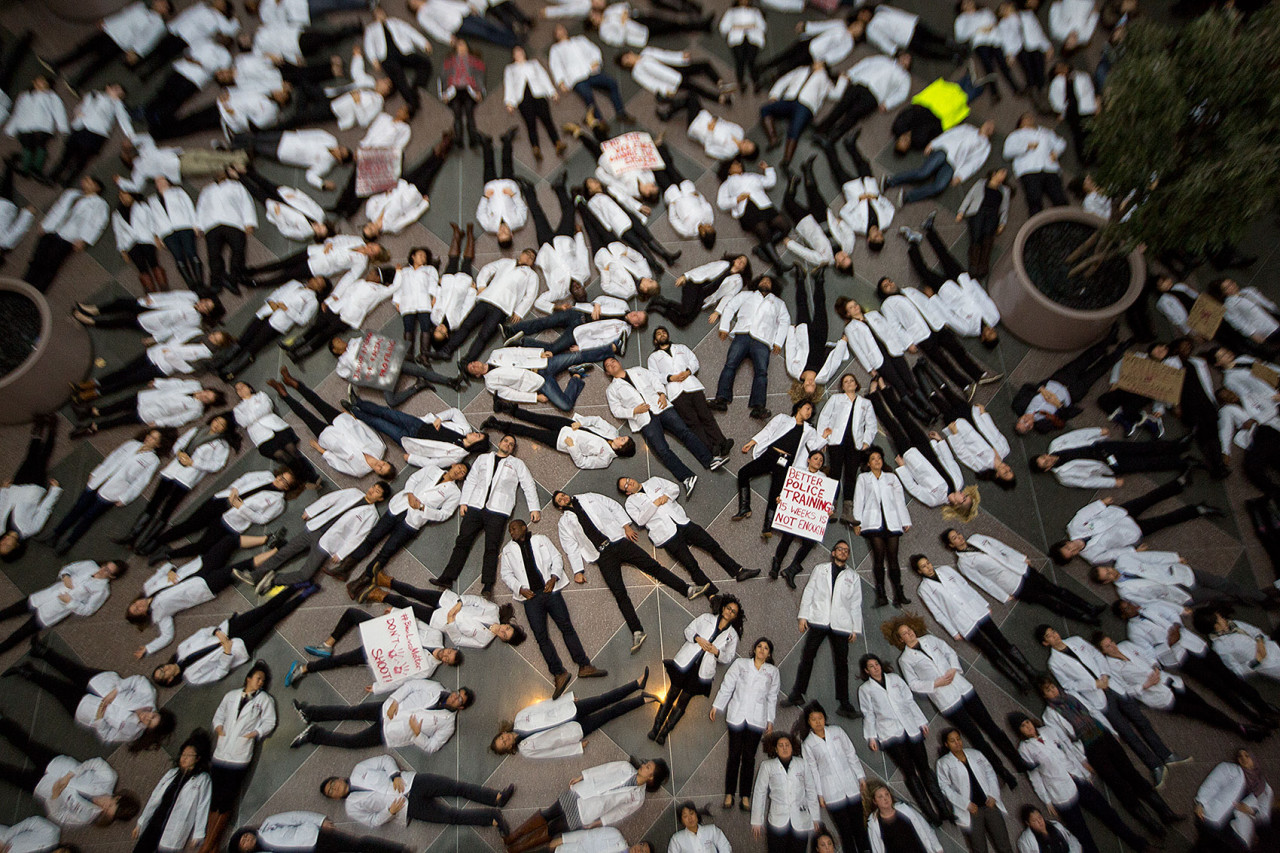
One of the many more important problems gripping our world.

But that said, there is also an innate problem of jumping to conclusions and facing new material with a closed mind. Also I titled this blog post with “in Defense of Tauriel” so I am going to defend her inclusion in this Hobbit trilogy. While Tauriel “may not be in the book,” she brings many improvements to the story of The Hobbit. First and most obvious is the addition of a woman in a world where vaginas are more mythical than dragons.
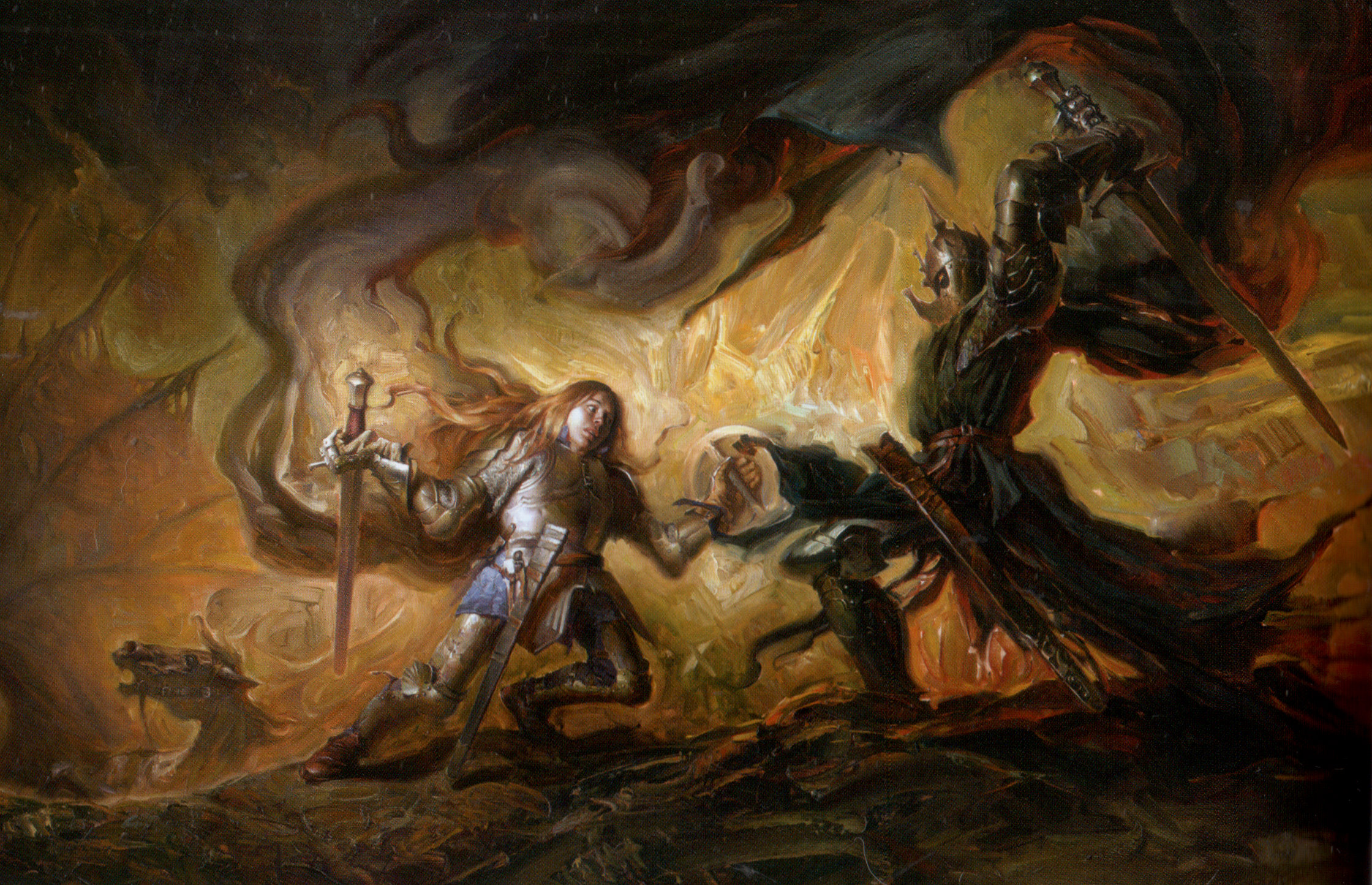
Eowyn is great but it is nice to see that there was more than one active woman in Middle Earth.

Now that I got my cleverness out-of-the-way, let’s dive into the more substantial contributions. When Tolkien wrote the Hobbit, the Lord of the Rings did not exist. In short: the Hobbit was written in a vacuum that has not existed since (and never will again). As with any simple story that was later expanded into a full universe, there are inconsistencies. For starters, let’s talk about those wood elves: what a bunch of dicks.

Seriously, how are these people good guys? When reading the Hobbit, the wood elves are terrible. The are greedy, selfish, and imprison the dwarves for basically no reason (starving dwarves stole food, can you believe their nerve?). Sure they don’t want to directly kill them like the goblins do, but is rotting in a cell really that much of an upgrade over a quick death? And once the dragon is dead and the dwarves and men are having a stupid (but kinda legitimate) battle over the treasure, the elves show up and pretty much declare it is theirs because….

They’re assholes.

"I'm sorry, I can't hear you over how pretty I am."
“I’m sorry, I can’t hear you over how pretty I am.”

As much as some people like to claim that the Hobbit is a perfect book and that all problems came from Satan (Peter Jackson), the reality is that this was one of the biggest problems in the story. If we are to believe that the elves are good guys (and Lord of the Rings seems to say so) then they cannot be so easily compared to the bad guys.

A good way to do this while staying true to the book is to keep Thranduil a jerk while adding two elf protagonists who are a bit more relatable. Enter Legolas and Tauriel:
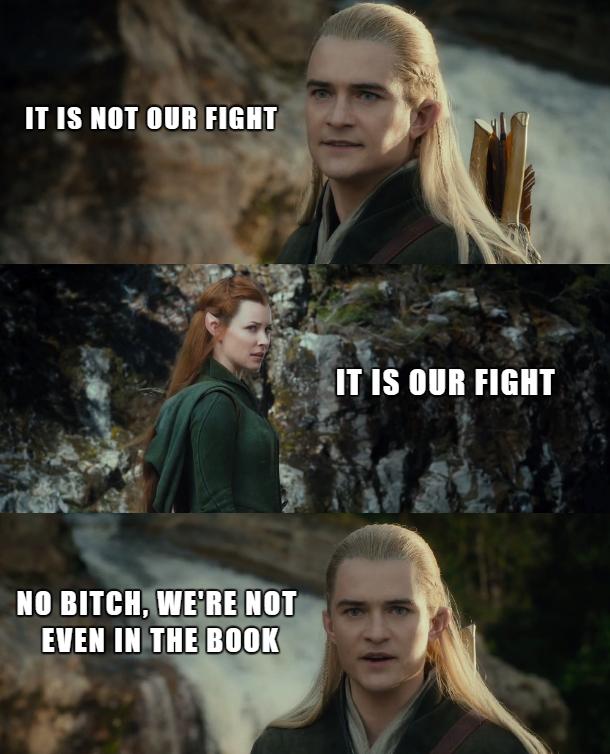
People can make jokes but this is the scene of the movie that argues that the elves should actually you know, do something positive.

Sure, neither one is in the book but where else (as prince of the Mirkwood elves) would Legolas be and again, it is nice to have a character calling the elves out on their hypocrisy.

The other great contribution that Tauriel makes is Kíli . Now, I say this as a huge Tolkien fan and as someone who loved the book: I never gave a sh*t when Fíli and Kíli died. I know I know, burn me at the stake. The Hobbit was a book about Bilbo, Gandalf, Thorin, and twelve other dwarves with different names who were all basically also Thorin. There was no real difference between them. Yes, some were fatter and some were taller and some were older but really: who cared. It is a mark of poor storytelling to have so many named characters with so little character between them. Yes, I just criticized Tolkien: deal with it.
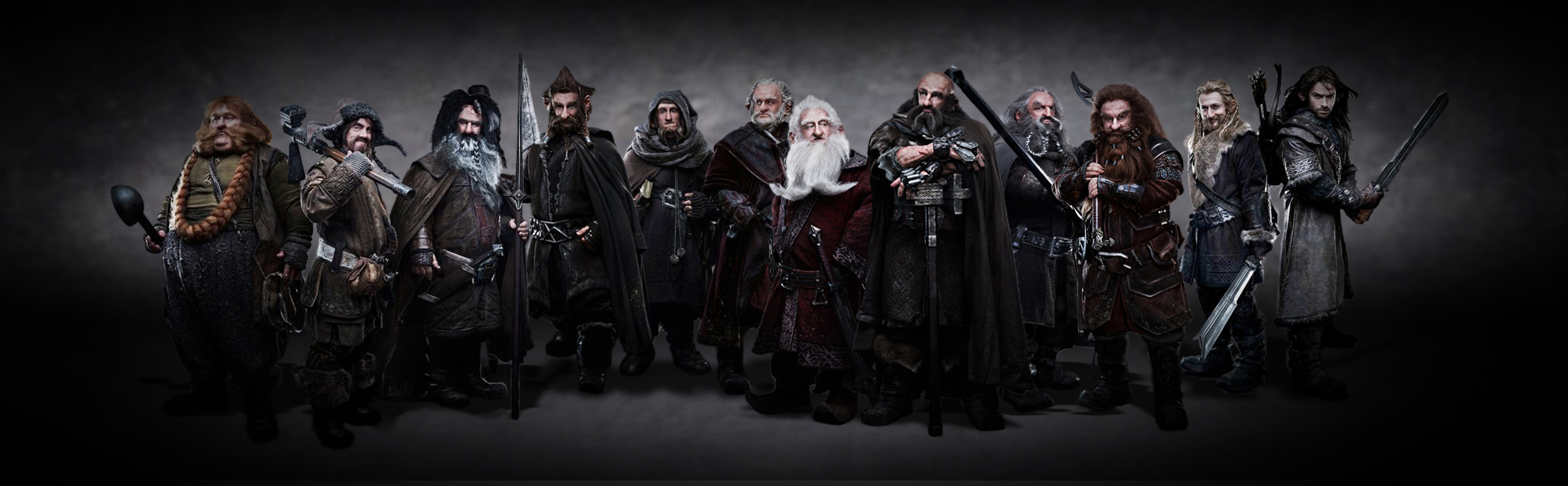
Even with three movies, can you name all the dwarves?

When I saw the Battle of the Five Armies in theaters, I heard something I did not expect. Gasping. People gasped when Kíli died. Now, people who read the book would not gasp since they would know it was coming. Generally also, people do not gasp at the deaths of characters they do not care about. What then could be the reason?

Tauriel made people care. The love story made people care. Was it a perfect love story? Not by any stretch, but it was better than Twilight and it worked the way that Jackson had designed it to. By including a new character, he was able to add to the character of the dwarves.

Okay... I will give you that. The dialogue in this scene sounded right out of high school.
Okay… I will give you that. The dialogue in this scene sounded right out of high school.

So while she was a lady, Tauriel was added for more than just her gender difference. She improves upon weak areas of the book and allowed for people who have never read the Hobbit as children to care a little bit more about this Middle Earth journey. Was the addition a successful one? Maybe or maybe not (that’s a matter of opinion), but it was a defensible one.

Part Two here.

There and Back Again: Reviewing The Hobbit (The Battle of the Five Armies)

Yesterday I had a rare and unexpected privilege. I was able to watch all three films of Peter Jackson‘s The Hobbit trilogy, back-to-back-to-back. I say rare because cinemas do not offer this kind of experience nearly enough, and unexpected because: they’re good, really good together. Certain films, even great ones like Christopher Nolan’s Dark Knight trilogy, gain very little from the trilogy viewing experience. They were created as separate entities and each tell their own story. In the case of Peter Jackson’s The Hobbit, however, the experience is much like The Lord of the Rings. All three films feel like they are parts to the same giant epic. The Unexpected Journey introduces audiences back to Middle Earth; The Desolation of Smaug escalates the conflict while building to the climax; and then there is The Battle of the Five Armies – what an ending it is.

In a film that echoes the overall strengths and weaknesses of the trilogy it concludes, The Battle of the Five Armies is over-the-top spectacle fueled by the simple heart of the story it is telling. Those out there who lamented the limited presence of actor Martin Freeman in The Desolation of Smaug can breathe a sigh: he is much more involved in this film. Indeed, it can be argued that the best scenes of the movie come before the blockbuster titular battle sequence.

One of the benefits of three movies allowed Jackson to develop individual personalities and presences for each of the dwarves in the company. This allows for more investment in the battle.

By breaking the story into three portions, Peter Jackson is able to give each their own feel. The Battle of the Five Armies plays out like a tragedy, with all sides building to a war that few truly want. Each leader has their own personality but is depicted as small in the events that are rapidly spiraling out of control. Whether it is the gold-driven insanity of Richard Armitage‘s Thorin, the reluctant responsibility of Luke Evans‘ Bard, or the seeming indifference of Lee Pace‘s Thranduil: every leader talks of peace while preparing for war.

Bard and Legolas are two of the more reasonable voices leading to the battle.

Here is where the not-so-subtle moral message of movie is hammered down. Greed is bad. Gold is not worth more than lives and the world would be a better place if more people treated jewels with as little value as hobbits do. With the wars in Afghanistan and Iraq still fresh in everyone’s minds, there are definite parallels to be drawn. A war fought solely over money while many innocents are caught and killed in the crossfire: not as fantastical as we’d all like it to be.

Certain cynics have already dismissed Jackson’s newest trilogy as a Lord of the Rings cash-in, but after watching it all play out it is clear that this was not the case. The reality is a situation very similar to 2005’s King Kong. Peter Jackson has the spirit of a child, the love of a fan… and enough money to create Middle Earth in his own image. While The Hobbit trilogy does take its bombastic nature to a fault, there is a purity running underneath it, and a sincerity that is greatly appreciated.

The controversial addition of Evangeline Lilly's Tauriel ultimately adds heart and even more of a sense of loss in The Battle of the Five Armies.
The controversial addition of Evangeline Lilly‘s Tauriel ultimately adds heart and even more of a sense of loss in The Battle of the Five Armies.

Lightning may not have struck twice, but it was close. In the end, The Battle of the Five Armies serves as an immensely fun and satisfying conclusion to a trilogy done well enough to stand on its own. As the ending credits roll, one cannot help but feel a sense of sadness and gratitude at the sheer spectacle that is Peter Jackson and his Middle Earth epics. It is only a shame that the story is now truly done.

Remember That Animated Return of the King Movie?

Whether the criticism is fair or not, Peter Jackson’s The Hobbit: The Desolation of Smaug has certainly received its share. I stand by my initial review of the movie yet I can definitely understand where people are coming from. In making three movies, the only thing Peter Jackson has proved so far is that two films would have been enough. There and Back Again will have to prove itself this Christmas. Yet whether that film is good or not, the base criticism will remain: it isn’t the book. At the conclusion of this trilogy there still will be no faithful, live-action adaptation of J.R.R. Tolkien’s book. It seems that The Hobbit was just destined to be swallowed up by Lord of the Rings, the epic film trilogy that preceded it.

If only it could have been like that animated version that was created by Rankin/Bass back in 1977. That adaptation was nearly spot on (for those Tolkien fans out there who haven’t seen it – do so). If only Rankin/Bass had continued adapting Tolkien stories, maybe then we’d have a complete set of faithful adaptations. Well, they did do one other – just one other. The Return of the King was released in 1980. Yes… The Return of the King… because nobody has time for beginnings and middles anymore. Actually it had a lot more to do with the fact that there was an animated version of the first part of The Lord of the Rings released around the same time (also check that one out… it is interesting to say the least – more on that later). Anyway, point is they tried their hand at Lord of the Rings… and it felt way too much like the Hobbit.

TheReturnoftheKing

For starters, examine the cover they went with for the DVD release. Notice anything? Hobbits and dwarves, front and center. Now it’s understandable to put Frodo and Sam on the cover as they are two of the main characters in both the book and the film. Where is Aragorn you may ask? Not important: at least not as important as those two dwarves, neither of whom is Gimli by the way. Also, is that a dragon in the upper corner… what?

In some cases: covers can be misleading. After all, they are the product of marketing campaigns and not the filmmakers. Suffice it to say: the marketing was trying to make this resemble the Hobbit as much as possible. Sound familiar?

Fun fact: there is actually a hobbit on this poster!

So marketing is on the same page. But how is the Return of the King content-wise? It is not an epic. Not by any stretch of the imagination. This version of J.R.R. Tolkien’s masterpiece is framed as the simple story of two hobbits simply walking into Mordor. Yes, Aragorn is in the film but is barely featured in it. Legolas and Gimli are cut altogether and there is very little focus on the battles. In fairness, for being only 98 minutes long, the film does manage to include an awful lot, it is merely simplified.

For the record, I always like how they made the Witch King look in this. Too bad the rest of the Nazgul look laughable.
For the record, I always liked how they made the Witch King look in this. Too bad the rest of the Nazgul appear laughable.

In watching Rankin/Bass’ version of Return of the King, the audience really does get the hobbit-sized version. The story is revealed to us by the hobbits after all (with the aid of a minstrel, hired by Gandalf, cause why not) so they naturally take center stage. The more epic parts of the story are barely touched upon because hobbits are not interested in that sort of thing.

This is a photo of everyone who has a major role in the film. Sorry for the small size but please note: half of them are hobbits.

Back again from the Hobbit are the musical numbers. I am aware Tolkien included songs in his work but can someone please tell me on what page can “Where There’s a Whip There’s a Way” is found? Seriously, I used to love that song as a kid: totally my jam.

My point is this: all of this has happened before and all this will happen again. Tolkien, and books as a platform, enjoy an advantage that films, particularly blockbusters, do not. They can change tone. The Hobbit is nothing like the Lord of the Rings. It was written long before Tolkien ever envisioned Sauron or the Nazgul or anything like that. It didn’t matter because the Hobbit was written first. Peter Jackson never had that luxury.

Rest assured, the hobbit bromance is in tact.

If he were to make a version of the Hobbit as it was originally created, then non-Tolkien fans would have had a few questions, namely: where is Gandalf throughout most of this movie, it seems kind of convenient that he just vanishes and appears as plot dictates. Why does the all powerful ring have no effect on Bilbo Baggins (who wears it for long stretches of time in the book). What was the dwarves’ plan for dealing with Smaug? Why does no one in Lake Town think it’s a bad idea for thirteen dwarves and a hobbit to go wake up a dragon? Why are the elves such jerks (still a valid question)? Why does Bilbo even care about these dwarves (seriously, if you think Thorin is an ass in the movie…)?

Anyway, I’m not making excuses for Jackson’s epic. “Why is there an elf-dwarf love story” is also a valid question.

There is a weakness in Hollywood that success merits only additional success. The child-friendly version of the Hobbit created by Rankin/Bass was a huge hit, therefore a child-like version of Return of the King is the way to go. An epic version of the Lord of the Rings was a masterpiece so Bilbo better get epic with it. The good news is this: the books still exist and will always exist. People will keep falling in love with the story and maybe one day Hollywood will get it right. If not, you can rest comfortably knowing that, after it’s all done, some rapid fan will edit down Peter Jackson’s trilogy to one movie and release that cut. After all, it didn’t take long for Jar Jar Binks to vanish from Star Wars.

“I will not risk this trilogy for the sake of one book.”