Is the Conjuring Misogynistic?

Short answer: no.

Longer answer: While reading a review of Annabelle in the Boston Globe, I came across an unfamiliar accusation. Peter Keough opened his critique with the following:

“Some praised “The Conjuring” (2013), James Wan’s film about the exorcism of a possessed house, for being scary without resorting to gore or special effects. Others, myself included, found the scariest aspect of the film to be its misogyny.”

I have seen The Conjuring multiple times and enjoy the film very much. I find it to be a well-written, well-acted, retro film of demonic horror. Personally, I had never noticed the misogyny that Keough referred to. After a little digging, the internet was revealed to have a few writers with opinions similar to the Globe. Andrew O’Hehir‘s article,The Conjuring”: Right-wing, woman-hating and really scary, appeared to be the most notable piece of criticism. In it, O’Hehir damns The Conjuring for its portrayal of the Warrens, its use of female antagonists, and its implied message that the Salem Witch trials were justified. He also reveals that he had mixed feelings on the film.

Okay… slow down.

For the record, O’Hehir is not the only one to feel this way, there are other reviews that echo his own sentiments… but let’s look at the accusations. First off, the Warrens. For those out there reading this without seeing the movie, The Conjuring follows the horror standard of “based on a true story.” Ed and Lorraine Warren were real-life Christian demon hunters who roamed the land and looked for evil to exorcise. In short: they were/are religious extremists. The kind of people who are more likely to believe in the devil than Darwin.

Criticisms of The Conjuring take issue with the film’s validating portrayal of the Warrens. In the film, the couple’s faith is shown only as their greatest weapon. It is what allows them to defeat the demon and save the family from harm. While admittedly, the Warrens were not this positive in real life, I am curious as to what the solution here would be? In order for The Conjuring to work as a haunted house horror film – the Warrens have to be more than just religious kooks. The entire threat of the movie would vanish if the Warrens weren’t valid in their beliefs.
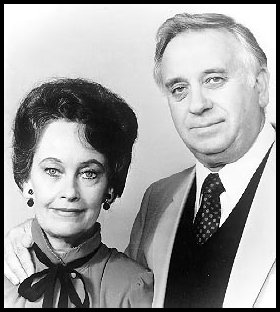
The real Warrens were probably wackos... but they are not in the movie.
The real Warrens were probably wackos… but they are not in the movie.

I feel that here is an instance where O-Hehir and other critics are projecting unreasonable expectations onto The Conjuring. EVERY MOVIE that uses the line “based on a true story” is fictitious. It is not the responsibility of any film maker to ever whisper to their audience “just remember kids, this isn’t real.” If The Conjuring were attempting a more meta approach, this criticism would be valid. As such, this is clearly a pure Hollywood thrill ride. The script does not address the fourth wall so director James Wan has no reason to either. It’s not that type of movie – these aren’t the real Warrens. They did not look like Vera Farmiga or Patrick Wilson either. Calm down about the portrayal.

Now, about the female portrayal:

Yes, the evil spirit haunting the house is a woman. A female antagonist does not misogyny make. It would as ridiculous as the claim that all black villains promote racism. Two of the main protagonists are women as well. Elaine Warren (who is depicted as the more essential of the couple) helps Lili Taylor‘s Carolyn defend her family from evil. O’Hehir seems to feel that the film labels women and their behaviors/identity as the source of all evil in the world. Again, this feels like a forced intrusion of perspective. Carolyn is not targeted for possession for neglecting her wifely duties – her family moved into a haunted house! If the ghost had attacked the husband, would that be a vengeful man-hating ghost uber-feminist? No, that would be a ghost.
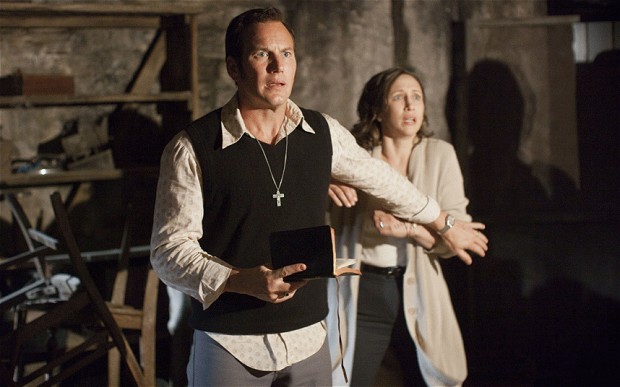
What do you see? A man protecting a helpless woman or a husband trying to guard his wife? Perspective makes a difference.

But Carolyn is saved by the power of maternal instincts!

Carolyn is saved by loving her children and not wanting to kill them… you know, not becoming a monster. Could a person project opinions/commentaries of maternal identity onto this action – of course. Yet at its heart, it is a parent refusing to abandon their child, and fighting off an evil force to do it. It is the climax of the film.

Yes, this is a movie that projects religious salvation over evil – because it is a movie about exorcism. Is it validating conservative roles and proclaiming religious faith is the ultimate way to go? Sure… if any audience member actually fights a real demon in their day-to-day life.

The last criticism I would like to address is the charge that The Conjuring validates the Salem Witch trials. This is both a serious charge and a baseless accusation. By claiming (in a fictional movie) that one real witch existed in the 1800s, The Conjuring is somehow saying that those poor victims deserved what they got in the 1600s. There is no line of dialogue that refers to the Salem Witch trials. There is nothing to connect the dots at all. Having a witch in the movie does not condone horrible crimes that happened in real life. There are several witches in Wizard of Oz, and yet I do not think that film is looking to serve as a commentary either.

Yes, witches were totally real. Just look at all the totally real stuff they could do.

The Conjuring, despite its marketing campaign, is not trying to be fact. There are many films that cross that line far worse (The Fourth Kind comes to mind). It is not as intelligent as certain horror gems like The Exorcist, but it is not trying to be either. It is fine to not like a movie, that is a very acceptable situation. That said, projecting an unreasonable set of expectations – and labeling the film as misogynistic – when it fails to follow them, goes too far. Certain people will see scenarios where none exist. Certain people will read novels in the blank spaces between the lines.

There are people out there who feel King Kong was made as a commentary on racism. Sure, if one discounts the people who made it - that is an acceptable thesis.
There are people out there who feel King Kong was made as a commentary on racism. Sure, if one discounts the people who made it – that is an acceptable thesis.

In certain cases, there is something to it. That said, The Conjuring is popcorn. You either like popcorn or you don’t. Just don’t go calling it milk duds. Do not go looking for sin where none exists. That sounds like a witch hunt.
How James Wan probably reacted to the criticism.

In Defense of Kate Capshaw's "Willie"

Look at that title, I’m so clever!

Anyway…

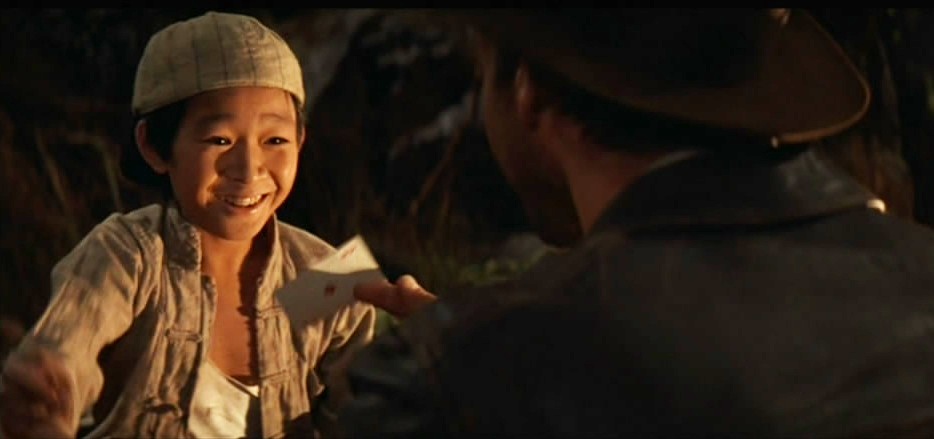
Indiana Jones and the Temple of Doom, one of the first big-budget Hollywood prequels in history (yes, it takes place years before Raiders of the Lost Ark) is a film featuring two characters that frankly were not well-received. The first I will mention is Short Round (played by Jonathan Ke Quan or Data from The Goonies). To say that Short Round incorporates Chinese stereotypes is to say that McDonald’s burgers are slightly unhealthy. It is a bit of an understatement.

"Feels like I step on fortune cookie!" That is an actual line from the film.
“Feels like I step on fortune cookie!”
That is an actual line from the film.

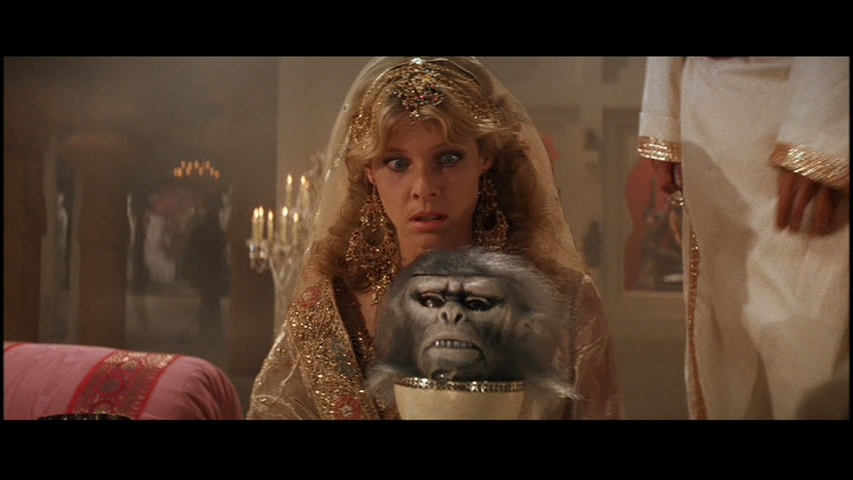
Yet Short Round is not the main focus of this article. Instead look to Wilhelmina “Willie” Scott (played by Kate Capshaw, the future wife of Steven Spielberg). Every Indiana Jones movie has its ‘Indy girl‘ and many people consider Willie to be, by far, the worst one. For anyone who is not familiar with the film (all two of you), Willie is forceful and opinionated, no matter how dire the situation. She is a nightclub singer by trade and does not care for the outdoors. Sounds like a great fit for Indiana Jones, right?

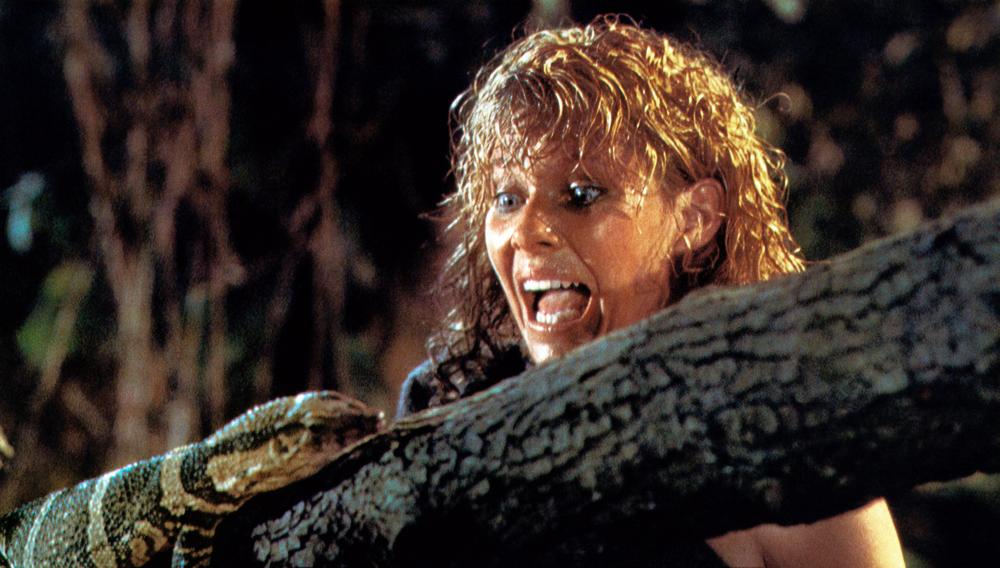
Many people have labeled Willie as whiny and say that she does little more than scream to be rescued throughout the entire movie. On one level, this is very true. Anyone looking for a tough, go-getter of a girl who can fight her way out of any situation, please see Marion Ravenwood instead. Yet Willie has been labeled as a simple helpless damsel-in-distress, and I think this criticism goes too far. Willie appears as a perfectly capable woman, when she is in her element. Let’s examine the opening sequence, the nightclub.

http://www.youtube.com/watch?v=XVD7bdywmC4

As with any Indiana Jones movie, it opens with an action sequence. Indiana gets into a shootout with some Chinese gangsters over a diamond, poison, and some antidote. There’s a lot of confusion and shooting. Tables get upturned, balloons get dropped, people get impaled with kabob skewers. Through it all, Willie is… going for the diamond. Yes, she likes fancy jewelry (and things worth a lot of money) and does not let a nightclub shootout get in her way of getting what she wants. She does not need to be saved but is rather abducted by Jones during his getaway. Not typical damsel-in-distress behavior.

I know what you’re saying: one instance does not a believable character make.

Also: who writes articles about Indiana Jones characters?

I will only answer the first point. True, Willie is never again at that level of assertive peak (possible exception in the seduction scene), but look at it this way: she is a nightclub dancer dropped into the jungle and dragged along into the Temple of Doom. How many people, outside of Indiana Jones, would have any more impact? It isn’t like she screams over nothing.

M8DINJO EC011
Trying to go to bed in a jungle full of wild animals – not the easiest thing in the world.

Willie is your typical fish-out-of-water character. She reacts with fear and hostility to everything new she encounters. This is not the optimal reaction, but it is a believable one. Not every human being is capable of handling the more extreme aspects of the world. Capshaw isn’t playing the rough and tumble character, she is playing a nightclub dancer.

Bro, is that even food?

To say that Willie’s character is annoying is a matter of opinion. To label her as useless and mere visual appeal is to, I feel, project a larger agenda onto a simple film. Is Willie Wonder Woman? Not even close. She is the audience. Let’s face it – we’d all be screaming for Indiana Jones to save us if we were we in her shoes.

Ha, listen to her scream as she's lowered to her death. What a whiner!
Ha, listen to her scream as she’s lowered to her death. What a whiner!

Yeah Korra's Great, but What Happened to Katara?

Michael Dante DiMartino and Bryan Konietzko deserve a lot of credit. In today’s world of strong-guy dominated entertainment, the pair are responsible for giving children many positive female role models to grow up with. Their first show, Avatar: the Last Airbender, brought audiences strong protagonists like Katara, Toph, and Suki, while at the same time providing an equally strong antagonist in the character of Azula. When the duo moved on to the Legend of Korra, it was hoped that the strong woman trend would continue. The good news is that, for the most part, it has. Legend of Korra has three main strong female characters, one of them being the titular hero, Korra. The other two, Asami and Lin Bei Fong, also feature significant screen time and well developed character arcs. As the series has progressed, more and more women characters have been introduced, and all of them appear fairly well written. Since Legend of Korra is a sequel show, some of the characters from the original have returned as well: namely Katara and Zuko. The sad news is that, the return has not been great.

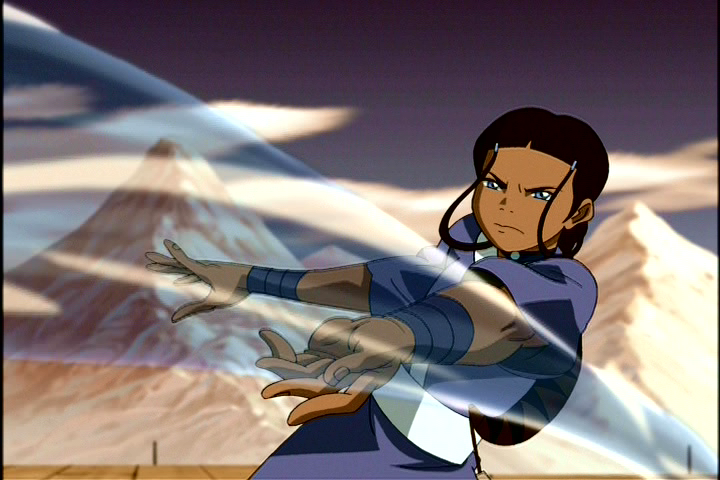
Katara was one of the main characters in Avatar: The Last Airbender. She is the first character introduced to the audience Throughout the intro it is her voice narrating. She is quickly established as someone who rebels against established gender roles. Within five minutes of the show starting, Katara is calling out Sokka (her brother) for his sexism and dismissive mature towards women.  This character trait continues throughout the series as Katara encounters several situations, most notably her training in the North Pole, which try to place restrictions on her because of her gender. In the face of every challenge, Katara remains defiant. She continually proves the established order wrong and demonstrates that she is as capable as any man.

Katara's fighting abilities grew as the show progressed. By series' end, she was the strongest waterbender present.
Katara’s fighting abilities grew as the show progressed. By series’ end, she was the strongest waterbender present.

As strong-willed as Katara is, it goes hand in hand with her generosity. Simply put, she is written as a character with an incredible sense of moral responsibility. There are several instances in the show where Katara goes out of her way, sometimes at hindrance to herself, in order to help those in need. In her words: “I will never, EVER turn my back on people who need me.”

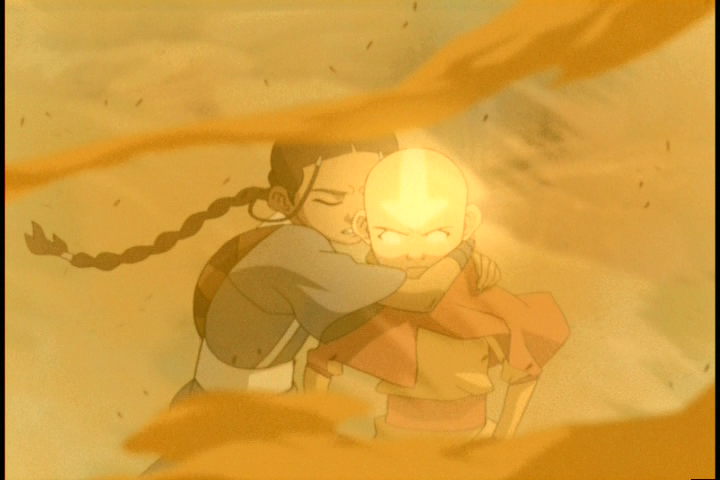
Wow, you can see why she’s a positive role model. What helps keep Katara balanced is the strength of her nurturing side. In the world today, there seems to be a misconception that a “strong” woman has no maternity instincts, that caring for another only takes away from personal goals. Avatar: the Last Airbender may be one of the first shows (definitely first cartoons) to showcase the strength of caring and being there for another person. There is a power in Katara’s scenes that does not exist in any of Aang’s or Zuko’s.

In my opinion, this is one of the most powerful scenes in the series.

All right, so far I’ve been talking up Katara a lot. I wanted to write out the strengths of her character creation. Partly to again give credit where credit is do, and partly to contrast this Katara from the older version that the audience sees in Legend of Korra. Katara, now in her eighties, returns as a minor character in the new show. This would be terrific… if she was anything like the Katara from the first series. No, the strong fighter appears to have traded in her chops for an order of elderly grandma. Good for taking care of toddlers and the sick… but not much else.

Katara.+Not+mine_b3f991_4190460

This is not an attempt to say that Katara should be more involved in Legend of Korra. She states herself at the beginning of the series that her time as a hero of the world is over. Yet there are two instances in particular where Katara’s involvement is strangely limited.

Katara hands off the primary responsibility to a new generation... before vowing to do nothing.
Katara hands off the primary responsibility to a new generation… before vowing to do nothing.

The first occurs in season two, when the South Pole is invaded by the North. Many of the Southerners revolt and there is open fighting in the streets. The North have come on the claim of ‘restoring culture’ and ‘bringing balance.’ The audience watches as many Southern Water Tribe characters fight for their personal freedom and their right to be independent. Sound familiar?

On one level, this is the same conflict that Katara faced in the first series, just on a larger scale. Here is how she reacted in the first show:

https://www.youtube.com/watch?v=SJc-DhZxKDQ

Wow, that’s really spirited, and she is just trying to prove her worth against an idiotic custom. I can’t imagine how fiercely she fights for her freedom and the freedom of her entire nation. Here is how she fights back in Legend of Korra:

tumblr_mapbzk5BNA1ra8acuo1_500Yeah, there is none, and time is devoted to showing the Southern rebellion. The audience knows that Katara has stepped out of the spotlight but seriously, the battle is on her front door.

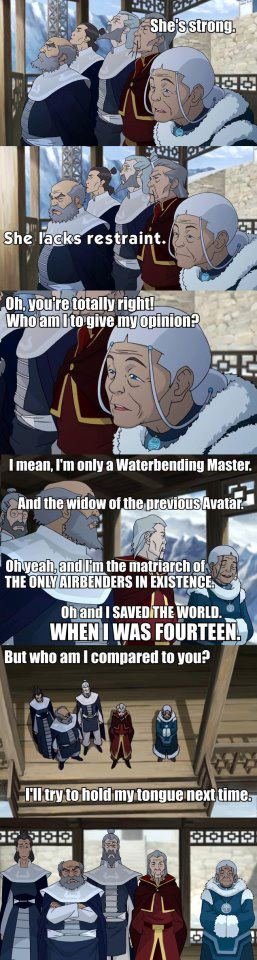
“Well she’s old.”

Yes, Katara is old… and it’s not like old people ever do anything cool or active in these shows…

Except of course for the entire society of cool older people who are actively involved in shaping world events.

Yeah, that excuse does not fly in this show. Writers DiMartino and Konietzko have done too much with the older generation for “I’m old” to be anywhere close to a valid excuse. Katara did not have to win the battle single-handedly for the South, but it is against her character that she would do nothing.

Instance Two occurs in season three with the appearance of Firelord Zuko. While Zuko’s involvement is little more than fan service, at least he is seen being active (he is supposed to be at least a couple of years older than Katara btw). The head scratcher comes when Korra requests Zuko’s guidance. She is desperate for council from someone at least familiar when a past Avatar and claims that “he knew Aang better than anyone.”

Sure, cause what would Katara know really?

Now there is the argument to be made that Zuko is the person who best knew Aang who is in the immediate facility. This is true, they are not at the South Pole. It is more of a bizarre line than anything else, but it does draw attention to a weird observation: why is Katara staying at the South Pole? When did she get so passive? Her children are actively working to rebuild Aang’s culture… and she’s at home?

Katara is pictured as very frail in the new show. It is a bizarre development that does not seem to come from anywhere, outside the fact that she lost her husband.

“Sorry kids, grandma needs to watch her stories.”

It’s just sad. Somewhere in the script writing, a decision was made that Katara would not be involved. Honestly, as harsh as it would be, it would be easier to believe that Katara had died rather than just become an old grandmother sitting by herself at the South Pole. When the audience is introduced to her, she is directly watching over Korra’s development. What happened to Katara? It is a sad day when one of the most powerful role models for young women is told to go sit quietly in the corner… and actually does so.

While I'm not for this level of involvement, it would be nice to see a happy medium.
While I’m not for this level of involvement, it would be nice to see a happy medium.