"Why am I so bad at being good?": the Encouraging Wisdom of Zuko

As the world ticks by another March 31st and I celebrate a special birthday, I will take the time to ask a deep-sounding and important question: how does one be a good person? There are so many complications to this question that make it nearly impossible to answer. The largest and most immediate may be “what is my definition of good?” Indeed, ‘good‘ is not a static word in the English language. Nearly any act, from saving a kitten to taking a life can be viewed as ‘good.’ So, where to start? Also, doesn’t this post have something to do with Avatar: the Last Airbender?

Yes, and there is a reason for starting the post with such a board question. As I have mentioned in past character analysis, the best art includes characters that can teach real life lessons. My post on Iroh focused on how he dealt with tragedy, my post on Azula discussed how the tragedy of her life came about and could have been avoided. Well, if we’re talking Fire Nation complexity, we gotta talk Zuko.

Zuko, for those out the who don’t know, is the Fire Nation (bad guy) banished prince. He was meant to be the next Fire Lord before speaking out of turn cost him his home and his title. He was cast out to wander the world in search of the Avatar with only one ship of men and his uncle (Iroh) to help him. Another way to describe Zuko would to be to liken him to Hamlet. I’m basically saying that he has daddy issues and difficulty making up his mind. Also, not the most cheerful guy to be around:

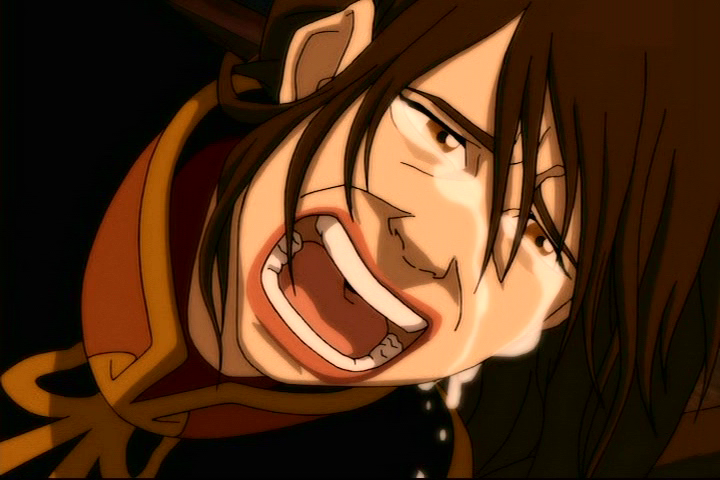
Typical Zuko response.

At the beginning of the series, Zuko is an antagonist. He chases the Avatar with single-minded focus. After all, according to his father, capturing the Avatar is the only way to restore his honor and the only thing that will allow him to return home. Wow, right? He must have done something really bad to get banished in the first place, right?

Turns out the only thing Zuko did was speak out of turn… and in protest of some troops being sent on a suicide mission. As a result, this happened:

https://www.youtube.com/watch?v=yycpDyhH9gg

Yeah: holy sh*t. Zuko’s own father burned half of his face off… just for speaking out of turn. This gives you an idea as to what kind of childhood Zuko led. He wasn’t raised by loving parents, he did not have a stable environment in which to grow, he did not have many friends or allies who believed in him. In short, Zuko did not come from the house where most storybook heroes are raised.
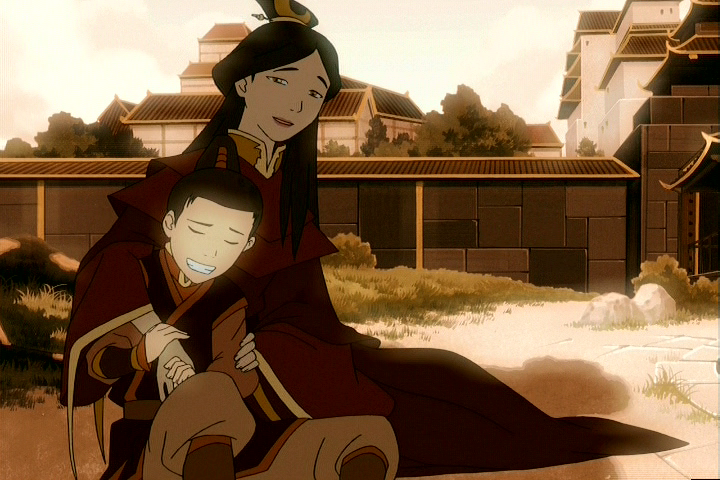
Zuko did have a happy childhood with his mom... until she was exiled.
Zuko did have a happy childhood with his mom… until she was exiled.

We all like to think that we’re good people on our own, but the proven fact remains that environment is crucial in child development. It can be an unsettling question to ask: “If I were raised by serial killers, would I view killing as wrong?” Well, Zuko was raised by a killer. Ozai (Zuko’s dear old daddy) essentially arranged the death of his father to further his own politcal career. I’m going to guess that morality talks were not an often occurrence in Zuko’s childhood.

As such, is it such a wonder that he began the series as a ‘villain’? No, the incredible achievement comes in his being a protagonist by series’ end. Of all the characters who transform throughout the series, there is none who grows as much as Zuko. The more incredible fact is that Zuko accomplishes this transformation largely on his own. Yes, Iroh is a powerful positive force for change, but he never forces Zuko to do anything.

There, that’s as forceful as Iroh ever is. Zuko does not rely on his uncle to question him. He is a constant judge of his own emotions and actions. After every major action, there is a reflection. This is one of Zuko’s most positive qualities as it allows him to learn and grow through everything he does.

“Zuko: For so long I thought that if my dad accepted me, I'd be happy. I'm back home now, my dad talks to me. Ha! He even thinks I'm a hero. Everything should be perfect, right? I should be happy now, but I'm not. I'm angrier than ever and I don't know why! Azula: There's a simple question you need to answer, then. Who are you angry at? Zuko: No one. I'm just angry. Mai: Yeah, who are you angry at, Zuko? Zuko: Everyone. I don't know. Azula: Is it Dad? Zuko: No, no. Ty Lee: Your uncle? Azula: Me? Zuko: No, no, n-no, no! Mai: Then who? Who are you angry at? Azula: Answer the question, Zuko. Ty Lee: Talk to us. Mai: Come on, answer the question. Azula: Come on, answer it. Zuko: I'm angry at myself!”
“For so long I thought that if my dad accepted me, I’d be happy. I’m back home now, my dad talks to me. Ha! He even thinks I’m a hero. Everything should be perfect, right? I should be happy now, but I’m not. I’m angrier than ever and I don’t know why!… I’m angry at myself!”

This awareness, this willingness to look inward and critique is so important for growth. For contrast, Azula never reevaluated her actions. Everything she did was right because… she did it. No one can ever be perfect so it is important to be able to look back and admit mistakes. Yet Zuko’s greatest ability is not his awareness, but his determination to continue to improve himself.

EUR1P8q

Let’s go back to the serial killer scenario. Even if you still found killing to be wrong, would you ever realize your family was in the wrong? More than that, would you ever act to stop them? Zuko does. He turns on his family, he turns on his father; the man who was pinnacle of authority.

https://www.youtube.com/watch?v=aRoboCNxzLA

Damn, that takes courage. A large detail not to ignore is that Zuko never distances himself from his family. Yes, he believes the Avatar should kill his father, and he does label his father “a monster,” but Zuko still calls the man ‘father.’ He never separates himself from the people who were so cruel to him. Is there a level of forgiveness there? Probably not, but it is good to see that no sense of superiority comes with Zuko’s change. He is never so high on himself to think he is perfect.

It could be argued that Aang was great because of his childhood and being raised by the Air Nomads. Katara may have found a lot of her strength and caring from her mother. Toph may even be her contradictory self only to spite her parents. Zuko… Zuko is the man he is because that is the man he chose to be, regardless of the negative and positive forces in his life.

Katara mocks but that is actually really impressive.

When asking how to be a ‘good’ person, that might be the answer. Look at all the forces in your life, and then be the force you want to be, since it is always possible.

DwwfrSN


"You Should Have Feared Me More!": The Cautionary Wisdom of Azula

Fiction does not exist. By definition, it is fancy; material created by human beings to tell stories, offer escapes, entertain, or teach lessons. It can be argued that the best of fiction does all these things, with only the great examples providing insight to how to approach real life. It is in this spirit that I turn again to Avatar: the Last Airbender, a cartoon that was so much more than (I think) anyone expected. I have already written an article on the real world wisdom to be learned from the character of Iroh. Now let’s examine another character, one who provided drastically different lessons. In the Avatar universe, no villain was more complete, more fully human, and therefore more relatable than Azula.

For those unfamiliar with the show, Azula is a princess of the Fire Nation (the bad guy). She is royalty, born and raised. She is also intelligent, a perfectionist, cunning, and fiercely determined. None of these traits are innately evil, but Azula suffers from being “out of balance,” a condition that all the villains in the Avatar universe share. What this means is that Azula pursues these traits too far, and at the sacrifice of others. This makes her cruel, selfish, and extremely controlling/manipulative. It also makes her incredibly successful, at least to herself. However, in a way that is incredibly relatable to our own non-bending world, Azula’s lifestyle leads to unhappiness, first for others and then herself.

Azula’s biggest vice is her control. Everyone is a little controlling, it reflects a natural desire to feel at peace in the world around you. Some control offers security and a feeling of well-being. Azula drives it negative by turning it to manipulation. She is a character who cannot trust, and therefore cannot understand when people do. She has “friends,” but only so far as people she feels she can keep under her thumb.

Azula's chief companions are Mai and Ty Lee. Ty Lee only joins Azula after being forced.
Azula’s chief companions are Mai and Ty Lee. Ty Lee only joins Azula after being forced. Both are recruited rather than asked to help.

The show does depict a closer friendship between Azula and Ty Lee. In the episode, “The Beach,” Azula does a rare break in character. She admits feeling jealously towards Ty Lee, namely the male attention her friend is receiving. Yet Azula cannot fully admit a flaw, as it would break from her image of herself as the perfect princess (perfectionist pushed too far). For the most part, Mai and Ty Lee are not treated as equals, but rather as lackeys. Azula does not value their opinion or often listen to their advice.

This might be evil if it weren’t so sad. Through her actions, Azula is isolating herself from other people. She is consumed by her image and perceived identity as “the princess.” She relishes in power over others, even at the expense of feeling genuine connections. These she does not trust and perceives as weakness. Rather than admit a flaw, she lashes out at all of those around her. This ultimately drives her “friends” to turn on her, leading Azula to grow incredibly paranoid and depressed rather than admit she made a mistake.

"Well what choice do I have? Trust is for fools! Fear is the only reliable way."  - Azula
“Well what choice do I have? Trust is for fools! Fear is the only reliable way.” – Azula

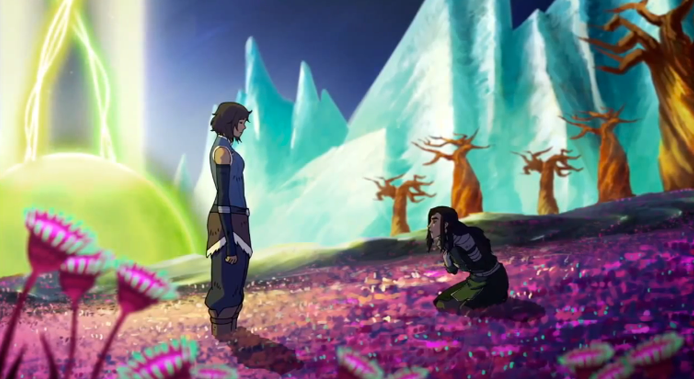
Another tragedy of Azula is her lack of growth. She is a cautionary tale of life spent too long in “the comfort zone.” Unlike her brother, Zuko, Azula never struggled with anything in her life until the betrayal of Mai and Ty Lee. Everything came easy to her. While this earned Azula respect and gained her responsibility, it meant that she was never challenged either, and never was able to grow as a person. Everyone is able to excel in conditions where they don’t feel threatened. Most don’t find out who they really are until they are challenged or broken. They will either grow, learning a new and deeper understanding of themselves (as Avatar Korra did) or they will be consumed by their own mind. Azula met this tragic fate.

When her world collapses and Azula is left alone and with no one to blame but herself, her sanity breaks.
When her world collapses and Azula is left alone and with no one to blame but herself, her sanity breaks. Since her mind cannot admit a problem, it is her body that exposes her inner despair.

Azula is the cautionary tale of someone who follows too far in the vein of who she was born to be rather than ever becoming the person she is. Every problem in her life was laid in infancy, from her non-existent relationship with her mother to an abusive father who taught her that manipulation was a way of life and trust was the path of foolishness. Azula grew in this world of propaganda (the Fire Nation being fully justified in the war) and isolation. It only really showed at one point in the show, but it was enough to show the audience just how unsuited Azula was to anything that didn’t revolve around the war.

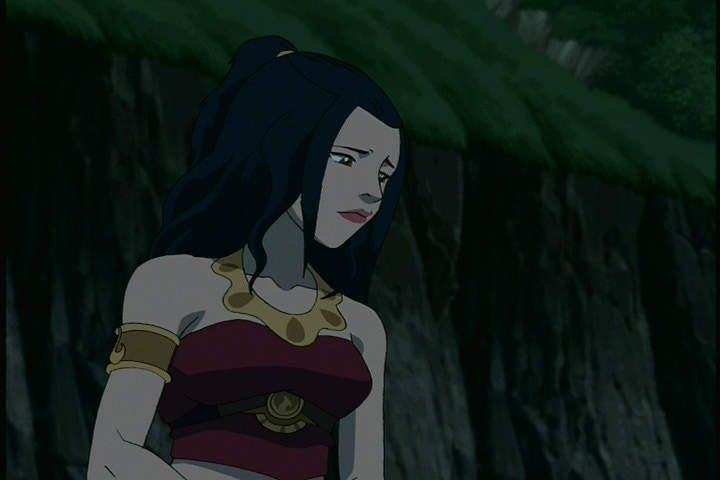
In a rare moment, Azula's armor comes down and the audience bears witness to an incredibly awkward teenager who really has no idea who she is in the normal world.
In a rare moment, Azula’s armor comes down and the audience bears witness to an incredibly awkward, alone teenager who really has no idea who she is in the normal world.

Perhaps there is no better way to illustrate the lesson than in the perspective of Zuko. In the beginning of the series, Zuko is clearly jealous of his sister, and the favoritism she receives. By series’ end however, he regards his banishment as “the greatest thing [that could have been] done for [his] life.” A pity that Azula never was banished. A pity that she could never escape.

As a child, Azula shows rare fear/regret as her mother chastises her for cruelty.
As a child, Azula shows fear/regret as her mother chastises her for cruelty. Her mother’s removal meant that all discipline was removed from Azula’s life.

The Sad Ending to the Avatar Universe

No, I’m not talking about anything having to do with James Cameron.

The sequel series to Avatar: the Last Airbender ended last month. The Legend of Korra enjoyed a finale that many critics and fans loved, with some calling it “the best series finale of 2014.” For my part, I initially was not a big fan of Korra‘s final episode. While I liked the events of the finale, the – everything that happened – portion of it, I was disappointed in the ‘how.’ It just all felt rushed. From the two-minute “forgive me ’cause I’m an orphan” speech by Kuvira to the sudden and controversial final moments between Korra and Asami, I walked away feeling like the season could have really used another episode to explain and flush out the resolution.

We get it Kuvira, you did not have a great childhood. That really does not justify your basically being Hitler this season.

I actually began writing a post that was dedicated to exploring the resolutions in “The Last Stand,” but my research compelled me to drop it (at least for now). The reality is that something far sadder than a series finale occurred last month. This very likely is the end of the Avatar universe, at least as far as creators Bryan Konietzko and Michael Dante DiMartino are concerned.

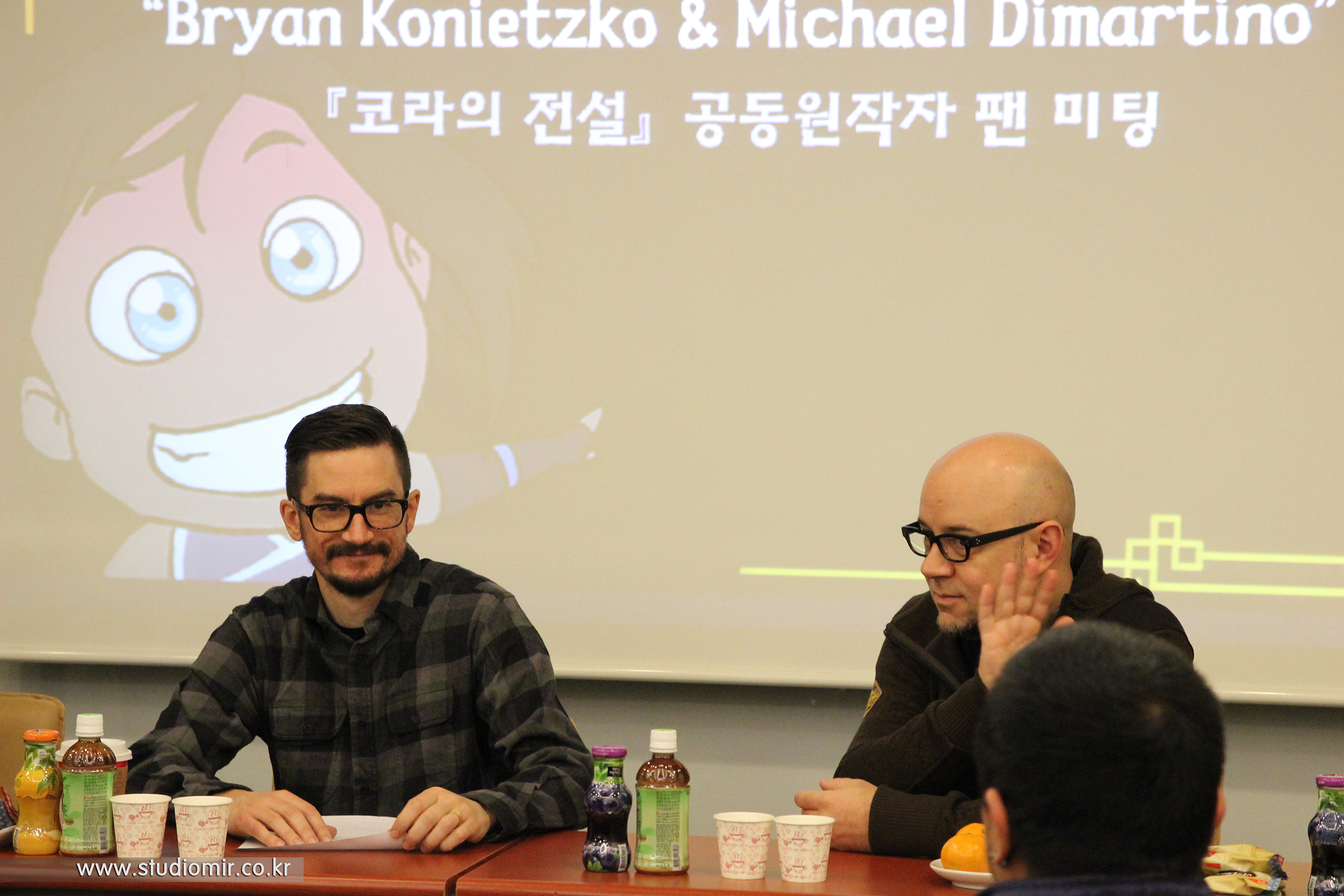
The two masterminds behind the Avatar universe.

There is a reason that season four of The Legend of Korra feels like it is missing an episode. It is.

After the immensely poorly handled fiasco that was season three, Nickelodeon felt compelled to interfere again with Legend of Korra. The show’s numbers had evidently fallen (surprise, surprise; when you yank season three off the air halfway through the season and then release season four a month later with little promotion). Nickelodeon must have been losing too much profit for their liking, so they responded by slashing Korra‘s animation budget.

Konietzko and DiMartino apparently received an ultimatum: lose an episode or some of their staff would be let go. Rather than firing anyone, the two came up with a compromise: a clip-show style episode that heavily reused animation. Nickelodeon got to save on costs, no one lost their jobs, and the series did not have to completely lose an episode…

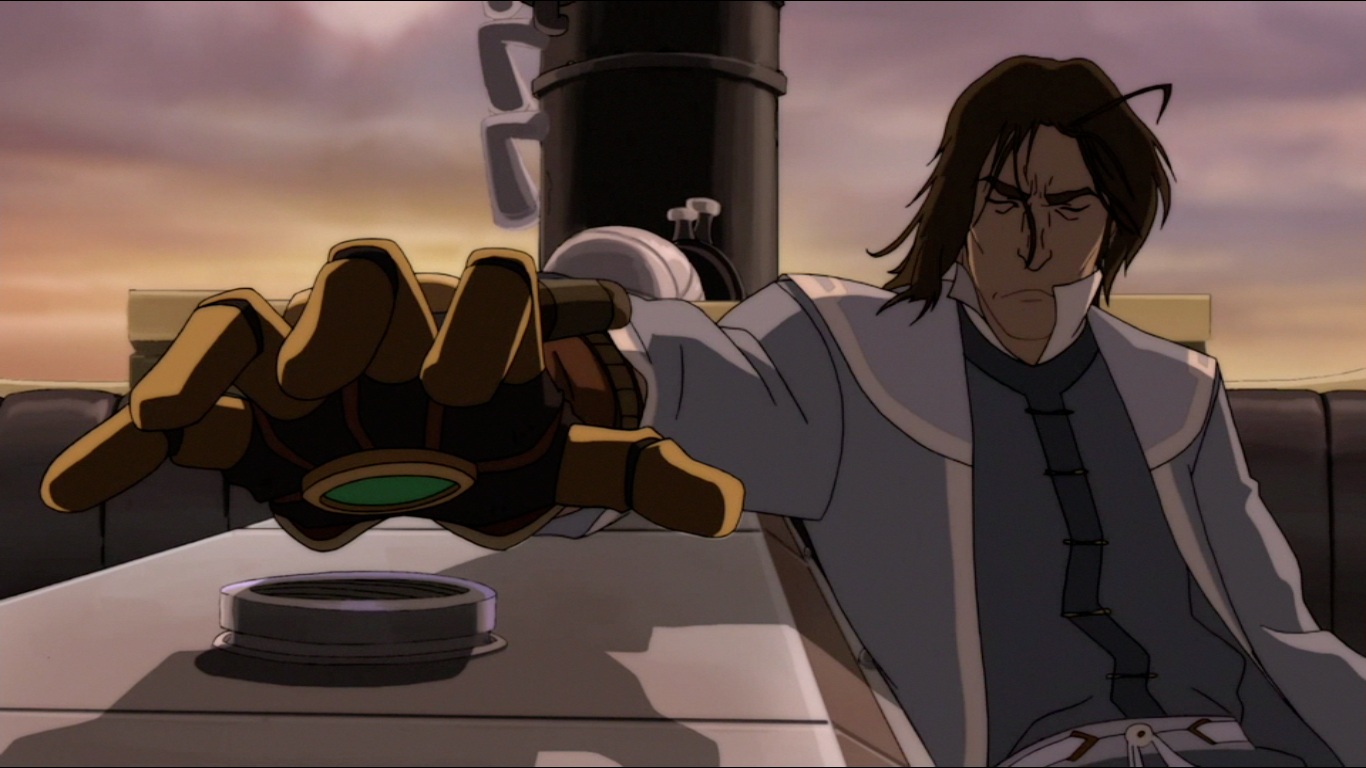
Even Varrick's hilarity could not save Remembrances from feeling really useless.
Even Varrick’s hilarity could not save “Remembrances” from feeling really useless.

Well, they still did. While “Remembrances” (as the clip-episode came to be called) is not in itself completely terrible, it is by far the worst episode of both series. Simply put: not enough happens in it. It is hard, however, to be overtly critical knowing the limitations that were faced. Nothing could happen in this episode, they did not have the money.

This means that Legend of Korra, an extremely fast-paced and tightly written story, lost twenty minutes of storytelling. Audiences can only imagine what the original, uncut, season four storyline might have looked like. Talk about treating one of your highest rated programs with complete disrespect. That would be like if HBO cut Game of Thrones set budget.

Do you really need all those extras? Do they need to be wearing armor?

As if the mishandling of season three and the mistreatment of season four weren’t enough interference, Nickelodeon was apparently very limiting in another aspect of the show:

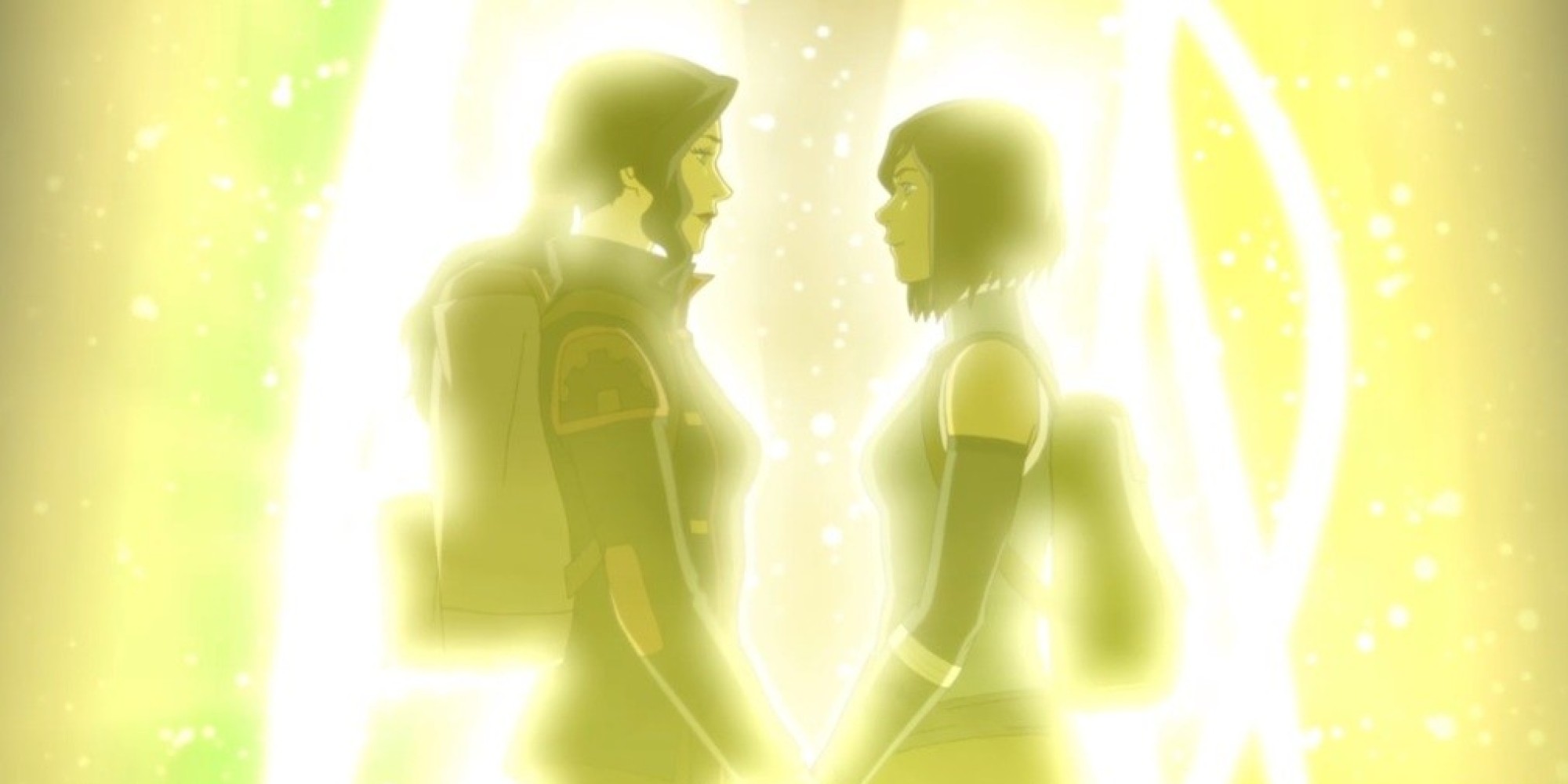
They're bisexual - you gotta deal with it.
They’re bisexual – you gotta deal with it.

Yes, it turns out that (spoilers) bisexuality is not an identity that Nickelodeon promotes. In his comments addressing the show’s ending, Konietzko handled it as politely and publicly correct as possible: “while they were supportive there was a limit to how far we could go with it.” That’s the nicest way possible of saying they were restrictive. If you are at a table with someone who has cookies and you ask for a cookie, they can be as nice as they want… while still not giving you the cookie. They can support your decision to want a cookie til the cows come home but you’re still hungry at the end of the day.

What is more troubling is the timing of Nickelodeon’s mishandling of the series. Reading the creators words on the dubbed “Korrasami” relationship (isn’t the internet just so clever?), it becomes clear that the idea of the two having a romantic relationship become much more concrete after season two. Seasons three and four were meant to be the set-up. Hmmm, now what two seasons did Nickelodeon really interfere with? I am not accusing the corporation of homophobia, but it is a little unsettling to have these timelines line up.

Suicide? That's fine, just make sure the two women don't kiss!
Suicide? That’s fine, just make sure the two women don’t kiss!

Regardless of what happened, one thing is clear: Konietzko and DiMartino have grown too mature for Nickelodeon. Who can really blame them after everything that happened with Korra? It does not sound anything like the successful partnership that occurred with Avatar: the Last Airbender. You can bet the two have a future project planned, they have said as much themselves. The sad news is: it is not Avatar related.

The two are moving on, likely to a studio or network (Netflix, HBO) that allows more artistic freedom. While this is likely a great move and I eagerly await their next series, it is sad that this is how the Avatar universe ends. There will be more comic books, which is nice I guess… but it appears unlikely that Nickelodeon will ever produce another series (after some feel that they tried actively to kill Korra) and even less likely that it will involve the two creators. This was an incredible universe that spanned two extraordinary shows. Even if its “cartoon” status prevented it from earning the acclaim of Game of Thrones and Orange is the New Black, both Korra and Avatar accomplished something truly special.

It is just a shame that this good-bye tastes so bitter.

"Hey cheer up, at least Michael Bay hasn't made a movie about us yet."
“Hey cheer up, at least Michael Bay hasn’t made a movie about us yet.”

Click here to support bringing Legend of Korra back to life on Netflix.