How to Make a Hallway Scary: the Silent Hills P.T.

There is a real question with video games: can they be terrifying? Those that have played know that yes, they really can. Such an experience is not central to the video game world. Practically all major releases have nothing to do with “fear” per say, an adrenaline rush from simulated combat is not the same as a truly dread-inducing experience. Video games, like films and stories, relay on simulating the senses. This goes against the normal adjectives one associates with gaming. Words like freeing, relaxing, and in-control cannot be applicable (at least to a large extent) in successfully scary games. To scare the player, a developer needs to remove the sense of freedom, keep a tension-filled environment, and make the player feel anything but in full control. The playable teaser to the upcoming Silent Hills accomplishes all of this… by making the player walk down an unending hallway.

Just a fan enjoying the happy hallway.

I’m not joking. It is terrifying.

Like all of the best scares, the Silent Hills P.T(short for playable teaser) goes for a simple concept. The most successful horror films have done this. Think of Jaws making people afraid of what could be in the water, and Paranormal Activity asking “what happens after you go to sleep?” The Playable Teaser asks this question: “what happens when you’re helpless in a very hostile and creepy environment?” But let’s break it down further. Here is the introduction to the hallway in question:

The_Never-ending_hallwayI am not sure if you can tell just by looking but there is a turn at the far end of the corridor. This is essential and comes into play later. First things first though… does it look at all familiar to another famous horror hallway?
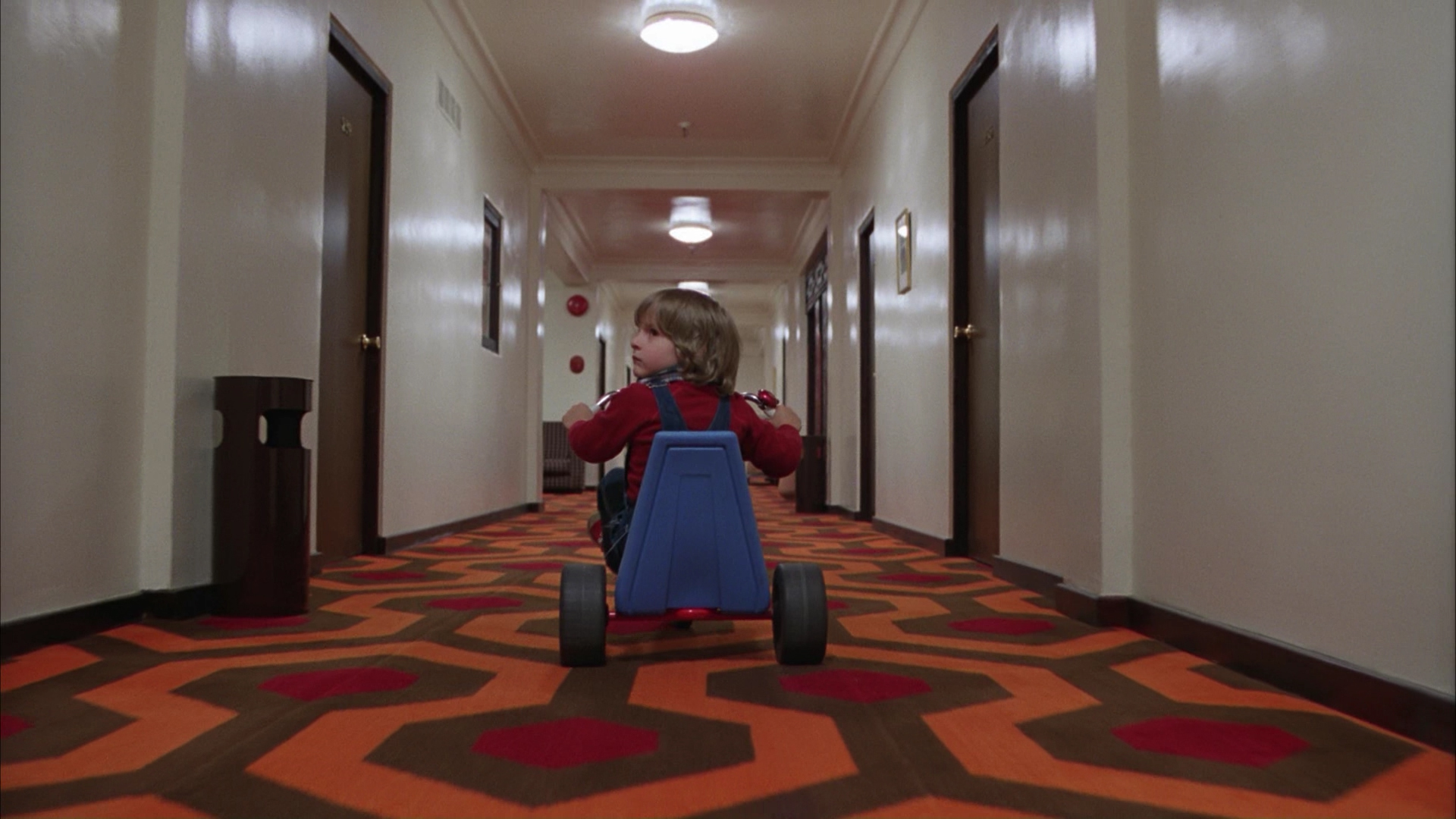
Nothing at all creepy about a boy riding his bike down a completely deserted hotel hallway.

Yes, the good folks over at Kojima Productions have invoked the spirit of Stanley Kubrick it seems, at least as far as visual setting is concerned. As Silent Hills is one of the more famous game series in the horror genre (only Resident Evil has more immediate recognition), it is to be expected that most of its hardcore fans would be familiar with The Shining. The use of an already famous horror setting aside, there is something much more important about the look of the game. Take a look at the difference in these two shots. One features an actor, a conduit for the audience. The other… is just you.
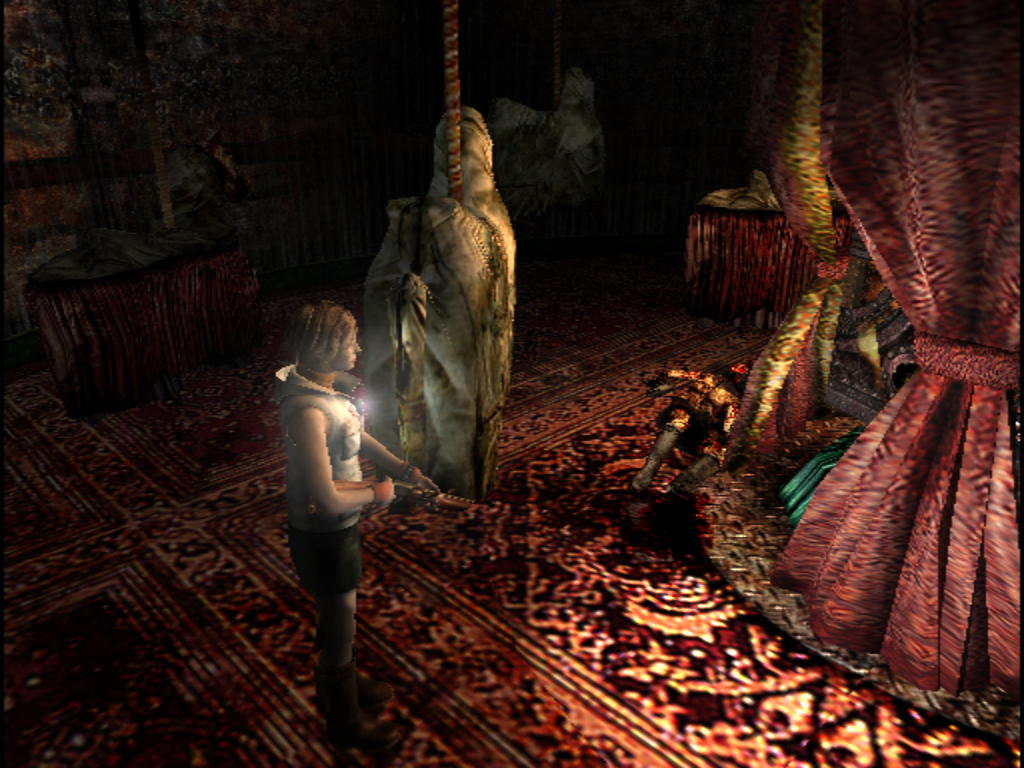
Previous entries in the series have always been in third person.. for however much that helps.

The Playable Teaser breaks from a long tradition in previous entries and goes first-person. There is no conduit, nothing between the player and the experiences. This helps greatly for two reasons. One: everything is seen without a player character standing in the way. Two: this use of first-person greatly restricts the freedom of the camera. Remember that turn at the end of the corridor? There is no way to see around it without taking those terrifying steps.

Well, just a few steps – what’s the big deal?

OH DEAR GOD!

The player is not as alone in this hallway as they would like. Throughout every walk down the happy hallway, players see things. Some, like the above image, are directly in front of you. That said, the vast majority of jarring sequences occur off to the side. This is a corridor full of many doors and many odd little angles to look around.

Now obviously, visuals can only do so much with horror. Many would actually argue that sound actually plays a greater role in creating fear. Personally, I agree with this, and it is clear the developers felt that sound was essential as well. While the music in the Playable Teaser is not particularly memorable, another use of sound is: the radio. While walking down the endless wonder of the corridor, the player hears different snippets of a radio broadcast.

But none so directly engaging as:

“I said look behind you” might be the most creepy line to ever come out of a video game radio. ever. As you no doubt heard, the weird distorted guttural cries of the creature(s) in the hallway are also audible and numerous points during the game.

This visual and audio construction are two of three key blocks that allow the Playable Teaser to be effectively scary. The last comes in terms of the player’s ability to interact. In short – they cannot. The player is only able to move and zoom the camera in to more closely examine objects. There are no weapons, no ability to attack at all. The lack of options takes away any real feeling of control. The only defiance the player can do against the game is to stop moving, but even then – that hallway is still creepy as hell.

This is the actual menu screen for the game. Kinda misleading... isn't it?
This is the actual menu screen for the game. Kinda misleading… isn’t it?

The Silent Hills P.T. creates dread. The dread of environment, the dread of enemies, the dread of vulnerability. It is a perfect exercise in simulated scares. Not since Silent Hill 2 has the series so immediately created an impact like that. Hopefully the full game can measure up to the Playable Teaser. I’ll let you know… assuming I am feeling brave enough to play it.
Through the Eyes of a Child: The Triumph of Telltale's Walking Dead Season Two

When Telltale completed Season One of its The Walking Dead in mid 2012, the clear question emerged: how could the sequel be better? The Walking Dead: Season One was heralded as one of the best games of the year, with many people dubbing it the greatest adventure game ever made. Now, whether that second part is true or not is a debate for another day. Regardless, Telltale had set the bar high. The company had successfully rebounded from the edge of collapse (remember Jurassic Park: the Game?) and had climbed into more mainstream gamer attention. Unlike the original, which came out of nowhere, The Walking Dead: Season Two would have expectations. In meeting these exceptions, Telltale had to create something both incredible and unlikely: a zombie story that did not sound too familiar. The succeeded with a simple twist in the traditional story-arch. An idea that has never been fully utilized in the genre before: a child protagonist.

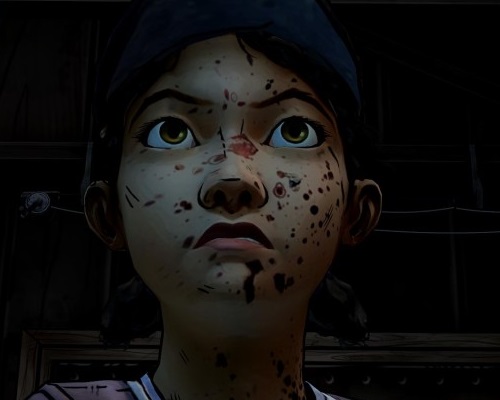
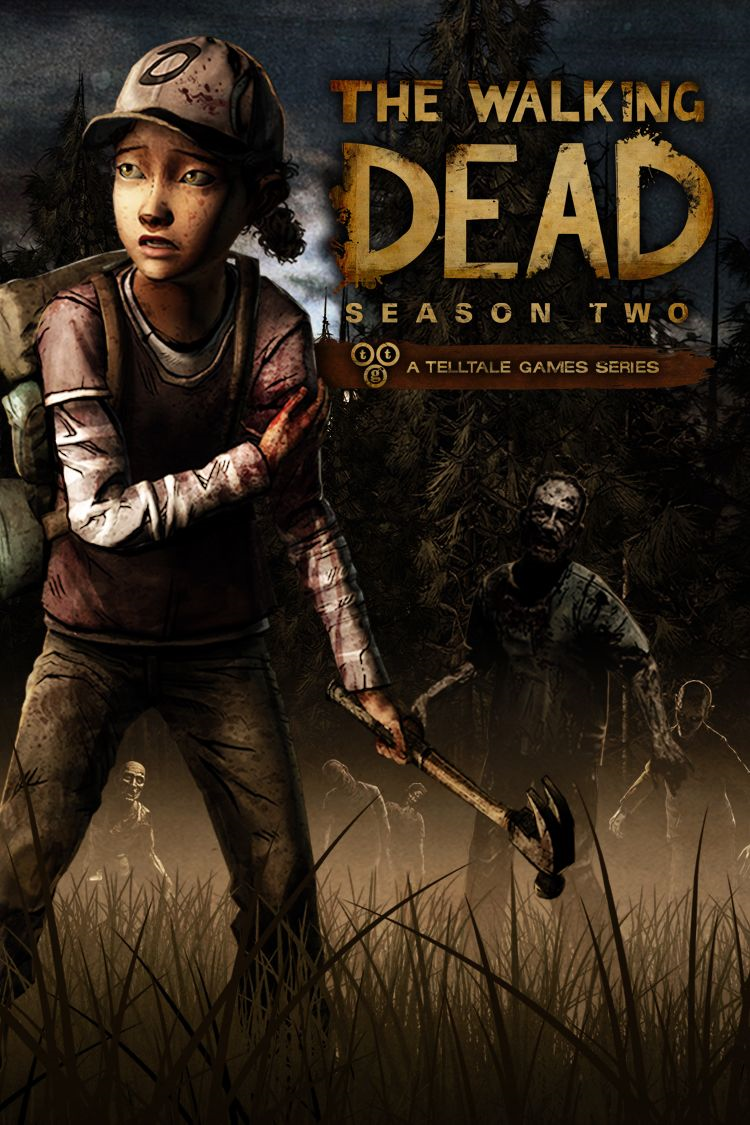
Marketing quickly established that this would be Clementine's story.
Marketing quickly established that this would be Clementine’s story.

This is not to say that children have not played a large role in the stories of zombie apocalypse before. From Carl on AMC’s The Walking Dead to Ellie in The Last of Us, children have been playing important supporting roles for sometime. Yet the main protagonist remained an empowered adult, with the child either functioning primarily as the embodiment of innocence, conscience, or some other ‘pure’ element of humanity. At eleven years old, Clementine breaks the mold that she had served in Season One.

Of course, a child protagonist poses problems – namely in the aspect of perspective storytelling, or point of view. Children do not experience the world in the same way that adults do. They live different lives, are ignorant of many issues, and concerned with priorities that not all adults would relate to. It was the triumph of Season Two‘s storytelling (headed by Nick Breckon and Andrew Grant) that allowed Clementine to be a relatable protagonist, while still maintaining the believable personality of a child. In discussing Clementine, the strengths and weaknesses of her portrayal must be observed.

WHERE THEY FALTERED

Since the flaws are so few, they will be highlighted first. As mentioned, problems can emerge with an 11-year old protagonist, namely: just how empowered are they? In a zombie apocalypse, why would the words of a child matter against bigger, stronger human beings? For the most part, Telltale handles this challenge well. Clementine is depicted as friendly and mature while having the all-important ability to keep her head in a crisis. The player sees the adult supporting characters appreciating these traits and trusting Clementine, which leads them to confide in her. Clementine is then able to use the influence she attains to either subtly or directly influence the group. She never brute forces any situation, and when a character does not want to listen to her – there’s little she can do about it.

That said, there was one event early on where the illusion of child protagonist is damaged. In the first episode, “All That Remains“, Clementine has an encounter with a grown woman named Rebecca. Here is the encounter:

There are several reasons why I personally do not believe this scene holds up at all with the nature of narrative perspective. It mainly comes down to the overly aggressive yet frightened attitude expressed by Rebecca. Clementine is a small, young girl who has just entered the group. She can pose no physical challenge and, at that point, it is very difficult to see her having a place of influence. Rebecca’s reaction is too strong and the lack of subtly causes the player to almost scoff at the encounter. This sequence would have fit much better if Season One‘s protagonist, Lee was still the player character. However, that reaction to a child is more laughable than tension-building.

The face of an adult's greatest threat in a zombie apocalypse.
The face of an adult’s greatest threat in a zombie apocalypse.

Quick note – that scene has another problem as Rebecca believes Clementine to be a spy for Carver, a man they are all fleeing. Yet, as Rebecca was a former member of Carver’s group… she would (and later does) know all his people. Another reason why this scene is more contrived than anything else.

WHERE THEY SUCCEEDED

Without spoiling the entirety of The Walking Dead: Season Two‘s plot, the writers at Telltale essentially made it a coming-of-age story. Throughout the course of the story-arch, Clementine is exposed to three (or really two) supporting characters who serve to showcase wildly different mentors. Each believes that Clementine must behave a certain way if she wants to live in a post-apocalyptic world. This style of character interaction allows the player a very clever way to look at the consequences of action, and how actions over time shape an individual’s identity.

Jane serves as one of Clementine's mentors in Season Two. She is also a reflection of who Clementine might grow to be.
Jane serves as one of Clementine’s mentors in Season Two. She is also a reflection of who Clementine might grow to be.

In addition to this, Clementine’s personality has already been greatly influenced by Lee during the events of Season One. There are many moments where the player, like Clementine, find themselves asking “What would Lee do in this situation?” It is a brilliant piece on the importance of influence and how no one grows up alone. Throughout most of the game, the player feels like they are making a human being. Clementine already developed significantly in Season One, but Season Two finishes her growth arc. By the end, it is very clear what type of person Clementine has become – and the player feels like they had a strong role in that act of creation.

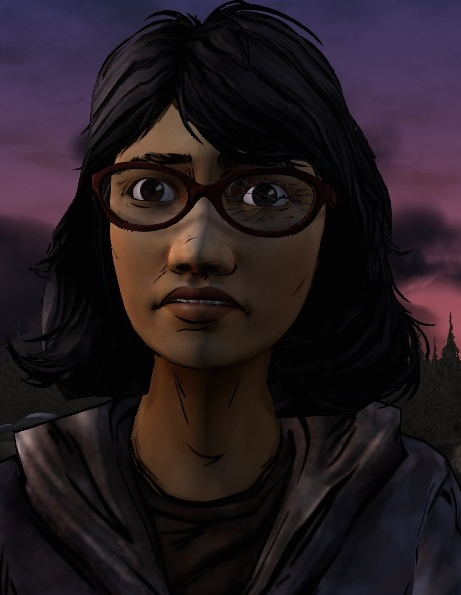
Sarah is a character used to contrast Clementine. At 15, she is considerably older, yet far less adult.
Sarah is a character used to contrast Clementine. At 15, she is considerably older yet far less adult.

Yet through it all, Clementine’s innocence and childish ignorance is touched upon. There is perhaps no more memorable scene than one of the final moments of ease in Season Two‘s story. Everyone is relaxing around a fire and joking around (needless to say, alcohol is involved). The subject of conversation turns to sex and everyone suddenly becomes very cautious around Clementine, who defies them by saying that she knows they’re talking about “kissing stuff.” This is not only a great moment in managing tension but a wonderful reminder of who Clementine is. She has had to grow up a lot to survive in a harsh world, but still maintains her child disinterest in anything to do with sex.

The Walking Dead: Season Two surpasses its predecessor with a unique protagonist and a very well-structured storyline. Is it perfect: no, but it is close. There is now a new question to be asked: how is Season Three going to top this?

Regardless of player choices, Clementine grows into a powerfully strong protagonist.

The Minecraft Expectation

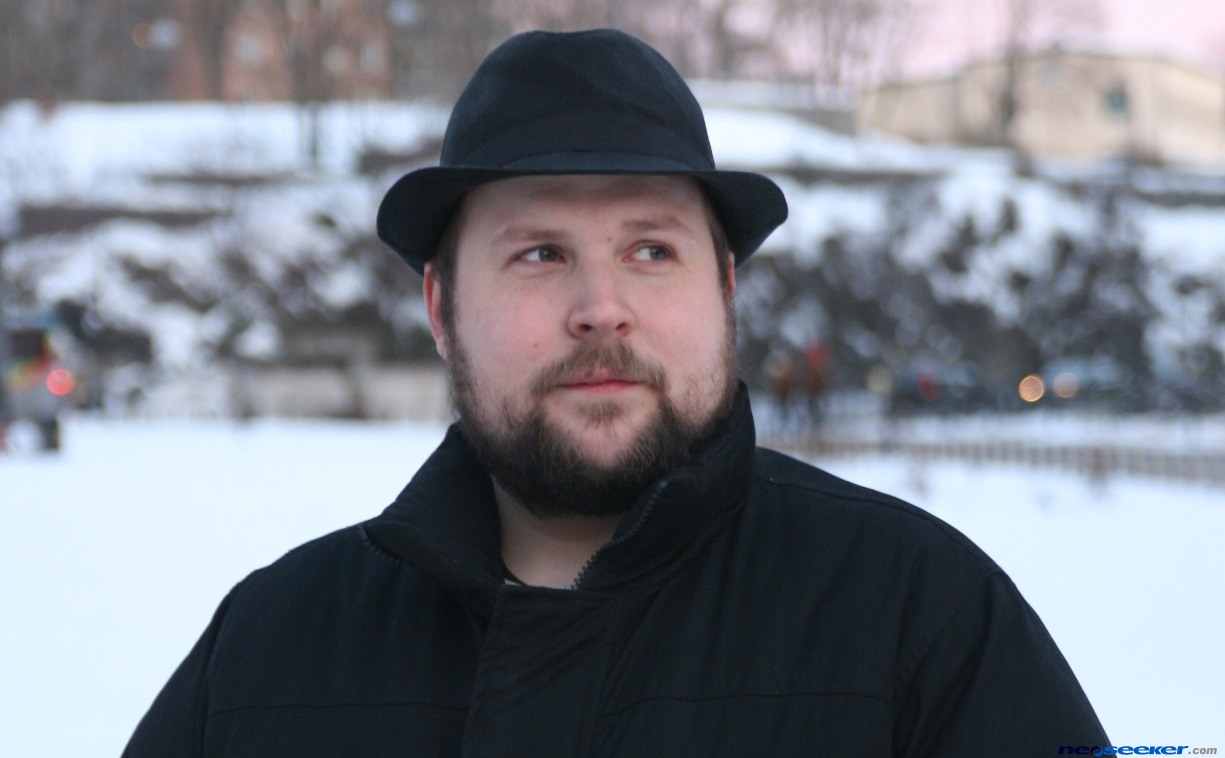
Well, it is over. With the 2.5 BILLION (yes, BILLION) sale of Mojang to Microsoft, Markus “Notch” Persson’s five-year relationship with his independent game phenomenon, Minecraft, has come to an end.  This essentially means that, without Notch, Microsoft paid a couple billion dollars to own Minecraft. Oh, and Scrolls too. That is insane. It showcases just how essential Microsoft believes Minecraft is to the future of gaming. Many gamers have had mixed-to-negative reactions to the purchase. Indeed, Minecraft is the most successful ‘indie’ (independently-made) video game in history. To have it swallowed up by a mammoth corporation like Microsoft is… well, we’ll see what happens. There is one person, however, who is very happy that Minecraft is now in Microsoft hands, and that is Notch:

"I’ve become a symbol. I don’t want to be a symbol, responsible for something huge that I don’t understand, that I don’t want to work on, that keeps coming back to me. I’m not an entrepreneur. I’m not a CEO. I’m a nerdy computer programmer who likes to have opinions on Twitter."
“I’ve become a symbol. I don’t want to be a symbol, responsible for something huge that I don’t understand, that I don’t want to work on, that keeps coming back to me. I’m not an entrepreneur. I’m not a CEO. I’m a nerdy computer programmer who likes to have opinions on Twitter.”

That is from a letter written by the Swedish programmer on his departure (the rest can be found here). It highlights the unrealistic expectation of Minecraft, and why we, as gamers, should try not to have ‘the Minecraft Expectation’ when it comes to games – especially indie ones. When I say the Minecraft Expectation, I refer to the supported belief that Notch was expected to keep working on Minecraft, without ever charging gamers for this additional content. This game has changed dramatically since its unveiling as a PC alpha test (earliest playable version – not technically a finished product) back in 2009. Minecraft was not even available for profit until 2011. And then it costs roughly twenty bucks to purchase. In the three years since there has been patch after patch of new and rebalanced content added to the game. And it has all been free.

New creatures, areas, and even worlds have been added since the initial release.

On the face of it, this is awesome for gamers. Nearly everyone hates paid dlc (downloadable content), especially when it feels like the retail game would be incomplete without it. What happened with Minecraft, I believe, is the opposite end of that dlc spectrum. Yes, there are games that withhold content and appear to delight in charging for every last dollar they can get from the consumer. But Notch was too nice. He had become bound to game he didn’t want to keep adding content to, and people treated him as a traitor if he even thought about doing something else.

Paying for content that feels like it should have been part of the original game is never a way to build a good relationship with the gaming community.

Independent developers do not have much money to finance their projects. Some use Kickstarters and paid early access to supplement funding. The only way that Minecraft has been able to continue this level of content and support is because, well… it’s worth around 2.5 billion dollars. Is it reasonable to expect a quality, finished product for the investment – absolutely. Is it reasonable to expect continued support and patching without ever needing to pay more for said content – not really. Not unless the game is a cultural event like Minecraft. How many of those come along?

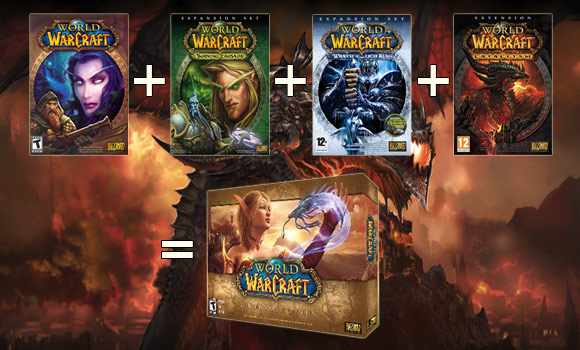
There is a good balance and I believe companies like Blizzard Entertainment do it well. They provide continued free support for their games, while at the same time releasing the occasional paid expansion pack. Their retail games never feel incomplete, like the expansion is needed. It is just a way for devoted fans to explore new content, while paying the developer’s salary.

World of Warcraft is supported and expanded regularly, yet the game has also seen a wealth of retail expansions.

Yeah, games are fun. They are art, they are expression, they are a sublime form of escapism. That said, they are also part of someone’s job. As gamers, there is a responsibility to fiscally support the products we want and to reject those we don’t. At this point, no one “owes” anyone any continued support of Minecraft. If Microsoft never releases additional content and goes straight for Minecraft II, who can blame them? So long as that game is a quality experience like the first – Microsoft has held up their end of the deal as a developer.