The Beginning of the End for Assassin's Creed?

In the last generation of video game consoles, certain series dominated the sales charts. Halo, Call of Duty, Uncharted, Grand Theft Auto: all of these were powerhouse series that continue to push out installments at least every few years. For video game company, Ubisoft; the last generation represented a changing of the guard. Prince of Persia, a video game series once wildly popular, was dying down. Sales had diminished greatly in the last couple of games and even rebooting the series did not prolong its lifespan. For Ubisoft that meant one thing: move on. The outcome was Assassin’s Creed. If you owned an Xbox 360 or a PlayStation 3, odds are you tried out at least one of the Assassin’s Creed games. They were fun an addictive, with interesting story campaigns and competitive multiplayer experiences. Like any cash-cow: Ubisoft made a lot of them. In total (including the portables), sixteen games have been made in the series. However, as a new generation begins: the changing of the guard may be upon Ubisoft again.

Ubisoft's original wall-climbing, death-defying protagonist.
Ubisoft’s original wall-climbing, death-defying protagonist.

Let’s start with Assassin’s Creed III. Many fans of the series regard this game to be a miss-step in the series. Indeed, reviews were not overly wild when the game was released. This was also the first in the series to be released on a next-gen platform (the Wii U). However, despite the lukewarm critical reception, Assassin’s Creed III did very well for itself. It sold fast and became Ubisoft’s biggest game to date. Financially speaking: nothing to worry about. At least until Assassin’s Creed IV: Black Flag was released.

Assassin's Creed III marked a notable departure in both time period and setting. Ambition was not lacking in this game.
Assassin’s Creed III marked a notable departure in both time period and setting. Ambition was not lacking in this game.

Where Assassin’s Creed III was determined a step back, Black Flag triumphed; being mentioned on multiple lists for “Best Game of the Year“. It was released on two more platforms than its predecessor as the Xbox One and PlayStation 4 were released in time to receive ports. Critical reception went up, platform count went up: sales went way down. 60% down according to initial estimates. Assassin’s Creed IV: Black Flag did not have the quick start that Assassin’s Creed III enjoyed. The game has not flopped: selling 10 millions units since its release. That is impressive but down 2 million from what Assassin’s Creed III sold in the same time frame.
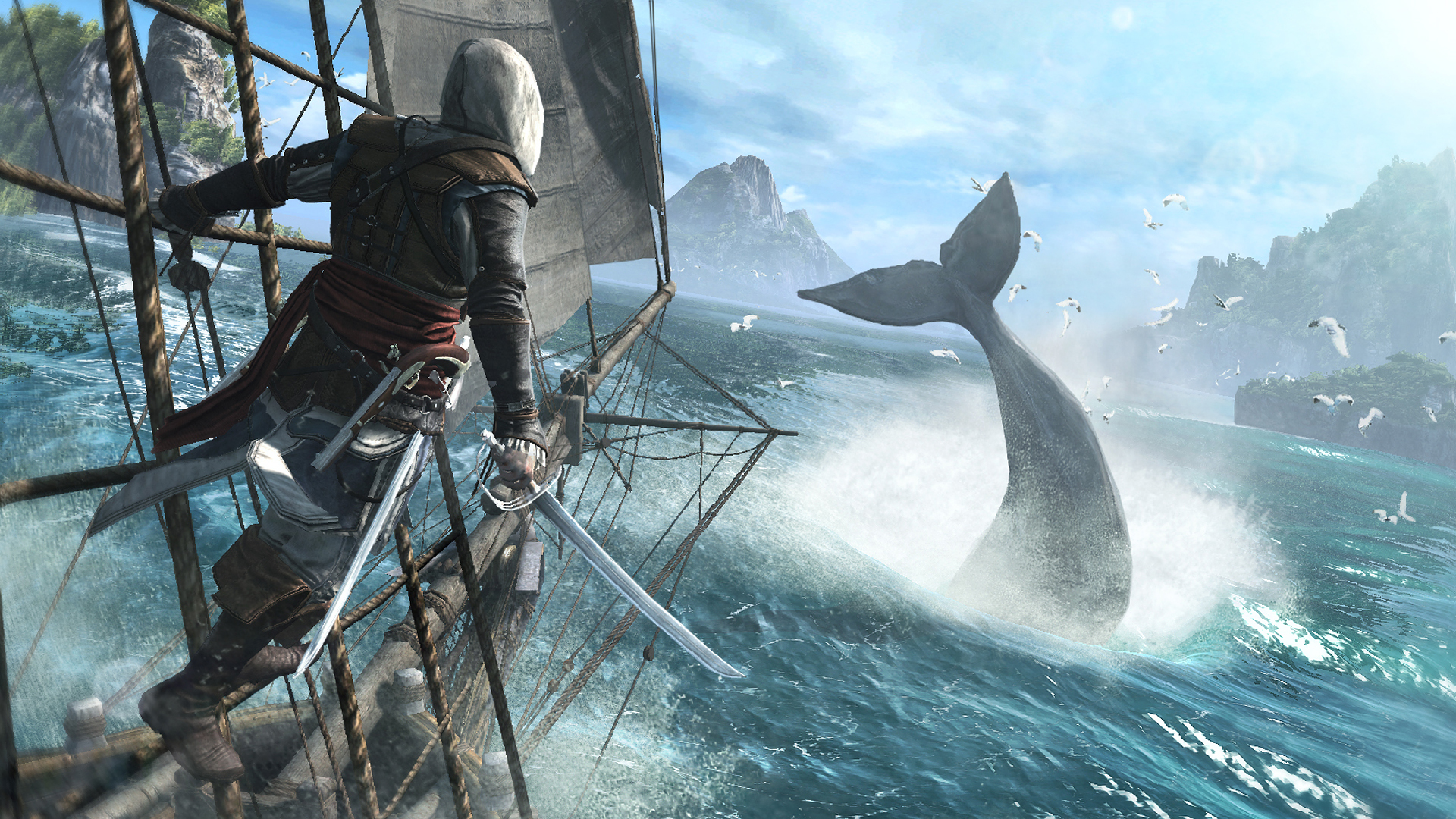
Assassin's Creed IV: Black Flag continues to mess with the formula. However, gameplay remains largely unchanged.
Assassin’s Creed IV: Black Flag continues to mess with the formula. However, gameplay remains largely unchanged.

What does this mean for the franchise? Nothing… yet. Ubisoft blamed poor sales on the incoming consoles. Ubisoft’s CEO, Yves Guillemot, felt that the initial slow start was caused by people waiting to purchase the game on new consoles. Consoles that, in many homes, likely weren’t entering the picture until Christmas. True, Black Flag was not the only major game to hit this slump. Call of Duty: Ghosts and Battlefield 4 were also affected. However, Call of Duty: Ghosts received less than overwhelming reviews and Battlefield 4 had significant technical issues. This was not the case with Assassin’s Creed IV: Black Flag.

New consoles: bad for business in the short term, but essential for innovation.

Ubisoft may be facing another problem: fans might just not care as much as they once did. Assassin’s Creed III enjoyed quick sales… but those sales came mostly from pre-orders (people feeling confident spending $60 on a game before hearing any critical feedback… you know, morons). How many of those games were sold back in less than a week or only played for a few minutes before being banished to the shelf? Ubisoft doesn’t care about those numbers because they don’t reflect the bottom line. They made their money: the product was profitable.

Sixteen games is a lot for any series. Granted, ten of those are not associated with the major releases so let’s just say six. There have been six major releases for Assassin’s Creed in the past six years: that’s a lot. That is Madden like levels of production. Eventually fans will say: is a new one worth $60? They may have already started. How many unique, worthwhile, assassin adventures are out there? If Ubisoft is producing a title every year (not leaving much time for experimentation) are these games really so different from one another?

Every series can only survive for so long.

Ubisoft has spoken of ending the series, before backtracking on their statements. It is unclear just what higher plans, if any, they have. That must lead one to think that there is only one bottom line: money. For as long as Assassin’s Creed is profitable, there will be new games. That time might just be running out.

Assassin's Creed will expand to the cinema next year.
Assassin’s Creed will expand to the cinema next year.

How Mass Effect 2 Failed the Trilogy

The Mass Effect Trilogy stands as an unparallelled achievement in video game history. A closely joined story arch that spanned three games and included a multitude of different scenarios, characters and outcomes based on player action. On the whole there is little emotion I can express for this work other than admiration. However, Mass Effect was not perfect. Mistakes were clearly made. Many people out there will tell you that the largest failure came in the ending, with Mass Effect 3. I do not share this belief. Yes, Mass Effect 3 is likely the worst game in the series (which is not to label it “bad” by any stretch) however I will argue that the greatest failings, at least in terms of character and story development, came in Mass Effect 2. I know: the game that is the best in the series is also the worst.

The question of how that is possible is best broken into three parts: character, story, and construction. I will address them in that order. Anyone familiar with Mass Effect will tell you that one of the highlights of the trilogy is its characters. Commander Shepard is an incredible protagonist who maintained his/her own identity despite the player influence. The first Mass Effect also introduced its audience to an incredible squad makeup that included Garrus Vakarian, Liara T’Soni and Tali’Zorah nar Rayya (just Tali for short). The squad wasn’t large, only six members total: including one destined to not finish the game alive. The result created a very personal atmosphere with clearly defined characters who each made a powerful impact. This is the squad size in Mass Effect 2:

masseffect2squad

Clearly there are more to be counted. Compared to the six in the first game, twelve potential crew members filled out this roster. There were also certain decisions in the game that could be made to give the player alternatives to certain squad mates (Samara OR Morinth). Expanding the central cast is always a dangerous move when designing a story. Any writer will tell you that there should never be more characters than necessary. The characters in Mass Effect 2 are well-written, realistic and flushed out creations, they are in large part what made the second installment the best. However, when their place in the trilogy is determined, nearly every character introduced in Mass Effect 2 has little to no impact on the overall story. This is a failing in writing and has largely to do with Mass Effect 2‘s construction, so I’ll come back to it.

Miranda Lawson is one of many characters introduced as a major new presence, only to simply lose significance in Mass Effect 3.

Let’s examine the story in Mass Effect 2: a suicide mission against the threat known as the Collectors. Commander Shepard must assemble the most dangerous people in the galaxy to stop the Collectors before it is too late for humanity. That’s a compelling story on its own but already there is a problem: no mention of the Reapers. The Reapers are the main threat of the Mass Effect Trilogy. They are hulking, nigh-indestructible ancient machines that have periodically extinguished all civilized life in the galaxy. Yes, the Collectors are working for the Reapers and yes, the Collectors pose a threat to humanity but the Reapers are bigger than that. The first Mass Effect concluded on a larger scale with one Reaper nearly eradicating the hub of galactic civilization. It was a bizarre move to lower the scale and try to tell a smaller story in Mass Effect 2. The result is that everything of real importance happens in Mass Effect 3, causing the final game of the trilogy to have to rush at a mad pace to try and resolve everything on its own.

The Collectors, even with the influence of Harbinger, are simply not vital to the main story in any way.

It isn’t that the story in Mass Effect 2 isn’t entertaining, it just doesn’t matter. Nothing, from the cybernetic rebirth of Commander Shepard, to the Tali mission concerning a dying star, to the reveal of a human Reaper, really impacts the trilogy. Every question raised in Mass Effect 2 goes unanswered. Worse still, most of the questions: such as how the galaxy will react to the Reaper invasion (a question raised at the end of the first Mass Effect) are left for Mass Effect 3.

Cool final boss fight: check. Adding significance to the plot: ...
Cool final boss fight: check. Adding significance to the plot: …

This all comes down to construction. The writers of Mass Effect 2 set out to tell a small story of a man who assembles a team and stops a threat. The game succeeds brilliantly at telling this story but, was it the story that should have been told? In many ways, Mass Effect 2 would have worked better as a first game rather than a middle installment. The “suicide mission” mechanic would ultimately prove disastrous for Mass Effect 3. In a game with the largest squad possible: any person could die. Even Commander Shepard, if the player did not prepare enough, could meet his/her end during the finale. The problem with “anyone could die” is that it leads to this: “everyone can live“. Meaning, from a game design perspective, that there are twelve what-ifs that people will care about in the final game. None of them can impact the story too drastically (because they might not be there) but all of them must be mentioned in some way. So everyone was treated to bizarre cameos in Mass Effect 3 where the character returned but never really did anything. The result was unsatisfying and sadly: easy to see coming. Rather than design an achievement structure which rewarded saving everyone, Mass Effect 2 should have instead opted for more scenarios like the first game: certain people have to die whether the player likes it or not. It was supposed to be a “suicide mission” after all.

Boldly left with nothing to do.

On its own, Mass Effect 2 is a brilliant game. In the trilogy, it was a foolish mistake. Yes, one can argue that if EA had not rushed Bioware in the development of Mass Effect 3, the writing staff may have found a way to better rationalize the two. However, the writers at Bioware did nothing to help themselves out. Mass Effect 2 was simply too low scale in an epic trilogy. It’s great to personalize the characters but not at the price of the story. Its a fundamental problem that largely prevented one of the most towering achievements in video game history from reaching even greater heights.

The final Mass Effect 2 DLC "Arrival" had more to do with the main plot than anything in the central game: think about that.
The final Mass Effect 2 DLC “Arrival” had more to do with the main plot than anything in the central game: think about that.

Sonic & All-Stars Racing Transformed is a Poor Man's Mario Kart… But is that a Bad Thing?

With game releases being slow this time of year (tons of announcements, not much in the way of things to play), I have decided to try and insure that my Wii U goes at least a couple more weeks before it begins to collect dust. Sonic, in this day and age, might not be the first name that comes to mind when one speaks of extending hours spent playing video games. The once-AAA mascot has seen his name fade into obscurity over the past decade with sub-par titles such as Sonic the Hedgehog (a 2006 reboot for the 360 and PS3 that gave Sonic a human love interest… not kidding), Sonic Unleashed (he was a werewolf in that one, excuse me: werehog), and Sonic Free Riders (just no). It is with his new underdog cult status that Sonic has attempted to rebuild his legacy over the past couple years (Sonic Colors and Sonic Generations serving as beacons of hope). Simply put, when 2D platformer games go 3D, they sometimes do not have a smooth transition. Sonic is the best example of this case. He has been without identity since Sonic Adventure debuted on the Dreamcast back in 1998. It is in this spirit of seeking identity (and not finding it) that I will discuss Sonic & All-Stars Racing Transformed.

This game came out for everything: Wii U, Xbox 360, PlayStation 3, PC, 3DS, Vita… literally every major platform on the market. This turned out to be a very good thing as I don’t think this game would hold quite the same appeal if it had been say a Nintendo exclusive. Why is that: because about twenty minutes in it becomes very apparent what type of game you’re playing.

Now substitute with Sonic characters and lower expectations accordingly.

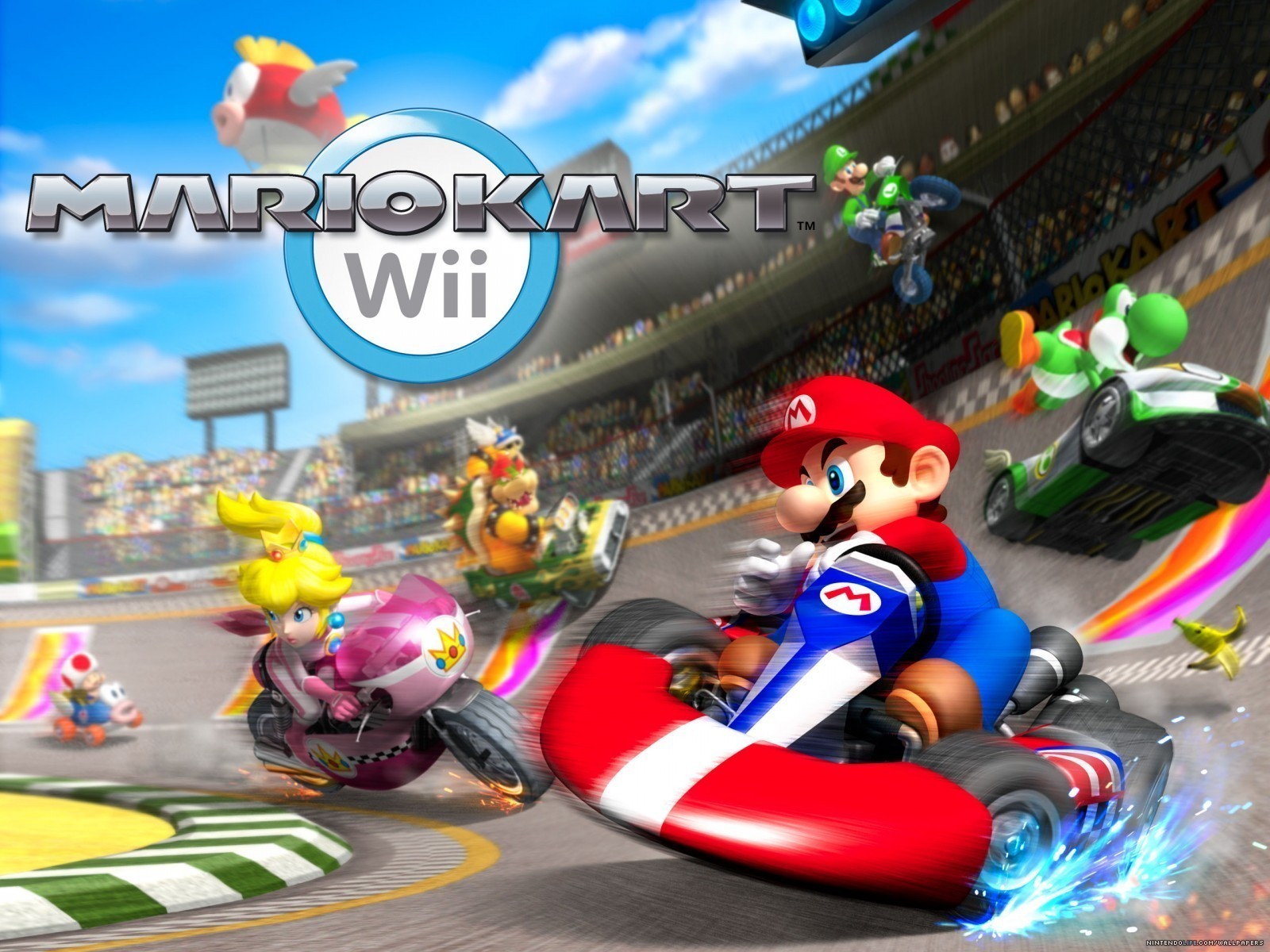
This game really feels like a Mario Kart entry. From the racers to the courses to the power-ups, it has everything we have come to expect when Nintendo gets behind the wheel. However, like most of Sonic’s recent outings: this game doesn’t hold a candle to the Mario product.

Before I start analyzing the game I want to mention the name. Sonic & All-Stars Racing Transformed, sequel to Sonic & Sega All-Stars Racing. Now here’s a series with a name that just rolls right off the tongue, huh. There’s not many more ways you could screw up a title (see Wii U and Xbox One for more ways to screw up a title). Problem number one: competing brands. This problem was in some ways solved by the sequel as it removed Sega from the title. I will argue, however, that this was not the way to go. Sonic is not the name he once was: his titles are no longer synonymous with quality (if anything the opposite). Since this is a game with multiple Sega characters, I suggest simply sticking sonic to the box and calling all future entries Sega All-Stars Racing. Comes out a lot better. I don’t think I’ve said this title’s full name once while describing it in conversation (I’ve taken to simply calling it Sonic All-Stars Racing). When you’re trying to build a brand, you need a brand name. When challenging Mario Kart, you need something that encompasses the essence of the game just as quickly and easily. Sonic & All-Stars Racing Transformed has way too much going on to be marketable.

A title so long it is obscured by the game's roster.
A title so long it is obscured by the game’s roster.

This brings me to my next topic: the characters. We got a lot more going on than Sonic in this game. Characters from properties like Super Monkey Ball, Jet Set Radio, Nights into Dreams, Shinobi, and even Skies of Arcadia feature in the racing roster. If you are unfamiliar with all of those series… now you know why Sonic is in the title. Even Wreck-It Ralph (from Disney’s new movie of the same name) makes it into the cut. I know this is a nitpick but can I just show you Wreck-It Ralph’s racer real quick:

Wreck-It-Ralph-in-Sonic-All-Stars-Racing-Transformed

There’s nothing wrong with it. Cool little truck there. What about this though:

wreck-it ralph disney movie ralph builds racecar for Vanellope von Schweetz sugar-rush

There was an actual race car in Wreck-It Ralph, racing was actually kind of a big part of the movie. Including this racer would have been a much cooler tie-in as well as allowing Vanellope von Schweetz a roster highlight as well. Before you ask, there is no Sugar Rush stage either. Pretty disappointing use of license there, Sega. Hopefully it will feature into the next Mario Kart.

But anyway, back to the character roster. The point I’m making is that it’s kinda weak, despite the fact that it reaches across Sega’s entire library. They really don’t have the character roster the way Nintendo does. Like Mario Kart doesn’t even dip into the full Nintendo library yet it contains more racers that I would be interested to play as. God help Sega if Nintendo even decides to take the Smash Bros. series into racing games (please Nintendo, make it happen).

But racing games go far beyond their drivers. Let’s talk about the stages. This is where Sonic & All-Stars Racing Transformed really doesn’t measure up to the Mario Kart series. The stages kinda suck. They’re long and vibrantly colorful but too much so in both areas. Without the transforming mechanic, the race ways feel very dull (this becomes obvious in the last grand prix, which is made up of stages from the first game). Even with the transforming, I still don’t feel the same draw to the raceways. Too bad because they are doing everything in their power to be memorable. There is so much going on on the courses that it can become distracting. At one point I stopped racing because I simply didn’t know which way to go. There was no immediate road that looked more real that anything else going on in the background. I had to wait for other racers to come and crash through the wall in front of me (don’t make it so you have to crash through walls in one course in a racing game) so I knew where to go. This is not the best design.

When the races do work they are original and gorgeous.

These tracks are not horrible by any stretch. There is nothing, however, on the level of say a Bowser’s Castle or a Rainbow Road in the bunch (or even a Toad’s Turnpike). They’re all flashy so the effect kind of wears out after a while. Really I could have used one or two more down-to-earth stages to help the more epic raceways stand out. That’s enough about the courses though, got to talk about the power-ups.

The power-ups in this game are bland imitations of the power-ups in Mario Kart. Wow, that didn’t take as long as I thought. Okay I’ll go more into it. They’re not bad, they do their job. There is nothing as devilishly fun as hitting someone with lightning or dispatching the blue shell of death. Instead of that we get bees… and puffer fish… and fireworks… what do these have to do with Sega? For instance: we got a Shinobi course and racer so why is there no ninja star? Just off the top of my head right there.

I know I’ve been very negative in this review but I’m just proving a point. This game is not the AAA challenger to Mario Kart. It is, however, still a very fun racer and as close as you will most likely come to experiencing Mario Kart without purchasing a Nintendo console. So for all the Microsoft, Sony and PC owners out there who want a fun racer: this game is pretty good. For us Nintendo owners: it is enough to satisfy until the main event arrives (Nintendo is unveiling Mario Kart Wii U on June 11th, get excited).

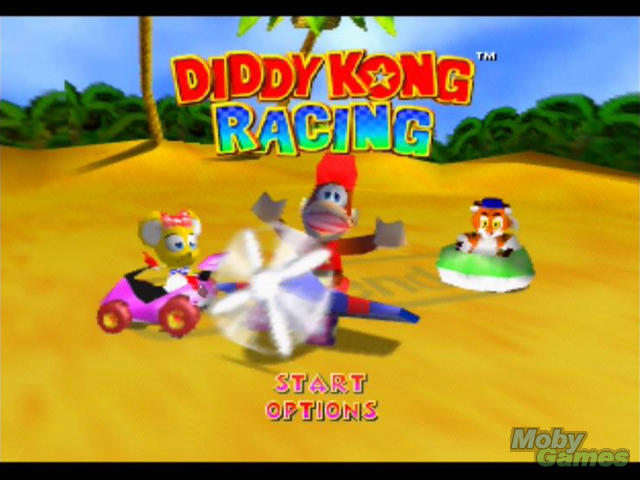
Oh and if there was anyone out there hoping this game would be the next Diddy Kong Racing: it’s not.

Diddy Kong Racing allowed for multiple vehicle-types on the same course. Sonic & All-Stars Racing Transformed regulates it to sections.

Oh, one last thing to include: does it seem odd to anyone else that Sonic needs a race car to go fast? Am I the only one who wonders about that?

Thoughts? Comments? Am I full of it or onto something? Let me know now in the feedback section of this article.