The Ultimate Mixed-Bag: Dragon Age II

The release of Dragon Age: Inquisition is upon us. Bioware‘s third in its series of medieval fantasy role-playing games looks impressive, and has already amassed a slew of favorable reviews before its release.  This is the first Dragon Age game since 2011. It is odd in this day to find such a high-budget video game release being given so long a development schedule. To put it simply: four Call of Duty games have been released in that time. Of course, the counter argument could be that EA lets Bioware take longer to develop their games but… that is not true.  Mass Effect 3 was released just over two years after the initial release of Mass Effect 2 (not including the dlc release dates), and that title was delayed. Dragon Age: Inquisition‘s long development time might have a lot more to do with the reaction to its predecessor, 2011’s Dragon Age II.

Dragon Age II received positive reaction from critics, but to look at the game’s user feedback is a different story. Many fans of the series condemned the sequel, calling it a rushed, cheap cash-in attempt on the first game. While not all the response was that critical, it came as a personal surprise to me. I am a big fan of Bioware, I love their games and quite enjoyed playing through Dragon Age II when it was released. That said, the game undeniably has weaknesses. While video game taste will always be a matter of perception and personal taste, there are a few areas where it is very possible to be objective. Let us examine the definite negatives and positives of Bioware’s most controversial release.

Level Variety

This is the first and largest negative aspect of Dragon Age II. The first game, Dragon Age: Origins, was known for its sprawling world and massive amount of dungeons. Last night, my friends and I tried to remember all the different dungeons in Dragon Age II. We concluded that their were basically six… in a game that took at least twenty hours to beat. The number is not the problem, if each dungeon was vast and took a lot of time and felt unique, that would be one thing. Dragon Age II recycles the same six small dungeons over and over again for its quests. The player better enjoy each dungeon’s design, because they will be seeing them a lot. True, there are a few others that are called in for special occasions but really it is difficult to overlook the impression this leaves. Reused dungeon design gives the definite feeling of a rushed game and chips away at the feeling of immersion. “Let’s go into this alley? Oh, you mean the alley that looks identical to every other alley in the city? Sure… why not.”
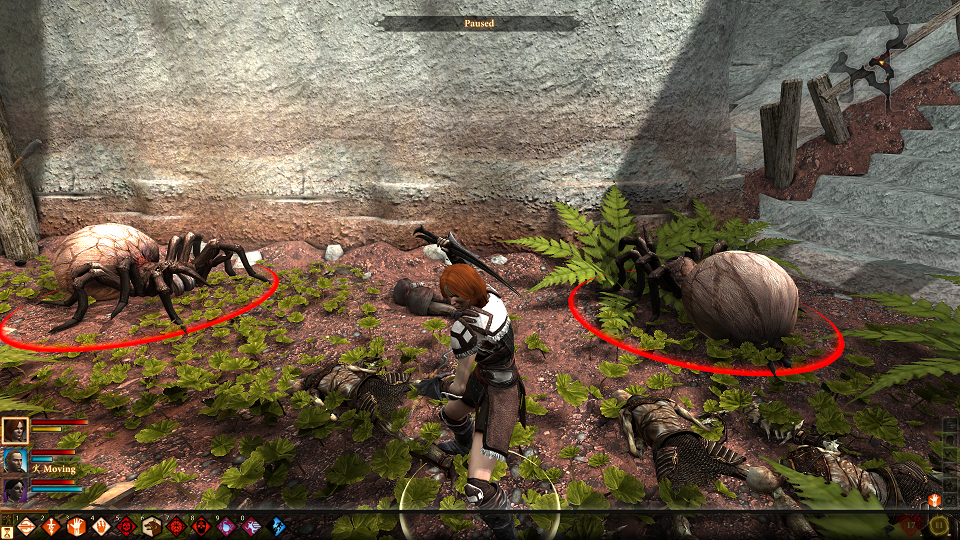
Get used to the one cave outside of Kirkwall that you revisit over and over again before the game is done.

Glitches

Glitches can make or break any game. The best video game’s can be tarnished and company’s reputations ruined over releasing products full of bugs. Unfortunately, Dragon Age II is such a game. Having completed multiple play-throughs, I personally encountered multiple glitches both times. These were not simply graphical errors either, where the models and textures go wonky. On several occasions, the game encountered errors which prevented quests from being completed or even attempted. In a game where going on quests is essential (the main drive of the entire video game), this is unacceptable. What made it worse was that Bioware and EA put out several expansions of paid dlc… without ever fixing the bugs in the main game. Don’t worry, the downloadable content contains errors too. It is a tough sell to continue to support a game that its own maker can’t even be bothered to fix.

I encountered a glitch in one play-through that prevented me from completing any of Fenris' side missions. An entire chunk of the game was removed due to this error.
I encountered a glitch in one play-through that prevented me from completing any of Fenris’ side missions. An entire chunk of the game was removed due to this error.

These are the only two clear failings of the game but – they are large failings. Whether a player liked the story is subjective. Whether a player liked the companions is subjective. Not being able to complete quests due to poor design – that is a very objective complaint. But anyway, about those companions…

The Companion Archs

Not to say that Dragon Age: Origins had poor companions, it did not. That said, certain mechanics of the system felt tacked on and were easy to manipulate. Companion loyalty simply came down to gift giving, it served to undermine the organic nature of forming a party. This was thankfully no longer true in Dragon Age II. While still not perfect, the companion system felt more natural this time around. Everything came down to how the player protagonist interacted with the companions. Gifts still played a role but it was reduced. The resulting effects caused the player to more carefully consider their options, especially given that companions could turn to enemies given the right circumstances.

Like its predecessor, each character had their own personality. Unlike its predecessor, there was no magic way to make them instantly all your friend.

The Art Style

Like it or not, there is no denying how much more creative the art style appeared in Dragon Age II. Each race became more distinctive looking. Quanari, for instance, became much more easily identifiable. While Origins was not weak on design, Dragon Age II did a lot to improve it. The game is definitely stylish.

Each race grew more distinct in 2.

Ultimately, Dragon Age II is bizarre in the fact that it is exceptional in both respects. What works in the game works very well and what does not fails miserably. There was no middle of the road in Bioware’s second fantasy epic. At the end of the day, however, this game might be one of the finest mixed bags ever made. It is certainly one of the few I can honestly say I would recommend to people looking for high quality… just watch out for the low.
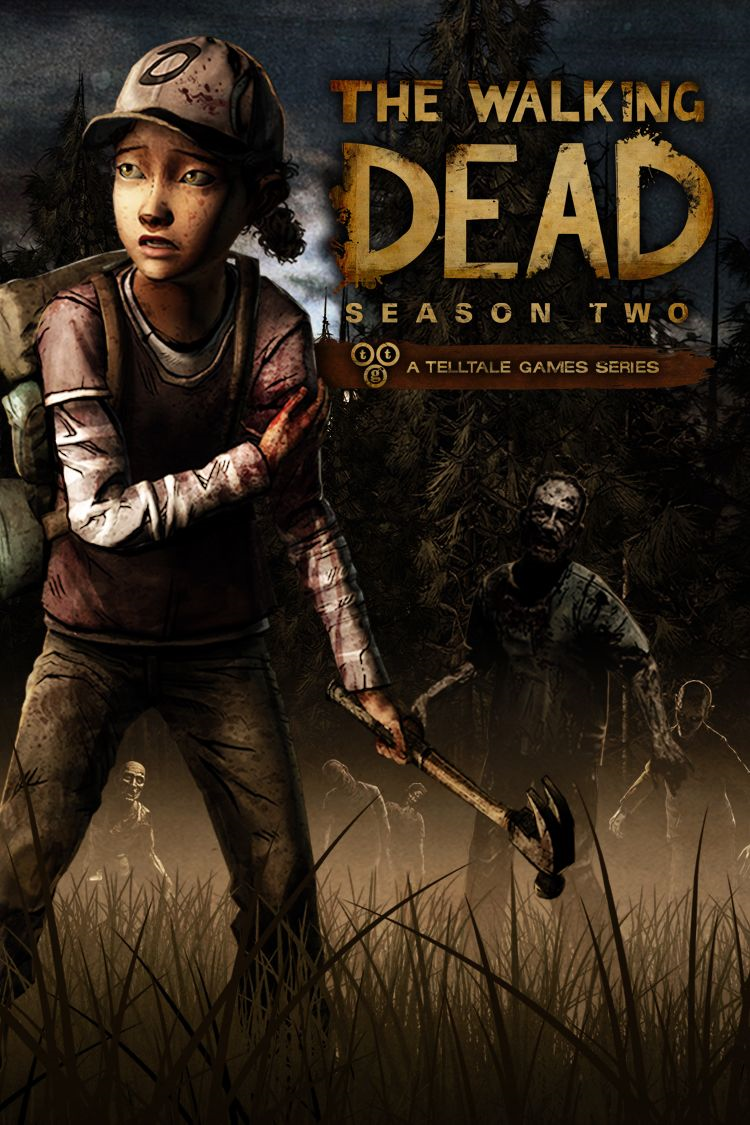
Through the Eyes of a Child: The Triumph of Telltale's Walking Dead Season Two

When Telltale completed Season One of its The Walking Dead in mid 2012, the clear question emerged: how could the sequel be better? The Walking Dead: Season One was heralded as one of the best games of the year, with many people dubbing it the greatest adventure game ever made. Now, whether that second part is true or not is a debate for another day. Regardless, Telltale had set the bar high. The company had successfully rebounded from the edge of collapse (remember Jurassic Park: the Game?) and had climbed into more mainstream gamer attention. Unlike the original, which came out of nowhere, The Walking Dead: Season Two would have expectations. In meeting these exceptions, Telltale had to create something both incredible and unlikely: a zombie story that did not sound too familiar. The succeeded with a simple twist in the traditional story-arch. An idea that has never been fully utilized in the genre before: a child protagonist.

Marketing quickly established that this would be Clementine's story.
Marketing quickly established that this would be Clementine’s story.

This is not to say that children have not played a large role in the stories of zombie apocalypse before. From Carl on AMC’s The Walking Dead to Ellie in The Last of Us, children have been playing important supporting roles for sometime. Yet the main protagonist remained an empowered adult, with the child either functioning primarily as the embodiment of innocence, conscience, or some other ‘pure’ element of humanity. At eleven years old, Clementine breaks the mold that she had served in Season One.

Of course, a child protagonist poses problems – namely in the aspect of perspective storytelling, or point of view. Children do not experience the world in the same way that adults do. They live different lives, are ignorant of many issues, and concerned with priorities that not all adults would relate to. It was the triumph of Season Two‘s storytelling (headed by Nick Breckon and Andrew Grant) that allowed Clementine to be a relatable protagonist, while still maintaining the believable personality of a child. In discussing Clementine, the strengths and weaknesses of her portrayal must be observed.

WHERE THEY FALTERED

Since the flaws are so few, they will be highlighted first. As mentioned, problems can emerge with an 11-year old protagonist, namely: just how empowered are they? In a zombie apocalypse, why would the words of a child matter against bigger, stronger human beings? For the most part, Telltale handles this challenge well. Clementine is depicted as friendly and mature while having the all-important ability to keep her head in a crisis. The player sees the adult supporting characters appreciating these traits and trusting Clementine, which leads them to confide in her. Clementine is then able to use the influence she attains to either subtly or directly influence the group. She never brute forces any situation, and when a character does not want to listen to her – there’s little she can do about it.

That said, there was one event early on where the illusion of child protagonist is damaged. In the first episode, “All That Remains“, Clementine has an encounter with a grown woman named Rebecca. Here is the encounter:

There are several reasons why I personally do not believe this scene holds up at all with the nature of narrative perspective. It mainly comes down to the overly aggressive yet frightened attitude expressed by Rebecca. Clementine is a small, young girl who has just entered the group. She can pose no physical challenge and, at that point, it is very difficult to see her having a place of influence. Rebecca’s reaction is too strong and the lack of subtly causes the player to almost scoff at the encounter. This sequence would have fit much better if Season One‘s protagonist, Lee was still the player character. However, that reaction to a child is more laughable than tension-building.

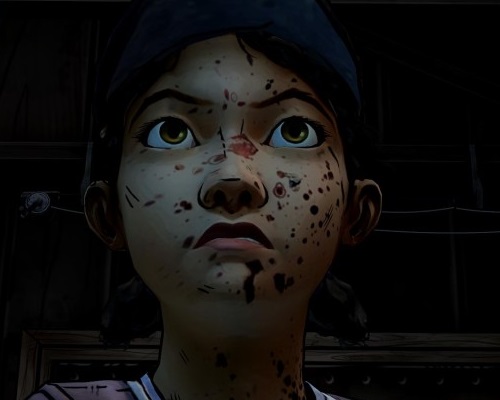
The face of an adult's greatest threat in a zombie apocalypse.
The face of an adult’s greatest threat in a zombie apocalypse.

Quick note – that scene has another problem as Rebecca believes Clementine to be a spy for Carver, a man they are all fleeing. Yet, as Rebecca was a former member of Carver’s group… she would (and later does) know all his people. Another reason why this scene is more contrived than anything else.

WHERE THEY SUCCEEDED

Without spoiling the entirety of The Walking Dead: Season Two‘s plot, the writers at Telltale essentially made it a coming-of-age story. Throughout the course of the story-arch, Clementine is exposed to three (or really two) supporting characters who serve to showcase wildly different mentors. Each believes that Clementine must behave a certain way if she wants to live in a post-apocalyptic world. This style of character interaction allows the player a very clever way to look at the consequences of action, and how actions over time shape an individual’s identity.

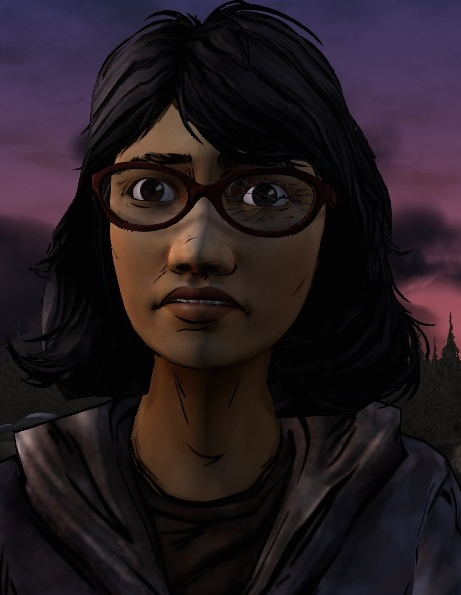
Jane serves as one of Clementine's mentors in Season Two. She is also a reflection of who Clementine might grow to be.
Jane serves as one of Clementine’s mentors in Season Two. She is also a reflection of who Clementine might grow to be.

In addition to this, Clementine’s personality has already been greatly influenced by Lee during the events of Season One. There are many moments where the player, like Clementine, find themselves asking “What would Lee do in this situation?” It is a brilliant piece on the importance of influence and how no one grows up alone. Throughout most of the game, the player feels like they are making a human being. Clementine already developed significantly in Season One, but Season Two finishes her growth arc. By the end, it is very clear what type of person Clementine has become – and the player feels like they had a strong role in that act of creation.

Sarah is a character used to contrast Clementine. At 15, she is considerably older, yet far less adult.
Sarah is a character used to contrast Clementine. At 15, she is considerably older yet far less adult.

Yet through it all, Clementine’s innocence and childish ignorance is touched upon. There is perhaps no more memorable scene than one of the final moments of ease in Season Two‘s story. Everyone is relaxing around a fire and joking around (needless to say, alcohol is involved). The subject of conversation turns to sex and everyone suddenly becomes very cautious around Clementine, who defies them by saying that she knows they’re talking about “kissing stuff.” This is not only a great moment in managing tension but a wonderful reminder of who Clementine is. She has had to grow up a lot to survive in a harsh world, but still maintains her child disinterest in anything to do with sex.

The Walking Dead: Season Two surpasses its predecessor with a unique protagonist and a very well-structured storyline. Is it perfect: no, but it is close. There is now a new question to be asked: how is Season Three going to top this?

Regardless of player choices, Clementine grows into a powerfully strong protagonist.

The Minecraft Expectation

Well, it is over. With the 2.5 BILLION (yes, BILLION) sale of Mojang to Microsoft, Markus “Notch” Persson’s five-year relationship with his independent game phenomenon, Minecraft, has come to an end.  This essentially means that, without Notch, Microsoft paid a couple billion dollars to own Minecraft. Oh, and Scrolls too. That is insane. It showcases just how essential Microsoft believes Minecraft is to the future of gaming. Many gamers have had mixed-to-negative reactions to the purchase. Indeed, Minecraft is the most successful ‘indie’ (independently-made) video game in history. To have it swallowed up by a mammoth corporation like Microsoft is… well, we’ll see what happens. There is one person, however, who is very happy that Minecraft is now in Microsoft hands, and that is Notch:

"I’ve become a symbol. I don’t want to be a symbol, responsible for something huge that I don’t understand, that I don’t want to work on, that keeps coming back to me. I’m not an entrepreneur. I’m not a CEO. I’m a nerdy computer programmer who likes to have opinions on Twitter."
“I’ve become a symbol. I don’t want to be a symbol, responsible for something huge that I don’t understand, that I don’t want to work on, that keeps coming back to me. I’m not an entrepreneur. I’m not a CEO. I’m a nerdy computer programmer who likes to have opinions on Twitter.”

That is from a letter written by the Swedish programmer on his departure (the rest can be found here). It highlights the unrealistic expectation of Minecraft, and why we, as gamers, should try not to have ‘the Minecraft Expectation’ when it comes to games – especially indie ones. When I say the Minecraft Expectation, I refer to the supported belief that Notch was expected to keep working on Minecraft, without ever charging gamers for this additional content. This game has changed dramatically since its unveiling as a PC alpha test (earliest playable version – not technically a finished product) back in 2009. Minecraft was not even available for profit until 2011. And then it costs roughly twenty bucks to purchase. In the three years since there has been patch after patch of new and rebalanced content added to the game. And it has all been free.

New creatures, areas, and even worlds have been added since the initial release.

On the face of it, this is awesome for gamers. Nearly everyone hates paid dlc (downloadable content), especially when it feels like the retail game would be incomplete without it. What happened with Minecraft, I believe, is the opposite end of that dlc spectrum. Yes, there are games that withhold content and appear to delight in charging for every last dollar they can get from the consumer. But Notch was too nice. He had become bound to game he didn’t want to keep adding content to, and people treated him as a traitor if he even thought about doing something else.

Paying for content that feels like it should have been part of the original game is never a way to build a good relationship with the gaming community.

Independent developers do not have much money to finance their projects. Some use Kickstarters and paid early access to supplement funding. The only way that Minecraft has been able to continue this level of content and support is because, well… it’s worth around 2.5 billion dollars. Is it reasonable to expect a quality, finished product for the investment – absolutely. Is it reasonable to expect continued support and patching without ever needing to pay more for said content – not really. Not unless the game is a cultural event like Minecraft. How many of those come along?

There is a good balance and I believe companies like Blizzard Entertainment do it well. They provide continued free support for their games, while at the same time releasing the occasional paid expansion pack. Their retail games never feel incomplete, like the expansion is needed. It is just a way for devoted fans to explore new content, while paying the developer’s salary.

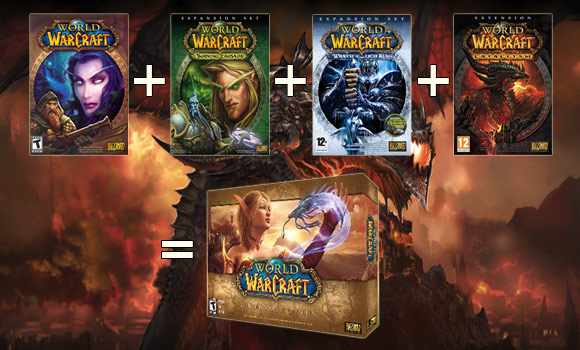
World of Warcraft is supported and expanded regularly, yet the game has also seen a wealth of retail expansions.

Yeah, games are fun. They are art, they are expression, they are a sublime form of escapism. That said, they are also part of someone’s job. As gamers, there is a responsibility to fiscally support the products we want and to reject those we don’t. At this point, no one “owes” anyone any continued support of Minecraft. If Microsoft never releases additional content and goes straight for Minecraft II, who can blame them? So long as that game is a quality experience like the first – Microsoft has held up their end of the deal as a developer.