S. is the Book for Anti-e-Readers Everywhere

If you are an avid reader/writer, chances are that you do not care too much for the e-readers (e.g., Kindle, Nook, Kobo). If you are not, do yourself a favor and find a reader/writer and ask them whether or not they prefer hardcover or e-reader. You will hear things like: “it doesn’t have the same smell,” “I miss the cover,” “I need to turn the pages.” Yes, avid book readers are junkies in their own right. For the most part, I agree with them. An e-reader will never be anywhere as good as a well-made hardcover. It just doesn’t have the same personality.

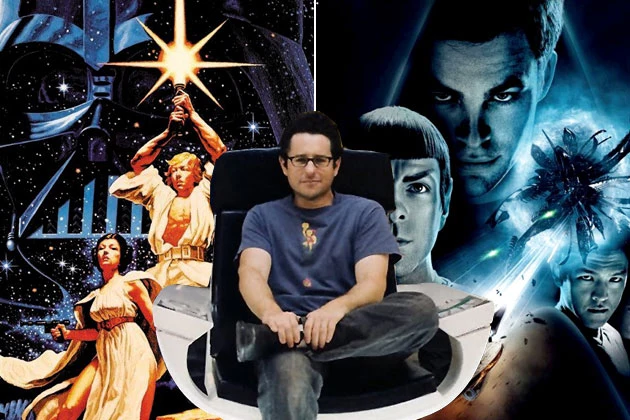
E-readers, however, do have their uses: mainly space-saving and book renting. I have a kindle and I love using it to ferret out future books to add to my collection. That said, not every author will even offer the choice to go digital. J.J. Abrams (yes, THAT J.J. Abrams) and novelist Doug Dorst (Alive in Necropolis) have come together to create S., a novel that absolutely cannot be read by e-reader. How was this accomplished? Take a look:

All of that is hidden inside the novel.

Anyone out there looking to get physcially excited to read a book, do yourself a favor and check this out. I may or may not have squealed with glee as I opened S. The hidden letters, the code-breaker, it all comes together to create an experience unlike any other. What is presented within the pages is a mystery, arguably the only genre that would work with this format. How is the story: couldn’t tell you yet, I’m still reading (it is nothing short of captivating so far). This is not meant to be a review for S. Let us instead examine the positives and negatives of this format, and whether or not authors have found a viable (if more in-depth) alternative to going digital.

For starters, the obvious good: this thing is FUN to read. The text itself is a complete novel. There are no nods or winks at the two commentators, whose notes provide a secondary story over the main source material. Anyone looking to blow through a book better just move on because S. will make a reader slow down and appreciate it. The format of the story draws the reader in as part of the mystery. Everyone (and when I say everyone, I mean us book geeks) has dreamed of finding that mysterious tome in the back shelves of a library and discovering something truly wondrous. No, this is not Tom Riddle’s diary, but expect to have fun nonetheless.

It is unclear which story is more intriguing, both succeed in keeping the reader entertained.

The obvious bad: there are pieces. This is not a book to be read on the train or while traveling, not unless one is extremely careful. Even reading in bed, I have had several occasions where one of the excerpts has nearly slipped free. If lost, there is no real indicator of where it belonged, short of reading the whole thing again to figure it out (another mystery!). There is a simplicity and convenience that can be found with most novels (and e-readers) that is lacking here. In most cases, it is not a bad thing. This is simply a book that demands one’s entire attention.

Even the outside of the book is specially designed to resemble a library book.
Even the outside is specially designed to resemble a library book.

I have seen other books attempt to do what S. accomplishes. The Jedi Path: A Manual for Students of the Force (no, I do not think I can get any more nerdy) also features notations from past readers, but these are little more than bizarre flavor and don’t really add anything substantial. There is also no extra material, allowing the book to be available via e-readers. Again, were S. not a mystery, I do not believe this format would work as well.

S. is not the only fascinatingly written book out there. For those seeking other experiences, I recommend House of Leaves. Simply put, there are some things e-readers can do, and some things they cannot. In the words of J.J. Abrams:

“It’s intended to be a celebration of the analog, of the physical object. In this moment of e-mails, and texting, and everything moving into the cloud, in an intangible way, it’s intentionally tangible. We wanted to include things you can actually hold in your hand: postcards, Xeroxes, legal-pad pages, pages from the school newspaper, a map on a napkin.”

Now that is a cool idea.

One last note, I know that Benedict Cumberbatch is rumored to be a villain in the book. I can neither confirm nor deny those rumors.

Leave Harry Potter Alone, J. K. Rowling!

In 2007, Harry Potter and the Deathly Hallows was released. The seventh book in the series concluded the adventures of Harry Potter, Ron Weasley, and Hermione Granger. The three finished Hogwarts, defeated Lord Voldemort and went on to live happily ever after. In short: series done. With this finale came the expected sadness. The adventures were over and, short of fanfiction, there would be no future installments to talk about with friends. What a horrible existence. Thank god for J.K. Rowling.

Less than four months after she finished with Harry Potter, J.K. Rowling came out to announce the important facts not already covered by her book series. Burning questions were answered and finally everyone knew: Dumbledore was gay. Obviously questions were asked after this revelation by a thankful reading public. Gratitude-filled inquiries like: “What does this have to do with the series?” and “Why did she say that?” and “Who really cares?”. Yes, everyone was happy. J.K. Rowling especially. For an arbitrary declaration, she got to see her name once more decorate the headlines. It was like casting a magic spell.

J.K. Rowling: boldly answering questions that no one asked.

Evidently J.K. Rowling enjoyed the response to her post-series declarations so much that she decided to do it again. Very recently, the author has come out with new information: Hermione should have ended up with Harry Potter. It’s funny how well those old questions reapply themselves here.

Rowling isn’t the first author to be unable to let go of her beloved creation. Look no further than J.R.R. Tolkien to see an author who became consumed with his created universe. The difference here is: Tolkien kept writing books to expound upon the history of Middle-Earth. What a sucker. J.K. Rowling hasn’t made a significant contribution to Harry Potter in years and her name still keeps making headlines.

Tolkien's long-winded announcement of "Frodo and Sam are gay."
Tolkien’s long-winded announcement of “Frodo and Sam are gay.”

True, Rowling could write another book. One shaped by her personal growth and more reflective upon the universe, but that would be too drastic. A book like that would completely change the tone of the series and might, in all likelihood, discard or contradict everything said in previous installments. I mean, no other book in history has done that, at least no other really famous book in history… like really really famous:

Almost as if it were written over hundreds of years by many different authors.


Okay but when is lightning going to strike twice?

I know I’ve been really tongue-and-cheek, but a serious comparison does exist here for Rowling. George Lucas, the creator of Star Wars, angered his fans for years with constant and continued changes to his creations. Lucas’ defense was simple: he made it, he decides what’s best. But is that true with major works? There is a real argument to be made that creations such as Harry Potter and Star Wars have become bigger than their creators. They have entered the public space and thus: belong to the public.

This documentary explores the notion of ownership. Really a sequel could be made that focuses on Rowling.

That same public does not want the change. If J.K. Rowling has new insights to say on Harry Potter then new books should be written. Sequels, prequels (look how well those worked out for George Lucas), just something new. At the moment: no such plan exists. There was a joke released last year that claimed Rowling was working on new installments, but it was just that.

Who knows what the future will bring for Harry Potter and J.K. Rowling. Maybe next year she’ll announce that she regrets writing the fifth book, or that Harry should have ended up with Ron or that she never should have written that unbelievably sappy epilogue to end her series. The good news for the fans is this: Harry Potter won’t change. There is an advantage to books over movies: it’s that much harder to make Special Editions.

Your move, J.K. Rowling.

A Different Product for a Different Time: Donald Duck Comics

Who doesn’t know Donald Duck? The crass companion of Mickey Mouse and Goofy has been around for the better part of the century. While Donald had humble origins (he started off as a side character to Peter Pig… I know, who?) the character quickly grew into the most clearly defined of all the major Disney animated characters. Mickey Mouse is a nice guy, Goofy is a nice guy – Donald, well he’s a jerk. A real jerk, with a fiery temper and abusive tendencies to his nephews. Yet with all that aside there is something really endearing about him. Yeah, he’s selfish but then: aren’t we all?

Like all major Disney creations, Donald Duck appeared in many forms. Movies, cartoons and comics: there was hardly a media platform that was foreign. This article focuses on those early comics, created by Carl Barks. These stories took the form of humorous adventures that took Donald and his three nephews (and occasionally Scrooge and others) to every exotic corner of the globe. Have you ever seen DuckTales? Think that but more politically incorrect… like really more.

I own a collection of the old Donald Duck stories, comics published between 1944 and 1952. Needless to say, the world was different then. In these tales, Donald and his nephews head to the arctic, the tropics and everywhere in between. In the ten stories they meet pretty much every type of people on the planet and well, there’s a lot of this:

Yep.
Yep.

Today, this would be unacceptable. Disney would face massive repercussions and have to at least make a public apology. However, I do not believe Barks had racism in mind when he was writing the stories. There is a focus on “political correctness” now that did not exist back in the early 20th century. Older ideas, such as imperialism, were still alive and well (not that they aren’t today, they’re just thankfully less popular). From John Carter to Batman, every character reflected this attitude.

Wasn't even the worst thing Donald did back then.
Wasn’t even the worst thing Donald did back then.

As times changed and culture evolved, the content of these works is now deemed offensive. To be labeled “politically incorrect” is to be accused of damaging culture. All people are created equally therefore it is not right to offend anyone. I take issue with the whole idea of “political correctness” but that is an article for another day. The question is: are these comics damaging?

No. These are not works of influence. These are flights of fancy with Donald Duck. In some ways his personality allows this behavior to be more acceptable. Looking at a list of other questionable content, it’s sad to see all these beloved characters behaving this way because it was socially acceptable at the time. Donald Duck has never been socially acceptable. As stated at the beginning of this article: he’s a jerk. Donald is the character the audience learns from, not emulates. There is an argument to be made that, in this culture, Donald worked better as a teacher. Regardless, times have changed and Donald along with them. Thankfully, there is more than one way to be a jackass.

Seriously, stuff like this has always disturbed me.